12 Florida Trail Sections for Casual Hikers (Not Thru-Hikers)

Florida’s famous for beaches and theme parks, but the real flex is this: you can hike through salt marsh, pine flatwoods, river bluffs, and prairie-wide “big sky” without committing to a thru-hike or hauling an expedition pack.
The Florida Trail is huge, sure—but it’s also full of snackable sections with easy parking, quick payoffs, and just enough wild to make your group chat jealous.
These are the stretches you can tackle on a random weekend morning, still make it back for a late lunch, and feel like you escaped the state for a minute.
Expect boardwalks, sandy tread, the occasional “yep, that’s a gator,” and a whole lot of Florida doing Florida things.
1. St. Marks National Wildlife Refuge (Big Bend coast + marsh edges)
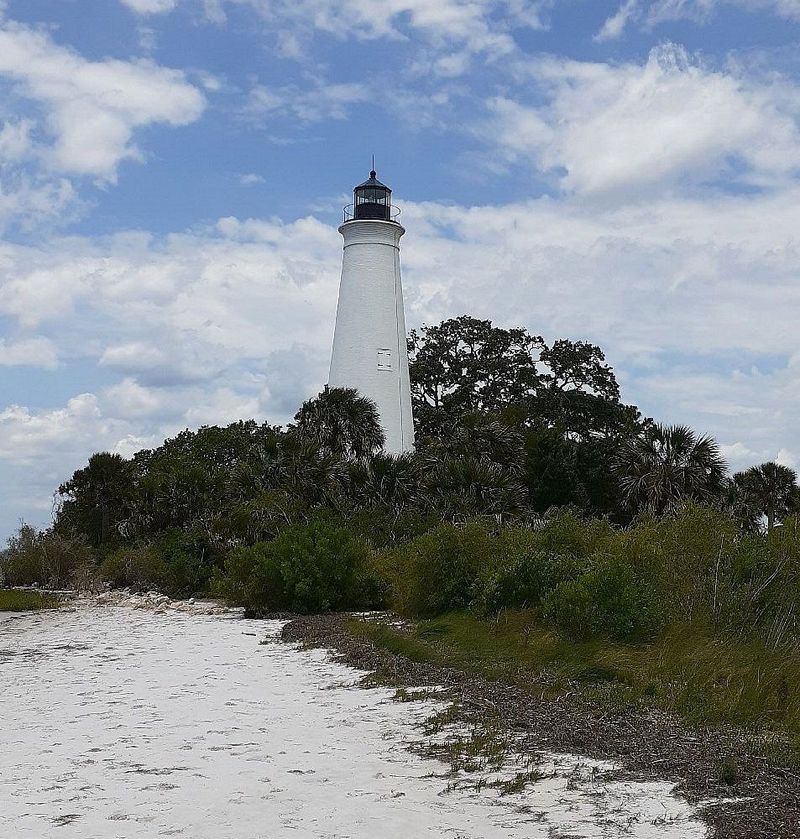
You’ll feel the coastal shift fast here—salt in the air, marsh grass waving, and that wide-open horizon that makes everything look cinematic.
The Florida Trail segment in St. Marks is mostly easygoing underfoot, with flat terrain that lets you focus on the good stuff: egrets stalking the shallows, ospreys circling overhead, and the occasional alligator doing its best “I live here” stare from a safe distance.
Morning is prime time because the light hits the marsh like a spotlight and the breeze usually behaves. Bring binoculars if you have them; you’ll use them more than you think.
The refuge also does prescribed burns, which is great for habitat and not always great for your plans—so it’s smart to check current notices before you drive out. When it’s on, though, this hike feels like classic Big Bend Florida in the best way.
2. Blackwater Region – Juniper Creek Trail (Panhandle)
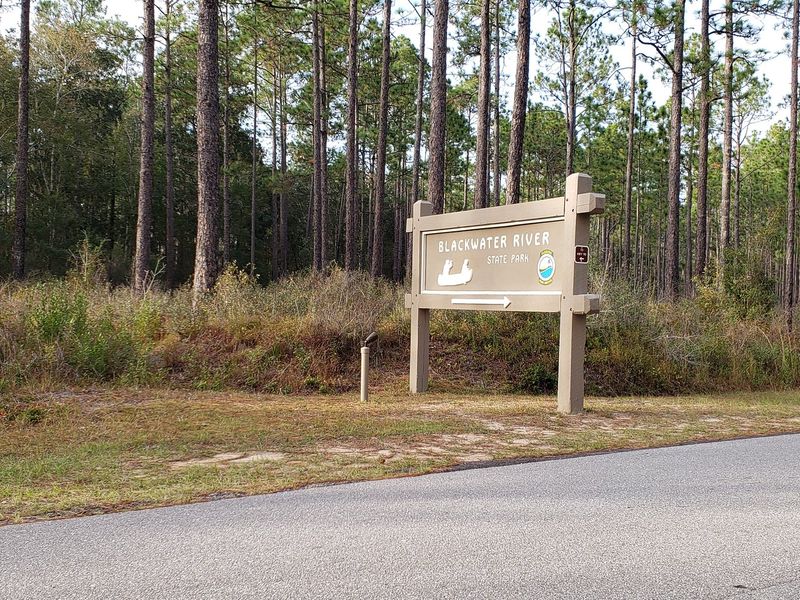
This one is for anyone who likes their Florida wild but not swampy. The trail threads through longleaf pine country and runs alongside dark, tea-colored water that looks like it was steeped overnight.
Juniper Creek brings the soundtrack—gentle flow, occasional gurgles, and just enough shade to keep things pleasant even when the humidity shows up.
The terrain stays pretty friendly, but you’ll notice roots, soft sand, and a few spots that remind you you’re in a real forest, not a city greenway.
The best move for casual hikers is to pick a turnaround point you like—maybe a particularly pretty creek bend—and make it an out-and-back. You’ll get the scenery twice and skip the shuttle math.
After rains, expect damp patches and a little mud, but it’s usually the manageable kind, not the “why are my shoes making suction noises” kind.
3. Apalachicola National Forest (near Bradwell Bay area — choose drier/shorter pieces)
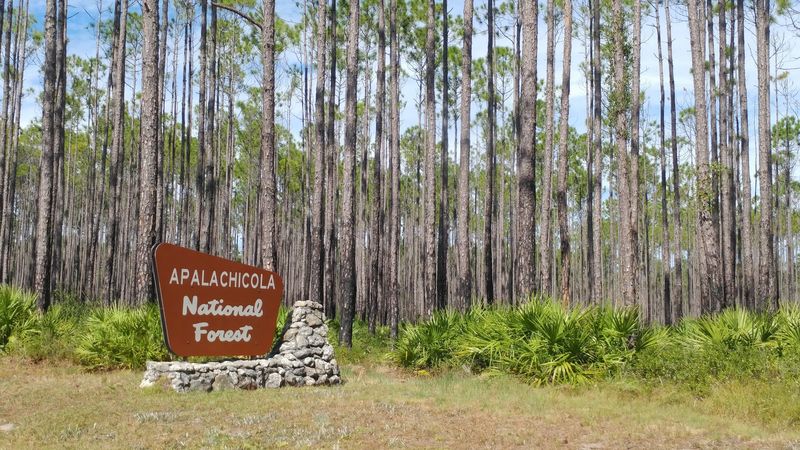
You come here for that deep, green North Florida feel—towering trees, filtered light, and the sense that you’ve stepped into a wilder chapter of the state. The trick is choosing your slice wisely.
Around Bradwell Bay, conditions can swing from “pleasant forest stroll” to “surprise wading audition,” especially after heavy rain.
If you’re keeping it casual, aim for shorter pieces on higher ground or plan an out-and-back from a reliable trailhead so you can bail if things turn soggy.
When it’s in good shape, the scenery is top-tier: mossy hardwoods, cypress pockets, and that rich, earthy smell that only shows up in places that still feel genuinely untamed.
Wear shoes you won’t cry over, bring bug spray like you mean it, and treat this one as an adventure with a flexible endpoint.
Apalachicola is generous—just not always dry.
4. Eglin Air Force Base – Alaqua section (Panhandle)
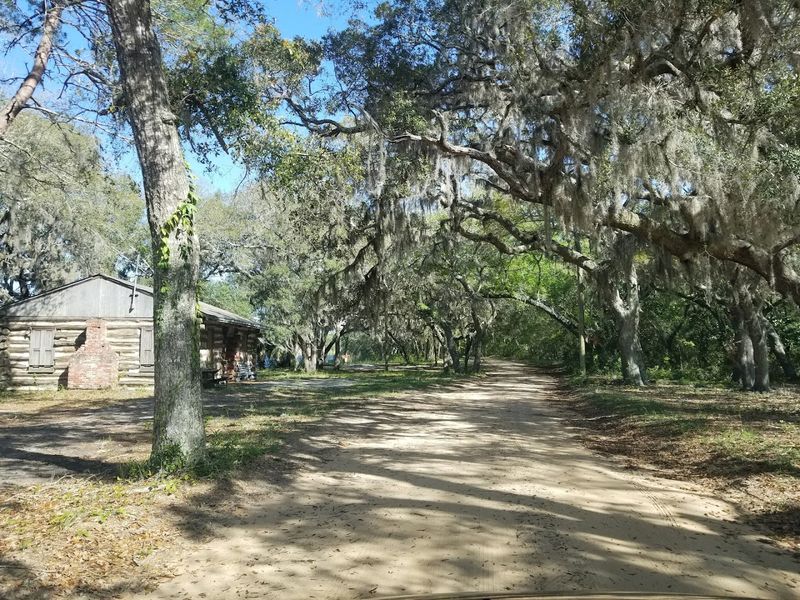
This is the kind of hike that surprises people who think “military base” automatically means boring. The Alaqua stretch serves up rolling terrain by Florida standards, plus clear-water views that feel more spring-fed than swampy.
You’ll move through mixed woods, catch glimpses of water that pop bright against the greens, and get a little elevation change that makes the walk feel dynamic without turning it into a workout flex. The big thing to know: access is regulated.
Visitors 16 and up typically need a permit and photo ID, so handle that part before you show up expecting a casual stroll. Once you’re in, it’s worth it—quiet, less crowded, and very “locals who did the homework” energy.
Plan for a shorter out-and-back and linger near the prettiest water views; it’s the kind of place where you’ll stop more than you think, mostly because the scenery keeps pulling you to the side of the trail.
5. Osceola National Forest – Nice Wander Loop (near Olustee)
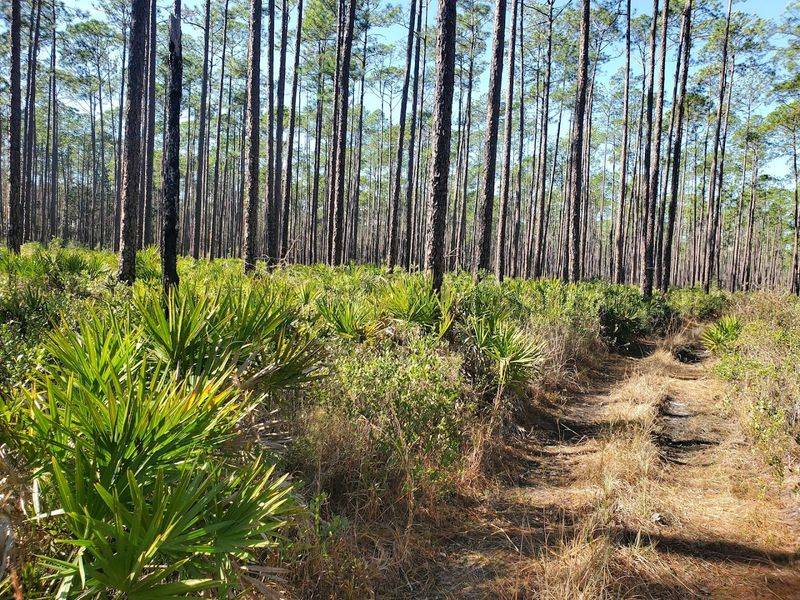
If you want a low-stress Florida Trail taste test, this loop is a solid pick. The vibe is classic Osceola: flatwoods, palmetto, and a peaceful, steady rhythm underfoot that makes it easy to chat while you walk.
What makes it special isn’t dramatic scenery—it’s the small stuff you start noticing when the trail isn’t trying to humble you.
Listen for woodpecker tapping, watch for gopher tortoise burrows, and keep your eyes up in the pines because this area is known for red-cockaded woodpeckers.
The loop format is also a win: no shuttle, no complicated turnaround decisions, just follow the tread and let the forest do its thing. Go earlier in the day for cooler temps and better wildlife odds.
If it’s been raining, you might hit damp patches, but this isn’t usually the kind of hike that turns into a footwear regret. It’s friendly, mellow, and quietly satisfying.
6. Osceola National Forest – Ocean Pond to Turkey Run (easy linear day-hike option)
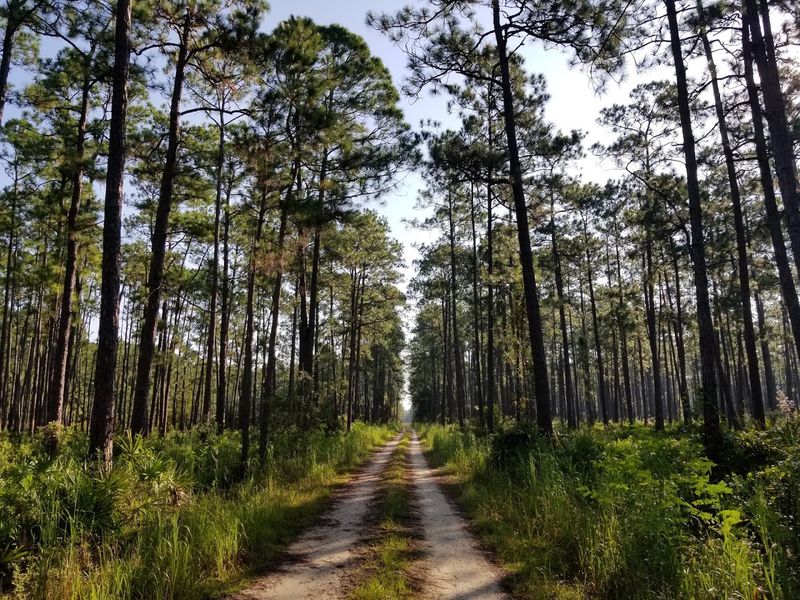
This section feels like a proper little journey without demanding full-day stamina. You start near Ocean Pond with that open, breezy lake-country feeling, then slip back into forest where the light flickers through the pines and the world gets quieter.
The casual-hiker cheat code here is to treat it as an out-and-back rather than committing to a long point-to-point—walk until you hit a good “this is enough” spot, then turn around.
Turkey Run Shelter is a fun landmark to aim for because it gives you a tangible destination and a good excuse to pause, sip water, and feel extremely outdoorsy for a minute.
Expect sandy stretches, some roots, and the occasional muddy patch depending on season. It’s the kind of trail where your pace naturally settles in, and by the time you return, you’ll realize you covered more ground than it felt like.
Bring extra water; the shade helps, but Florida still Florida’s.
7. Big Shoals State Park (Suwannee River whitewater viewpoint)
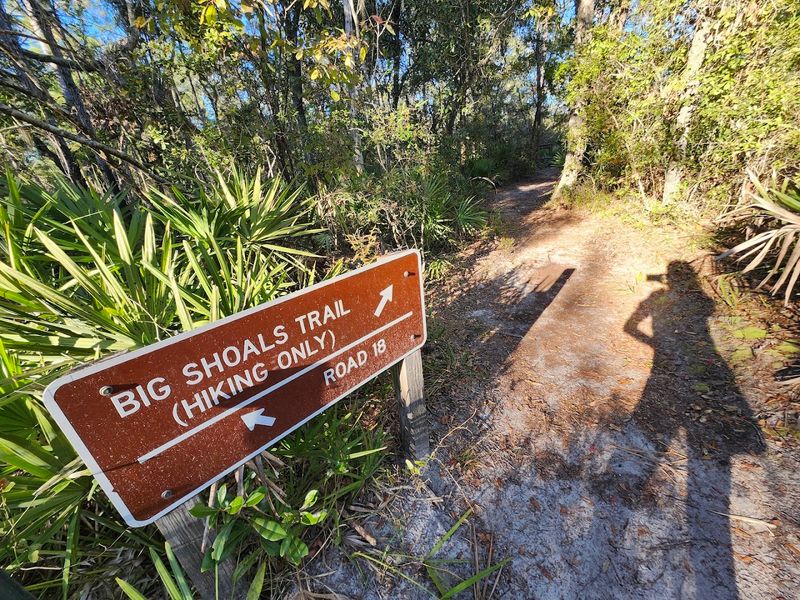
You know you’re somewhere different when Florida starts acting like it has actual river drama. Big Shoals delivers the state’s best “wait, that’s here?” moment: a rushing Suwannee stretch that qualifies as Florida’s only Class III whitewater.
The Florida Trail in this park is perfect for an out-and-back—walk in, build anticipation, and then land at the bluffs where the river churns and you get a rare high-energy soundscape for this state.
The footing is generally reasonable, but you’ll want decent shoes because tree roots and uneven spots show up near the river.
Cooler months are especially good because you can take your time without melting, and the views open up nicely when foliage thins.
It’s also photogenic without trying, so expect a few stops for “hold on, that’s a great shot.” Pack snacks and linger at the overlooks; this is one of those short hikes that feels bigger than its mileage.
8. Suwannee River Section (choose short riverside segments)
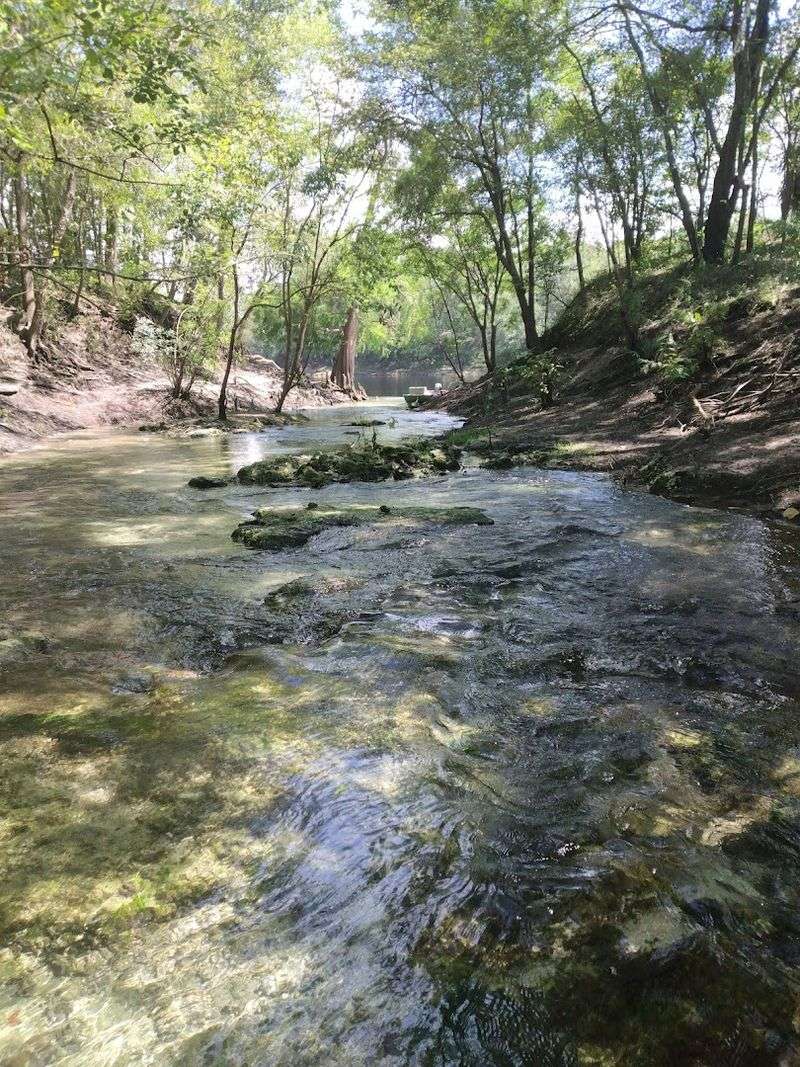
This is the Suwannee at its most addictive: bluffs, ravines, and stretches where the river slides past like a slow, dark ribbon. The full Suwannee River section is long enough to be a commitment, but you don’t need the whole thing to get the magic.
Pick a day-hike slice with easy access, walk a few miles along the edge, then turn back once you’ve collected your fill of views.
The trail constantly toys with your perspective—one minute you’re on high ground looking down at the water, the next you’re dipping into shaded hollows that feel cooler and quieter.
It’s also a great place for “what is that bird?” moments, plus the occasional deer sighting if you’re out early. Keep an eye on the ground near drop-offs, especially if you’re hiking with kids, because some overlooks are legitimately steep.
When you time it right, it’s a highlight reel of North Florida in one outing.
9. Ocala National Forest – Juniper Springs to Hopkins Prairie area
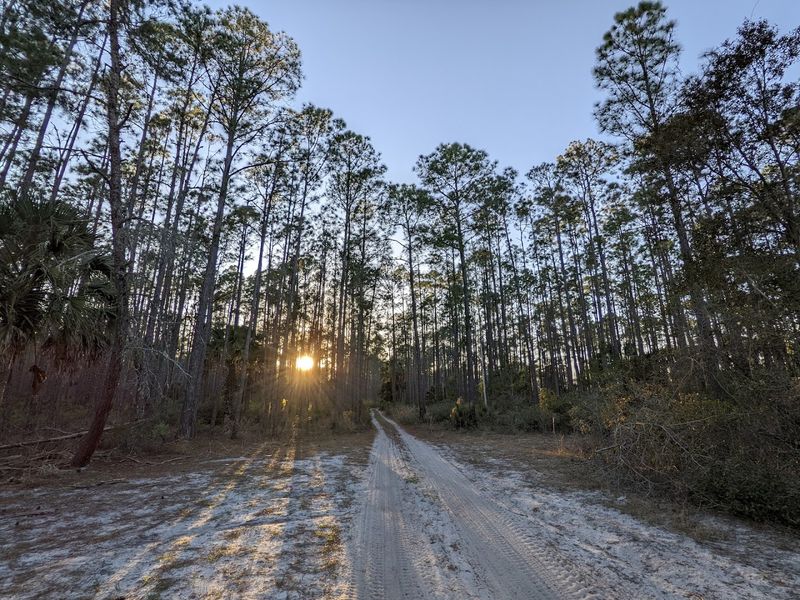
This stretch has a reputation for a reason. You’re in the Juniper Prairie Wilderness zone, where the trail feels more remote and the landscape flips between scrubby openness and shaded pockets that smell like warm pine.
The hiking itself is straightforward, but the sand can be the main character—some parts are firm, others are soft enough to make you notice your calves. The payoff is the variety: palmetto flats, scattered oaks, and long sightlines that make the sky feel huge.
If you’re keeping it casual, start from a clear access point, hike to a feature you want to see—like a prairie edge or a particularly scenic stretch of wilderness tread—then turn around before the mileage sneaks up on you.
Early morning is your friend here because Ocala can heat up fast.
Bring more water than you think you need, and don’t be surprised if you see sand tracks from critters that clearly got up earlier than you did.
10. Green Swamp West (Central Florida sandhills + alternating habitats)
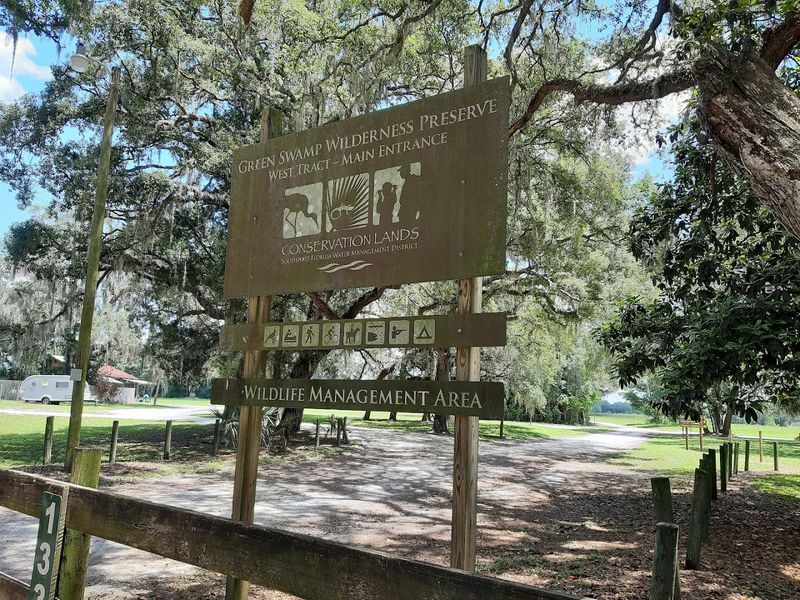
This hike is peak “only in Central Florida” variety—sandhills, open stretches, and pockets of greener habitat stitched together like a sampler platter. It’s flatter than it sounds, but it doesn’t feel monotonous because the scenery keeps changing just as you start to settle in.
The tread can be sandy, especially in dry stretches, so it’s a good choice for hikers who want something easy on the joints but still a little leg-work.
A popular way to do it is trailhead-to-trailhead for a moderate day hike, but you can absolutely keep it shorter by turning around at a point that feels right.
Wildlife sightings are a bonus here; you might catch sandhill cranes, deer, or signs of hogs in the softer ground. Go in the cooler months if you can—Green Swamp is gorgeous when it’s not trying to steam you.
Bring sun protection; some stretches are bright and open in a way that sneaks up on you.
11. Three Lakes WMA – Prairie Lakes area (near St. Cloud)
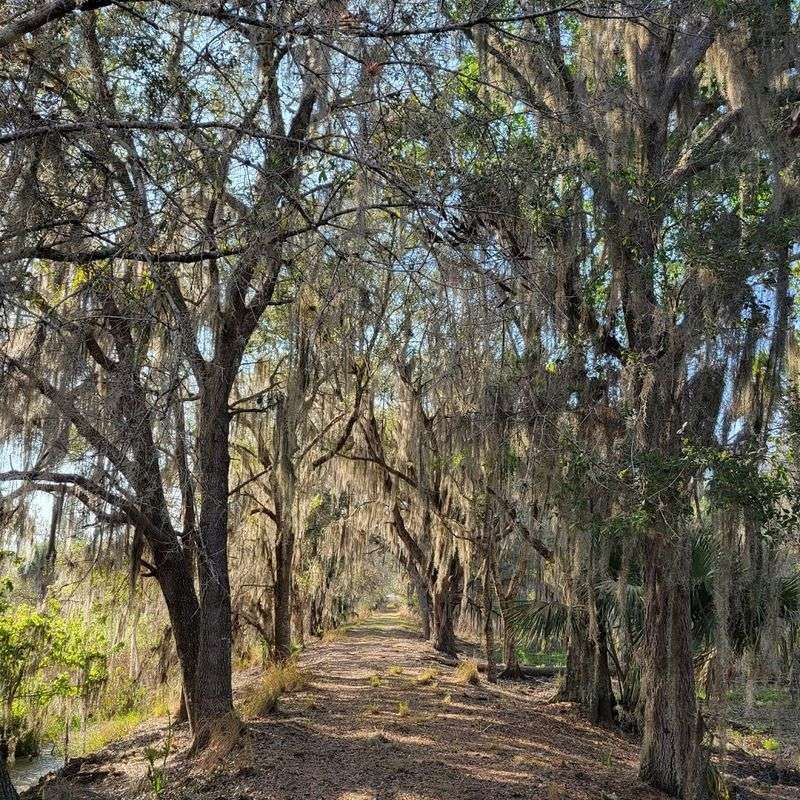
This is your “big sky” fix without driving all the way to the coast. The landscape opens up into prairies and oak hammocks, and the change of scale is immediate—you’re not tucked under a canopy here; you’re walking with the horizon in full view.
It’s a satisfying contrast to Florida’s usual tunnel-of-trees hiking, and it makes the whole outing feel bigger than the mileage. Expect flat terrain and a straightforward path, but don’t underestimate the sun exposure; this is a hat-and-water kind of hike.
Wildlife is part of the deal, too—wading birds, raptors, and plenty of movement in the grasses if you slow down and look. The vibe is quieter than you’d expect for something relatively close to Orlando-area traffic, which is exactly why locals love it.
If it’s windy, even better—the prairies come alive. After rain, some sections can be damp, so footwear you trust is the smart play.
12. Kissimmee Prairie Preserve State Park – “Kissimmee Prairie North”
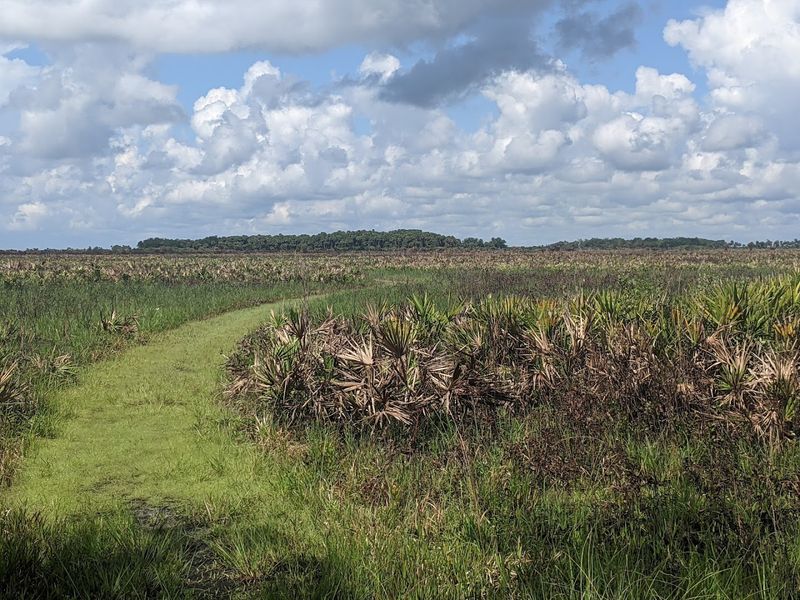
If Florida ever wanted to prove it has “wide-open West” energy, it would point you here. The prairie stretches out with almost no visual clutter—just grasslands, sky, and the feeling that you can see tomorrow from where you’re standing.
The hiking is easy in the sense that it’s flat, but it’s not boring; you’re scanning constantly for movement—deer, birds, maybe a distant bobcat-shaped shadow if you’re lucky and quiet.
This park is also famous for night skies, so if you can time your hike for late afternoon, you’ll get that golden-hour glow that makes everything look sharper.
On the North end, you can keep it casual by doing a shorter out-and-back and spending extra time lingering at scenic points instead of chasing distance.
Bring water, sun protection, and bug spray because the prairie doesn’t offer much cover and the insects don’t ask permission.