5 Florida Beaches Where You’re Most Likely to Find Shark Teeth
Florida’s coastline holds a hidden treasure that beachcombers dream about: fossilized shark teeth. These ancient relics wash up by the thousands, especially along certain stretches where currents and geology team up perfectly. Whether you’re a serious collector or just looking for a cool souvenir, knowing where to search makes all the difference.
1. Caspersen Beach
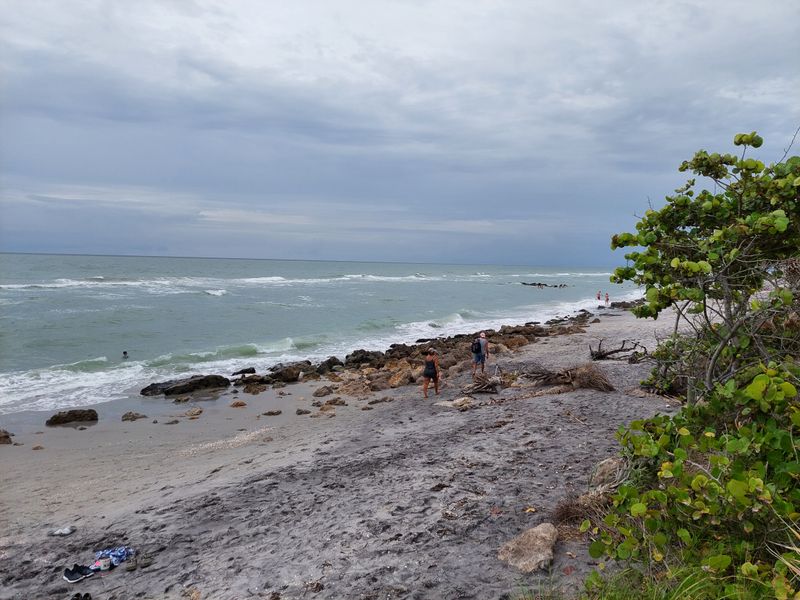
Venice earned its nickname as the “shark tooth capital of the world” for good reason, and Caspersen Beach stands as the crown jewel of this fossil-hunting paradise. Millions of years ago, this area was underwater, and now those ancient shark teeth continuously wash ashore.
Timing your visit matters tremendously here. Low tide exposes more sand and concentrates the teeth along the waterline, while storms churn up the ocean floor and deliver fresh batches of fossils.
Serious collectors arrive early morning with sifters and mesh bags, combing through shell piles where black triangular teeth hide. The beach stretches for over a mile, giving you plenty of room to explore. Many hunters report finding multiple teeth in just one visit, making this spot truly unbeatable for beginners and experts alike.
2. Manasota Key
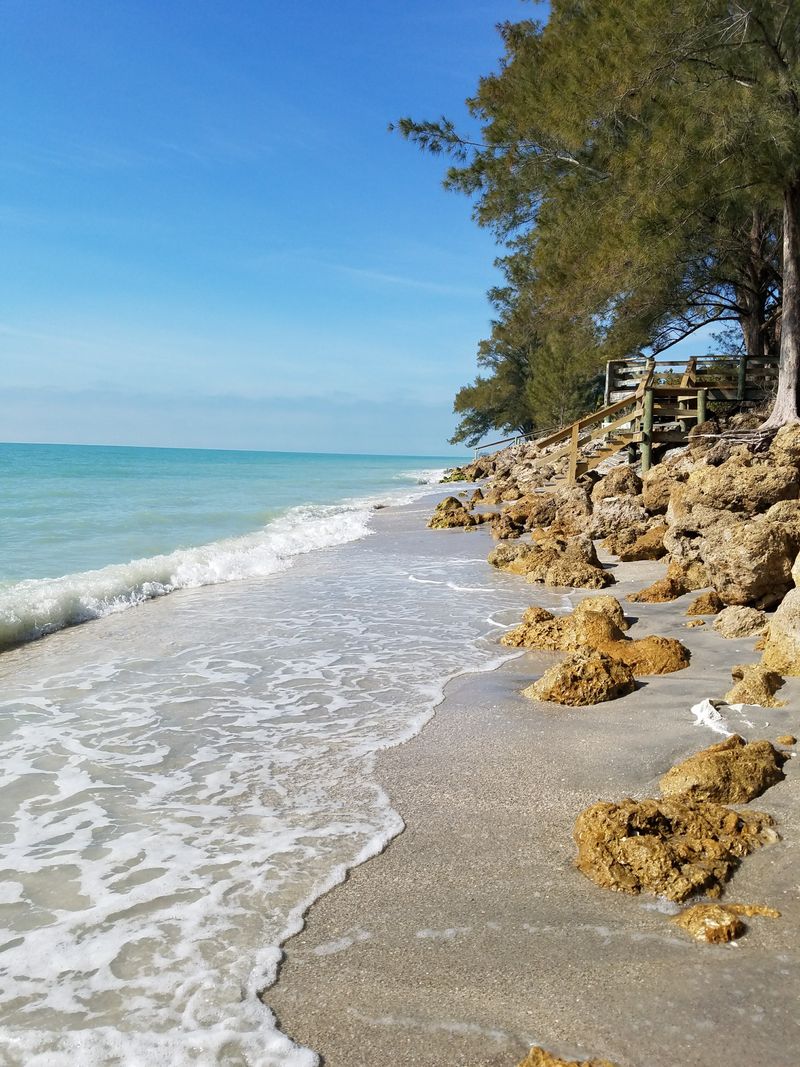
Just a short drive south from Venice’s busy beaches, Manasota Key offers something special: fewer crowds and equally impressive fossil finds. This barrier island remains refreshingly under the radar compared to its famous neighbor.
What makes this spot exceptional is that it receives the same prehistoric deposits as Venice but sees far less foot traffic. That means more teeth remain unclaimed, waiting for patient searchers. Local collectors guard this secret closely, returning season after season.
The key stretches for miles, with multiple access points to explore. Blind Pass Beach at the southern tip gets particularly good reviews from tooth hunters. Bring a small shovel or sand scoop to sift through the darker sediment layers where fossils concentrate. You’ll often spot manta ray plates and other marine fossils alongside the shark teeth here.
3. Casey Key
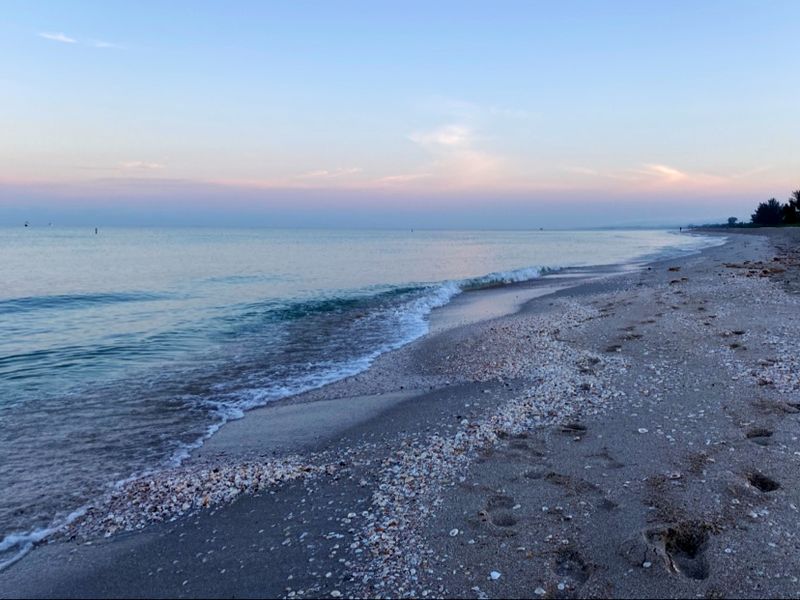
Sandwiched between Sarasota and Venice, Casey Key has developed a devoted following among fossil enthusiasts who appreciate its consistent results. The Gulf-side beaches here benefit from the same geological goldmine that makes the entire Venice area so productive.
Collectors recommend focusing your search right where waves meet sand in the active surf zone. As each wave retreats, it leaves behind a fresh layer of shells and sediment that often contains newly deposited teeth. Wading ankle-deep and watching the sand closely yields the best results.
North Casey Key Beach Park provides easy public access and good facilities, making it family-friendly for longer hunting sessions. The teeth found here range from tiny to impressive, with occasional megalodon fragments turning up to thrill lucky finders. Visit after winter storms for particularly productive hunts.
4. Mickler’s Landing
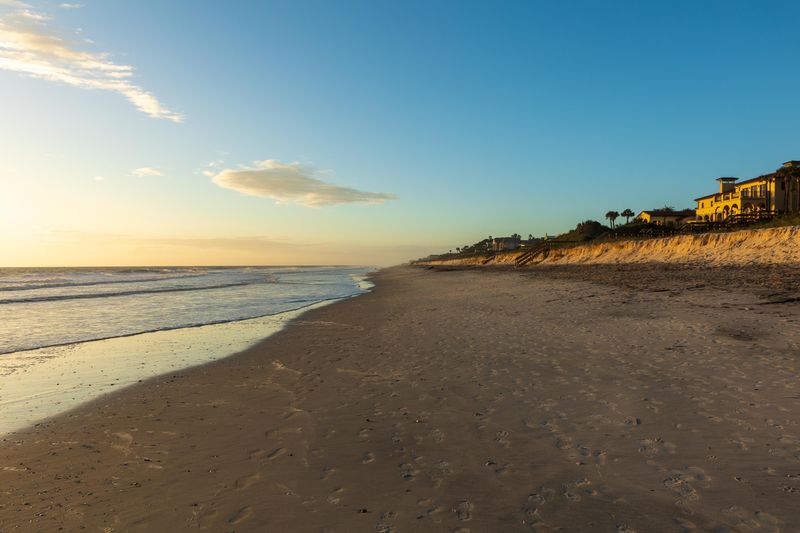
Breaking away from the Gulf Coast dominance, Mickler’s Landing near Jacksonville proves the Atlantic side has serious game too. The beach’s distinctive dark coquina sand creates a perfect contrast, making black shark teeth pop visually against the lighter shell fragments.
Unlike seasonal spots, this location produces year-round finds because offshore currents constantly deliver fresh material. Dedicated hunters make regular pilgrimages here, and online fossil forums buzz with recent Mickler’s discoveries. The consistency is remarkable.
Park facilities make this an easy destination for families wanting to combine swimming with treasure hunting. Early morning walks during outgoing tides provide optimal conditions. Many visitors report finding multiple teeth per trip, including specimens from modern sharks and prehistoric species. The beach stretches for miles, so spread out and explore different sections to increase your chances significantly.
5. Fort Clinch State Park Beach
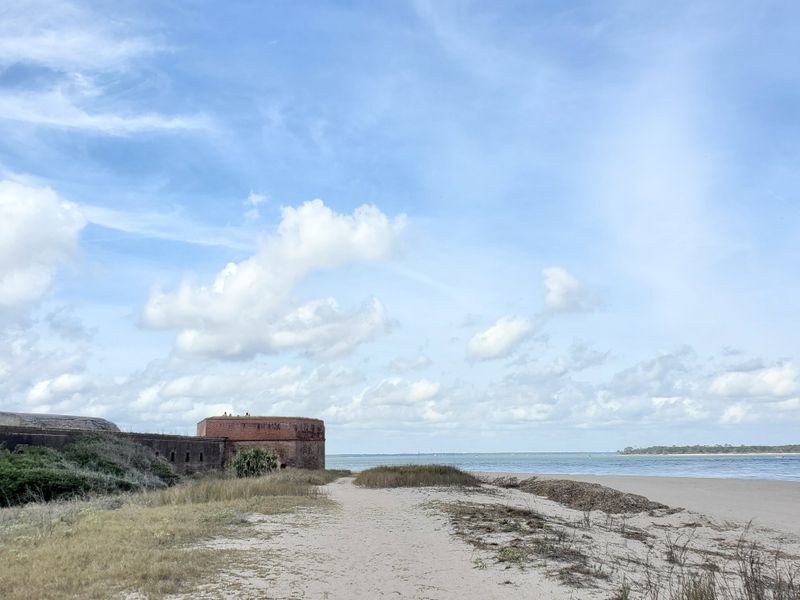
Way up on Florida’s northeastern corner, Fort Clinch State Park Beach benefits from an unusual advantage: regular dredging operations in the nearby inlet. These maintenance projects pump sand from deeper waters onto the shore, essentially delivering prehistoric treasures straight to collectors.
This continuous replenishment means the beach never gets completely picked over. Fresh loads of fossil-rich sediment arrive regularly, keeping the hunting productive throughout the year. Locals know this and return frequently to check what new material has appeared.
The park setting adds bonus appeal with hiking trails, historic fort tours, and excellent facilities. Tooth hunters appreciate the well-maintained beach access and ample parking. Focus your search near the inlet area where dredged material gets deposited most heavily.