7 Florida Bridges That Are Engineering Marvels
Florida is home to some of the most impressive bridges in America, spanning vast bays, rivers, and even the open ocean. These structures are not just roads over water—they are feats of modern engineering designed to handle hurricanes, heavy traffic, and massive ships passing below.
From the iconic Seven Mile Bridge stretching through the Keys to the towering Sunshine Skyway with its graceful cables, each bridge tells a story of innovation and resilience.
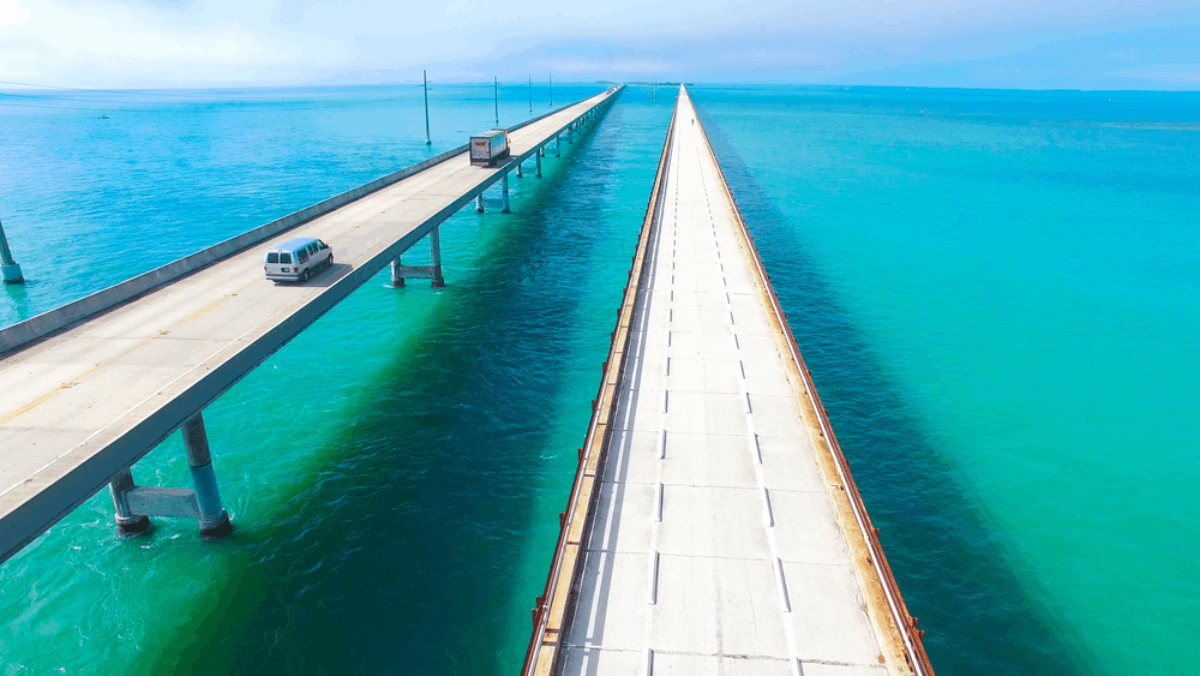
1. Seven Mile Bridge (Florida Keys)

Connecting Marathon to the Lower Keys, this legendary structure is one of the longest segmental bridges anywhere on Earth. Built in the early 1980s, it replaced an older railway bridge and now carries thousands of travelers over crystal-clear waters every day. The bridge is nearly seven miles long, giving drivers breathtaking views of the Atlantic Ocean and the Gulf of Mexico on either side.
Engineers used precast concrete segments assembled on-site to create a smooth, durable roadway. This technique allowed construction crews to work efficiently in a challenging marine environment. The bridge must withstand saltwater corrosion, tropical storms, and constant sun exposure.
Visitors often stop at the old bridge, now a pedestrian and fishing pier, to appreciate the scale of this engineering wonder.
2. Sunshine Skyway Bridge (Tampa Bay)
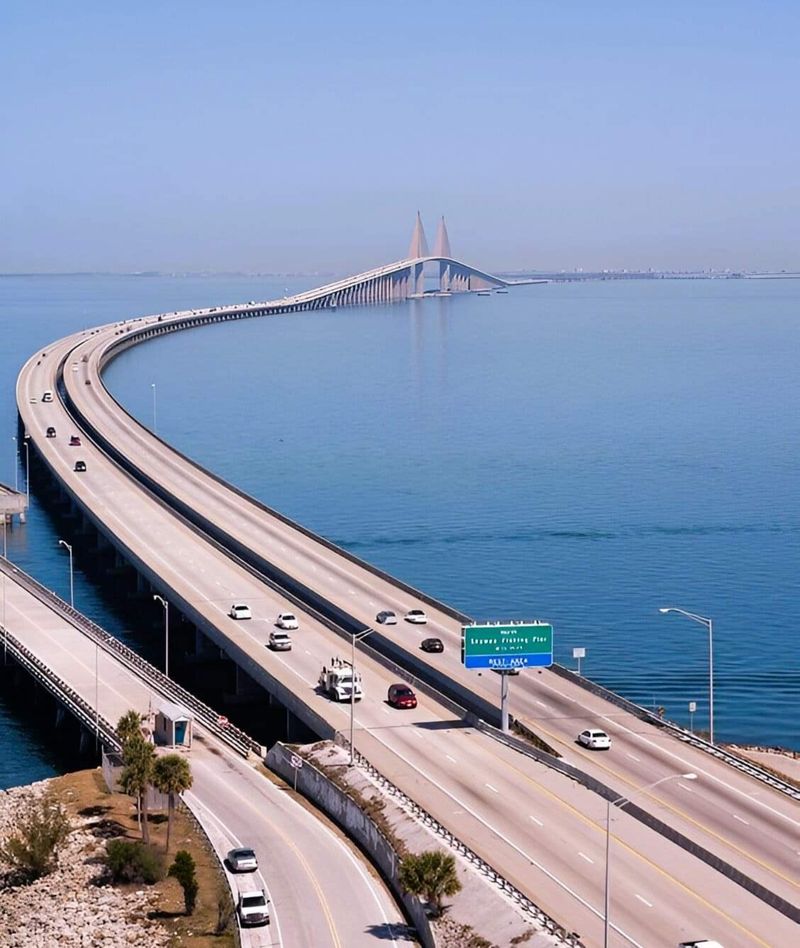
With its golden cables and soaring towers, the Sunshine Skyway is one of the most recognizable landmarks in Florida. Opened in 1987, it replaced a bridge that was partially destroyed by a ship collision in 1980. The new design features a cable-stayed system with a main span rising 430 feet above the water, allowing even the largest vessels to pass safely underneath.
Engineers built the bridge to survive Category 5 hurricanes and direct ship impacts. Massive concrete dolphins surround the support piers, deflecting wayward ships before they can cause damage. The bright yellow cables are not just beautiful—they are critical for distributing weight and keeping the roadway stable.
Driving across feels like flying, with panoramic views of Tampa Bay and the Gulf beyond. The Sunshine Skyway has won numerous design awards and is celebrated as a triumph of both safety and style in modern bridge construction.
3. Pensacola Bay Bridge
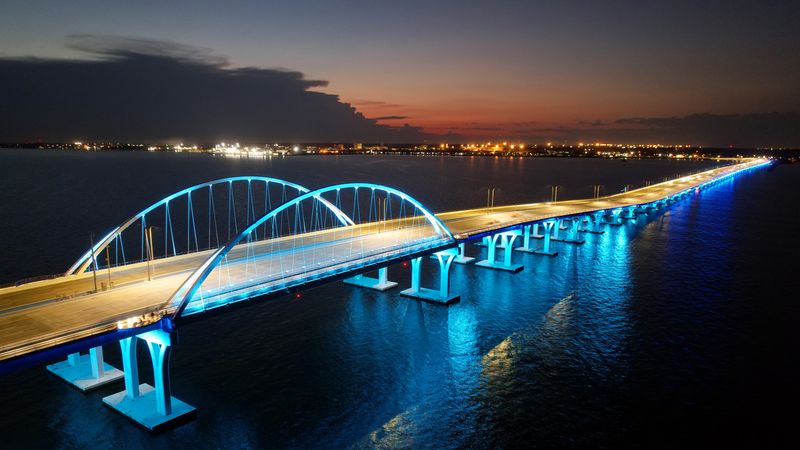
Hurricane Sally in 2020 severely damaged the original Pensacola Bay Bridge, tearing away sections and leaving the community in need of a reliable crossing. The newly rebuilt bridge showcases cutting-edge storm-resistant engineering, designed to endure the powerful hurricanes that frequently threaten the Gulf Coast.
The updated design includes stronger concrete, reinforced pilings, and improved drainage systems to handle storm surge and heavy rainfall. Engineers also raised the roadway slightly to reduce the risk of wave damage during future hurricanes. These upgrades make the bridge safer and more resilient than ever before.
Locals appreciate the smoother ride and modern safety features, while engineers study the project as a model for future coastal infrastructure.
4. Dames Point Bridge (Jacksonville)
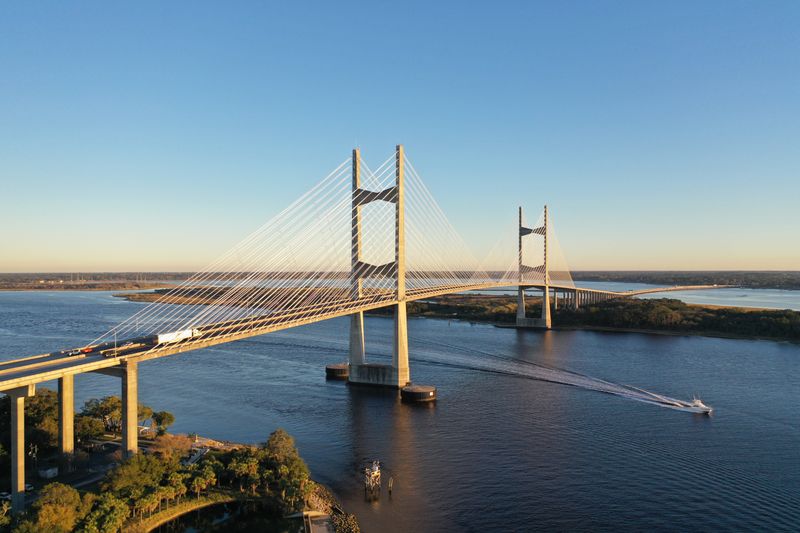
Spanning the St. Johns River in Jacksonville, the Dames Point Bridge is Florida’s longest cable-stayed bridge, stretching over 10,000 feet from end to end. Its towering pylons and delicate cables create a striking silhouette against the Florida sky.
One of the bridge’s main purposes is to allow massive cargo ships to reach the Port of Jacksonville, one of the busiest ports on the East Coast. Engineers designed the main span to rise high enough that even the tallest vessels can pass underneath without issue. This clearance is essential for the region’s economy and trade.
The bridge also handles heavy traffic from Interstate 295, connecting neighborhoods and industrial areas around the city. Its combination of strength, height, and elegance makes the Dames Point Bridge a true engineering achievement and a vital part of Jacksonville’s infrastructure network.
5. Howard Frankland Bridge (Tampa–St. Petersburg)
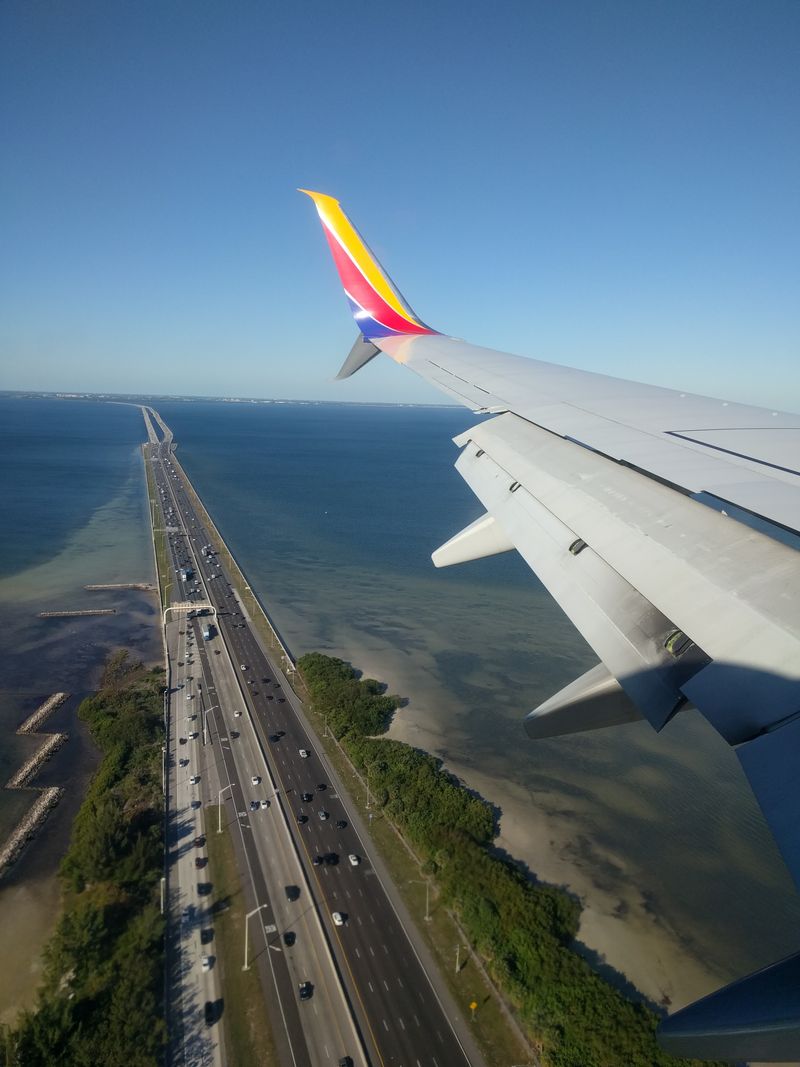
Known locally as the Frankland, this bridge is one of the busiest in Florida, carrying tens of thousands of vehicles daily between Tampa and St. Petersburg. Originally built in the 1950s, the bridge has undergone several expansions to keep up with the region’s explosive growth. Currently, new spans are being added to increase capacity and improve safety for drivers.
The latest construction project includes wider lanes, better shoulders, and modern materials designed to resist corrosion from saltwater. Engineers are also incorporating features to protect the bridge from hurricanes and rising sea levels, ensuring it remains functional for decades to come. The project is a massive undertaking, requiring careful coordination to keep traffic flowing during construction.
6. Gandy Bridge (Tampa Bay)
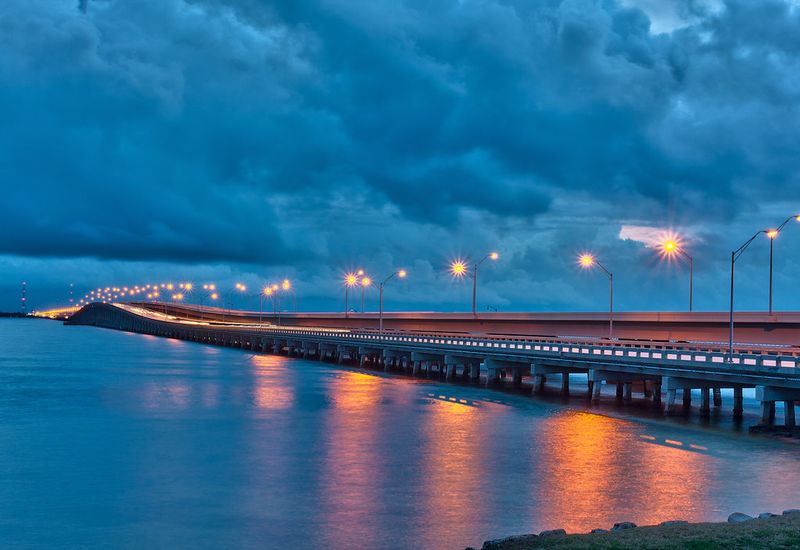
As Florida’s first bridge across Tampa Bay, the Gandy Bridge holds a special place in the state’s transportation history. Opened in 1924, it transformed travel between Tampa and St. Petersburg, replacing a lengthy ferry ride with a direct road connection. Over the decades, the bridge has been rebuilt and upgraded multiple times to accommodate modern traffic demands.
The current structure features multiple spans and wider lanes, designed to handle the heavy flow of commuters and tourists. Engineers continue to make improvements, adding stronger materials and better drainage systems to extend the bridge’s lifespan. These ongoing upgrades ensure the Gandy remains safe and efficient for years to come.
Driving across the Gandy today, it’s easy to forget how revolutionary this bridge was nearly a century ago. It paved the way for future development around Tampa Bay and remains a critical link in the region’s transportation network.
7. Mathews Bridge (Jacksonville)
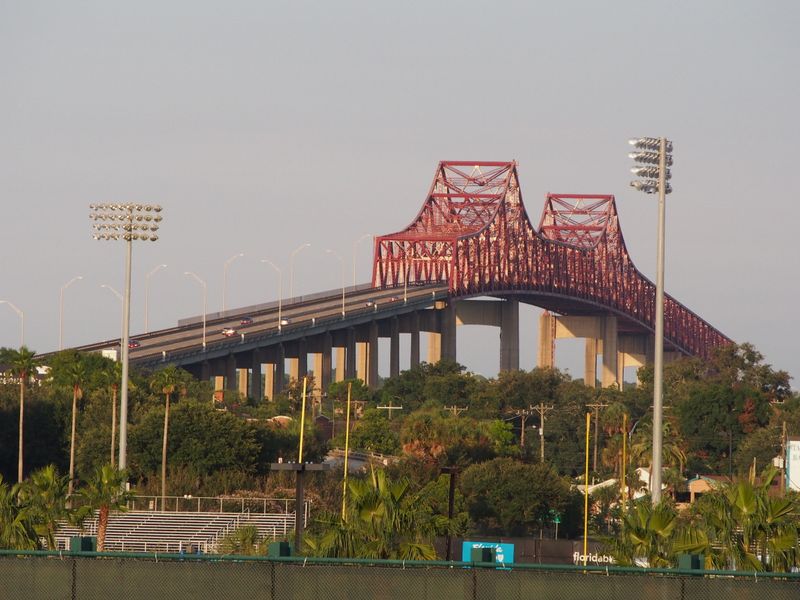
Featuring a distinctive cantilever truss design, the Mathews Bridge is an engineering landmark in Jacksonville. Built in the 1950s, it includes a unique lift span that can be raised to allow tall ships to pass through the St. Johns River. This movable section is a rare feature among modern bridges and requires precise engineering to operate safely and smoothly.
The bridge was designed to handle both heavy vehicle traffic and the logistical challenges of river navigation. Its steel truss structure distributes weight efficiently, making it strong enough to support large trucks and buses while remaining flexible enough to accommodate the lift mechanism. Regular maintenance keeps the lift span in working order, though it is used less frequently today.