This Forgotten 1600s Spanish Fort Still Guards Florida’s Atlantic Coast
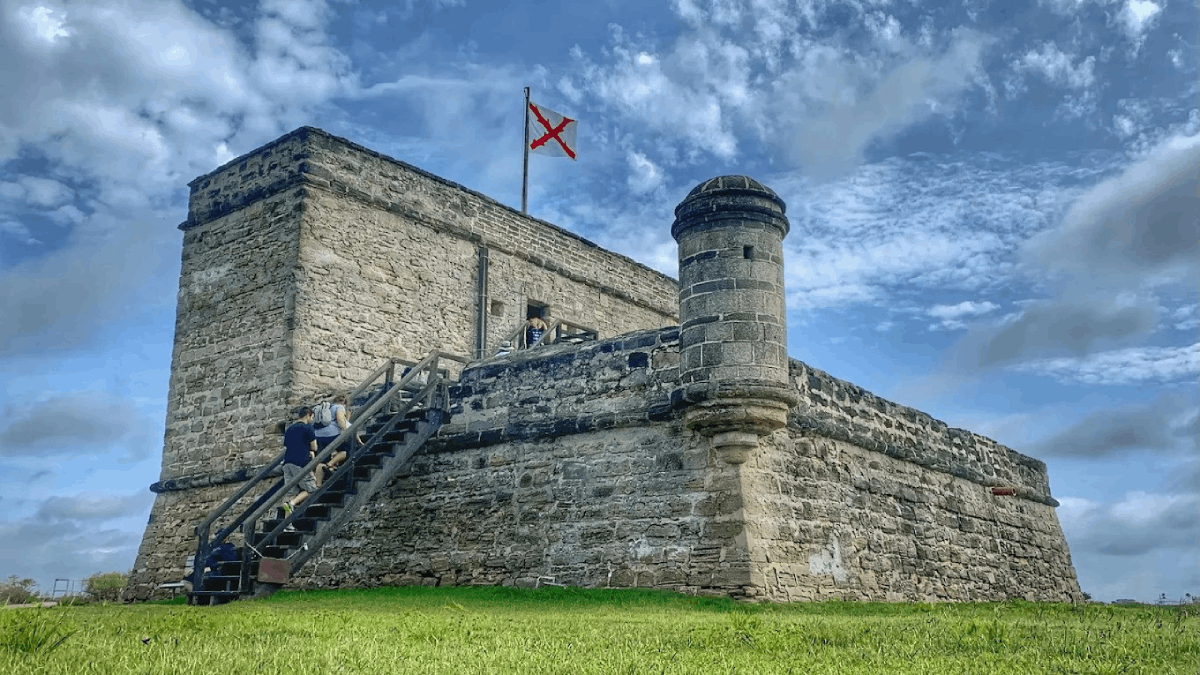
Hidden along Florida’s Atlantic Coast, Fort Matanzas stands as a quiet reminder of Spanish colonial power and military strategy. Built to protect St. Augustine from enemy attacks, this small stone fortress still watches over the Matanzas River today. Most tourists rush past this national monument on their way to bigger attractions, but those who stop discover a fascinating piece of history.
With free ferry rides, knowledgeable park rangers, and beautiful coastal scenery, Fort Matanzas offers an experience that feels both educational and adventurous.
Why Fort Matanzas Feels Like a Hidden Piece of Florida History
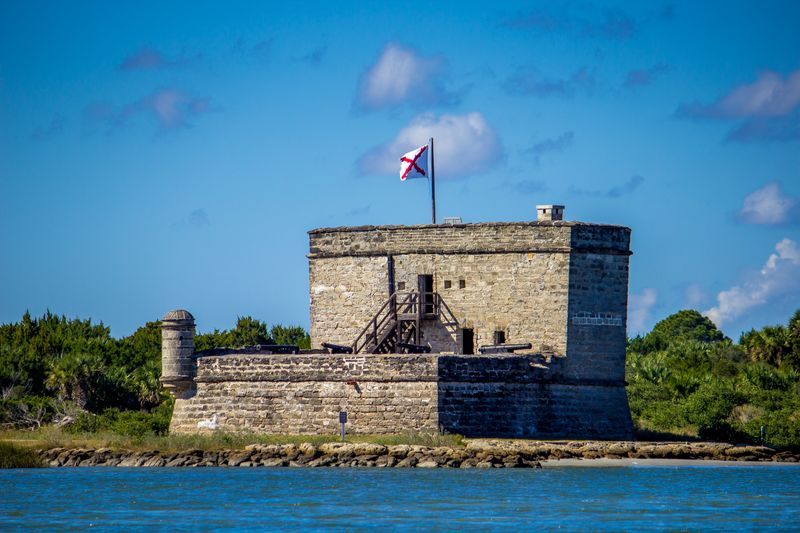
Unlike the famous Castillo de San Marcos in downtown St. Augustine, Fort Matanzas sits quietly about 14 miles south along A1A. Most people drive right past without realizing this national monument exists. The fort earned its place in history by guarding the southern water route into St. Augustine, preventing enemies from sneaking up the back way.
What makes this place special is how it blends history with nature. You’re not just staring at old walls—you’re walking through coastal marshes, spotting dolphins from the ferry, and breathing in salt air. The entire experience is free, which seems almost unbelievable given how well-maintained everything is.
Where Fort Matanzas Is Located and How to Get There
Fort Matanzas National Monument sits at 8635 A1A South in St. Augustine, Florida. The location puts you right along the scenic coastal highway, making it an easy stop during a beach day or historical tour. You’ll find the visitor center on the mainland side, with plenty of parking and clean restroom facilities.
Getting there from downtown St. Augustine takes about 20 minutes by car heading south on A1A. The drive itself is beautiful, with ocean views and charming beach communities along the way. If you’re staying near the beaches, you might be even closer.
The monument is open daily from 9 AM to 5:30 PM, so plan your visit accordingly. Arriving early gives you the best chance at snagging ferry tickets, especially on weekends and holidays.
There’s no admission fee to enter the grounds, explore the trails, or visit the visitor center.
The Dark and Fascinating History Behind Fort Matanzas
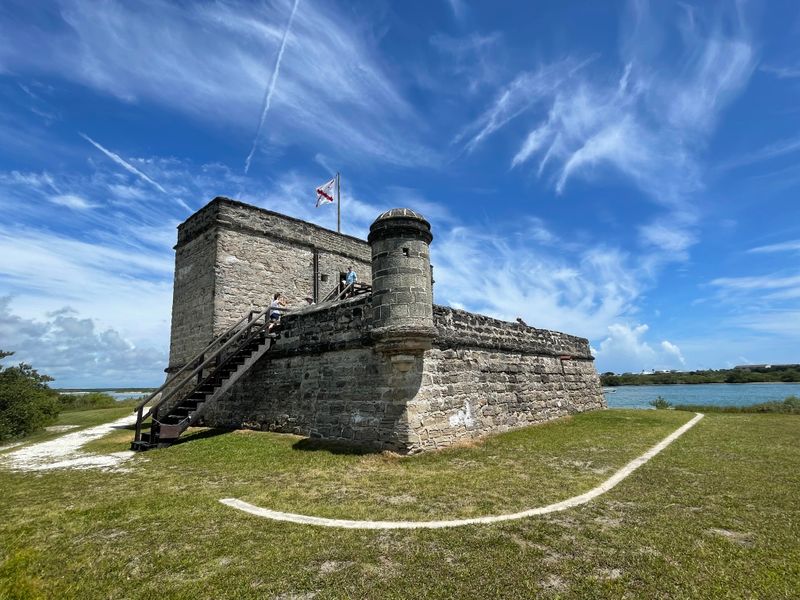
The name “Matanzas” translates to “slaughters” in Spanish, hinting at the site’s violent past. In 1565, Spanish forces killed hundreds of French soldiers near this spot after they shipwrecked during a storm. This brutal event gave the inlet its grim name and established Spanish dominance in the region.
Spain built the fort in 1740-1742 after realizing enemies could sail up the Matanzas River and attack St. Augustine from behind. The British had nearly succeeded with this strategy during earlier conflicts. The small fortress held just a handful of soldiers but served as an early warning system and defensive position.
Construction required cutting massive blocks of coquina stone, the same shell-based material used for Castillo de San Marcos. Workers hauled these heavy blocks to the island and stacked them by hand. The fort successfully protected St. Augustine’s southern approach for decades, though it never saw major battle action.
What the 1600s Spanish Fort Looks Like Today
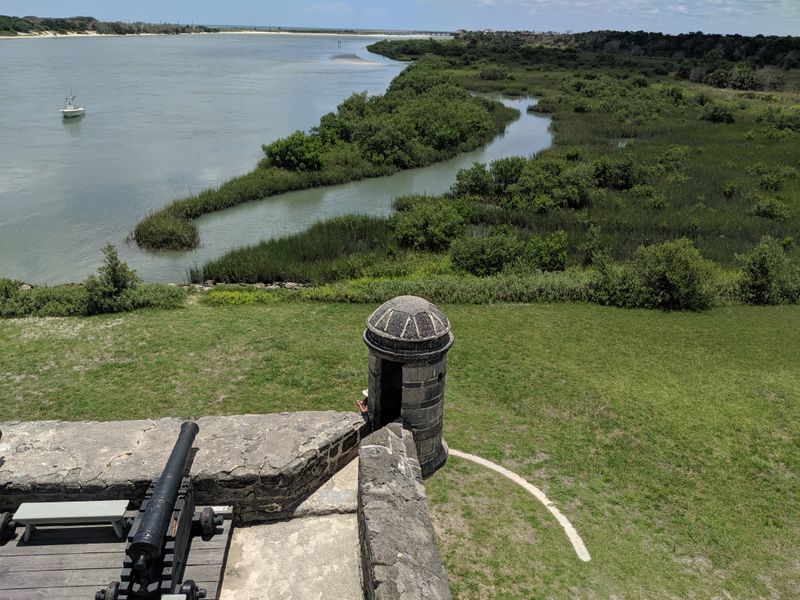
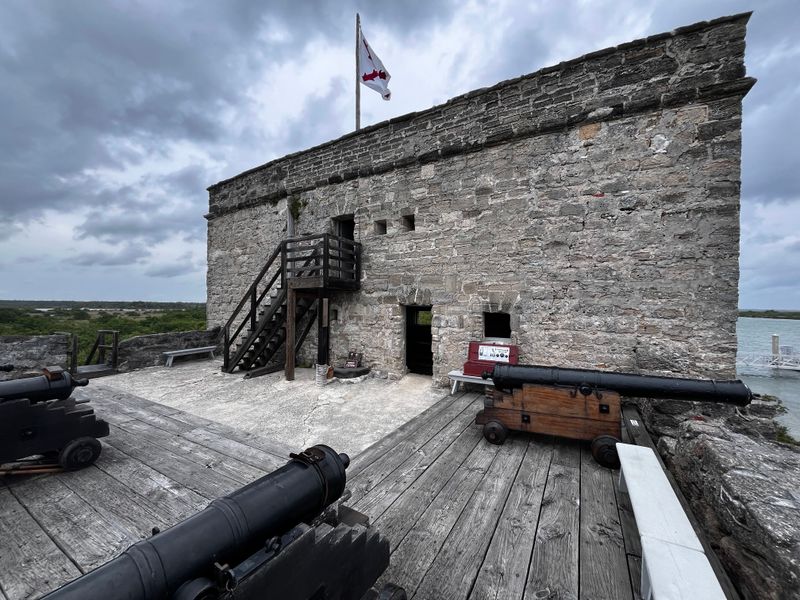
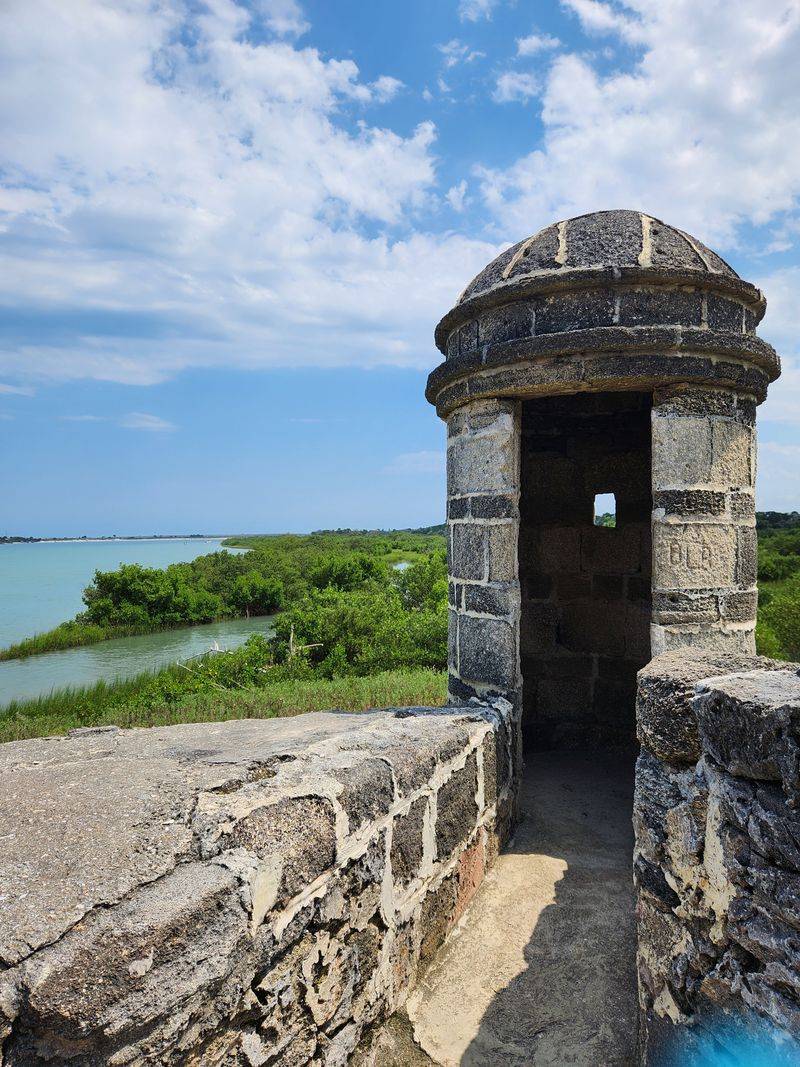
Fort Matanzas is surprisingly small compared to what most people imagine when they hear “fort.” The square structure stands just two stories tall, with thick coquina walls that have weathered centuries of storms and salt air. A wooden ladder leads to the upper gun deck, where soldiers once kept watch for approaching ships.
The National Park Service has done excellent preservation work, keeping the fort stable while maintaining its authentic appearance. You can still see original stonework, gun ports facing the water, and the basic layout soldiers would have known.
The whole structure sits on a small barrier island, surrounded by salt marsh and tidal waters. Views from the top offer stunning coastal scenery in every direction.
Taking the Free Ferry Across the Matanzas River
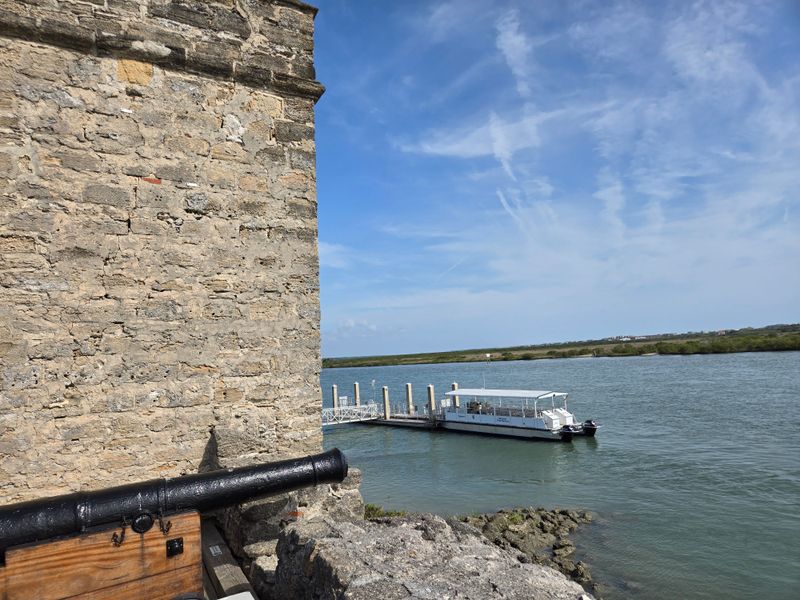
One of the best parts of visiting Fort Matanzas is the free ferry ride across the water. You’ll board a pontoon boat that makes the short five-minute journey from the visitor center to the fort island. The ride itself feels like a mini adventure, with marsh grasses waving in the breeze and seabirds flying overhead.
Ferry tickets are completely free but available in limited numbers throughout the day. Get to the visitor center early to grab your preferred time slot, especially during busy seasons. The staff inside can tell you the current wait times and answer any questions.
During the crossing, many visitors spot dolphins playing in the inlet or pelicans diving for fish. The boat captain often points out wildlife and shares interesting facts about the area. It’s a relaxing way to approach the fort, giving you time to imagine how soldiers must have felt rowing across these same waters centuries ago.
What You’ll See Around the Fort and Nature Trails
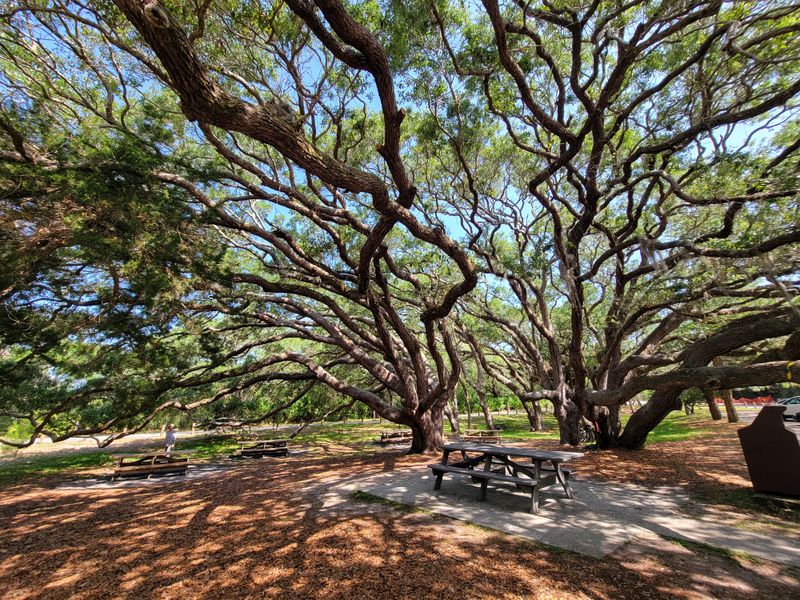
Beyond the fort itself, Fort Matanzas National Monument offers beautiful nature trails through coastal hammock ecosystems. A boardwalk loop near the parking area takes about 20 minutes to walk and showcases native plants and wildlife.
Beach access is available if you want to walk along the shore or dip your toes in the Atlantic. The area feels peaceful and uncrowded compared to more popular St. Augustine beaches.
Picnic tables, shade structures, and vending machines make this a comfortable spot to relax.
What to Know Before You Visit Fort Matanzas
Planning ahead makes your Fort Matanzas visit smoother and more enjoyable. Arrive early in the day to secure ferry tickets, especially on weekends when the monument gets busier. The visitor center opens at 9 AM, and ferry slots can fill up quickly during peak tourist seasons.
Bring sunscreen, hats, and water since you’ll be spending time outdoors in Florida sun. The ferry ride and fort exploration offer little shade, and temperatures can climb quickly. Comfortable walking shoes help for exploring the trails and climbing the fort’s ladder to the upper deck.
The entire experience is free, which is rare for such a well-maintained historical site. There’s no need to bring cash for admission, though vending machines at the visitor center accept payment for cold drinks.
If you have kids, ask about the Junior Ranger program—they can earn badges by completing activities at both Fort Matanzas and Castillo de San Marcos.