The Abandoned Florida Ghost Town Hidden Where Two Rivers Meet
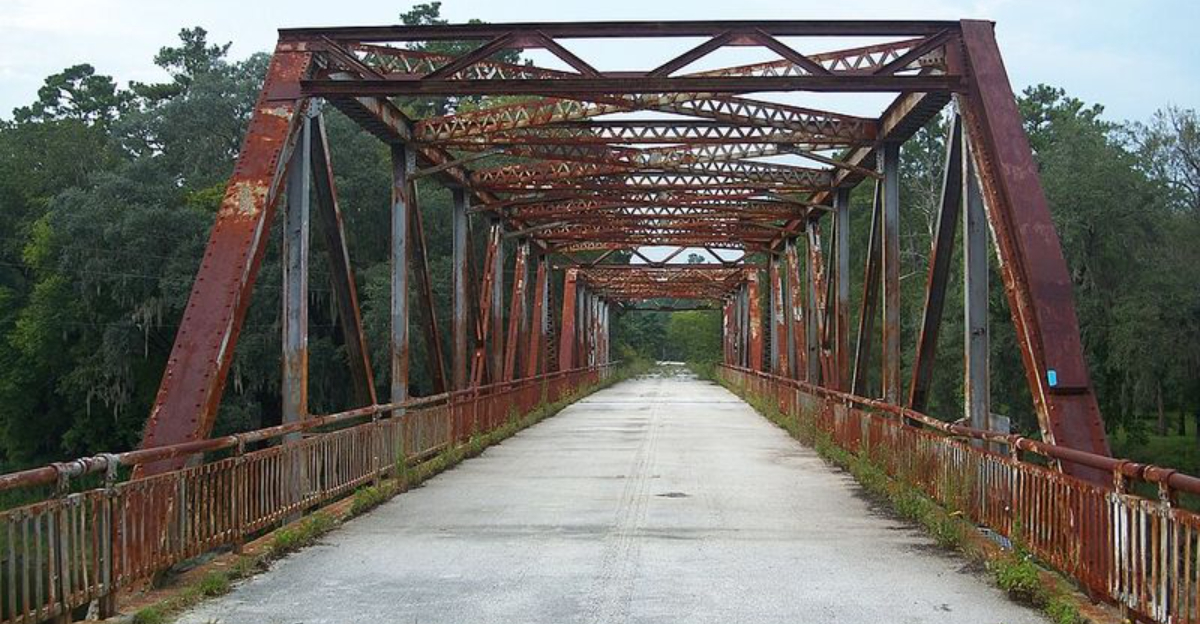
Hidden in North Florida’s river country, Ellaville isn’t a themed attraction—it’s a real ghost town that nature is steadily taking back.
One minute you’re on quiet backroads, the next you’re staring at a rusted bridge, dark water below, and overgrowth swallowing the last traces of a once-busy lumber community.
No shops. No neighbors.
Just silence and history. Here are 10 must-know talking points to help you explore Ellaville safely, responsibly, and with the full story in mind.
Where Is Ellaville, Florida (And Why It’s So Easy to Miss)
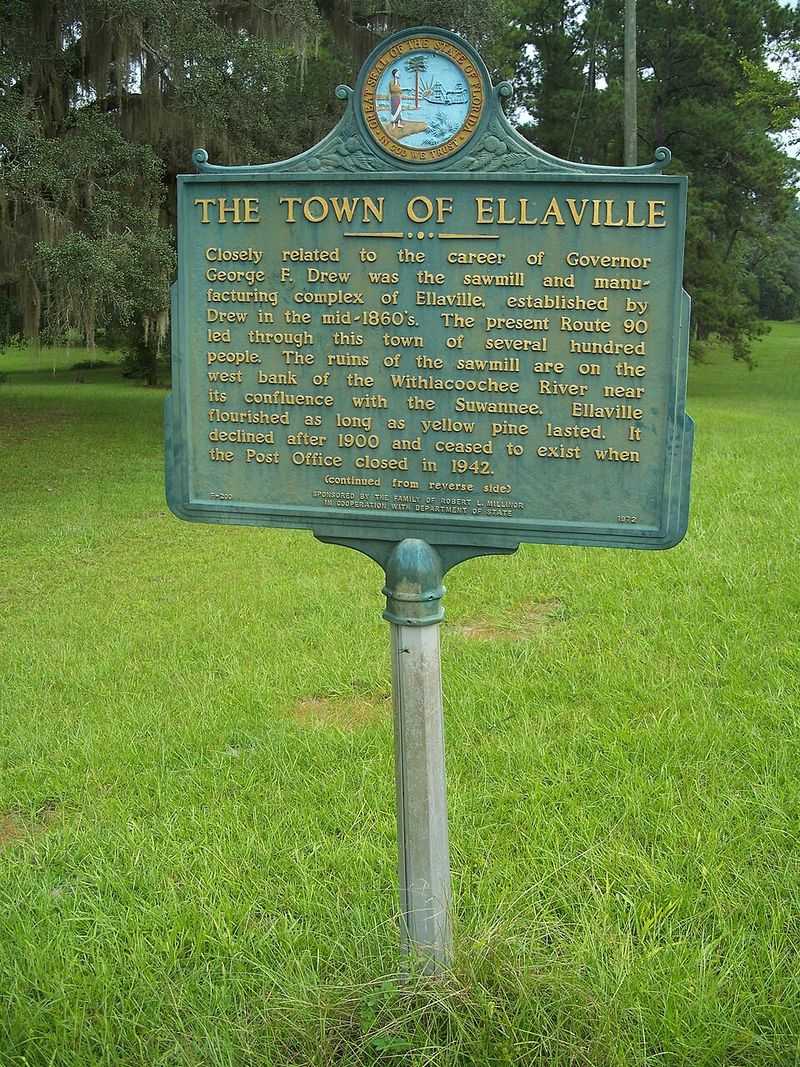
Ellaville hides where the Suwannee and Withlacoochee rivers meet, tucked inside Suwannee River State Park near the US 90 bridge. If you blink, you miss it because the modern highway sweeps you over the floodplain without fanfare.
Signage is minimal, the woods are thick, and the good stuff sits a short walk from the official trails.
Park at the main lot for Suwannee River State Park, then follow trail markers toward the river overlooks. You are not hunting a preserved main street, but scattered footprints of a town.
Expect sand, roots, and a little route finding as the paths braid through palmetto and oak.
Cell service flickers, so download maps before rolling in. The confluence is your north star, with tannin-dark water showing a seam where currents meet.
That quiet edge-of-the-map feeling is part of Ellaville’s charm, which is exactly why it stays overlooked.
The Quick Backstory: How a Busy Lumber Town Turned to Silence
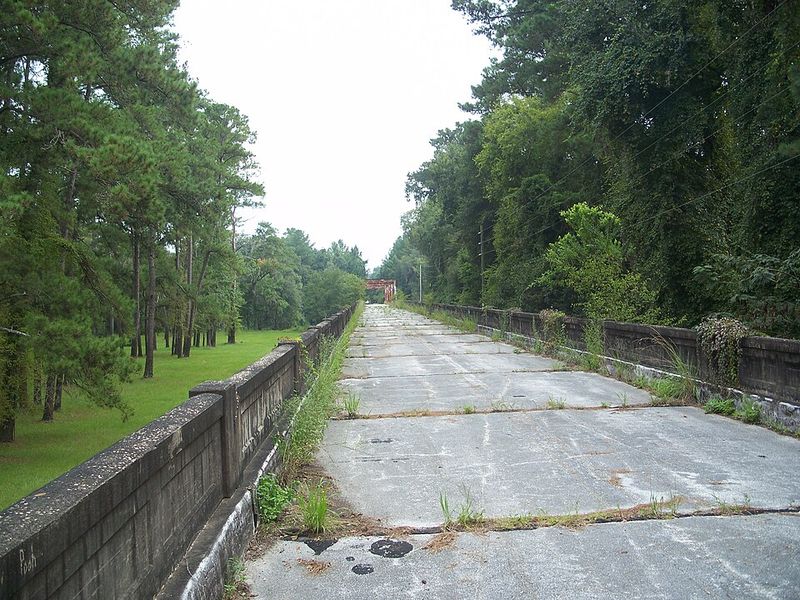
Ellaville sprang up in the 1860s around a powerhouse sawmill built near the rivers for easy log transport. For years, timber ruled, trains loaded, and a small town buzzed with workers, families, and storefronts.
You can almost hear the saws if you stand by the water long enough.
Then the spiral began. Fire chewed the mill, forests thinned, and floods kept pushing the reset button.
Industry followed the timber somewhere else, leaving buildings to sag and a post office that finally shuttered.
By mid 20th century, Ellaville slipped into memory while the woods reclaimed the streets. What remains today is not a preserved set, but a scatter of remnants that hint at scale.
Standing there, you feel the whiplash of boom-to-bust that shaped so many river towns, and you realize how quickly a map dot can vanish when its purpose dries up.
The Iconic Rusted Bridge That Feels Like a Portal to the Past
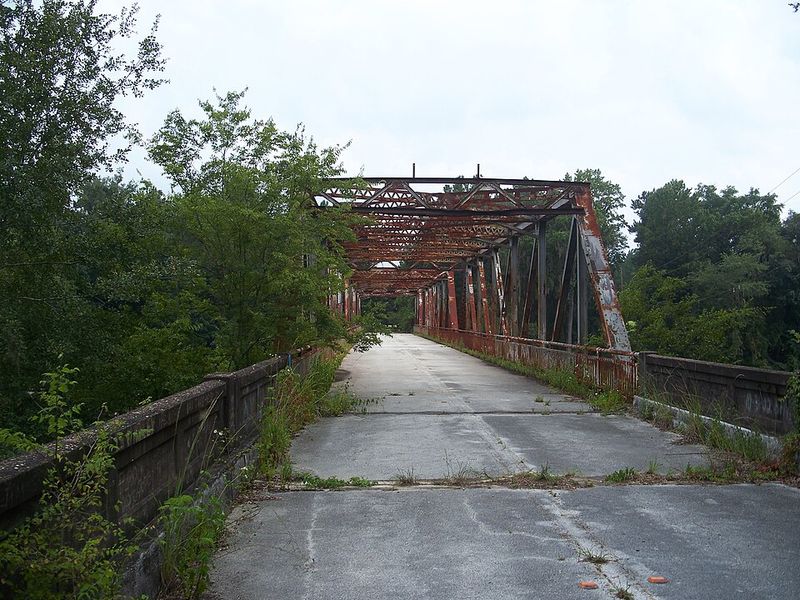
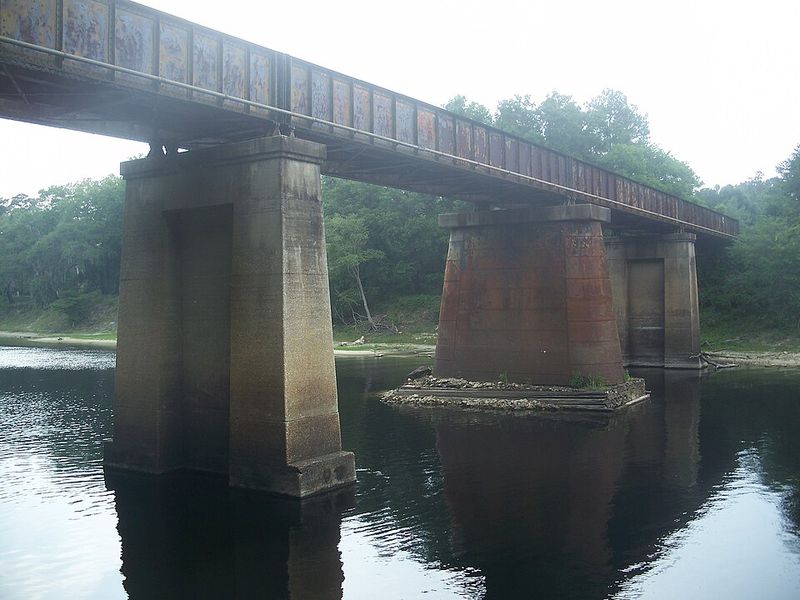
There is a steel truss bridge here that looks like it time-traveled from a sepia postcard. Its latticework rises over the Suwannee, all rivets and rust, framing the water like a movie still.
You do not need to know engineering to feel the weight of it.
Approach from the riverside trail and the bridge appears between live oaks, as if revealed on cue. The tannin water below mirrors the girders on calm days, doubling the drama.
Bring a lens if photography is your thing, because angles stack up fast.
Do not climb or cross any closed sections, even if a gap tempts you. Edges can be slick, and the drop is unforgiving.
Stand back, listen to the river thrum through the beams, and let your mind run that old train across. It is the quickest way to understand Ellaville’s muscle.
The Drew Mansion Mystery: What Happened to Ellaville’s Grandest Home
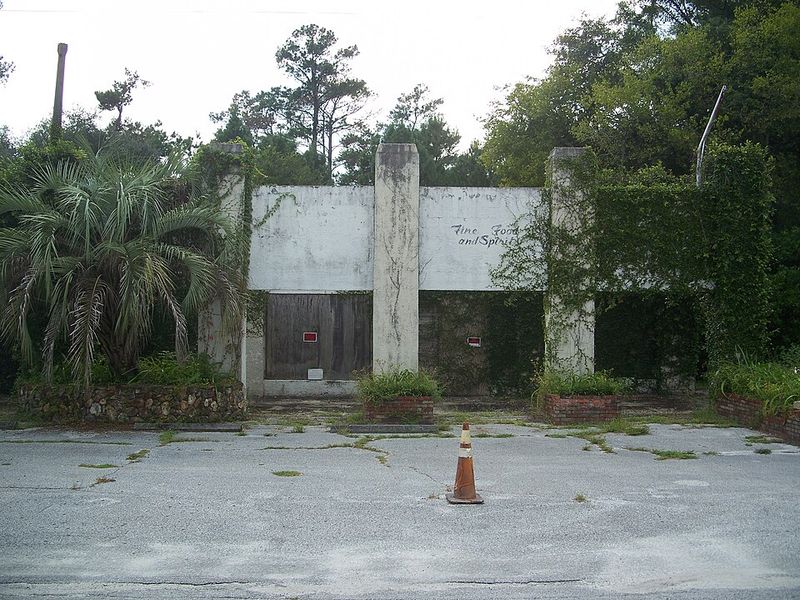
The Drew Mansion once presided over Ellaville like a statement piece, all ambition and ornament. Today, you find outlines: brick footings, steps to nowhere, and fragments that make your brain sketch the rest.
It is not a house tour. It is an imagination exercise with moss.
Walk slowly and you will notice symmetry baked into the remains. Corners hint at rooms, a threshold frames air, and the yard feels deliberately placed despite the wild.
It is haunting in a quiet, non-theatrical way.
The big question people ask is what truly sealed its fate. There was fire.
There was time. There was neglect and weather, the usual Florida cocktail.
The result is a ghost of a floor plan you piece together like a puzzle, respectful of the fact that lives unfolded here long before our curiosity showed up.
What’s Still Here Today (And What Nature Has Taken Back)
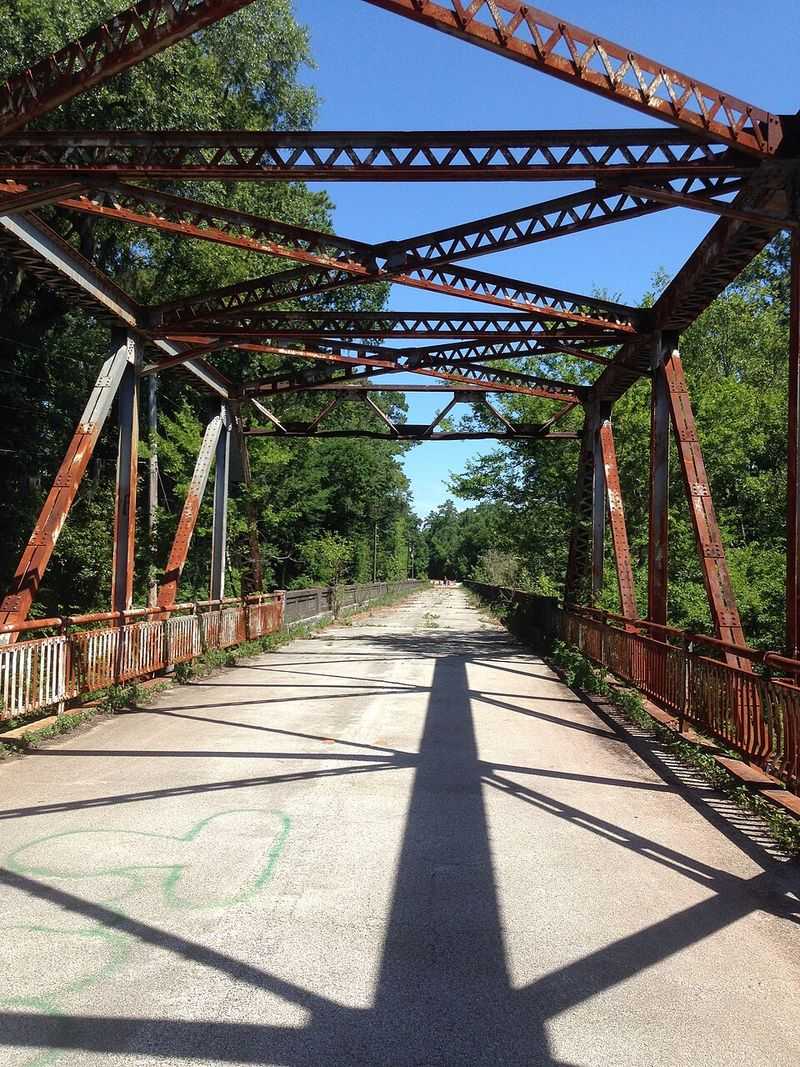
Expect foundations, partial walls, iron bits, the old road trace, and that photogenic bridge. There are cemetery markers tucked back from the river, and you might spot rail remnants hiding in leaf litter.
It is a mosaic, not a museum, and the joy is stitching it together.
Nature has aggressively edited the town. Roots drown curbs, palmetto swallows steps, and vines lace through every seam.
In wet seasons, low spots puddle and mosquitoes throw a party, so plan your timing.
What you will not find are intact storefronts or an easy narrative plaque on every corner. Ellaville asks you to explore with attention, to read the ground the way you read a diary.
Keep your eyes tuned for straight lines and right angles. When geometry appears in the wild, it usually means people were there first.
The Two-Rivers Setting That Makes This Ghost Town Extra Eerie
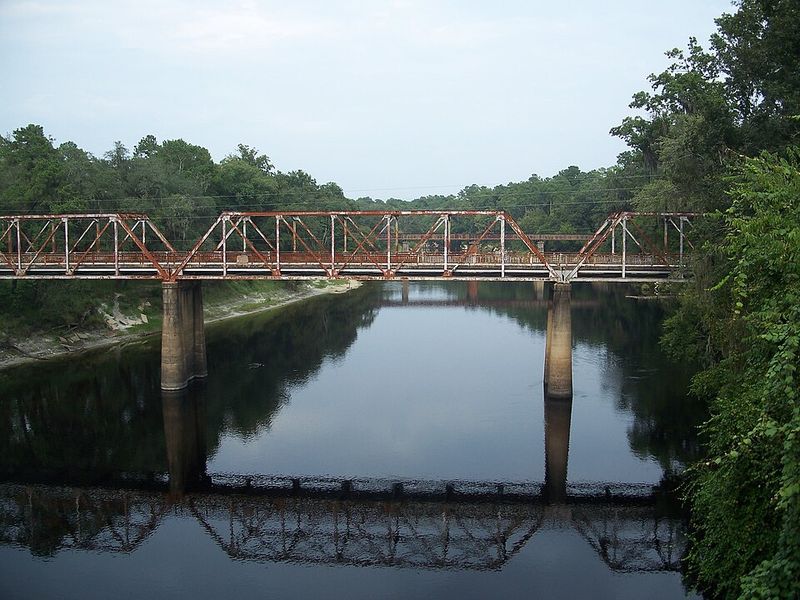
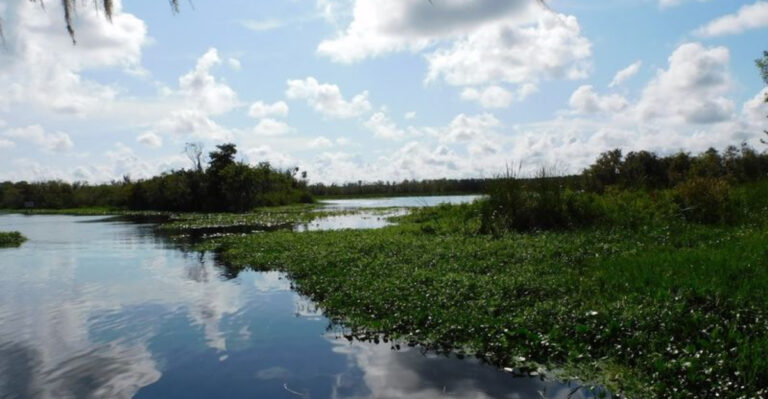
Stand on the overlook and watch the Suwannee and Withlacoochee press together like two ideas trying to agree. The water wears that tea-stained color from tannins, making reflections look older than they are.
On still mornings, a thin fog floats and muffles everything.
Rivers are great storytellers. They bring logs, silt, and stories downstream, then quietly take towns back when industry leaves.
At Ellaville, the confluence feels like a stage where past and present share lines.
Listen for woodpeckers and distant traffic fading to a hush. You will understand why a mill thrived here and why floods complicated the future.
The eerie is not jump-scare spooky. It is the sense that the landscape has a memory and you are walking through it, politely, while the current handles the punctuation.
The Creepiest Sights to Look For (Without Trespassing)
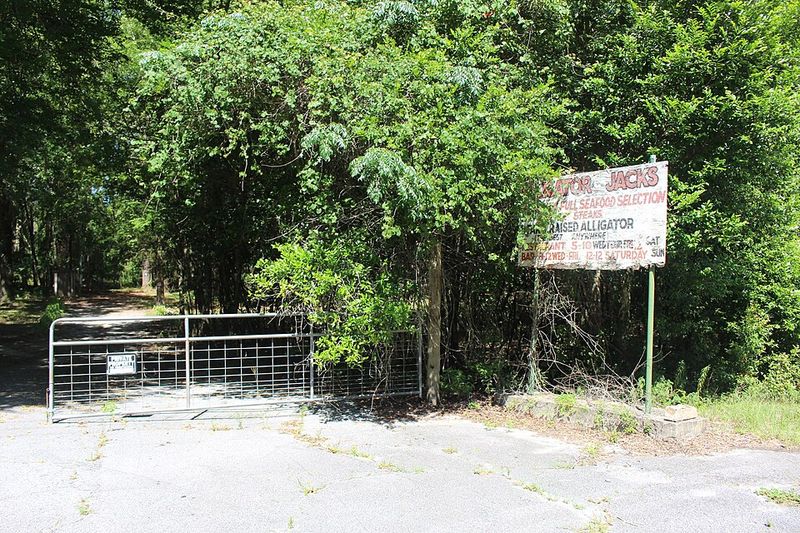
Keep an eye out for half-buried gears, lonely steps that stop at air, and fence posts leaning like tired sentries. The small cemetery can feel especially hushed beneath live oaks.
Read names softly and leave everything exactly as found.
In the brush, square holes in the ground may outline former piers or footings. Metal shards flash in leaf litter after rain, so watch your step and your dog’s paws.
The creepiest part is how ordinary objects become ominous when detached from purpose.
Skip any structures beyond barriers, even if curiosity aches. Stability is not guaranteed, and citations ruin adventures.
Instead, frame photos through branches, catch late-afternoon shadows on brick, and let the forest do the lighting. You will get the spine-tingles without crossing lines, which is the right kind of haunted.
How to Visit Ellaville Safely and Responsibly
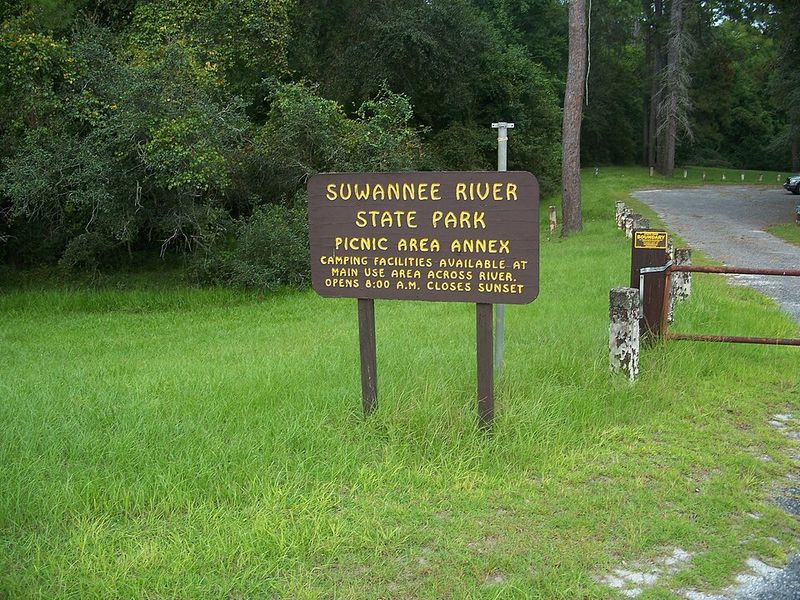
Start at Suwannee River State Park’s official trailheads, sign the map board if available, and stick to blazed routes. Wear real shoes, not flip flops.
The ground is rooty, sometimes slick, and snakes like warm afternoons.
Pack water, a small first-aid kit, and a flashlight if you are chasing golden hour. Tell someone your plan because signals drop.
Respect any fences or closed signs. They are there for your safety and to protect fragile remains.
Leave No Trace is not a suggestion. Do not move bricks, chalk stones, or pocket hardware.
These crumbs are the town’s archive. A respectful visit ensures others get the same eerie discovery later.
If you bring a dog, leash up and carry bags. The ghosts do not clean up after you, and rangers should not have to either.
Best Time to Go + What to Bring for a Comfortable Explore
Cooler months are friendliest. Late fall through early spring gives you fewer bugs, lower humidity, and clearer sightlines through the understory.
After heavy rain, sections puddle and trails can feel gummy.
Bring water, breathable layers, and real socks. Toss in insect repellent, sunscreen, and a small rain shell.
A paper map or downloaded offline map helps when the trees eat your bars. Camera gear shines near golden hour, but headlamps keep the exit mellow if you linger.
Footing matters, so go with grippy shoes. If you are sensitive to mosquitoes, a head net is not overkill in shoulder seasons.
Snack-wise, salty beats sweet in the heat. There is nowhere to buy anything inside the park, so prep your kit in town, then enjoy the silence out here.
Turn It Into a Day Trip: Nearby Stops Around Suwannee River State Park
Make it a full loop. Start with Ellaville’s ruins, then wander the Suwannee River bluffs for big-sky views.
If water levels allow, add a quick paddle segment from a nearby launch. The tannin water glows like cola under sun.
Refuel in Live Oak or Madison with a no-frills plate and sweet tea. If springs call your name, detour to the region’s clear-blue gems for a rinse and reset.
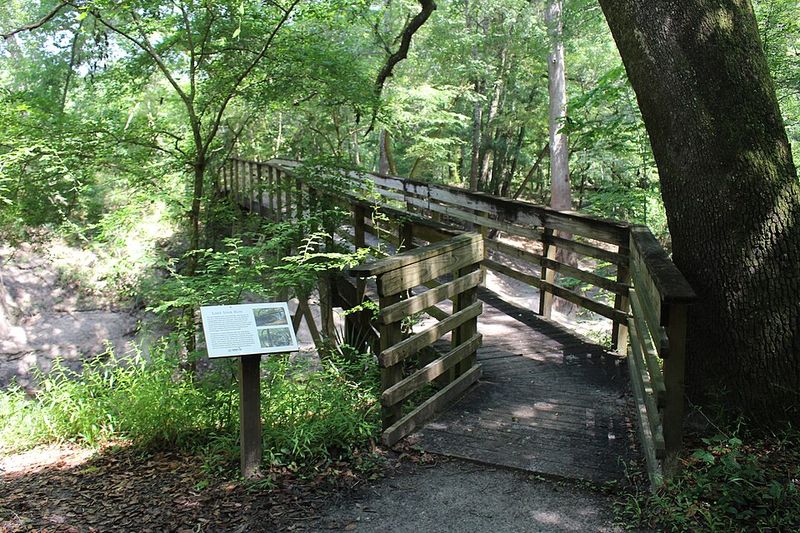
Back at the park, the Earthworks and Lime Sink trails change up the scenery fast.
End at the confluence overlook for sunset when the rivers go mirror-still. Bring a towel, extra snacks, and dry sandals in the trunk.
It is an easy, satisfying North Florida day that mixes history, forest therapy, and road-trip freedom without burning half your weekend.