This Florida Park Takes You 120 Feet Underground Into a Tiny Hidden Rainforest
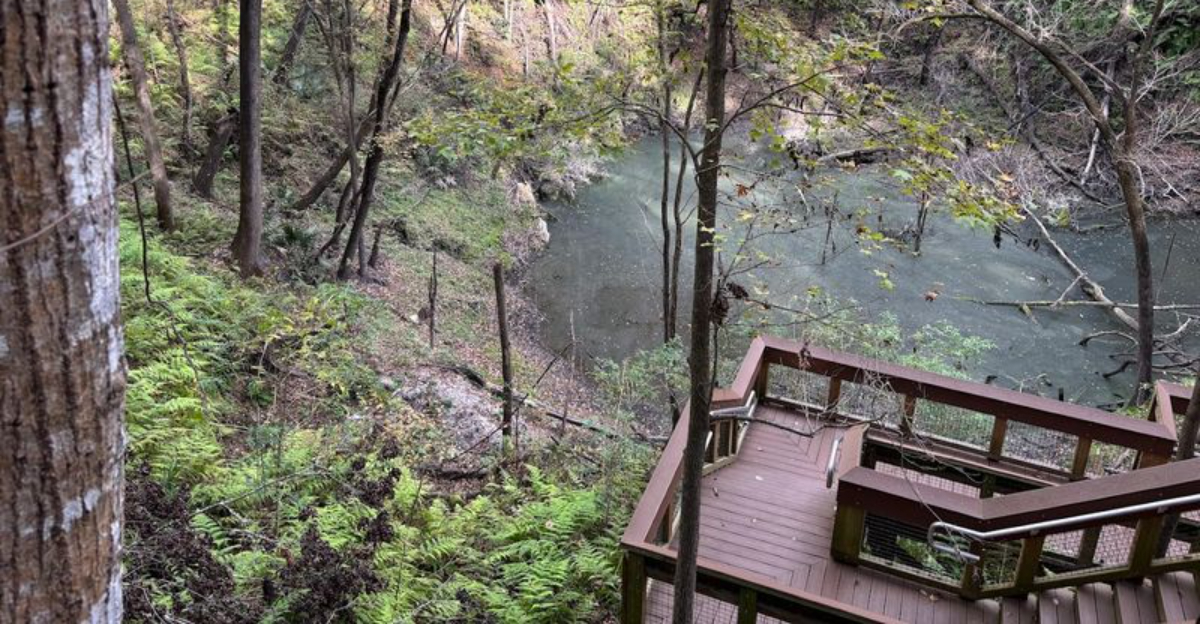
Hidden inside Gainesville sits a staircase to another world. Descend 120 feet into Devil’s Millhopper Geological State Park and step into a cool, lush mini rainforest. Waterfalls whisper, ferns glow, and the city melts away in minutes.
Here is exactly how to make the most of this small but unforgettable Florida escape.
1. The Sinkhole Descent
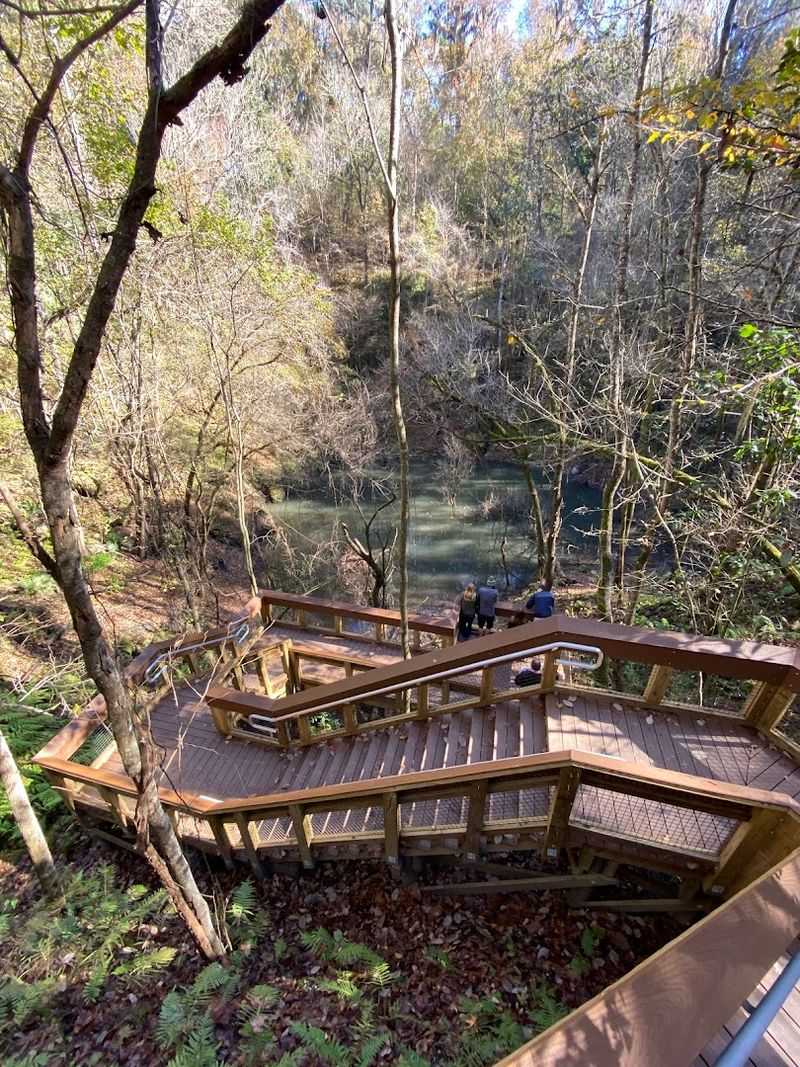
Step onto the boardwalk and you feel the air change. As you descend into the sinkhole, humidity rises and the soundtrack shifts to water whispers. Landings give you breathers to admire ferns gripping limestone and twisted roots.
By the lowest platform, the city feels far away. It is like entering a hidden room beneath Gainesville, cool and dim even in summer.
You will spot tiny rivulets after rain, feeding that miniature rainforest vibe. Interpretive signs explain the geology and the three streams that disappear underground. Pause, listen, and let the drip and leaf rustle reset your pace.
Then turn for the climb, steady and rewarding, with railings and frequent landings. Take it slow and you will savor the return as much as the descent.
2. Boardwalk And Stairs: Effort Made Easy
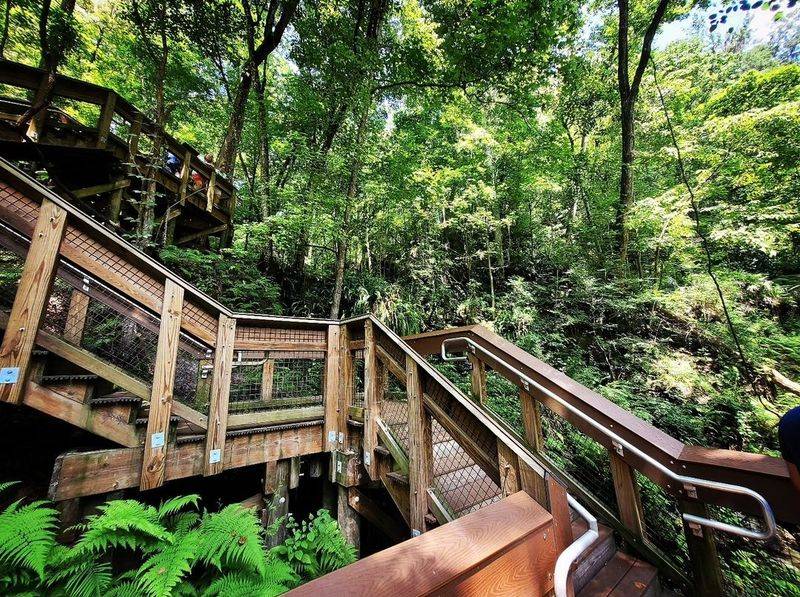
Those famous stairs are part workout, part scenic overlook tour. There are around 132 steps one way, broken by sturdy landings with benches on top trails nearby. Railings help you keep a comfortable rhythm, and the grade feels manageable for most visitors.
If stairs are not your thing, the rim trail offers an easy, mostly flat loop with shady benches.
Take breaks, drink water, and watch your footing when leaves blanket the treads. After rain, sections can feel slick, so slower is smarter. I like pausing at mid levels to listen for owls and dripping water.
If you use a stroller or wheelchair, stick to the accessible areas around the visitor center and picnic spots. Either route gives you that forest mood without leaving Gainesville.
3. Mini Rainforest Microclimate
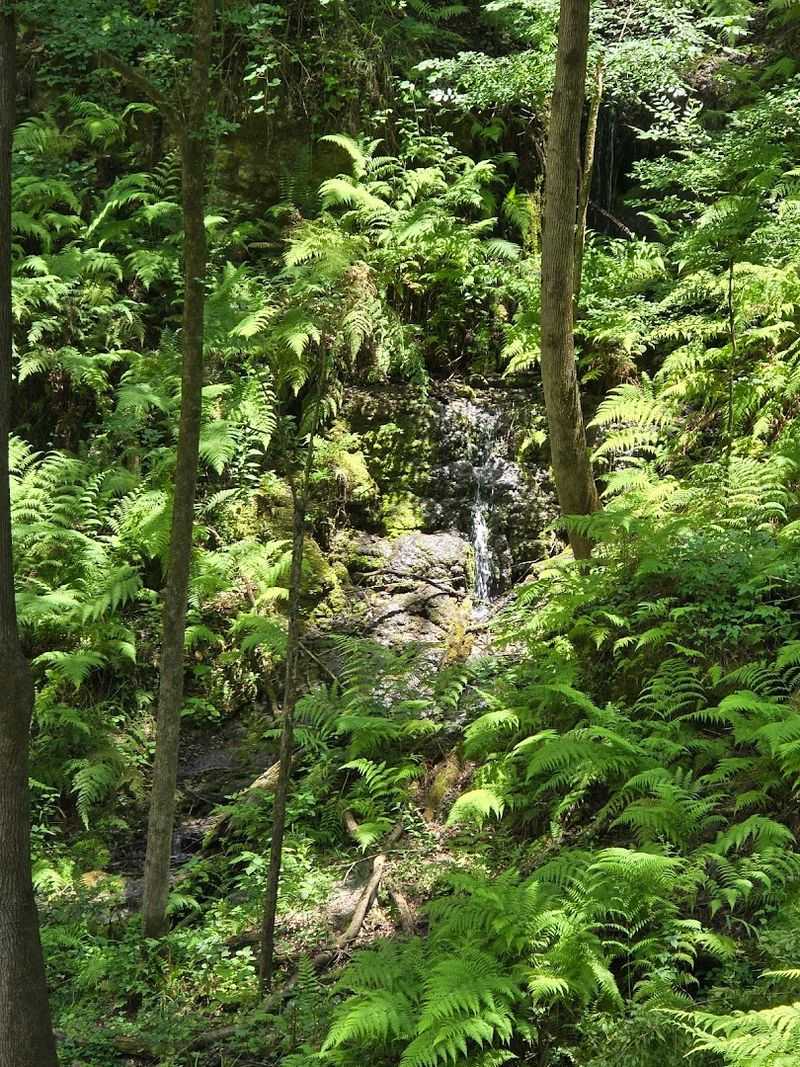
Devil’s Millhopper earns its rainforest nickname because the air down there is cooler and wetter than the streets above. Shade-loving plants thrive, and the limestone walls trap moisture like a bowl. Even on bright days, you might see mist hugging the greenery.
That temperature shift feels wonderful after a summer drive, and it explains why so much life concentrates inside the sinkhole.
You will notice mosses, liverworts, and ferns edging the steps. Look closely at seepage lines where water seeps from layers, staining rock in subtle bands. The result is a pocket ecosystem you can read like a living textbook.
Please do not pick plants or climb off the boardwalk. Keeping boots on the wood keeps this rare microclimate healthy for the next curious visitor.
4. Seasonal Waterfalls And Vanishing Streams
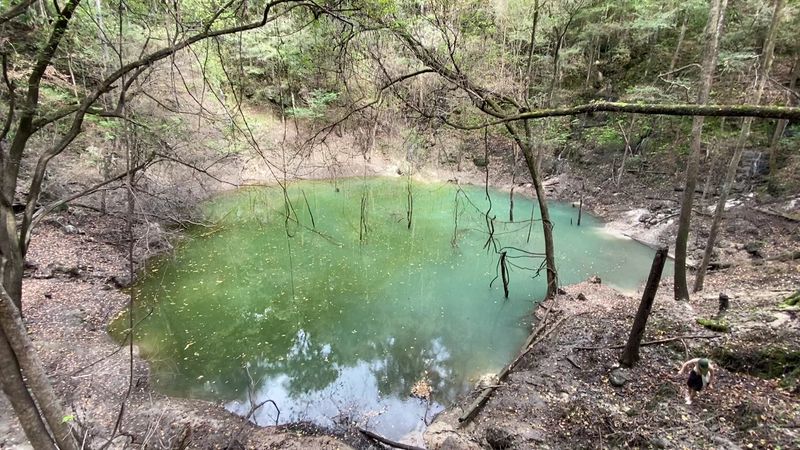
Three small streams feed the sinkhole, appearing as gentle waterfalls after good rain. Their music changes with the seasons, from lively trickles to quiet drips during drought. I like to visit after a storm when the ledges glow and everything smells rinsed clean.
Even when water is low, stains on the rock tell stories of flow paths and time.
Stay on the platforms for the best vantage points and safer footing. Photos look richer under cloud cover, which softens harsh highlights on wet stone. Try recording a short video to capture the sound, then pocket your phone and simply listen.
Patience pays here. Give yourself a few quiet minutes and the tiny cascades begin to feel like a conversation with the earth.
5. Plants And Wildlife To Notice
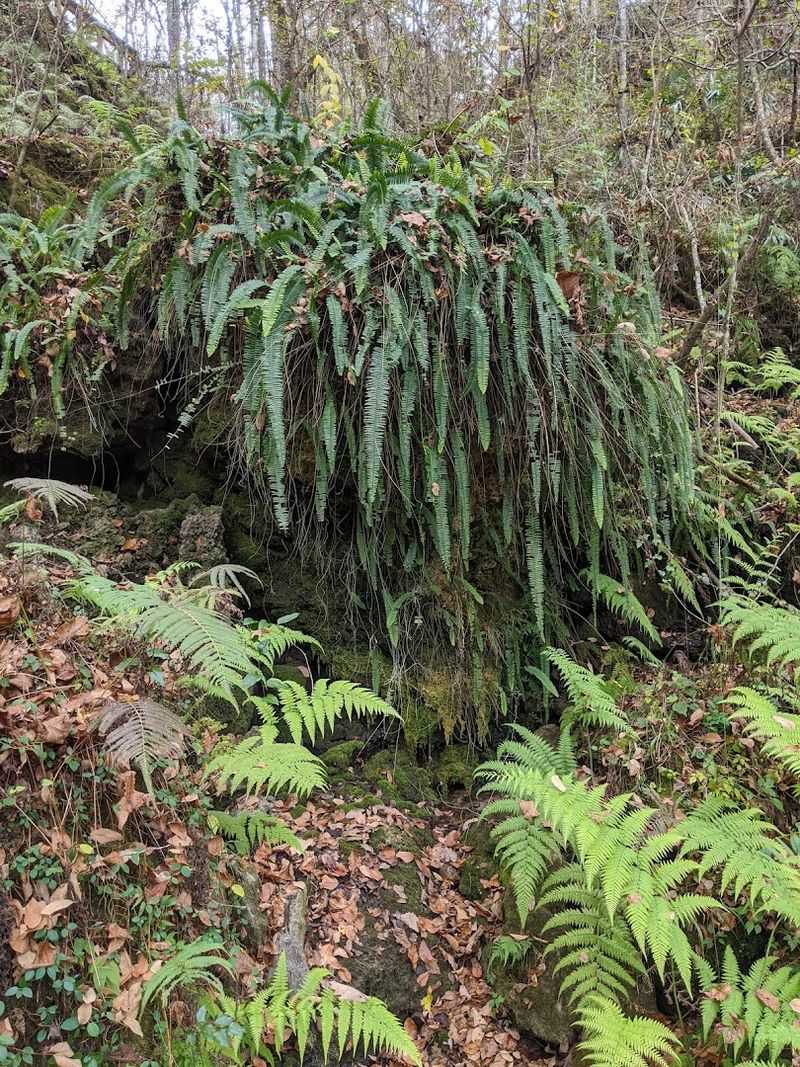
Bring curiosity for the small stuff. You might spot anoles flashing dewlaps, squirrels bouncing along branches, and barred owls calling in the canopy. Look for resurrection ferns that curl brown in drought and spring vivid green after rain.
Along the rim, sandhill flora mixes with hardwoods, while down below, moisture lovers steal the show.
Do not feed wildlife, and keep pets leashed to protect nesting and ground cover. Early mornings feel the most alive, with cooler air and fewer footsteps. If you enjoy plant ID, the visitor center displays help you connect names to textures.
Snap photos, but leave seeds, leaves, and logs undisturbed. That gentle respect keeps this pocket forest welcoming for the next wanderer.
6. Rim Trail, Picnic Spots, And Facilities
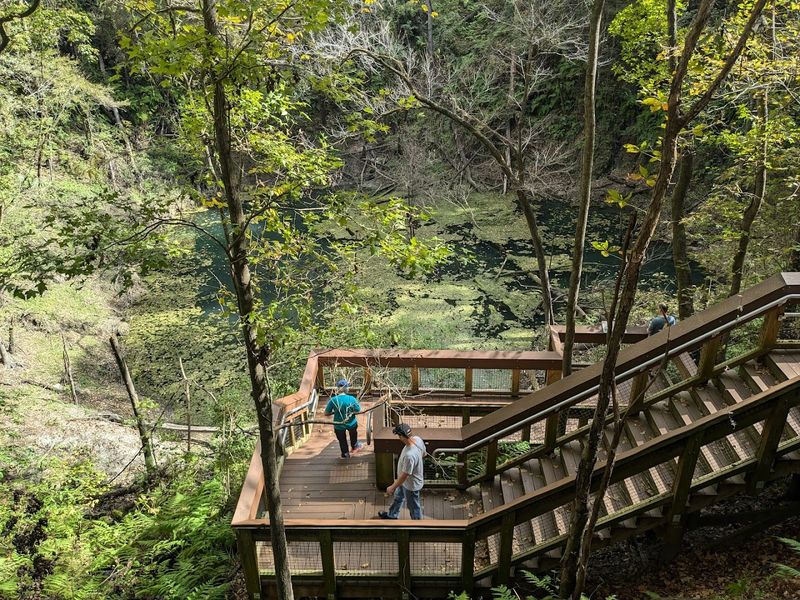
A short loop traces the rim for a half mile, offering peeks into the canopy and glimpses of the stairway plunging below. Benches dot the route so you can pause in shade. It is a pleasant leg-stretcher if you are not committing to the descent.
At the trailhead, picnic tables and grills make an easy lunch stop, and restrooms are clean.
Parking is straightforward, with plenty of space on most mornings. Pay the modest fee by phone using the posted QR code, or arrive with an annual pass. If you prefer guidance, weekend ranger-led walks dive into geology and history.
Otherwise, a self-guided visit gives you freedom to linger where the light feels magical. Either way, you will leave refreshed.
7. Timing, Fees, And Good Etiquette
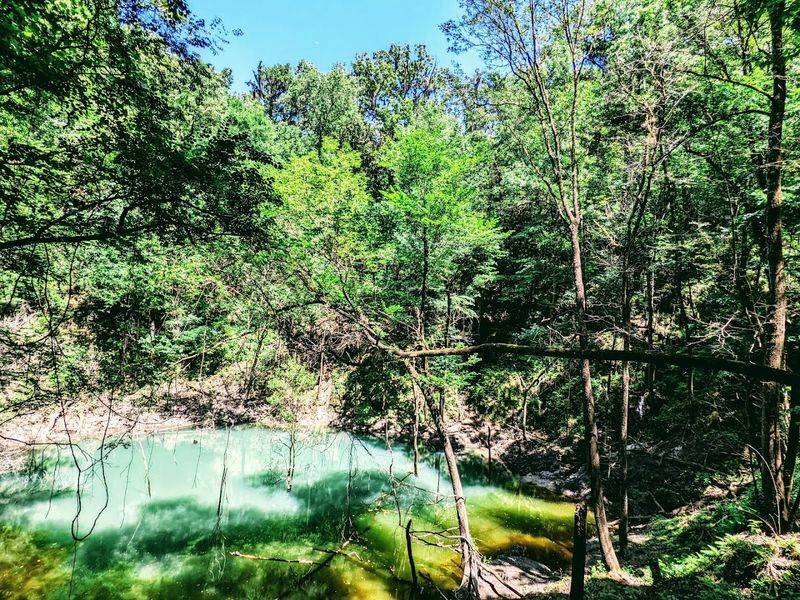
Plan an hour if you are moving casually, longer if you want to read every sign and take photos. Mornings offer cooler temperatures and softer light. After heavy rain, call ahead or check the park website for any closures.
Summer storms can roll in quickly, so pack water, a poncho, and shoes with grip. You will thank yourself on the climb.
Admission is typically four dollars per vehicle, which feels fair for upkeep of trails, stairs, and restrooms. Pay at the kiosk or via the QR code at the entrance. Stay on marked paths, keep voices low, and yield space on the stairs.
Rangers and signs are there to help, so bring questions. Treat the place kindly and it will treat you back.