At This Wild Florida Attraction, Humans Stay in Cages While Monkeys Roam Free
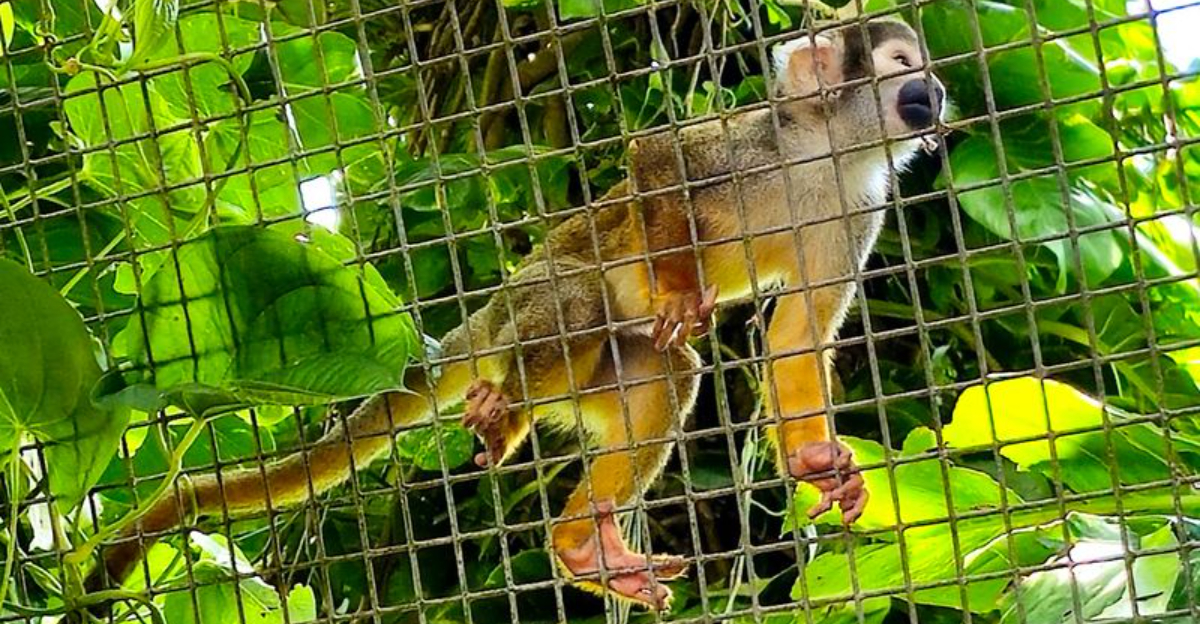
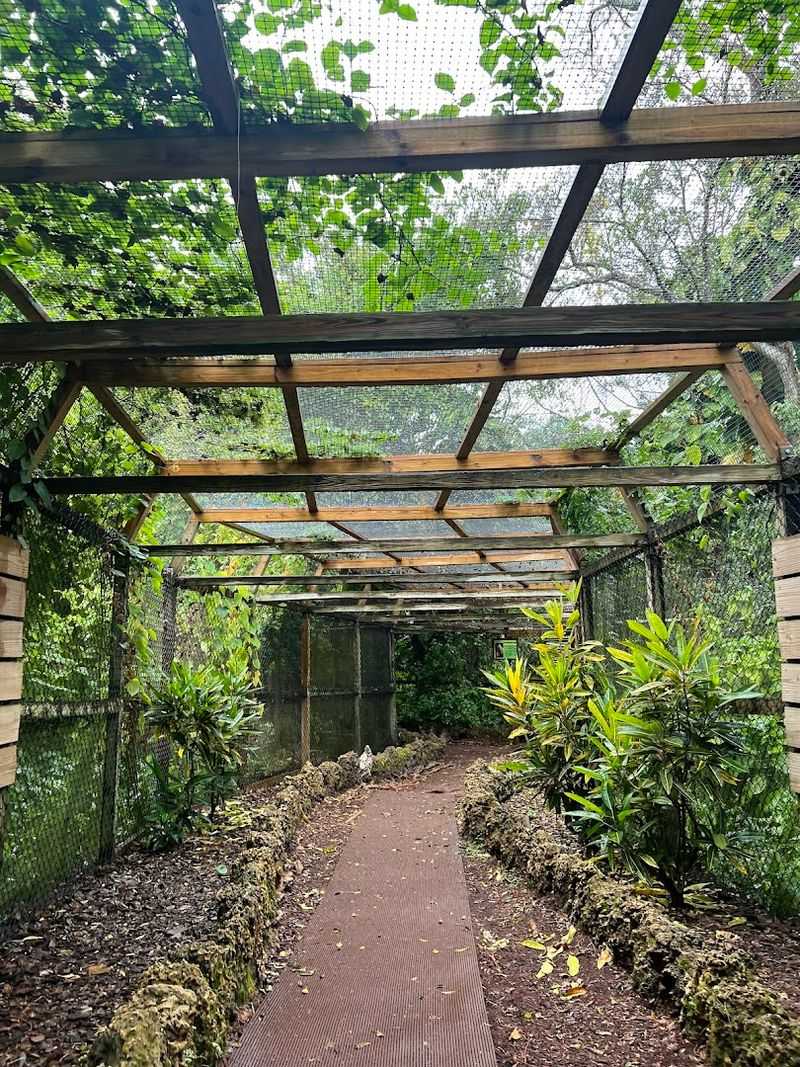
Ready to flip the zoo experience on its head? At Monkey Jungle in Miami, you stroll through cage-like tunnels while monkeys roam free overhead in a lush rainforest setting. It is equal parts thrilling and educational, with close encounters, lively shows, and chances to feed curious faces safely.
Come early, bring your sense of wonder, and get ready to see primates on their own terms.
1. Why Humans Walk in Cages Here
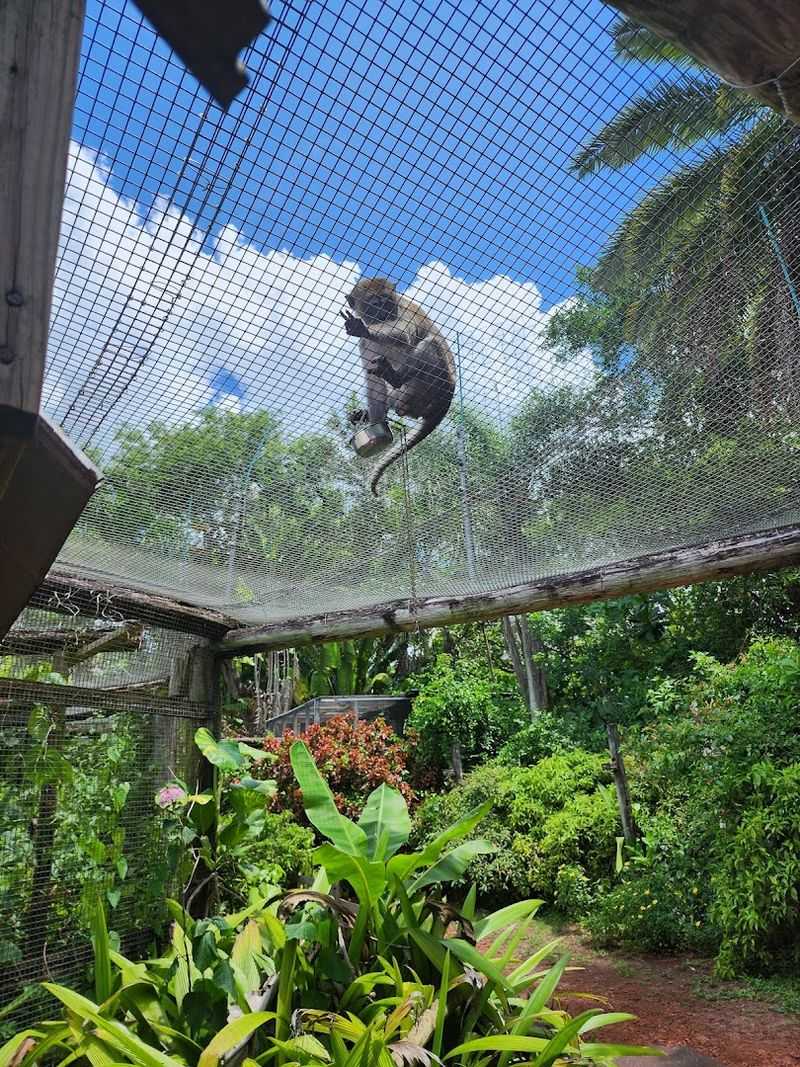
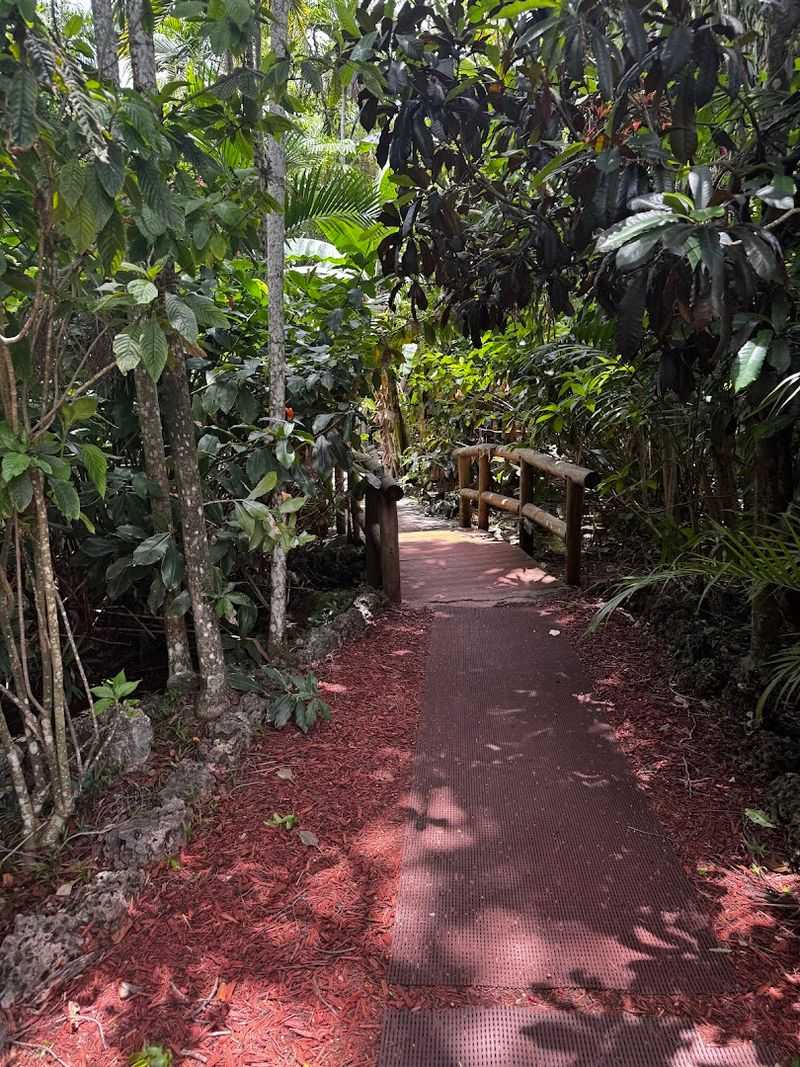
Monkey Jungle flips the zoo script. Here, you walk through sturdy mesh pathways while monkeys roam open habitats above and around you. It feels thrilling and a little surreal, like stepping onto their turf with a respectful buffer.
You still make real eye contact, hear rustling leaves, and watch social drama unfold without crowding them. The result is closer, kinder viewing that keeps stress low for the animals and safe for you.
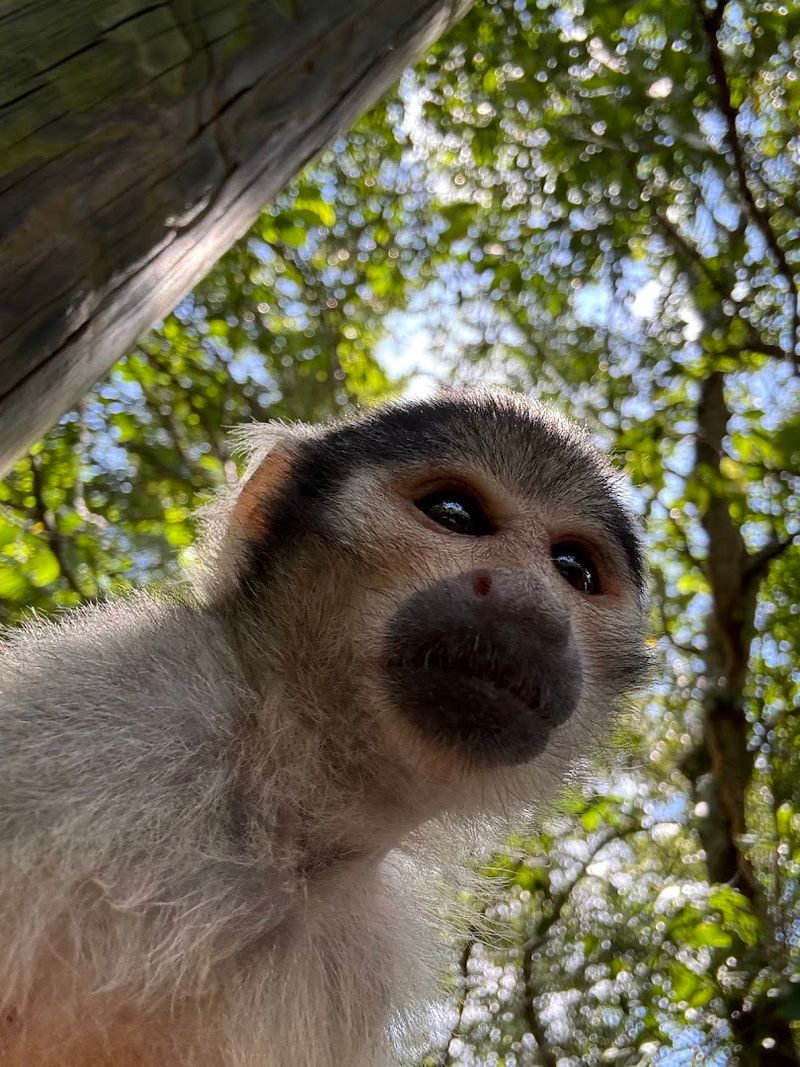
As you move along the cage-like tunnels, macaques dash across branches and squirrel monkeys peek down curiously. Guides explain why this layout matters for welfare and research. You keep fingers safe, they keep freedom of movement.
It is the rare attraction where the headline is simple truth: humans in cages, monkeys free.
2. The VIP Squirrel Monkey Encounter
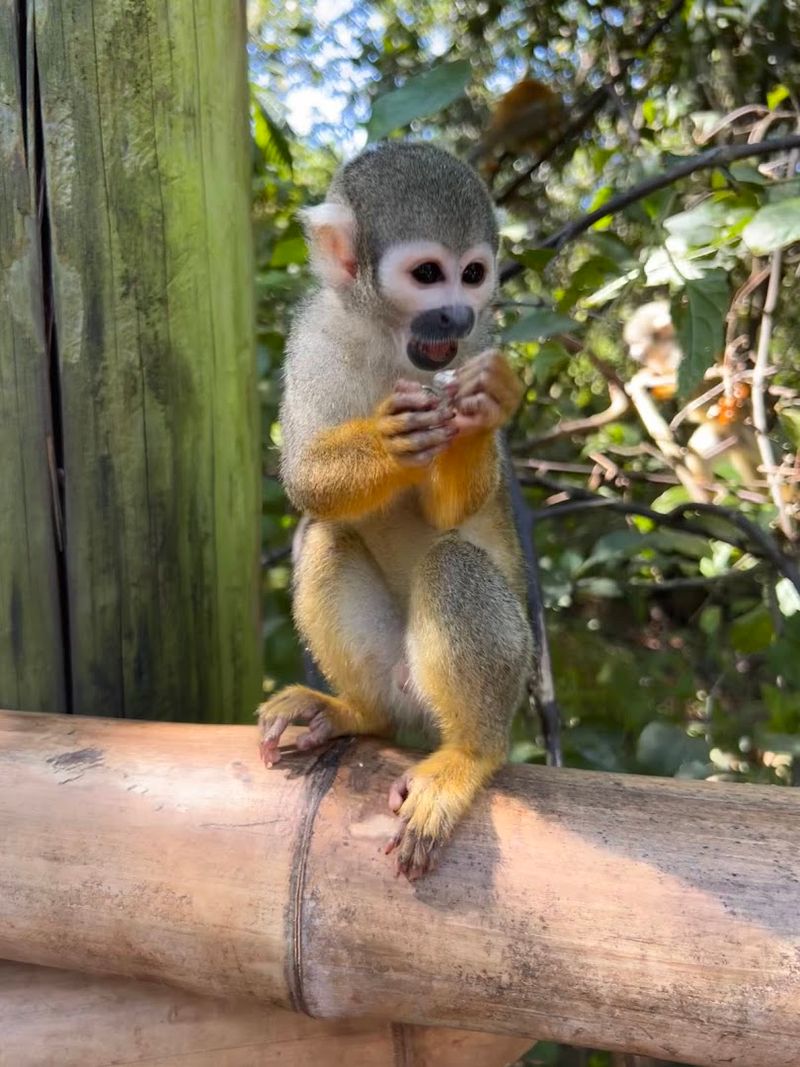
The up close encounter with squirrel monkeys feels like stepping into a tiny rainforest bubble. Book the guided experience, currently about $150 per person, and a small troop will hop near you, sometimes briefly landing on your shoulder or wrist. A keeper sets the tone, explains boundaries, and keeps everyone calm and respectful.
You will laugh, flinch, and grin as quick hands investigate treats and shiny zippers.
If that price is too steep, do general admission and still get great moments. The encounter adds intimacy, not the entire show. Staff often credits fees to upgrades the same day, so ask.
Groups are limited for safety, and sessions can sell out. Reserve ahead on busier weekends, or call the desk for availability.
3. Feeding Ritual: Bowls on Chains
Do not skip the little packs of raisins and sunflower seeds at check in. For a dollar or two, you get the key to the park’s most charming ritual. Slip treats into small bowls clipped to chains, then watch macaques hoist them hand over hand.
It is adorable and surprisingly orderly. You feed without fingers near teeth, and they work for their snacks like tree top pros.
This simple system turns you into an instant favorite. Try a few stations, because bold and shy personalities rotate through. Kids love seeing bowls rise and lower like tiny elevators.
Go slow, savor the faces, and take short videos, not nonstop clips. The magic is in quiet moments when a monkey pauses and studies you back.
4. Do Not Miss the Shows
Time your walk to catch the rotating presentations. Staff deliver lively talks at the monkey pool, the reptile corner, the Amazonian rainforest dome, and the aviary. You learn why mandrills bare colorful faces, how iguanas regulate heat, and what signals macaques trade across their seven acres.
The tone is friendly and fast, with room for questions and jokes. Even skeptical teens lean in when a keeper demonstrates training cues.
Shows run about every 30 minutes on busy days, but schedules can shift with maintenance or weather. Ask at the entrance for the day’s lineup and any closures. If something is down, prices may be discounted.
Do two loops of the park so you meet different troops at different times.
5. Who You Will Meet
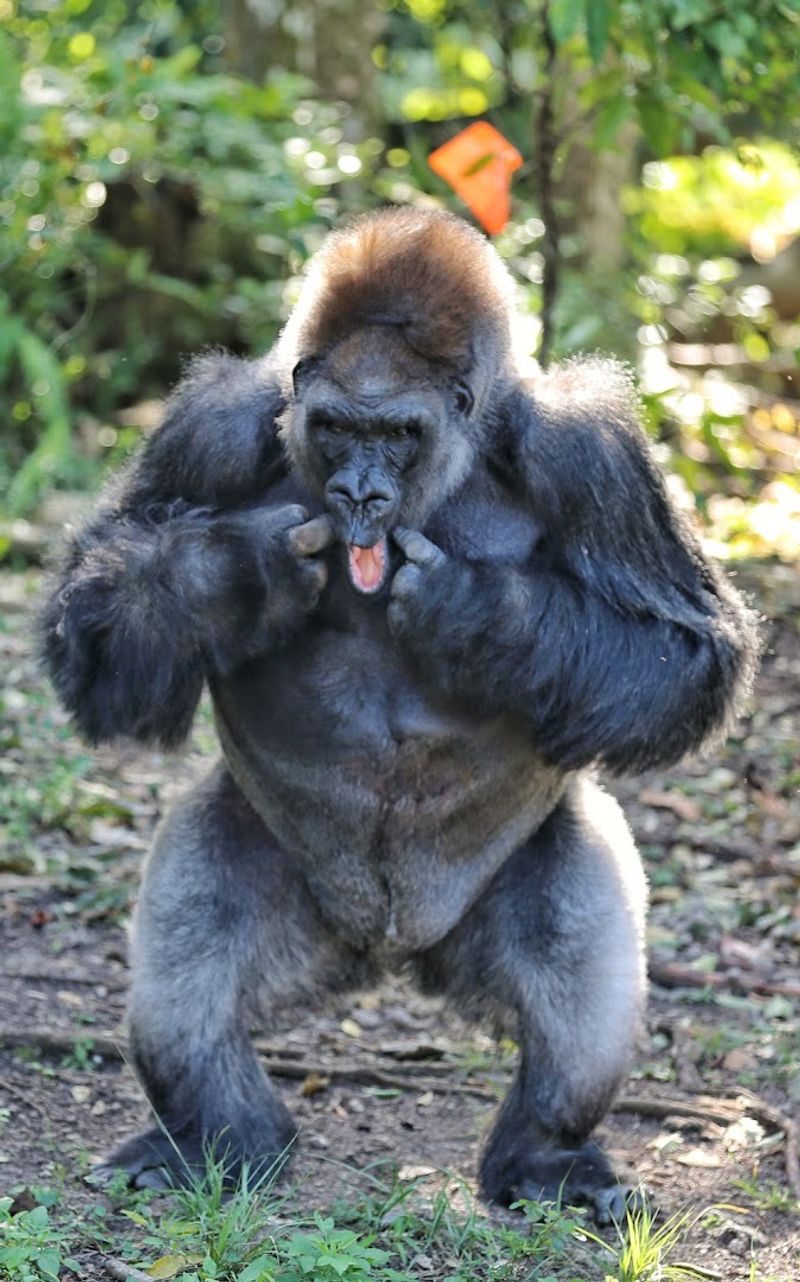
You will meet a cast of characters in this compact park. Crab eating macaques splash in the pool, squirrel monkeys zip like yellow sparks, and mandrills stroll with movie star confidence. Parrots squawk commentary while tortoises lumber through sun patches.
In the reptile area, keepers compare iguanas and snakes, busting silly myths. Everything feels close enough for detail, yet respectful of space, which keeps everyone relaxed.
Some sections may be under repair or temporarily closed, so expect a flexible route. The rainforest dome is humid and leafy, perfect for cameras that handle low light. Pause and listen for trills, chirps, and soft branch thumps.
You are not at a stadium show. You are eavesdropping on neighborhoods.
6. Plan Your Visit Like a Pro
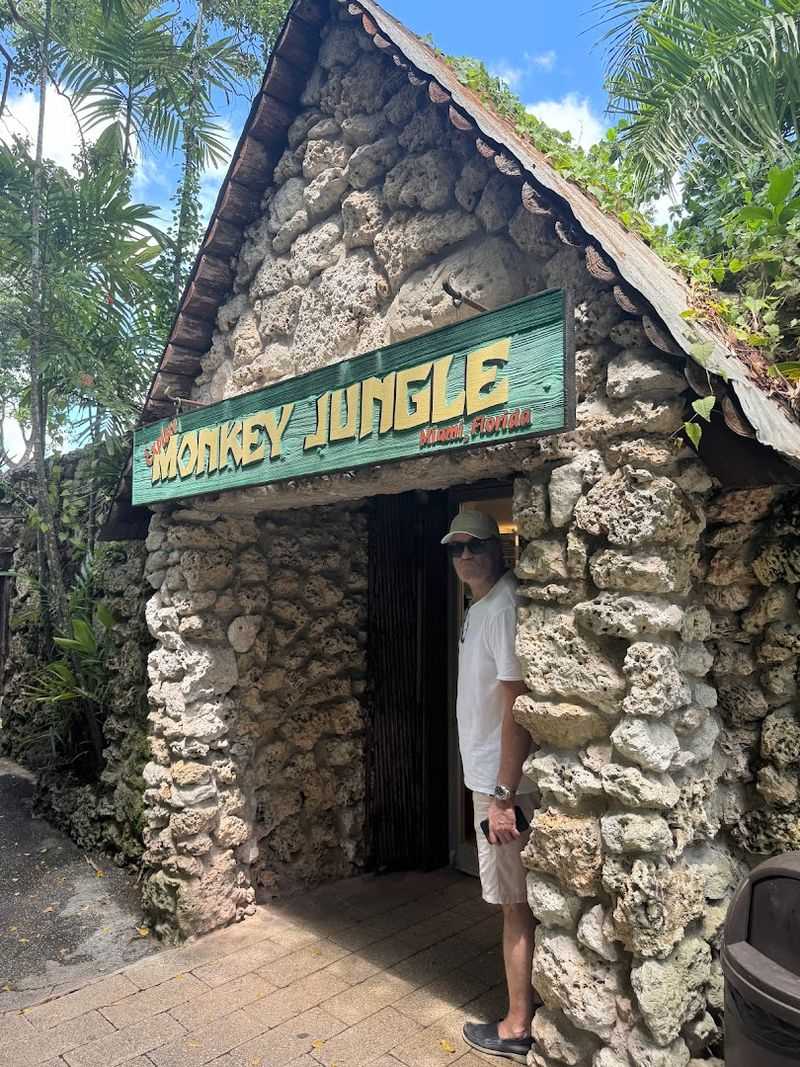
Plan smart and you get more magic. The park opens at 9:45 AM and closes at 4:15 PM daily, with ticket sales reportedly stopping around 3 PM. General admission has recently been about $20 for adults and $10 for children, with occasional discounts during repairs.
Parking is free. The address is 14805 SW 216th St, Miami, and the phone is +1 305-235-1611. Check the website for updates before you drive.
Arrive near opening for calmer paths and chattier guides. Budget 60 to 120 minutes for general admission, longer if you add the $150 squirrel monkey encounter. Bring water, sunscreen, and patience in case sections are closed.
Buy feeding treats at check in. You will be glad you did.
7. History, Hurricane Andrew, and Expectations
Monkey Jungle opened in 1932 and has weathered decades of storms, including catastrophic damage during Hurricane Andrew. Part of its charm is history you can feel in winding paths and vintage signs. Part of its challenge is aging infrastructure.
You will see areas awaiting repairs and hear frank talk about funding, welfare standards, and future upgrades. Reviews praise friendly staff and education, and sometimes note small aviaries or messy restrooms.
It is honest to arrive with balanced expectations. This is a quirky, historic wildlife park, not a massive zoo. You come for behavior, closeness, and thoughtful care, not polished theme park gloss.
Call ahead about closures, bring empathy, and support what feels good. The monkeys return that energy instantly.