15 Lesser-Known Spots Across Florida Worth Exploring In 2026
Florida is famous for its theme parks and crowded beaches, but some of the state’s most memorable experiences hide in places most travelers never think to visit. From underground cave systems to dramatic rocky coastlines and even whitewater rapids, these spots challenge everything you thought you knew about the Sunshine State. Whether you’re chasing rare wildlife, historic gardens, or landscapes that look nothing like typical Florida, these fifteen destinations offer something genuinely different for anyone ready to explore beyond the usual tourist trail.
1. Cedar Key
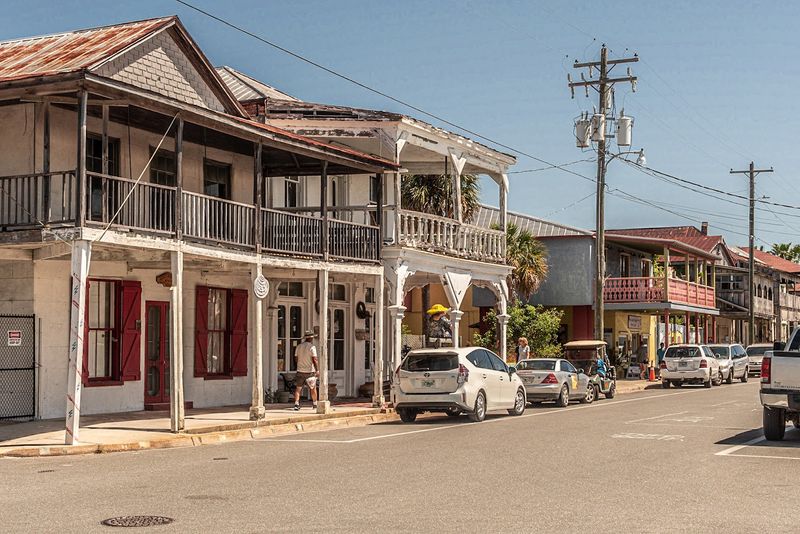
Cedar Key sits on Florida’s Gulf Coast like a time capsule from decades past. The working waterfront still defines daily life here, with commercial fishing boats tied up at weathered docks and seafood shacks serving catches that came in that morning. This is the Florida your grandparents might remember, before high-rises and resort chains took over the coastline.
The state park preserves much of the island’s natural character, with salt marshes and coastal hammocks that haven’t changed in generations. History runs deep here too, with a small museum documenting Cedar Key’s role in the timber and pencil industries that once drove the local economy. Walking the handful of streets that make up downtown feels refreshingly unhurried.
Plan to spend at least a full day exploring the island’s quirky shops, paddling the shallow flats, or just watching pelicans dive from one of the old piers. The sunsets over the Gulf are reliably stunning, and the lack of crowds makes them feel like your own private show.
2. Torreya State Park
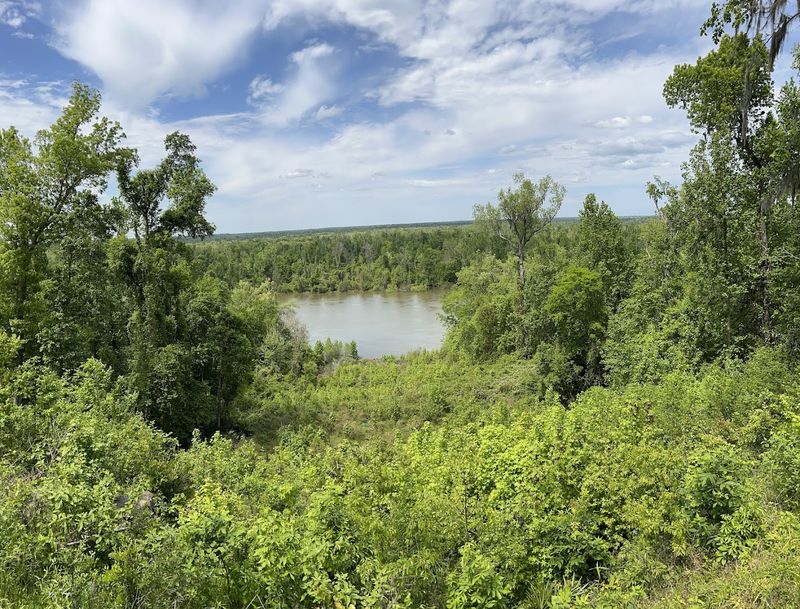
Most people picture Florida as relentlessly flat, which makes Torreya State Park feel almost surreal. High bluffs rise sharply above the Apalachicola River, creating views that seem lifted from Appalachia rather than the Sunshine State. The park protects one of Florida’s rarest trees, the Torreya, which clings to these slopes in numbers found almost nowhere else on Earth.
Hiking trails wind through surprisingly hilly terrain, with elevation changes that will remind your legs this isn’t your average Florida walk. The river views from the top of the bluffs stretch for miles, especially beautiful when morning mist hangs over the water. A historic plantation house adds another layer of interest for anyone who enjoys a bit of backstory with their nature.
Bring sturdy shoes and expect to work a little for the best overlooks. The park’s remote location in the Panhandle keeps visitor numbers manageable even on weekends, so you’ll likely have long stretches of trail practically to yourself.
3. Ravine Gardens State Park, Palatka
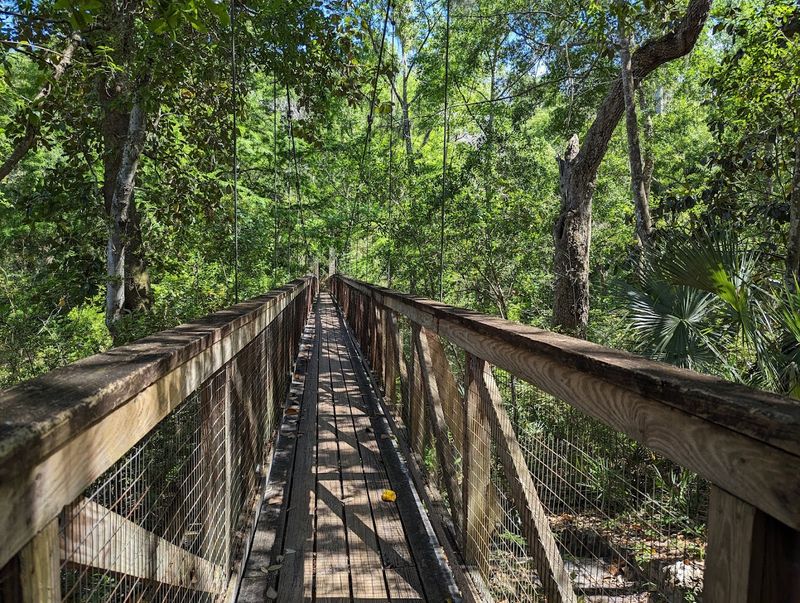
Ravines aren’t supposed to exist in Florida, yet Ravine Gardens proves otherwise with its dramatic network of steep-sided gullies cutting through the landscape. Built during the Depression era as a public works project, the gardens still feel like a secret discovery tucked away in the small town of Palatka. Suspension bridges sway gently as you cross from one side of the ravines to the other, offering unusual perspectives on the gardens below.
The azaleas steal the show in spring, but the park rewards visits year-round with its unique topography and shade-drenched paths. Brick walkways and stone staircases wind down into the ravines, where the temperature drops noticeably and the atmosphere turns almost mystical. It’s the kind of place that feels worlds away from Florida’s typical beach-and-palm-tree scenery.
Photography enthusiasts will find endless angles to work with, especially when light filters through the tree canopy. Pack water and take your time exploring the various trails that connect different sections of the garden system.
4. Dry Tortugas National Park
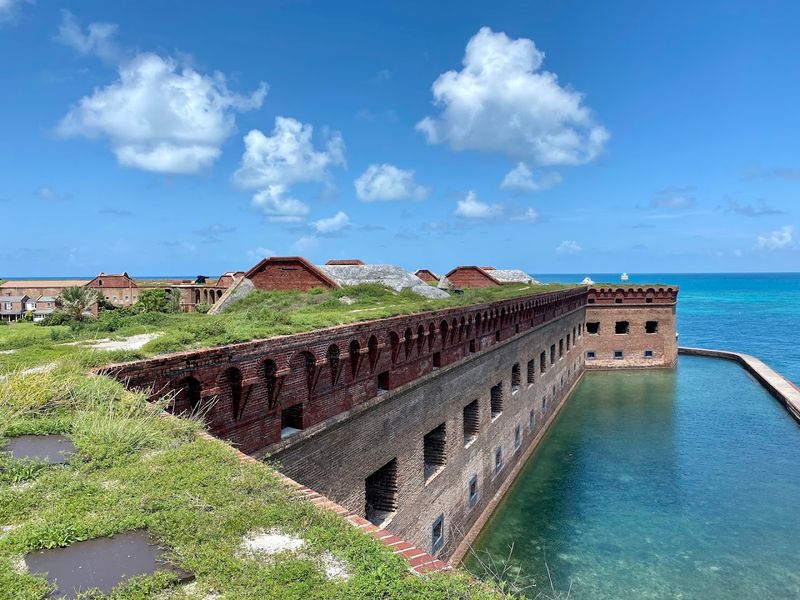
Reaching Dry Tortugas requires either a long boat ride or a seaplane flight, which immediately sets it apart from most Florida destinations. The effort pays off the moment you see Fort Jefferson rising from impossibly clear turquoise water, surrounded by nothing but ocean and sky in every direction. This is one of America’s most remote national parks, and that isolation preserves an experience that feels genuinely special.
Snorkeling around the fort reveals coral gardens and tropical fish that seem more Caribbean than Florida. The massive brick fortress itself tells stories of Civil War prisoners and yellow fever outbreaks, while seabirds nest in the walls and wheel overhead in huge numbers. Swimming and exploring the fort’s dark corridors and gun placements can easily fill an entire day.
Most visitors take the ferry from Key West, which allows about four hours on the island. Camping is possible for those who want to experience the park after day-trippers leave and stars fill the sky with zero light pollution.
5. Big Shoals State Park
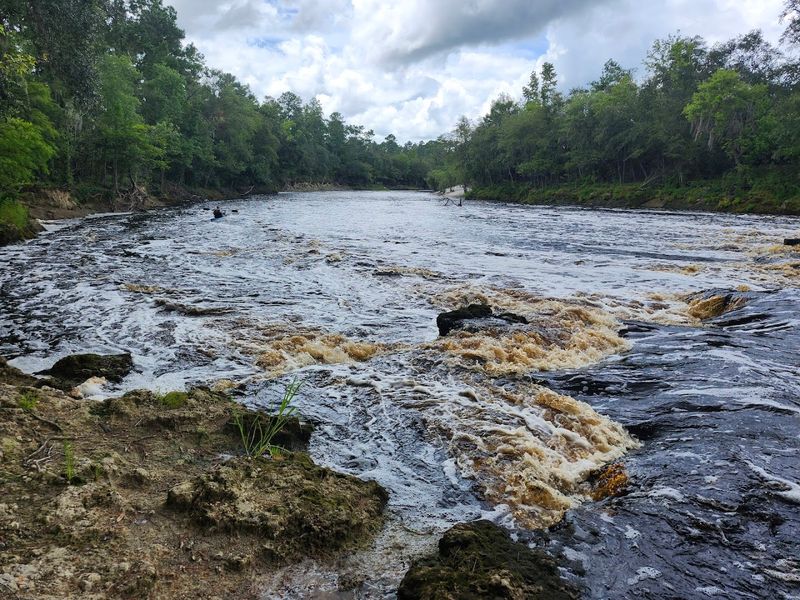
Whitewater rapids in Florida sound like a joke until you stand at the overlook at Big Shoals and watch the Suwannee River tumble over limestone shelves in genuine Class III rapids. These are the biggest rapids in the entire state, dramatic enough that paddlers come specifically to run them when water levels cooperate. The surrounding landscape adds to the surprise, with 80-foot limestone bluffs rising above the river in formations that feel completely out of place for Florida.
Trails follow the river and climb to viewpoints where you can watch kayakers navigate the churning water below. The geology here is unusual, with exposed rock and swift current creating habitats for species rarely found elsewhere in the state. Even when the rapids aren’t running at their most dramatic, the sheer novelty of the landscape makes the drive worthwhile.
Check water levels before planning a paddling trip, as conditions vary significantly with rainfall. Hikers will find the trails relatively easy but rewarding, especially the sections that hug the bluff edges.
6. Bok Tower Gardens, Lake Wales
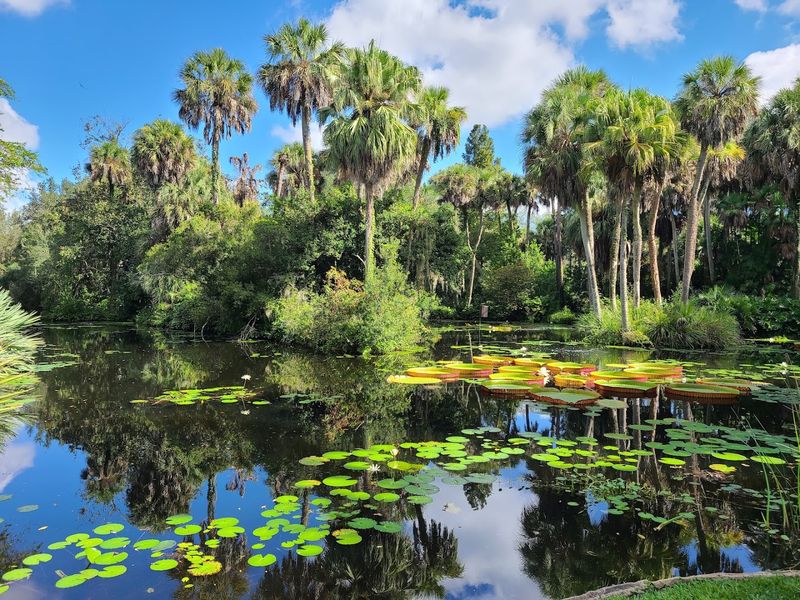
Bok Tower somehow remains underappreciated despite being one of Florida’s most beautiful cultural sites. The 205-foot singing tower rises from the highest point in peninsular Florida, surrounded by formal gardens that Edward Bok commissioned as a thank-you gift to his adopted country. Twice-daily carillon concerts fill the air with bell music that drifts across the landscaped grounds and native plant areas.
The gardens mix cultivated beauty with natural Florida ecosystems, offering both manicured flower beds and wild pine flatwoods within the same property. Walking the paths feels meditative, especially on weekday mornings when visitor numbers stay light. The tower itself is an architectural gem, covered in decorative tiles and sculptures that reward close inspection.
Current events for 2026 include concerts, exhibitions, and seasonal garden displays that add extra reasons to visit beyond the permanent collection. The on-site cafe and gift shop are worth checking out, and the nearby Pinewood Estate offers house tours for an additional fee. Plan at least two hours to properly explore the grounds.
7. Devil’s Millhopper Geological State Park, Gainesville
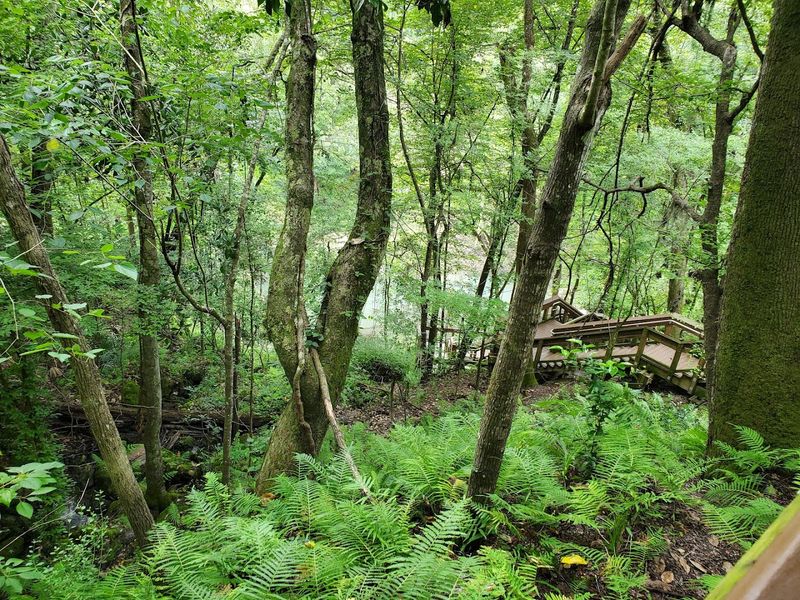
A 120-foot-deep sinkhole creating its own miniature rainforest ecosystem is not what anyone expects to find in North Central Florida. Devil’s Millhopper earned National Natural Landmark status for good reason, with small streams trickling down the steep walls and ferns, mosses, and other moisture-loving plants thriving in conditions completely different from the surrounding uplands. Wooden stairs descend partway into the crater, allowing visitors to experience the temperature drop and humidity increase as they go deeper.
The sinkhole formed when the limestone roof of an underground cavern collapsed, exposing layers of rock and fossils that tell stories reaching back millions of years. Looking up from the bottom provides a unique perspective, with the circular opening framing a patch of sky far above. The entire park is compact, making it an easy stop for anyone passing through Gainesville.
Interpretive signs explain the geology and ecology throughout the descent. The stairs involve a moderate climb back up, but nothing too strenuous for most visitors. Early morning visits offer the best light for photography.
8. Falling Waters State Park, Chipley
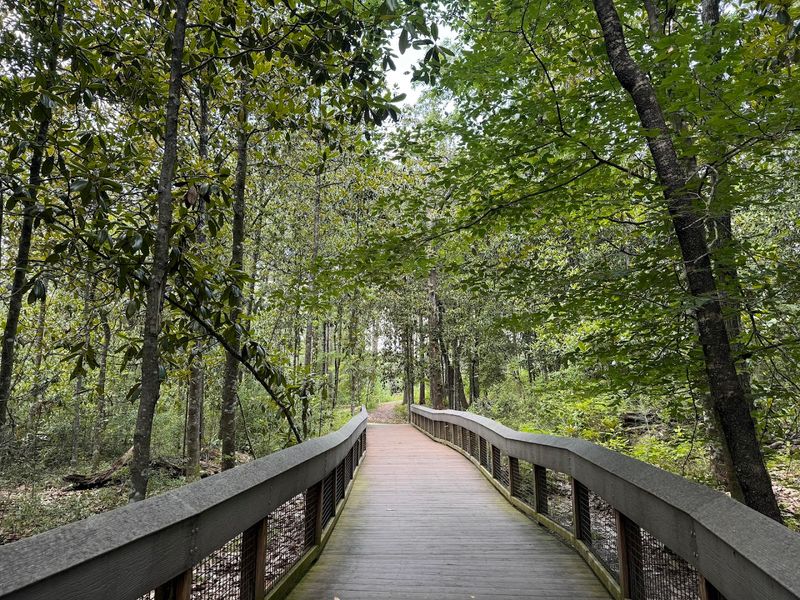
Florida’s tallest waterfall drops 73 feet into a cylindrical sinkhole at Falling Waters State Park, creating one of the state’s most photogenic natural features. The waterfall doesn’t always flow at full strength, depending on recent rainfall, but even a modest flow creates an impressive sight as it disappears into the dark opening below. A boardwalk and observation platform let you view the falls from multiple angles, with interpretive signs explaining the karst geology that created this unusual feature.
The surrounding park protects beautiful longleaf pine habitat dotted with additional sinkholes and old-growth trees. Trails wind through the forest, offering easy walks that showcase the Panhandle’s distinct ecosystems. Picnic areas and a small lake add options for families wanting to make a half-day of their visit.
The park’s location in the Panhandle means it stays relatively quiet even during peak Florida tourism season. Bring a camera and plan to spend time at the main overlook, as the play of light on the falling water changes throughout the day.
9. Marjorie Kinnan Rawlings Historic State Park, Cross Creek
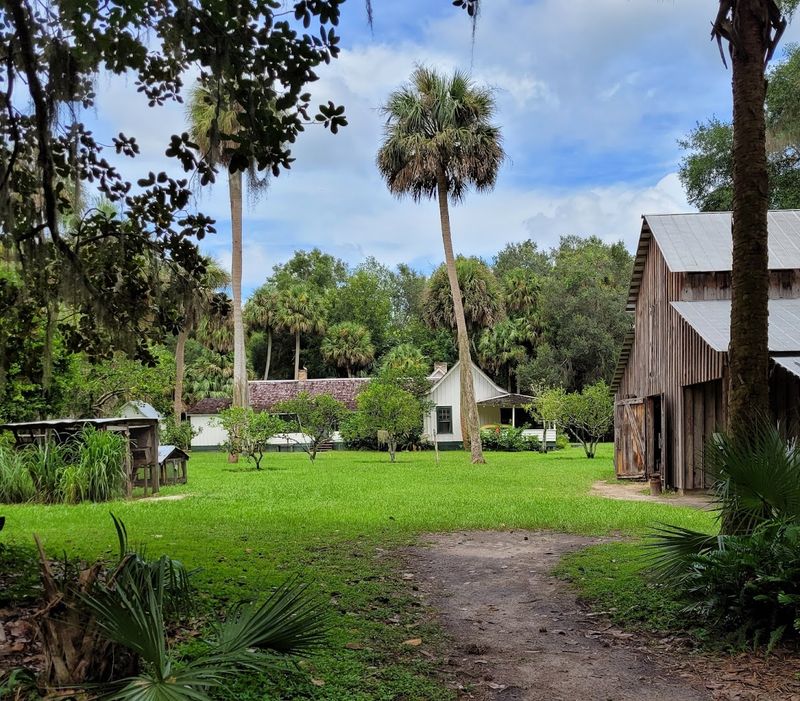
Stepping onto Marjorie Kinnan Rawlings’ preserved homestead feels like walking into the 1930s rural Florida that inspired her Pulitzer Prize-winning novel. The Cracker-style house sits surrounded by citrus groves and farmyard buildings that look ready for the author to return any moment. Rangers lead tours through the home, sharing stories about Rawlings’ life, her writing process, and the neighbors who became characters in her books.
The property captures a vanishing version of Florida, before air conditioning and development transformed the state’s interior. Chickens still scratch in the yard, and the dirt road leading to the house remains unpaved, maintaining the authentic atmosphere. The surrounding Cross Creek area retains much of its backwoods character, making the entire visit feel like a journey backward in time.
Tours run throughout most of the year, though the house closes for a period in late summer for preservation work. The grounds stay open even when house tours aren’t available, allowing visitors to explore the farmyard and walk the short nature trail. Literature fans will particularly appreciate the chance to see where The Yearling came to life.
10. Washington Oaks Gardens State Park, Palm Coast
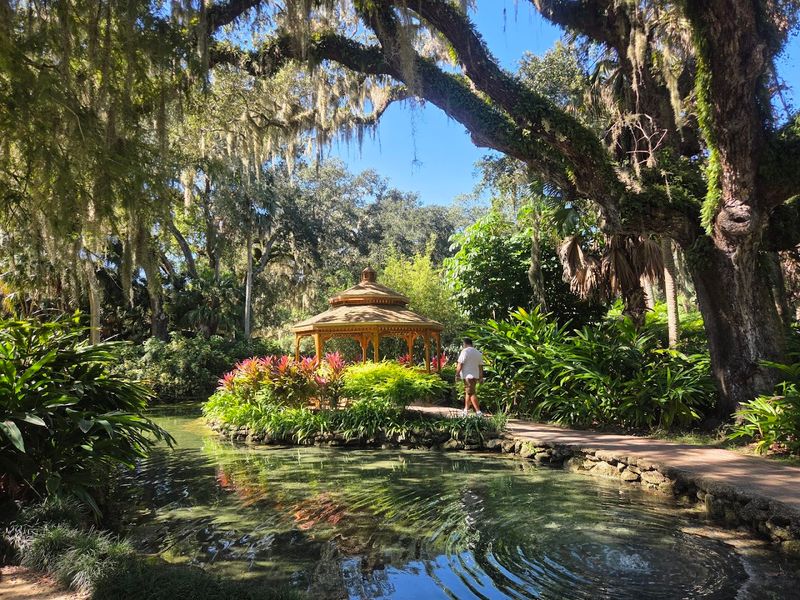
Washington Oaks combines two completely different Florida experiences in one park: formal gardens on the inland side and a dramatically rocky Atlantic shoreline that looks nothing like the state’s typical sandy beaches. The coquina rock formations create tide pools, natural sculptures, and photogenic coastline that changes character with every tide. Waves crash against the weathered limestone, sending spray into the air and creating an almost Mediterranean atmosphere.
Cross under the coastal highway to find the ornamental gardens, featuring azaleas, camellias, and reflecting pools surrounded by moss-draped oaks. The gardens feel particularly special in spring, though the coastal side rewards visits any time of year. Well-maintained paths connect different garden areas and lead down to the shore, making exploration easy even for visitors with limited mobility.
The park sits between Flagler Beach and St. Augustine, making it a perfect stop for anyone traveling A1A along the coast. Bring shoes suitable for walking on uneven rock if you plan to explore the shoreline thoroughly. Low tide reveals the most dramatic rock formations and the best tide pool viewing.
11. Koreshan State Park, Estero
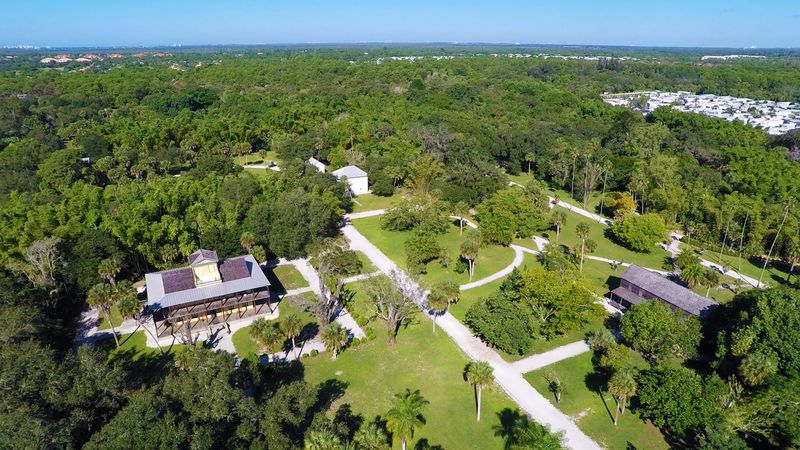
Koreshan State Park preserves the remains of a utopian community that believed the entire universe existed inside a hollow Earth, with us living on the inner surface. The Koreshan Unity settlement flourished here in the early 1900s, and several original buildings still stand along the Estero River, now restored and open for tours. Walking through the grounds feels like discovering a forgotten chapter of Florida history that’s stranger than most fiction.
The park offers exhibits explaining the community’s beliefs, their surprisingly advanced approach to gender equality, and the scientific experiments they conducted to prove their hollow-Earth theory. Beyond the historical interest, the park provides excellent paddling on the Estero River and hiking trails through pine flatwoods and riverside hammocks. The combination of natural beauty and unusual history creates an experience unlike any other Florida state park.
Rangers lead tours of the historic buildings on weekends, bringing the settlement’s story to life with anecdotes and artifacts. The park’s location near Fort Myers makes it an easy day trip, though the peaceful grounds invite longer visits for anyone wanting to paddle or camp overnight.
12. St. Marks National Wildlife Refuge
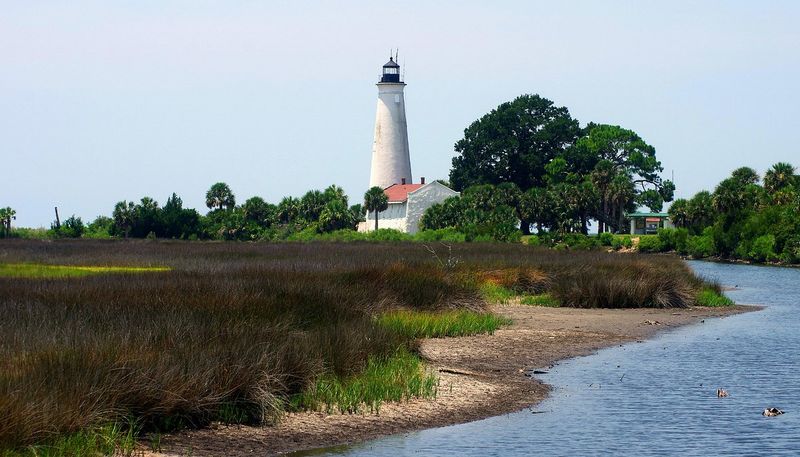
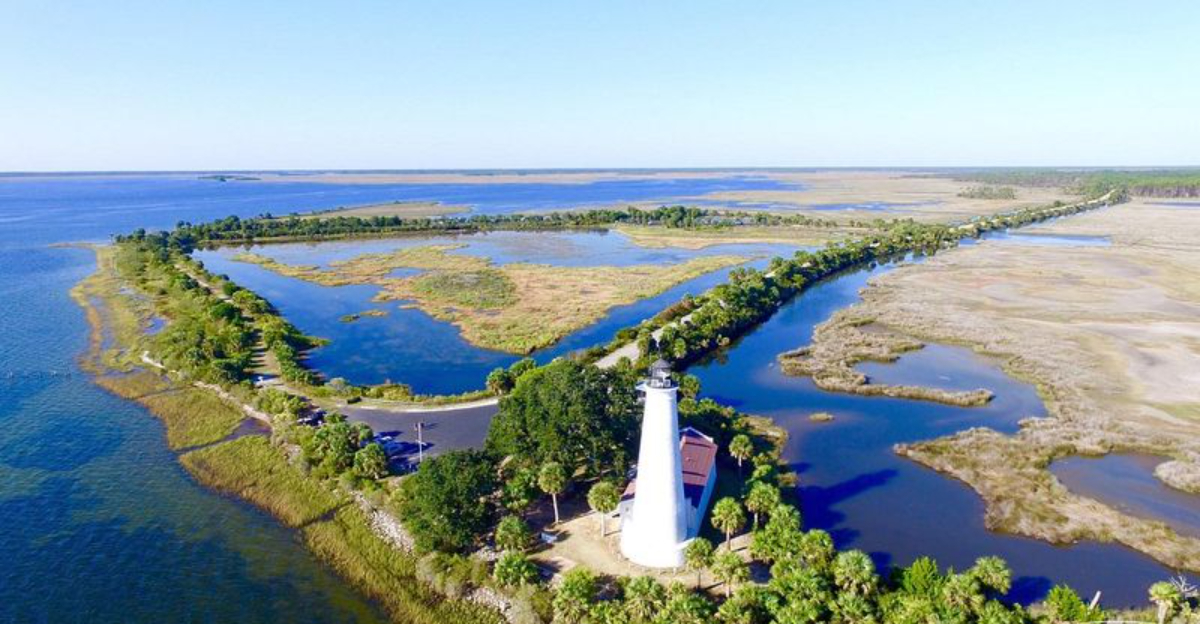
St. Marks National Wildlife Refuge sprawls across more than 86,000 acres of coastal marsh, pine flatwoods, and Gulf shoreline in the Big Bend region. The refuge is a birding hotspot, with migration seasons bringing thousands of warblers, raptors, and shorebirds through the area. A scenic drive leads to the historic St. Marks Lighthouse, standing watch over the confluence of the St. Marks River and the Gulf, surrounded by marshes that stretch to the horizon.
Trails and old roadbeds provide miles of hiking and biking opportunities, with observation platforms positioned for wildlife viewing across different habitats. Alligators sun themselves along the ditches, while ospreys and bald eagles nest in the tall pines. The refuge feels genuinely wild despite being less than an hour from Tallahassee, offering a sense of space and natural Florida that’s increasingly rare.
Visit during fall or spring migration for the best birding, though any season offers wildlife sightings. The lighthouse area makes a perfect picnic spot, with views across the water and usually a good breeze coming off the Gulf.
13. Kissimmee Prairie Preserve State Park
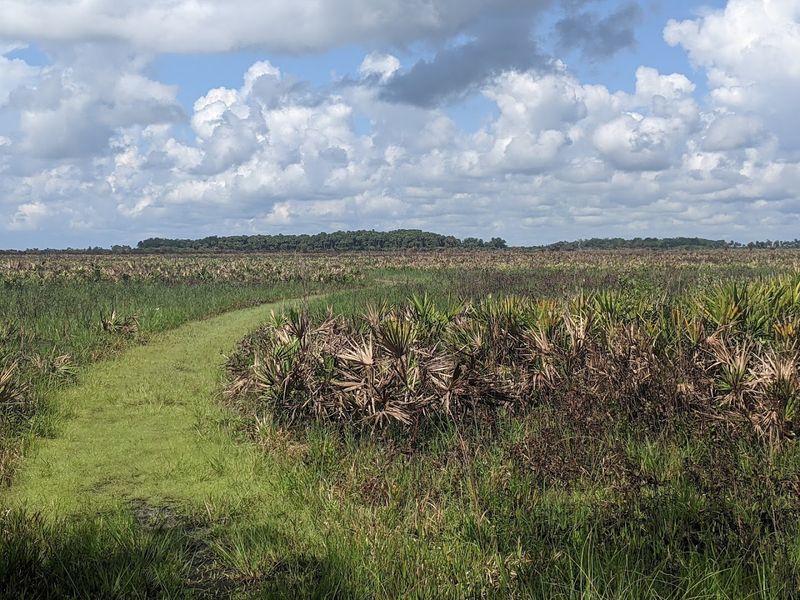
Kissimmee Prairie Preserve protects the largest remaining tract of Florida dry prairie, a landscape that once covered much of the state but now exists only in fragments. Standing in the middle of this enormous grassland, with horizons stretching in every direction and almost no trees breaking the view, challenges every preconception about Florida geography. The preserve supports rare species like crested caracaras, burrowing owls, and grasshopper sparrows that depend on this increasingly scarce habitat.
The park has earned recognition as one of Florida’s best spots for stargazing, with minimal light pollution allowing the Milky Way to blaze overhead on clear nights. Miles of trails and old ranch roads invite hiking, biking, and horseback riding through the prairie, with observation platforms positioned for wildlife watching. The sense of space here is almost Western, completely unlike the Florida of beaches and palm trees.
Primitive camping allows overnight stays for those wanting to experience the prairie at dawn and dusk when wildlife activity peaks. Bring plenty of water and sun protection, as shade is scarce and summer temperatures can be intense.
14. Florida Caverns State Park, Marianna
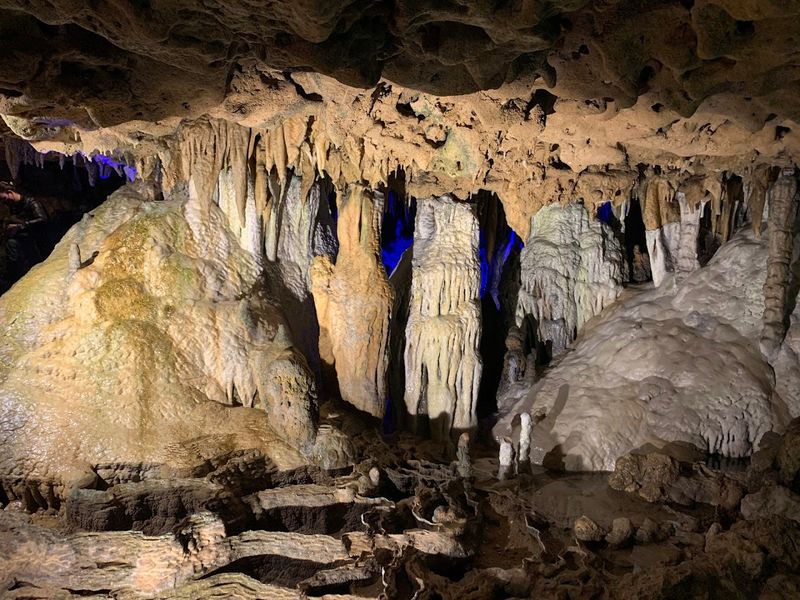
Genuine cave tours in Florida sound unlikely, but Florida Caverns State Park offers exactly that: ranger-guided walks through an active limestone cave system decorated with stalactites, stalagmites, and flowstone formations. The caves maintain a constant cool temperature year-round, making them particularly appealing during Florida’s hot summer months. Lighting installed along the tour route illuminates the formations without overwhelming the underground atmosphere.
Above ground, the park includes hiking trails, a spring-fed swimming area, and the Chipola River for paddling. Sinkholes dot the landscape, offering glimpses into the karst geology that created the caves below. The combination of underground and surface features makes this one of North Florida’s most geologically interesting parks.
Cave tours run regularly throughout the year, though it’s wise to call ahead and confirm times, especially during the off-season. The tour involves stairs and uneven surfaces, so reasonable mobility is required. Above-ground trails offer alternatives for anyone who can’t or doesn’t want to go underground.
The park’s Panhandle location means it stays relatively uncrowded even during peak Florida tourism periods.
15. Blowing Rocks Preserve, Jupiter Island
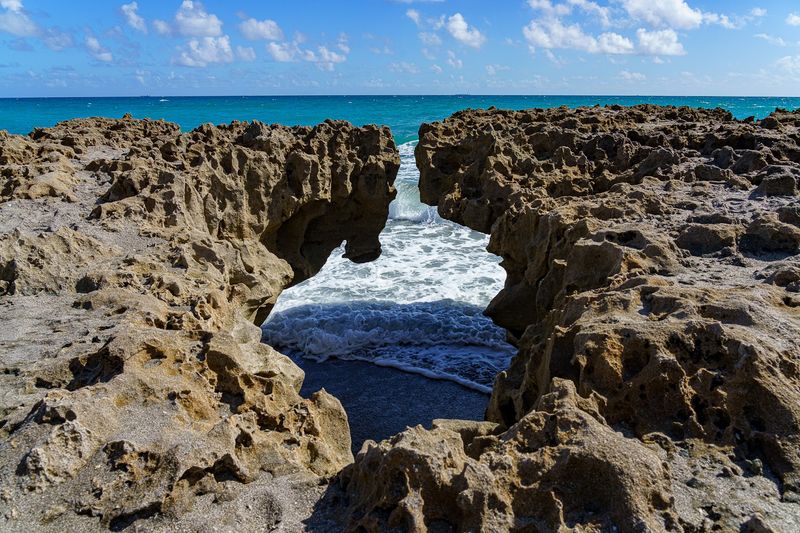
Blowing Rocks Preserve protects one of Florida’s most dramatic coastlines, where waves crash against the largest Anastasia limestone outcropping on the Atlantic coast. During high tide and rough seas, water forced through holes and crevices in the rock can shoot spray as high as 50 feet into the air, creating a natural spectacle that draws photographers and nature lovers. Even on calm days, the rocky shoreline provides a striking contrast to Florida’s typical sandy beaches.
The preserve includes coastal strand habitat and mangrove wetlands in addition to the famous rocks, with trails connecting different ecosystems. Sea turtles nest on the beach sections during summer, and the preserve plays an important role in protecting nesting habitat along this developed stretch of coastline. The Nature Conservancy manages the property, maintaining its natural character while allowing public access.
Time your visit to coincide with high tide and onshore winds for the most dramatic water displays. The rocks can be slippery and sharp, so watch your footing if you explore the formations up close. Sunrise and sunset both offer excellent lighting for photography.