12 Fascinating Florida Sites Every History Enthusiast Should Visit This Spring
Florida is more than beaches and theme parks — it’s one of the oldest and most historically layered states in the entire country. From Spanish fortresses to gilded-age estates, the Sunshine State holds stories that stretch back centuries.
Spring is the perfect season to explore these sites before the summer heat kicks in and crowds swell. Whether you’re a lifelong history buff or just curious about the past, these 12 spots will genuinely surprise you.
1. Castillo De San Marcos National Monument, St. Augustine
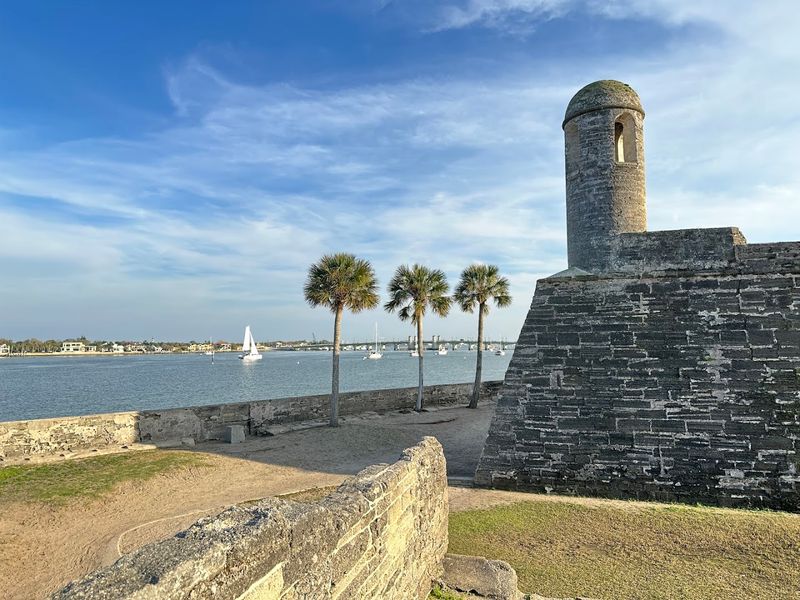
There’s something almost unreal about standing in front of Castillo de San Marcos. Built by the Spanish in the late 1600s, this fortress is the oldest masonry fort in the continental United States — and it has never been taken by force.
That fact alone makes it one of the most impressive military structures you’ll find anywhere in the country.
The fort was constructed from coquina, a naturally occurring limestone made of compressed shells. This material turned out to be genius for defense — rather than shattering when hit by cannonballs, coquina absorbed the impact.
British forces found this out the hard way during their sieges, and the walls still stand today as proof of just how effective the material really was.
Spring visitors get the bonus of comfortable temperatures and the chance to catch ranger-led programs that happen regularly throughout the season. Park rangers here are genuinely knowledgeable and enthusiastic — their storytelling makes the history feel real rather than textbook-dry.
The cannon firings and musket demonstrations are crowd favorites, especially if you’re visiting with kids.
The fort sits right on the water, offering sweeping views of Matanzas Bay. Bring a camera because the light in the late afternoon hits the coquina walls in a way that’s genuinely beautiful.
Entry is covered by America the Beautiful passes, and the National Park Service keeps the site well-maintained and accessible. Plan for at least two hours here, especially if you want to explore the interior rooms, gun decks, and the fascinating exhibits about the fort’s long and complicated history.
This is the kind of site that earns a spot on every serious Florida history itinerary without question.
2. St. Augustine Historic District, St. Augustine
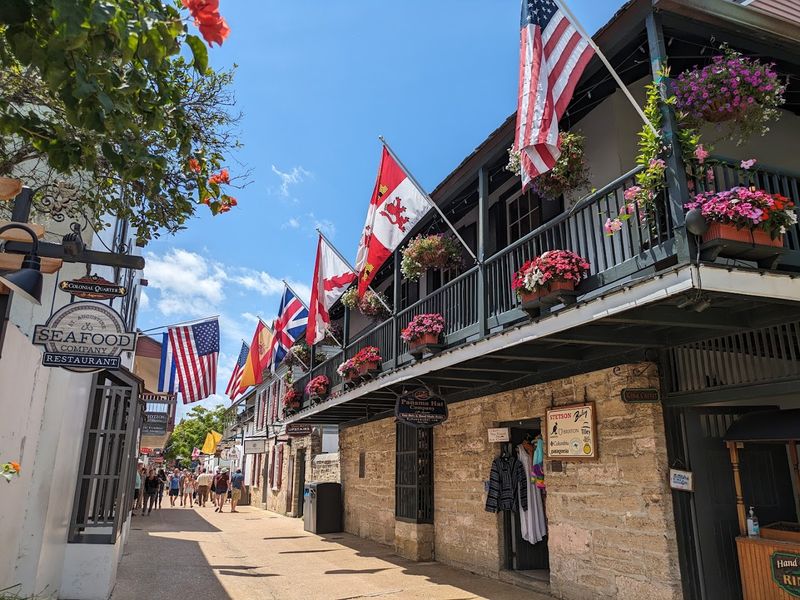
Walking through the St. Augustine Historic District feels like stepping into a time machine — one that drops you somewhere between 16th-century Spain and early American colonial life. Founded in 1565, St. Augustine holds the title of the oldest continuously occupied European settlement in the United States.
That’s not a small claim, and this district wears that history openly on every block.
The streets here are narrow and winding by design, built for a time when horses, not cars, were the main mode of transport. You’ll pass centuries-old buildings, historic churches, and plazas that look almost identical to how they appeared hundreds of years ago.
The Flagler College campus — originally a luxury hotel built in the 1880s — is worth a slow walk-through just for the architecture alone.
Spring is an excellent time to visit because the weather is comfortable and outdoor exploration is genuinely enjoyable. The district is walkable, so wear good shoes and plan to spend at least half a day wandering.
Free walking tour maps are available at the visitor center, which makes independent exploration easy and budget-friendly.
Local shops and restaurants are tucked between historic landmarks, so you can grab a bite without losing the old-world atmosphere. St. George Street is the main pedestrian corridor, and it’s lined with enough history and personality to keep you engaged for hours.
Don’t skip the Colonial Quarter, an interactive living history experience that brings the 16th through 19th centuries to life in surprisingly entertaining ways. This district isn’t just a place to look at old buildings — it’s a place where history genuinely feels alive.
3. Fort Matanzas National Monument, St. Augustine
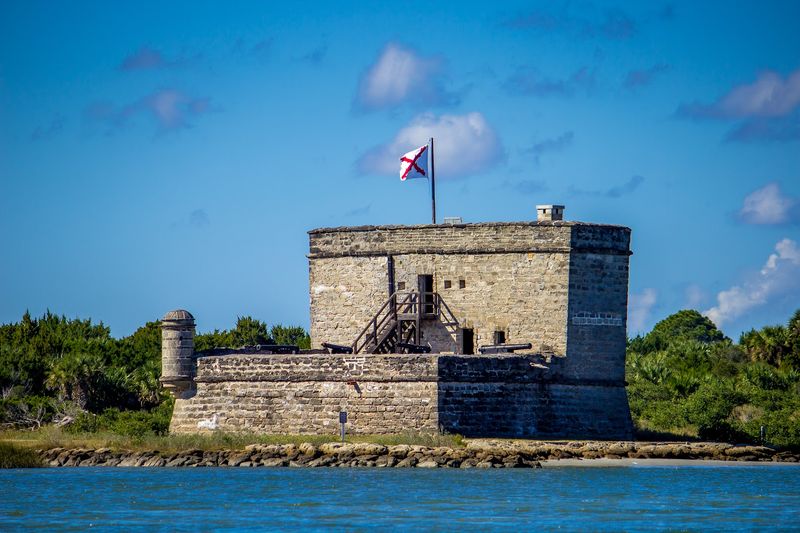
Most visitors to St. Augustine never make it to Fort Matanzas, and that’s honestly a shame. Tucked about 14 miles south of the city on a narrow barrier island, this smaller Spanish fortification is quieter, more remote, and in some ways even more atmospheric than its famous neighbor.
The name itself carries weight — “Matanzas” is Spanish for slaughter, a nod to a brutal 1565 massacre that took place near this very spot.
Getting there is part of the experience. A free ferry operated by the National Park Service takes visitors across the Matanzas River to the island where the fort stands.
The boat ride is short but scenic, cutting through tidal marshes that feel genuinely wild and undisturbed. Spring is an ideal time to make the crossing because wildlife is active and the marsh grasses are vivid green.
The fort itself was built in the 1740s to guard the southern water approach to St. Augustine. It’s compact compared to Castillo de San Marcos, but the interior is fascinating, and rangers stationed there are happy to walk you through the details.
The isolation of the location gives you a real sense of what it must have felt like to be posted here centuries ago — cut off, surrounded by water, and responsible for protecting a city you could barely see.
After your fort visit, take time to walk the nearby nature trail along Rattlesnake Island. The birding is excellent in spring, and the views of the inlet are worth the walk.
Admission is completely free, which makes this one of the best deals in Florida’s entire historical tourism landscape. Don’t let the out-of-the-way location talk you out of going — it’s absolutely worth the detour.
4. Vizcaya Museum And Gardens, Miami
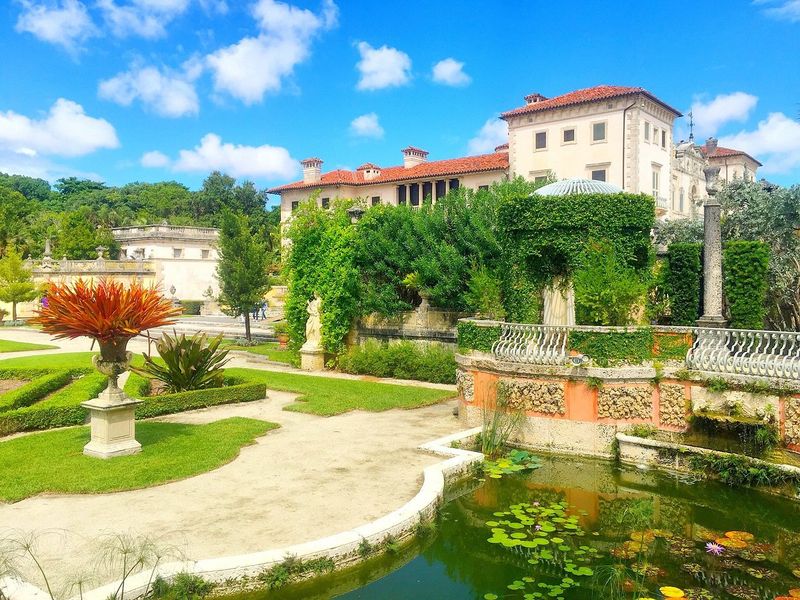
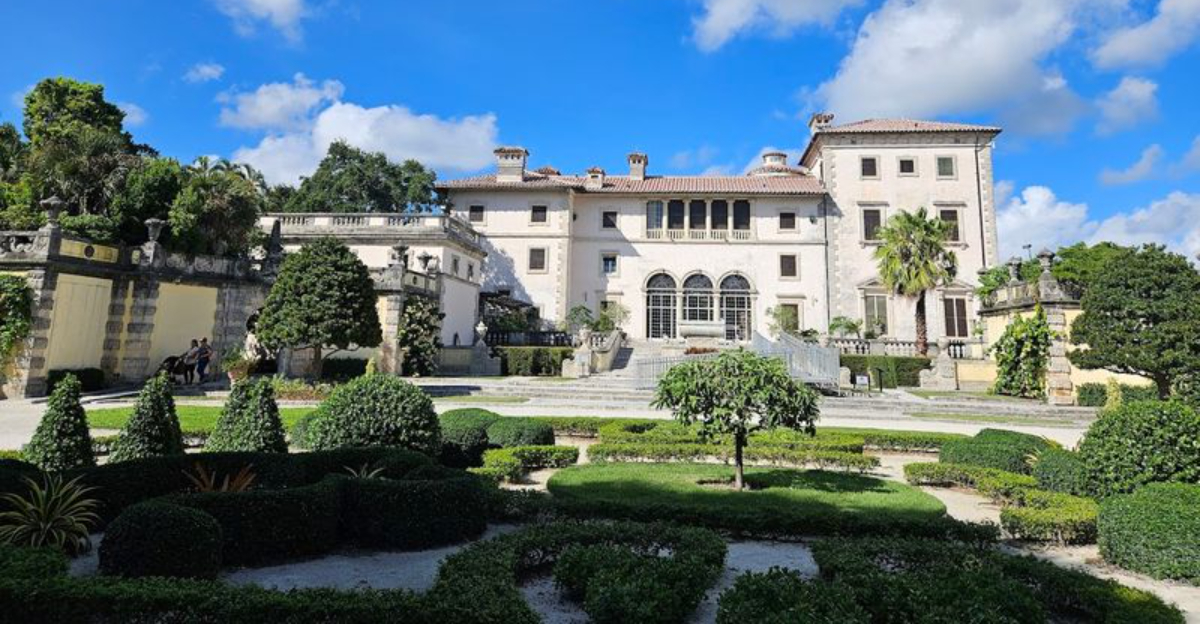
Vizcaya feels like it was airlifted from the Italian Renaissance and dropped onto the shores of Biscayne Bay — which is essentially what happened. Built between 1914 and 1922 as the winter retreat of industrialist James Deering, this 34-room villa is one of the most lavishly decorated historic homes in the entire United States.
Walking through it in spring, with the gardens in full bloom, is a genuinely spectacular experience.
Deering spent years collecting European antiques, art, and architectural elements to furnish his home, and the result is an interior that reads more like a world-class museum than a private residence. Every room tells a different story, from Renaissance tapestries to Baroque furniture to hand-painted ceilings.
The level of craftsmanship throughout the house is almost disorienting in the best possible way.
The gardens are equally impressive. Designed in a formal Italian style with fountains, grottos, and sculpted hedges, they stretch across ten acres and offer some of the most photogenic views in all of Miami.
The stone barge anchored in the bay just off the main terrace is an iconic image and makes for an unforgettable backdrop.
Spring is arguably the best time to visit Vizcaya because the gardens are lush and the weather is warm without being punishing. Weekend mornings tend to be less crowded than afternoons, so arriving early gives you more space to move through the rooms and grounds at your own pace.
Audio guides are available and genuinely enhance the experience by adding layers of context to what you’re seeing. Vizcaya is a site that earns its reputation as one of Miami’s cultural crown jewels — it’s more than worth the admission price for anyone with even a passing interest in American history or architecture.
5. Mission San Luis, Tallahassee
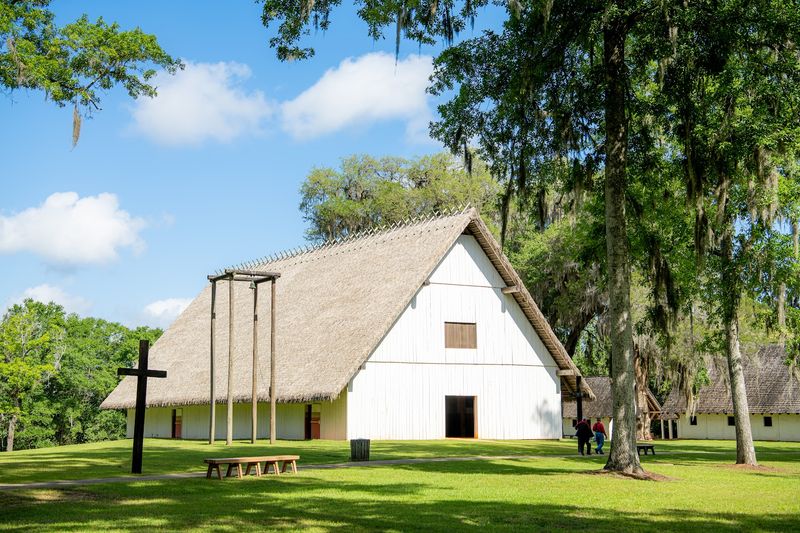
Mission San Luis is one of those places that genuinely catches you off guard. Sitting on a hill in the middle of Tallahassee, this living history site reconstructs a 17th-century Spanish mission and Apalachee Indian town that once served as the western capital of Spanish Florida.
It’s an unexpected find in a modern state capital, and it’s far more immersive than the average history museum.
The site features full-scale reconstructions of the mission church, the Apalachee council house, a Spanish colonial home, and several other structures.
The council house alone is jaw-dropping — it’s one of the largest reconstructed Native American buildings in the Southeast, and standing inside it gives you an immediate sense of the scale and sophistication of the Apalachee people who lived here.
What makes Mission San Luis stand out is its commitment to telling both sides of the story. Interpreters here discuss the lives of both the Spanish settlers and the Apalachee community, including the tensions, alliances, and daily realities of coexisting cultures in the 1600s.
That nuanced approach is refreshing and educational in equal measure.
Spring is a great season to visit because the outdoor spaces are pleasant to walk through and special programming is often scheduled around seasonal events. The site hosts demonstrations of period crafts, cooking, and military drills that bring the history to life without feeling like a theme park.
Admission is affordable, and the museum inside offers additional context through well-curated artifacts and exhibits. If you’re making a trip to Tallahassee for any reason this spring, carve out at least two hours for this site — you’ll leave knowing something genuinely new about Florida’s deep and layered past.
6. Edison And Ford Winter Estates, Fort Myers
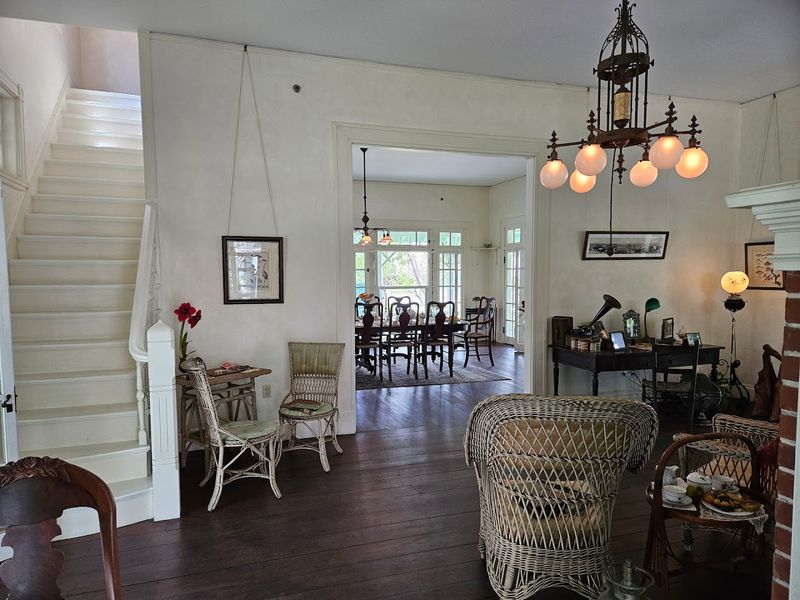
Two of the most influential inventors in American history chose the same stretch of Fort Myers riverfront as their winter escape — and that alone makes this site remarkable. Thomas Edison built his Florida home in 1886, and Henry Ford purchased the neighboring property years later, drawn in part by his friendship with Edison.
Today, the combined estates offer a fascinating window into the private lives of two men who shaped the modern world.
Edison’s laboratory on the property is a particular highlight. It’s the oldest surviving research facility of its kind in the United States, and it still contains original equipment, notebooks, and materials from Edison’s experiments.
Standing in the space where he worked on the phonograph, light bulb, and other inventions gives you a different kind of connection to history than a typical museum display ever could.
The botanical garden stretching across the property reflects Edison’s deep interest in plant-based research. He was actively exploring plants as potential sources for synthetic rubber late in his life, and the garden he cultivated for that purpose is now a lush, sprawling collection of tropical and subtropical species.
Spring is a gorgeous time to walk it.
Ford’s home on the adjacent property is smaller and more understated than Edison’s, which tells you something about the two men’s personalities. Both homes are open for guided tours, and the museum on-site houses an impressive collection of vintage cars, Edison’s inventions, and personal artifacts from both families.
The gift shop carries some genuinely interesting books and replicas if you’re looking for a meaningful souvenir. Budget a solid half-day for this site — there’s more to absorb here than most visitors expect, and the whole experience is both educational and genuinely enjoyable.
7. Bok Tower Gardens, Lake Wales
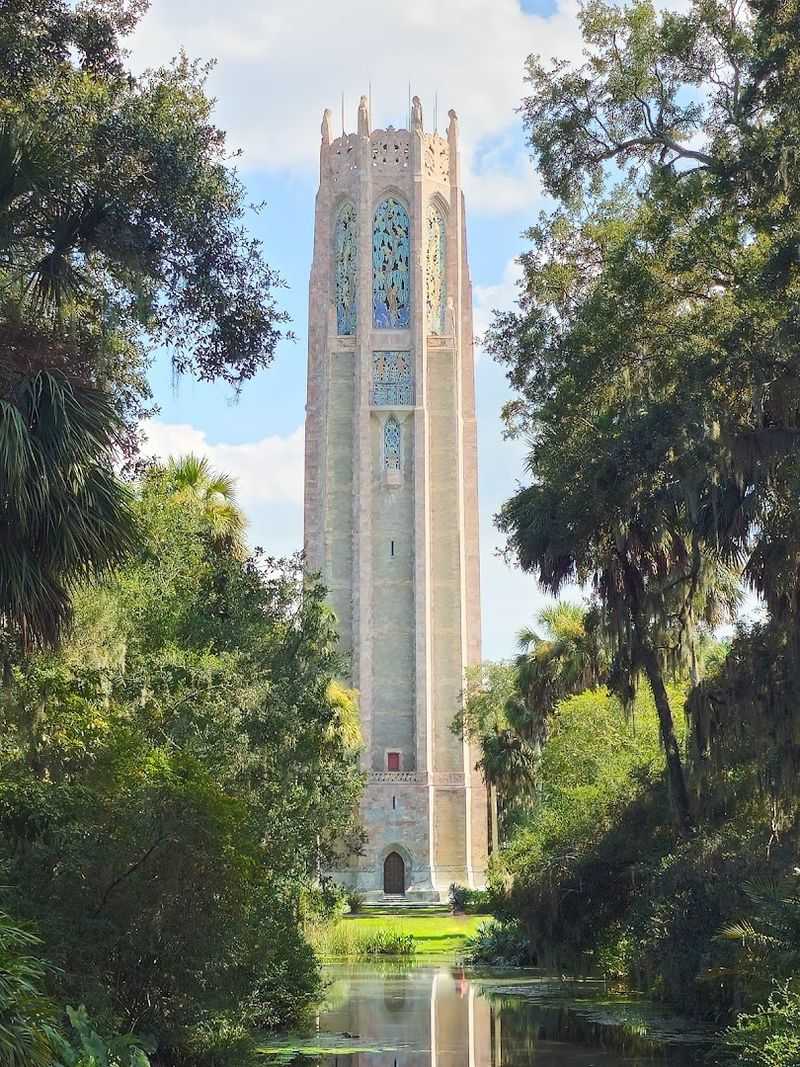
Bok Tower Gardens has a quiet kind of magic that’s hard to describe until you’re standing there. Built in the 1920s as a gift to the American people from Dutch-born publisher Edward Bok, this sanctuary sits atop Iron Mountain — Florida’s highest point on the central ridge at a not-exactly-dizzying 295 feet above sea level.
The tower itself, a stunning mix of Gothic and Art Deco design, rises 205 feet and houses a 60-bell carillon that performs concerts daily.
The carillon is the heart of the experience. Hearing those bells roll across the gardens while you’re sitting on a bench surrounded by azaleas and camellias is one of the more unexpectedly moving things you can do in Florida.
Spring is peak season for the flowering plants, which means the gardens are especially vivid and fragrant during March and April visits.
Beyond the bells and the blooms, Bok Tower has genuine historical significance. It was dedicated by President Calvin Coolidge in 1929 and designated a National Historic Landmark in 1993.
The Pinewood Estate, a 1930s Mediterranean Revival mansion on the grounds, is open for tours and adds another layer of history to the visit.
The site was designed by landscape architect Frederick Law Olmsted Jr., son of the man who designed Central Park, and that pedigree shows in every deliberately composed view and pathway. Visitors often remark that the place feels European — unhurried, thoughtful, and designed for genuine contemplation rather than entertainment.
Parking is free, and the grounds are stroller and wheelchair accessible. If you want a Florida history experience that’s peaceful rather than packed, Bok Tower Gardens is one of the most rewarding stops you can make this spring.
8. The Ringling, Sarasota
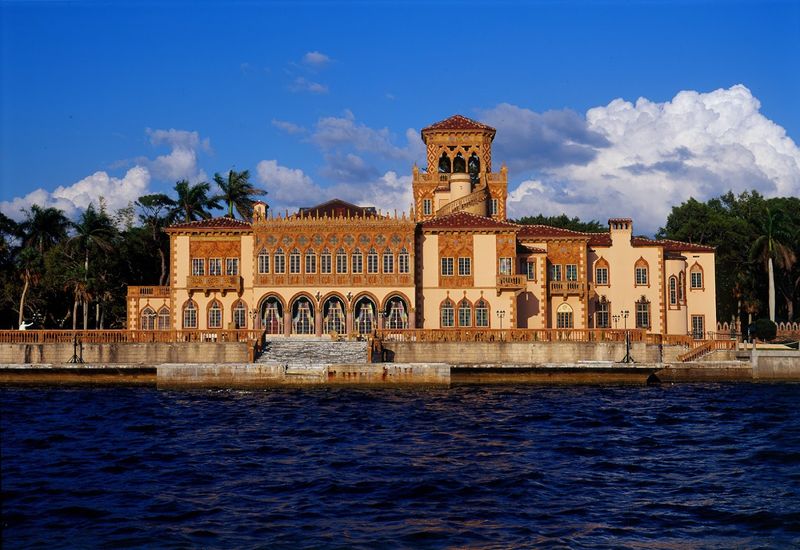
John Ringling built an empire on sawdust and sequins, and then he turned that circus fortune into one of the most extraordinary cultural legacies in Florida history. The Ringling complex in Sarasota encompasses an art museum, a circus museum, and the Ca d’Zan — his breathtaking Venetian Gothic waterfront mansion — all set on 66 acres along Sarasota Bay.
It’s the kind of place that takes you by surprise, even if you think you know what to expect.
The art museum is genuinely world-class. Ringling was a serious collector, and the galleries hold an impressive collection of Baroque masterworks, including five monumental paintings by Peter Paul Rubens that were acquired specifically for this space.
The courtyard, lined with bronze casts of classical sculptures, is one of the most beautiful outdoor spaces in the state.
The circus museum is a completely different energy — colorful, loud in the best visual sense, and filled with elaborate parade wagons, costumes, and memorabilia from the golden age of American circus performance. The Howard Bros.
Circus miniature, a scale model of an entire traveling circus in operation, is alone worth the trip for anyone who appreciates extraordinary craftsmanship.
Ca d’Zan, Ringling’s winter mansion on the bay, is open for guided tours and offers a look inside one of Florida’s most opulent historic homes. The interior is layered with Venetian glass, hand-painted ceilings, and period furnishings that reflect Ringling’s larger-than-life personality.
Spring is an ideal time to visit because the grounds are lush and outdoor events are frequently scheduled. The Ringling is operated by Florida State University and consistently delivers one of the most varied and satisfying museum experiences in the entire Southeast.
9. Fort Jefferson, Dry Tortugas National Park, Key West
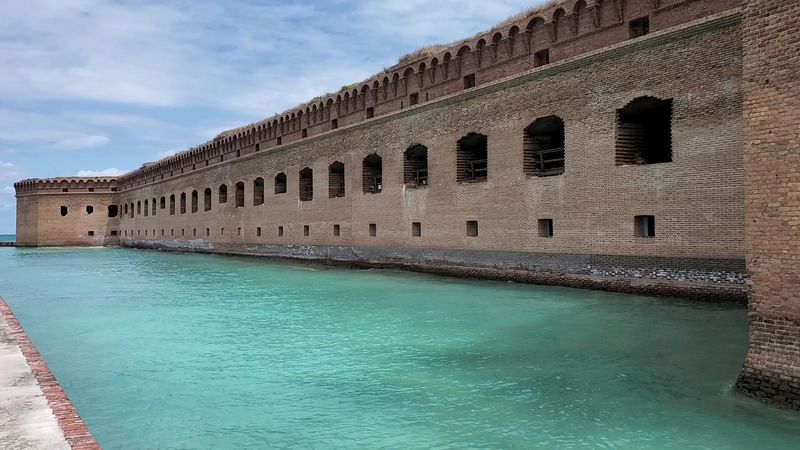
Fort Jefferson is the kind of place that makes you question whether what you’re seeing is real. Sitting in the middle of the Gulf of Mexico, accessible only by boat or seaplane, this massive hexagonal Civil War-era fortress is built on a tiny coral island 70 miles west of Key West.
It’s one of the most remote and visually dramatic historic sites in the entire United States — and getting there is part of what makes it unforgettable.
Construction began in 1846 and continued for decades, yet the fort was never fully completed. At its peak, the walls reached 50 feet high and stretched nearly half a mile in circumference, making it one of the largest masonry structures in the Western Hemisphere.
The fact that all those bricks were shipped to a remote island in the pre-railroad era is staggering to think about.
The fort is most famous for being the prison of Dr. Samuel Mudd, the physician who set the broken leg of John Wilkes Booth following Lincoln’s assassination. His cell is still there, and the story of his imprisonment and eventual pardon adds a compelling human dimension to the site’s military history.
Spring is considered one of the best times to visit Dry Tortugas because the weather is clear, the water visibility for snorkeling is excellent, and the bird migration brings an extraordinary variety of species to the island. The ferry from Key West takes about two and a half hours each way, so plan for a full day.
Bring sunscreen, water, and snorkel gear — the reef surrounding the fort is alive with color and absolutely worth exploring before or after your tour. This is the most adventurous stop on any Florida history itinerary, and it delivers completely.
10. De Soto National Memorial, Bradenton
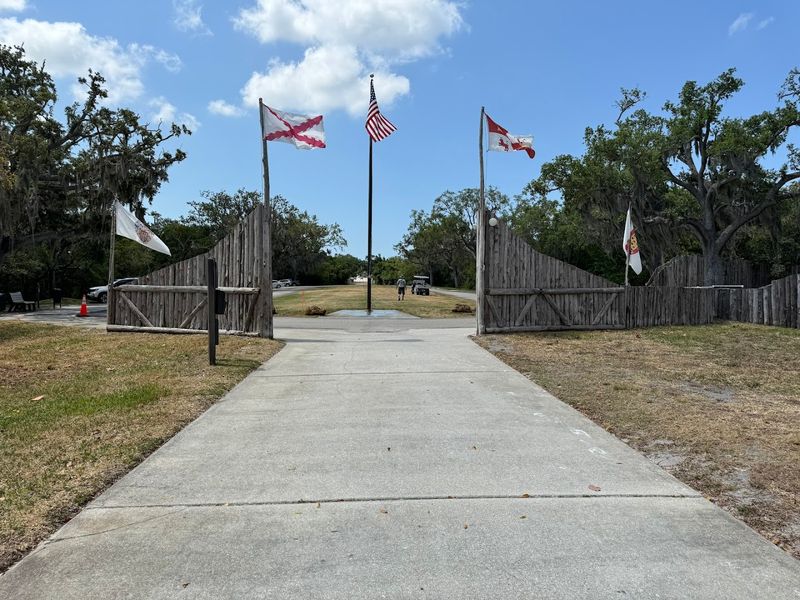
Few chapters in Florida’s history are as complicated or as consequential as the arrival of Hernando de Soto and his expedition in 1539. The De Soto National Memorial in Bradenton marks the spot where historians believe de Soto and roughly 600 soldiers landed on the shores of Tampa Bay, beginning a four-year march through the southeastern United States that would dramatically reshape the region forever.
The park tells that story with honesty and depth.
The visitor center here punches above its weight for a site of this size. The exhibits cover the Spanish colonial period, the lives of the Native peoples encountered by de Soto’s expedition, and the devastating consequences that followed contact — including disease, forced labor, and displacement.
The National Park Service does a commendable job of presenting multiple perspectives rather than a single heroic narrative.
From January through April, the park runs living history programs staffed by volunteers dressed in period-accurate 16th-century Spanish armor and clothing. Spring visitors catch the tail end of this programming season, which makes March and April visits particularly rich.
Watching someone demonstrate crossbow use or explain the logistics of a 16th-century military campaign in real time is an experience that sticks with you.
The trail along the mangrove shoreline is short but scenic and gives you a genuine feel for the landscape that greeted the Spanish when they arrived. The park is free to enter, which makes it an easy addition to any Tampa Bay area itinerary.
If you’re already planning to visit the Ringling in Sarasota or the Edison estates in Fort Myers, De Soto National Memorial fits naturally into a broader Gulf Coast history loop. It’s a modest site in scale but substantial in what it teaches.
11. Ponce De Leon’s Fountain Of Youth Archaeological Park, St. Augustine
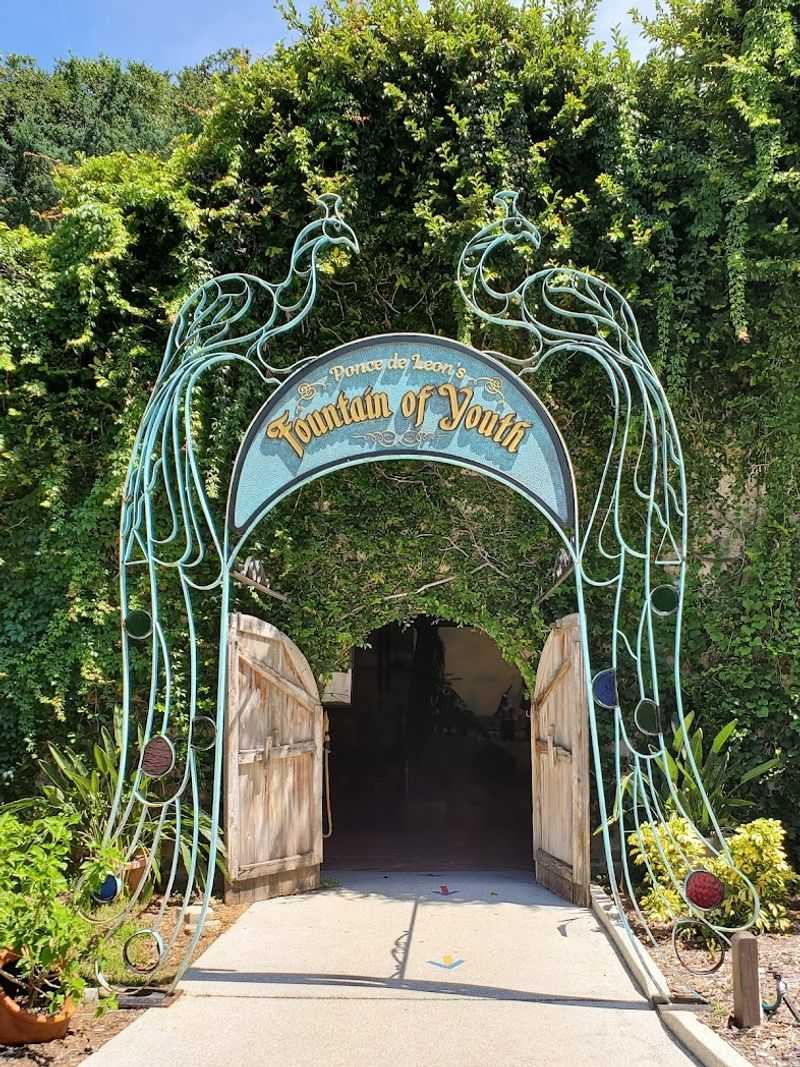
The legend of the Fountain of Youth is one of the most enduring myths in American history — and even if you take the story with a healthy grain of salt, the site in St. Augustine tied to that legend is far more historically interesting than the name might suggest. This is believed to be the landing site of Pedro Menendez de Aviles, the Spanish admiral who founded St. Augustine in 1565, making it one of the most historically significant pieces of ground in the entire country.
Archaeological excavations here have uncovered a remarkable amount of material, including a 1,000-year-old Timucuan Indian burial ground, Spanish colonial artifacts, and the remains of a 16th-century mission. The park incorporates these finds into its exhibits, so visitors are looking at real archaeology alongside the theatrical flourishes of the Fountain of Youth narrative.
That combination is surprisingly effective.
Yes, you can drink from the spring — and yes, it tastes like sulfur. But the ritual of it is fun, and the park leans into the experience with good humor.
The real draws are the planetarium show about Spanish navigation, the costumed interpreters who demonstrate period weapons and tools, and the peacocks that roam the grounds freely and have absolutely no personal space awareness.
Spring is a lovely time to visit because the park’s outdoor spaces are comfortable and the live demonstrations are running at full schedule. The grounds overlook the Matanzas River, and the views from the waterfront are genuinely beautiful in the soft spring light.
Admission is reasonably priced, and the combination of archaeology, mythology, and spectacle makes this one of the more memorable stops in St. Augustine’s already history-packed lineup. Come with curiosity and an open mind — you’ll leave with both satisfied.
12. Fort Caroline National Memorial, Jacksonville
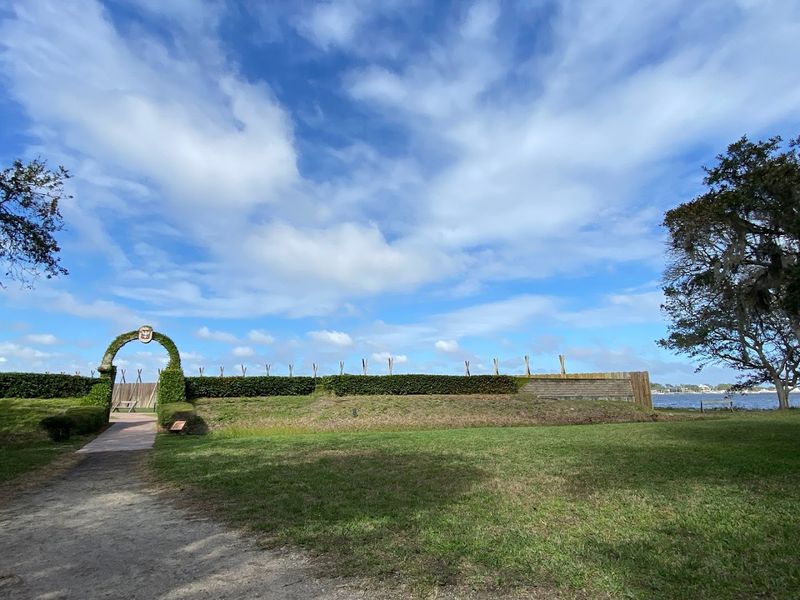
Fort Caroline is one of Florida’s most overlooked historic sites, and that’s a genuine puzzle, because the story connected to it is one of the most dramatic and consequential in the entire colonial period. In 1564, French Huguenots established a settlement here on the south bank of the St. Johns River — becoming one of the first European attempts to colonize what is now the continental United States.
A year later, Spanish forces massacred the colony, and the event helped cement Spain’s grip on Florida for the next two centuries.
The reconstructed fort at the memorial is modest in size but effective in conveying the vulnerability of the original settlement. Standing inside the triangular earthwork walls and looking out toward the river, it’s easy to understand both why the French chose this location and why it proved so difficult to defend.
The site is managed by the National Park Service as part of the Timucuan Ecological and Historic Preserve.
The visitor center offers well-produced exhibits on the French Huguenot colonists, the Timucua people who inhabited the region before European arrival, and the brutal Spanish response that ended the French experiment.
The exhibits don’t shy away from the violence and complexity of the period, which gives the site a sense of historical seriousness that visitors tend to appreciate.
Spring is a fine time to visit because the surrounding preserve is lush, the trails along the river are walkable, and the bird life in the marsh is active and diverse. The site is free to enter and sits within a larger preserve that includes the Theodore Roosevelt Area trail system — a worthy addition to your visit if you have extra time.
Fort Caroline rewards the curious traveler who goes looking for Florida’s less-told stories.