The 8 Most Remarkable Stargazing Spots in Florida
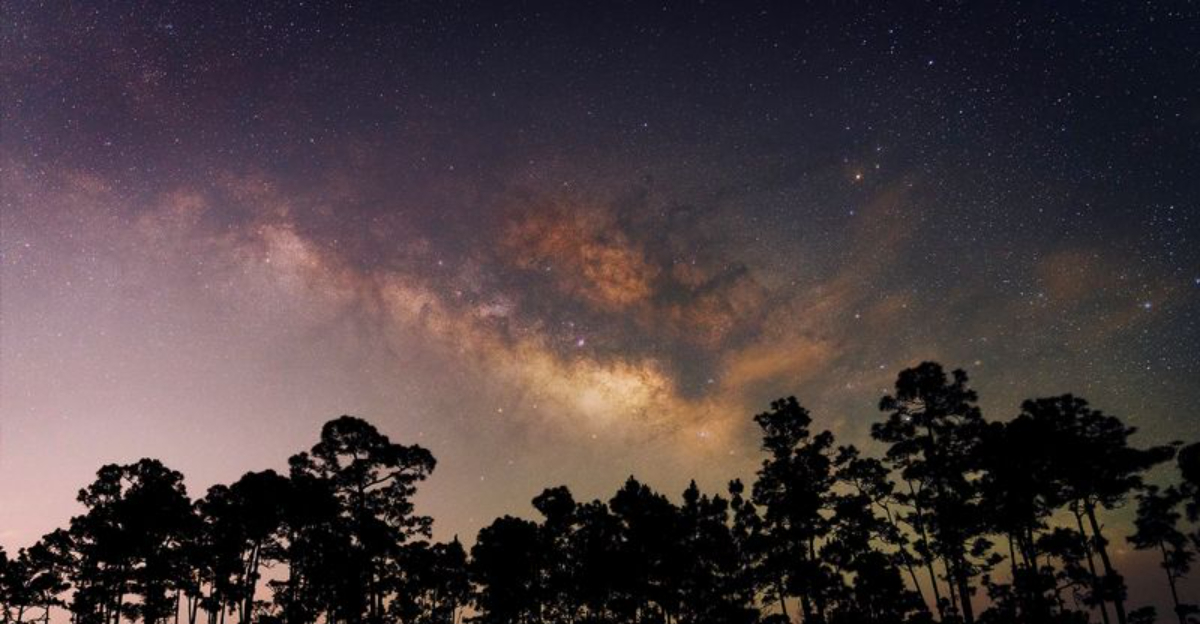
Florida might be famous for its beaches and theme parks, but after the sun goes down, the real show begins overhead. Away from the city lights, the Sunshine State reveals some of the darkest, most star-packed skies in the entire Southeast.
Whether you are a seasoned astronomer or just someone who loves lying on a blanket and staring up at the Milky Way, Florida has a spot with your name on it. Pack your telescope, grab a blanket, and get ready to look up.
1. Kissimmee Prairie Preserve State Park
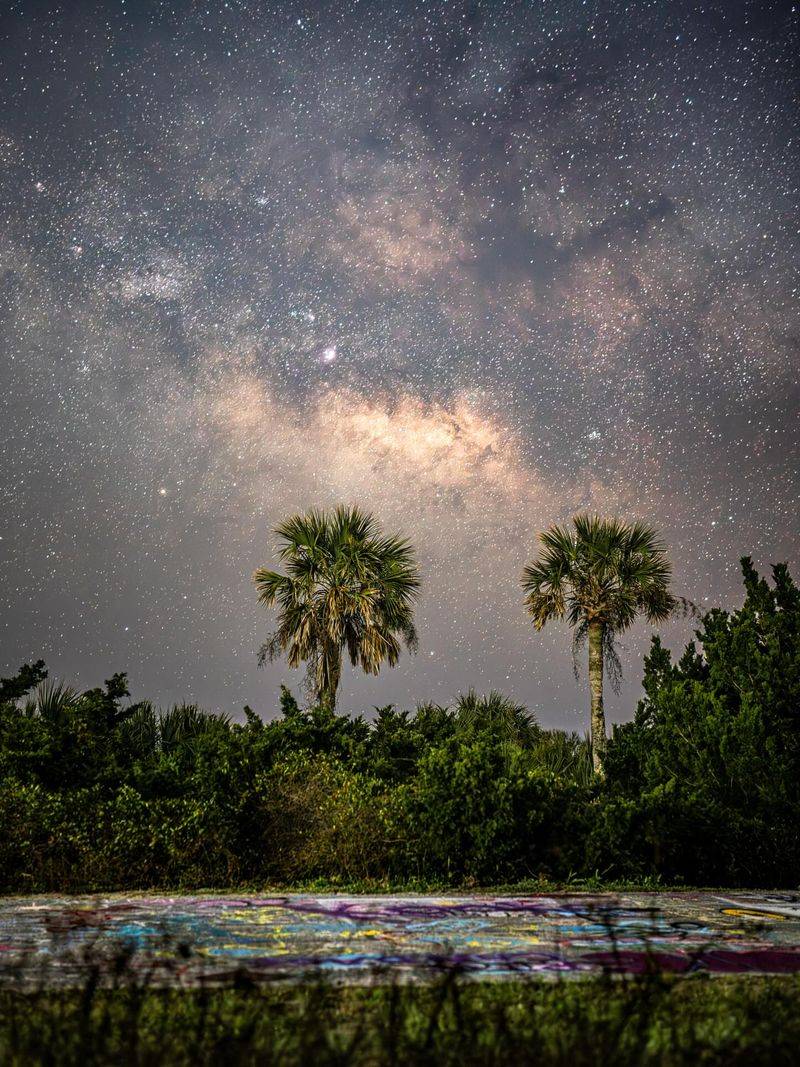
Flat, wide, and gloriously empty of light pollution, Kissimmee Prairie Preserve State Park is widely considered one of the best stargazing destinations in the entire state. Sitting on more than 54,000 acres of dry prairie in Central Florida, this park is a certified International Dark Sky Park — a title that is not handed out lightly.
When you stand in the middle of that open landscape at night, the sky feels enormous in a way that is hard to put into words.
The park hosts regular Star Party events where astronomy clubs set up telescopes and guide visitors through the constellations. Even if you show up on a random night without a group, the darkness alone is worth the trip.
On a clear, moonless night, the Milky Way stretches across the sky so clearly it almost looks painted on.
Camping is available here, which means you can stay long enough to watch the sky shift through the night. There are no tall trees blocking your sightlines — just horizon-to-horizon sky.
Bring bug spray, because the prairie insects do not take nights off. The park is a couple of hours from Orlando, making it a surprisingly accessible escape from the glowing sprawl of Central Florida.
What makes this place feel special is not just the darkness but the silence. No traffic noise, no distant bass from a venue, just wind and crickets and the occasional sound of a bird calling in the dark.
First-time visitors are often genuinely shocked by how many stars are visible with the naked eye. If you have never seen a real dark sky before, this is the place to start your journey.
2. Big Cypress National Preserve
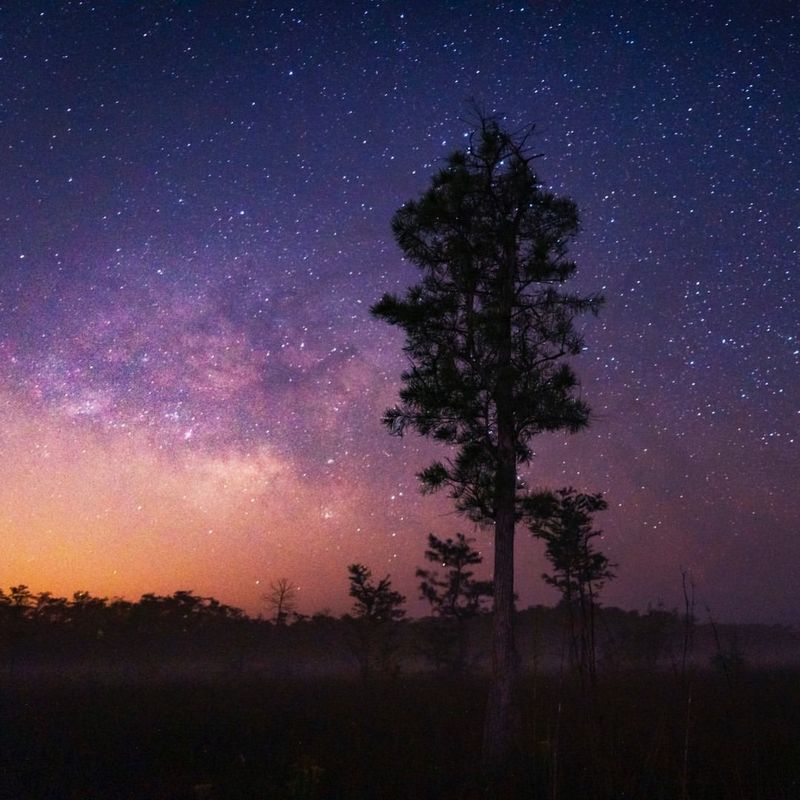
There is something almost prehistoric about Big Cypress National Preserve after dark. The ancient cypress trees draped in Spanish moss, the shallow swamp water reflecting starlight, and the distant calls of frogs and night birds create an atmosphere that feels completely removed from modern life.
This massive preserve covers over 729,000 acres in South Florida, and large portions of it sit far enough from any city to offer genuinely dark skies.
Unlike some stargazing spots that feel sterile or overly organized, Big Cypress has a wild, untamed energy. You are not just looking at stars — you are doing it surrounded by one of the most ecologically rich landscapes in North America.
The experience of spotting Jupiter above a cypress dome or watching a meteor streak past a full moon over the sawgrass is genuinely unforgettable.
The preserve has several campgrounds, including some primitive sites that put you even deeper into the darkness. Turner River Road and Loop Road are popular spots for pulling over and scanning the sky, though you should always be aware of your surroundings in a place this wild.
Alligators are real, active, and not impressed by your telescope setup.
Visiting during the dry season, roughly November through April, gives you clearer skies and far fewer mosquitoes. The humidity drops, the air gets crisp, and the stars come into sharp focus.
Big Cypress does not advertise itself as a stargazing destination the way some parks do, but that low-key reputation is exactly what keeps it from getting crowded.
Serious sky-watchers who appreciate a little adventure mixed with their astronomy tend to claim this as their favorite Florida spot, and honestly, it is easy to understand why.
3. Dry Tortugas National Park
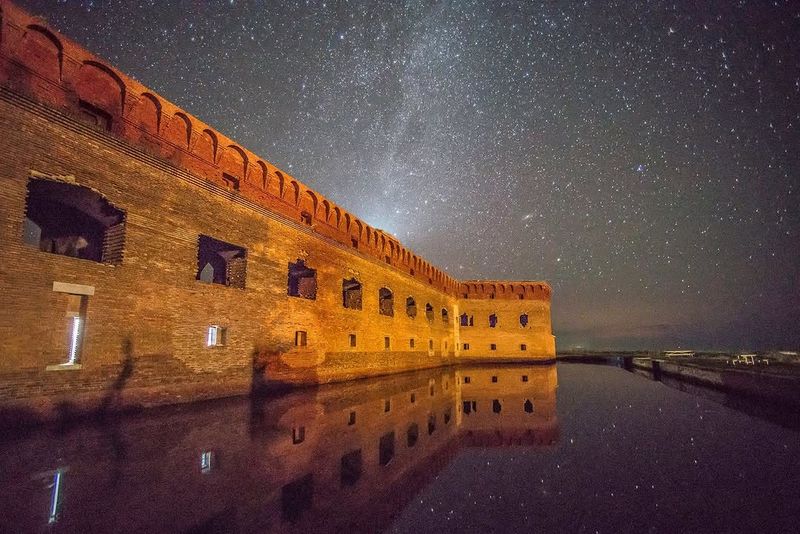
Seventy miles west of Key West, accessible only by ferry or seaplane, Dry Tortugas National Park sits so far from the mainland that light pollution becomes almost a non-issue. The isolation that makes daytime visits feel like an adventure transforms the experience at night into something truly extraordinary.
Standing on the old brick walls of Fort Jefferson under a sky packed with stars is one of those moments that sticks with you for years.
The park allows primitive camping on Garden Key, and those who spend the night are rewarded with some of the most unobstructed skies in Florida. With water on every side and no nearby cities, the darkness here is deep and consistent.
The Milky Way appears overhead like a glowing river, and on clear nights, even the faint band of the zodiacal light can sometimes be spotted near the horizon.
Getting there requires a little planning. The Yankee Freedom ferry runs daily from Key West and takes about two hours each way.
If you want to camp, reservations fill up fast, especially during the cooler months when conditions are most comfortable. The heat and humidity of summer can make overnight stays challenging, though the skies remain dark year-round.
Dry Tortugas has a fascinating history beyond its astronomical appeal. The fort was used as a Civil War prison and later as a quarantine station, and its walls have seen centuries of storms and sunrises.
At night, all that history feels present in a quiet, almost eerie way. Watching a shooting star arc over the fort’s massive brick silhouette is the kind of experience that reminds you just how small and lucky we are.
Few places in Florida deliver this level of wow factor after dark.
4. Chiefland Astronomy Village

Chiefland Astronomy Village was literally built for this. Located in North Central Florida near the small town of Chiefland, this community exists specifically to give amateur and professional astronomers a place to observe under dark, stable skies.
The area around Chiefland has some of the lowest light pollution readings in the entire state, and the flat terrain means your view extends all the way to the horizon in every direction.
The village itself is a neighborhood of observatories and astronomy enthusiasts who have built their homes and facilities around the shared goal of seeing the night sky clearly. Several of the sites here welcome visiting astronomers, and organized star parties draw crowds from across the country.
If you are serious about astronomy, showing up here with a good telescope is like a musician getting to play Carnegie Hall — the conditions just make everything better.
Even casual visitors who show up without equipment often find themselves welcomed by locals who are happy to let you look through their gear. The astronomy community around Chiefland has a reputation for being genuinely enthusiastic and welcoming.
Conversations that start at a telescope eyepiece often run until two or three in the morning.
The surrounding area of Levy County adds to the appeal. Cedar Key is nearby for a meal or a morning walk, and the overall pace of life in this part of Florida is slow and relaxed in the best possible way.
Chiefland is not a tourist destination in any traditional sense, which is precisely what makes it feel like a hidden gem. Astronomers who have visited compare the sky quality here favorably to some of the most celebrated dark-sky sites in the American West, and that is not a comparison made lightly.
5. Everglades National Park
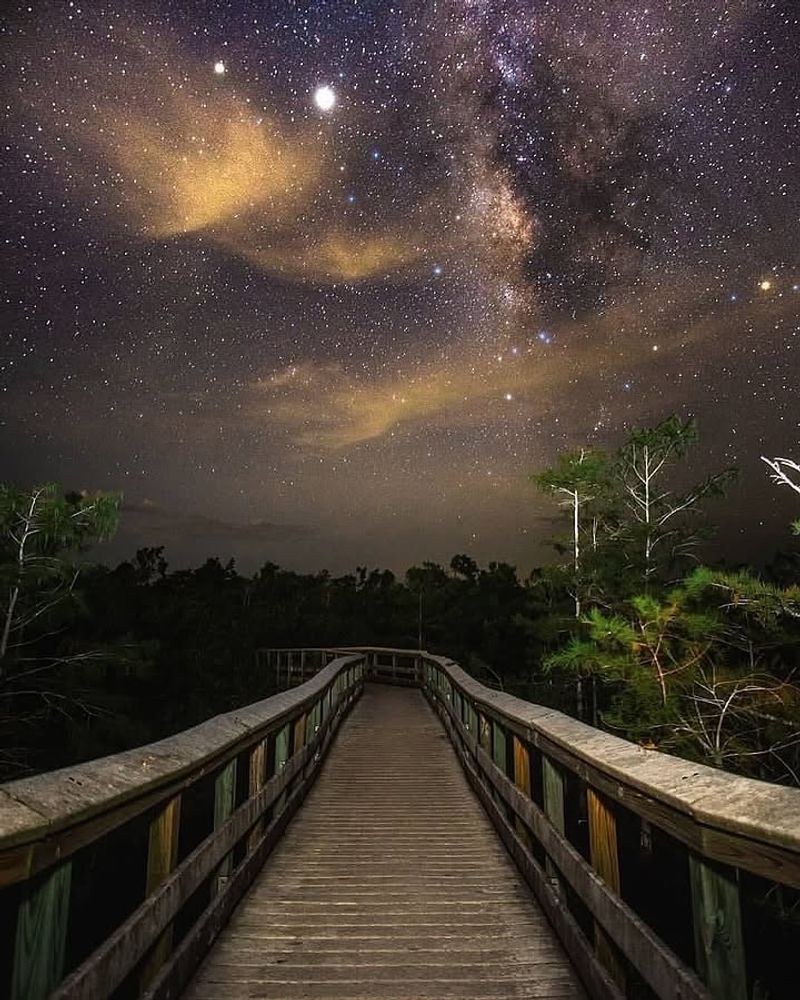
The Everglades is the largest tropical wilderness in the United States, and at night it transforms into something that feels almost otherworldly. The sheer scale of the park — over 1.5 million acres — means that once you get away from the park entrances, the darkness closes in fast and completely.
Royal Palm, Flamingo, and the remote backcountry areas all offer dramatically dark skies once the visitor crowds thin out after sunset.
Flamingo, located at the southern tip of the park on Florida Bay, is one of the most remote drive-in locations in South Florida. On a clear night, the reflection of the Milky Way in the still waters of the bay creates a visual that is almost surreal.
The horizon is completely flat and unobstructed, giving you a 360-degree view that few other places in the state can match.
The park has campgrounds at Long Pine Key and Flamingo that serve as solid base camps for nighttime sky-watching. Backcountry camping along the wilderness waterway takes the experience even further from civilization.
Just know that the Everglades has its own rules — mosquitoes can be ferocious, especially in summer, and wildlife encounters are not uncommon after dark.
What makes the Everglades feel different from other stargazing spots is the ambient sound. Frogs, insects, night herons, and the occasional splash from an alligator create a constant natural soundtrack that makes the experience feel primal and alive.
You are not just observing the universe from a field — you are doing it from the edge of one of the most complex ecosystems on the planet. That combination of ecological wonder and astronomical beauty is something that is genuinely hard to replicate anywhere else in Florida.
6. Groveland
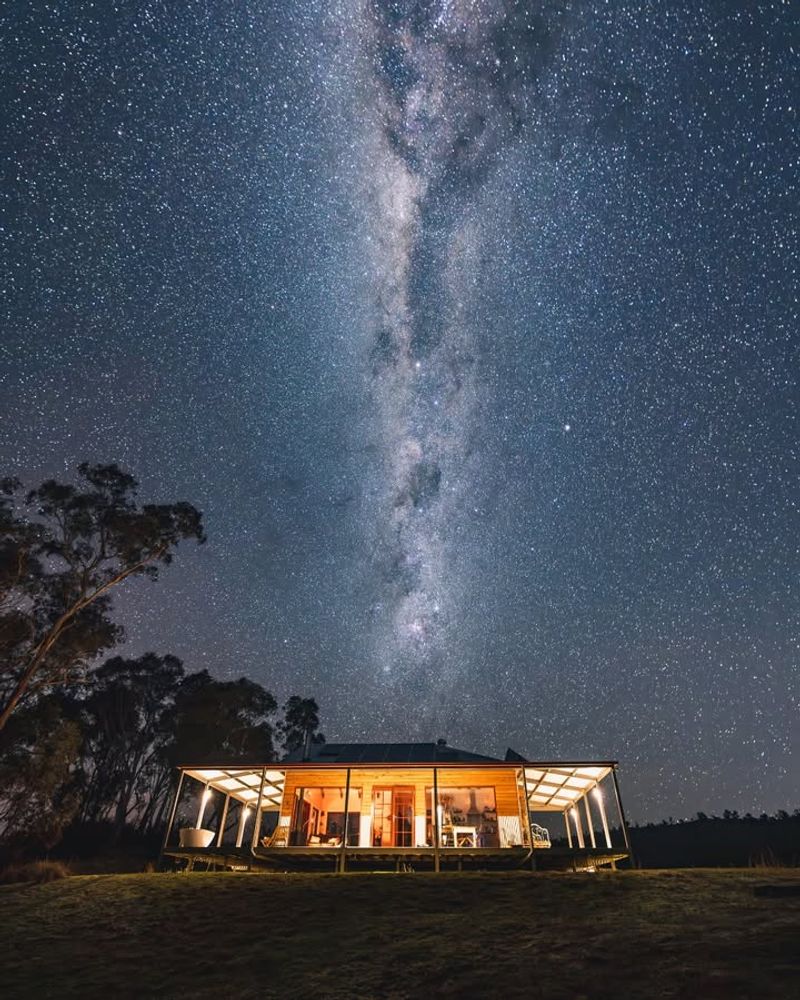
Groveland might surprise you. This small Lake County town sits just west of Orlando’s suburban sprawl, but it has carved out a reputation among Florida stargazers as a remarkably accessible dark-sky location.
The flat, rural landscape around Groveland sits in a pocket of low development, and on clear nights the contrast between the glowing horizon toward Orlando and the genuinely dark sky directly overhead is almost striking enough to be its own kind of spectacle.
The area around Groveland has been a gathering spot for Florida astronomy clubs for years. Its proximity to a large population center — Orlando is less than an hour away — makes it an easy choice for people who want to stargaze without committing to a four-hour drive.
Amateur astronomers from Tampa and Orlando both make regular trips out here, setting up in open fields and pastures where the sky opens up fully.
There is no single official park or facility that defines Groveland as a stargazing destination, which is part of what keeps it low-key. Local astronomy groups often organize informal star parties in the area, and if you connect with the Central Florida Astronomical Society, you can find out exactly where and when the next gathering is happening.
Those events tend to be friendly, casual, and packed with people who genuinely love sharing the sky.
For someone new to stargazing who does not want to drive to a remote national preserve, Groveland is the perfect introduction. The dark skies here are not as dramatic as Kissimmee Prairie or Chiefland, but they are good enough to see the Milky Way clearly on a moonless night.
Sometimes the best stargazing spot is simply the one that is close enough that you actually go. Groveland has turned a lot of casual sky-lookers into committed astronomy enthusiasts.
7. Dr. Julian G. Bruce St. George Island State Park
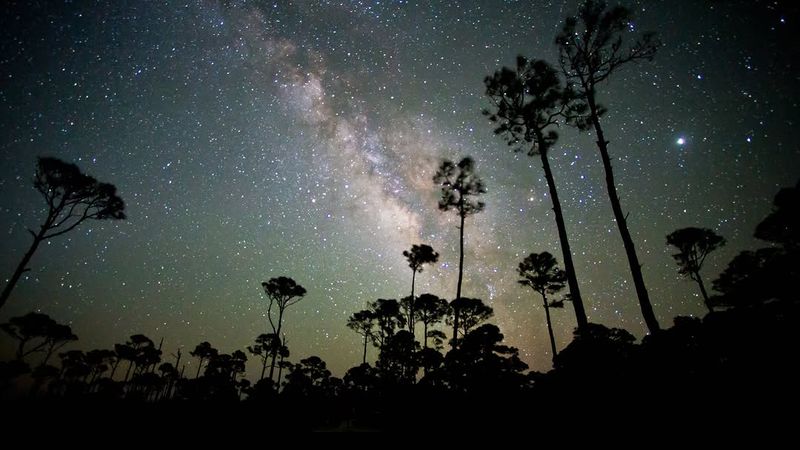
Out on a barrier island in the Florida Panhandle, St. George Island State Park feels like it belongs to a different era. The park sits at the eastern end of St. George Island, separated from the mainland by Apalachicola Bay and far enough from any major city to keep the skies genuinely dark.
The beach here faces south, which means your view over the Gulf of Mexico is completely free of light interference — just open water and open sky.
The combination of a dark beach, warm Gulf breezes, and a sky full of stars makes this one of the most atmospheric stargazing experiences in Florida. Lying on the white sand with waves breaking nearby while the Milky Way arches overhead is the kind of thing that sounds like a cliché until you actually do it.
Then it just sounds like a perfect night.
The park has a campground that fills up quickly during peak season, so booking ahead is essential if you want to stay overnight. The primitive beach campsites are especially popular among stargazers because they put you right on the sand with nothing between you and the sky.
Ranger programs occasionally include nighttime beach walks that touch on astronomy and wildlife.
St. George Island is also well-positioned for watching the International Space Station pass overhead, and ISS sightings are more visually dramatic when the sky is dark enough to show the stars it moves against.
The Panhandle’s slightly higher latitude compared to South Florida also means some winter constellations appear a bit higher in the sky here, adding variety for dedicated observers.
The park’s remote location keeps crowds manageable, and the overall vibe is unhurried and peaceful — exactly the energy you want when you are trying to lose yourself in the cosmos.
8. Big Pine Key
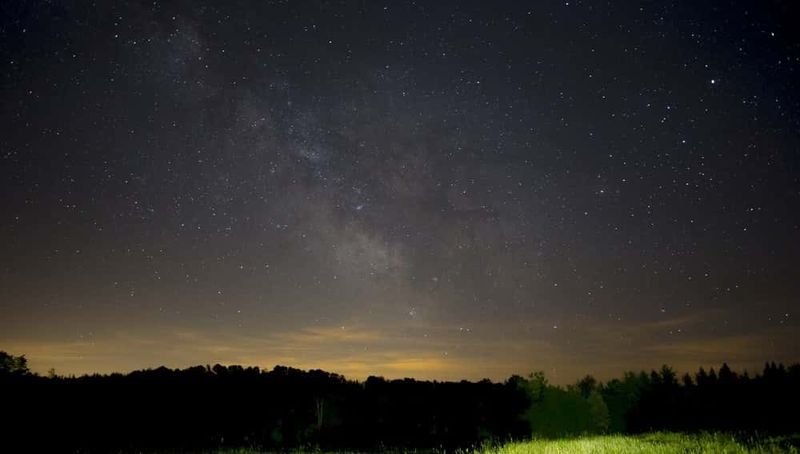
Big Pine Key sits in the Lower Florida Keys, roughly 30 miles north of Key West, and it occupies a unique sweet spot — far enough from Key West’s glow to offer noticeably darker skies, but still accessible enough to reach without a boat or seaplane.
The island is best known during the day as home to the endangered Key deer, but after sunset, the sky above Big Pine Key earns its own kind of admiration.
The low elevation, flat terrain, and surrounding ocean on all sides create a viewing environment where the sky seems to wrap around you.
Stars appear closer to the horizon here than they do in most of Florida, and the humidity can sometimes add a soft atmospheric glow that makes bright planets and star clusters look almost three-dimensional.
Photographers who shoot here talk about the quality of light in a way that sounds almost spiritual.
No Pine Key Wilderness Area and nearby Bahia Honda State Park extend the dark-sky territory in this part of the Keys. Bahia Honda in particular has a beach that faces south and southwest, giving an unobstructed view over open ocean that is ideal for watching meteor showers and tracking the paths of planets across the ecliptic.
The two locations together make this stretch of the Keys a legitimate astronomy destination.
One thing that sets Big Pine Key apart from other Florida stargazing spots is the sound design. The gentle slap of ocean water against the shoreline, the rustle of palms, and the occasional splash of something large in the shallows all create a backdrop that turns a stargazing session into a full sensory experience.
Bring a red-light flashlight, keep noise low, and give yourself at least an hour for your eyes to fully adjust. The patience pays off in ways that a phone photo simply cannot capture.