10 Florida Waterfalls You Need to See Before Summer Ends
Florida is famous for its beaches and theme parks, but did you know the Sunshine State is also hiding some seriously stunning waterfalls? From the lush springs of Central Florida to the rugged ravines of the Panhandle, these natural wonders are easier to reach than you might think.
Summer in Florida gets hot fast, and nothing beats cooling off near a real waterfall tucked inside a shady state park. Pack your water shoes and sunscreen — these 10 breathtaking Florida waterfalls are waiting for you right now.
1. Rainbow Springs State Park — Dunnellon (Central Florida)
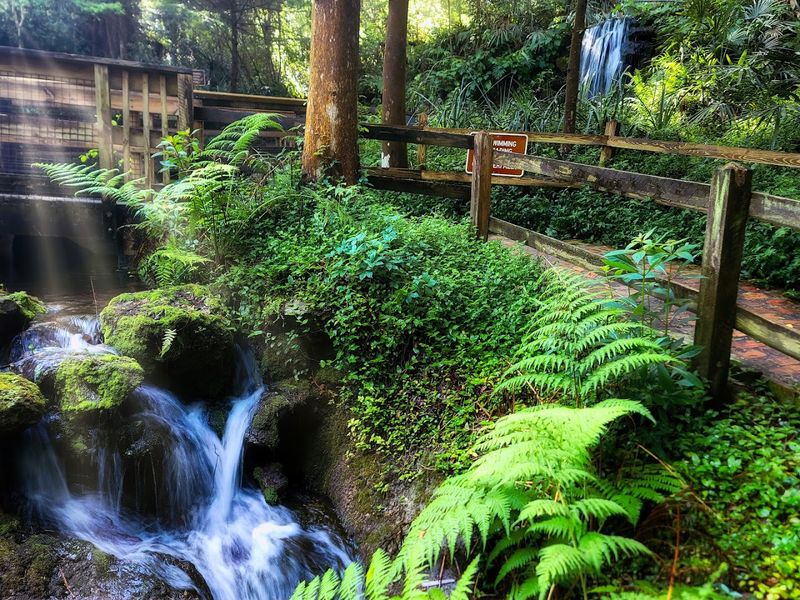
There is something almost unreal about the water at Rainbow Springs. It runs so clear and so blue that your first instinct is to wonder if someone added dye.
Spoiler: no one did — that is just Florida geology doing its thing.
Located in Dunnellon, Rainbow Springs State Park sits along the Rainbow River and features man-made waterfalls that were originally built during the park’s days as a private attraction in the mid-20th century. Those waterfalls still flow beautifully today, cascading over mossy rocks into pools surrounded by blooming flowers and ancient trees.
The contrast of the bright water against the deep green landscape makes it one of the most photogenic spots in the entire state.
The park is open year-round, but summer is genuinely magical here because the spring water stays a constant 68 degrees no matter how scorching it gets outside. That temperature difference hits you the second you wade in — refreshing in the best possible way.
Tubing down the Rainbow River is a wildly popular activity, and you can rent tubes right at the park.
Snorkeling is also fantastic here. The visibility in the spring run can exceed 100 feet on a calm day, and you will likely spot turtles, fish, and even the occasional manatee drifting by.
There are walking trails too, winding through native gardens that bloom with color through the warmer months.
Admission is affordable, parking is manageable on weekday mornings, and the whole experience feels like stumbling into a Florida that most tourists never get to see. Rainbow Springs is not just a waterfall stop — it is a full afternoon adventure that earns every bit of its reputation.
2. Falling Creek Falls — Lake City (North Florida)
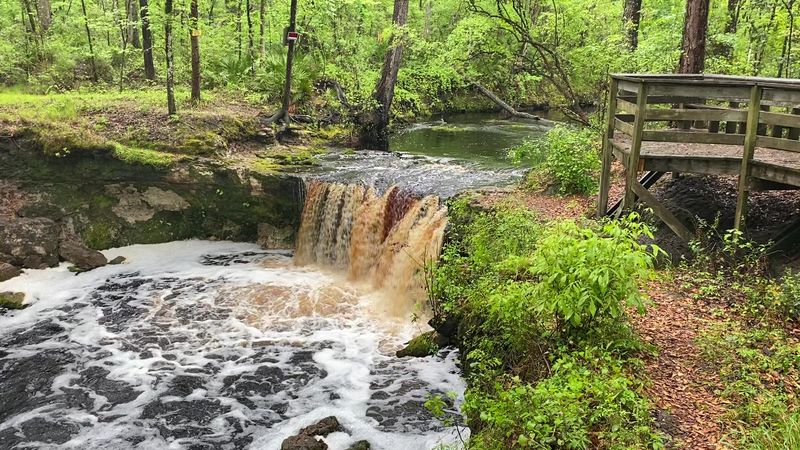
Falling Creek Falls has the kind of low-key energy that makes you feel like you discovered something most people drove right past on US-129. And honestly?
A lot of people do. That is their loss and your gain.
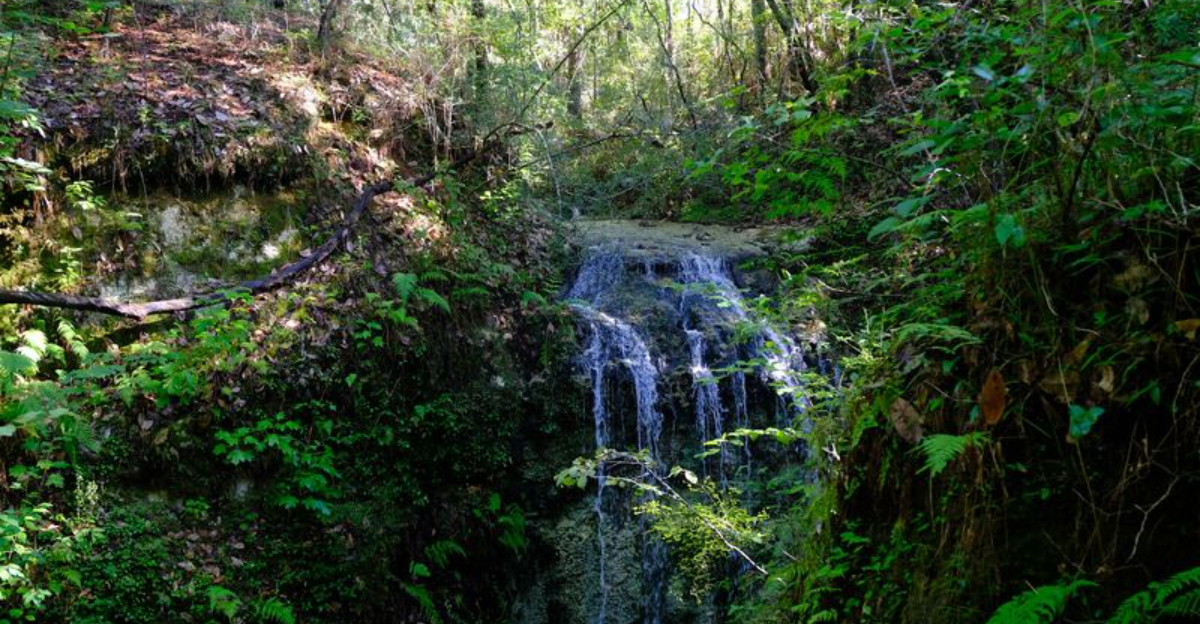
Located just outside Lake City, this waterfall drops about 10 feet over a series of limestone ledges into a shallow, dark-water creek below. It is not Niagara Falls — but in a state where most water moves at a lazy horizontal pace, watching water actually fall vertically feels like a genuine event.
The surrounding forest is dense and moody, with tall hardwoods forming a canopy that keeps the area cool even on blazing summer days.
Getting there involves a short, easy trail that most people can handle without breaking a sweat. The path winds through a mix of pine flatwoods and hardwood hammocks, and it is common to spot wildlife along the way — deer, various wading birds, and plenty of insects doing their noisy summer symphony.
The whole hike is under a mile round trip, making it a solid choice for families with younger kids.
One thing worth knowing: the water level and flow at Falling Creek can vary significantly depending on recent rainfall. After a good summer storm, the falls are much more dramatic and the sound of the water carries through the trees.
During dry stretches, the flow slows down considerably. Checking recent visitor reports before you go is a smart move.
There is no entrance fee, no crowds fighting for the best photo angle, and no gift shop trying to sell you a snow globe. Just a genuine North Florida waterfall doing its quiet, underappreciated thing.
Sometimes the best spots are the ones that never made the top ten lists — until now.
3. Steinhatchee Falls — Steinhatchee (North Florida)
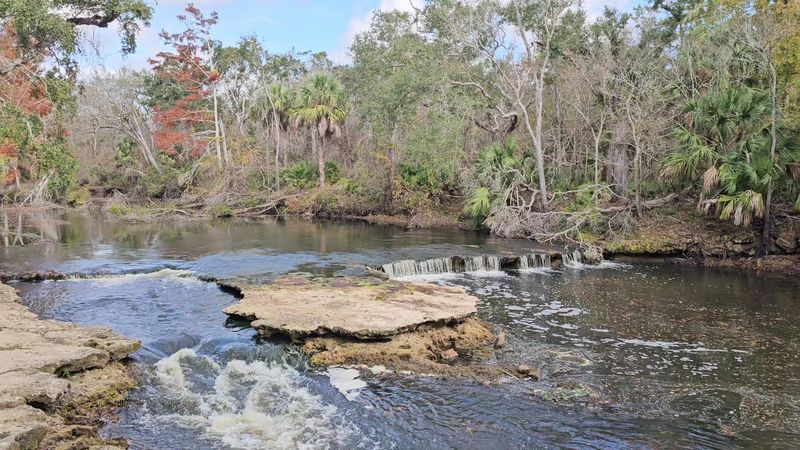
Steinhatchee Falls is not the kind of waterfall you see on postcards, and that is exactly what makes it worth the trip. Instead of a dramatic vertical plunge, this one spreads wide across a limestone shelf, rushing over flat rocky outcroppings in a way that looks almost ancient.
It feels less like a tourist attraction and more like a secret the river has been keeping for centuries.
Found along the Steinhatchee River in North Florida, these falls are technically a series of shoals — wide, shallow drops where the water moves fast and loud over exposed bedrock. The sound alone is worth the drive.
When the river is running well after summer rains, the rush of water over those rocks creates a surprisingly powerful roar that echoes through the surrounding cypress forest.
Wading is a huge draw here. The rocky bottom makes footing a little tricky, so water shoes are strongly recommended, but once you are out there standing in knee-deep moving water on a hot August afternoon, the whole world slows down.
Kids go absolutely wild for it. Adults do too, honestly — there is something deeply satisfying about standing in a Florida river that actually has some current to it.
The area around Steinhatchee is also known for scalloping season, which runs through the summer months, so combining a waterfall visit with a scallop trip makes for an incredible full-day outing. The town itself is small and charming, with local seafood spots that serve the freshest catch you will find anywhere.
Steinhatchee Falls does not have a fancy parking lot or a ranger station. It is raw, quiet, and genuinely off the beaten path — which in a state as busy as Florida, is increasingly hard to find and absolutely worth protecting.
4. Torreya State Park (Weeping Ridge Trail) — Bristol (Panhandle)
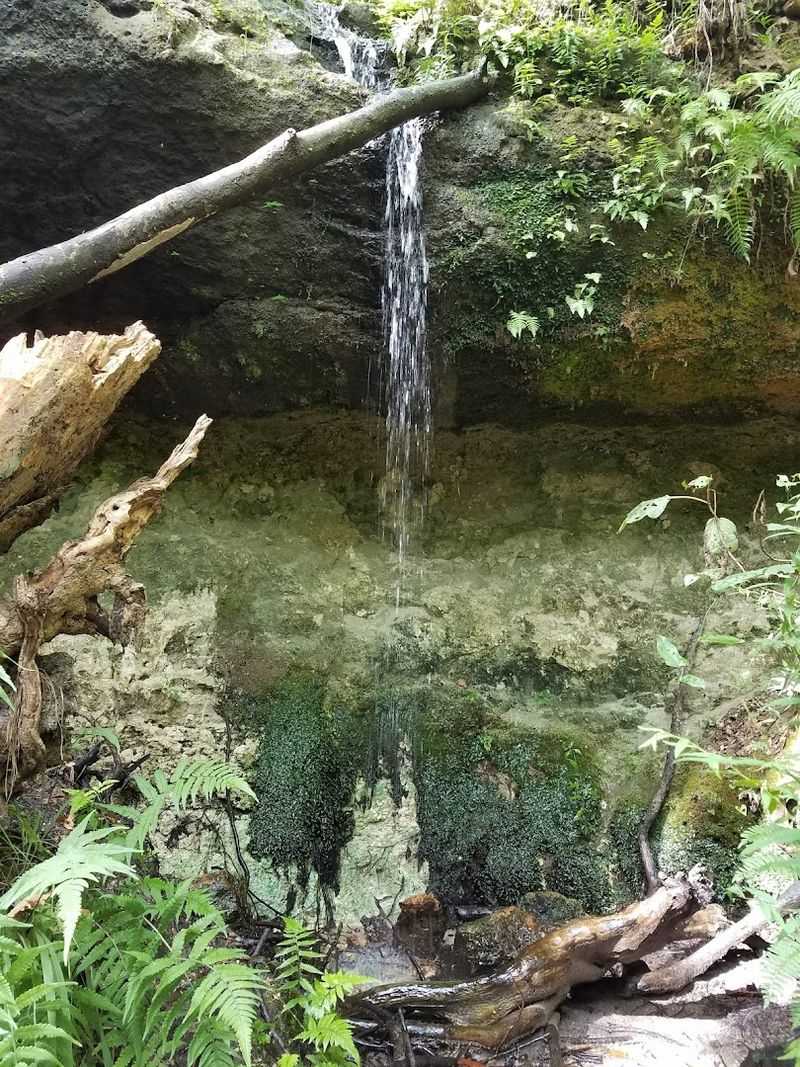
Torreya State Park is the kind of place that makes you forget you are in Florida. The terrain here is dramatic by any state’s standards — deep ravines, steep bluffs overlooking the Apalachicola River, and a forest that feels more like the Appalachian foothills than anything most Floridians grew up around.
The Weeping Ridge Trail is where the waterfall magic happens.
Along this trail, water seeps and trickles down steep, moss-covered hillsides in what locals describe as a weeping effect — thin sheets and streams of water slowly making their way down the ravine walls. It is not a thundering cascade, but the visual is hauntingly beautiful, especially after summer rains when the moisture level in the air is high and every surface seems to glisten.
The sound is soft and constant, like white noise made by the earth itself.
The park is named after the Torreya taxifolia, one of the rarest trees in the world, which grows here and almost nowhere else on the planet. Walking through a forest that contains a tree on the brink of extinction adds a layer of meaning to the hike that you will not find on a typical nature walk.
Rangers at the park are passionate about the conservation story and love sharing it with visitors.
Elevation changes in Torreya are significant for Florida — some sections of the trail gain over 150 feet, which will absolutely get your heart rate up. Wear proper hiking shoes and bring more water than you think you need.
The heat in the Panhandle during July and August is no joke, even under the tree canopy.
If you want a Florida outdoor experience that genuinely surprises you, Torreya delivers something most residents have never even heard of — and that is a rare thing in this state.
5. Big Shoals State Park — White Springs (North Florida)
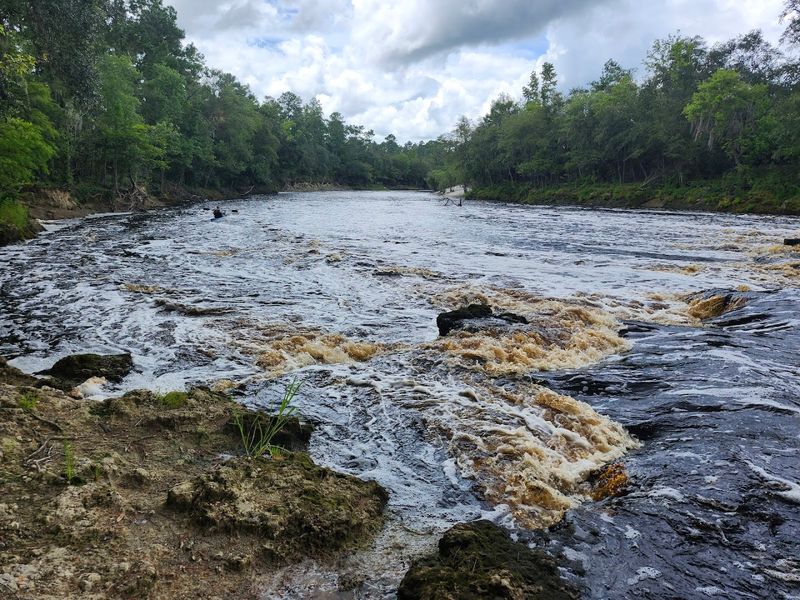
Big Shoals is not messing around. This is Florida’s largest whitewater rapids — a bold claim in a state not exactly famous for elevation changes — and when the Suwannee River is running high, the roar of water crashing over those limestone ledges can be heard from the trail long before you see it.
It is genuinely thrilling.
Located in White Springs, Big Shoals State Park sits along one of Florida’s most iconic rivers. The shoals themselves drop about two feet over a wide stretch of exposed limestone, creating Class III rapids during high water levels.
Kayakers and canoeists come from all over the Southeast to run these rapids, and watching them navigate the churn from the viewing bluff above is entertainment all on its own.
Even if you are not paddling, the park’s trail system offers excellent views of the falls from elevated overlooks. The Big Shoals Trail winds along the river bluff through a gorgeous mix of hardwoods and pines, giving you multiple vantage points as you hike.
The forest here has an old-growth feel — wide trunks, deep shade, and a quiet that makes you feel genuinely far from civilization even though you are only minutes from the highway.
Summer is a good time to visit, but water levels are key. The falls are most dramatic after periods of heavy rainfall when the Suwannee is running high and fast.
During dry stretches, the rapids calm down considerably and the limestone shelves become more visible. Either way, the landscape is worth the trip.
White Springs itself has a rich musical history as the birthplace of the Florida Folk Festival, held annually at the park. So you might find yourself watching whitewater AND listening to live folk music on the same afternoon.
That is a Florida combo you did not know you needed.
6. Devil’s Millhopper Geological State Park — Gainesville (North Florida)
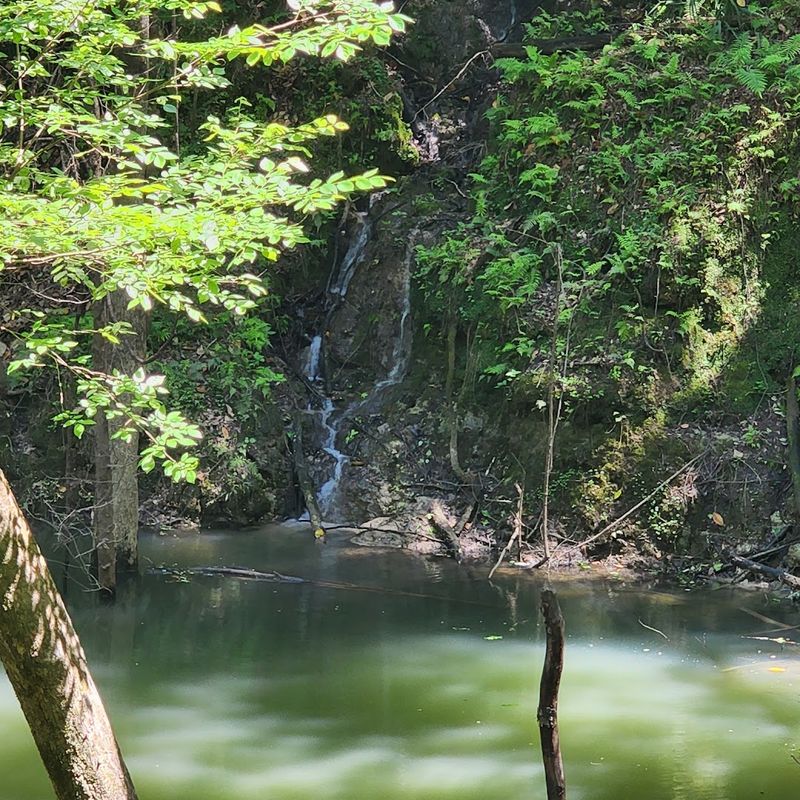
Walking into Devil’s Millhopper feels like descending into another world. A 120-foot-deep sinkhole opens up in the middle of Gainesville, and at the bottom, a dozen small streams trickle down the steep walls and disappear into the earth.
The air temperature drops noticeably as you go down, and the vegetation shifts from typical Florida scrub to a cool, fern-covered microclimate that belongs somewhere in the Pacific Northwest.
The sinkhole was formed thousands of years ago when the limestone bedrock beneath the surface collapsed, creating this dramatic geological bowl. The name comes from old folklore — early settlers thought the sinkhole looked like the hopper of a grain mill, and the bones of ancient animals found at the bottom added a devilish reputation to the place.
That history gives it a personality most state parks just cannot match.
A wooden staircase with 232 steps takes you down to the floor of the sinkhole, where you can observe the small waterfalls and streams up close. The sound of dripping water echoes off the walls in a way that feels meditative.
Getting back up is a legitimate workout — those 232 steps going back up will remind you of every flight of stairs you skipped this year.
The park is run by the University of Florida and the Florida Park Service, and interpretive signs along the boardwalk explain the geology, ecology, and folklore in a way that is genuinely interesting rather than textbook-dry. It is a favorite field trip destination for local schools, but adults find it just as fascinating.
Admission is low, the parking area is small and fills up on weekends, and the whole visit takes about an hour. Go early, bring water, and prepare to be quietly amazed by something that has no business existing in the middle of a Florida city.
7. Camp Branch / Disappearing Creek — Live Oak (North Florida)
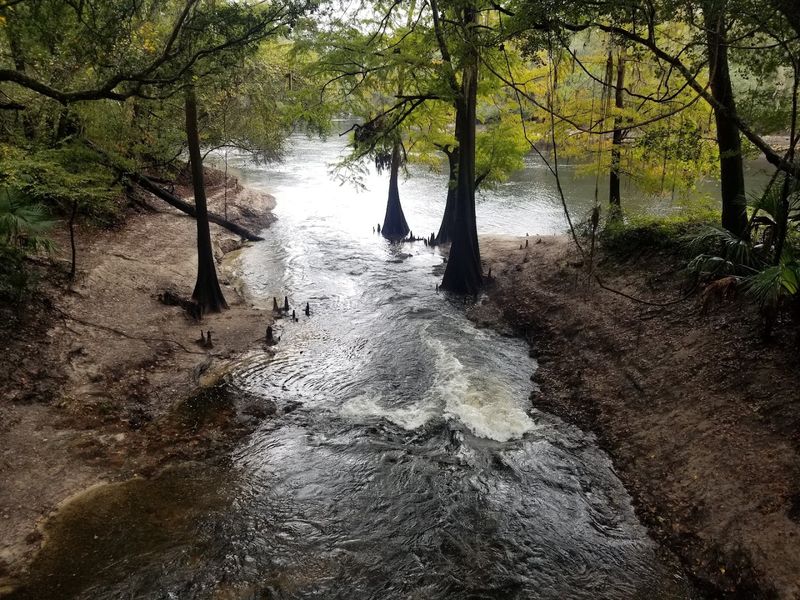
Camp Branch and its companion, Disappearing Creek, are for the adventurers who want something completely off the tourist radar. This is not a manicured state park with a welcome center and a gift shop.
It is raw North Florida terrain — sinkholes, underground streams, and a creek that literally vanishes into the earth before your eyes. That is not a metaphor.
The water just disappears.
Located near Live Oak in Suwannee County, this area sits on top of Florida’s famous karst geology, where the limestone bedrock is riddled with holes, caves, and underground passages. Camp Branch flows through a forested ravine before reaching a point where the creek drops into a sinkhole and continues its journey underground.
When rainfall is high, small waterfalls form as the water cascades into the opening, creating one of the more surreal natural scenes in the state.
The terrain here requires some navigation skills and a willingness to get your feet wet. There are no formal trails, no posted signs, and no amenities.
Visitors who make the effort to find it describe the experience as genuinely exploratory — the kind of outdoor adventure that feels more like discovery than recreation. Bringing a map, wearing sturdy footwear, and going with someone who has been before is a smart approach.
Wildlife in this area is abundant. The dense hardwood forest supports a wide variety of birds, and the creek environment attracts wading birds, turtles, and the occasional river otter.
Summer mornings here are loud with birdsong and insect noise in the best possible way.
Camp Branch rewards the curious and the patient. It is not going to hand you a perfect photo op on a silver platter.
But if you are willing to explore, it offers something increasingly rare in modern Florida — genuine wilderness with no filter.
8. Morikami Museum and Japanese Gardens — Delray Beach (South Florida)
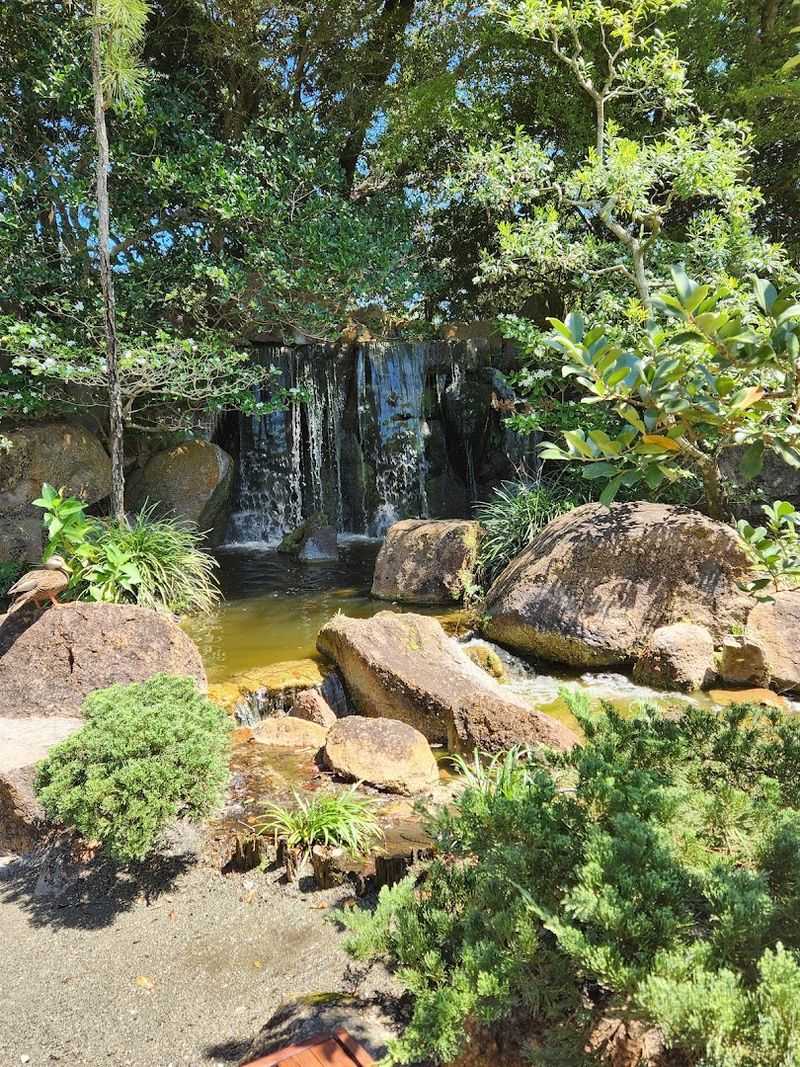
Okay, fair warning: Morikami is not a natural waterfall in the wilderness sense. But dismissing it because of that would be a serious mistake.
The waterfalls inside these meticulously designed Japanese gardens in Delray Beach are some of the most intentionally beautiful water features in all of South Florida, and the experience of sitting beside them is genuinely restorative.
The Morikami Museum and Japanese Gardens were built to honor the Yamato Colony, a group of Japanese agricultural settlers who came to Palm Beach County in the early 1900s. The gardens have evolved over the decades into a world-class cultural landscape featuring six distinct garden styles, each with its own water elements — streams, cascades, stone-lined pools, and multi-tiered falls that feed into koi ponds filled with enormous, colorful fish.
In summer, the gardens take on a lush, almost overgrown quality that feels deeply peaceful. The humidity that makes the rest of South Florida miserable actually works in Morikami’s favor, keeping the vegetation thick and green and the sound of moving water constant throughout the grounds.
Early morning visits during summer are especially magical — the light is soft, the crowds are thin, and the whole place feels like a secret garden.
The on-site Cornell Cafe serves Japanese-inspired food that is legitimately delicious, making a lunch stop part of the experience rather than an afterthought. The museum itself houses rotating exhibits on Japanese art and culture that add real depth to the visit.
Admission is reasonable, the parking is easy, and the pace is entirely yours to set. Morikami is the kind of place where an hour can quietly stretch into three, and you will leave feeling calmer than when you arrived.
In a state full of loud, fast attractions, that is worth a lot.
9. Falling Waters State Park — Chipley (Panhandle)
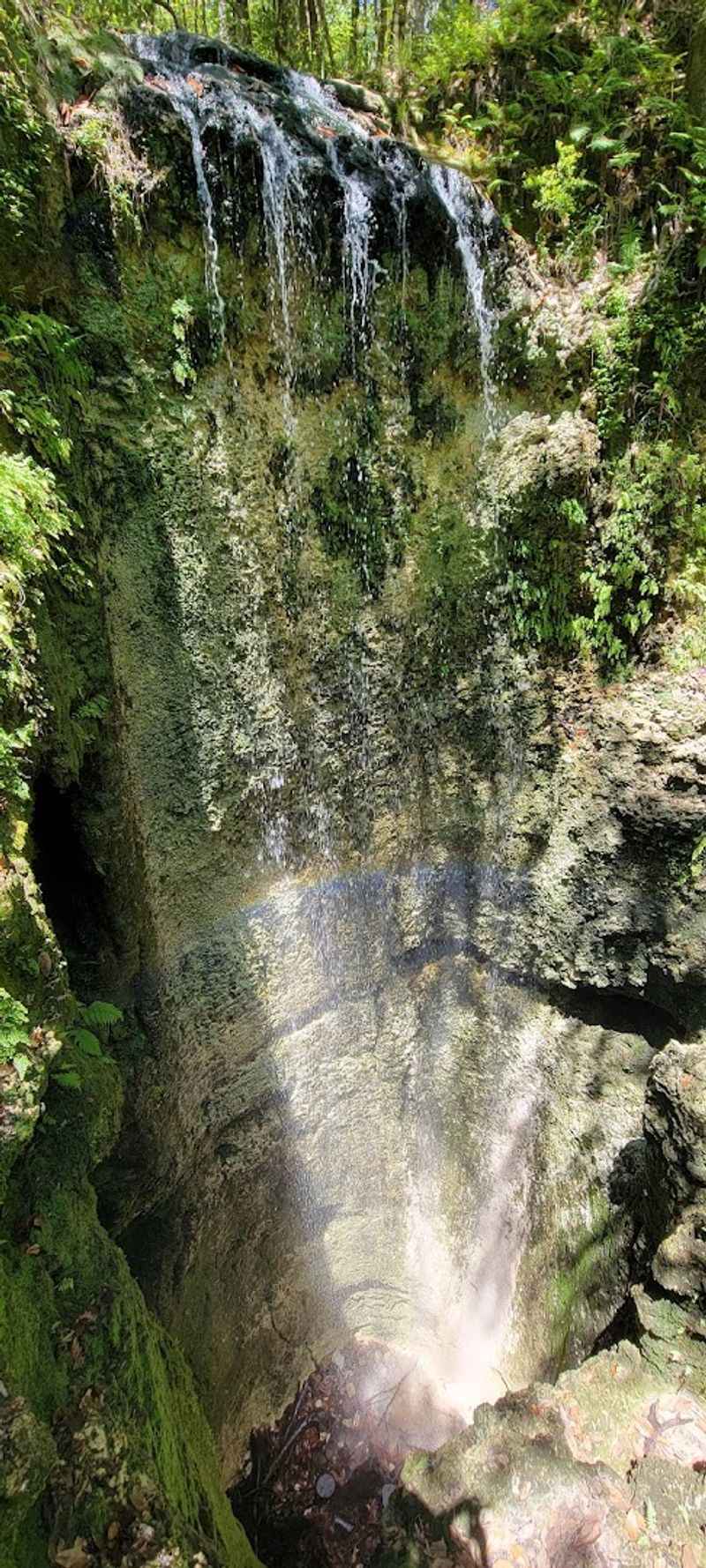
Falling Waters State Park is home to Florida’s tallest waterfall, and yes — that sentence does carry some irony in a state that sits mostly at sea level. But the falls here are legitimately impressive.
A stream drops 73 feet straight down into a cylindrical sinkhole, disappearing into the darkness below. Nobody is entirely sure where the water goes after that.
The mystery is part of the appeal.
Located near Chipley in the Panhandle, the park is a short drive from Interstate 10 and makes a perfect road trip stop. The main trail to the waterfall is an easy, paved walk that takes about 20 minutes round trip, passing through a shaded ravine with ferns, wildflowers, and the kind of cool air that feels like a gift after a summer afternoon in the Panhandle heat.
The viewing platform at the top of the falls gives you a dramatic look down into the sinkhole below.
Beyond the waterfall, the park has a lot going on. There is a spring-fed swimming lake that stays refreshingly cool through the summer months, a campground tucked into the pine forest, and several miles of nature trails that wind through diverse habitats.
Birding is excellent here, particularly during the summer months when migrating species pass through the Panhandle corridor.
The geology of the park is fascinating on its own terms. The entire region sits on limestone karst terrain, and the sinkhole that swallows the waterfall is a dramatic example of what happens when underground cavities collapse over time.
The park’s interpretive signs explain the process clearly and without making it feel like a geology lecture.
Falling Waters earns its reputation as one of the Panhandle’s top natural attractions. The combination of a genuine waterfall, a swimming lake, and easy access from a major highway makes it almost impossible to drive past without stopping.
10. Robinson Branch Falls — Columbia County (North Florida)
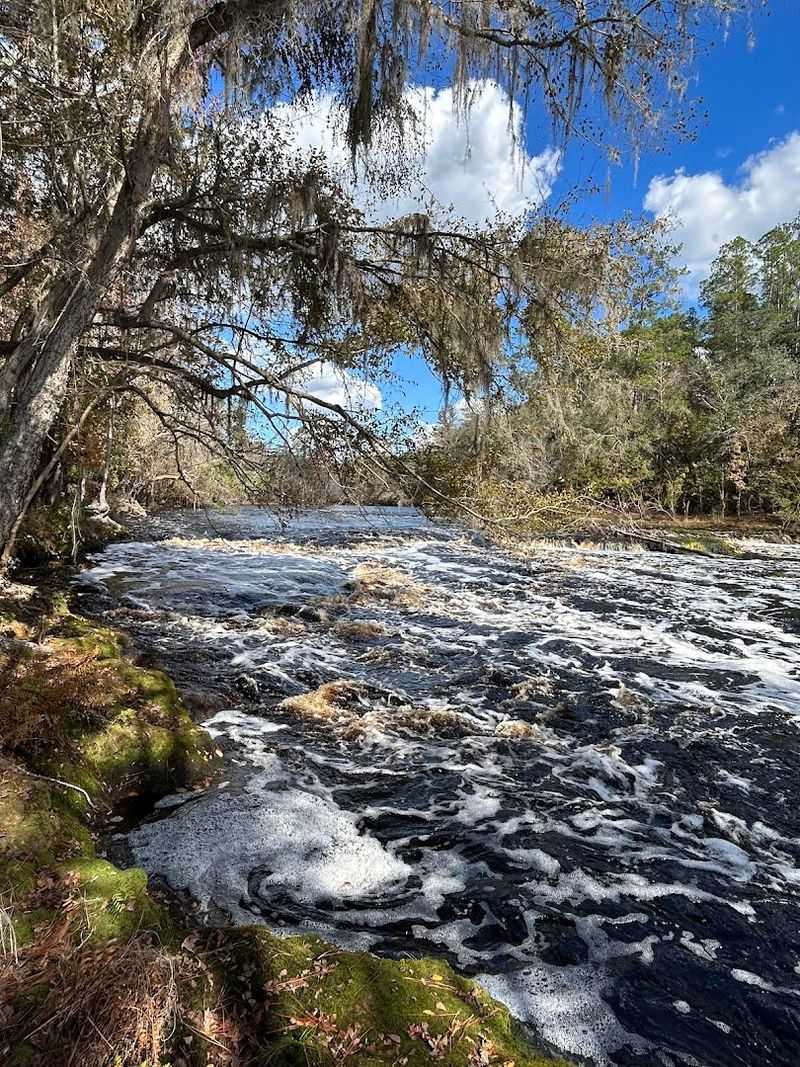
Robinson Branch Falls sits at the quieter end of Florida’s waterfall spectrum — small, tucked away, and completely unbothered by fame. That is not a criticism.
In fact, for people who are tired of fighting crowds at the more well-known spots, this Columbia County gem feels like a reward for doing your homework.
The falls here are formed where Robinson Branch creek drops over a series of limestone ledges into a dark, tannic pool below. The water in North Florida’s blackwater streams gets its color from tannins — natural compounds released by decaying leaves — giving it that deep amber or tea-colored appearance that looks almost otherworldly.
The combination of dark water, moss-covered rocks, and overhanging hardwood trees creates a moody, atmospheric scene that photographs beautifully in the soft light of early morning or late afternoon.
Access requires a bit of effort and some willingness to navigate without a formal trailhead. This is the kind of spot where local knowledge helps enormously, and connecting with Florida hiking groups online before your visit can point you toward the best approach.
Rubber boots or water shoes are essential — the terrain gets muddy fast after rain, and crossing the creek to get the best view involves getting your feet wet regardless of conditions.
Summer visits are perfectly timed because the surrounding forest is at peak lushness, with ferns and wildflowers filling in every gap between the trees. The canopy is thick enough to provide real shade, making the hike far more comfortable than it would be in a more exposed landscape.
Robinson Branch Falls is a reminder that Florida still has quiet corners that reward the people willing to look for them. Not every great waterfall needs a parking lot, a brochure, or a line of visitors waiting for their turn.
Some of the best ones just need you to show up.