This Sunken 44,000-Ton Aircraft Carrier Is the World’s Largest Artificial Reef — and It’s in Florida
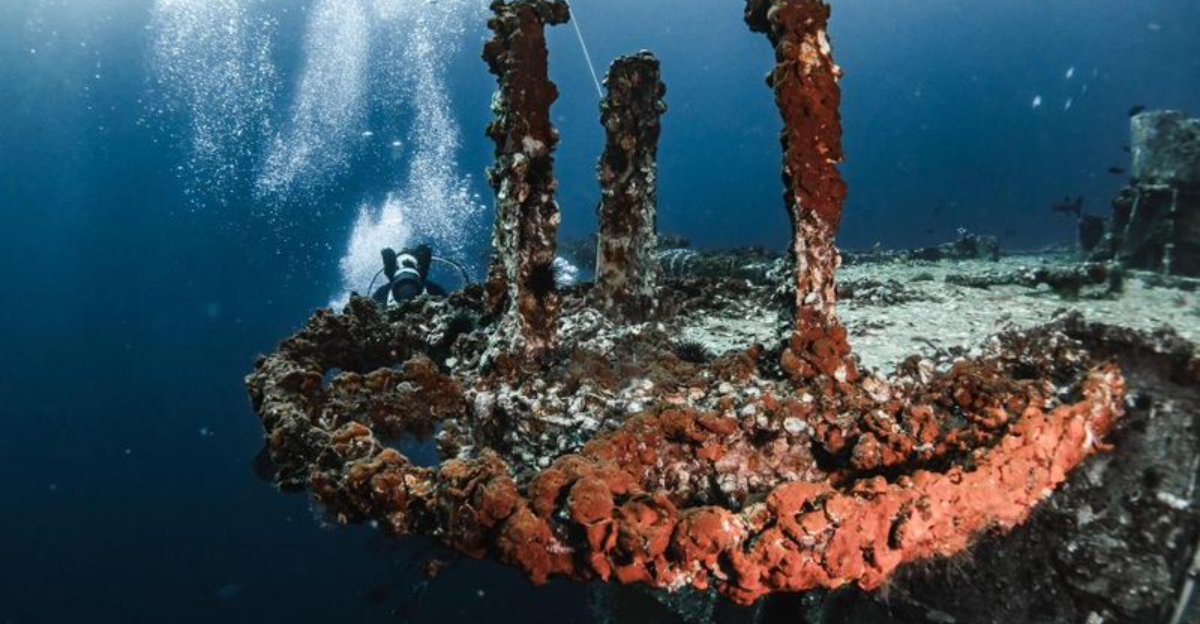
Off the coast of Pensacola, Florida, a massive warship rests 212 feet below the Gulf of Mexico’s surface, transformed from military vessel to underwater paradise. The USS Oriskany, a 911-foot aircraft carrier that served in the Korean and Vietnam Wars, was intentionally sunk in 2006 to create the world’s largest artificial reef. Today, this colossal structure attracts divers from around the globe who come to explore its decks, swim through its corridors, and witness the incredible marine life that has claimed it as home.
1. A Legendary Warship with Battle Scars
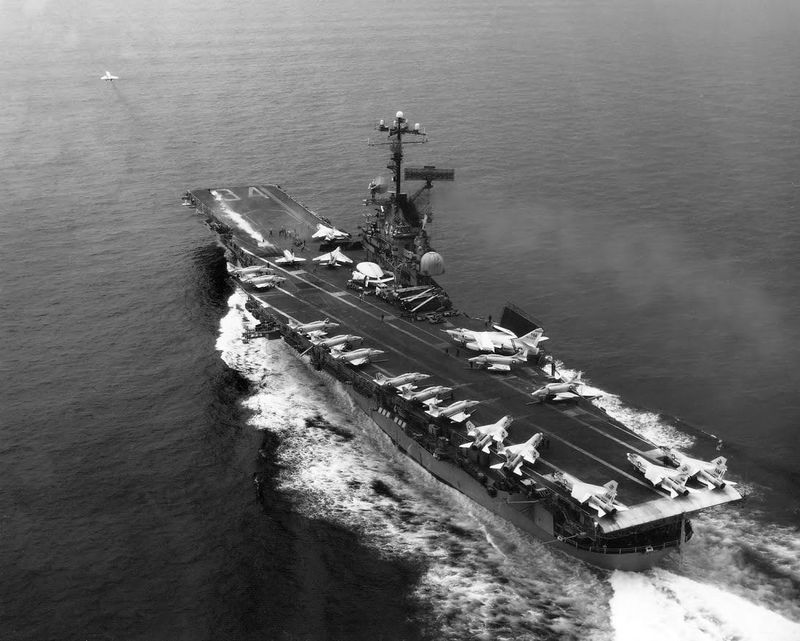
Built in 1945, the USS Oriskany earned its stripes through decades of military service that would make any history buff’s heart race. This Essex-class carrier saw action in Korea and completed multiple combat tours during Vietnam, earning two battle stars along the way. The ship’s name honors the Revolutionary War Battle of Oriskany, fought in New York in 1777.
Sailors called her “Mighty O,” and she certainly lived up to that nickname. The carrier launched countless aircraft on dangerous missions and brought thousands of servicemen safely home. Her flight deck once roared with jet engines and the organized chaos of naval aviation at its finest.
But Oriskany’s history includes tragedy too. A devastating fire in 1966 killed 44 crew members, leaving permanent marks on the ship’s legacy. After decommissioning in 1976, the carrier sat in mothballs for three decades before finding new purpose beneath the waves, where her storied past now attracts curious divers eager to touch living history.
2. The Spectacular Sinking Operation
Preparing a 44,000-ton warship for its final voyage isn’t exactly a weekend project. Engineers spent months removing hazardous materials, cutting strategic openings for diver access, and ensuring the ship would settle upright on the seafloor. The cleanup alone cost millions and required meticulous attention to environmental safety standards.
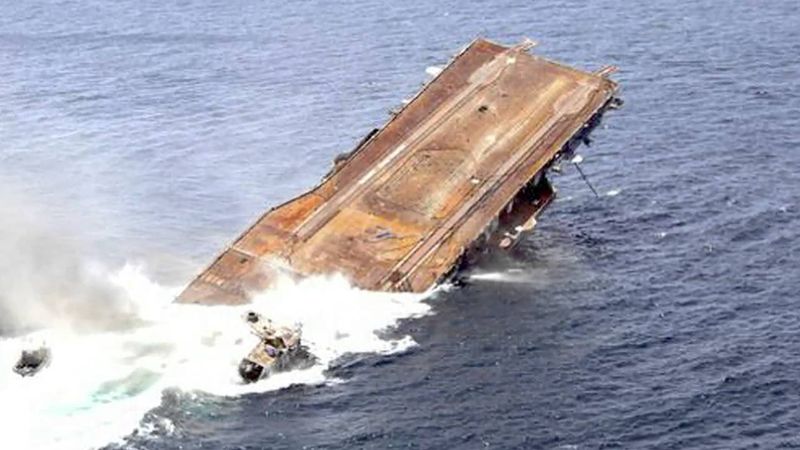
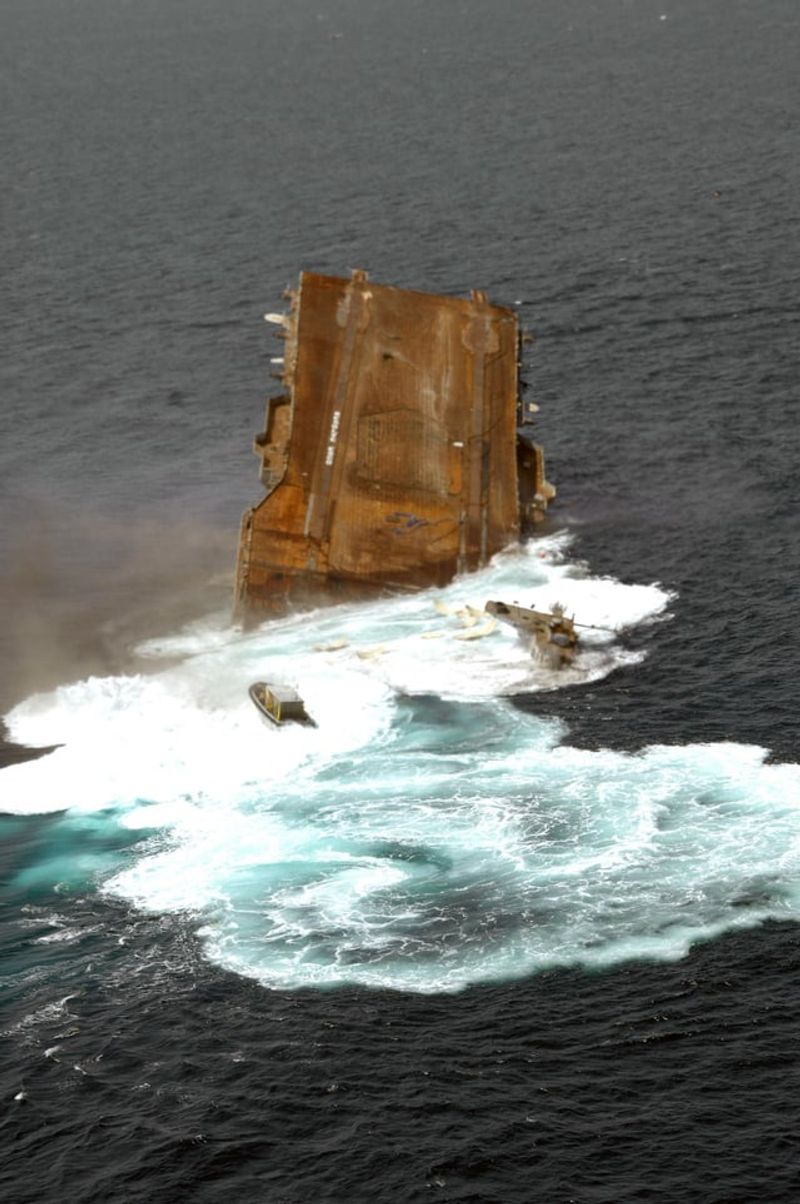
On May 17, 2006, thousands of spectators gathered along Pensacola Beach to witness something most people never see. Explosives detonated precisely placed charges, and the massive carrier began its controlled descent. The entire process took just 37 minutes from first explosion to final resting place.
Cameras captured every dramatic moment as the bow tipped forward and the stern lifted skyward before sliding beneath the surface. The ship settled perfectly upright in 212 feet of water, exactly as planned. Naval veterans watching from shore saluted as their old ship disappeared, many with tears streaming down their faces, knowing she’d found an honorable second life serving ocean ecosystems instead of war efforts.
3. Prime Diving Location 24 Miles Offshore
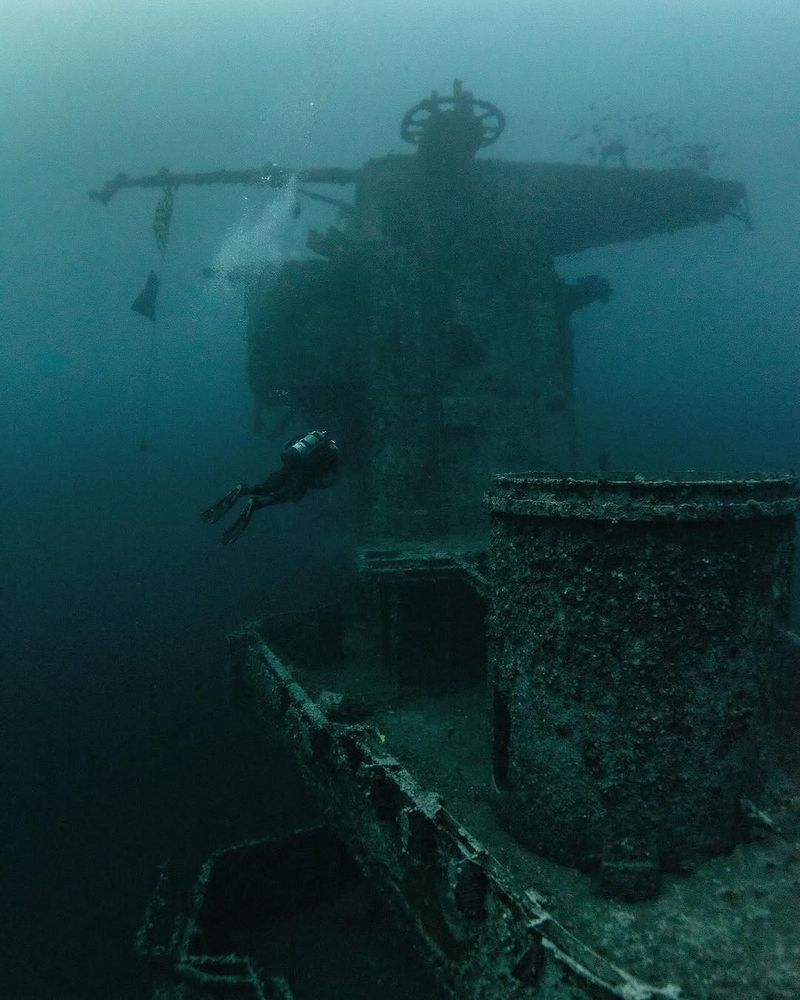
Finding the Oriskany requires a serious boat ride from Pensacola’s shore. The reef sits approximately 24 miles southeast of Pensacola Pass in the Gulf of Mexico, far enough that you’ll want a vessel with comfortable seating and maybe some seasickness remedies handy. Charter operators know these coordinates by heart and make regular trips when weather permits.
The journey typically takes 90 minutes to two hours, depending on sea conditions and your boat’s speed. Smart captains check forecasts carefully because Gulf weather can shift faster than a politician’s promises. Calm mornings often give way to choppy afternoons, so early departures work best.
GPS coordinates mark the exact spot where this steel giant rests: 30°02.560’N, 87°00.480’W. The wreck’s superstructure rises to within 135 feet of the surface, creating an underwater skyscraper that’s visible on fish finders from considerable distances. During peak season, you might find several dive boats anchored above simultaneously, each releasing bubbles from divers exploring different sections of this submerged marvel.
4. Technical Dive Challenges and Depths
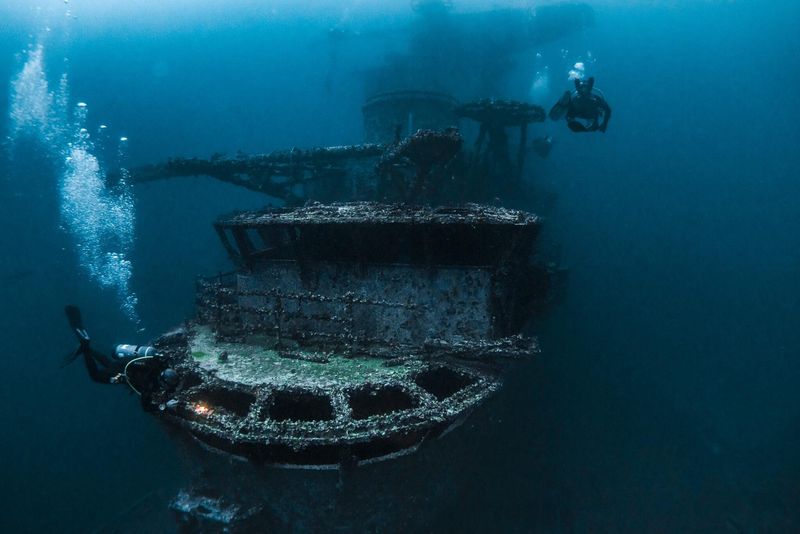
Don’t let Instagram photos fool you—diving the Oriskany demands serious skills and certification. The flight deck sits at 135 feet below the surface, already pushing recreational diving limits, while the sandy bottom rests at 212 feet. These depths require advanced training, specialized equipment, and respect for the ocean’s unforgiving nature.
Nitrogen narcosis becomes a real concern at these depths, affecting judgment like having one too many margaritas. Technical divers use mixed gases like nitrox or trimix to extend bottom time and reduce decompression obligations. Even experienced divers limit their time exploring to avoid mandatory decompression stops that can stretch for hours.
Strong currents frequently sweep across the wreck, sometimes reaching two knots or more. Divers must time their visits carefully and maintain awareness of their air supply and depth throughout the dive. The ship’s interior spaces add another layer of complexity—penetrating the structure requires overhead environment training and proper equipment.
One wrong turn inside could prove fatal, which is why most divers stick to external exploration of this magnificent underwater monument.
5. Explosion of Marine Life colonization
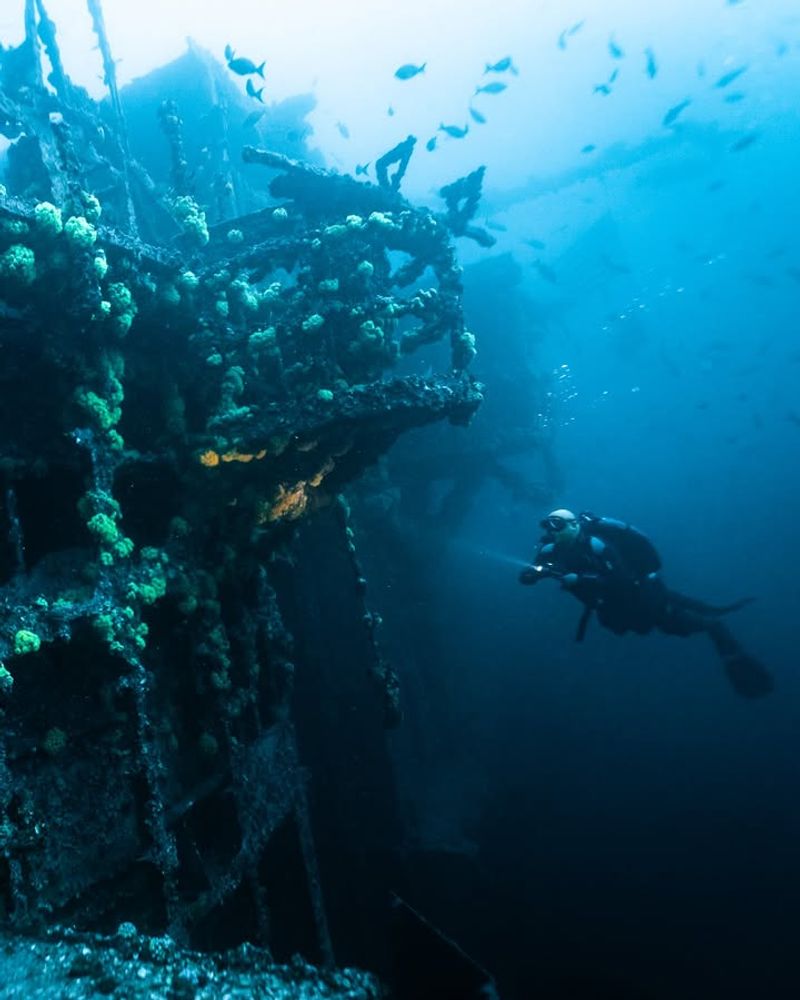
Mother Nature wasted zero time claiming the Oriskany as her own. Within months of sinking, the first pioneers arrived—algae and barnacles coating every surface in sight. Fast-forward nearly two decades, and this artificial reef supports an ecosystem so vibrant it rivals natural formations that took centuries to develop.
Massive schools of amberjack circle the superstructure like living tornadoes, their silver bodies flashing in filtered sunlight. Goliath grouper—some weighing over 400 pounds—have claimed the hangar deck as their territory, eyeing passing divers with curiosity rather than fear. Barracuda patrol the flight deck edges while smaller tropicals dart between coral-covered railings and gun mounts.
Seasonal visitors include manta rays gliding gracefully overhead and whale sharks occasionally cruising past during summer months. The biodiversity continues expanding as soft corals establish themselves on vertical surfaces and hard corals slowly spread across horizontal planes. Marine biologists estimate the reef now hosts thousands of species, from microscopic plankton to apex predators, creating a food web complexity that rivals old-growth underwater forests elsewhere in the Gulf.
6. Exploring the Flight Deck and Island
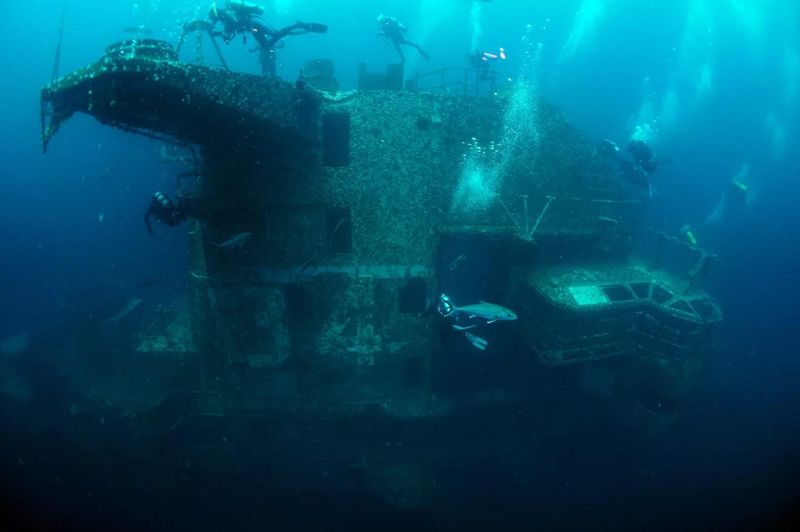
Swimming across the Oriskany’s flight deck feels like floating through an alternate reality where aviation history meets ocean wilderness. The expansive deck stretches longer than three football fields, now carpeted with marine growth instead of nonskid coating. Anchor points where aircraft once chained down have become homes for octopuses and small fish seeking shelter.
The island superstructure rises like an underwater apartment building, its levels offering different exploration opportunities. Portholes peer into darkness while external ladders and catwalks provide routes for adventurous divers to ascend toward shallower depths. Each level reveals artifacts from the ship’s operational days—hatches, equipment mounts, and communication arrays now serving as attachment points for sea fans and sponges.
Photography opportunities here are absolutely ridiculous. The massive scale creates perspective shots that look photoshopped even when they’re completely real. Divers often hover near the island to capture the surreal contrast between military architecture and thriving reef ecosystem, watching schools of fish swirl through spaces where sailors once directed flight operations during actual combat missions decades ago.
7. Charter Operations and Dive Services
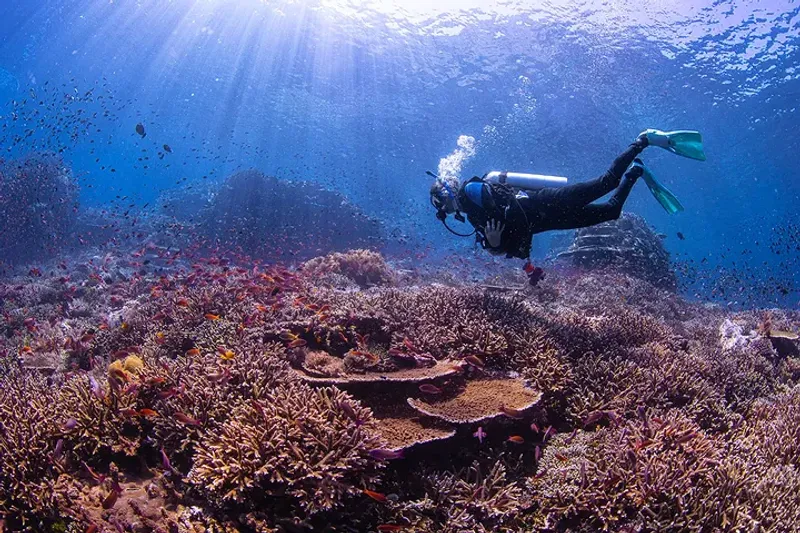
Several Pensacola-area dive operators run regular trips to the Oriskany, each offering slightly different experiences and price points. Most charters include two dives, hot showers, snacks, and all the tank fills you need. Expect to pay between $150-250 per person depending on the season and whether you need equipment rentals beyond basic scuba gear.
Experienced captains know exactly where to anchor for optimal access to different sections of the wreck. Some specialize in photographer-friendly trips with longer bottom times, while others cater to technical divers pushing deeper limits. Always verify the crew’s experience level and safety equipment before booking—this isn’t the dive site for cutting corners on professionalism.
Peak diving season runs April through October when Gulf waters warm up and visibility improves dramatically. Summer months offer the calmest seas but also the most crowded boats. Shoulder seasons provide excellent conditions with fewer divers competing for photo angles.
Winter diving remains possible but requires thicker wetsuits and tolerance for choppier surface conditions that can make the boat ride challenging for those prone to seasickness.
8. Environmental Impact and Conservation Success
Skeptics initially questioned whether sinking a warship would help or harm Gulf ecosystems. Nearly twenty years later, the data speaks louder than any debate ever could. The Oriskany has exceeded every environmental goal set before her sinking, creating habitat where mostly barren sand previously existed.
Fish populations in the surrounding area have increased measurably, providing better catches for recreational and commercial fishermen working nearby waters. The vertical relief attracts pelagic species that rarely venture over flat bottom, diversifying the local ecosystem in ways scientists continue studying. Research diving teams regularly document new species colonizing the structure.
The reef’s success has influenced artificial reef programs worldwide, proving that properly prepared vessels can serve conservation purposes after military service ends. Florida’s artificial reef program now manages dozens of similar projects, though none match the Oriskany’s sheer scale and impact. Environmental groups that initially opposed the sinking now point to it as a model for responsible repurposing of decommissioned ships, demonstrating how human infrastructure can support rather than damage ocean health when thoughtfully integrated into marine environments.