These 11 Secret Florida Spots Are Hiding in Plain Sight
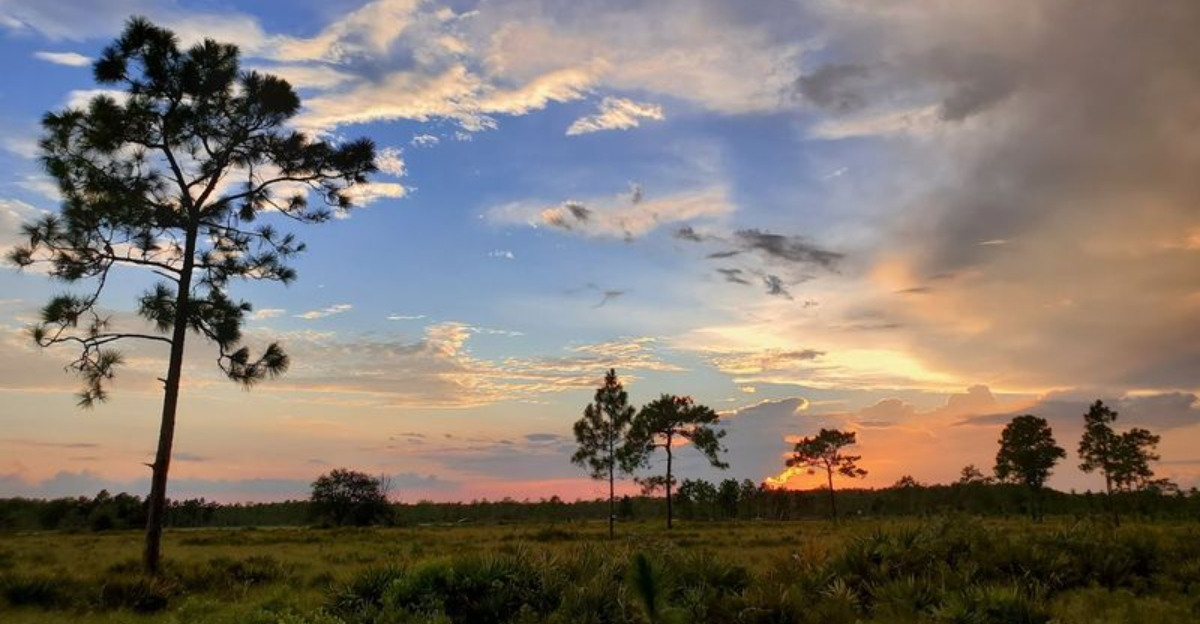
Florida is famous for its theme parks and crowded beaches, but the state has a whole other side that most visitors never discover. Tucked between highways, suburban neighborhoods, and rural back roads are wild, peaceful, and genuinely jaw-dropping places that locals quietly keep to themselves.
These 11 spots are not hidden because they are hard to find — they are hidden because nobody thinks to look. Once you visit even one of them, your whole idea of what Florida really is will change forever.
1. River Rise Preserve State Park — High Springs
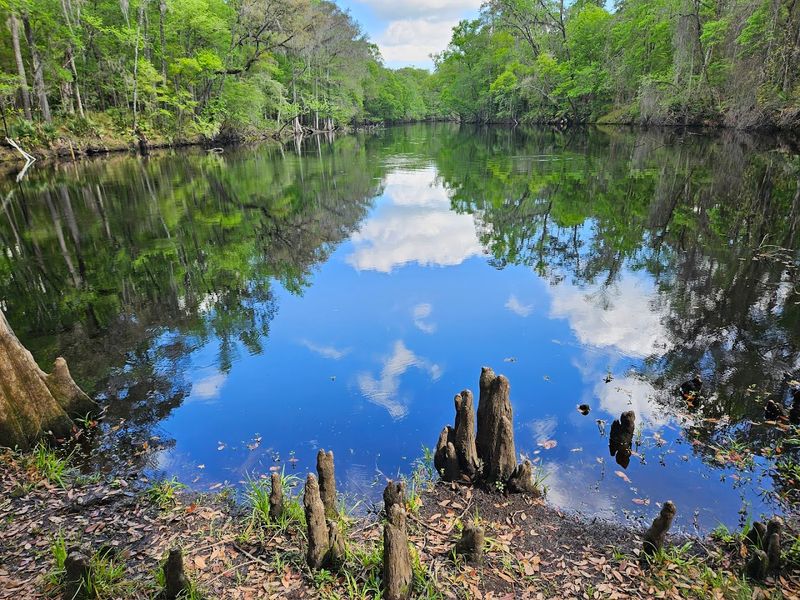
There is something almost magical about watching a full-sized river appear out of nowhere. At River Rise Preserve State Park near High Springs, the Santa Fe River literally disappears underground for about three miles before dramatically resurfacing — and you can hike right to the spot where it comes back.
That geological quirk alone makes this place unlike anything else in the state.
The preserve covers thousands of acres of longleaf pine flatwoods, hardwood hammocks, and floodplain forest. Most visitors to the High Springs area head straight to Ginnie Springs or Ichetucknee, completely bypassing this gem.
That means the trails here stay refreshingly quiet even on weekends when every other spring run in the region is packed shoulder to shoulder.
Horseback riding is actually allowed on many of the trails, which gives the whole experience an old-Florida ranch feel. The main trail to the river rise is about five miles round trip and relatively flat, making it accessible for most hikers.
Bring water, because shade comes and goes depending on the section you are walking.
Wildlife sightings here are genuinely impressive. White-tailed deer, gopher tortoises, sandhill cranes, and even the occasional black bear have been spotted along the route.
Birdwatchers will find plenty to keep their binoculars busy throughout the morning hours especially.
The best time to visit is between October and April when the weather is cooler and the bugs are manageable. No crowds, no entry fee at the trailhead, and a payoff view that looks like something out of a nature documentary.
River Rise earns its place on this list without even trying hard.
2. Citrus Tract, Withlacoochee State Forest / Citrus WMA — near Inverness
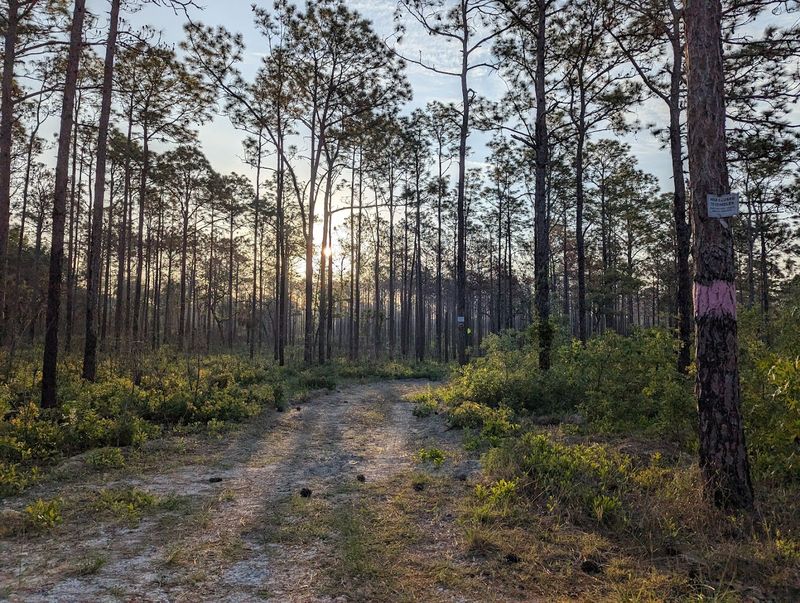
Most people drive through Citrus County on their way somewhere else, and that is exactly why the Citrus Tract inside Withlacoochee State Forest stays so wonderfully uncrowded. Sprawling across hundreds of thousands of acres, this section of the forest offers hiking, mountain biking, horseback riding, and wildlife watching on a scale that honestly rivals anything in central Florida.
The Citrus Wildlife Management Area overlaps with the forest here, which means the land is managed with both recreation and conservation in mind. You get the benefit of well-maintained trails alongside genuinely wild habitat.
Scrub jays, red-cockaded woodpeckers, and Florida black bears all call this landscape home, and patient visitors willing to slow down often spot them without much trouble.
One of the underrated highlights is the Holder Mine Campground area, which sits inside the tract and offers a no-frills camping experience surrounded by towering pines. Waking up to birdsong and zero cell service feels like a genuine reset.
The campground fills up during hunting season, but outside of that window it stays surprisingly available.
The trail network here is extensive enough that you could explore for days without retracing your steps. Some sections pass through open scrub habitat that feels almost otherworldly, with white sandy soil and scattered palmettos stretching in every direction.
It is a side of Florida that most beach tourists never imagine exists.
Bring a printed trail map because cell service gets spotty fast once you are deep in the forest. The Florida National Scenic Trail also passes through this area, giving long-distance hikers a chance to connect to a much bigger adventure.
For a quiet weekday escape near Inverness, this tract delivers every single time.
3. Lake Lotus Park — Altamonte Springs
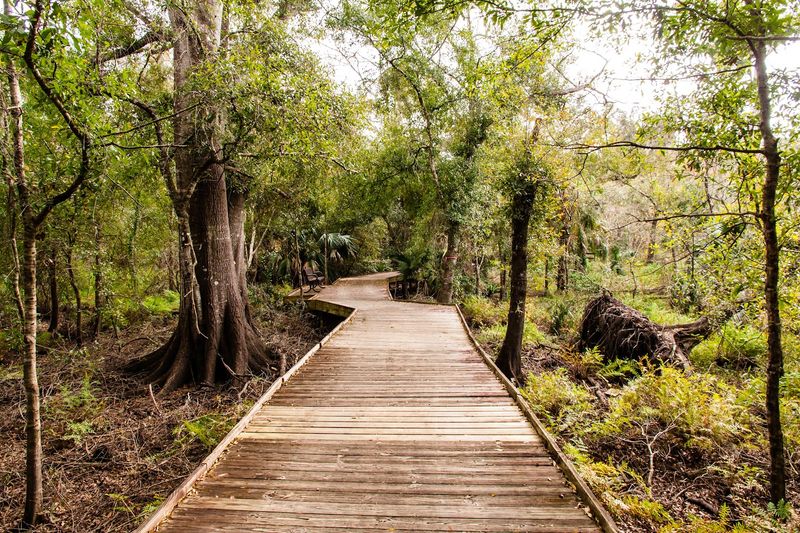
Altamonte Springs is not exactly the first place that comes to mind when people picture untouched Florida nature — it sits smack in the middle of suburban Seminole County, sandwiched between strip malls and subdivisions. But Lake Lotus Park is one of those rare spots that genuinely stops you in your tracks the moment you step onto the boardwalk.
The park wraps around a shallow lake covered in American lotus, and when those flowers bloom in late spring and early summer, the view is spectacular enough to make your jaw drop. Huge yellow blooms rise above broad green pads, and the whole surface seems to glow in the morning light.
Photographers who know about this place guard it like a secret treasure.
The trail system is short — you can walk the whole thing in under an hour — but the quality of the experience punches way above its size. Cypress trees draped in Spanish moss line the water’s edge, great blue herons stand motionless in the shallows, and turtles stack up on every available log.
It genuinely feels like you have wandered into a nature documentary rather than a city park.
Admission is free, parking is easy, and the boardwalk is accessible enough for most visitors. Families bring strollers here, birders bring spotting scopes, and joggers use the perimeter path for a quick morning loop.
Everyone seems to find what they came for.
Go early on a weekday if you want the place mostly to yourself. The light on the lotus flowers is best between 7 and 9 in the morning, and the birds are most active during those same hours.
For a completely free and shockingly beautiful escape inside suburban Orlando, Lake Lotus is genuinely hard to beat.
4. GTM Research Reserve Back Trails — Ponte Vedra / St. Augustine Area
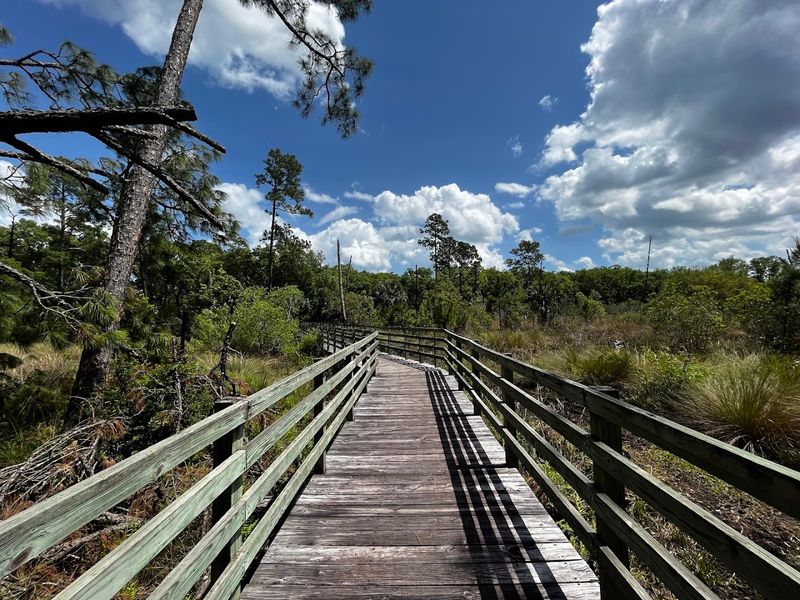
The Guana Tolomato Matanzas Research Reserve stretches along the northeast Florida coast just south of Ponte Vedra Beach, and while the main beach access gets a steady stream of visitors, the back trail network is a completely different world. Head past the first parking lot and the crowds thin out almost immediately, leaving you with miles of undeveloped coastal landscape that feels genuinely remote.
The reserve protects one of the largest undeveloped stretches of coastal habitat in Florida, covering more than 73,000 acres of salt marsh, scrub, maritime hammock, and tidal creeks. That variety of habitats packed into one connected system means the wildlife diversity here is exceptional.
Roseate spoonbills, wood storks, bald eagles, and river otters are all regular sightings for anyone willing to spend a few hours exploring.
The back trails range from easy flat walks along the edge of Guana Lake to more rugged paths through palmetto scrub that require a little navigation confidence. A printed map from the reserve office is worth grabbing before you head out, especially if you plan to venture beyond the more obvious routes.
Getting turned around back here is easier than it looks.
Kayaking the tidal creeks is another way to experience the reserve at a slower pace, and several launch points exist within the property. Paddling through the marsh at low tide with nothing but birds and the sound of wind in the cordgrass is the kind of afternoon that resets your whole perspective on the week.
The reserve charges a small parking fee at some lots but remains one of the best-kept secrets in the entire St. Augustine region. Weekday mornings between September and April offer the best combination of wildlife activity and comfortable temperatures.
This place deserves far more attention than it gets.
5. Half Moon Wildlife Management Area — near Ocala
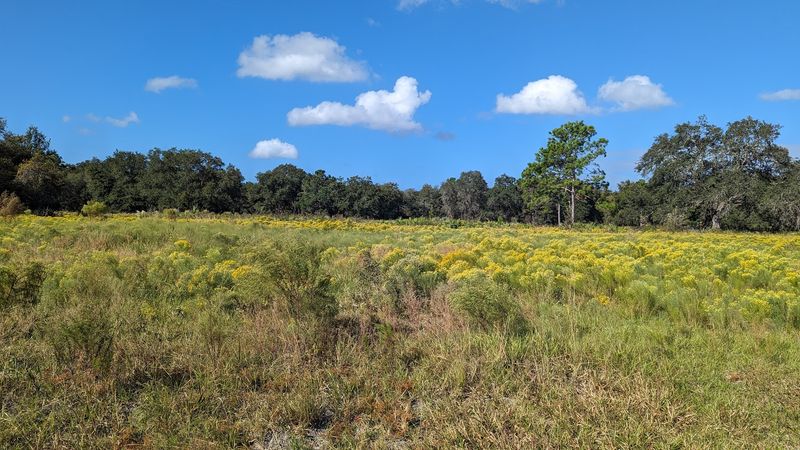
Half Moon Wildlife Management Area sits in a quiet corner of Marion County that most people blow right past on their way to Ocala National Forest. That is their loss.
This WMA covers a mosaic of wet prairies, marshes, and pine flatwoods that attracts an almost absurd variety of birds, making it a quiet legend among Florida birders who have figured out just how good it is.
The landscape here is classic old Florida — wide open, slightly wild, and completely unmanicured. Sandhill cranes stalk through the wet grass, snail kites circle overhead hunting apple snails, and in winter the marsh edges fill up with migrating waterfowl.
If you have never seen a snail kite up close, this is honestly one of the more reliable spots in the state to find one.
Access is straightforward via unpaved roads that are generally passable in a standard vehicle during dry conditions. A high-clearance vehicle makes things easier if you want to explore the back sections after heavy rain.
The WMA is managed by the Florida Fish and Wildlife Conservation Commission, and no entry fee is required.
Hunting seasons do affect access at certain times of year, so checking the FWC website before visiting is a smart habit. Outside of hunting periods, the area is practically deserted — you might go an entire morning without seeing another person, which is increasingly rare in this part of central Florida.
Sunrise visits are especially rewarding. The light hitting the wet prairie at dawn, with birds calling from every direction and mist rising off the marsh, is the kind of scene that reminds you why people fall so hard for Florida’s wild interior.
Half Moon is a genuine hidden treasure hiding just off the main roads.
6. Econ River Wilderness Area — Oviedo
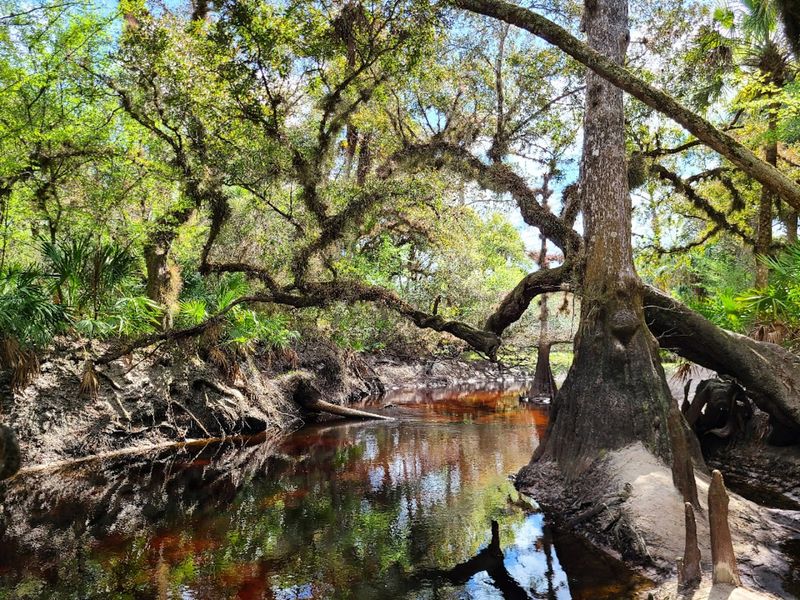
Oviedo has a well-earned reputation among locals for its famous roadside owls, but just outside town lies a wilderness area that quietly outshines even that quirky attraction. The Econ River Wilderness Area follows the Little Econlockhatchee River through a stretch of floodplain forest so lush and undisturbed that it feels completely disconnected from the suburban sprawl surrounding it.
The trail system here winds through river swamp, cabbage palm hammock, and upland pine forest, offering a solid variety of terrain in a relatively compact area. The river itself is tea-colored from tannins, slow-moving, and lined with ancient oaks draped in moss.
Paddling the Econ is a popular option, and several canoe and kayak launch points exist within the wilderness area for those who prefer exploring by water.
Wildlife encounters are a regular part of any visit. River otters, barred owls, red-shouldered hawks, and a rotating cast of wading birds make appearances throughout the year.
During spring wildflower season, the forest understory fills with color that most people associate with the Appalachians rather than central Florida.
The wilderness area is managed by Orange County and remains free to access. Parking is available at multiple trailheads, and the trail network is well enough marked that getting seriously lost is unlikely.
Still, downloading an offline map before heading out is always a good call in any forested area.
What makes the Econ particularly special is the contrast — you are minutes from Oviedo’s grocery stores and traffic lights, yet standing in forest that looks and sounds like it belongs in a much wilder part of the country. That proximity to civilization without any loss of wildness is a rare combination, and it is exactly what makes this spot worth knowing about.
7. Camp Helen State Park — West Edge of Panama City Beach
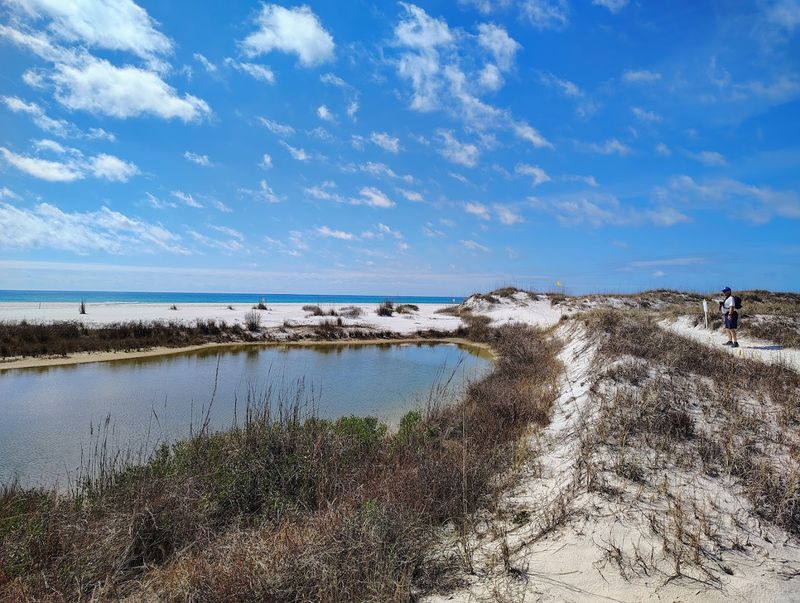
Panama City Beach is basically synonymous with wall-to-wall spring breakers and neon-lit souvenir shops, which makes Camp Helen State Park feel like it landed on the wrong stretch of coastline entirely. Tucked at the far western edge of the PCB strip, this park sits on a narrow peninsula between Lake Powell — one of Florida’s largest coastal dune lakes — and the Gulf of Mexico.
The contrast with everything around it is genuinely startling.
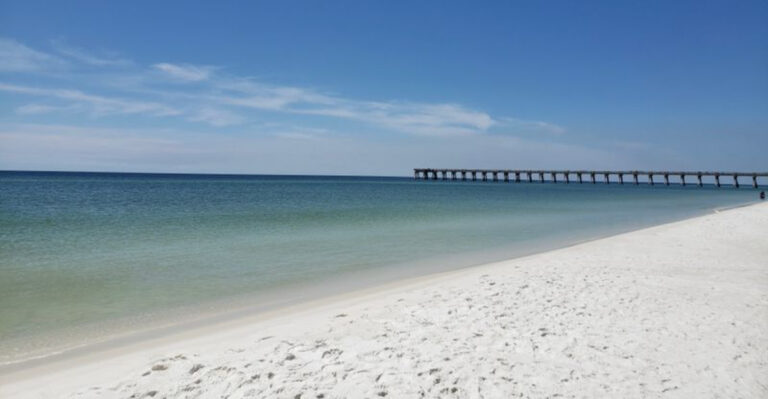
The beach here is the same stunning sugar-white sand and emerald water that the rest of Panama City Beach is famous for, but the crowd is a fraction of the size. The dune lake adds a layer of ecological interest that most barrier island beaches simply do not have.
These coastal dune lakes are a globally rare phenomenon, and Florida’s stretch of them along the Emerald Coast is considered one of the most significant concentrations in the world.
Hiking trails wind through the park’s pine flatwoods and along the lake shoreline, and the remnants of a 1940s resort camp still dot the property. Those old structures give the place a nostalgic, slightly eerie quality that hikers find oddly charming.
History enthusiasts and nature lovers both tend to leave satisfied.
Fishing from the lake shore is popular, and paddlers who bring their own kayaks or canoes can launch onto Lake Powell for a peaceful morning on the water. The park charges a small entry fee, but it is well worth every cent given what you get in return.
Arriving early on weekend mornings is the smart move, especially between Memorial Day and Labor Day. The parking lot fills faster than you might expect once word gets out about how good this place is.
And honestly, it deserves every visitor it gets.
8. St. Marks National Wildlife Refuge Trails Beyond the Lighthouse — St. Marks
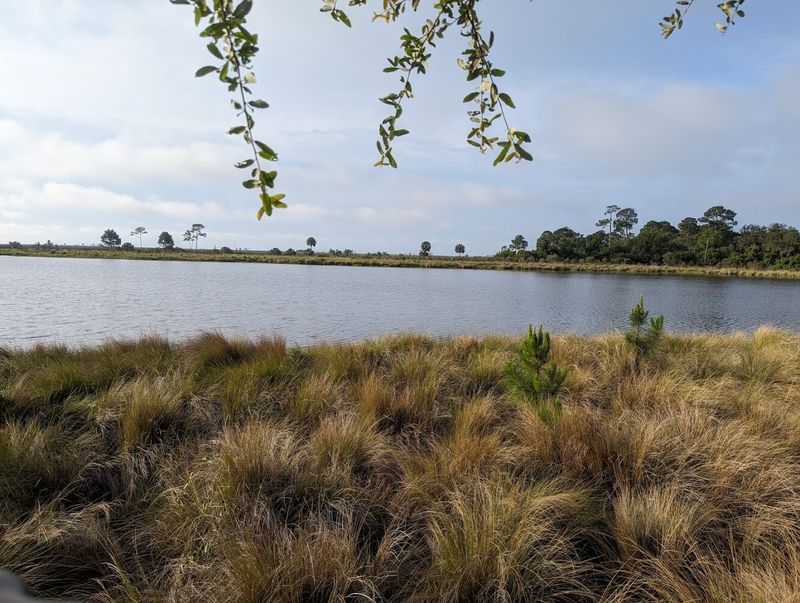
The lighthouse at St. Marks National Wildlife Refuge is the postcard image that gets all the attention, and rightfully so — it is gorgeous, historic, and photogenic from every angle. But the trails that extend beyond the lighthouse into the deeper sections of the refuge are where this place really earns its reputation as one of the wildest and most rewarding natural areas in the Florida Panhandle.
St. Marks NWR covers more than 68,000 acres of salt marsh, pine flatwoods, hardwood swamp, and Gulf coastline. The Florida National Scenic Trail passes through the refuge, offering long stretches of backcountry hiking that most day visitors never attempt.
Those who do are rewarded with landscapes that feel genuinely remote despite being less than 20 miles from Tallahassee.
Monarch butterfly migration turns the refuge into something extraordinary each fall. Thousands of monarchs funnel through this area on their way south, and the concentration of butterflies on certain October mornings has to be seen to be believed.
Birding during fall and winter migration is equally spectacular, with massive flocks of waterfowl filling the impoundments and shorebirds crowding the tidal flats.
The refuge road that leads to the lighthouse is itself worth driving slowly with the windows down. Alligators bask on the banks of the dikes, ospreys dive into the channels, and white-tailed deer graze at the road edge with surprising regularity.
Wildlife encounters begin before you even get out of the car.
Entry requires a small fee, payable at the entrance station or through an annual federal recreation pass. The lighthouse area gets crowded on weekends, but the back trails stay quiet almost year-round.
Bring bug spray from June through September — the marsh mosquitoes in summer are not playing around.
9. Deep Creek Preserve & Park — Arcadia / DeSoto County
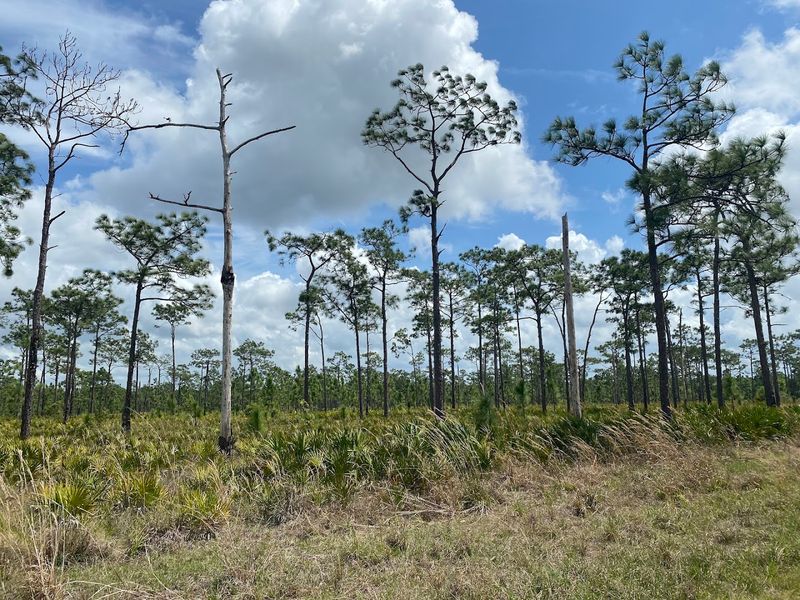
DeSoto County is one of those Florida places that rarely shows up on travel lists, which is exactly what makes Deep Creek Preserve such a find. Located near Arcadia in the heart of Florida’s ranching country, this preserve protects a stretch of creek corridor, pine flatwoods, and wetland habitat that feels untouched in a way that is getting harder to find anywhere in the state.
The Peace River watershed that Deep Creek feeds into is one of Florida’s most biologically rich river systems, and the preserve reflects that richness. Gopher tortoises are everywhere, plodding through the palmetto scrub with their ancient, unhurried energy.
Scrub jays sometimes work the open sandy areas, and the creek itself holds a variety of freshwater species that draw anglers looking for a quiet spot far from the usual fishing crowds.
Hiking here is straightforward and unpretentious. The trails are wide, the terrain is flat, and the signage is clear enough that navigation is rarely an issue.
What the trails lack in dramatic elevation changes they make up for in atmosphere — the kind of wide-open, sky-dominated Florida landscape that reminds you this state was once almost entirely wild.
The preserve is managed by the Southwest Florida Water Management District and is open to the public at no charge. Primitive camping may be available with a permit, making it a solid option for anyone looking to spend a night under the stars without driving to a more well-known destination.
Arcadia itself is worth a quick detour for its antique shops and old-Florida downtown, so pairing a morning hike at Deep Creek with an afternoon in town makes for a genuinely satisfying day trip. Not many people know this place exists, and for now, that is part of its considerable charm.
10. Three Lakes Wildlife Management Area — Osceola County
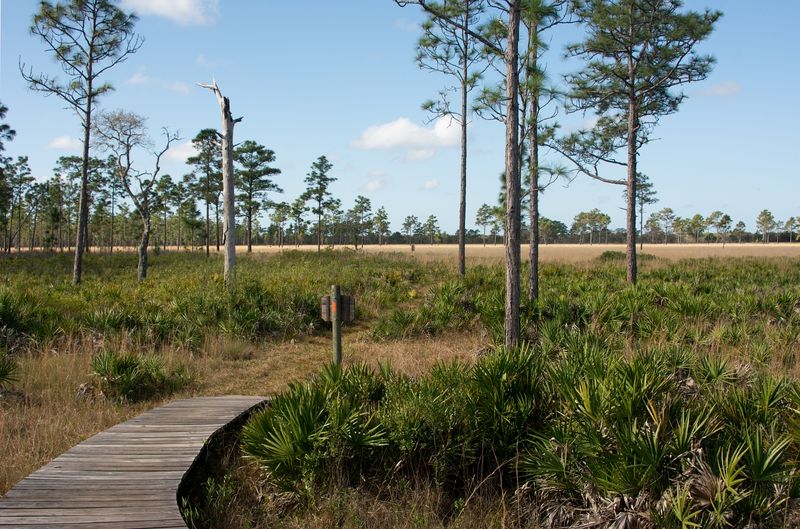
Sandwiched between the tourist corridors of Orlando and the cattle ranches of south-central Florida, Three Lakes Wildlife Management Area is the kind of place that makes you feel like you have genuinely escaped. The WMA sits in Osceola County and encompasses more than 60,000 acres of wet prairie, pine flatwoods, and three namesake lakes that attract wildlife in numbers that will genuinely impress even seasoned naturalists.
Florida sandhill cranes are practically everywhere here, and during winter the population swells as greater sandhill cranes migrate in from the north to join them. Watching hundreds of cranes feeding across an open prairie at dawn is one of those Florida experiences that does not get nearly enough credit.
Bald eagles, caracaras, and a rotating cast of hawks patrol the skies overhead throughout the cooler months.
The Prairie Lakes Unit within the WMA contains a section of the Florida National Scenic Trail that passes through some of the most open and expansive flatwoods in the state. Backpackers use this stretch for overnight trips, and primitive campsites are available at designated spots along the route.
The nights out here are spectacularly dark, making stargazing genuinely outstanding.
Hunting seasons affect access to certain parts of the WMA at various times of year, so checking the FWC regulations calendar before planning a visit is essential. Outside of those windows, the area is remarkably quiet and feels far larger and wilder than its proximity to Orlando would suggest.
A high-clearance vehicle helps during wet season, when some of the internal roads can get soft and muddy. But even in a standard car, the main access roads provide enough vantage points to make a wildlife-focused visit worthwhile.
Three Lakes rewards patience and early starts with experiences that are hard to replicate anywhere else in central Florida.
11. Apoxee Trail / Apoxee Park at Grassy Waters Preserve — West Palm Beach Outskirts
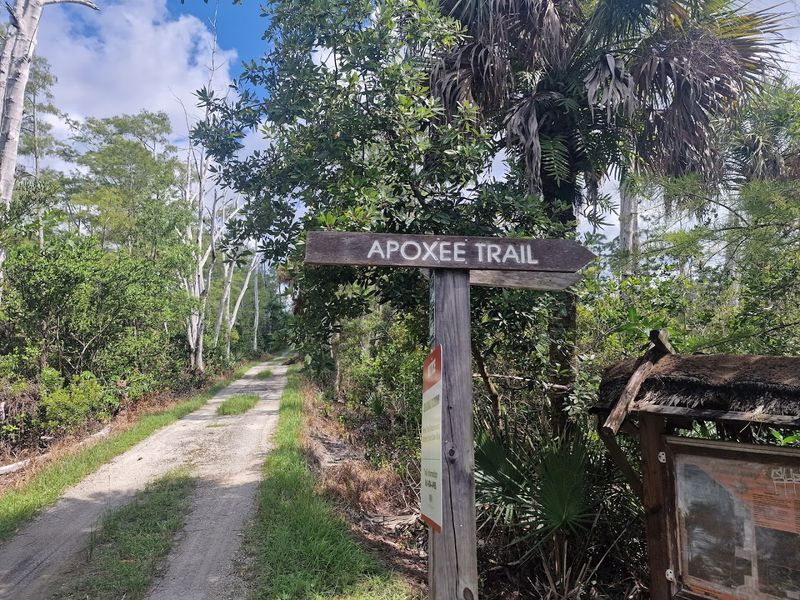
West Palm Beach is not exactly the first city that comes to mind when you think about wild Florida nature, but Grassy Waters Preserve on the city’s western edge holds a genuine surprise. The Apoxee Trail winds through the preserve’s scrub, wetland, and pine flatwoods habitat in a way that feels far removed from the Palm Beach County sprawl pressing in from every direction.
Grassy Waters serves as the primary drinking water supply for West Palm Beach, which means the land has been protected from development for decades. That protection has allowed the ecosystem to stay remarkably intact, and the wildlife reflects it.
Gopher tortoises, scrub jays, osprey, and a wide variety of wading birds are regular sightings along the trail. During migration season, the tree canopy fills with warblers that stop to rest and refuel.
The Apoxee Trail itself runs about 6.5 miles one way, with the option to turn around at any point for a shorter out-and-back. The surface alternates between paved sections and natural dirt paths, making it accessible for walkers, joggers, and cyclists alike.
Interpretive signs along the route explain the ecology of the preserve in a way that adds genuine depth to the experience without feeling like a lecture.
Parking and access are free, and the preserve is open daily from sunrise to sunset. The trailhead is well marked and easy to find off of Haverhill Road.
Morning visits between October and April offer the best combination of comfortable temperatures and active wildlife.
For anyone living in or visiting the Palm Beach area who wants a real taste of old Florida scrub without driving hours north or west, Apoxee delivers in a way that consistently surprises first-time visitors. The secret is out among locals, but the rest of the world has not caught on yet.