This Florida Museum Might Be the Most Colorful Place You’ve Never Heard Of
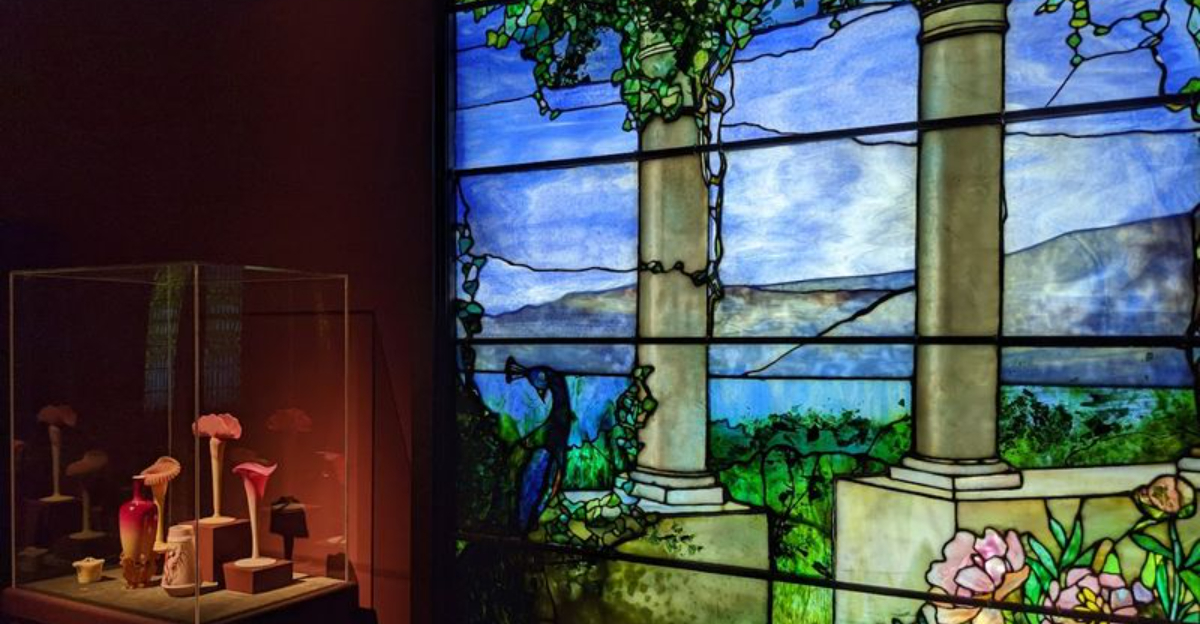
Tucked away in the charming streets of Winter Park sits a treasure that most people drive right past without knowing what they’re missing. The Charles Hosmer Morse Museum of American Art holds the world’s largest collection of Louis Comfort Tiffany works, and stepping inside feels like walking into a kaleidoscope of glass, light, and pure artistry. If you think museums are boring, this place might just change your mind forever.
1. The Tiffany Chapel That Stopped the 1893 World’s Fair
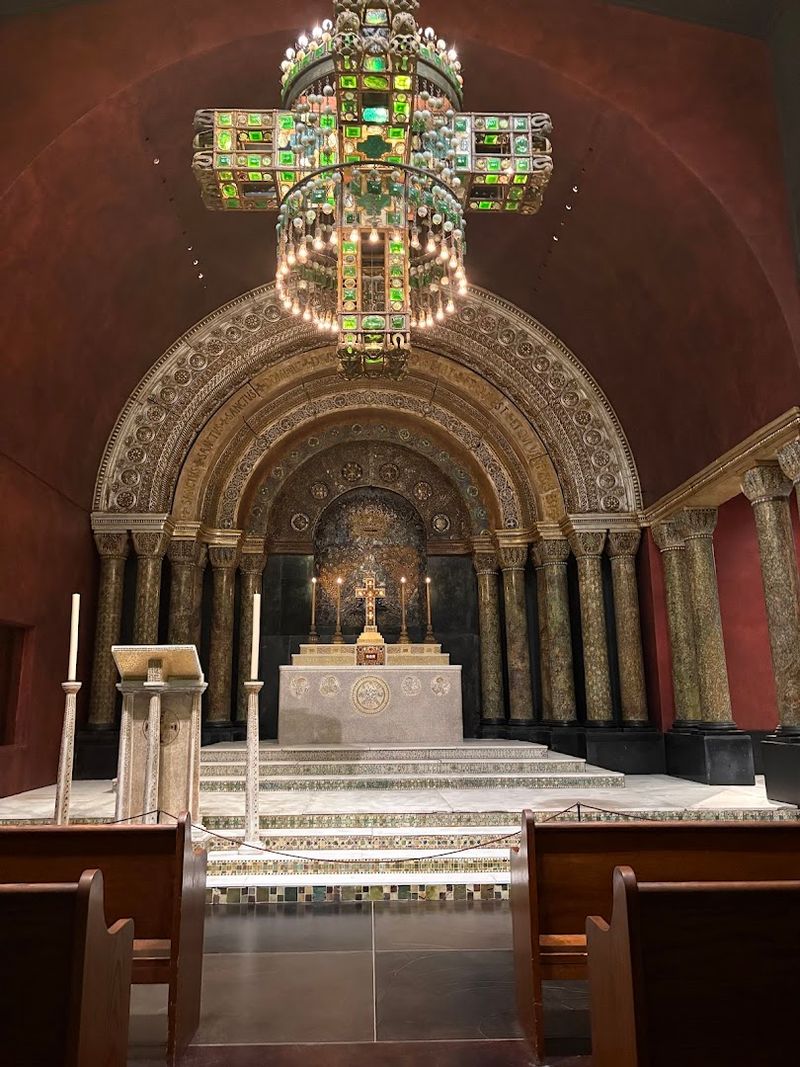
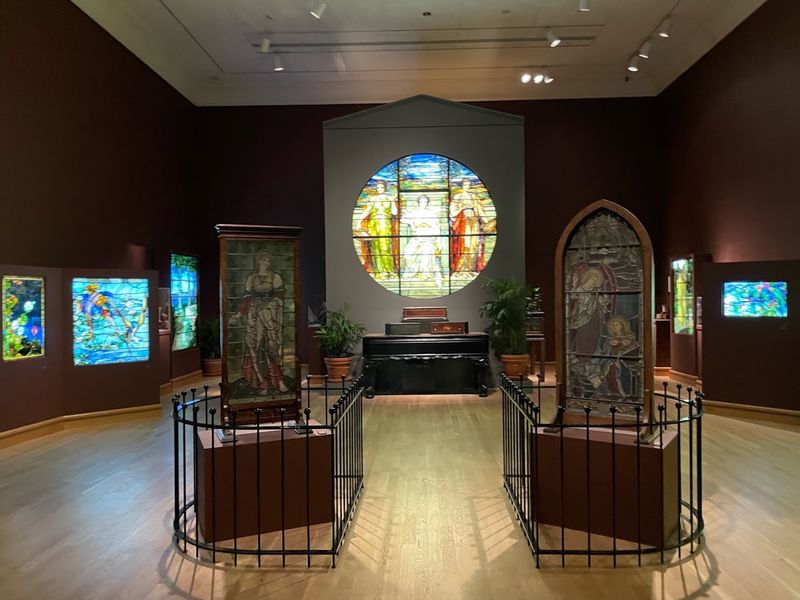
Picture this: a chapel so stunning that it made visitors at the 1893 Chicago World’s Fair stop dead in their tracks. That’s exactly what Louis Comfort Tiffany created, and now it’s been meticulously reconstructed right here in Winter Park. The chapel was nearly lost to history after parts were destroyed in a fire, but the museum founders rescued what remained and pieced it back together using old photographs.
Walking into this space feels almost sacred, even if you’re not religious. The leaded glass columns glow with an inner light, and the mosaic altar shimmers with thousands of tiny glass pieces. Every surface tells a story of craftsmanship that’s hard to find in today’s world.
What makes this even more remarkable is how the museum staff can explain the painstaking restoration process. They’ll tell you about tracking down missing pieces and matching Tiffany’s original techniques. It’s not just art on display—it’s a rescue mission that succeeded beyond anyone’s wildest dreams.
Give yourself extra time in this room. Seriously, sit down on one of the benches and just look around. The way light moves through the glass changes throughout the day, creating an experience that photographs simply cannot capture.
2. Stained Glass Windows That Rewrite Everything You Thought You Knew
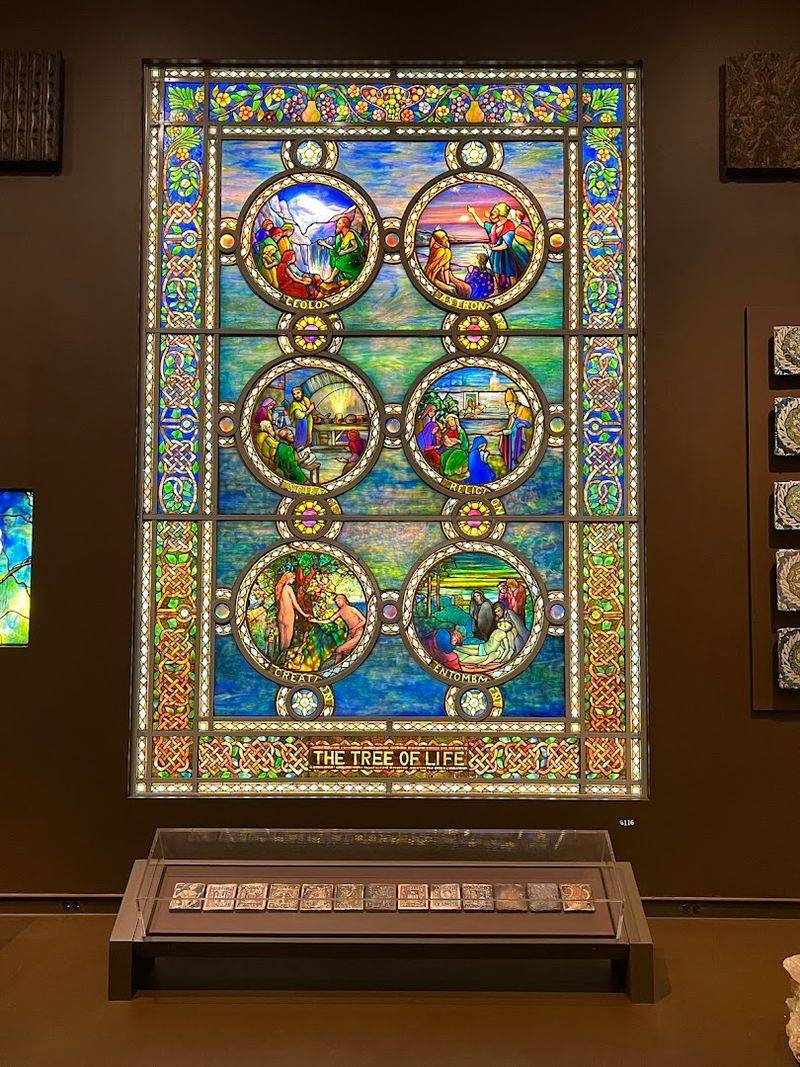
Most people think stained glass means church windows with religious scenes, but Tiffany had other ideas. His windows feature peacocks, wisteria vines, landscapes, and abstract patterns that look more like paintings than traditional glass work. The museum has an entire gallery dedicated to these massive illuminated panels, and standing in front of them is like being inside a sunset.
Here’s something wild: Tiffany didn’t just paint on glass like other artists. He developed techniques to layer different types of glass, creating depth and texture that makes flowers look three-dimensional. Some pieces use hundreds of individual glass fragments to capture a single leaf or petal.
The museum’s lighting setup deserves its own award. They’ve positioned lights behind each window to mimic natural daylight, so the colors appear exactly as Tiffany intended. Blues become electric, reds glow like embers, and greens pulse with life.
Don’t rush through this section. Each window has a placard explaining its history and technique, and reading them adds so much to the experience. You’ll learn about “confetti glass,” “drapery glass,” and other innovations that Tiffany invented.
It’s basically a masterclass in why this guy changed American art forever, and you’re getting it for less than the cost of a movie ticket.
3. Lamps That Prove Lighting Can Be Fine Art
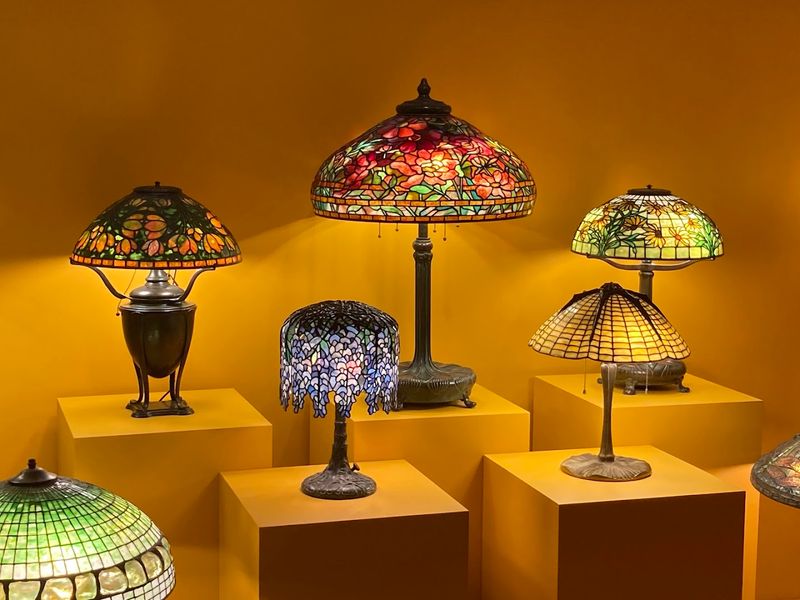
You’ve probably seen knock-off “Tiffany-style” lamps at home decor stores, but seeing the real deal will make you understand why those copies fall so flat. The museum has room after room of authentic Tiffany lamps, each one a unique work of art that took months to create. The famous Dragonfly and Wisteria designs are here, along with dozens of patterns you’ve never seen before.
What’s fascinating is learning how these lamps were made. Tiffany employed teams of skilled artisans, many of them women, who selected and cut each piece of glass by hand. They’d hold pieces up to the light, rejecting anything that didn’t have the perfect color or texture.
The museum doesn’t just display these lamps—they actually light them up so you can see how they transform a space. A lamp that looks pretty when off becomes absolutely magical when illuminated from within. The glass seems to come alive, with colors shifting and patterns emerging that you couldn’t see before.
One visitor tip: look at the bases too. Tiffany designed elaborate bronze bases that complement each shade perfectly. Some have organic, flowing lines while others feature geometric patterns.
The attention to detail extends to every single element, proving that Tiffany truly believed everyday objects deserved to be beautiful.
4. Laurelton Hall Recreations That Transport You to Tiffany’s Private World
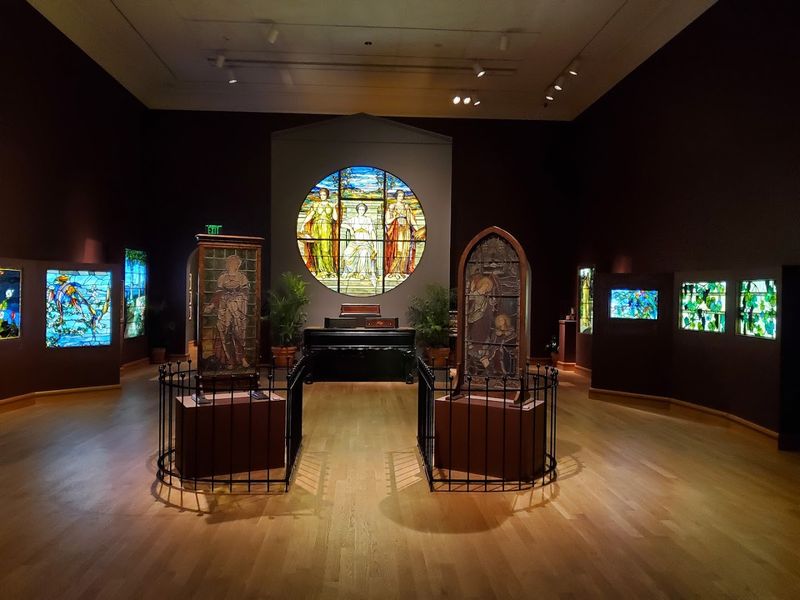
Imagine being so successful that you build yourself a 84-room mansion on Long Island and fill it with your own artwork. That’s what Tiffany did with Laurelton Hall, his personal paradise that showcased his design philosophy. Sadly, a fire destroyed most of it in 1957, but the Morse Museum salvaged what survived and recreated entire sections.
Walking through these galleries feels like stepping into Tiffany’s mind. You’ll see the Daffodil Terrace with its glass columns that look like flowers reaching toward the sky. There’s the Fountain Court with its elaborate glass fountain that once actually flowed with water.
The museum didn’t just grab random pieces and stick them on walls. They studied photographs and architectural plans to reconstruct whole rooms as Tiffany designed them. You’re basically getting a private tour of a mansion that no longer exists anywhere else.
What strikes most visitors is how Tiffany lived surrounded by color and light every single day. His dining room had glass panels depicting gardens. His entry hall featured peacock motifs.
Even his bathroom had custom glass tiles. This wasn’t a guy who saved his art for museums—he believed beautiful design should be part of daily life, and these recreations prove he practiced what he preached in spectacular fashion.
5. American Art Pottery That Proves Tiffany Wasn’t the Only Genius
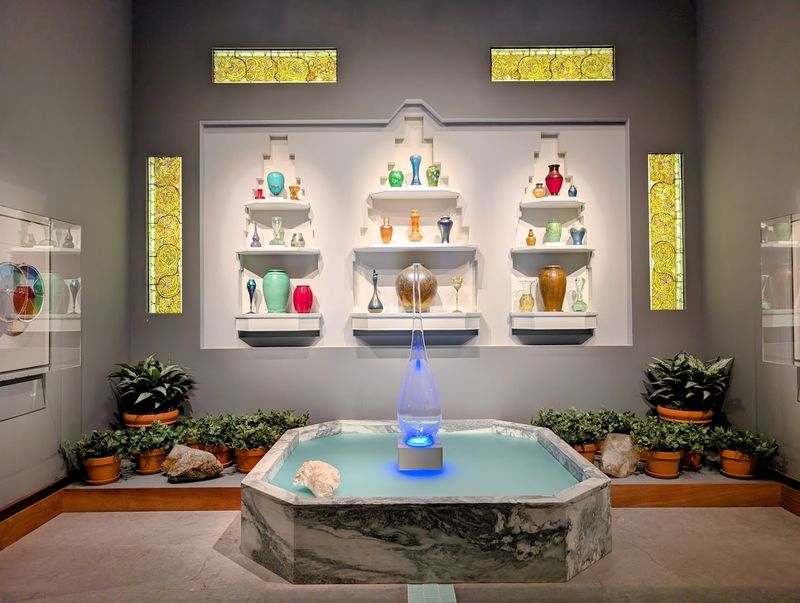
While Tiffany gets most of the attention, the museum also houses an impressive collection of American art pottery from the same era. We’re talking pieces by Rookwood, Grueby, and other studios that were revolutionizing ceramics while Tiffany was revolutionizing glass. These aren’t your grandma’s flower pots—they’re sculptural works with experimental glazes and avant-garde designs.
The pottery galleries show how the Arts and Crafts movement swept through America in the late 1800s and early 1900s. Artists rejected mass production and created handmade pieces that celebrated natural forms. You’ll see vases shaped like gourds, bowls with dripping crystalline glazes, and tiles featuring stylized plant motifs.
What makes this collection special is how it complements the Tiffany works. You start to see common themes: nature-inspired designs, innovative techniques, and a commitment to elevating decorative arts to fine art status. It’s like seeing different artists responding to the same cultural moment.
Don’t skip the labels here. They explain fascinating details about glaze chemistry, firing techniques, and the individual artists who often worked in obscurity. Some pieces failed during firing and were rescued from scrap heaps.
Others won international awards. Each one has a story, and together they paint a picture of American creativity during a transformative period in design history.
6. Jewelry and Decorative Objects That Defined Luxury
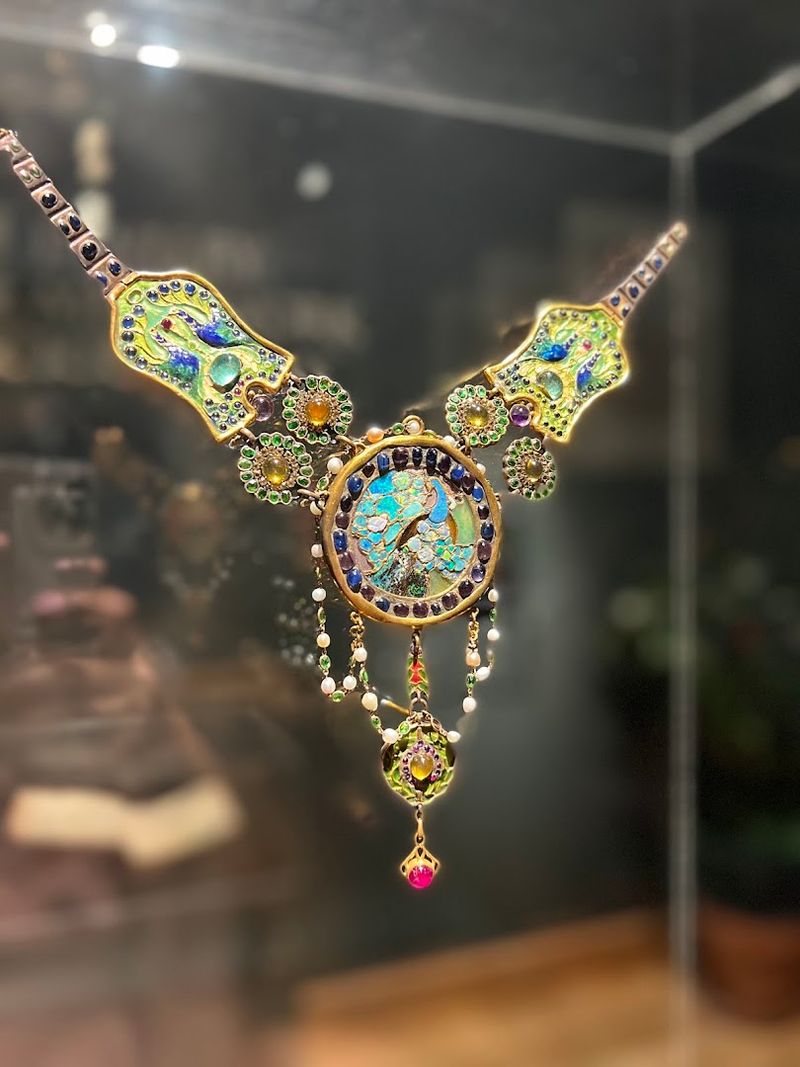
Before you assume Tiffany only made big windows and lamps, check out the jewelry galleries. These cases hold necklaces, brooches, and decorative objects that wealthy Americans wore and displayed in their homes. We’re talking enamel work so detailed you need to get close to believe it’s real, not painted.
Peacock feathers, dragonflies, and abstract patterns appear in miniature form.
The jewelry shows Tiffany’s obsession with color and light on an intimate scale. He’d combine opals with enamel, or set moonstones alongside hand-blown glass beads. Each piece looks like wearable art because that’s exactly what it was meant to be.
Beyond jewelry, you’ll find desk sets, candle holders, and other objects that brought Tiffany’s aesthetic into everyday life. A letter opener becomes a bronze sculpture. A picture frame features glass mosaic borders.
Even paperweights got the luxury treatment with swirling glass patterns trapped inside.
What’s remarkable is seeing how Tiffany’s design principles worked at every scale. Whether he was creating a chapel window or a pendant necklace, the same attention to color, craftsmanship, and natural inspiration shines through. These smaller pieces also show how Tiffany Studios marketed to different price points, making his designs accessible to more people while maintaining exceptional quality standards throughout their entire product line.
7. Graphics and Paintings That Reveal Tiffany’s Other Talents
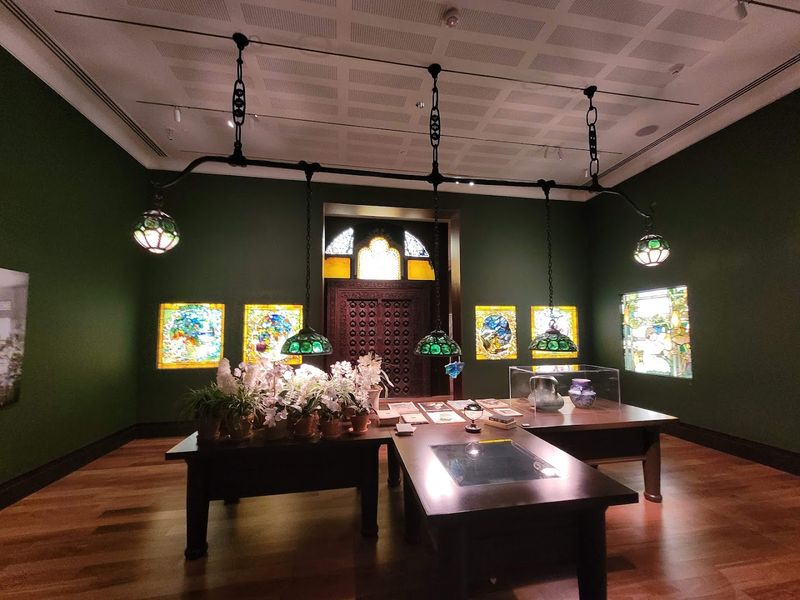
Most visitors arrive expecting glass and are surprised to discover Tiffany started his career as a painter. The museum displays his paintings and graphics, showing a side of the artist many people never knew existed. His landscapes capture light and atmosphere in ways that clearly influenced his later glass work.
You can see him studying how sunlight filters through trees or reflects off water.
These paintings aren’t just historical curiosities—they’re genuinely good art that would stand on their own without the Tiffany name. His travels to North Africa and the Middle East inspired exotic scenes with rich colors and dramatic compositions. Some works show early experiments with the same nature themes that would dominate his glass designs.
The graphics collection includes posters, book illustrations, and designs that show how Tiffany’s influence spread beyond decorative arts. He embraced the Art Nouveau style that was sweeping through Europe and helped bring it to American audiences. His graphic work feels modern even today, with flowing lines and stylized natural forms.
Looking at these pieces helps you understand Tiffany’s complete artistic vision. He wasn’t just a craftsman working with glass—he was a trained fine artist who brought painting techniques to three-dimensional design. The way he understood color theory, composition, and light came from years of studying and creating two-dimensional art first.
8. An Admission Price That Makes Other Museums Look Greedy
Here’s something that’ll blow your mind: admission to this world-class museum costs around eight bucks for adults. That’s less than a fancy coffee drink, and you’re getting access to the planet’s most comprehensive Tiffany collection. Senior and student discounts make it even cheaper.
Oh, and on Friday evenings after 4 PM, admission is completely free with live music performances adding to the atmosphere.
The affordability comes from the museum’s endowment and the vision of its founders, who wanted art to be accessible to everyone. They could easily charge triple and still have lines out the door, but they’ve kept prices low on purpose. It’s a gift to the community and to visitors.
Most people spend at least two hours exploring the galleries, though you could easily fill an entire afternoon if you read all the information and watch the educational videos. That’s incredible value considering what you’re seeing—museum-quality art that would cost millions at auction if it ever came up for sale.
The location in downtown Winter Park means you can combine your visit with lunch at nearby restaurants, shopping along Park Avenue, or a stroll around the scenic neighborhoods. Free parking is available right next to the museum, which is practically unheard of in popular Florida destinations. Everything about this place feels designed to remove barriers and just let people experience extraordinary art without stress or financial strain.