We Found 11 Florida Swimming Spots Locals Love When June Gets Brutal
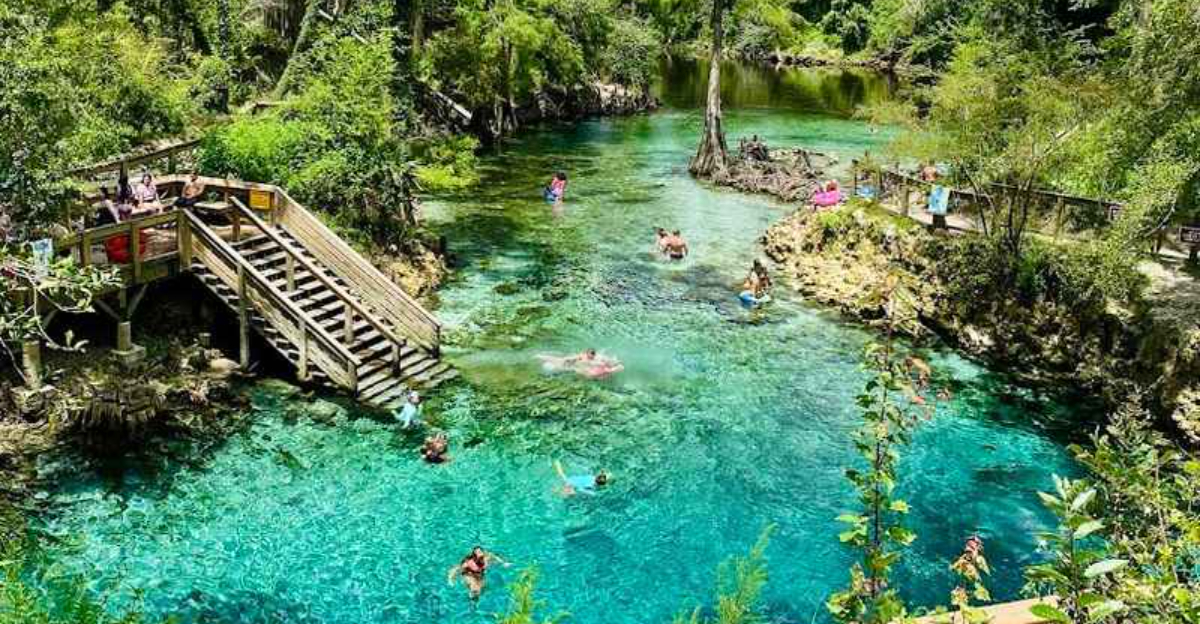
June in Florida brings sweltering heat that makes you want to jump into the nearest body of water. While tourists flock to crowded beaches, locals know the real gems are hidden in springs and natural swimming holes scattered across the state. These crystal-clear spots offer year-round 72-degree water, lush scenery, and a refreshing escape from summer’s intensity that beaches just can’t match.
1. Kelly Park / Rock Springs (Apopka)
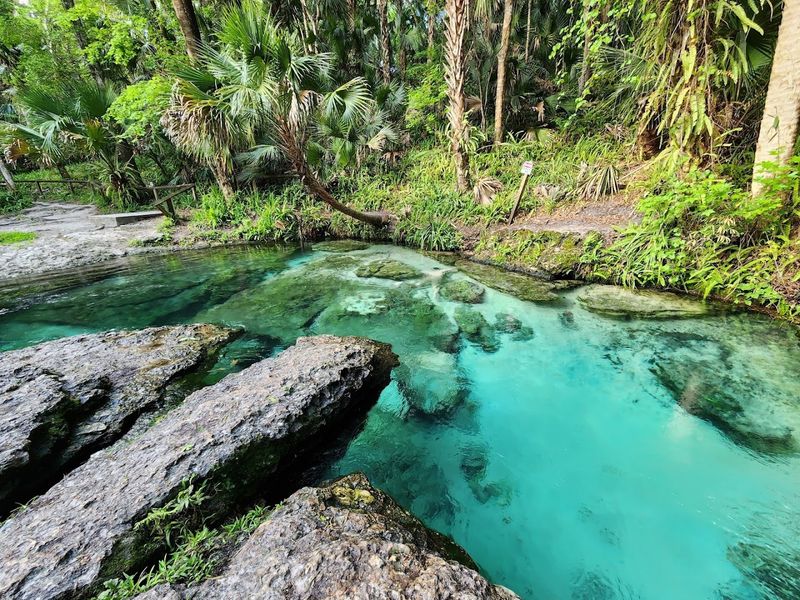
Tubing down Rock Springs Run feels like floating through liquid glass. The spring pumps out 26,000 gallons per minute of perfectly chilled water that stays a constant 68 degrees, making it a lifesaver when June temperatures climb into the nineties. Families pack their coolers and claim picnic spots early because this place fills up fast on weekends.
The tubing route stretches about a mile and takes roughly an hour to complete at a leisurely pace. You’ll drift past cypress trees draped in Spanish moss while fish dart beneath your tube in water so clear you can count every scale. The current does all the work, so even kids can handle it without any struggle.
Getting there requires some planning since the park caps daily visitors to protect the ecosystem. Arrive before 10 AM or risk getting turned away at the gate. Tube rentals are available if you don’t have your own, and the park provides a tram back to the start so you don’t have to lug anything upstream.
Pack water shoes because the spring bottom has some rocks, and bring quarters for the parking meters that seem to eat dollar bills for breakfast.
2. Lithia Springs Conservation Park (Lithia)
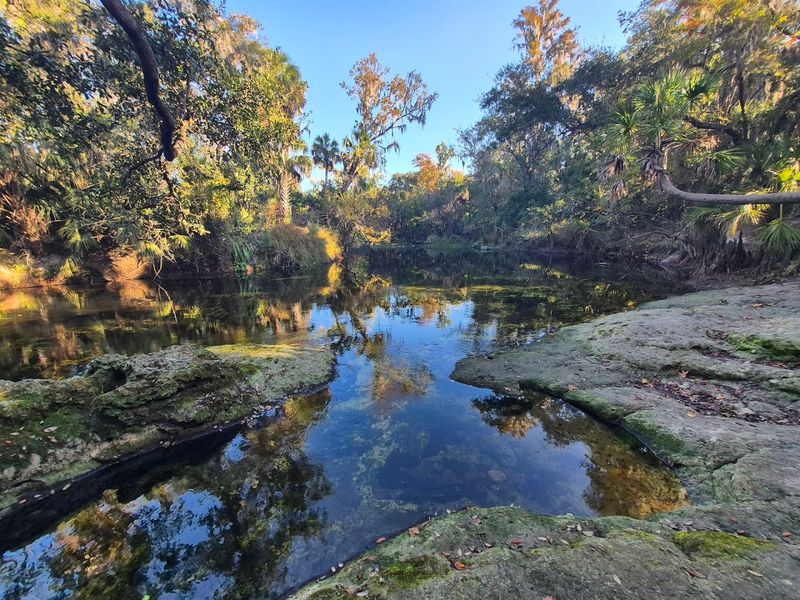
Tucked away in Hillsborough County, Lithia Springs offers a more low-key vibe than some of Florida’s celebrity springs. The main pool isn’t massive, but the water runs deep enough for proper swimming and the temperature hovers right around 72 degrees year-round. Local families treat this spot like their backyard pool, showing up with lawn chairs and staying all afternoon.
The spring feeds into the Alafia River, creating a secondary swimming area where the cooler spring water mixes with the warmer river current. Kids love this transition zone because they can hop between cold and comfortable without leaving the water. The sandy beach area provides plenty of space for towels and umbrellas, plus there’s actual shade from mature trees.
Weekdays are your best bet for avoiding crowds and snagging a primo spot near the water. The park charges a small entry fee that helps maintain the facilities, which include clean bathrooms and picnic pavilions you can reserve for birthday parties. Canoe and kayak launches let you explore the river if swimming gets boring.
Just remember that glass containers are banned, so transfer your drinks into plastic bottles before you arrive or risk having them confiscated at the entrance.
3. Madison Blue Spring State Park (Lee)
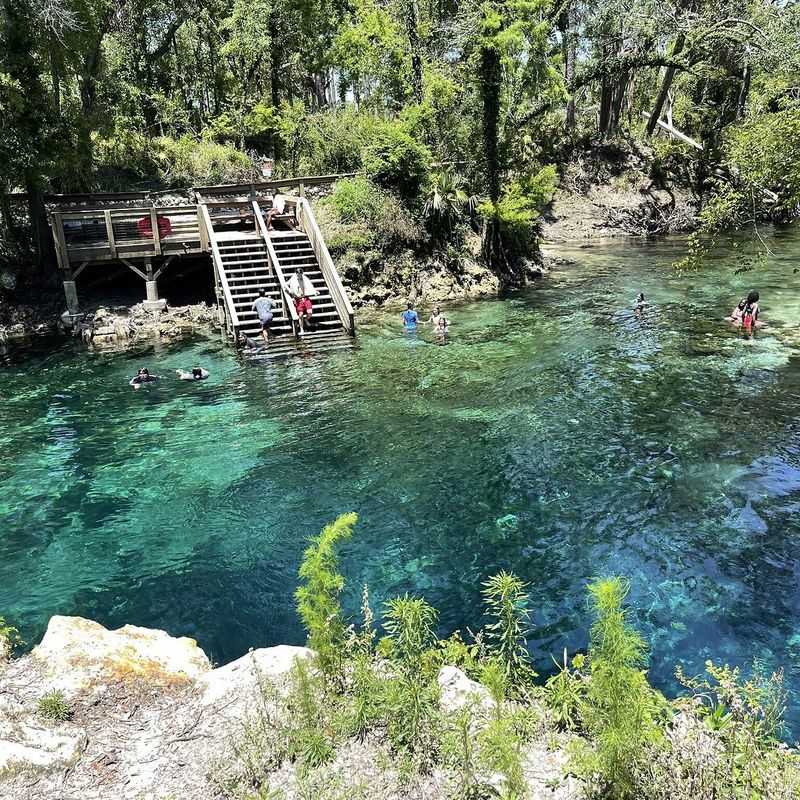
Madison Blue Spring punches way above its weight class in the stunning department. The spring basin glows an almost unnatural shade of blue that photographs beautifully but looks even better in person. Cave divers flock here because the spring connects to an extensive underwater cave system, though regular swimmers stick to the surface where it’s plenty exciting without risking your life.
The spring dumps 53 million gallons daily into the Withlacoochee River, creating a strong current near the boil that’s fun to swim against if you’re feeling energetic. Snorkeling gear reveals a whole world beneath the surface where fish congregate and aquatic plants sway in the flow. The visibility stretches for dozens of feet on clear days, making it easy to spot turtles cruising past.
A wooden dock with stairs provides easy water access, and the park maintains a nice sandy area for spreading out your gear. Tubes and rafts aren’t allowed in the spring itself to protect the ecosystem, but you can float them in the river section. Pavilions with grills make this spot perfect for combining swimming with a cookout.
The park stays open until sunset, giving you plenty of time to swim, dry off, and jump back in for one more dip before heading home.
4. Fanning Springs State Park (Fanning Springs)
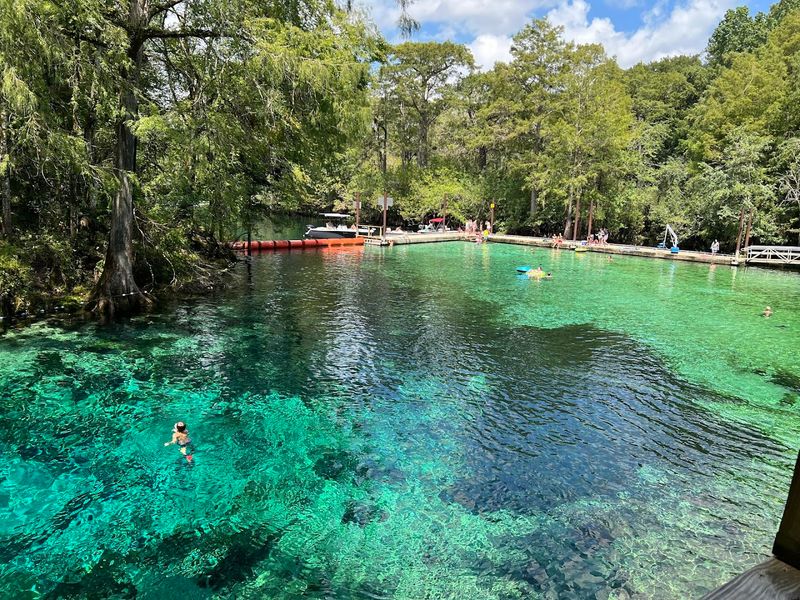
Fanning Springs sits right off Highway 19, making it one of the easiest springs to reach when you need immediate heat relief. The spring pool opens directly into the Suwannee River, giving you two completely different swimming experiences in one location. Spring water stays predictably cool while the river warms up nicely by June, letting everyone pick their preferred temperature.
A long boardwalk stretches over the spring, perfect for jumping off when you’re ready to commit to the cold shock. Watching first-timers ease into the water while their friends cannonball past them never gets old. The spring bottom stays visible even in the deepest sections, and manatees occasionally wander in from the river during cooler months, though June is usually too warm for sightings.
The park provides ample parking and well-maintained facilities including outdoor showers to rinse off the spring water before your drive home. Kayak rentals let you explore the Suwannee River, or you can bring your own boat and use the launch. Covered pavilions offer shade and picnic tables, plus there are grills if you want to make a full day of it.
Lifeguards aren’t stationed here, so parents need to watch their kids closely, especially where the spring current meets the river flow and things get a bit unpredictable.
5. Ruth B. Kirby Gilchrist Blue Springs State Park (High Springs)
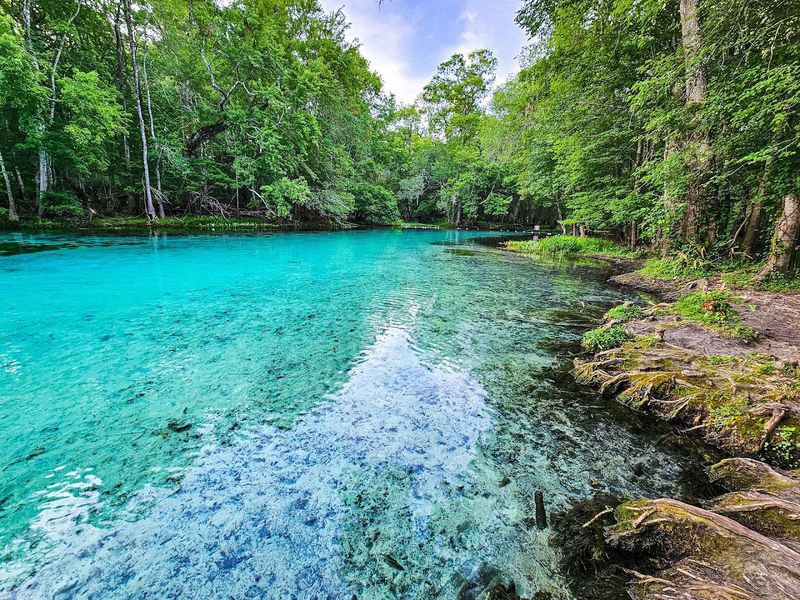
Gilchrist Blue Springs keeps things simple and that’s exactly why locals love it. No massive crowds, no tour buses, just a gorgeous spring that pumps out water so clear it looks Photoshopped. The spring run stretches about 300 feet before meeting the Santa Fe River, giving you plenty of room to swim laps or float around aimlessly while contemplating life.
Bring a mask and snorkel because the underwater scenery deserves a closer look. Small fish gather in schools near the spring vent, and the sandy bottom reflects sunlight in wavy patterns that mesmerize you into staying longer than planned. The water depth varies from shallow wading areas perfect for toddlers to deeper sections where teenagers practice their diving form off the dock.
The park maintains a small beach area with actual sand, not the rocky limestone you find at some springs. Shade trees line the banks, providing natural cooling spots when you need a break from the sun. Pavilions are available first-come-first-served, or you can reserve them ahead for gatherings.
The facilities stay clean and the staff keeps a watchful eye on things without being overbearing.
Pack a lunch because once you’re settled in, leaving feels like a crime against relaxation. The entry fee is minimal and helps preserve this gem for future generations of heat-exhausted Floridians.
6. Rum Island Spring and Park (Fort White)
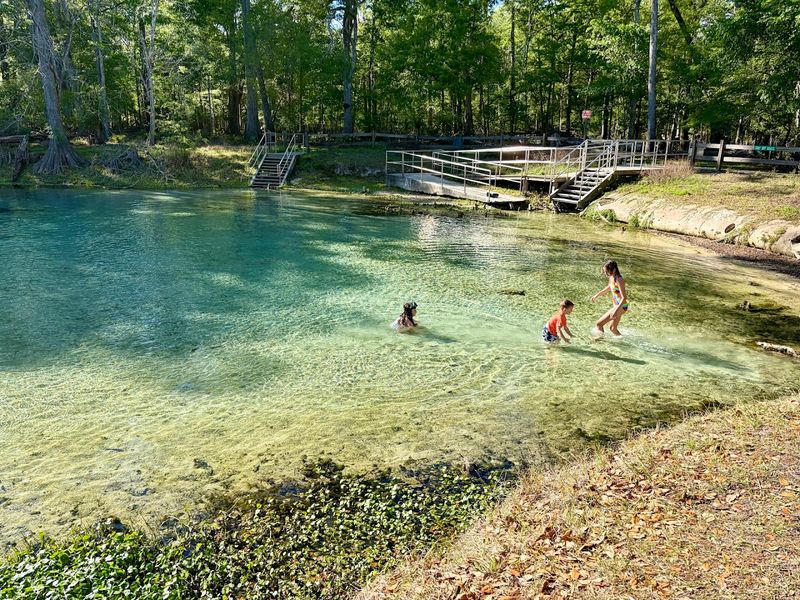
Rum Island earned its name from bootleggers who allegedly used the spot during Prohibition, though these days the only thing intoxicating is the water temperature. This spring feeds directly into the Ichetucknee River, creating a swimming hole that feels more like a neighborhood hangout than a tourist destination. Locals guard this spot fiercely, hoping it stays under the radar of the Instagram crowd.
A rope swing dangles from a massive tree branch, providing endless entertainment for kids and adults who refuse to act their age. The spring basin isn’t huge, but it’s deep enough for proper swimming and the current stays gentle near the edges. Tubers floating down the Ichetucknee often stop here to cool off before continuing downstream, creating a social atmosphere where everyone mingles.
The park is county-managed rather than state-run, giving it a more laid-back vibe with fewer regulations. Pavilions and picnic areas scatter throughout the property, and there’s a boat ramp for launching kayaks or canoes. The facilities are basic but functional, with bathrooms and outdoor showers available.
Parking fills up quickly on summer weekends, so arrive early or be prepared to walk a bit from overflow areas.
Admission costs just a few dollars per vehicle, making this one of the most budget-friendly springs in North Florida for families watching their wallets.
7. Blue Hole at Ichetucknee Springs State Park (Fort White)
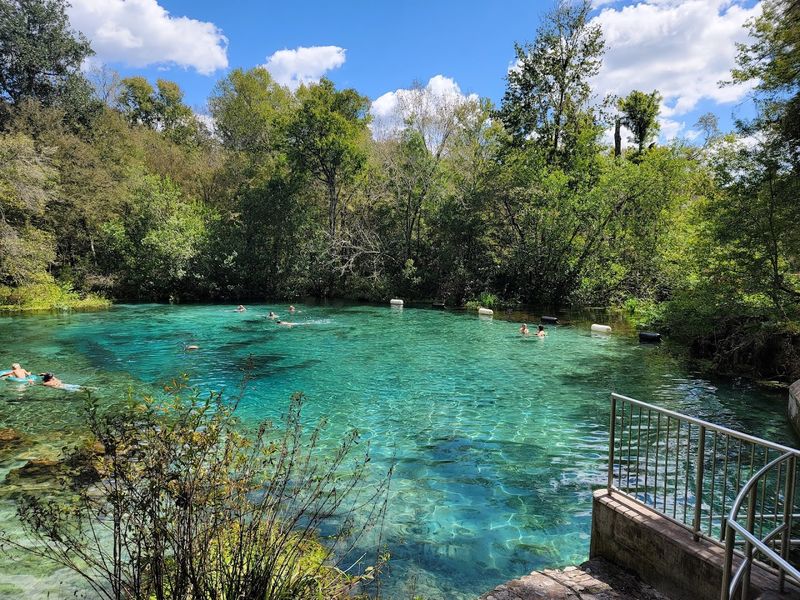
The Blue Hole lives up to its name with water so intensely colored it looks like someone dumped blue dye into it. This spring serves as the headwaters for the Ichetucknee River, though most tubers skip right past it in their rush to start floating downstream. Smart swimmers know to spend time here first because the Blue Hole offers the deepest, coldest water in the entire park system.
The spring basin plunges over 20 feet deep in the center, where the main boil pushes water up from underground caverns. Snorkeling here reveals limestone formations and fish that seem unbothered by human visitors. The clarity lets you see straight to the bottom even at maximum depth, creating a slightly unnerving sensation of floating over an abyss.
Swimmers who venture near the boil feel the force of thousands of gallons pushing upward, strong enough to lift you off your feet.
A wooden observation deck circles part of the spring, perfect for watching the action or working up courage for your first jump. The park provides stairs for easy entry, though some folks prefer the thrill of leaping from the deck. Swimming here requires more effort than lazy springs because the current pulls toward the river outlet, giving you a mild workout whether you want one or not.
The Blue Hole sees fewer visitors than the main tubing area, making it ideal for people seeking peace rather than party vibes.
8. Alexander Springs Recreation Area (Altoona)
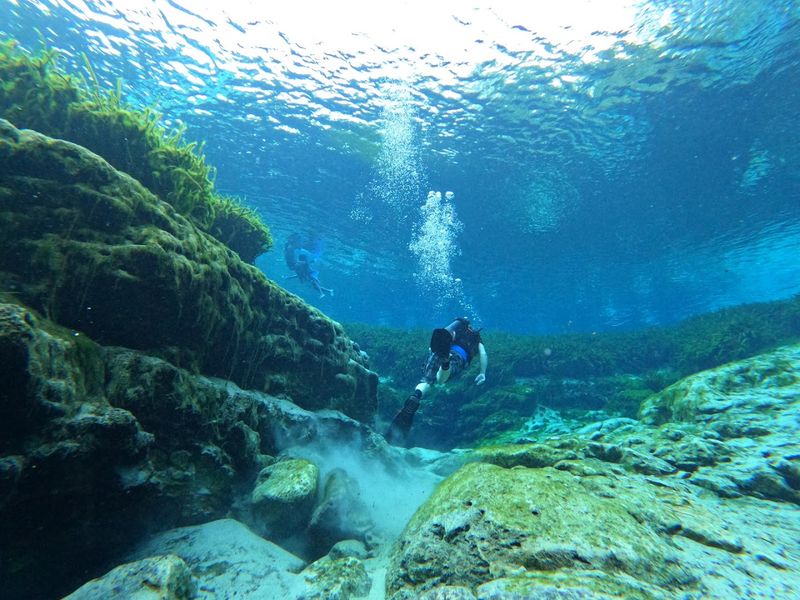
Alexander Springs feels more like a natural water park than a typical spring. The massive spring pool covers several acres, giving you room to swim serious distances or claim your own corner away from everyone else. The spring cranks out 76 million gallons daily, maintaining that perfect 72-degree temperature that feels shocking at first but becomes addictive within minutes.
A designated swimming area with roped boundaries keeps swimmers separate from the canoe traffic heading down Alexander Springs Creek. The sandy bottom and gradual depth increase make this spot particularly family-friendly, letting kids wade safely while parents swim nearby. Lifeguards patrol during peak season, adding an extra layer of security that nervous parents appreciate.
The beach area rivals some coastal spots with actual sand you can dig your toes into while sunbathing between dips.
The recreation area offers full amenities including a campground, cabins, bathhouses, and a concession stand selling snacks and tube rentals. Canoe and kayak launches provide access to the creek, which winds through pristine forest for miles. Picnic pavilions and grills scatter throughout the property, and there’s even a nature trail if you need to walk off your lunch before swimming again.
The entry fee runs higher than county parks but includes access to all facilities, and the National Forest Service maintains everything to high standards that justify the cost.
9. Juniper Springs Recreation Area (Silver Springs)
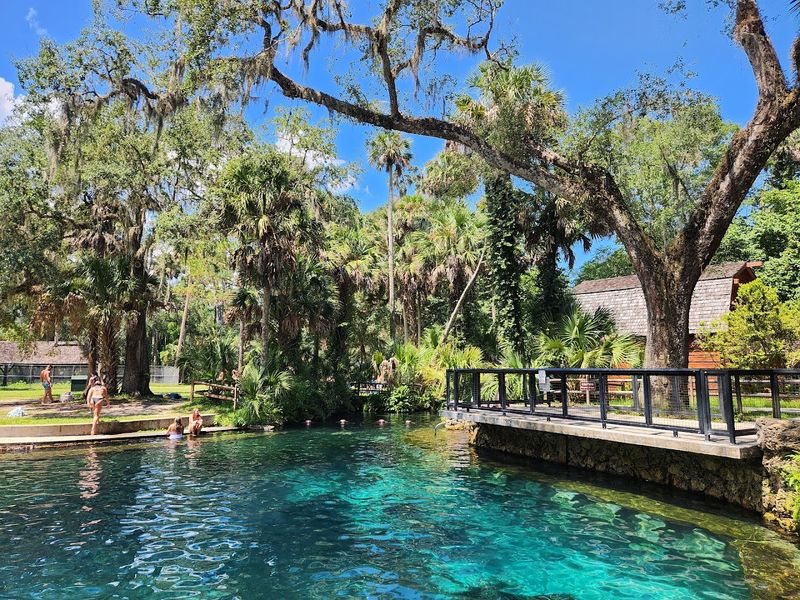
Juniper Springs has been cooling off overheated Floridians since the 1930s when the Civilian Conservation Corps built the stone walls that still contain the swimming area today. Those walls give the spring a historic, almost European feel that sets it apart from more natural-looking spots. The spring produces 13 million gallons daily, feeding into Juniper Creek where you can rent canoes for a seven-mile paddle through untouched Ocala National Forest.
The swimming area stays relatively small and shallow, maxing out around six feet deep, making it perfect for younger swimmers still building confidence. The stone walls provide convenient ledges for sitting and dangling your feet while you adjust to the temperature. Underwater visibility is excellent, revealing small fish and the occasional turtle passing through.
The constant water flow keeps everything pristine and prevents any stagnation or algae buildup that plagues some swimming holes.
Historic stone buildings house the bathhouse and concession area, adding character you won’t find at modern facilities. The recreation area includes a campground nestled in the forest, letting you extend your visit overnight and hit the spring first thing in the morning before day-trippers arrive. Nature trails loop through the surrounding woods, offering glimpses of deer, wild turkeys, and other wildlife.
Parking can be challenging on summer weekends, so arrive before 11 AM or risk circling the lot repeatedly while your kids complain from the backseat.
10. Morrison Springs Park (Ponce de Leon)
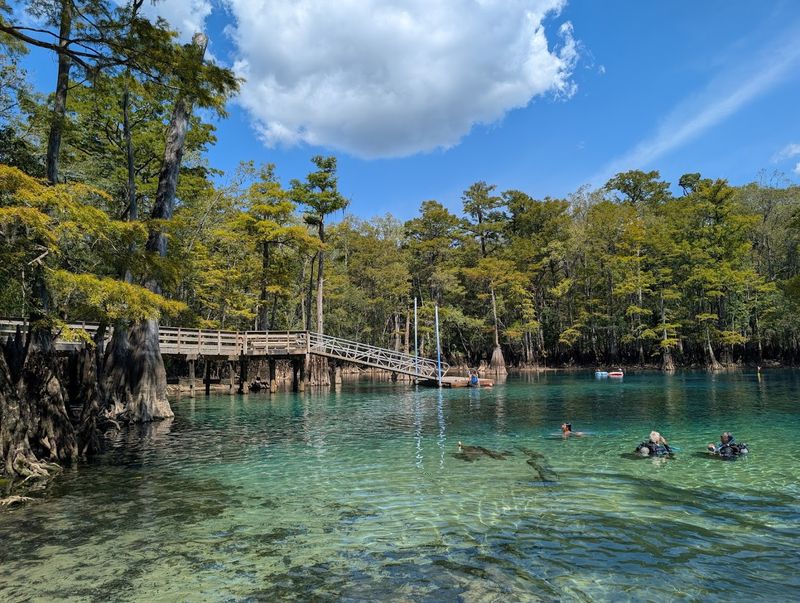
Morrison Springs might be the most underrated swimming spot in the Panhandle. This county park surrounds a first-magnitude spring that produces 48 million gallons daily, creating a massive pool that stays deep enough for diving in the center while offering shallow areas along the edges. The water color shifts from pale turquoise in the shallows to deep sapphire where the spring vent opens, providing a visual guide to depth that swimmers appreciate.
Certified divers explore the cave system that feeds the spring, but surface swimmers have plenty to enjoy without risking their necks underground. The spring basin stretches wide enough that you can actually swim laps if you’re training for something, or you can float on your back and cloud-watch while the cool water works its magic. Snorkeling reveals schools of bream and bass that treat the spring like their personal aquarium, completely unfazed by human visitors paddling overhead.
The park maintains a nice beach area with imported sand that feels legitimate between your toes. Picnic tables and grills scatter throughout the property, and there’s a playground for kids who somehow still have energy after swimming. The facilities stay clean and functional, with bathhouses and outdoor showers available.
Parking is free and plentiful, unlike some springs that gouge you for every dollar.
Weekdays offer the best experience with minimal crowds and your pick of shady spots under the massive oak trees that frame the spring.
11. Ponce de Leon Springs State Park (Ponce de Leon)
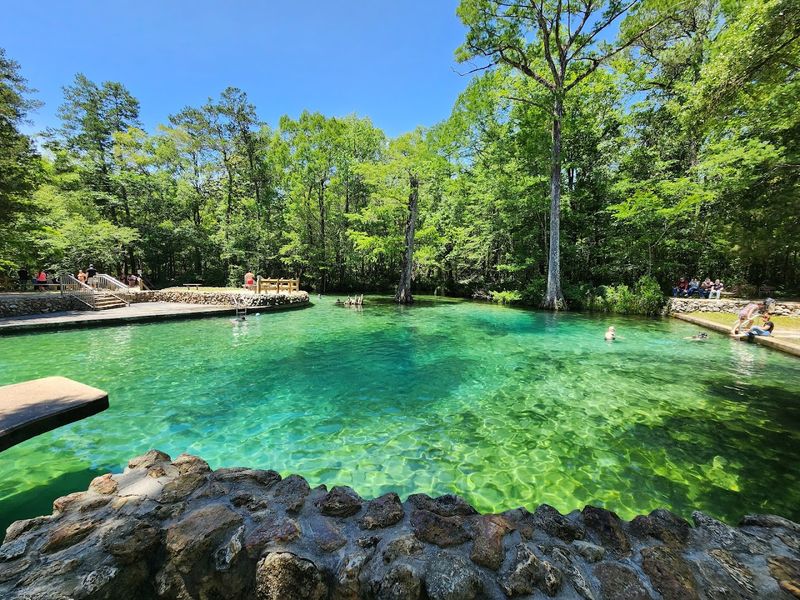
Legend claims Ponce de Leon searched for the Fountain of Youth, and while this spring might not reverse aging, it certainly makes you feel decades younger after a June afternoon baking in Florida heat. The spring sits in a natural limestone basin surrounded by steep slopes covered in native vegetation, creating a secluded feeling despite being right off Highway 90. The constant 68-degree water flows into Sandy Creek, giving you options between spring swimming and creek wading.
A wooden boardwalk provides access to the spring without trampling the fragile vegetation, and stairs lead down to the water level where you can ease in gradually or just jump and get the shock over with. The spring pool isn’t enormous, but it’s plenty big for a refreshing swim and the depth varies enough to accommodate different comfort levels. Underwater visibility lets you watch fish investigating your toes while you float around contemplating how smart our ancestors were for settling near springs.
The state park maintains excellent facilities including clean restrooms, picnic pavilions, and nature trails that wind through the property. A small museum explains the area’s history and ecology, worth a quick visit before or after swimming. The park sees moderate traffic but rarely gets overcrowded, maintaining a peaceful atmosphere that bigger springs have lost.
Entry fees are reasonable and help fund conservation efforts that keep the spring healthy for future generations.