10 Unique Florida Experiences You Literally Can’t Have Anywhere Else
Florida isn’t just beaches and theme parks. Beneath the tourist hotspots lies a collection of experiences so unusual, so specific to this peninsula, that you’d be hard-pressed to replicate them anywhere else on Earth. From swimming alongside gentle sea cows in spring-fed rivers to watching rockets pierce the atmosphere from behind NASA’s gates, the Sunshine State offers adventures that exist nowhere else in America, and in some cases, nowhere else in the world.
1. Swim With Manatees In Their Natural Habitat (Crystal River)
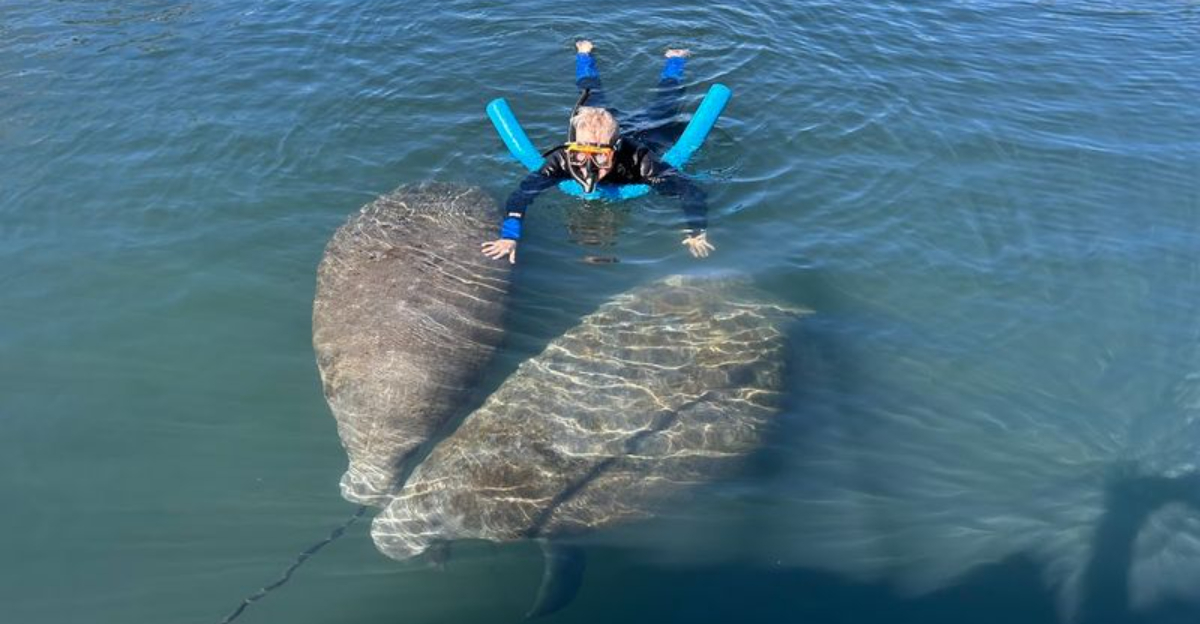
Crystal River holds a distinction that makes wildlife lovers from around the world book flights to Florida’s Nature Coast. This is the only place in the United States where you can legally swim alongside manatees in their natural environment, not in a tank or controlled facility.
The area earned federal protection specifically for these gentle marine mammals. Crystal River National Wildlife Refuge was created exclusively to safeguard manatee habitat, making it the sole refuge in the country with that singular mission.
During cooler months, hundreds of manatees migrate to the warm spring waters here, seeking refuge from chilly Gulf temperatures. The springs maintain a constant 72°F year-round, creating perfect conditions for both manatees and the humans who want to meet them.
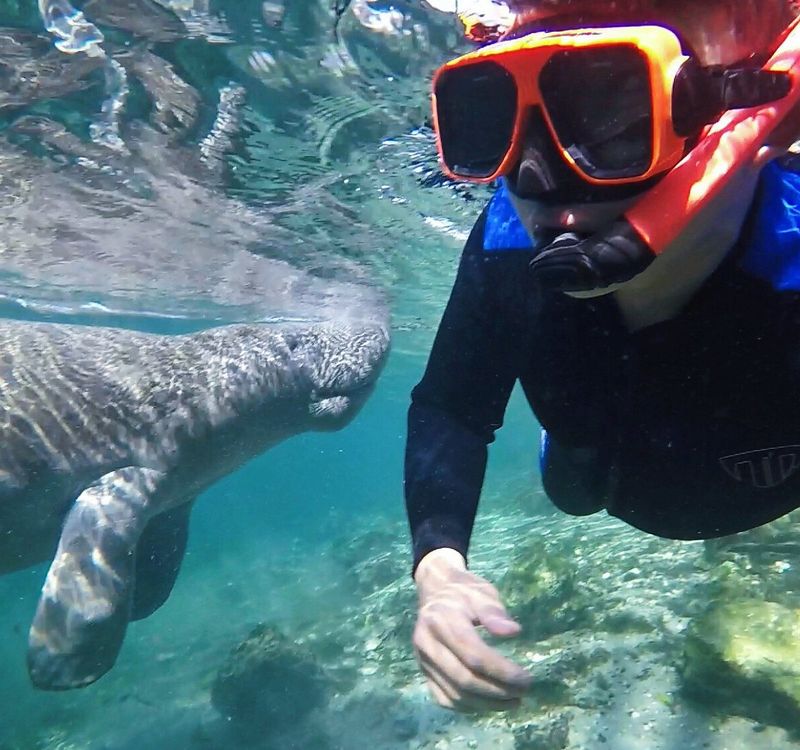
Tour operators follow strict guidelines to protect the animals. You’ll float quietly, letting manatees approach you if they choose, rather than chasing them. Many become curious and swim right up to snorkelers, their whiskered faces appearing almost dog-like in their gentle curiosity.
The experience feels surreal—hovering weightless in gin-clear water while a 1,200-pound sea cow glides past, sometimes rolling belly-up for a scratch. It’s intimate, humbling, and completely unlike any aquarium encounter. You’re a guest in their world, not the other way around.
2. Explore America’s Largest Subtropical Wilderness (Everglades National Park)
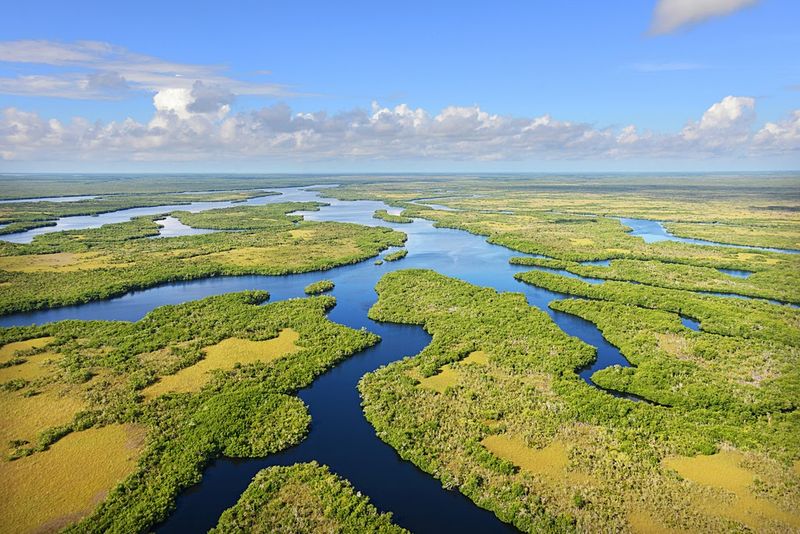
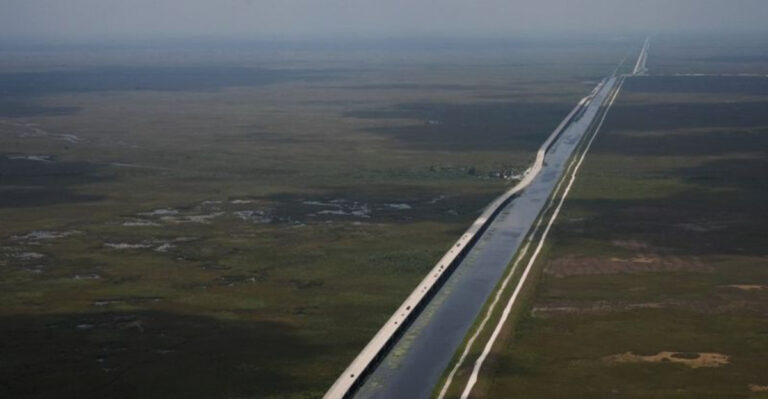
Calling the Everglades a swamp misses the point entirely. What spreads across South Florida is something far more extraordinary: 1.5 million acres of subtropical wilderness unlike anything else in the United States.
The National Park Service manages this vast ecosystem that blends wetland prairies, hardwood hammocks, pine rocklands, coastal mangroves, and marine environments into one interconnected whole. It’s not just big—it’s the largest subtropical wilderness the country has to offer.
Water moves through the Everglades in a slow, wide sheet, creating the “River of Grass” that Marjory Stoneman Douglas made famous. This flow sustains an incredible diversity of life, from tiny tree snails found nowhere else on Earth to massive American crocodiles basking on mudflats.
You can paddle through mangrove tunnels where branches form green arches overhead. Hike boardwalks above sawgrass that stretches to the horizon. Watch roseate spoonbills and wood storks feed in shallow pools at sunset.
The subtropical designation matters. This isn’t a temperate forest or a desert. The climate, the species, the entire feel of the place exists in a category that no other U.S. wilderness can claim.
You’re exploring something genuinely rare, a landscape that defies easy comparison and rewards those willing to slow down and look closely.
3. Watch A Rocket Launch From Behind NASA’s Gates (Kennedy Space Center)
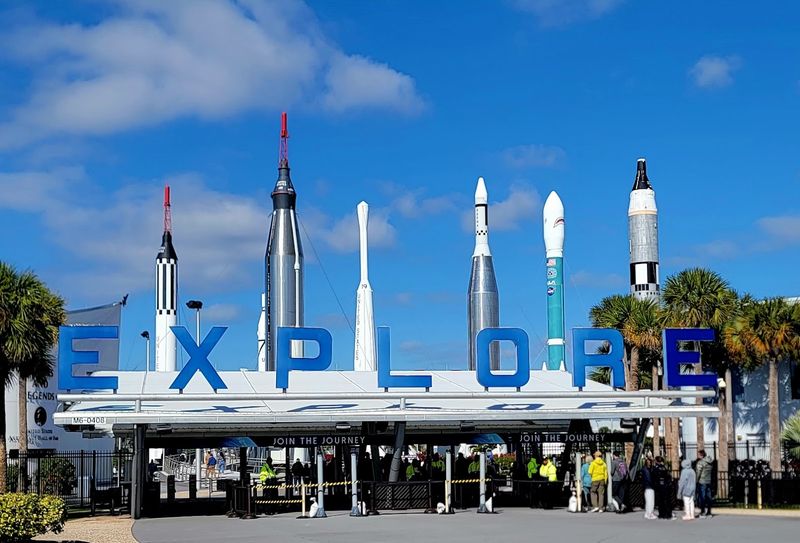
Planetariums are nice. Watching a rocket launch in person from Kennedy Space Center Visitor Complex is something else entirely.
Florida’s Space Coast offers the only civilian access to watch actual spacecraft leave Earth from inside a working spaceport. You’re not watching from miles away on a public beach—you’re at NASA’s doorstep, with expert narration and access to dedicated launch viewing areas.
The Visitor Complex coordinates viewing for both NASA and commercial launches. Depending on the mission, you might watch from the Apollo/Saturn V Center or other designated spots that put you closer to the action than almost anywhere else the public can legally stand.
When a rocket ignites, the sound arrives seconds after the light. You feel the rumble in your chest before your brain fully processes what’s happening. The flame is impossibly bright, and the vehicle climbs faster than seems possible for something that massive.
Between launches, you can tour the complex, meet astronauts, walk beneath a Saturn V rocket, and touch a piece of Mars rock. But the launch itself—that’s the irreplaceable moment. It’s humanity’s most ambitious technology doing its most audacious work, and you’re close enough to feel the heat and hear mission control chatter.
No other state offers this combination of access, frequency, and front-row seats to space exploration.
4. Take A Boat Or Seaplane To A Remote Island National Park (Dry Tortugas National Park)
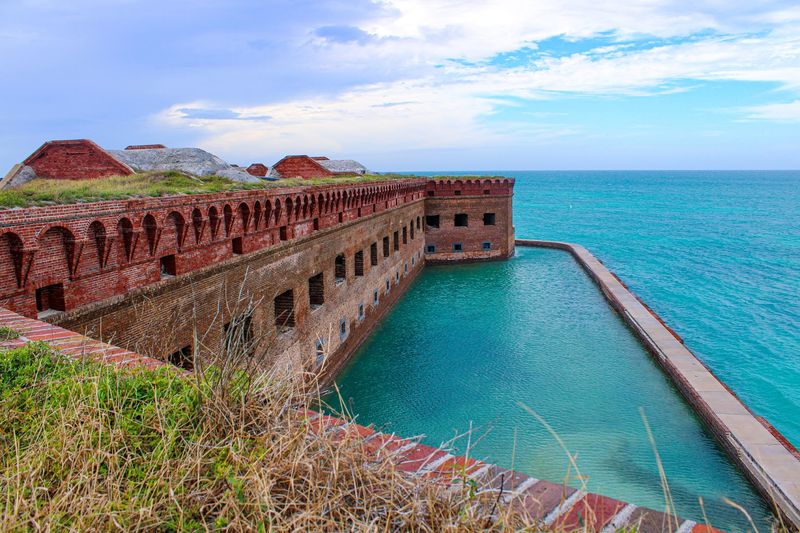
Seventy miles west of Key West, where the Gulf of Mexico meets the Atlantic, sits a cluster of islands so remote you can only reach them by boat or seaplane. Dry Tortugas National Park feels less like mainland America and more like a forgotten outpost at the edge of the world.
Fort Jefferson dominates Garden Key, a massive hexagonal fortress built from 16 million bricks. It was never finished and never saw battle, but it remains the largest masonry structure in the Western Hemisphere. Walking its ramparts feels like stepping into a historical novel set somewhere in the Caribbean.
The water surrounding the fort is ridiculously clear. Snorkelers glide over coral reefs where sea turtles, barracuda, and tropical fish go about their business. The reef system here rivals anything in the Keys, but with far fewer people around to disturb it.
Most visitors arrive via ferry or seaplane, both of which add to the adventure. The seaplane ride offers jaw-dropping aerial views of shipwrecks and sandbars. The ferry gives you more time on the island to explore, camp, or simply soak in the isolation.
There’s no food service, no cell signal, and very little infrastructure. It’s just you, the fort, the reef, and an overwhelming sense of being off the grid in a way that’s nearly impossible to achieve elsewhere in the United States.
5. See A Live Mermaid Show In A Submerged Theater (Weeki Wachee Springs)
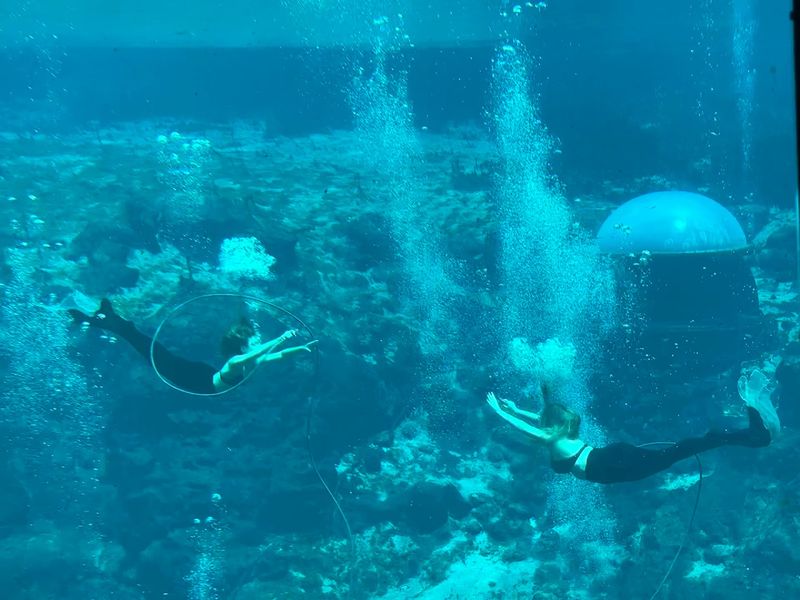
Weeki Wachee Springs State Park has been staging mermaid shows since 1947, making it one of Florida’s most wonderfully weird roadside attractions that somehow survived into the 21st century. And yes, they’re still performing.
The theater itself is submerged, with a 400-seat auditorium facing a large glass window that looks into the natural spring. Performers—”mermaids”—swim gracefully through the clear water, breathing from air hoses hidden among the aquatic plants while acting out underwater ballets and storylines.
It’s pure Old Florida kitsch, the kind of attraction that feels like it should have disappeared decades ago. But the shows continue, drawing families, nostalgic Floridians, and curious travelers who’ve heard about this bizarre piece of Sunshine State history.
The spring itself is beautiful, pumping out 117 million gallons of water daily at a constant 74°F. You can kayak the Weeki Wachee River, swim in Buccaneer Bay, or simply marvel at the clarity of the water.
But the mermaid show is the main event. Watching performers smile and wave while holding their breath underwater, their tails shimmering in the spring light, feels like visiting a time capsule of mid-century roadside America. It’s campy, it’s charming, and it’s absolutely, definitively Florida in a way that no other state can claim.
6. Snorkel The Only Coral Reef System In The Continental U.S. (Florida Keys)
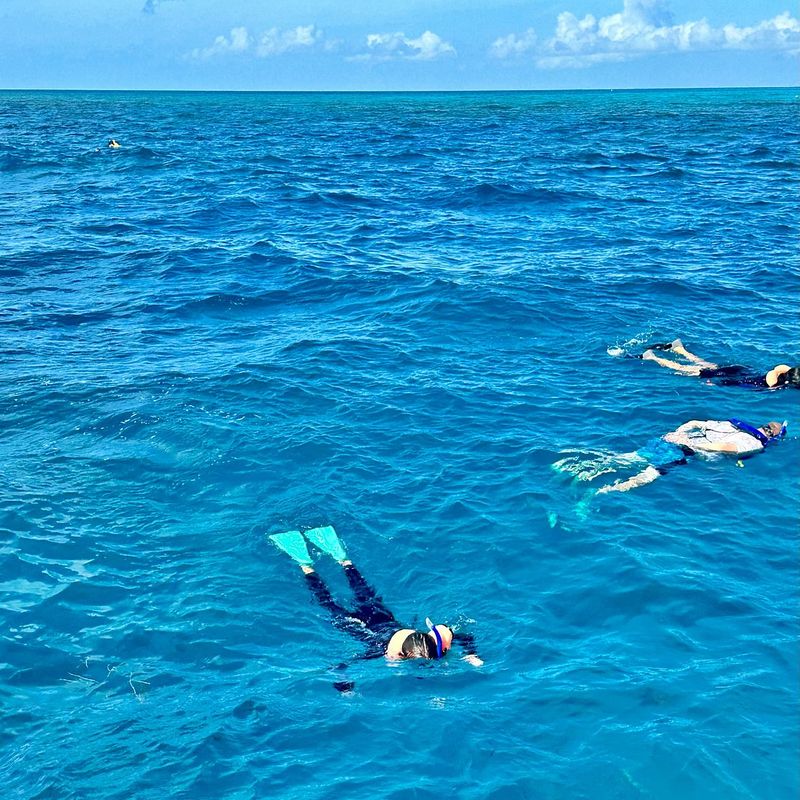
Hawaii has reefs. California has kelp forests. But if you want to snorkel a true coral reef system without leaving the continental United States, Florida is your only option.
The Florida Reef stretches roughly 350 miles from the Dry Tortugas to the St. Lucie Inlet, making it the only extensive shallow coral reef near the coast of any continental state. It’s the third-largest barrier reef system in the world, trailing only Australia’s Great Barrier Reef and the Belize Barrier Reef.
The reef runs parallel to the Keys, creating a living barrier between the Atlantic Ocean and Florida Bay. Snorkelers can access it easily from dozens of locations, with tour operators offering half-day trips to popular spots.
Underwater, you’ll find brain coral the size of small cars, forests of elkhorn and staghorn coral, and an explosion of tropical fish—parrotfish, angelfish, tangs, and groupers. Sea turtles cruise by. Nurse sharks rest on sandy patches.
Barracuda hover in the blue.
Climate change and disease have stressed the reef in recent years, making conservation efforts critical. But the experience of floating above this underwater garden remains magical. The water is warm, the visibility often excellent, and the diversity of life astonishing.
No other continental U.S. destination offers anything close to this kind of reef snorkeling right offshore.
7. Dive Or Snorkel Looe Key Reef (Lower Florida Keys)
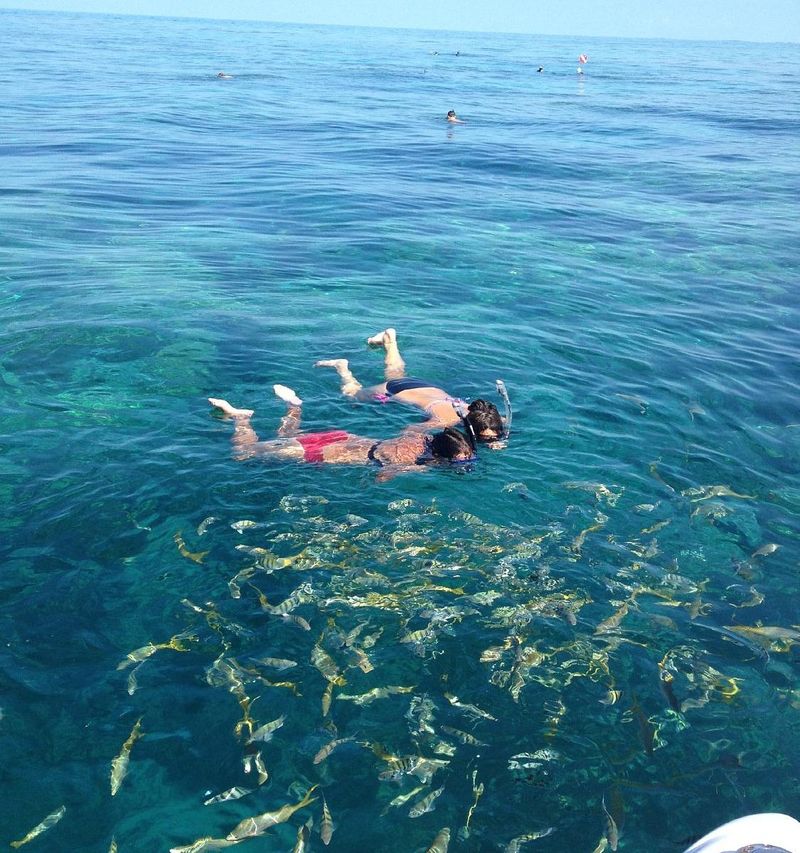
Among Florida’s many reef sites, Looe Key stands out for its classic Caribbean beauty and protected status. Located in the Lower Keys, this sanctuary preservation area showcases the spur-and-groove formations that define healthy reef systems.
The “spurs” are ridges of coral running perpendicular to shore, while the “grooves” are sandy channels between them. This structure creates highways for fish and allows waves to dissipate their energy without destroying the reef. Swimming through these formations feels like exploring an underwater canyon system.
Looe Key sits within a National Marine Sanctuary, which means stricter protections and healthier coral than many other sites. The result is a reef that looks and feels more vibrant, with dense coral coverage and abundant marine life.
Snorkelers can access the reef easily—the water depth ranges from about 5 to 35 feet, with much of the best coral in shallow areas. Divers go deeper to explore walls and overhangs where larger fish congregate.
The name comes from HMS Looe, a British frigate that wrecked here in 1744. You can still see ballast stones from the wreck scattered on the seafloor, adding a historical element to the natural beauty.
Tour boats leave from Ramrod Key and Big Pine Key, making Looe Key accessible as a day trip. But the experience feels far removed from mainland America—more Bahamas than United States, with water so clear and blue it looks Photoshopped.
8. Sleep Underwater In Key Largo (Jules’ Undersea Lab)
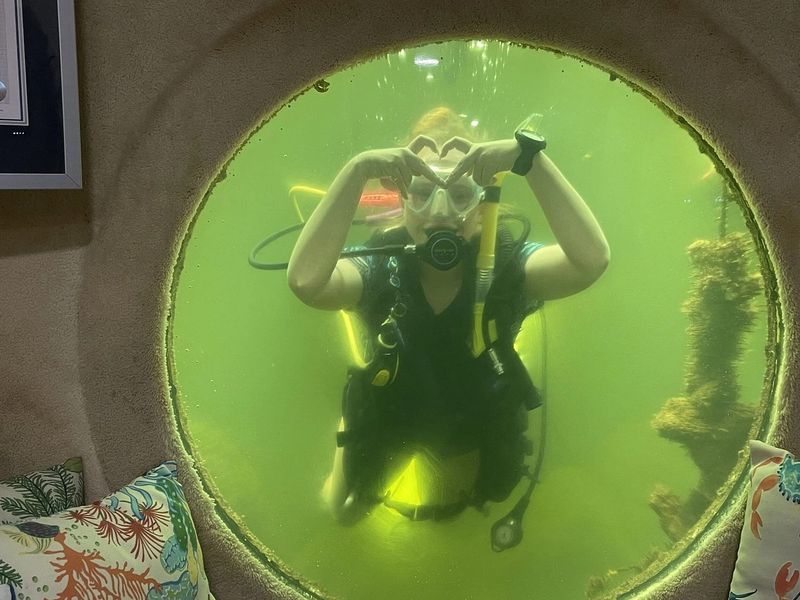
Hotels offer ocean views. Jules’ Undersea Lodge offers an ocean room—because the entire facility sits 21 feet below the surface of a Key Largo lagoon.
This underwater habitat began life as La Chalupa, an underwater research lab in Puerto Rico. It was moved to Key Largo and converted into the world’s only underwater hotel, where guests must scuba dive to check in.
The experience starts with a dive down to the entrance at the bottom of the habitat. You surface inside the lodge, where the air pressure keeps water from flooding the living space. It’s the same principle submarines use, just in reverse.
Inside, you’ll find surprisingly comfortable accommodations—bedrooms, a bathroom with hot shower, a full kitchen, entertainment systems, and large circular windows where fish peer in at you. Groupers and angelfish become your neighbors. Barracuda cruise past like they’re checking out the new arrivals.
Guests can stay overnight or just visit for a few hours. The lodge offers “aquanaut” experiences that include pizza delivery (brought down by a diver), movies, and the surreal experience of sleeping while surrounded by the ocean.
It’s not luxury lodging in the traditional sense. But as a bucket-list experience, sleeping underwater in a converted research lab ranks among the strangest and most memorable accommodations in the country. Only in the Florida Keys would someone think this was a reasonable business idea—and only here could they actually pull it off.
9. Drive The Overseas Highway Across The Florida Keys
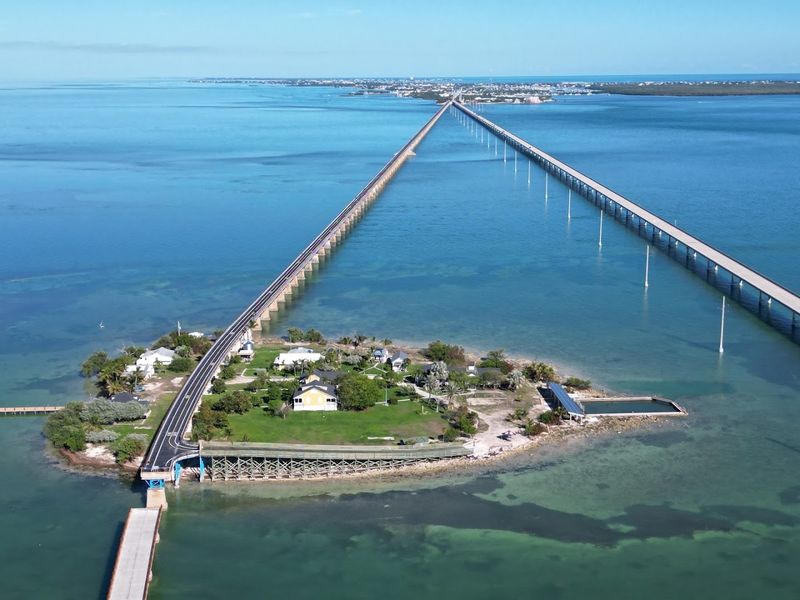
Road trips usually involve looking at scenery. The Overseas Highway makes you drive through it.
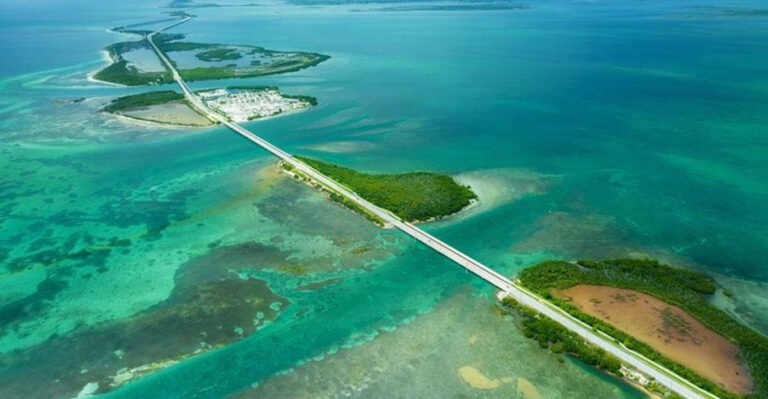
This 113-mile stretch of U.S. Route 1 connects the Florida Keys from Key Largo to Key West, crossing 42 bridges and hopping from island to island over water so blue and clear it looks tropical—because it is. No other American road trip offers this sustained sense of driving across the ocean.
The Seven Mile Bridge is the star of the route. You’re suspended over open water with nothing but turquoise sea on both sides and the old bridge running parallel like a ghost of highway history. It’s been featured in countless movies and music videos because it photographs like nowhere else in the country.
Between bridges, you pass through tiny island communities—Islamorada, Marathon, Big Pine Key—each with its own personality. Roadside stands sell key lime pie and conch fritters. Marinas bristle with fishing boats.
Iguanas sun themselves on rocks.
The drive takes about three hours without stops, but rushing defeats the purpose. Pull over for fresh grouper sandwiches. Snorkel at Bahia Honda.
Watch sunset from Mallory Square in Key West.
What makes this drive uniquely Floridian isn’t just the bridges or the water. It’s the feeling that you’ve left the mainland United States behind and entered something closer to the Caribbean, all while staying on a numbered U.S. highway. That paradox—tropical island-hopping without leaving American soil—exists nowhere else.
10. Experience Bioluminescent Paddling On Florida’s Space Coast
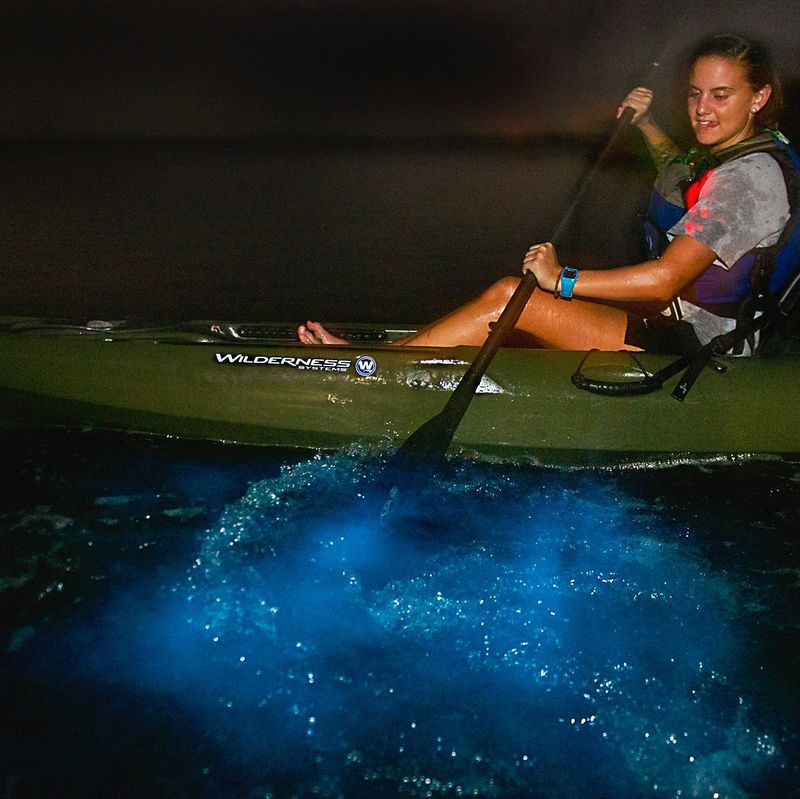
Summer nights on Florida’s Space Coast offer a natural light show that rivals anything NASA launches into orbit. Paddle through the Indian River Lagoon during the right conditions, and every stroke of your paddle ignites an underwater galaxy.
Bioluminescent dinoflagellates—tiny organisms that flash when disturbed—create this effect. Drag your hand through the water and it glows electric blue-green. Fish dart past leaving comet trails.
Manatees become ghostly submarines outlined in living light.
The phenomenon isn’t exclusive to Florida globally—other places have bioluminescence. But the combination here is special: warm shallow lagoon, protective mangrove ecosystem, proximity to Kennedy Space Center, and the sheer intensity of the glow during peak summer months.
Tour operators in Titusville and Merritt Island lead guided kayak trips during the darkest nights. The less moonlight, the more dramatic the effect. You’ll paddle through narrow channels where mangrove roots drip overhead and every movement creates sparkles.
The Indian River Lagoon is one of the most biodiverse estuaries in North America, home to more species than the Chesapeake Bay. That biological richness includes the conditions that support dense populations of bioluminescent organisms.
Seeing it yourself feels like science fiction made real. The water glows like something from Avatar. Your paddle becomes a magic wand.
And overhead, if you’re lucky, a rocket might arc into space, adding human-made light to nature’s own spectacular display. That’s a combination you’ll only find on Florida’s Space Coast.