These 8 Florida Statues Are More Than Art—They’re Pieces Of Living History
Florida’s public spaces hold more than just bronze and stone monuments. Scattered across the state, from coastal towns to inland parks, stand statues that tell powerful stories about the people and events that shaped the Sunshine State.
Each sculpture captures a moment frozen in time, honoring explorers, athletes, civil rights pioneers, and community builders whose legacies continue to influence Florida today.
1. Ponce de Leon Statue — St. Augustine
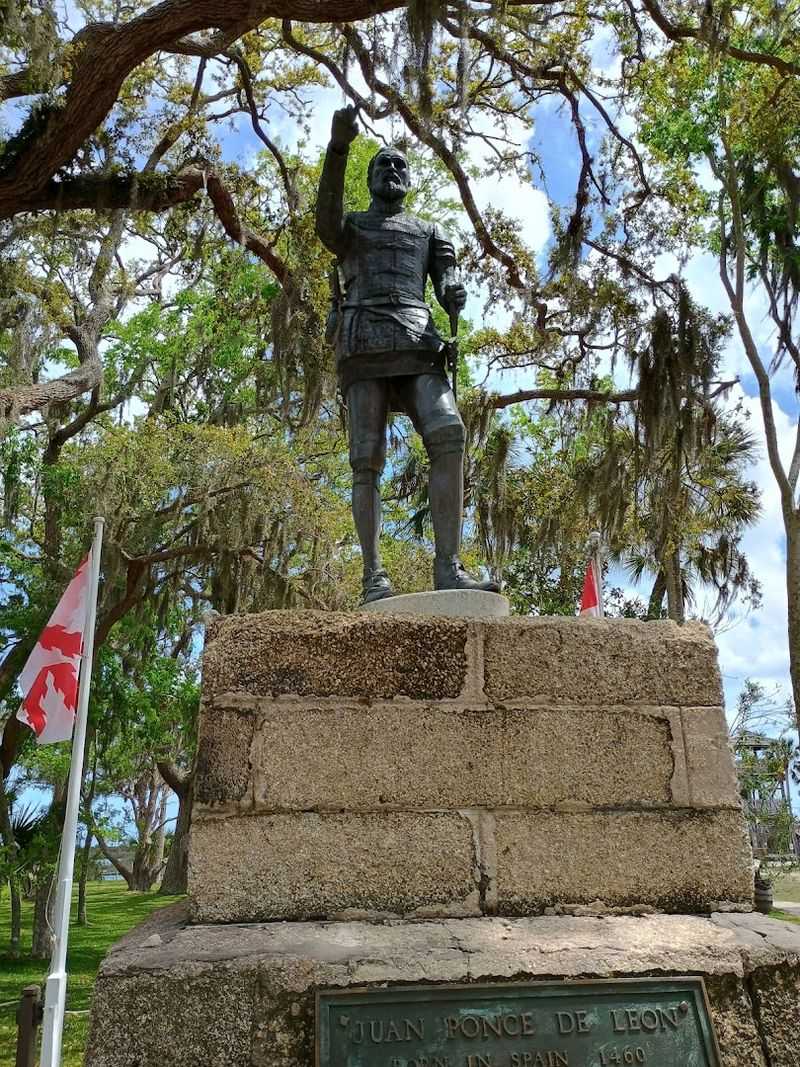
Standing tall in America’s oldest city, this bronze figure honors the Spanish explorer who first set foot on Florida soil in 1513. Juan Ponce de Leon searched for new lands and opportunities, forever changing the course of history for this region.
The statue captures him in full explorer gear, gazing outward as if still surveying uncharted territory.
St. Augustine takes pride in its Spanish heritage, and this monument serves as a daily reminder of those early days. Visitors often stop to snap photos and read the plaque detailing his voyages.
The statue has become a meeting point for walking tours that wind through the cobblestone streets.
What makes this sculpture particularly meaningful is its location near the Fountain of Youth Archaeological Park. Legend says Ponce de Leon sought the mythical fountain during his travels, though historians debate whether he actually believed in it.
Either way, the story has become part of Florida folklore.
The monument went through restoration work to preserve its details from the harsh coastal weather. Salt air and humidity can wear down even the sturdiest materials over time.
Now it stands protected, ensuring future generations can connect with this chapter of exploration history.
Local schools bring students here to learn about Spanish colonization and its impact on Native populations. The statue sparks conversations about both achievement and consequence.
It represents a complex beginning to what would eventually become the state we know today, making it far more than decorative public art.
2. Statue of Henry M. Flagler — St. Augustine
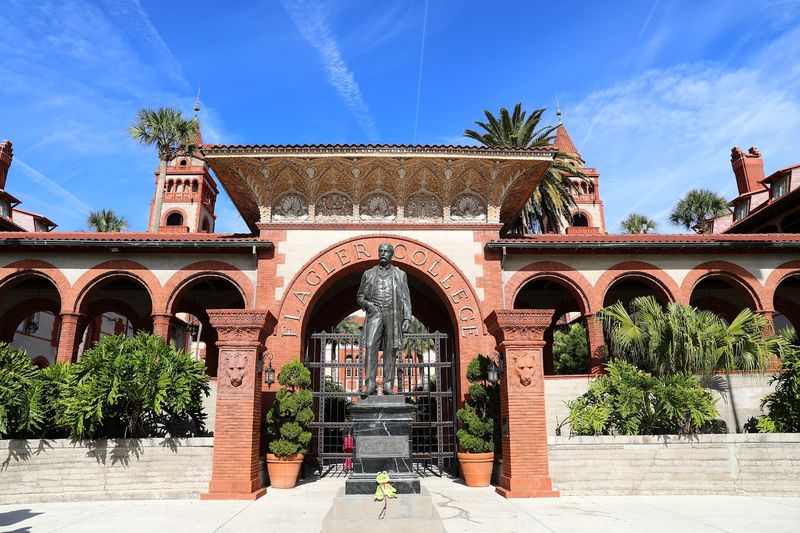
Henry Flagler didn’t just visit Florida—he transformed it completely. This statue celebrates the railroad tycoon who built the infrastructure that turned remote coastal settlements into thriving tourist destinations.
His vision connected the entire east coast of Florida, making travel accessible to thousands who had never considered visiting before.
The sculpture shows Flagler dressed in period business attire, looking every bit the confident industrialist he was. His expression seems determined, fitting for someone who literally moved mountains (or at least, carved through them) to lay railroad tracks.
The detail work captures the fashion and bearing of the Gilded Age perfectly.
St. Augustine benefited enormously from Flagler’s investments, including the construction of luxurious hotels that still operate today. He saw potential where others saw swampland and mosquitoes.
His developments brought jobs, commerce, and a new identity to the area as a winter paradise for wealthy northerners.
The monument stands near some of his most famous architectural achievements, creating a walking history lesson. Tourists can see both the man and his works in one visit.
Many don’t realize how much one person’s ambition shaped modern Florida until they learn Flagler’s story.
Critics point out that progress came with costs, including displacement of communities and environmental changes. The statue acknowledges his role without glossing over complicated truths.
It reminds us that Florida’s development involved both innovation and difficult trade-offs, making this bronze figure a conversation starter about growth, vision, and their lasting consequences on the Sunshine State.
3. Chief Osceola Statue — Silver Springs State Park
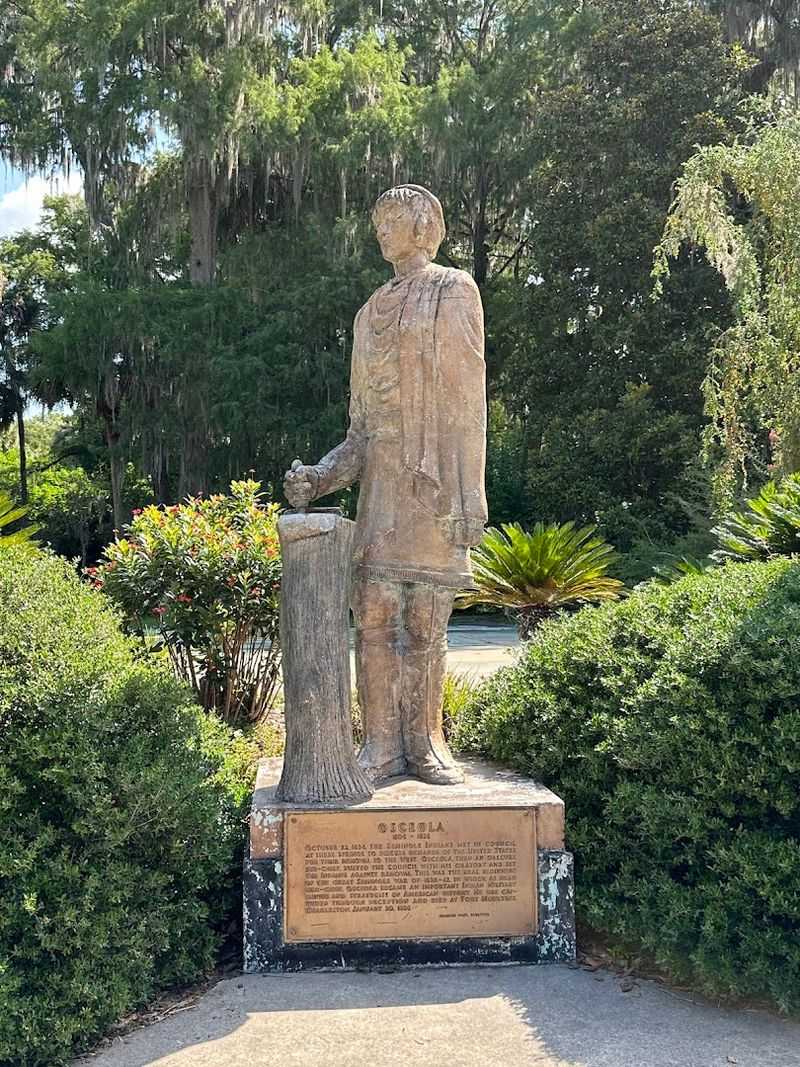
Deep in the heart of Silver Springs State Park stands a powerful tribute to one of Florida’s most legendary Seminole leaders. Chief Osceola led his people during the Second Seminole War, refusing to accept forced removal from their ancestral lands.
His courage and tactical skills made him a symbol of resistance that still resonates today.
The statue depicts him in traditional dress, capturing both his warrior spirit and his dignity. Artists worked carefully to represent Seminole culture with respect and accuracy.
Every detail matters when honoring someone who fought so fiercely for his people’s right to remain in Florida.
Silver Springs itself holds significance in Seminole history, serving as an important natural resource and gathering place. The clear waters that still flow today witnessed countless moments of their daily lives.
Placing this monument here connects the physical landscape with the human stories that unfolded across it.
Visitors often remark on the statue’s emotional impact, feeling the weight of what Osceola and his people endured. School groups learn about the Seminole Wars from a perspective that centers Indigenous voices.
The monument challenges simplified versions of history that overlook Native American experiences.
The Seminole Tribe of Florida continues to thrive today, maintaining their culture and sovereignty. This statue serves as a bridge between past and present, honoring ancestors while acknowledging living descendants.
It stands as proof that some spirits cannot be conquered, and some stories deserve to be told and retold for generations to come in the place they call home.
4. Monument of States — Kissimmee
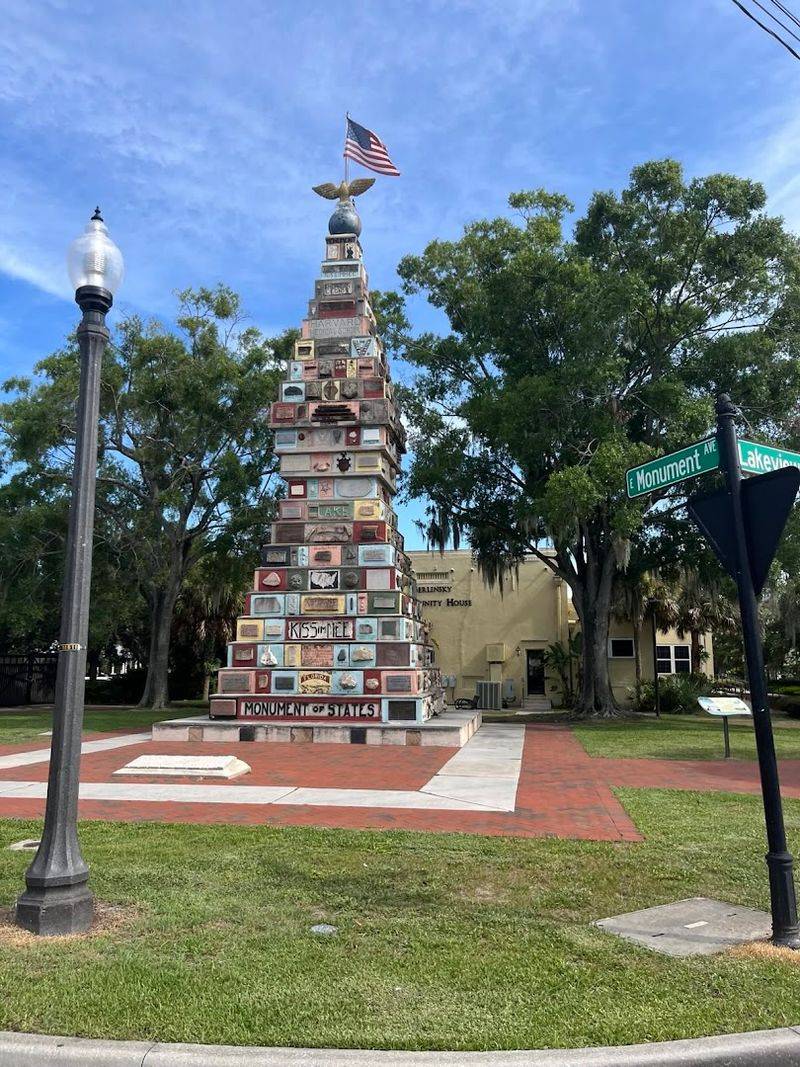
Rising from a Kissimmee park, this quirky tower tells a story of unity during one of America’s darkest hours. Built in 1943 during World War II, the Monument of States was designed to symbolize national solidarity when the country needed it most.
Dr. Charles Bressler-Pettis spearheaded the project, collecting stones from every state and several foreign nations.
The structure looks like nothing else you’ll encounter in Florida. Over 1,500 stones create a colorful patchwork reaching skyward, each one representing a different place.
Some rocks came from famous landmarks, while others arrived from ordinary citizens who wanted to contribute to something bigger than themselves.
What really sets this monument apart are the unexpected items embedded throughout. You’ll spot a piece of petrified wood, stones from historic battlefields, and even rocks from foreign countries that were America’s allies.
Each addition carries its own micro-story within the larger narrative of wartime cooperation.
Local residents rallied around the project, with President Franklin D. Roosevelt himself donating a stone.
The monument became a community gathering point during bond drives and patriotic events. It represented hope that the war would end and the nation would emerge stronger.
Today, the tower stands as a somewhat forgotten treasure that deserves more attention. Restoration efforts have helped preserve it for future generations.
Walking around its base, reading the plaques identifying different stones, you can’t help but feel connected to that moment when Americans from all corners came together, sending pieces of their home to create something that still stands tall in central Florida.
5. The Torch of Friendship — Miami
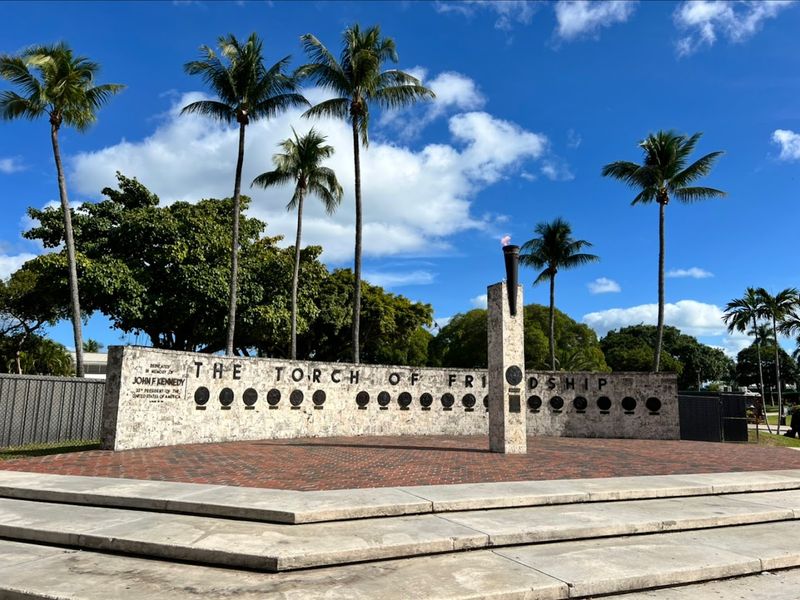
Spiraling upward in brilliant colors, this modern sculpture celebrates Miami’s deep connections with Latin America. The Torch of Friendship stands in Bayfront Park, its twisted form reaching toward the sky like a flame frozen mid-dance.
Created in 1960, it marked a pivotal moment when Miami was becoming the unofficial capital of the Americas.
The monument’s design breaks from traditional statue forms completely. Instead of depicting a person or event literally, it uses abstract shapes and vibrant hues to express friendship and cultural exchange.
The torch concept works perfectly—fire has always symbolized enlightenment, hope, and the sharing of knowledge across borders.
Miami’s identity as a multicultural hub makes this location ideal for such a tribute. Waves of immigrants from Cuba, Venezuela, Colombia, and beyond have shaped the city’s character.
The torch acknowledges these connections aren’t just historical footnotes but living relationships that define everyday life here.
Bayfront Park serves as a gathering space for festivals, protests, and celebrations representing countless communities. The sculpture watches over all of it, a constant reminder of shared values.
At night, lighting effects make the torch even more dramatic, turning it into a beacon visible across the water.
Some might walk past without noticing, but those who stop and consider its meaning often find themselves moved. The simplicity of the gesture—offering friendship—carries profound weight in a world that sometimes forgets its importance.
This isn’t just Miami’s monument; it belongs to everyone who believes in building bridges instead of walls, making it a perfect symbol for a city that has always opened its arms to newcomers seeking opportunity and connection.
6. Statue of Don Vicente Martinez Ybor — Tampa
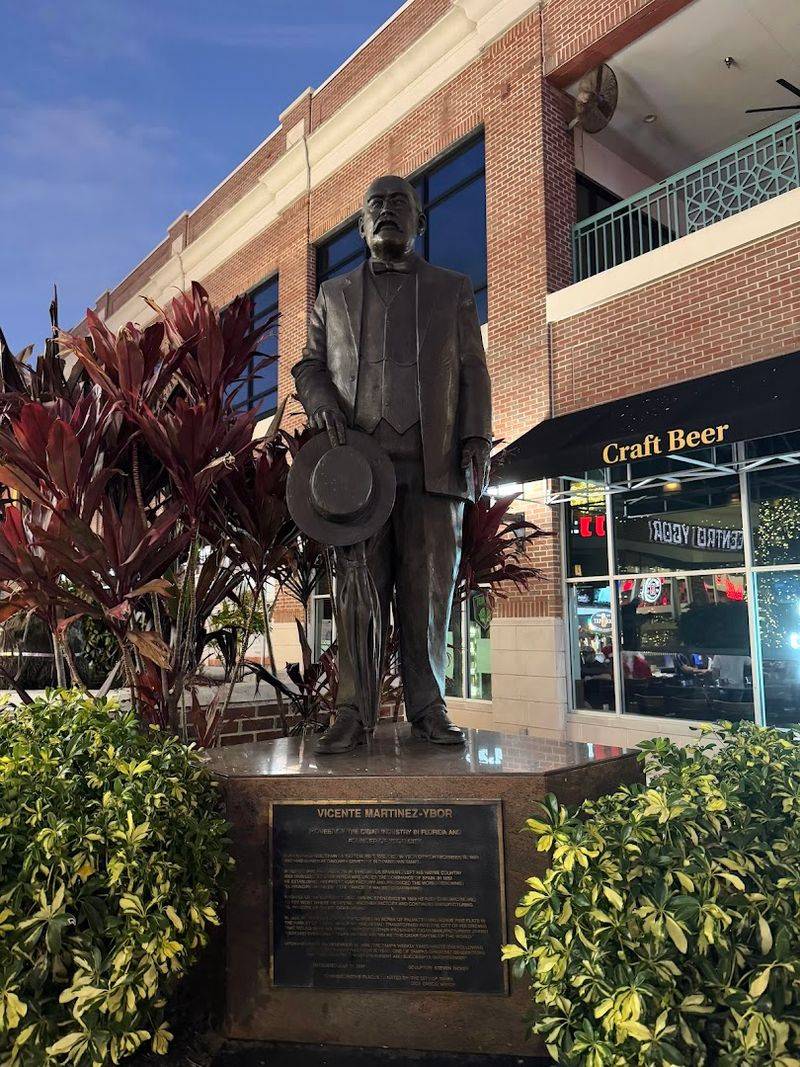
Walking through Ybor City today, you’ll find brick streets, cigar shops, and a thriving cultural scene—all thanks to one man’s vision. Don Vicente Martinez Ybor established his cigar manufacturing empire here in the 1880s, creating a company town that attracted workers from Cuba, Spain, and Italy.
His statue stands in the heart of the neighborhood that still bears his name.
The bronze figure shows Ybor as a distinguished businessman of his era, dressed impeccably with the bearing of someone who built something from nothing. He looks out over the district as if still surveying his creation.
The attention to period detail helps transport viewers back to Tampa’s cigar-rolling heyday.
Ybor didn’t just build factories—he created an entire community with housing, schools, and social clubs for workers. His approach was unusual for industrialists of that time, showing genuine investment in employee welfare.
The neighborhood became a melting pot where different cultures blended while maintaining distinct traditions.
Tampa might have developed very differently without his influence. The cigar industry brought economic prosperity and international connections that shaped the city’s identity.
Even after machine production ended hand-rolling’s dominance, the cultural legacy remained embedded in the community.
Today’s Ybor City balances preservation with modern entertainment, and the statue serves as an anchor to that history. Restaurants, clubs, and shops occupy buildings that once housed cigar workers and their families.
The monument reminds visitors and residents alike that this wasn’t always a trendy nightlife destination—it was a working-class neighborhood built by an entrepreneur who saw potential where others saw swampland, forever changing Tampa’s trajectory through industry and immigration.
7. Spirit of the American Doughboy — Pensacola
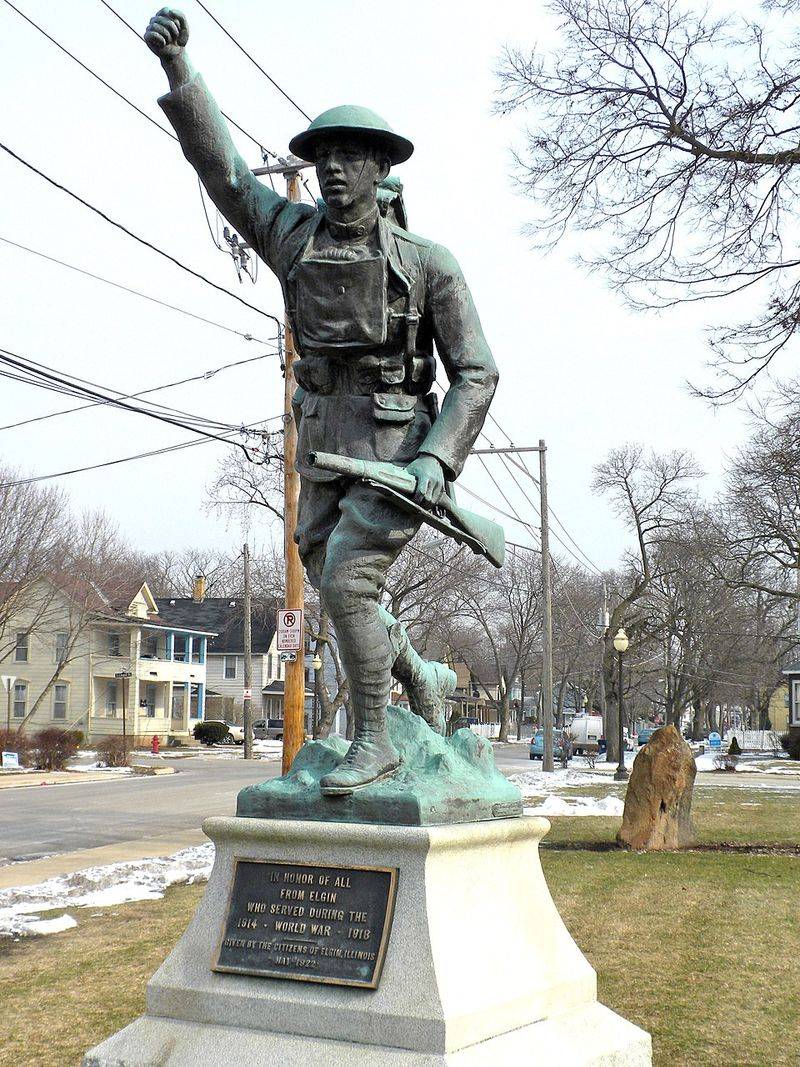
Standing at attention in Pensacola, this soldier represents every young American who answered the call during World War I. The Spirit of the American Doughboy became one of the most replicated monuments in the country, with versions appearing in towns from coast to coast.
Each one honors local veterans who served in the Great War, keeping their sacrifice visible to new generations.
The statue shows a soldier mid-stride, rifle in hand, moving forward with determination. His uniform details are meticulously rendered, from the wrapped puttees on his legs to the distinctive helmet.
The pose captures both the courage and the tragedy of young men marching into mechanized warfare unlike anything the world had seen before.
Pensacola’s military heritage runs deep, with Naval Air Station Pensacola training aviators for over a century. This monument fits naturally into a community that understands service and sacrifice.
Veterans’ organizations maintain the site, ensuring flowers are placed and the area stays respectful.
Many Americans today know little about World War I compared to later conflicts. These doughboy statues serve as teaching tools, prompting questions about why we fought, what was gained, and what was lost.
The war fundamentally changed global politics and set the stage for conflicts that followed.
Original dedication ceremonies in the 1920s and 1930s drew huge crowds of veterans, widows, and families still grieving their losses. The monuments provided a focal point for collective memory.
Now, a century later, this Pensacola doughboy still stands watch, reminding passersby that freedom has always required ordinary people to do extraordinary things, often at tremendous personal cost that deserves remembrance in bronze and stone.
8. Christopher Columbus Statue — Miami
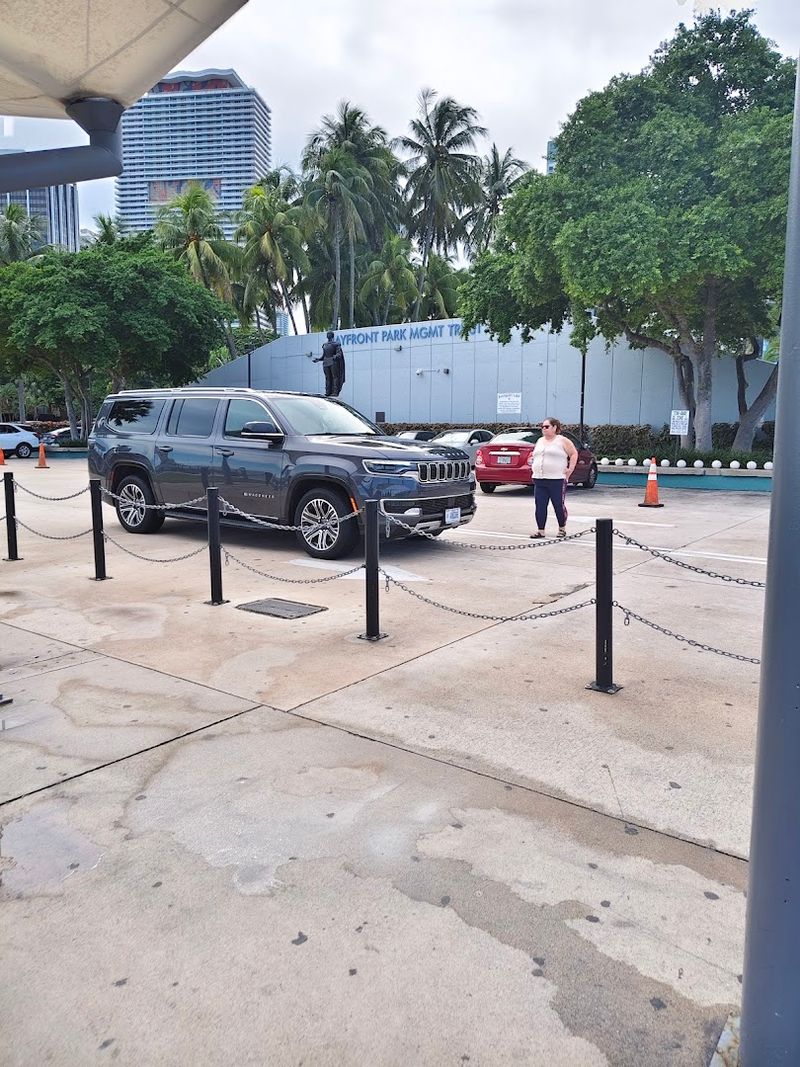
Controversy and history collide at this Miami monument to the Italian explorer whose 1492 voyage changed the world forever. Christopher Columbus statues exist across the Americas, each one sparking ongoing debates about how we remember the past.
This particular sculpture has witnessed protests, celebrations, and everything in between as perspectives on his legacy have evolved.
The statue presents Columbus in traditional explorer fashion, looking outward as if spotting land on the horizon. Created decades ago when his story was taught primarily as one of brave discovery, the monument reflects a simpler narrative.
Today’s viewers bring much more complex understandings of what his arrival meant for Indigenous populations already living in the Americas.
Miami’s large Italian-American community has historically celebrated Columbus Day with pride, seeing him as a symbol of Italian contributions to world exploration. The statue served as a gathering point for parades and cultural festivals.
These traditions continue, though now they share space with voices demanding acknowledgment of colonization’s devastating impacts.
Some cities have removed Columbus statues entirely, while others have added contextual plaques explaining both his achievements and the consequences of European contact. Miami’s monument remains standing, becoming a lightning rod for discussions about public memory.
Should we preserve controversial history or remove symbols that cause pain?
There are no easy answers, which is exactly why this statue matters. It forces communities to grapple with uncomfortable truths about how we got here.
Rather than a simple celebration or condemnation, the monument has become a space for ongoing dialogue about whose stories get told, how we honor complexity, and what public art should represent in a diverse society still reckoning with its past.