The Incredible Survival Story Behind This Historic Palm Beach, Florida Mansion
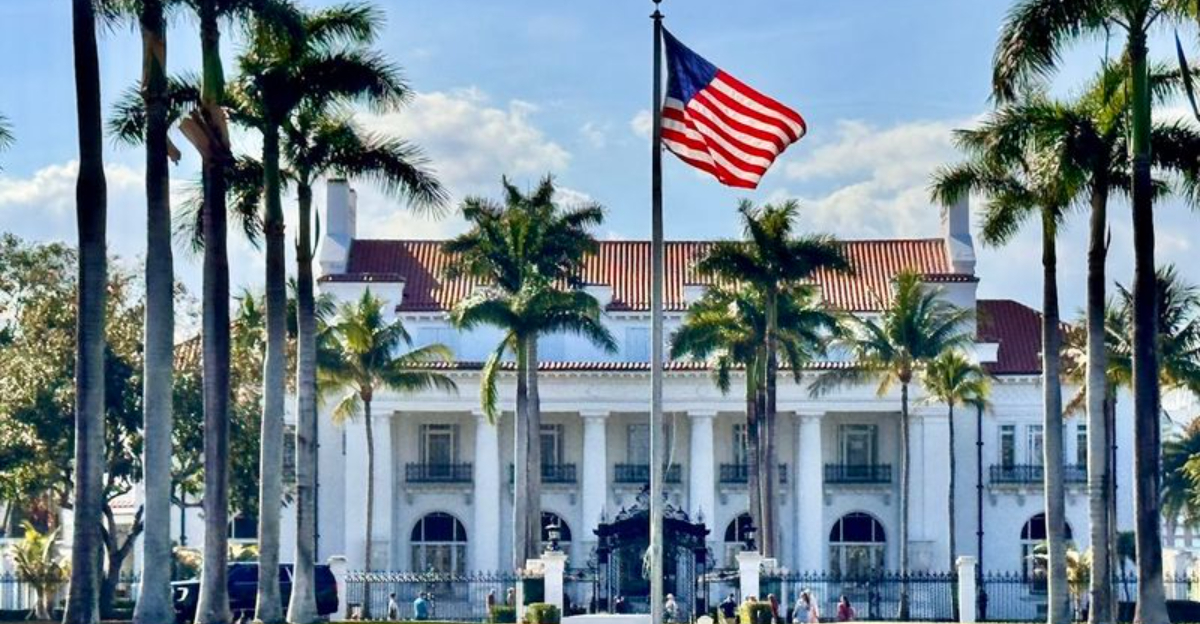
Whitehall, the stunning mansion that now houses the Henry Morrison Flagler Museum, has witnessed more than a century of Florida history. Built in 1902 as a wedding gift from oil tycoon Henry Flagler to his third wife, this 75-room palace barely escaped destruction in the 1950s.
Thanks to the dedication of Flagler’s granddaughter and countless preservationists, this architectural treasure survived to tell its remarkable tale of wealth, vision, and the birth of modern Florida.
A Gilded Age Palace Built on Love and Ambition
Henry Flagler spared no expense when he commissioned architects John Carrere and Thomas Hastings to design Whitehall for his bride, Mary Lily Kenan. The mansion cost a staggering $2.5 million to build in 1902, which translates to roughly $80 million today.
Flagler wanted to create the most magnificent home in America, and he succeeded beyond imagination.
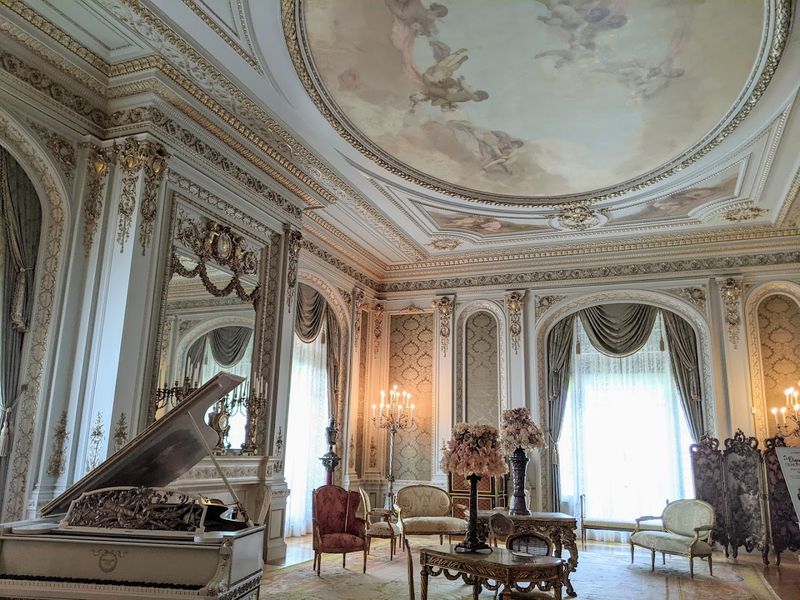
The 75-room estate sprawls across 100,000 square feet of pure opulence. Every room showcases a different architectural style, from Renaissance to Louis XIV to Colonial.
Marble columns tower overhead, hand-painted ceilings stretch endlessly above, and imported treasures fill every corner.
The New York Herald called it “more wonderful than any palace in Europe, grander and more magnificent than any other private dwelling in the world.”
Flagler only enjoyed his masterpiece for a short time each year. The couple typically spent just six to eight weeks at Whitehall during Palm Beach’s winter season.
The rest of the year, the mansion sat empty, maintained by a full-time staff who kept everything pristine for the Flaglers’ return. This seasonal pattern continued until Henry’s death in 1913.
Mary Lily inherited the estate but remarried and eventually passed away in 1917. The mansion then entered a period of uncertainty.
Without the Flaglers’ presence, Whitehall’s future looked increasingly uncertain. The property changed hands, and by the 1920s, developers had added a ten-story hotel tower to the west side, transforming the private residence into a commercial venture.
The grand rooms became hotel lobbies and public spaces.
For three decades, Whitehall served as a luxury hotel, but the original grandeur slowly faded. The magnificent furnishings were sold off or stored away.
Original fixtures disappeared. The building that once represented the pinnacle of American wealth was becoming just another dated hotel property facing an uncertain fate in the rapidly changing post-war era.
The Granddaughter Who Refused to Let History Die
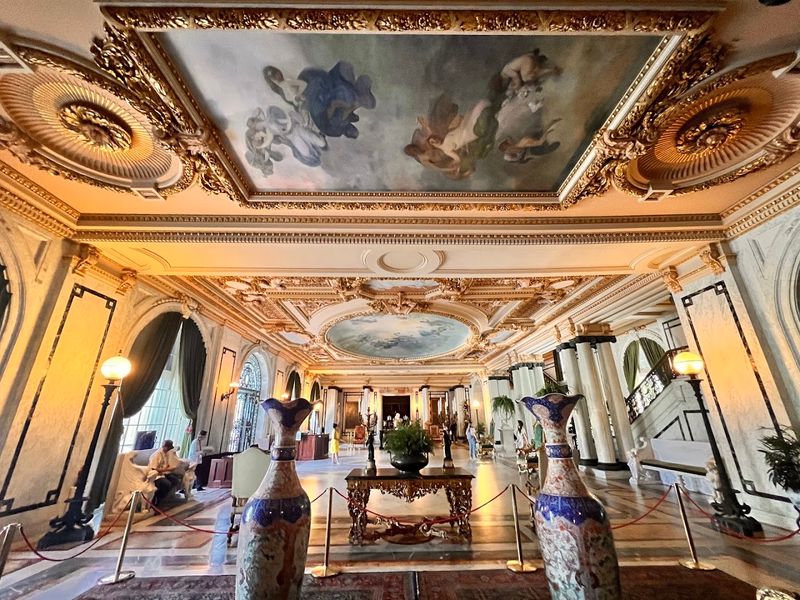
Jean Flagler Matthews grew up hearing stories about her grandfather’s legendary mansion. As Henry Flagler’s granddaughter, she understood the historical significance of Whitehall better than anyone.
When she learned in the 1950s that developers planned to demolish the deteriorating hotel to make way for modern construction, she knew she had to act.
Matthews launched a passionate campaign to save Whitehall from destruction. She rallied preservationists, historians, and community leaders to her cause.
Her determination convinced enough people that this wasn’t just a building but a crucial piece of Florida’s foundation story. The mansion represented the vision that transformed Florida from wilderness into paradise.
In 1959, Matthews established the Henry Morrison Flagler Museum as a nonprofit organization. She personally purchased the property and began the monumental task of restoration.
The hotel additions were removed, and the original structure was carefully brought back to its former glory. Matthews spent years tracking down original furnishings, artwork, and decorative pieces that had been scattered after Mary Lily’s death.
Her dedication went beyond simple preservation. Matthews wanted visitors to experience Whitehall as her grandparents had known it.
She scoured auction houses, contacted descendants of Gilded Age families, and followed leads across the country. Every recovered chandelier, painting, or piece of furniture represented another victory in her mission to resurrect the past.
The museum officially opened to the public on February 6, 1960. Matthews had accomplished what seemed impossible just years earlier.
She transformed a decaying hotel back into a time capsule of American history. Her efforts ensured that future generations could walk through the same rooms where her grandfather once entertained presidents, industrialists, and society’s elite during Florida’s most transformative era.
The Railroad Car That Almost Became Scrap Metal
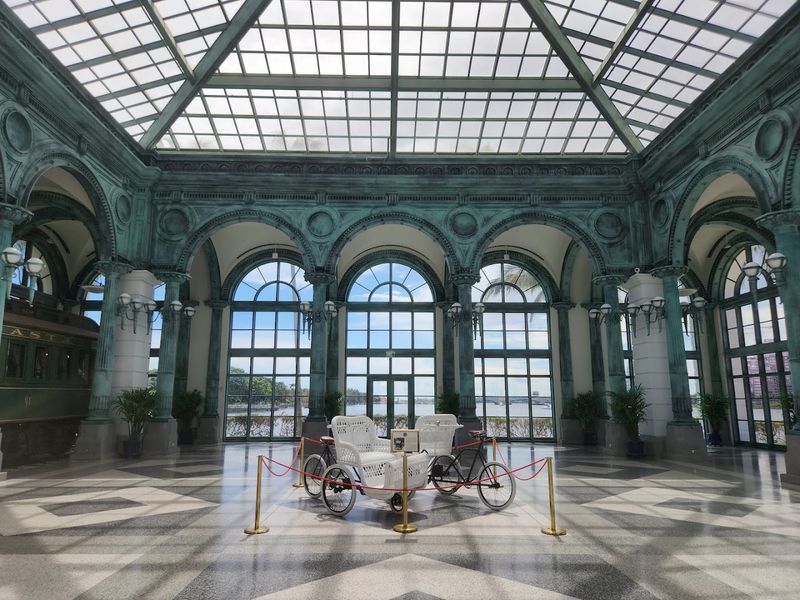
Railcar No. 91 represents Henry Flagler’s most personal connection to his greatest achievement. This wasn’t just transportation but a mobile palace from which he supervised construction of the Florida East Coast Railway.
The private car allowed Flagler to travel his railroad line in absolute comfort while monitoring every mile of track laid across Florida’s challenging terrain.
The restored railcar sits in its own climate-controlled pavilion behind the mansion. Walking through its interior feels like stepping onto a luxury train from 1886.
Rich mahogany paneling lines the walls, plush seating areas invite relaxation, and brass fixtures gleam under soft lighting. The observation platform at the rear offers views that Flagler himself enjoyed while watching Florida’s landscape roll past.
This railcar nearly met a tragic end. After Flagler’s death, the car bounced between owners and uses.
By the mid-20th century, it had been abandoned and was scheduled for demolition. Preservationists located it just in time, sitting neglected and deteriorating in a rail yard.
The rescue mission proved almost as challenging as saving the mansion itself.
Restoration specialists spent years bringing the railcar back to its original splendor. They researched historical photographs, studied period railroad cars, and tracked down original materials.
Every detail matters when recreating a piece this significant. The brass fixtures were repolished, the woodwork refinished, and the upholstery recreated using period-appropriate fabrics and techniques.
Today’s visitors can walk through every section of the car. The sleeping quarters show how Flagler rested between inspection trips.
The dining area reveals where he took meals while discussing construction challenges with engineers. The observation platform lets you imagine standing where Flagler stood, watching his dream of connecting Florida to the rest of America become reality one rail tie at a time.
Marble Halls That Witnessed Florida’s Transformation
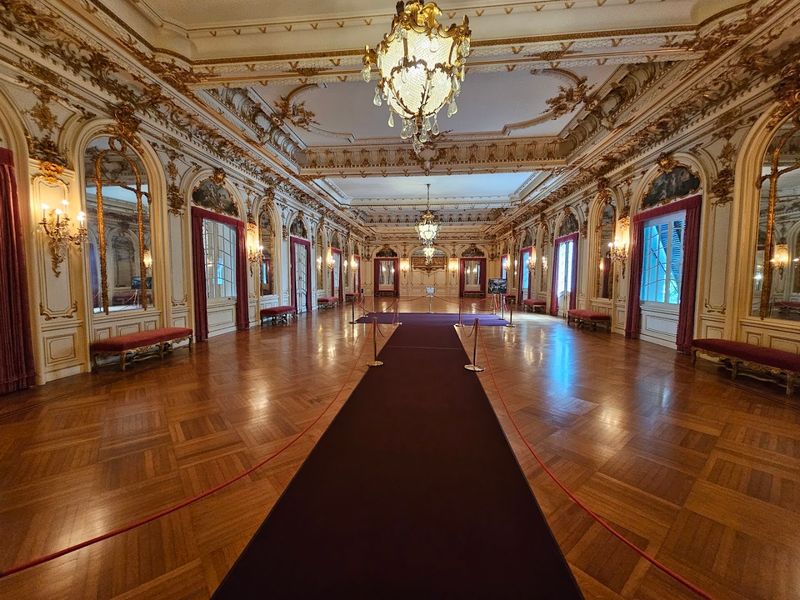
Whitehall’s entrance hall makes an immediate impression. Visitors step into a space that screams wealth and power from every surface.
Seven different types of marble cover the floors and walls, imported from quarries across Europe. The ceiling soars overhead, decorated with elaborate plasterwork that took craftsmen months to complete.
This wasn’t meant to be subtle.
Flagler designed this space to announce his arrival as Florida’s most important developer. Every governor, senator, and business leader who wanted to discuss Florida’s future had to walk through these marble halls first.
The grandeur wasn’t accidental but calculated. Flagler understood that impressive surroundings gave him psychological advantage in negotiations that would shape an entire state.
The restoration team faced enormous challenges bringing this space back to life. Decades as a hotel had damaged the original surfaces.
Marble had cracked, plasterwork had crumbled, and the original color schemes were hidden under layers of paint. Specialists used historical photographs and chemical analysis to determine exactly how everything originally looked.
Each type of marble had to be carefully cleaned using techniques that wouldn’t damage the stone. Some sections required complete replacement with matching material from the same European quarries used in 1902.
The plasterwork restoration took skilled artisans who understood century-old techniques. Modern construction methods wouldn’t produce the same results.
Standing in the restored entrance hall today, you experience the same awe that Flagler’s guests felt. The space communicates power, wealth, and ambition without saying a word.
This is where deals were made that brought railroads, hotels, and development to Florida’s east coast. These marble halls witnessed conversations that transformed swampland into the vacation paradise we know today.
Every surface tells part of that incredible story.
The Art Collection That Survived Against All Odds
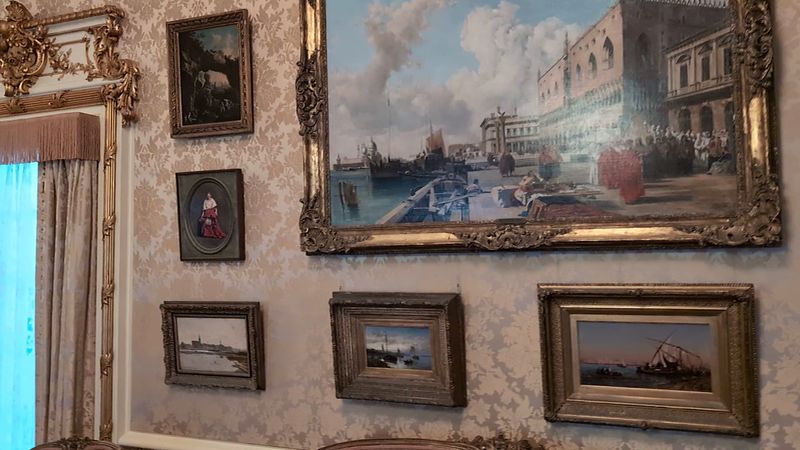
Flagler filled Whitehall with masterpieces from Europe and America. Paintings by old masters hung alongside contemporary works.
Sculptures occupied prominent positions throughout the mansion. Decorative arts from multiple continents adorned every room.
The collection represented not just wealth but sophisticated taste and cultural knowledge that Flagler had acquired over decades.
When the mansion became a hotel, this priceless collection scattered to the winds. Some pieces were sold at auction.
Others went to family members or disappeared into private collections. A few items ended up in museums or galleries far from Florida.
The dispersal seemed permanent and irreversible.
Jean Flagler Matthews made recovering the original collection a personal crusade. She hired researchers to track down every documented piece that once graced Whitehall’s walls.
The search took decades and led across the country. Some owners willingly returned or sold pieces back to the museum.
Others required lengthy negotiations or significant financial investment.
Not every original piece could be recovered. Some had been destroyed, lost, or remained in collections where owners refused to part with them.
In those cases, Matthews and her team located period-appropriate substitutes. They found paintings, sculptures, and decorative objects from the same era that matched Whitehall’s original aesthetic.
The goal was authenticity in spirit even when exact replacements proved impossible.
Today’s visitors see rooms filled with either original Flagler pieces or carefully selected period alternatives. Museum labels identify which items belonged to the Flaglers and which came later.
The collection tells two stories: the original tale of Gilded Age wealth and taste, and the modern story of dedication and perseverance that brought these treasures back together under one roof where they belong.
Architectural Details That Defied the Wrecking Ball
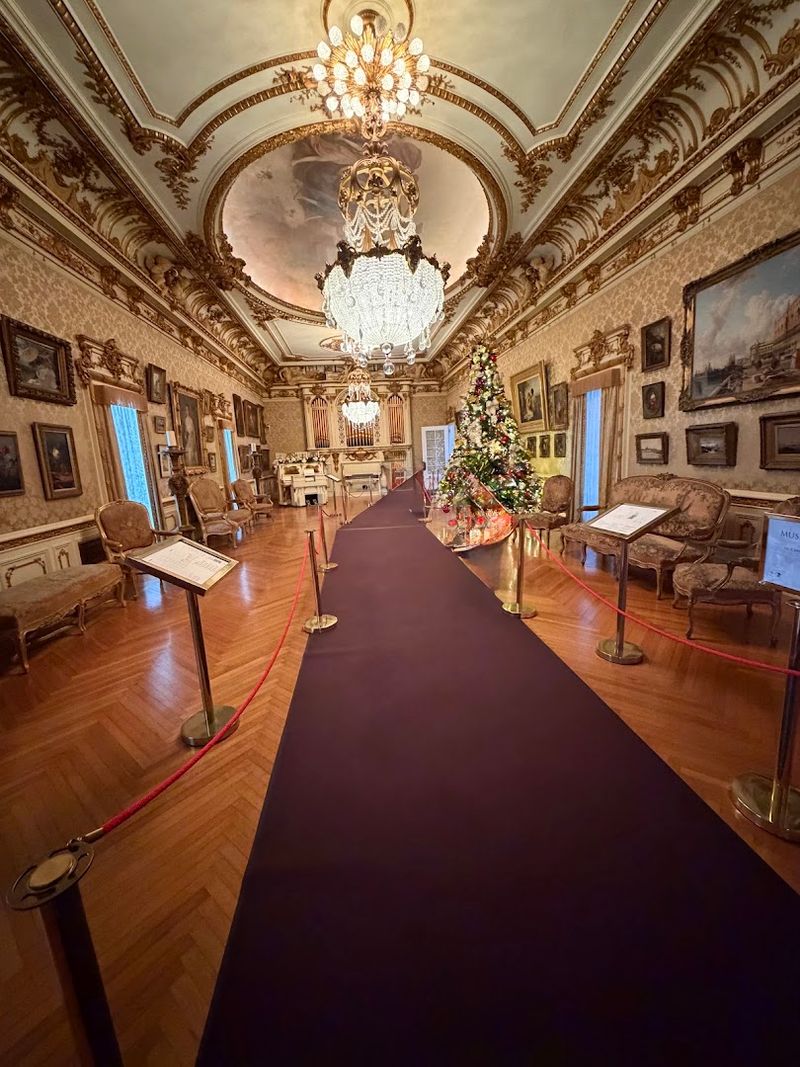
Carrere and Hastings designed Whitehall as a showcase of architectural styles. Each major room represents a different period or influence.
The music room channels Louis XV France. The library embraces Renaissance Italy.
The ballroom evokes colonial America. This wasn’t random but deliberately educational, showing guests the breadth of Western architectural achievement.
Craftsmen spent two years bringing these designs to life. Plasterers created elaborate ceiling decorations by hand.
Woodworkers carved intricate paneling from imported hardwoods. Stone masons shaped marble into columns, mantels, and decorative elements.
Every surface received attention from specialists who understood historical techniques and styles.
The hotel conversion damaged many of these details. Walls were knocked down to create larger spaces.
Ceilings were lowered to accommodate modern utilities. Original fixtures were removed and replaced with generic hotel equipment.
Decades of wear, alterations, and neglect left the architectural details in serious jeopardy when Matthews began her restoration.
Restoration architects studied every room extensively before beginning work. They examined historical photographs, construction documents, and surviving elements.
Paint analysis revealed original color schemes hidden under layers of later additions. Architectural historians identified which details were original and which came from hotel renovations.
The research phase alone took years.
Restoring these details required finding craftspeople with old-world skills. Modern construction workers couldn’t replicate the hand-carved woodwork or elaborate plasterwork.
The museum located specialists who still practiced traditional techniques. These artisans spent months recreating damaged or missing elements.
They mixed plaster using historical formulas, carved wood with period tools, and painted using authentic methods. The result is a mansion that looks like Flagler just stepped out, preserved against time itself through sheer determination and skill.
A Museum That Teaches Florida’s Origin Story
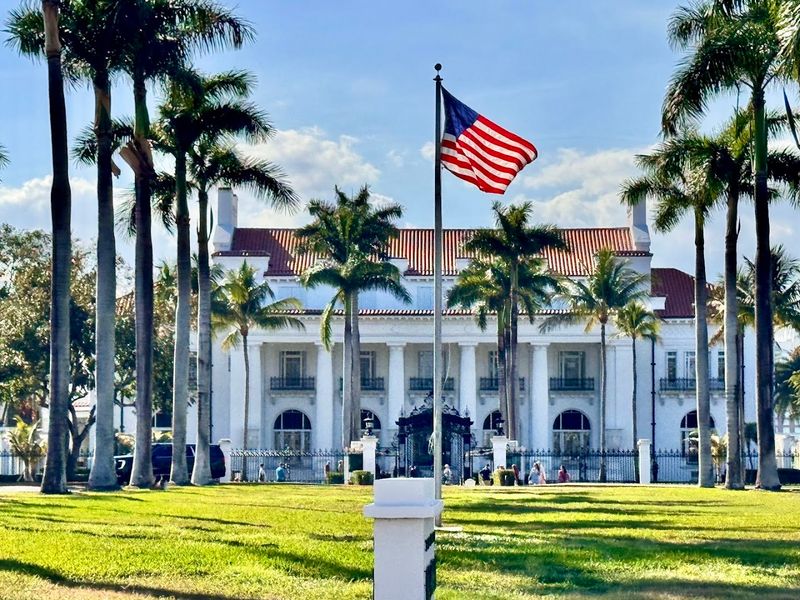
The Flagler Museum does more than preserve a mansion. It tells the story of how Florida became Florida.
Before Flagler arrived, the state’s east coast was largely uninhabited wilderness. Swamps, heat, and isolation kept development at bay.
Flagler saw potential where others saw obstacles, and he had the wealth and determination to transform his vision into reality.
Museum exhibits explain how Flagler’s railroad opened Florida to tourism and development. Each mile of track brought new possibilities.
Towns sprang up along the route. Hotels appeared to accommodate travelers.
Agriculture expanded as crops could finally reach northern markets. The Florida East Coast Railway didn’t just connect existing communities but created entirely new ones from scratch.
Special exhibitions rotate regularly, exploring different aspects of Gilded Age life and Florida history. Past shows have examined fashion, retail history, transportation, and social customs.
These temporary exhibits complement the permanent collection, giving repeat visitors new reasons to return. The museum balances its role as historical house and educational institution beautifully.
Educational programs bring school groups through regularly. Students learn about the Gilded Age, architectural history, and Florida’s development.
Docent-led tours provide context that self-guided visits might miss. The knowledgeable staff answers questions and shares stories that bring the mansion’s history to life.
Many visitors mention the exceptional tour guides in their reviews.
The museum’s survival itself teaches an important lesson about preservation and determination. Jean Flagler Matthews could have let developers demolish Whitehall and simply mourned its loss.
Instead, she fought to save it and spent decades restoring what had been damaged. Her example inspired Florida’s historic preservation movement and saved countless other buildings from destruction.
Every visitor who walks through Whitehall’s doors experiences the result of one woman’s refusal to let history disappear without a fight.