11 Florida Campgrounds That Feel Like Your Own Private Slice of Paradise
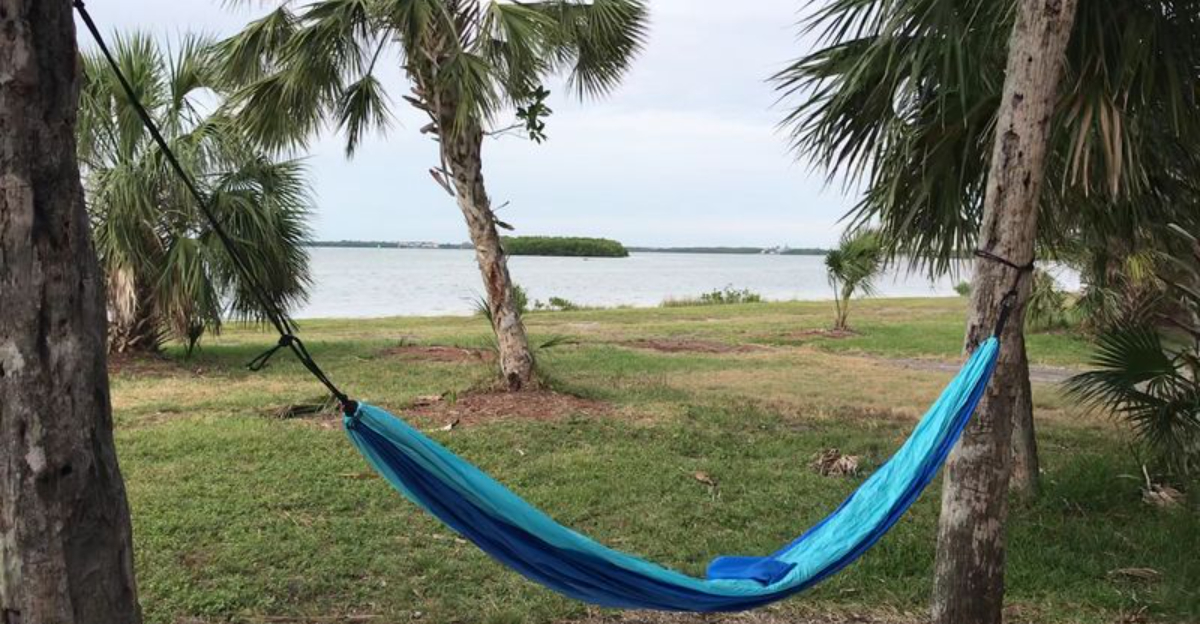
Florida camping doesn’t have to mean crowded RV parks or cookie-cutter campgrounds squeezed between highways and strip malls. Scattered across the state, from the turquoise shallows of the Keys to the wild prairie darkness of central Florida, you’ll find campgrounds that feel more like secret hideaways than public recreation areas. These spots offer the kind of quiet, natural beauty that makes you forget you’re in one of the country’s most visited states, with shorelines, springs and wilderness that rival anything you’d find on a tropical postcard.
1. Garden Key Campground, Dry Tortugas National Park (Key West)
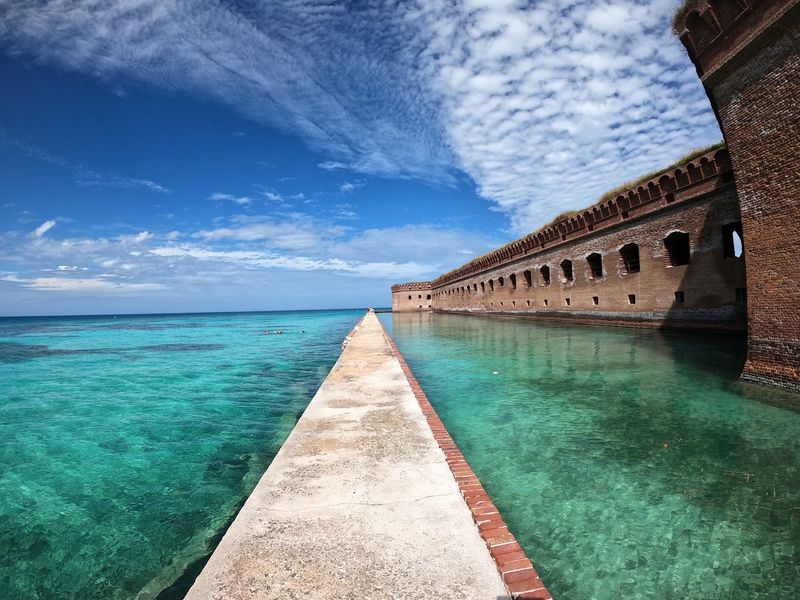
Seventy miles of open water separate you from Key West when you step onto Garden Key. The National Park Service calls this one of the most remote camping locations in the entire park system, and they’re not exaggerating. Your neighbors here are Fort Jefferson’s massive brick walls, nesting seabirds and some of the clearest water you’ll see anywhere in the continental United States.
Getting here requires either a ferry ride or your own boat, plus reservations booked well ahead. Once you arrive, the camping is primitive in every sense. No showers, no electricity, no freshwater source beyond what you carry in.
What you do get is an experience that feels more like the Bahamas than Florida. Snorkeling around the fort reveals coral gardens and tropical fish that seem impossibly vibrant. Sunsets paint the horizon in colors that don’t look real, and at night the stars come out in full force with zero light pollution to dim them.
Most campers stay just one or two nights because logistics get complicated fast. But those who make the trip tend to remember Garden Key as one of the most surreal camping experiences they’ve ever had, a place where Florida stops feeling like Florida and starts feeling like somewhere much farther away.
2. Cayo Costa State Park Campground (Cayo Costa)
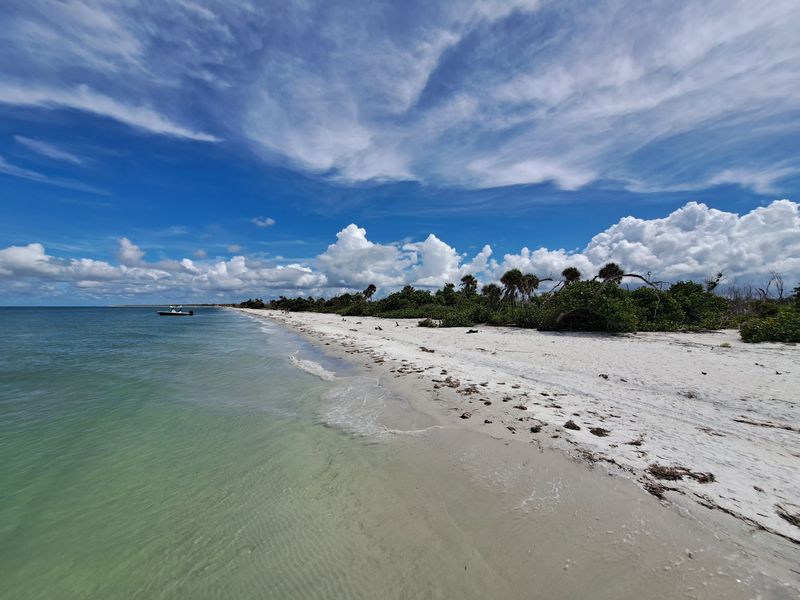
Barrier islands don’t get much more untouched than Cayo Costa. Nine miles of beach stretch along this island’s Gulf side, and the only way to reach it is by private boat or passenger ferry. That alone filters out the casual crowd and gives the whole place a castaway vibe from the moment you step off the dock.
The campground has no electricity, which means you’re packing in most of what you’ll need. Coolers, camp stoves, plenty of water and anything else that makes primitive camping comfortable should be on your list. The park does have restrooms and cold showers, but beyond that, you’re on your own.
What makes the effort worthwhile is the sheer emptiness of it all. While other Florida beaches pack in umbrellas and sunbathers, Cayo Costa’s shoreline often feels like it belongs to you alone. Shell collectors have a field day here, and the island’s interior trails wind through maritime forests and salt marshes where you’re more likely to see wading birds than other people.
One thing to note: the park’s official page recently posted a boil-water advisory, so check current conditions before you pack. But if you’re looking for a camping experience that genuinely feels remote without leaving Florida, Cayo Costa delivers.
3. Bahia Honda State Park Campgrounds (Big Pine Key)
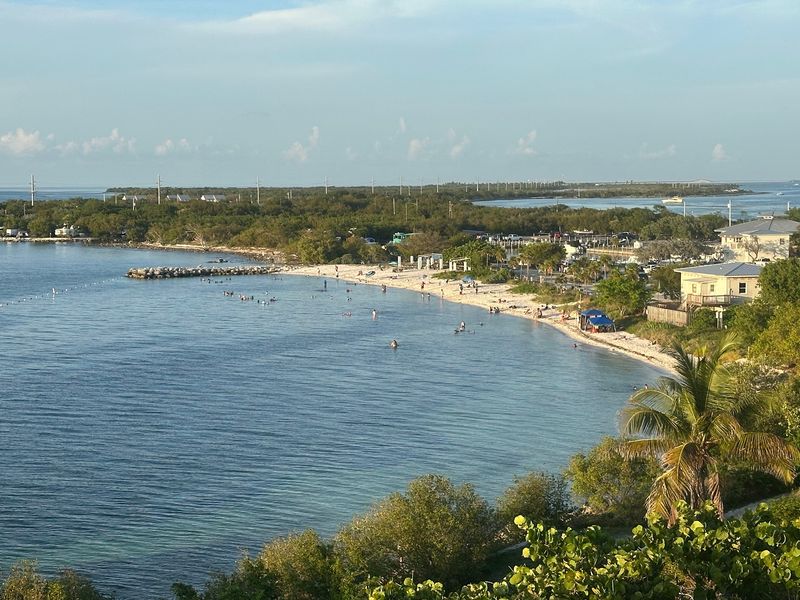
Waking up within steps of Keys water that looks like it was Photoshopped is a pretty good way to start any morning. Bahia Honda manages to combine easy access with scenery that rivals any resort view, minus the resort price tag and poolside crowds. The campground has multiple areas, with some sites close enough to the shoreline that you can hear the water from your tent.
Snorkeling here is excellent, especially around the old Bahia Honda Bridge, where fish gather in the shade of the historic structure. Paddlers can launch kayaks right from the beach, and the park’s trails offer quick escapes into coastal hammock when you need a break from the sun.
What sets Bahia Honda apart from other Keys campgrounds is how it balances convenience with that remote-island feeling. You’re not roughing it like you would at Dry Tortugas, but you’re also not squeezed into a parking-lot-style RV resort. The beaches here consistently rank among Florida’s best, and the water stays warm and swimmable most of the year.
Reservations book up fast, especially in winter when snowbirds flood the Keys. Plan ahead if you want a waterfront site, and bring everything you need because the nearest grocery stores are several miles away in either direction.
4. Curry Hammock State Park Campground (Marathon)
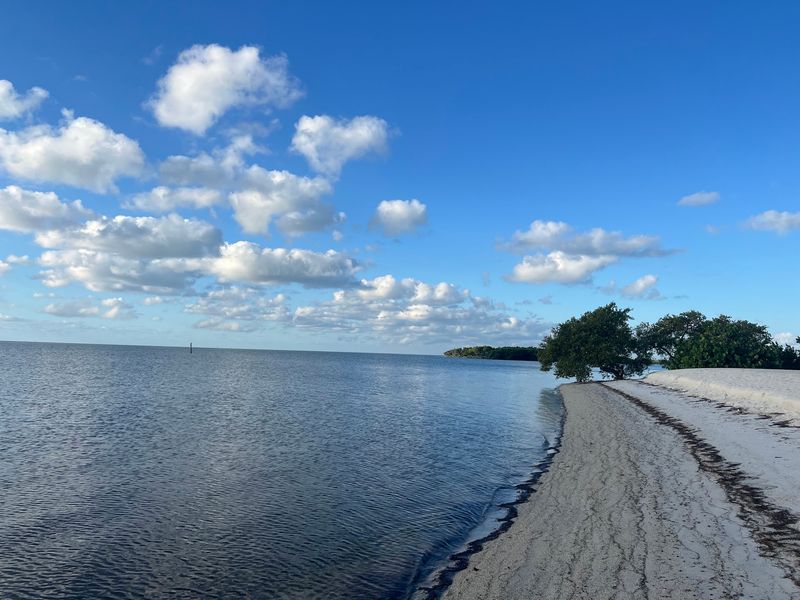
Halfway between Key Largo and Key West, Curry Hammock protects about 1,000 acres of Keys landscape that hasn’t been turned into tiki bars and souvenir shops. The campground sits near a 1,200-foot Atlantic beach, giving you water access without the resort-heavy atmosphere that dominates much of the Middle Keys.
Paddlers love this spot because kayaks and paddleboards can launch right from the campground waterfront. The shallow flats around the park are ideal for beginners, while more experienced paddlers can explore mangrove channels and nearby islands. Fishing is popular here too, with snook, tarpon and bonefish all cruising the nearby waters depending on the season.
The campground itself stays relatively quiet compared to busier Keys destinations. Sites are well-spaced, with enough vegetation between them to provide a sense of privacy. Some have water views, while others tuck into the hammock forest that gives the park its name.
What Curry Hammock does really well is provide that Keys experience without requiring you to fight for space or pay premium prices. It’s not as dramatic as Bahia Honda’s beaches or as remote as Cayo Costa, but it offers a comfortable middle ground where you can enjoy the water, the wildlife and the laid-back Keys vibe without the usual crowds.
5. Fort De Soto Park Campground (Tierra Verde)
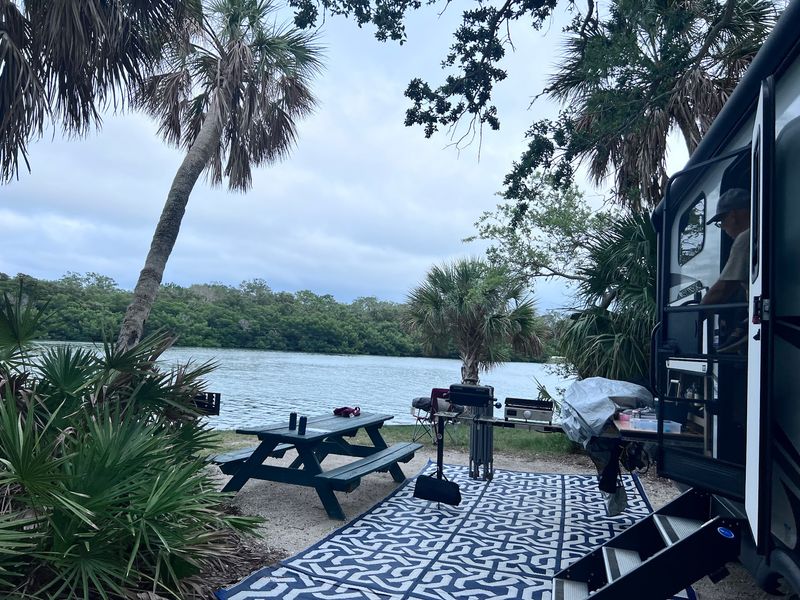
Fort De Soto combines waterfront camping with islands, mangroves and miles of white sand that make Tampa Bay’s urban sprawl feel much farther away than it actually is. The park spreads across more than seven miles of waterfront, including nearly three miles of beach, while the campground connects to everything via a paved recreation trail that’s perfect for bikes or early-morning walks.
Pinellas County manages 236 reservable campsites here, ranging from basic tent spots to full-hookup RV sites. What they all share is proximity to some of the best beach access in the Tampa Bay area. The sand is soft and white, the water stays relatively calm and shallow, and the whole setup feels more like a Gulf Coast resort than a county park.
Beyond the beach, Fort De Soto offers kayak launches, fishing piers, a historic fort to explore and enough trails to keep you busy for days. Birdwatchers flock here during migration seasons when the islands become temporary rest stops for exhausted songbirds crossing the Gulf.
The campground does get busy, especially on weekends and during school breaks. But even when it’s full, the park’s size means you can always find a quiet stretch of beach or a mangrove channel where the only company is wading birds and the occasional dolphin cruising by.
6. Grayton Beach State Park Campground (Santa Rosa Beach)
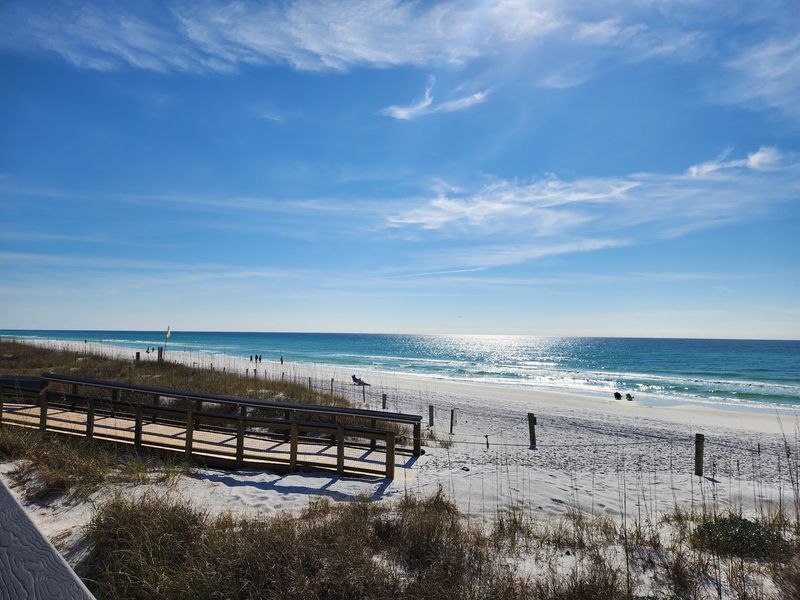
White sand that squeaks under your feet, emerald Gulf water and rare coastal dune lakes combine to create scenery that looks too perfect to be a campground. Grayton Beach protects just 59 campsites, and Florida State Parks calls it one of the nicest camping areas along the entire Gulf Coast. That’s not marketing hype.
The beach here consistently ranks among Florida’s best, with sugar-white sand that stays cool even in summer heat. The water shifts from pale turquoise to deep emerald depending on the light and the season, and the whole scene feels more Caribbean than Panhandle. Behind the dunes, rare coastal lakes add another layer of natural beauty that’s unique to this stretch of coast.
Campsites tuck into a coastal forest that provides shade and privacy without blocking access to the beach. A short walk or bike ride takes you from your tent to the water, and the park’s trail system lets you explore scrub forest and wetlands when you need a break from the sand.
The nearby town of Grayton Beach maintains its Old Florida charm despite sitting along the increasingly developed 30A corridor. Reservations here book months in advance for peak season, so plan early if you want one of these coveted spots. Once you’re here, though, you’ll understand why people return year after year.
7. Topsail Hill Preserve State Park Campground (Santa Rosa Beach)
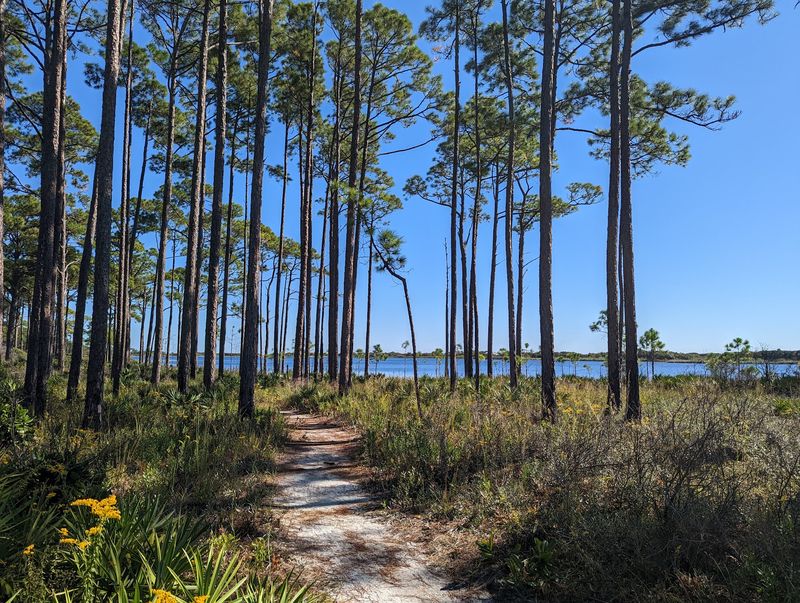
Three miles of pristine Gulf beach, towering white dunes, old-growth pine forest and unusual freshwater coastal dune lakes make Topsail Hill look less like a state park and more like a nature documentary. The preserve protects landscapes that once covered much of the Panhandle coast but have since disappeared under development. Here, they’re still intact.
The campground offers access to more than 15 miles of trails that wind through different ecosystems, from wetlands to coastal scrub to those impossibly tall dunes. Some trails lead to beaches that feel remarkably removed from the nearby 30A development, where million-dollar beach houses line the shore just down the coast.
Camping here requires a bit more effort than at some other parks. Sites are a short walk from the parking area, which keeps vehicle noise to a minimum but also means hauling your gear a bit farther. What you get in return is a quieter, more immersive experience where the sounds of the Gulf and the wind through the pines replace traffic and crowds.
The dune lakes are worth exploring by kayak or paddleboard, offering calm water and unique ecosystems where freshwater meets salt. These rare features exist in only a few places worldwide, and Topsail Hill protects several of them in their natural state, giving campers access to something genuinely special.
8. Fort Pickens Campground, Gulf Islands National Seashore (Pensacola Beach)
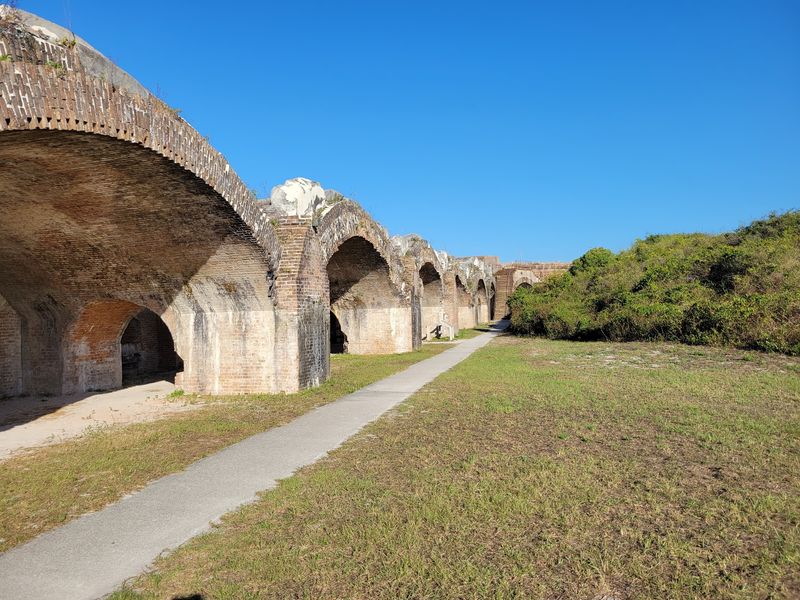
A narrow barrier island west of Pensacola Beach puts campers between the Gulf and Pensacola Bay, with dunes, historic fortifications and miles of undeveloped shoreline all within walking distance. Fort Pickens offers both tent and RV camping, and the Florida National Scenic Trail runs right through the campground toward the historic fort and Langdon Beach.
The fort itself is worth exploring, with brick corridors and gun batteries that tell the story of coastal defense from the 1800s through World War II. But most campers spend their time on the beaches, which stretch in both directions with far fewer people than you’d find on the main Pensacola Beach strip.
Fishing is excellent from the shore, the piers or by kayak in the bay. The Gulf side offers classic beach activities like swimming and shelling, while the bay side stays calmer and attracts different bird species. Dolphins cruise both waters regularly, often close enough to shore that you can watch them from your campsite.
The campground sits exposed to wind and weather, which keeps it cooler in summer but can make winter camping a bit chilly. Sites are mostly open with limited shade, so plan accordingly. But if you want easy beach access combined with history, trails and that barrier-island feeling, Fort Pickens delivers all of it without requiring a boat or ferry to reach.
9. Manatee Springs State Park Campground (Chiefland)
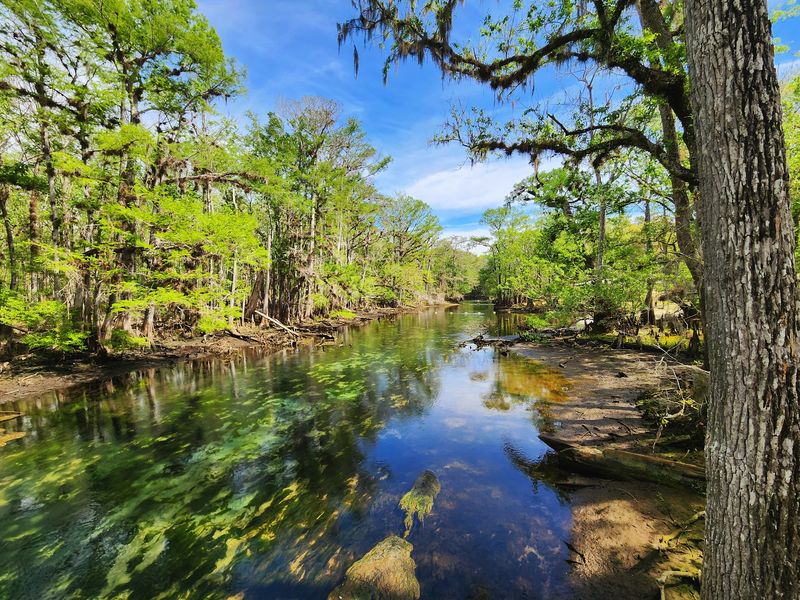
Trade saltwater for an impossibly clear freshwater spring at this North Florida escape where cypress forests meet first-magnitude spring flow. An 800-foot boardwalk winds through the trees beside the main spring, while some campground sites sit just a short walk from water so clear you can count fish from the surface.
The spring pumps out millions of gallons daily, creating a constant 72-degree swimming hole that feels refreshing in summer and surprisingly warm in winter. That winter warmth attracts manatees, which migrate up the Suwannee River when Gulf temperatures drop. Seeing these gentle giants in the spring run is a highlight that brings people back year after year.
Beyond the main spring, trails wind through cypress swamps, past sinkhole ponds and into quiet uplands where wildlife sightings are common. The Suwannee River borders the park, offering paddling opportunities for those who bring kayaks or canoes. The river’s dark tannin-stained water contrasts dramatically with the spring’s crystal clarity, creating two completely different aquatic experiences within the same park.
The campground offers both tent and RV sites with varying levels of shade and privacy. Sites closer to the spring fill up fast, especially when manatees are present. But even the sites farther back provide easy access to everything the park offers, making this a comfortable base for exploring North Florida’s spring country.
10. Kissimmee Prairie Preserve State Park Campground (Okeechobee)
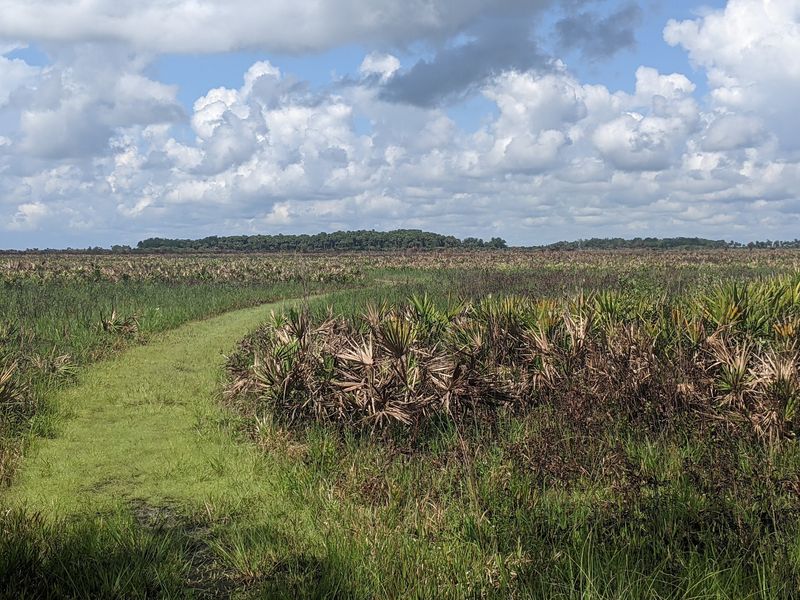
Paradise doesn’t always require palm trees or ocean views. Sometimes it looks like 54,000 acres of prairie wilderness stretching to the horizon under some of the darkest skies left in Florida. Kissimmee Prairie feels remarkably isolated for a state known for crowded beaches and theme parks, offering a completely different kind of escape.
The preserve protects one of Florida’s largest remaining dry prairie ecosystems, a landscape that once covered much of central Florida but has since been converted to cattle ranches and orange groves. Here, the grasslands remain intact, supporting rare species and providing habitat that’s become increasingly scarce.
What sets this campground apart is the night sky. With minimal light pollution from nearby towns, the stars come out in full force after sunset. The Milky Way stretches overhead, planets shine bright enough to cast shadows, and meteor showers put on shows that rival anything you’d see from a mountain peak out West.
The campground is primitive but well-maintained, with sites spread far enough apart that you feel genuinely alone. Days can be spent hiking the preserve’s trails, watching for crested caracaras and burrowing owls, or simply sitting in the vast openness and appreciating a landscape most people never associate with Florida. It’s not everyone’s idea of paradise, but for those who appreciate wild spaces and dark skies, it’s perfect.
11. Flamingo Campground, Everglades National Park (Flamingo)
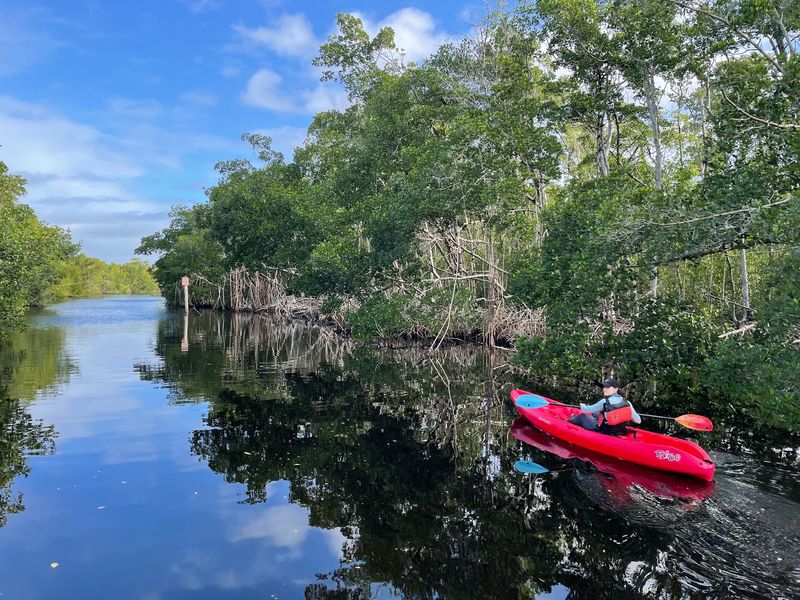
Drive 38 miles beyond the main Everglades entrance and eventually the road just ends at Florida Bay. Flamingo sits at that terminus, one of the park’s most remote and scenic areas, with a large seaside campground surrounded by the Everglades landscape that makes this park famous.
The campground is open year-round, though summer brings heat, humidity and mosquitoes that can test even experienced campers. Winter is the prime season here, with comfortable temperatures, fewer bugs and better wildlife viewing as animals concentrate around water sources. The dry season also makes paddling more accessible, with marked canoe trails winding through mangrove tunnels and across open bays.
Florida Bay stretches out from the campground, its shallow waters dotted with mangrove islands and frequented by dolphins, manatees, sea turtles and an incredible variety of wading birds. Sunrises and sunsets over the bay create the kind of light shows that justify waking up early or staying out late, with colors that shift from pink to orange to purple as the sun moves.
Flamingo offers more amenities than truly primitive campgrounds, with a marina, boat ramp and visitor center nearby. But the location still feels wild and removed, especially at night when the only lights come from stars and the occasional boat crossing the bay. It’s the kind of place where you remember you’re camping in a genuine wilderness, not just a park with trails.