A Ghost Town And Crystal Waters Make This St. Pete, Florida Island One Of The State’s Most Unusual Escapes
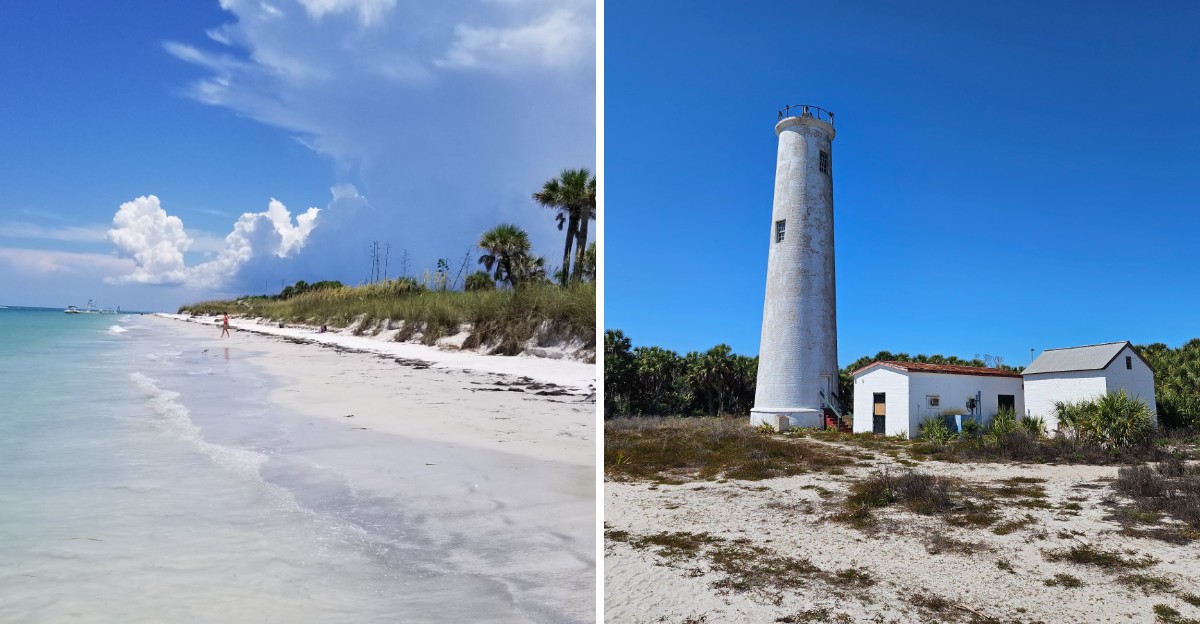
A whole town once stood on this tiny island, complete with a movie theater, a bowling alley, and brick streets. Today, those streets run through quiet ruins, and gopher tortoises wander past them like they own the place.
The only way here is by boat. No bridge, no cars, no snack stand waiting at the dock.
I like how this Florida island refuses to be convenient. You pack your own water, ride across the bay, and step onto sand with an 1858 lighthouse still blinking nearby.
I can’t imagine a stranger mix of beach day and history lesson. Clear Gulf water on one side, crumbling forts on the other, and birds nesting everywhere in between. So how did a buzzing little city turn into a castaway island?
Your Ride Over Is Part Of The Adventure
Getting to Egmont Key State Park and National Wildlife Refuge takes a little planning. The island sits at the mouth of Tampa Bay, southwest of Fort De Soto Beach, and only boats can reach it.
Ferry service to Egmont Key runs from Fort De Soto Park. That gives you two easy starting points, depending on where your day begins.
Bringing your own boat? Private boaters need to anchor offshore, so plan on wading or swimming a short way in. Waterproof bags will make you very happy here.
Florida State Parks lists Egmont Key State Park hours as 8 a.m. to sunset, while the federal wildlife refuge lists public access from sunrise to sunset. Ferries often run on set schedules, so check your return time before you wander off.
Wind can pick up on the water, which makes loose hats a real risk. Strap down sunglasses, bags, and anything else you plan to keep.
Think of the boat ride as the opening act. Tampa Bay views roll by, and the island slowly grows from a green smudge into something real.
Pets aren’t allowed on the island, except for service animals. Your dog will have to hear about the trip later.
Brick Roads Lead To A Town That Faded Away
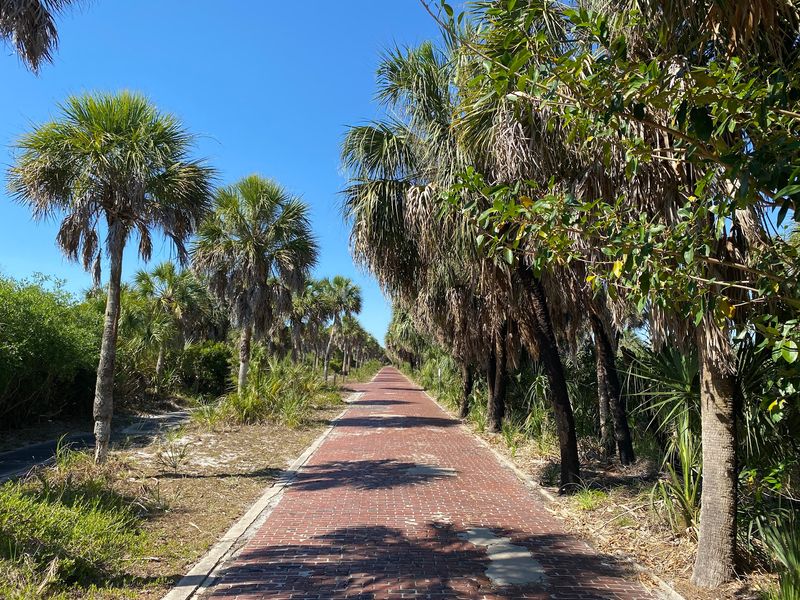
Over 300 people once called this island home. Fort Dade was established in 1898 during the Spanish-American War to protect the Tampa Bay area.
Construction wrapped up in 1906, and the place grew into a small city. It had electricity, telephones, a hospital, a jail, and even tennis courts.
Movie night and bowling were part of island life too. Not bad for a spot you still can’t drive to.
The fort stayed active until 1923. After that, the crowds left, and nature started its slow takeover.
Today you can walk along remnants of the old brick paths. They cut through palms and brush, linking pieces of a town that mostly vanished.
That ghost-town feeling is the real magic here. Every crumbling foundation hints at a daily routine that once filled these roads.
One important update for planning: all structures in the park remain closed to the public. Enjoy the ruins from the outside, follow posted signs, and stay out of closed areas.
Honestly, the view from the path tells plenty of the story anyway.
A Lighthouse That Still Clocks In For Work
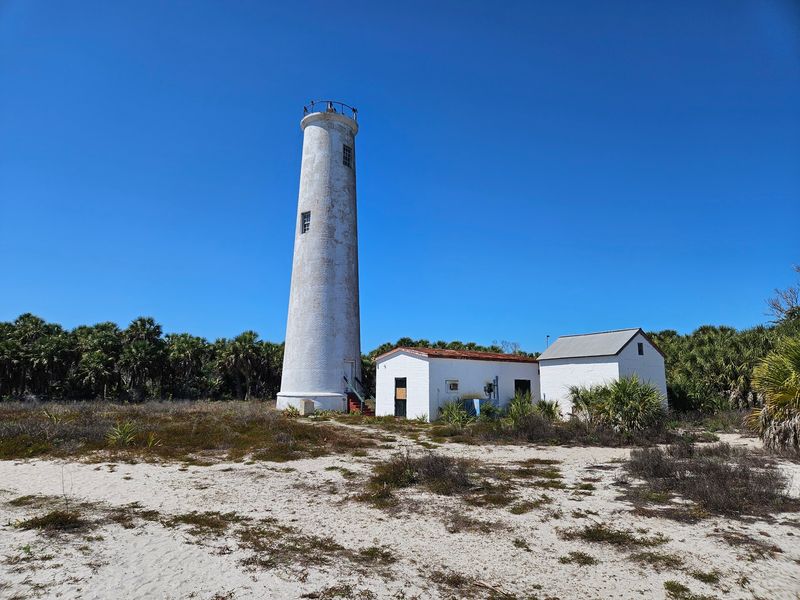
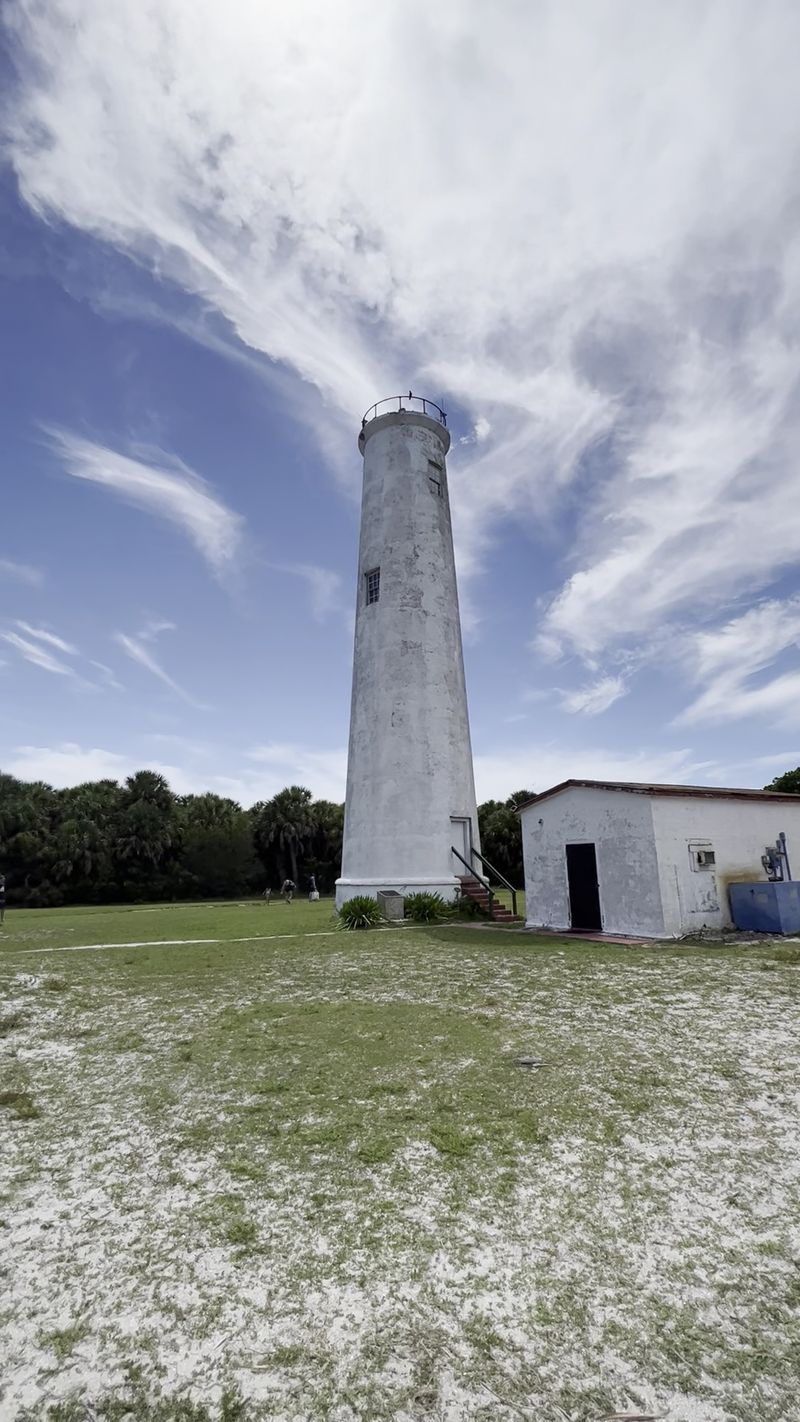
Some old buildings retire. The Egmont Key Lighthouse, built in 1858, never got the memo.
It’s the oldest structure in the Tampa Bay area still used for its original purpose. The U.S. Coast Guard maintains it as an active navigational aid.
Its story started even earlier. The first lighthouse on the island was finished in 1848.
At the time, it was the only lighthouse between St. Marks and Key West. Then a hurricane badly damaged it that same September.
The replacement has stood watch ever since, guiding ships through the bay entrance. That’s a long shift by anyone’s standards.
The tower itself is closed to the public, so climbing is off the table. Still, standing near its base and looking up makes for a great photo.
Keep an eye on the ground around the lighthouse area too. Gopher tortoises often roam the grounds, adding a slow-moving welcome committee.
Ships still pass close by on their way into Tampa Bay. Watching a giant vessel glide behind a lighthouse that’s been working since 1858 feels oddly comforting.
Clear Water Makes Snorkeling Feel Like Treasure Hunting
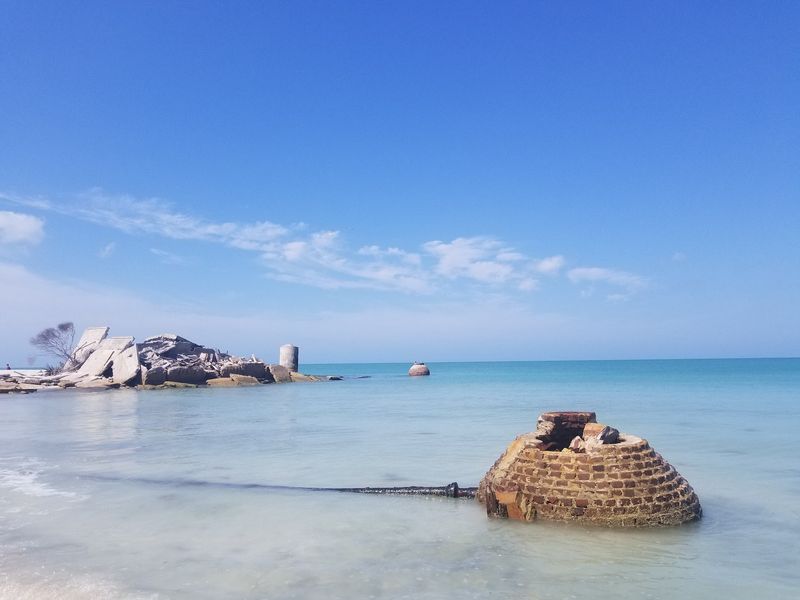
Here’s a twist you won’t find at most beaches. Pieces of the old fort have slipped into the sea and now act as an artificial reef.
That means your snorkel session comes with a side of history. Fish gather around the sunken structures, turning old ruins into underwater neighborhoods.
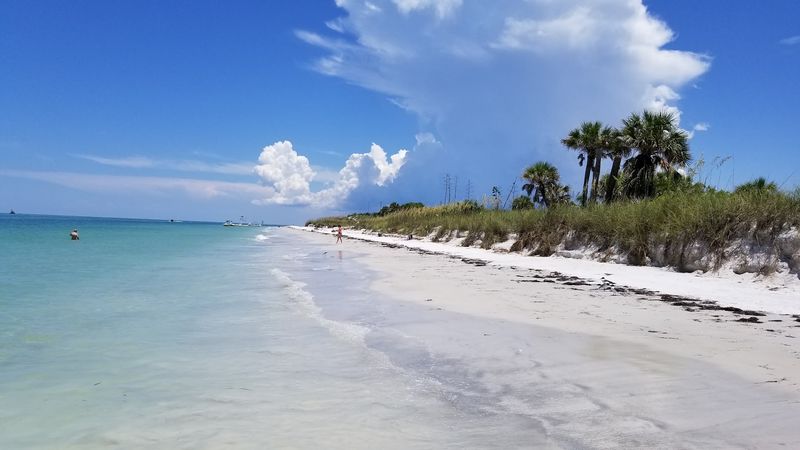
The clear Gulf water around Egmont Key State Park is a big part of the appeal. On calm days, you can see a surprising amount without going deep.
Bring your own mask, snorkel, and fins. There’s nowhere on the island to rent or buy gear.
Currents near the island can be strong, so stay alert and keep kids close. Swimming near a buddy is always the smart move.
Reef-friendly sunscreen is a good choice for days spent face down in the water. Your back will burn faster than you think.
After snorkeling, the white-sand beach makes a perfect drying-off spot. Floating over a sunken fort, then napping on soft sand, is a pretty excellent way to spend a Florida afternoon.
Gopher Tortoises Run This Island, Slowly
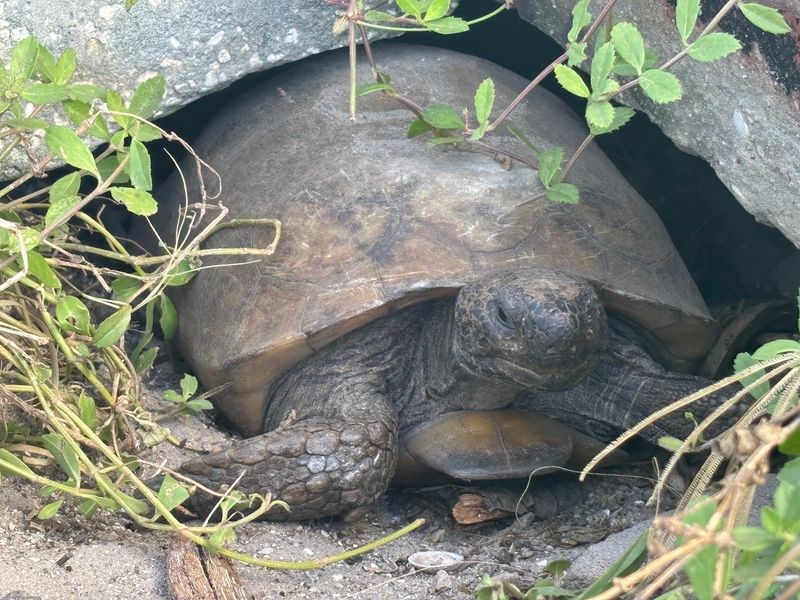
Forget the fort for a minute, because the real residents are shelled. Egmont Key provides habitat for a large population of gopher tortoises.
Florida box turtles live here too. You can sometimes spot both along the trails, especially if you walk quietly.
The island is protected as Egmont Key National Wildlife Refuge, with wildlife conservation playing a major role in how the island is managed. Protecting animals comes first, and visitors are guests.
Loggerhead sea turtles use the beaches as nesting areas. If you see marked nests, give them plenty of space.
Birds are a huge deal here as well. Egmont Key is an important nesting area, and several beaches, including the south end, are closed year-round as bird sanctuaries.
That closure might seem like a bummer, but it’s a good trade. Those birds need a quiet spot to raise their young.
For tortoise spotting, keep your distance and let them cross the path first. Nobody wins a race against a tortoise who has somewhere to be.
Binoculars are worth packing. They help you enjoy the birds without crowding them.
Six Miles Of Trails Hold More Than Shade
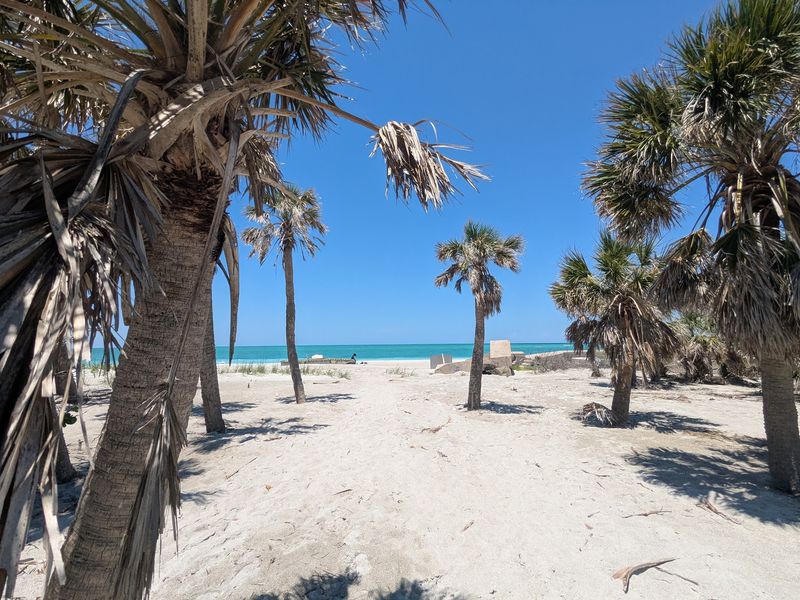
About 6 miles of historic paths crisscross the island. That’s plenty of ground for a few hours on foot.
Trails are open year-round from sunrise to sunset. Many follow the same routes soldiers and families once used daily.
Wear real shoes, not flimsy flip-flops. Sand, brick, and roots make for uneven walking.
Bug spray deserves a spot at the top of your list. Mosquitoes on Egmont Key can be fierce, especially away from the breezy beach.
Some paths may be overgrown or blocked as the island recovers from storms. Follow signs and skip any area marked closed.
Along the way, you’ll pass ruins, palms, and quiet stretches of island scrub. It’s a hike with plot twists.
Pace yourself in the Florida heat. Shade comes and goes, and the sun doesn’t take breaks.
Plan your loop around your ferry time if you came by boat service. Nothing ruins a relaxing walk faster than sprinting back to the dock.
A small daypack keeps water, snacks, and sunscreen handy. Your future self will thank you.
Pack Like You’re Being Marooned, Because Kind Of
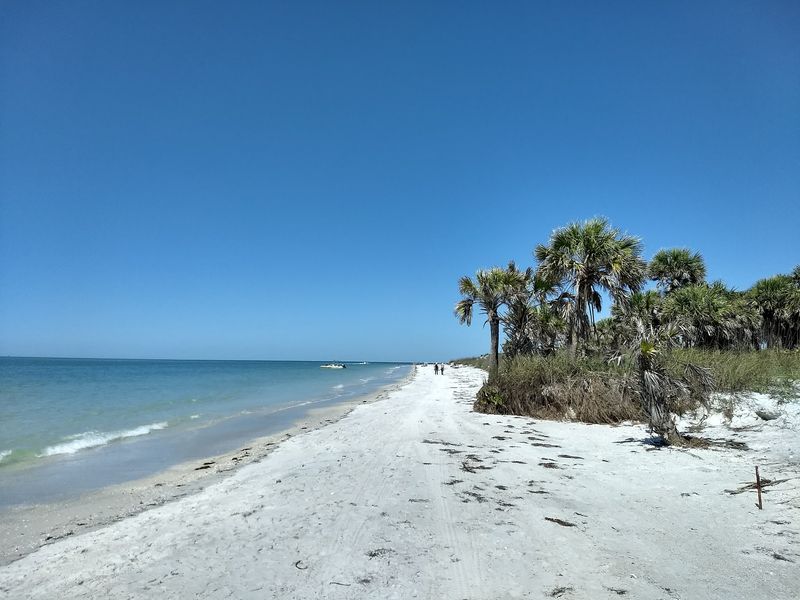
No stores. No drinking water. No overnight stays.
That short list explains why preparation matters so much at Egmont Key State Park. Everything you need for the day has to come with you.
Start with more water than seems reasonable. Florida sun and long walks drain you quickly.
Pack food, sunscreen, and insect repellent too. A hat and a cover-up help when shade runs thin.
Picnic tables and a shaded area are available at the north end of the island, but there are no restroom facilities on Egmont Key. That’s handy for a lunch break between beach time and trail time.
Leave glass containers at home, since they aren’t allowed. Open fires and camping are off-limits as well.
A sturdy cooler with plastic or metal bottles works great. Just make sure it’s easy to carry from the boat.
Bring a trash bag and carry everything back out. The island stays beautiful because visitors leave it that way.
Think of it as a mini castaway kit. Prepared castaways have much better days than surprised ones.
Shells Wash Up, But The Rules Matter
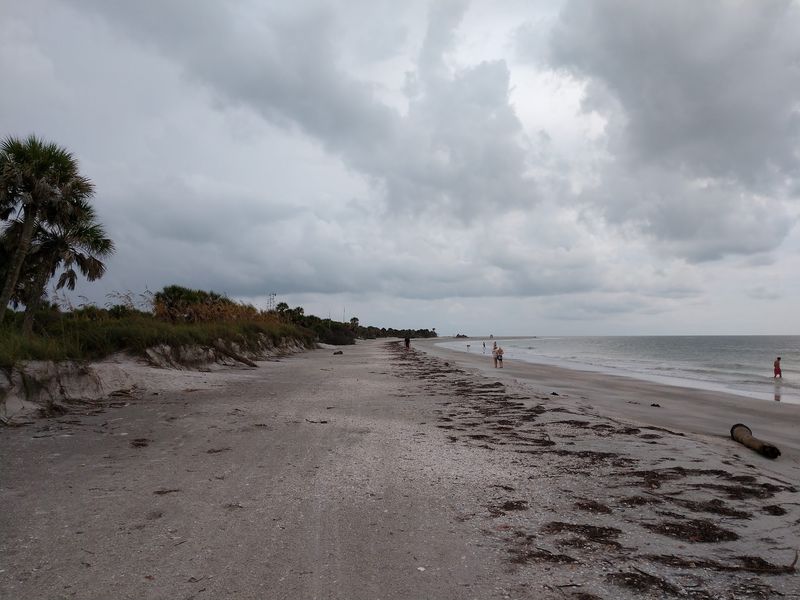
Beachcombers, this one’s for you. Shell collecting is a popular pastime on Egmont Key’s white-sand beaches.
The rule is simple and important. Live shells must stay put, so check that nothing is living inside before you pick one up.
Fishing is allowed in designated areas too. Bring your own gear and know Florida fishing rules before you cast.
Swimming, picnicking, and wildlife watching round out the easygoing options. Some people do all of them, and some just stake out a palm tree.
Birding can be great here with so many nesting species. Just remember the south end stays closed for the shorebirds.
The Tampa Bay Pilots Association has worked on the island since 1926. Its crews still guide ships in and out of the bay.
That gives the island a neat mix of quiet beach and working waterway. You might be sorting shells while huge ships slide past offshore.
A mesh bag makes shell hunting easier. Sand drains out, and your treasures stay put.
Older Stories Than The Fort Live Here Too
The name dates back to 1763. Egmont Key honors John Perceval, the second Earl of Egmont.
The island’s history isn’t all sunny. Near the end of the Third Seminole War in the late 1850s, it held captured Seminoles before their forced removal.
During the Civil War, the Union Navy occupied the island. Later came Fort Dade and its bustling town.
All those layers earned a spot on the National Register of Historic Places in 1979. Few beaches carry this much story under the sand.
Today the Florida Department of Environmental Protection manages the park with the U.S. Fish and Wildlife Service and the U.S. Coast Guard. It’s a team effort to protect both history and habitat.
The park’s administrative address is 4905 34th St. South, #5000, St. Petersburg, FL 33711. The island itself, of course, sits out in the water.
Visiting with that history in mind changes the whole trip. A walk becomes a lesson, and a beach day becomes something you’ll remember.