These 10 Florida Towns Were Supposed to Become Something Completely Different
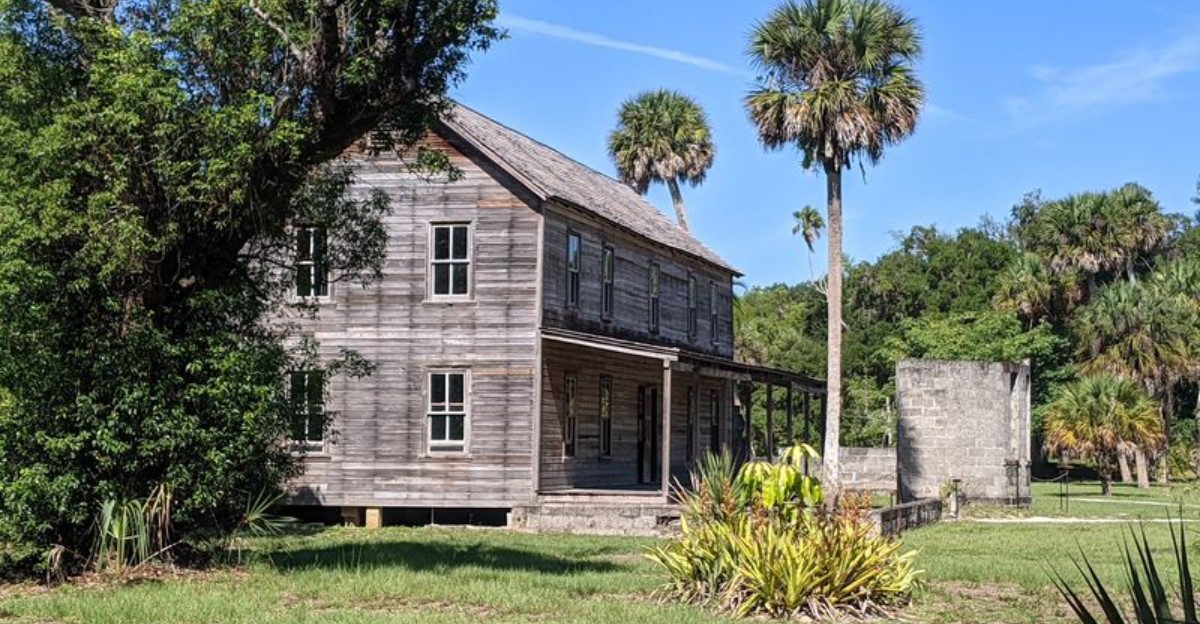
A man in the 1890s convinced his followers that we all live on the inside of a hollow Earth. Then he picked a spot in Florida to build a city for eight million believers.
That plan did not work out. Neither did a promise that pond water could cure your aches, or a town name invented to scare off cold weather. Another little town once proudly called itself a city because of mermaids.
Honestly, I love this stuff. Florida is packed with places that started with one big dream and ended up somewhere totally different. A few swapped pencil mills for fishing boats.
One traded a grand Arabian Nights fantasy for ordinary city life.
The best part? You can still visit these spots and see the leftovers of those wild plans. Which one do you think wandered the furthest from its original script?
1. Estero
Cyrus Teed believed the sky was actually the middle of the planet. He taught that humans live on the inside surface of a hollow Earth, an idea he called cellular cosmogony.
In 1894, Teed and his followers, known as the Koreshan Unity, settled along the Estero River. Their goal was huge. They planned to build New Jerusalem, a city for eight million people.
The group lived communally and practiced celibacy. That second rule made growing to eight million a pretty tough math problem. You can probably guess how that turned out.
Still, the Koreshans were busy builders. They put up homes, a bakery, a general store, a publishing house, and an Art Hall. By 1904, they had even incorporated the Town of Estero.
Fast forward to 1961. The remaining members deeded their land to the state, and it became a state historic site. Today, that site is Koreshan State Park.
Here’s what makes a visit fun. You can stroll past original buildings that the believers used for daily life. Ranger-guided tours help explain how a hollow Earth theory shaped an entire community.
Need a break from the history lesson? The park also offers camping, fishing, boating, and hiking. The Estero River makes a peaceful backdrop for paddling.
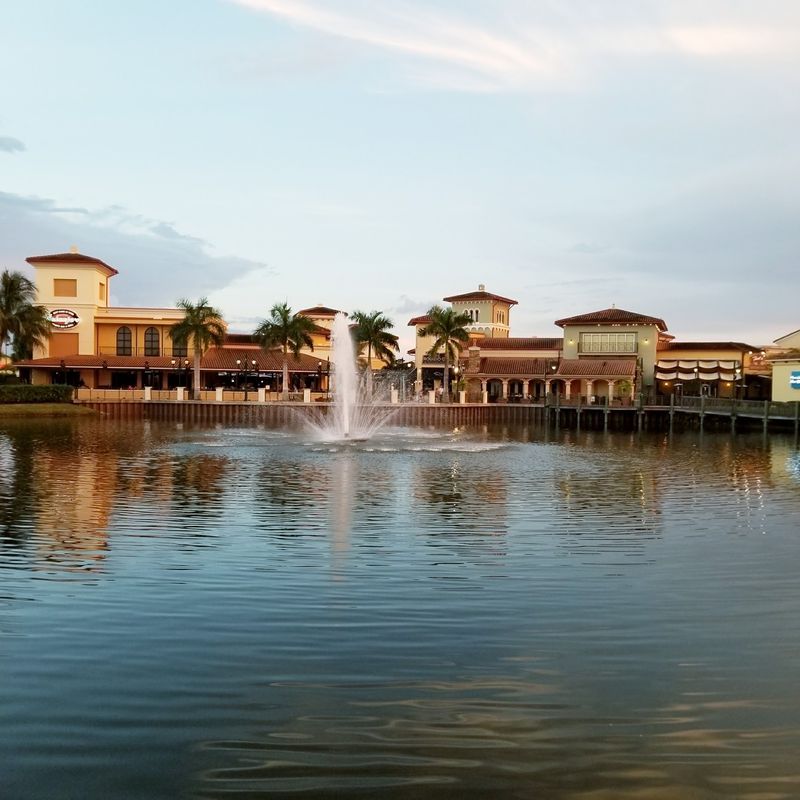
Modern Estero is now an incorporated village in Lee County. It’s a busy Southwest Florida community, which is about as far from a celibate utopia as you can get.
A smart tip is to pick a cooler morning for exploring the grounds. Then you can enjoy the shady paths while picturing a city that only ever lived in one man’s imagination.
Address: Koreshan State Park, 3800 Corkscrew Rd, Estero, FL 33928
2. Micanopy
Long before antique shops lined its streets, this area was part of a bold dream of safety and freedom. In 1822, a wealthy Moroccan-born businessman named Moses E. Levy started a project nearby.
He called it Pilgrimage Plantation. Levy hoped it would become a refuge for Jewish families escaping persecution in Europe.
Historians describe it as one of the earliest attempts at a Jewish communal settlement in America. That’s a pretty big claim for a patch of North Central Florida farmland.
The plantation focused on growing sugar cane. Levy wanted the crop to support settlers and help the community stand on its own.
Sadly, the dream didn’t last. The settlement was destroyed in 1835 during the Second Seminole War.
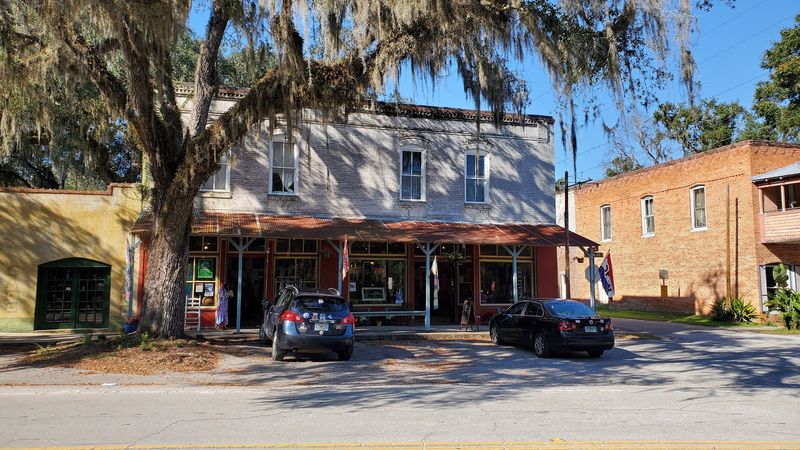
Although Pilgrimage Plantation was destroyed, nearby Micanopy continued developing into the historic town known today for its well-preserved 19th-century buildings.
Strolling the historic district feels like flipping through an old photo album. You’ll find antique shops, local eateries like Blue Highway Pizzeria, and the charming Pearl’s Country Store.
Curious about the deeper backstory? The Micanopy Historical Society Museum covers local history with exhibits that help connect the dots.
A good plan is to start at the museum, then wander the main street. That way, the old buildings make a lot more sense as you pass them.
It’s hard not to think about Levy while you browse. His refuge never became the place he pictured, but the town nearby still holds onto its past with real care.
Address: Micanopy Historical Society Museum, 607 NE Cholokka Blvd, Micanopy, FL 32667
3. Weeki Wachee
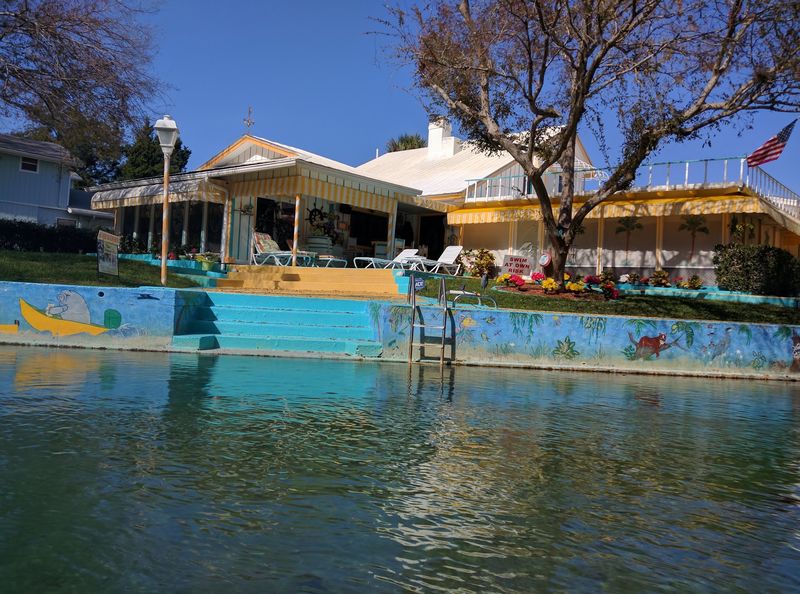
Most cities form around ports, farms, or railroads. Weeki Wachee became a city largely thanks to women in fish tails.
The story starts in 1947. Newton Perry, a former Navy man, developed an underwater breathing system and opened a mermaid show at the spring.
Performers swam in a submerged theater while guests watched through glass. The shows grew famous, and the tiny spot became a household name.
In 1966, Weeki Wachee incorporated as a city. Its fame came mostly from that one attraction, which is a wonderfully odd reason to become a city.
Here’s the twist. The city itself was abolished in 2020, and the area is now unincorporated land in Hernando County.
So the town that was supposed to be a city isn’t one anymore. The mermaids, however, are still swimming strong.
Weeki Wachee Springs State Park keeps the live mermaid shows going in that underwater theater. Kids and grownups both tend to stare like they’ve never seen water before.
The park also includes Buccaneer Bay, a water park that’s perfect for hot Florida afternoons. You can also kayak or canoe on the Weeki Wachee River.
Fun fact for the road. The name comes from the Seminole language and is often translated as little spring or winding river.
Planning tip: check show times before you arrive so you can build your day around them. Then grab a paddle and see the spring that once powered an entire city on its own.
Address: Weeki Wachee Springs State Park, 6131 Commercial Way, Weeki Wachee, FL 34606
4. Ave Maria
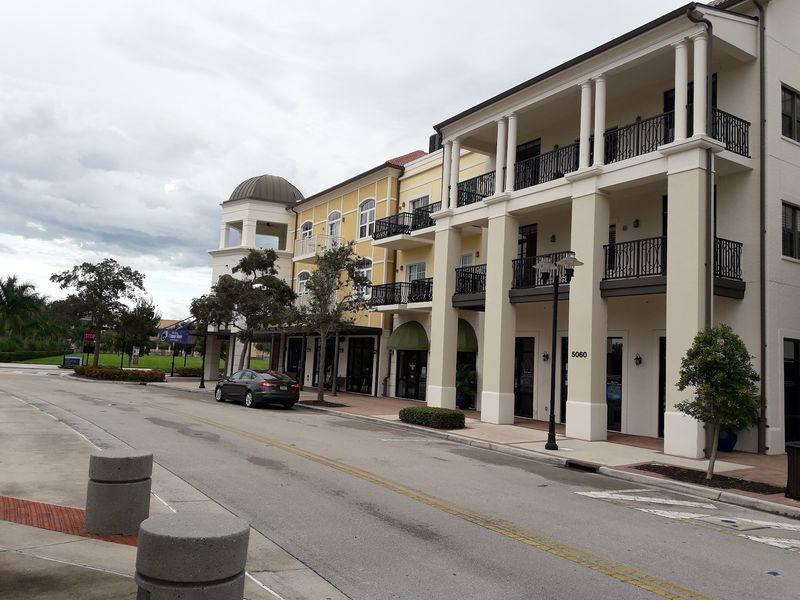
The man who helped make Domino’s famous decided his next project should be an entire town. Tom Monaghan, a devout Catholic entrepreneur, founded Ave Maria in the mid-2000s in Collier County.
His early vision was bold. He wanted a planned community with a strong Catholic identity that would especially attract Catholic families.
Monaghan even tried to control what local stores could sell, including contraception. That idea drew pushback, and those restrictive retail plans were dropped.
So the town didn’t become the strict community first described. Instead, it’s open to people of all faiths, and it’s one of the faster-growing spots in Southwest Florida.
You can still see the original inspiration clearly. Ave Maria University anchors the community, and the striking Ave Maria Oratory stands right at the center.
That oratory is hard to miss. It’s a large Catholic church with a bold design that makes it the town’s signature landmark.
The streets around it were built for walking. A town square holds shops and restaurants, and Midtown Plaza adds more places to wander.
Many street names also reflect the Catholic roots. It’s a fun detail to notice as you drive in.
Visiting tip: check the community calendar before your trip. Ave Maria hosts many events during the year, which can make a simple stroll feel more lively.
It’s interesting to watch a brand-new town settle into its own personality. The founder had a clear blueprint, but the residents ended up writing their own chapter.
Address: Ave Maria Oratory, 5076 Annunciation Cir, Ave Maria, FL 34142
5. Opa-Locka
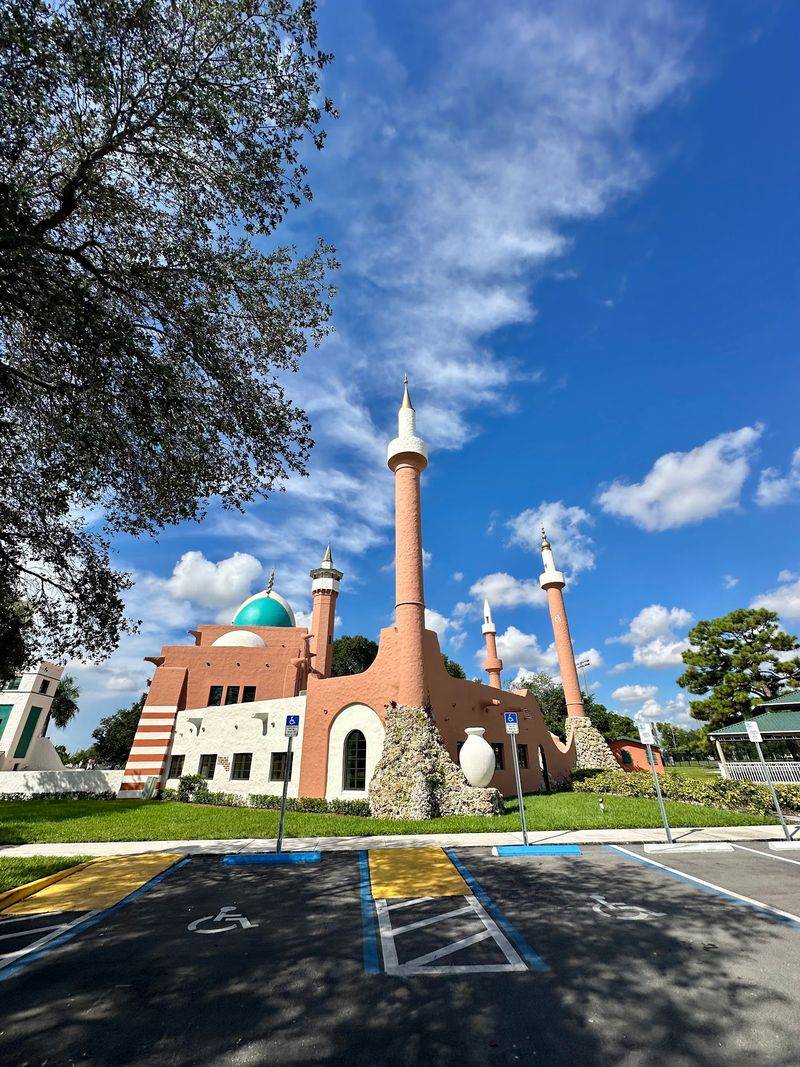
Aviation pioneer Glenn Curtiss apparently read a book and thought, why not build it? In the 1920s, he developed Opa-locka with a theme inspired by the Arabian Nights stories.
The plan went far beyond a catchy slogan. Buildings were designed in a Moorish Revival style, with domes, minarets, and arches that look straight out of a storybook.
Curtiss pictured a fantasy city that would draw new residents to South Florida. It was part of the land boom that swept the state during that decade.
Then reality crashed the party. The 1926 Miami hurricane and the end of the Florida land boom stopped the dream from reaching its full size.
Opa-locka became an ordinary working city in Miami-Dade County instead. Still, many of those wild buildings survived.
The star of the show is the City Hall. With its white domes and slender towers, it might be the most surprising government office you’ll ever see.
Opa-locka has one of the largest collections of Moorish Revival architecture in the Western Hemisphere. That’s a big title for a small city.
Even some street names carry the theme. Look for names like Sharazad Boulevard and Ali Baba Avenue on the map.
Tip for history fans: enjoy the City Hall from outside and snap photos of the domes. The details really pop in bright afternoon light.
It’s fun to think how close Florida came to having a full Arabian Nights city. What’s left is a quirky reminder that big dreams sometimes leave the coolest leftovers.
Address: Historic Opa-locka City Hall, 777 Sharazad Blvd, Opa-locka, FL 33054
6. Frostproof
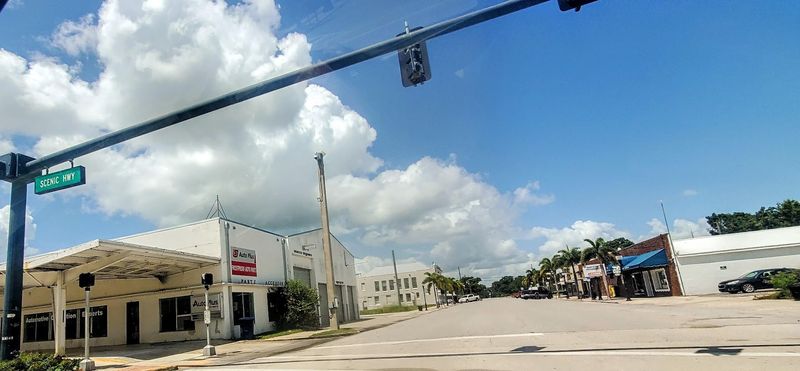
One sneaky edit on a government form gave this city its name. In 1892, Joseph Washington Carson was sending in a post office application.
The suggested name was Lakemont. Carson quietly swapped it for Frostproof instead.
Why the switch? It was a marketing move meant to convince buyers that the land was safe from frost, which mattered a lot for citrus growers.
Before that, the place had a bumpy naming history. It started as Fort Clinch in 1850, which was abandoned within months, and was later called Keystone City.
Keystone City caused confusion with Keystone Heights. So a new name was needed, and Carson saw his chance.
Nature had other plans. The Great Freeze of 1894 and 1895 badly damaged most of the area’s citrus, just a few years after the bold new name.
You have to admire the confidence, though. The name stuck, and Frostproof is still an incorporated city in Polk County today.
It goes by the nickname The Friendly City. It sits between Lake Clinch and Lake Reedy, with citrus groves all around.
Outdoor fans can enjoy fishing on the lakes. The area also draws hunters looking for some time in rural Florida.
Want the best time to visit? Aim for the annual Orange Blossom Festival, which celebrates the fruit that inspired that cheeky name in the first place.
Address: Frostproof City Hall, 111 W 1st St, Frostproof, FL 33843
7. Panacea
Got a headache, sore back, and a grumpy stomach? Back in the day, promoters in Panacea claimed they had a pond for each one.
The town was founded in 1895 by W.C. Tully. Its name means cure-all, and that wasn’t an accident.
Panacea was developed as a health resort built around mineral springs. The community became famous for seven mineral springs whose waters were believed to have healing properties.
Tourists came looking for healing waters. The Panacea Mineral Springs Hotel became a major spot for visitors.
Then things fizzled. The hotel burned down in the 1920s, and tourism shifted toward South Florida.
The springs stopped being the main draw and are now historical remnants. The spa dream quietly faded into the marsh grass.
Today, Panacea is a small unincorporated community in Wakulla County with an Old Florida feel. Nature fans love it for fishing, crabbing, shrimping, and oystering.
Paddlers can also kayak or canoe through the coastal waters. It’s a great place to slow down and enjoy the Gulf at its own pace.
The must-visit stop is the Gulf Specimen Marine Laboratory and Aquarium. It’s a hands-on way to meet the sea creatures that live along this stretch of coast.
So the town never became a famous spa city. But if fresh air, calm water, and curious critters count as medicine, the name still sort of fits.
Address: Gulf Specimen Marine Laboratory and Aquarium, 222 Clark Dr, Panacea, FL 32346
8. Cedar Key
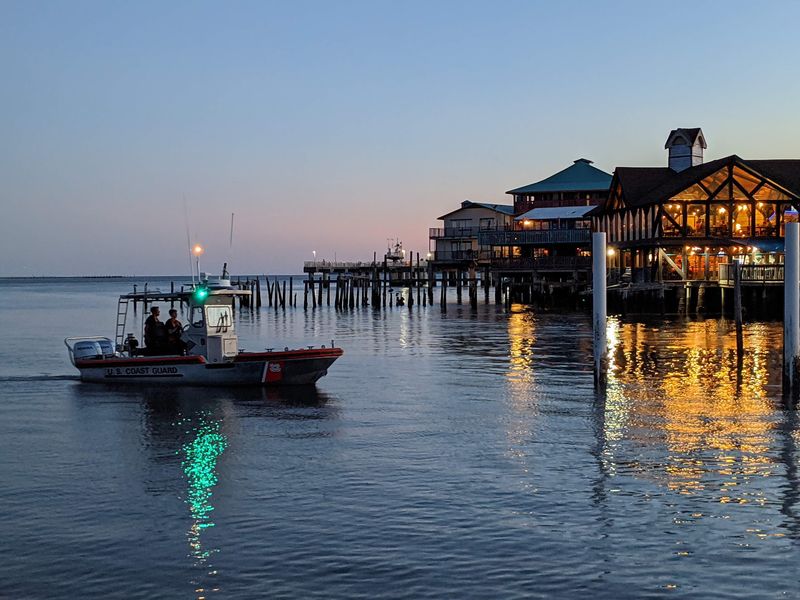
Your school pencil might have a family tree that leads to a tiny Gulf island. In the 1800s, Cedar Key was a busy industrial town built on cedar wood.
The Florida Railroad connected it to the Atlantic side of the state. That made the island a key port for shipping goods.
Cedar trees grew thick in the area. Pencil makers, including the Eberhard Faber company, set up mills to turn that wood into pencils.
For a while, it looked like Cedar Key would keep growing into a major city. Lumber, shipping, and trains kept the docks crowded.
Then several problems hit at once. Heavy logging used up the cedar forests, and a railroad to Tampa in 1886 pulled business away.
The final blow came in 1896. A powerful hurricane wrecked the mills and docks.
Instead of a big industrial city, Cedar Key became a quiet island town in Levy County. Today, it’s known for seafood, natural beauty, and an artsy spirit.
Nature lovers can explore the Cedar Keys National Wildlife Refuge and the Lower Suwannee National Wildlife Refuge nearby. Birdwatchers especially have plenty to look at.
For the full backstory, stop by the Cedar Key Museum State Park. It helps explain the island’s busy past.
Visiting during the Old Florida Celebration of Arts adds even more fun. It’s a cheerful way to see how an old pencil town turned into a creative escape.
Address: Cedar Key Museum State Park, 12293 SW 166th Ct, Cedar Key, FL 32625
9. Christmas
Soldiers in 1837 didn’t spend the holiday opening presents. On December 25 of that year, U.S. Army troops built a fort during the Second Seminole War.
They named it Fort Christmas after the date. That simple choice gave a whole community its name.
The spot began as a military outpost, not a festive destination. A town slowly grew around the fort over the years.
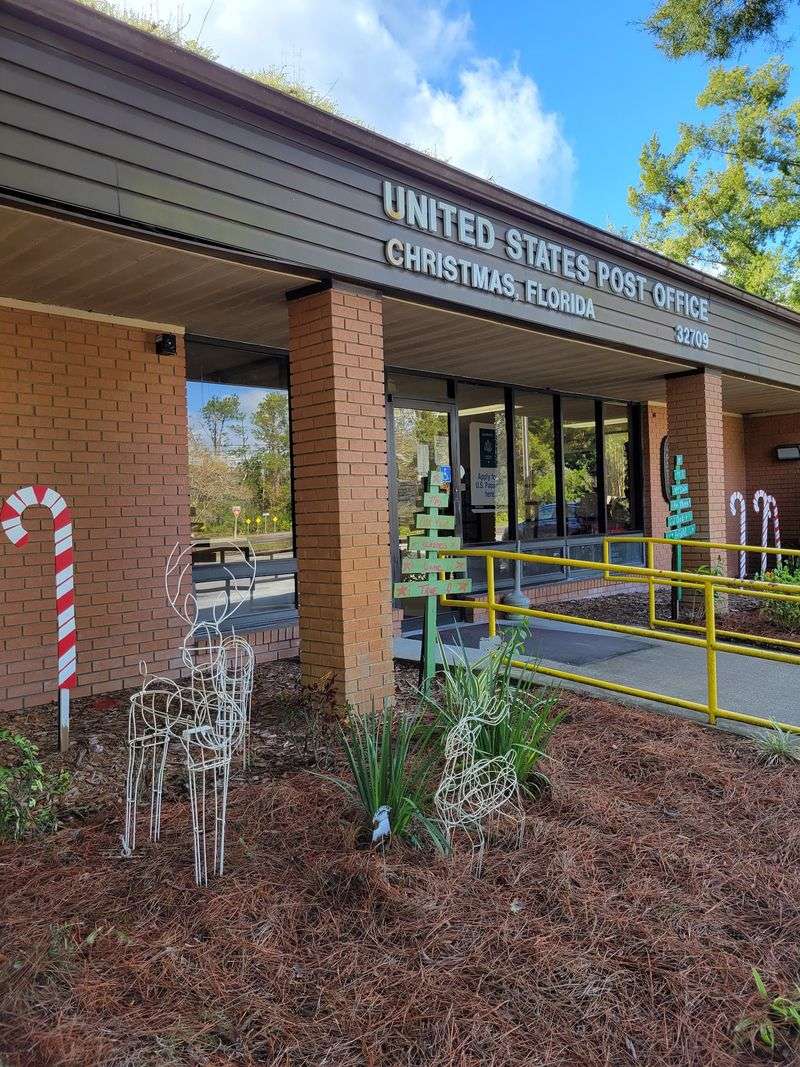
Today, Christmas is an unincorporated community in Orange County. And it leans into its name with a big smile.
The Christmas Post Office is a holiday hot spot. People come for its special Christmas postmark and a Santa mailbox.
Want your holiday cards to stand out? Mailing them from a town literally named Christmas is a pretty clever trick.
History fans should head to Fort Christmas Historical Park. It features a replica of the original fort, plus exhibits on the history of the region.
Walking the grounds gives you a better sense of the area’s frontier days. It’s a nice reminder that the cheerful name has a serious backstory.
Tip: if you want the postmark, plan your post office trip early in the holiday season. That gives your cards time to reach friends before the big day.
It’s funny how history works. A fort built for battle became a little Florida town people visit for some holiday cheer.
Address: Fort Christmas Historical Park, 1300 Fort Christmas Rd, Christmas, FL 32709
10. Elfers
Oranges, not rooftops, once ruled Elfers. In the early 1900s, this part of Pasco County was a booming citrus hub.
The area was first known as the Baillie settlement. It officially became Elfers in 1909.
Citrus was such a big deal that railroad service arrived in 1913 to help ship the fruit. Groves stretched across the land.
Elfers even became an official town in 1925. That status lasted until 1933, when it returned to unincorporated land during the Great Depression.
The real turning point came in December 1962. A severe freeze ruined the citrus groves.
Many landowners decided to sell their acreage to developers. Bit by bit, the farmland turned into neighborhoods.
Today, Elfers is a census-designated place that functions mainly as a suburban area. Many addresses even share the New Port Richey name.
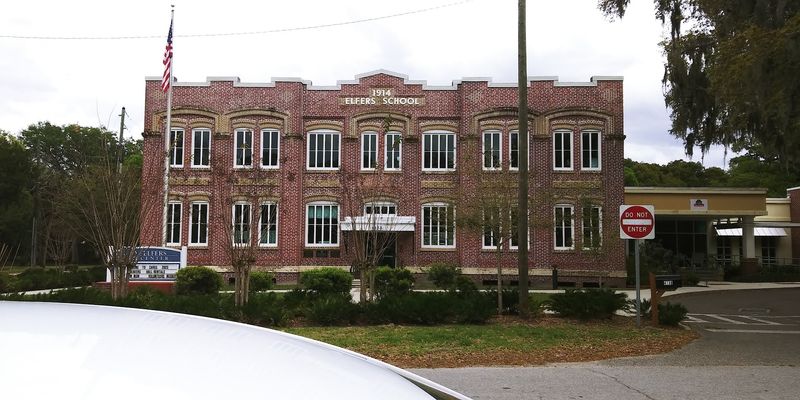
You can still find pieces of the past. The Elfers CARES Center sits in the historic brick school building and includes a cafe and library.
Elfers Centennial Park offers another peek back in time. It features a restored cracker house, a classic style of early Florida home.
Nature breaks are close by too. Anclote River Park and Key Vista Nature Park are both nearby for outdoor time.
It’s wild to think that today’s driveways once held rows of orange trees. Elfers is proof that one cold night can redraw an entire map.
Address: Elfers CARES Center, 4136 Barker Dr, New Port Richey, FL 34652