Long Before Modern Resorts, St. Augustine, Florida Had A Massive Indoor Pool Guests Could Swim In
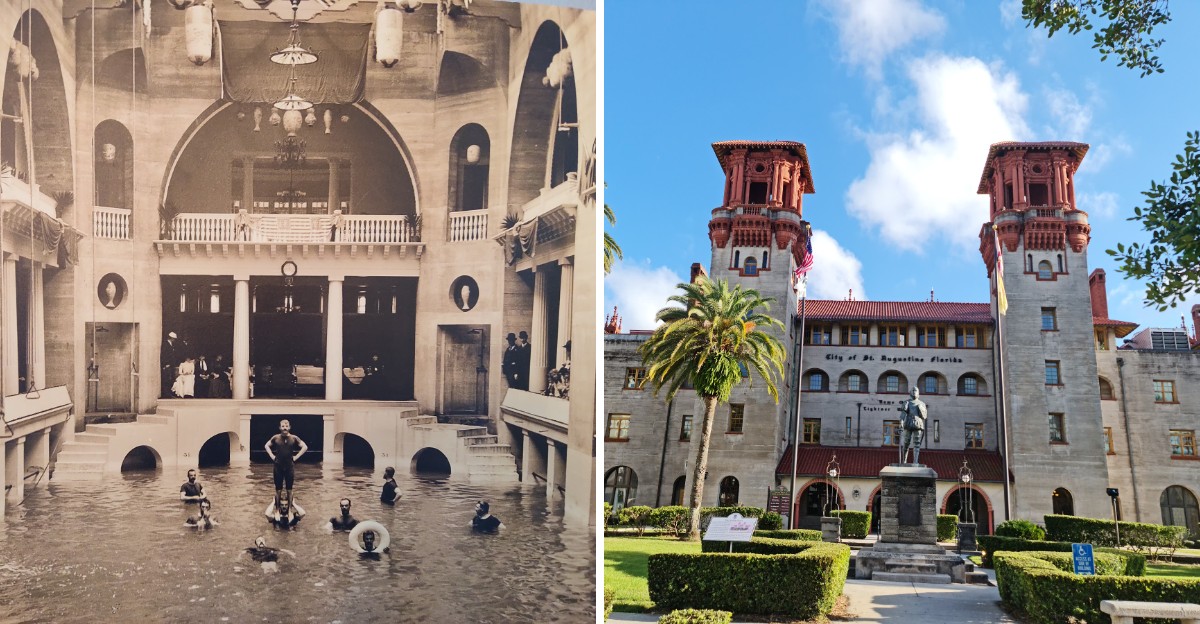
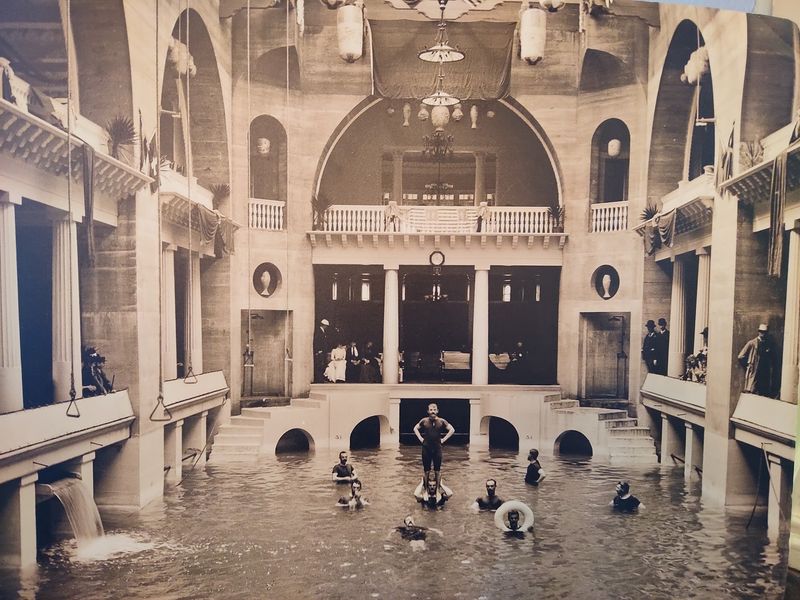
By 1889, hotel guests could swim laps in an indoor pool that was once called the largest of its kind in the world. Today, you can eat lunch right where those swimmers used to splash.
The pool sat inside a grand Gilded Age hotel built for wealthy winter visitors. The same building also had steam baths, a gym, and a bowling alley. I can’t imagine how wild that must have seemed to people in the 1880s.
That old hotel is still standing in Florida. Now it holds Tiffany glass, music machines, Victorian treasures, and a courtyard pond full of hungry koi.
I like how the building itself feels like the main exhibit. The collections are great, but the story of the place steals the show. So how did a fancy swimming hall end up as a cafe?
The Giant Pool That Started The Whole Story
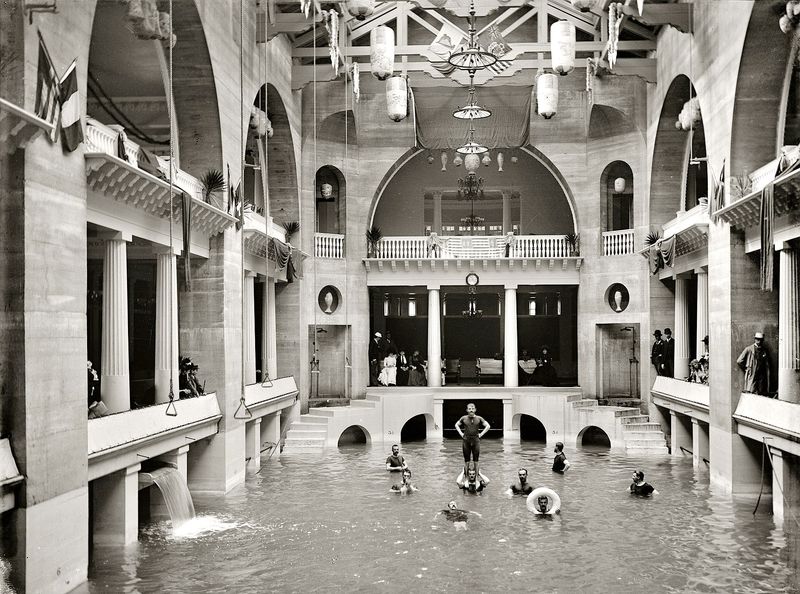
Railroad builder Henry Flagler opened the Hotel Alcazar in 1888 as a fun companion to his fancy Ponce de Leon Hotel across the street. Today that building is the Lightner Museum, and its old swimming hall is the star of the story.
The indoor pool was said to be the largest in the world at the time. It was fed by mineral water from an artesian well, which sounds like a spa brochure written in 1888.
Guests could swim while others watched from balconies above the water. Swimming had become a kind of social show, and the Alcazar gave it a stage.
The pool sits in the building’s lower level, open several stories high. Its deep end and shallow end are still easy to picture when you look down at the space.
The hotel closed in 1931 during the Great Depression. The pool stopped holding water, but it never stopped holding attention.
That’s a pretty great comeback story for a swimming hole. Few pools anywhere in Florida get a second life this interesting, and fewer still get a museum wrapped around them.
Lunch Tastes Better At The Bottom Of A Pool
Eating in the deep end sounds like a bad idea at most hotels. At the Lightner Museum, it’s a highlight.
Cafe Alcazar sits inside the old pool, right where swimmers once paddled. Tables fill the floor of the empty basin, and the tall walls of the former swimming hall rise around you.
The cafe serves lunch, and it’s a natural break during a museum day. A visit here can easily stretch past two hours, so planning a meal in the middle makes sense.
The setting also ranks as one of the most unusual dining rooms in St. Augustine. Few places let you order a sandwich surrounded by Gilded Age architecture and a little leftover pool history.
Hours and menu details can change, so check before you go. A reservation is a smart move if your heart is set on a specific time.
Here’s a fun way to think about it. Rich hotel guests once paid big money to swim in this room, and now you get to sit down and relax in it without packing a towel.
Steam Rooms And Workouts From The 1880s Were Surprisingly Fancy
Gilded Age wellness was a serious business. Hotel Alcazar guests didn’t just swim, they steamed, soaked, and sweated their way through the winter season.
The building held Russian and Turkish baths, plus massage rooms and a gym. These were high-end features for the time, and Henry Flagler wanted his guests to feel pampered from head to toe.
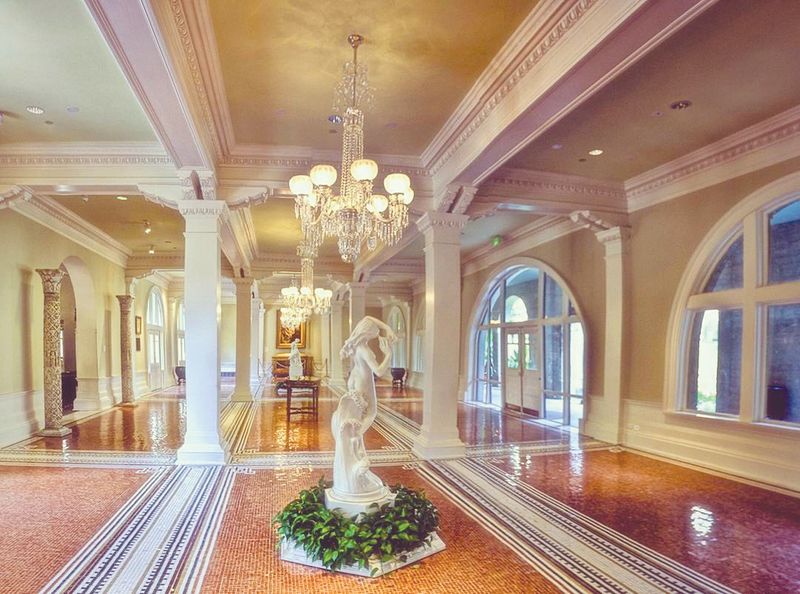
The Lightner Museum keeps part of that story alive with its historic baths area. You can see how the spaces worked and what a fashionable health routine looked like more than a century ago.
Spoiler alert: some of it looks a little intense. Old exercise machines and treatment setups can seem strange next to a modern fitness center.
That’s what makes this section so much fun. It shows that people chasing relaxation and good health isn’t new at all.
A trip through the baths also helps the giant pool make more sense. The whole lower level worked like a resort spa, long before that word showed up on hotel signs across Florida and beyond.
A Chicago Publisher Turned The Old Hotel Into A Treasure Chest
Otto C. Lightner was a Chicago publisher with a serious collecting habit. He bought the empty Alcazar building in 1946 to give his huge collection a home.
The museum opened in 1948 and took his name. That’s how a closed hotel became one of the most talked-about museums in St. Augustine.
Lightner loved Victorian objects and everyday treasures from the Gilded Age. His collection includes furniture, paintings, sculptures, mechanical oddities, and plenty of things you didn’t know you wanted to see.
He passed away in 1950 and was buried on the museum grounds. His wish was for the collection to stay put and be shared with the public.
The galleries cover three floors of the old hotel. Exhibits rotate and change over time, so it’s worth checking what’s on view before your trip.
Walking through these rooms feels like opening a giant attic owned by someone with excellent taste. Every room has a different flavor, and you never quite know what odd and wonderful item is waiting around the next corner.
Tiffany Glass That Practically Glows
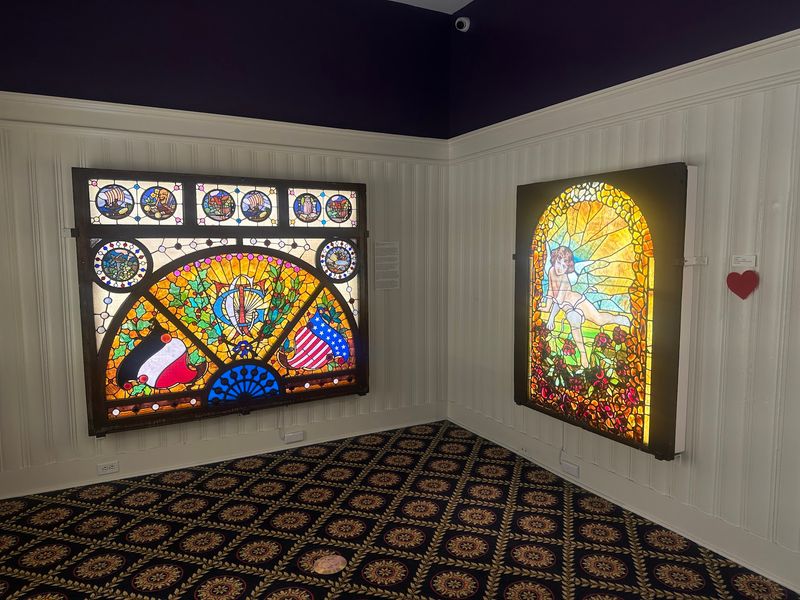
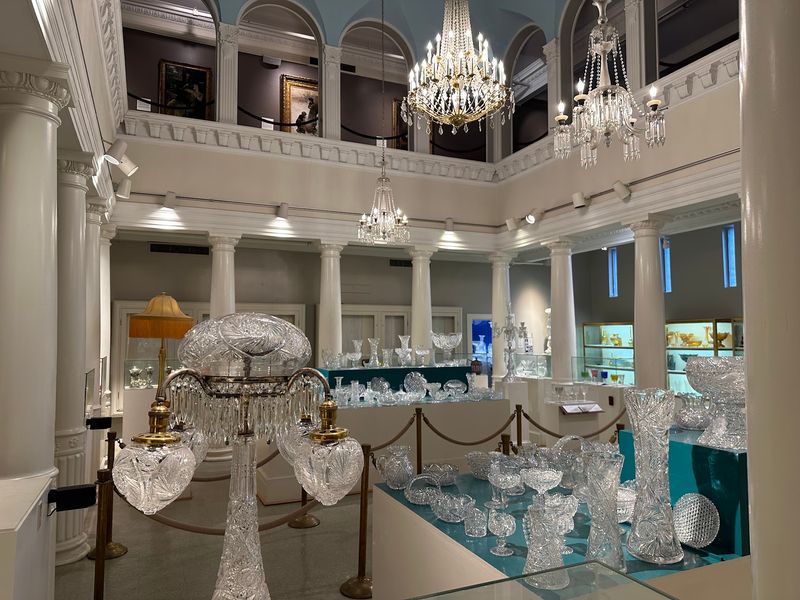
Colored glass gets a lot of love at the Lightner Museum. The glass gallery ranks as a favorite stop, and it’s easy to see why.
Look for works by Louis Comfort Tiffany, the famous American artist known for stained glass and lamps. His work was a big deal during the Gilded Age, which fits this building perfectly.
The museum also shows other cut glass and art glass pieces. Some sparkle, some swirl, and some look almost too delicate to be real.
Here’s a tip for your visit. Slow down and look at how the light passes through each piece, because the colors shift as you move around them.
It’s also a nice chance to think about Flagler’s era. The Ponce de Leon Hotel across the street, now Flagler College, is famous for its own Tiffany windows.
So seeing Tiffany glass here makes the whole neighborhood click together. You’re looking at the same style of beauty that wealthy winter visitors enjoyed when Florida’s first big resort boom took off.
Music Machines That Played Before Anyone Had Speakers
No phones. No radios. No playlists.
So how did people in the 1800s fill a room with music?
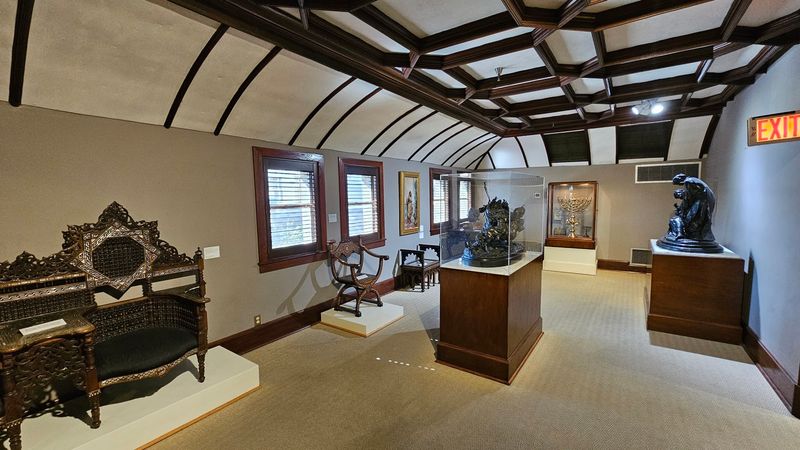
The Lightner Museum answers that question with its collection of mechanical musical instruments. These machines played tunes using cylinders, discs, and clever moving parts.
Some look like fancy furniture, while others look like something out of a steampunk dream. Each one shows how much effort people put into home entertainment before electricity changed everything.
The music gallery is a great stop for kids and adults alike. It turns old technology into something you can actually understand and enjoy.
Nearby, you’ll also find other Gilded Age curiosities, including vintage bicycles. Those tall, old-fashioned bikes make modern ones look pretty easy to ride.
Docents are often around to share details and stories. Asking a question can turn a quick look into a much richer visit.
Honestly, this room might change how you think about your own music. Your favorite songs come with a tap, but these beauties needed gears, springs, and a lot of patience.
Bring A Quarter Because The Koi Are Waiting
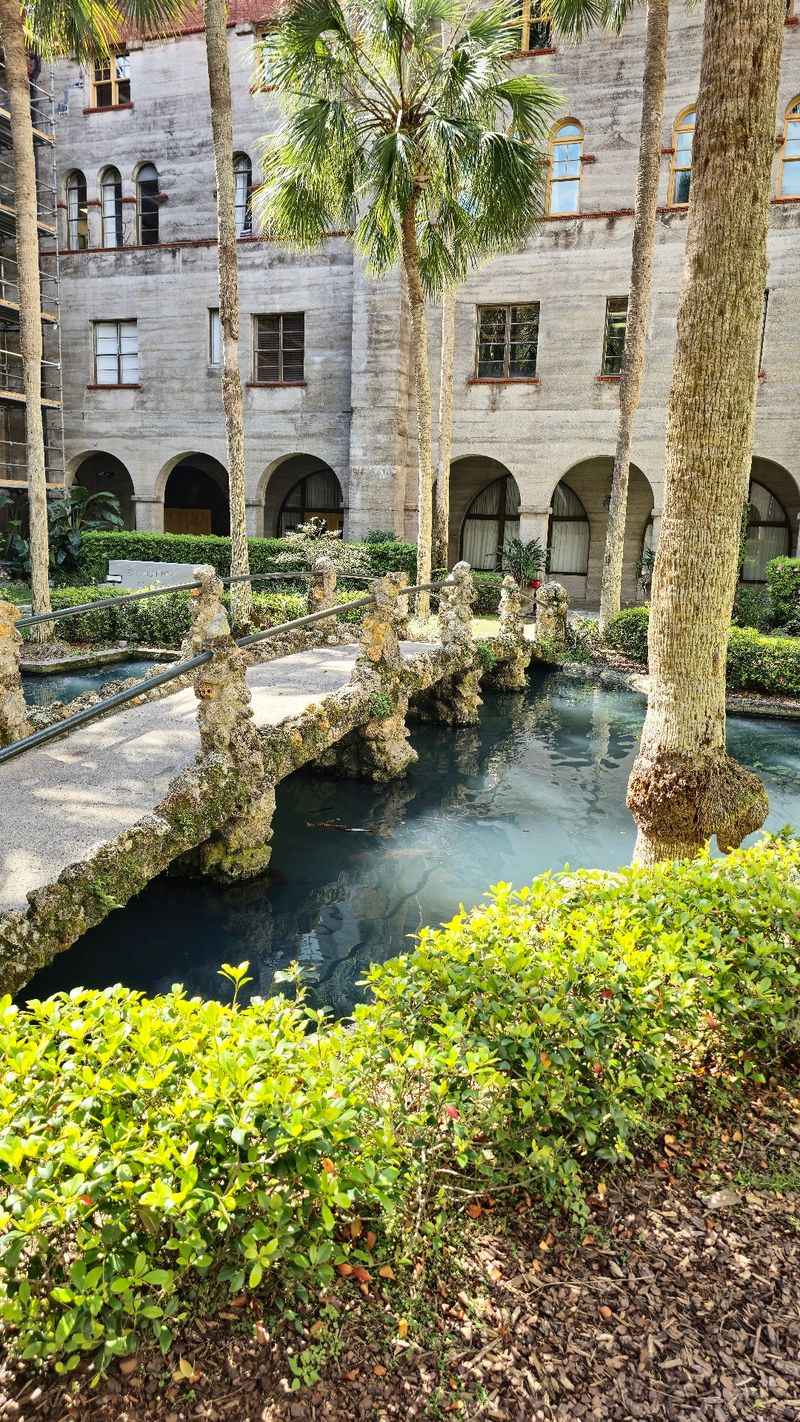
The courtyard might be the easiest part of the Lightner Museum to love. It’s open, leafy, and framed by the building’s Spanish Renaissance Revival architecture.
In the middle sits a pond filled with koi. Fish food is sold nearby from a coin machine, so keeping a quarter in your pocket is a smart move.
The koi know the drill. Toss in a little food, and they swarm to the surface in bright flashes of orange, white, and gold.
A small bridge crosses the pond, which makes a lovely spot for photos. The tall towers and arches of the old hotel rise around the courtyard like a movie set.
The architects behind the building were John Carrère and Thomas Hastings. They later designed the New York Public Library, so this courtyard has impressive roots.
Even if you’re short on time, a stroll here is worth it. It’s a peaceful pause between galleries, and the fish will happily accept any spare change you’re willing to turn into snacks.
Plenty Of Couples Say I Do Under These Arches
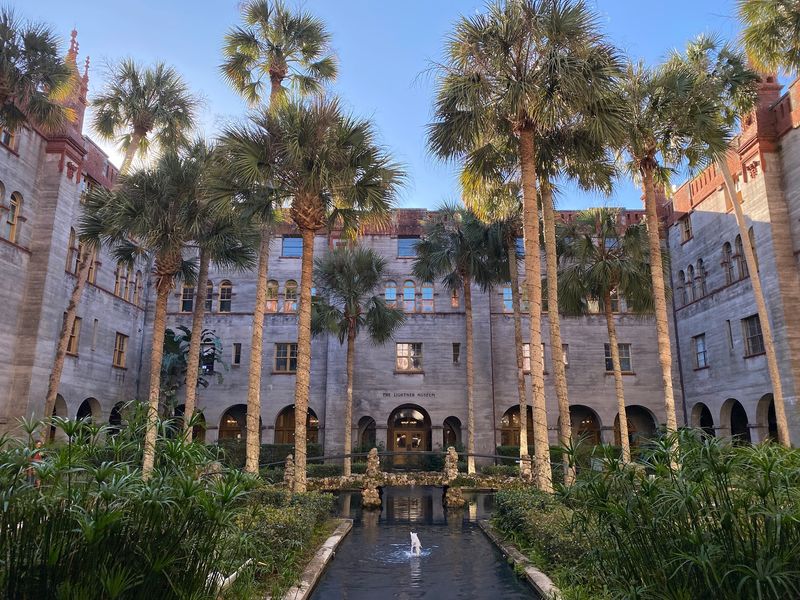
Grand hotel? Check. Romantic courtyard?
Check. Historic towers glowing at sunset? Also check.
It’s no surprise that the Lightner Museum is a popular wedding venue. The building offers spaces for ceremonies and receptions, and the setting does a lot of heavy lifting for photos.
The courtyard is a favorite backdrop, with its pond, palms, and arches. The old pool area also adds a memorable twist for events.
St. Augustine’s Nights of Lights season makes evening events extra special. The holiday display lights up the historic downtown from late fall into winter.
That means winter couples can get glowing city views just steps away. It’s hard to beat that combo of history and twinkling lights.
Even if a wedding isn’t on your calendar, it’s fun to know this side of the building. A hotel built for celebrations in 1888 is still hosting them today.
Henry Flagler wanted the Alcazar to be a place for fun and fancy gatherings. In a sweet way, that original mission is still alive.
Plan Your Visit So You Don’t Miss A Single Corner
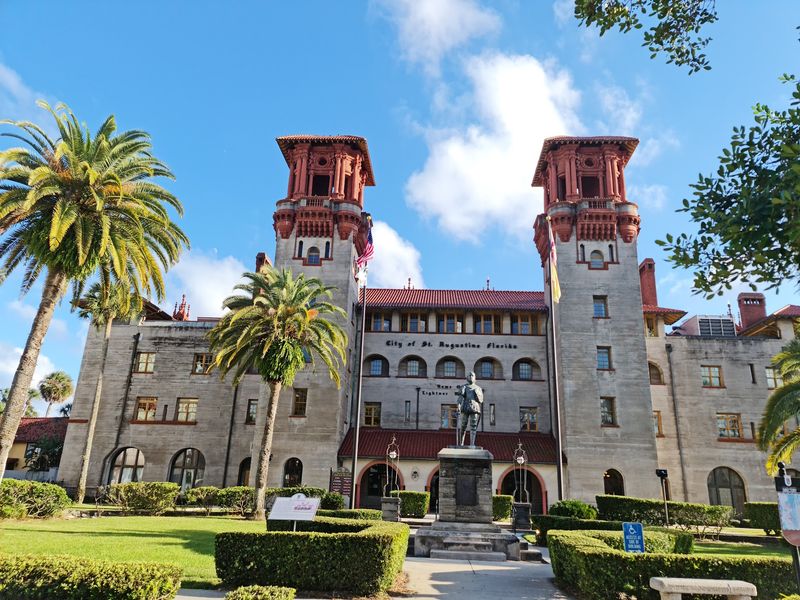
Finding the Lightner Museum is easy. It sits at 75 King St, St. Augustine, FL 32084, right in the heart of the historic district.
The museum is open daily from 9 AM to 5 PM. Give yourself at least two hours, plus time for lunch in the old pool.
Admission requires a ticket, and members get perks like museum store discounts. A public parking lot sits right behind the building, which is handy in a busy downtown.
Across King Street, you’ll spot Flagler College, once the Ponce de Leon Hotel. It’s a perfect pairing, since both buildings were part of Flagler’s resort vision.
City Hall shares part of the old Alcazar building too. That’s a fun detail to point out to friends as you walk around.
Exhibits change over time, so check the current lineup before heading over. That way, you’ll know what’s on view.
Florida has plenty of shiny new resorts. Still, none of them can claim a giant 1888 indoor pool where you can now eat lunch.