A No-Car Guide to Exploring Florida: Cities and Towns That Are Actually Walkable
Ditch the keys and upgrade your Florida trip with neighborhoods that actually reward walking. From breezy island streets to art-packed downtowns, these spots are built for strolling, sipping, and discovering.
You will get clear routes, realistic transit tips, and the kind of micro-destinations locals actually love. Ready to trade parking hunts for people watching and waterfront sunsets on foot?
1. Key West
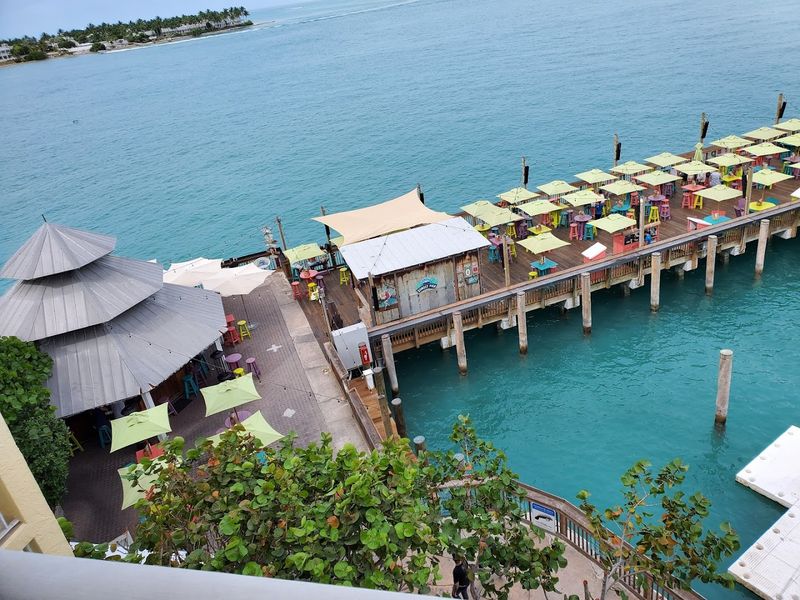
Think of this as Florida on “easy mode” for walking. Stay anywhere near Old Town and your days naturally fall into a loop: Cuban coffee in the morning, a quick peek at the water, then wandering streets that keep changing character every few blocks.
Duval is the loud spine, but the fun is on the quieter side streets—gingerbread houses, pocket gardens, and tiny bars that feel like someone’s living room with better lighting.
You can walk to the Southernmost Point early before the line gets dramatic, then drift toward Mallory Square for sunset without planning a thing.
When the heat spikes, duck into the shade around Truman Annex or pop into a museum for an air-conditioned reset. Key West rewards curiosity more than schedules.
2. Miami (Downtown/Brickell/Wynwood)
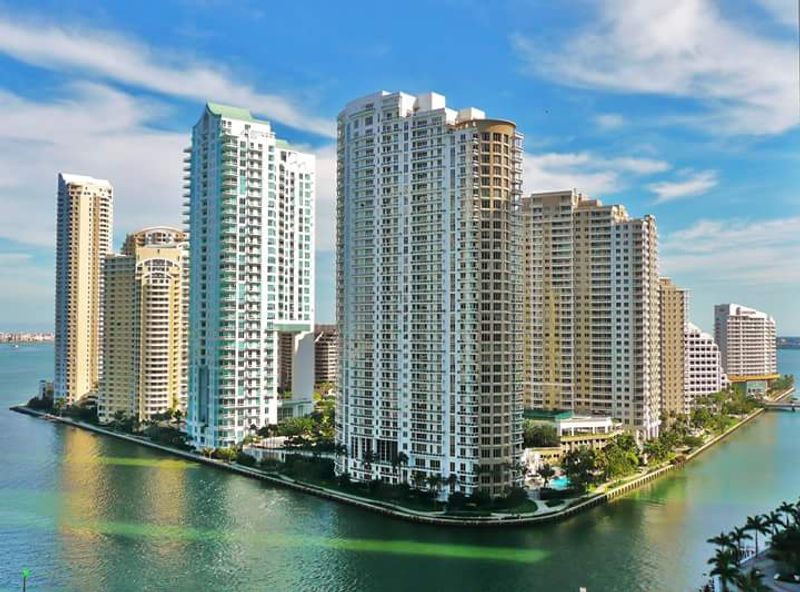
A car-free Miami works when you treat neighborhoods like mini-cities and pick your base wisely. Downtown and Brickell give you that “walk out, do stuff” feeling—waterfront views, shiny towers, and plenty of food within a few blocks.
Wynwood flips the vibe: murals everywhere, gallery doors open late, and cafés that take espresso seriously. The best move is to spend mornings along the bay, then head inland when you’re ready for color and noise.
Sidewalk life changes fast here, so embrace the hop—short rides between districts, long walks once you land. If you time it right, you can do a museum afternoon, a mural stroll, and a rooftop night without ever thinking about parking.
Miami’s secret is proximity—if you stay central, the city feels surprisingly compact.
3. Miami Beach (South Beach)
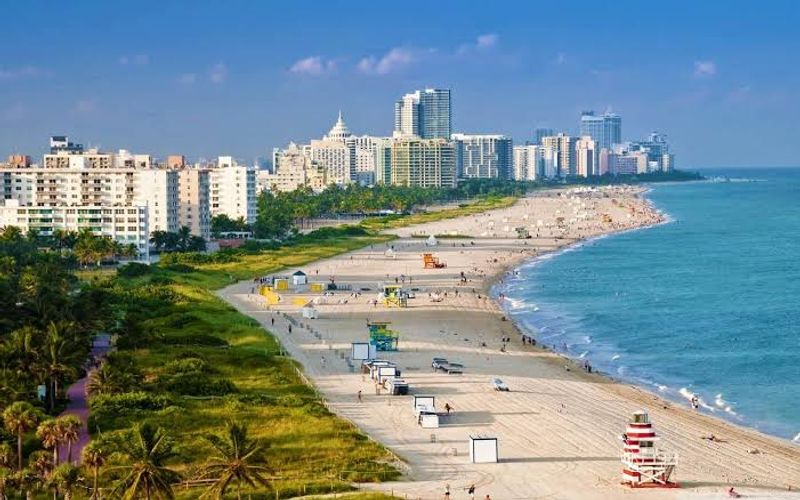
South Beach is built for roaming: flat grid, constant people-watching, and a beach path that basically begs for a long walk.
Start your day inland for breakfast, then drift toward the ocean when the light gets good—Ocean Drive is a spectacle, but Española Way and the streets just off it feel more human.
The Art Deco blocks are best in the morning before they turn into a photo shoot set. When you want a break from sand, Lincoln Road gives you an easy pedestrian runway of shops and snacks, and the sound of the ocean never feels far.
The key to enjoying it without a car is staying in the thick of things so you can reset quickly: quick swim, quick shower, back out for tacos, then sunset along the boardwalk. It’s a loop you’ll happily repeat.
4. Fort Lauderdale (Las Olas/Downtown)
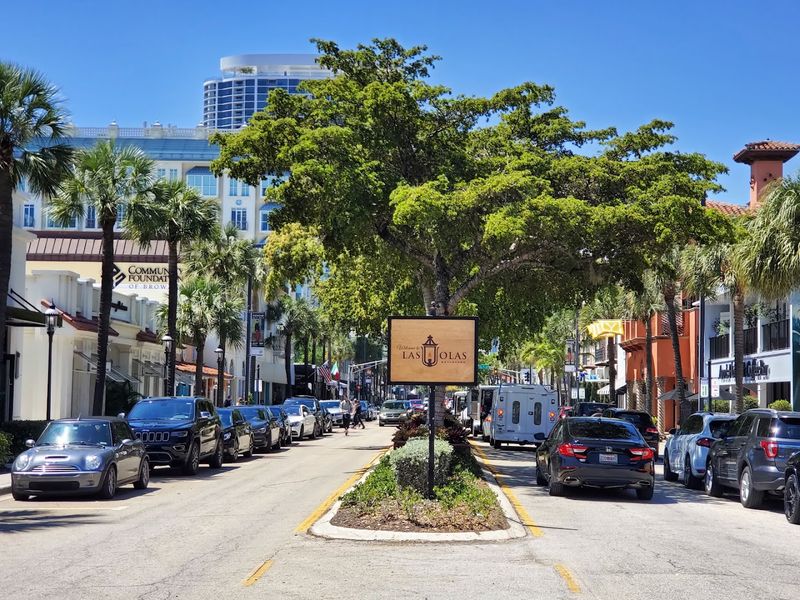
Fort Lauderdale’s walkability lives in the Las Olas bubble, and that’s not a bad thing. One direction gets you leafy streets, boutiques, and patios; the other pulls you toward the Riverwalk where the city suddenly feels calmer.
The best way to do it is in layers: coffee and a slow Las Olas stroll first, then the waterfront when the sun is higher. You’ll notice how often the water shows up—canals, marinas, bridges—so bring shoes you don’t mind putting miles on.
Museum fans can slide into a culture stop without adding a long commute, and dinner options stay clustered enough that you can decide on the fly. At night, the vibe is lively but not chaotic, which makes it an easy car-free base if you want a city feel without Miami’s intensity.
5. West Palm Beach (Downtown/Clematis/Waterfront)
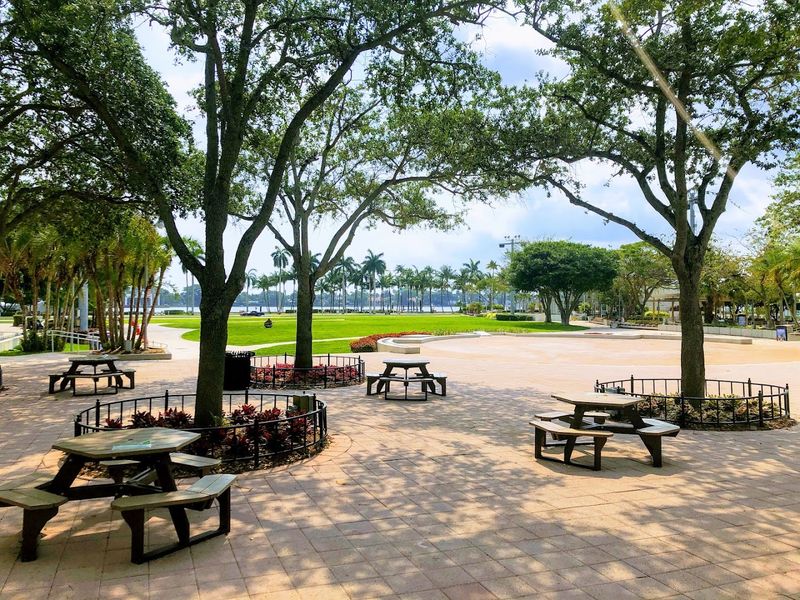
This one is all about a tight downtown plus a waterfront that’s made for evening walks. Clematis has the energy—restaurants, bars, music nights—while the water gives you the reset button whenever you want it.
The best days here feel like a zigzag: start in town for breakfast, wander toward the Intracoastal for breezes, then loop back for galleries or a late lunch. If you’re into architecture, the streets near downtown serve up plenty to look at without requiring a long trek.
It’s also a place where you can keep plans loose; the “what’s next?” options are close enough that you can pivot based on weather or mood.
After dark, the city stays walkable in a practical way—streetlights, steady foot traffic, and enough places open late to make it feel like you’re not stuck in a beach town bedtime.
6. Delray Beach (Atlantic Ave)
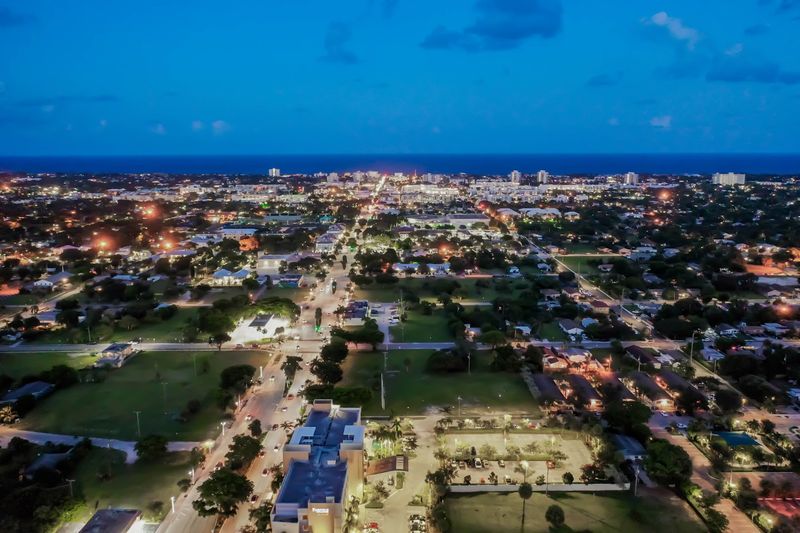
Delray’s secret sauce is that Atlantic Avenue acts like a magnet. You can plant yourself near it and spend a whole weekend bouncing between coffee, dinner, and the beach without ever feeling stranded.
The walk from the ave to the sand is short enough to do barefoot if you’re reckless, and the people-watching stays top-tier the whole way. This is a great place to build a “two swims, three snacks” day: morning beach time, a lunch reset, then a second round later when the light softens.
Between those, you’ve got galleries, little shops, and plenty of patios for an unhurried drink. Delray doesn’t demand a checklist; it’s better when you wander, notice a place you didn’t plan on, and follow the vibe.
If you want a walkable beach town that still feels polished, this is your move.
7. St. Petersburg (Downtown/Waterfront)
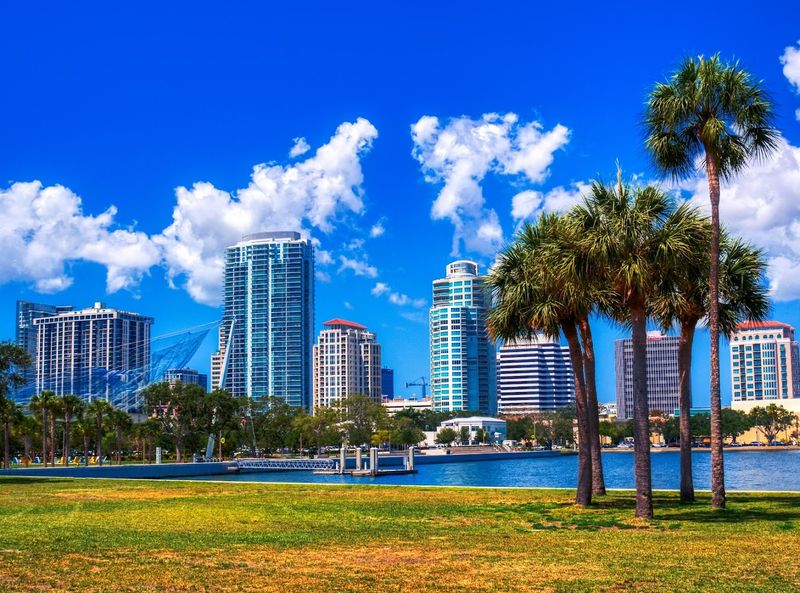
St. Pete is a walking city that actually feels designed for people, not just cars passing through. The downtown grid is friendly, Central Avenue keeps you supplied with food and art, and the waterfront is where you go to breathe for a minute.
Start with a mural hunt—there’s color around nearly every corner—then drift toward the parks along Tampa Bay when you need shade and a view. The best part is how easy it is to string together small wins: coffee, museum, quick snack, sunset walk, dinner, all without any logistical drama.
It’s also one of those places where the walk itself is the activity; you’ll keep stopping because something catches your eye. If you’re picky about walkability, St. Pete delivers the “I can just live here for a few days” feeling.
8. Tampa (Downtown + Riverwalk/Ybor pockets)
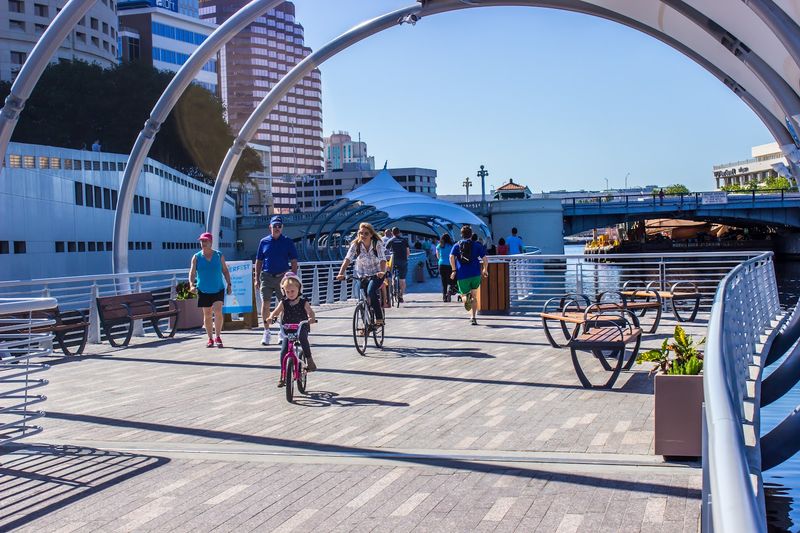
Tampa works car-free when you lean into its best corridors instead of trying to conquer the whole sprawl. Downtown and the Riverwalk give you a clean, scenic backbone—water views, parks, and a steady flow of places to pause for a drink or a snack.
Then there’s Ybor City, which brings brick streets, cigar history, and nightlife that feels more neighborhood than megaplex. The fun move is to do daytime Tampa by the water, then shift to Ybor when you’re ready for energy.
You’ll notice the city feels different block to block; some stretches are sleek and modern, others feel like old Florida hanging on. If you like a city with a bit of grit and a lot of personality, Tampa’s pockets are worth it.
Keep your base close to the action and your steps will do the rest.
9. Sarasota (Downtown)
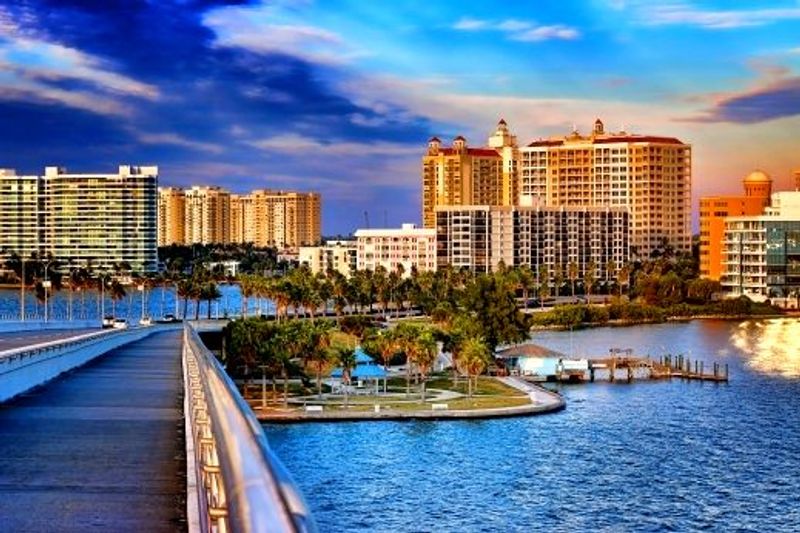
Sarasota’s downtown is compact in the best way: enough going on to fill a few days, small enough that you’re never far from a good meal or a place to sit outside.
You’ll get a mix of polished and casual—art spaces and boutiques, then a corner where someone’s eating ice cream like it’s a full-time job.
The bayfront area is your built-in evening plan: stroll, watch boats drift by, and let the breeze do what Florida air conditioning sometimes can’t.
Food-wise, this is an easy city for spontaneous decisions; options stay close, and you can bounce from coffee to lunch to dinner without mapping it like a military operation.
If you’re the type who likes a walkable base with a calmer rhythm, Sarasota nails it. Just plan your longer beach ambitions separately if you don’t have wheels.
10. Dunedin (Downtown)
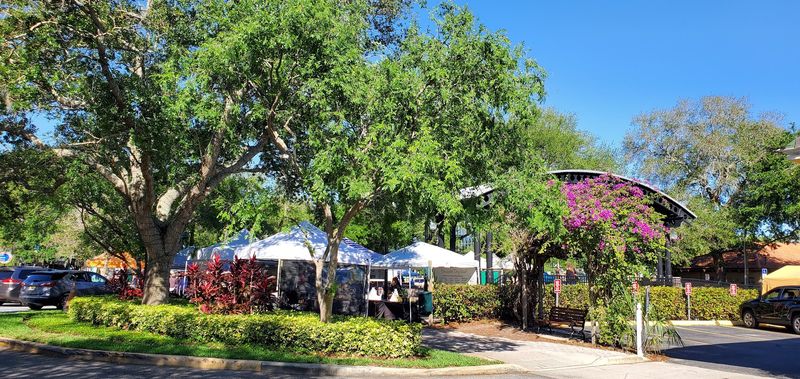
Dunedin is proof that small can be mighty. The downtown core is a tidy little web of cafés, breweries, shops, and shaded streets that make wandering feel natural.
It’s the kind of place where you can start the day with a pastry, lose an hour browsing, then end up on a waterfront path without realizing you’ve been walking the whole time. The vibe is friendly and a bit quirky—more “locals actually hang here” than “tourists were engineered to.@
If you like pairing a walkable town with easy outdoor time, Dunedin does it well; you can work in a sunset stroll and still make dinner reservations without stress.
It’s also a great option if you want Florida charm without the Key West price tag or the Miami volume. Come hungry, because the casual food scene punches above its weight.
11. St. Augustine (Historic District)
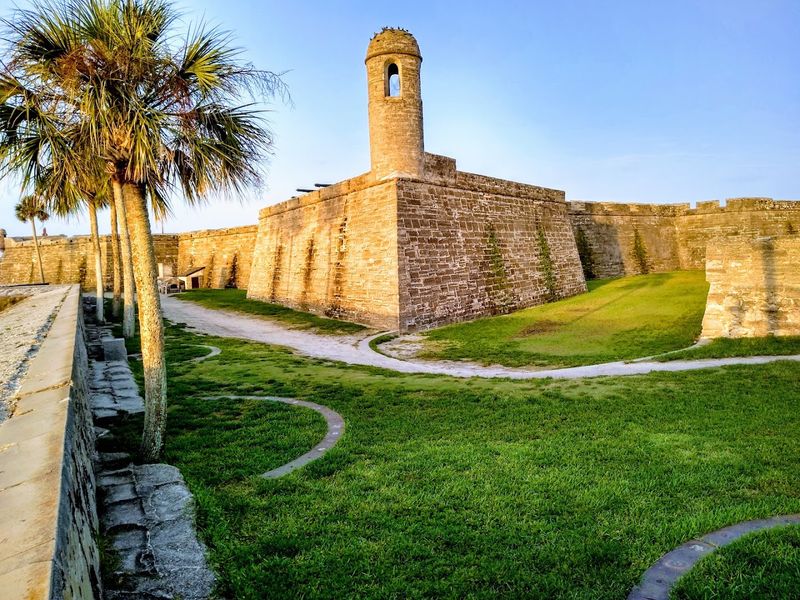
If you want walkability with real texture under your feet, St. Augustine is the one. The historic district is dense, older-than-your-country vibes (if you’re visiting from somewhere new), and streets that reward slow wandering.
Mornings are best for exploring before the crowds swell—hit the narrow lanes, peek into courtyards, and let your route be guided by the smell of something baking.
By afternoon, use the shaded spots and museums to pace yourself, then come back out when the light turns golden and the stone buildings look extra dramatic.
You can build a whole weekend around walking: a fort visit, a long meander down St. George Street, a quiet detour along the water, then dinner somewhere you discovered by accident. St. Augustine doesn’t need hype; it’s just legitimately pleasant on foot.
12. Fernandina Beach (Amelia Island Historic District)
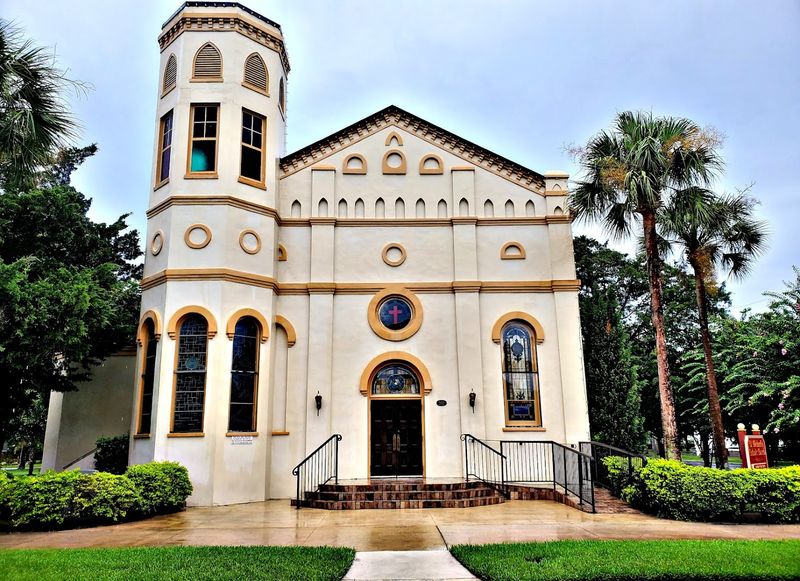
Fernandina Beach feels like a real old-school downtown that kept its soul. Centre Street is the anchor—historic buildings, small shops, and plenty of places to grab a bite—while the surrounding blocks make for easy wandering when you want a quieter stroll.
The best way to do it is unstructured: start with coffee, walk until something catches your eye, then follow the smell of seafood or the sound of live music.
The town has a breezy, coastal mood without turning into a caricature of itself, and it’s easy to stitch together an entire day within a walkable radius.
When you’re ready for water views, the nearby waterfront area gives you that “pause and stare” moment that every car-free trip needs. If you like your Florida a little calmer and a little more historic, Fernandina is a smart pick.
13. Orlando (Downtown/Lake Eola)
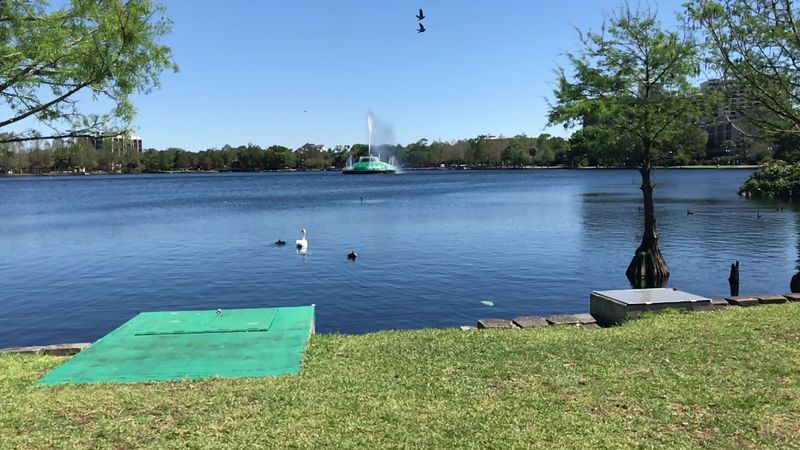
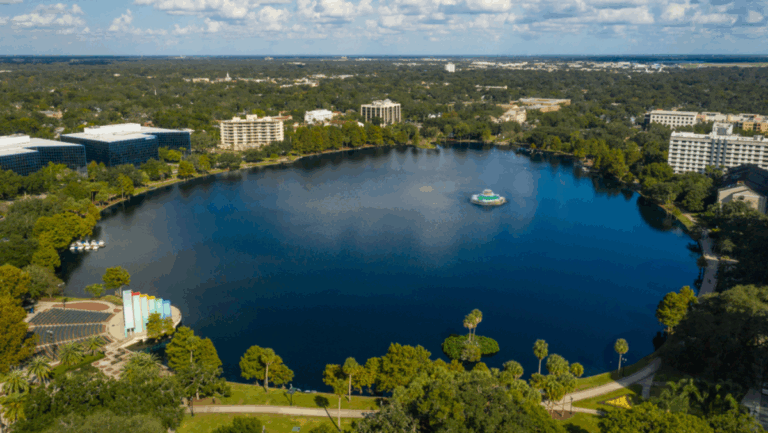
Orlando’s best no-car version isn’t the theme park sprawl—it’s downtown, where Lake Eola acts like the city’s living room. Loop the lake early and you’ll catch joggers, swan boats, and people walking dogs like they’re in a sitcom.
From there, it’s easy to wander into nearby pockets for coffee, lunch, and an evening drink without feeling trapped on a six-lane road.
Downtown Orlando is also good at giving you variety within a small footprint: parks, murals, and clusters of restaurants that make “we’ll decide when we get there” a realistic plan.
Heat is the main opponent, so build in indoor breaks—museums, cafés, or just a long lunch. If you treat downtown as its own destination instead of a base for driving elsewhere, Orlando becomes surprisingly walkable and genuinely fun.
14. Winter Park (Park Ave)
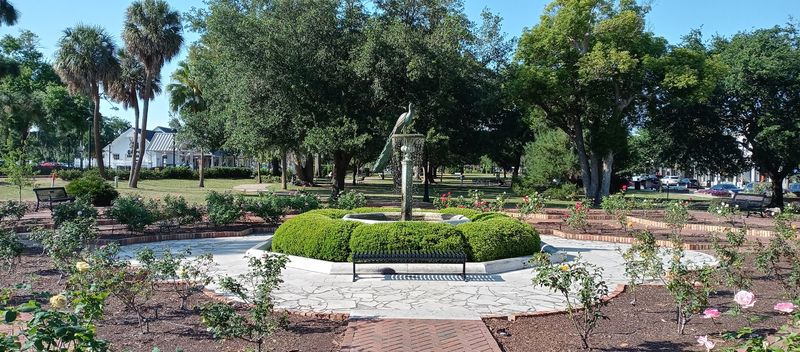
What makes Winter Park work is how effortlessly it behaves like a European-style stroll town—minus the jet lag. Park Avenue is your runway: boutiques, wine bars, coffee, and shady sidewalks that make walking feel like the default.
The best hours are late morning into afternoon, when you can bounce between shops and snacks, then drift toward the water for a slower pace.
The residential streets nearby are part of the charm; take a detour and you’ll see pretty houses, big trees, and that “people actually live here” calm.
If you’re into small museums, galleries, or just a clean, pretty walk with lots of pit stops, Winter Park delivers. It’s also ideal for a no-car day trip because the core is compact—arrive, stroll, eat, repeat.
When your feet get tired, you’re never far from a bench and something cold to drink.
15. Mount Dora (Downtown)
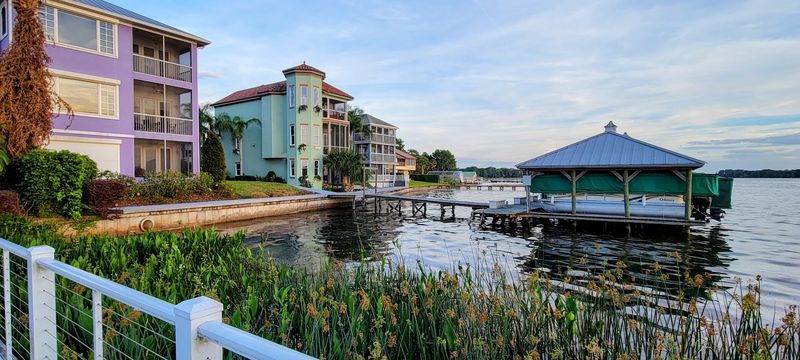
Mount Dora is a hill—yes, in Florida—which immediately makes it feel different. The downtown is small but layered: antique stores, cafés, lake views, and streets that invite slow wandering rather than speedwalking from A to B.
It’s a great place to do a “browse first, eat later” day because you’ll keep finding little shops that pull you in for five minutes that turn into thirty.
The lakefront area gives you an easy scenic payoff, especially near sunset when the light hits the water and everything calms down.
This town is at its best when you lean into its pace: long lunch, casual stroll, maybe dessert because why not. If you’re visiting in warmer months, aim for morning and late afternoon walks and use midday for indoor browsing.
Mount Dora is proof that walkable doesn’t have to mean big-city.