Beaches in Florida With Natural Rock Formations (Yes, Really)
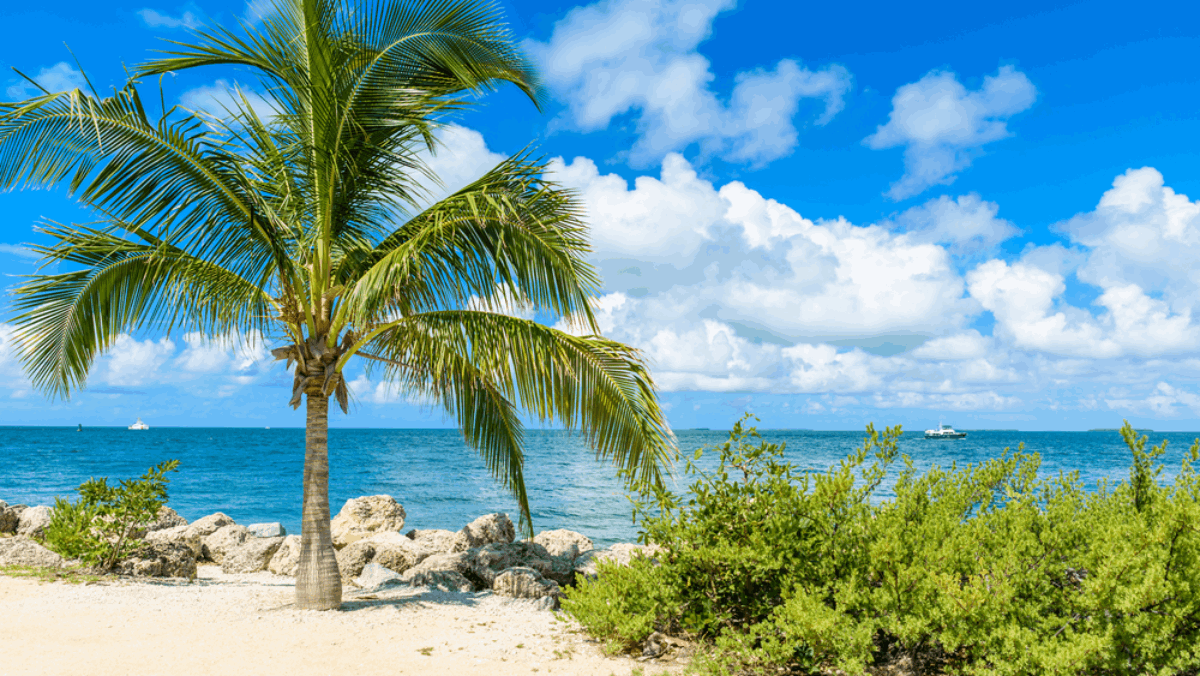
When people think of Florida beaches, they usually imagine endless stretches of soft white sand and calm turquoise waters. But did you know that some Florida beaches actually feature stunning natural rock formations that look like they belong on a distant coastline?
These rocky shores offer a completely different beach experience, with tide pools, jagged limestone outcrops, and unique geological wonders that make for unforgettable adventures and incredible photo opportunities.
1. Blowing Rocks Preserve (Hobe Sound)
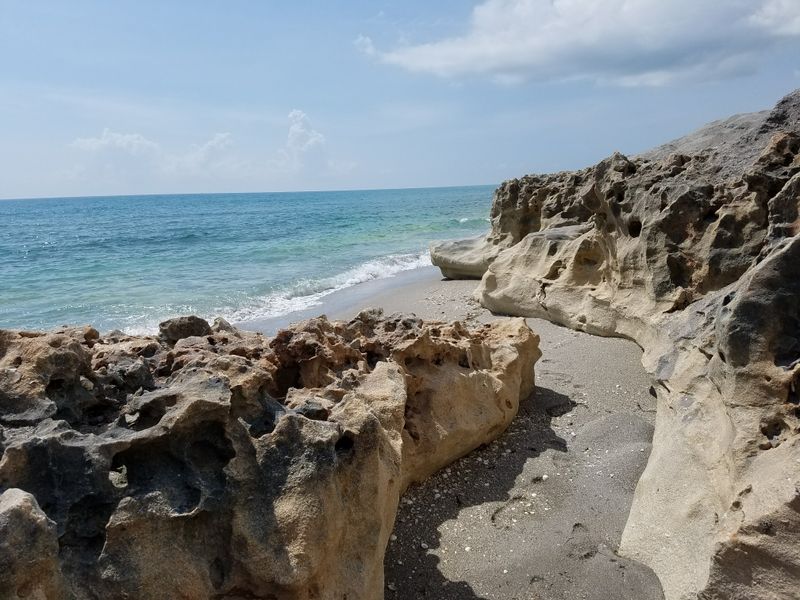
Jupiter Island holds one of Florida’s most dramatic coastal secrets: a limestone shoreline that erupts with ocean spray during high tide. The Blowing Rocks Preserve gets its name from the spectacular water geysers that shoot up through holes in the ancient rock ledge, sometimes reaching heights of 50 feet!
Managed by The Nature Conservancy, this 73-acre preserve protects one of the largest Anastasia limestone formations on Florida’s east coast. Walking along the rocky shore feels like exploring another planet, with weathered formations creating fascinating shapes and textures.
2. Washington Oaks Gardens State Park (Palm Coast)
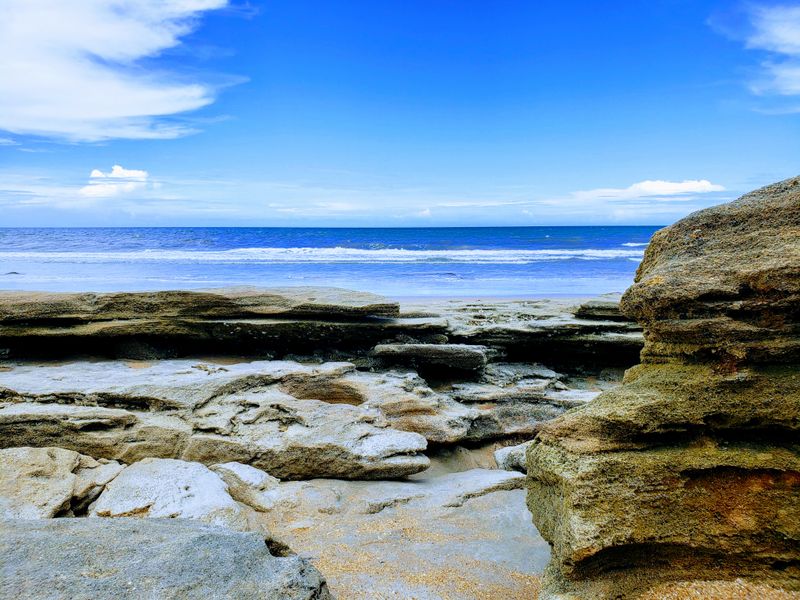
Along the quiet shores of Palm Coast lies a beach that looks like it was plucked from a completely different geographic region. Washington Oaks features extraordinary coquina rock formations that have been shaped by thousands of years of wave action into smooth, sculptural masterpieces.
Coquina is a unique sedimentary rock made from tiny compressed shells and coral fragments. At low tide, these formations create shallow tide pools teeming with small fish, crabs, and sea creatures. The park also includes beautiful formal gardens and coastal hammock trails.
Bring water shoes because the rocks can be slippery, and check tide schedules to experience the formations at their most accessible and photogenic moments.
3. Coral Cove Park (Tequesta)
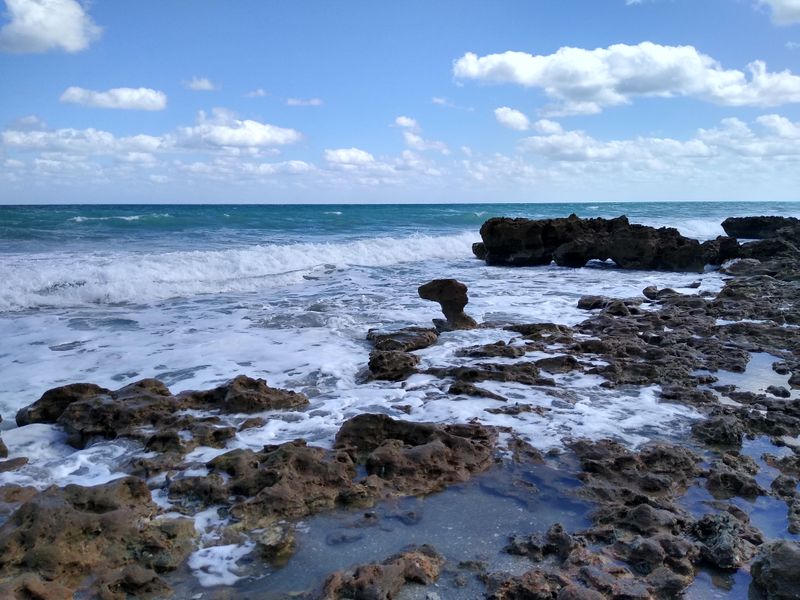
Tucked between Jupiter and Tequesta, Coral Cove Park surprises visitors with its rugged limestone shelves that extend into the Atlantic Ocean. Despite its name, the rocks here are actually ancient limestone, not coral, but they create equally fascinating landscapes for exploration.
This compact beach park is a favorite among snorkelers and tide pool enthusiasts. The rocky formations create natural barriers that calm the waters in certain areas, making it easier to spot colorful fish and marine life. Local families often bring kids here to discover hermit crabs and small fish trapped in the shallow pools.
Arrive early on weekends because parking fills up quickly. The park offers restrooms, showers, and picnic areas, making it perfect for a full day of rocky beach adventure and ocean discovery.
4. St. Andrews State Park Jetties (Panama City)
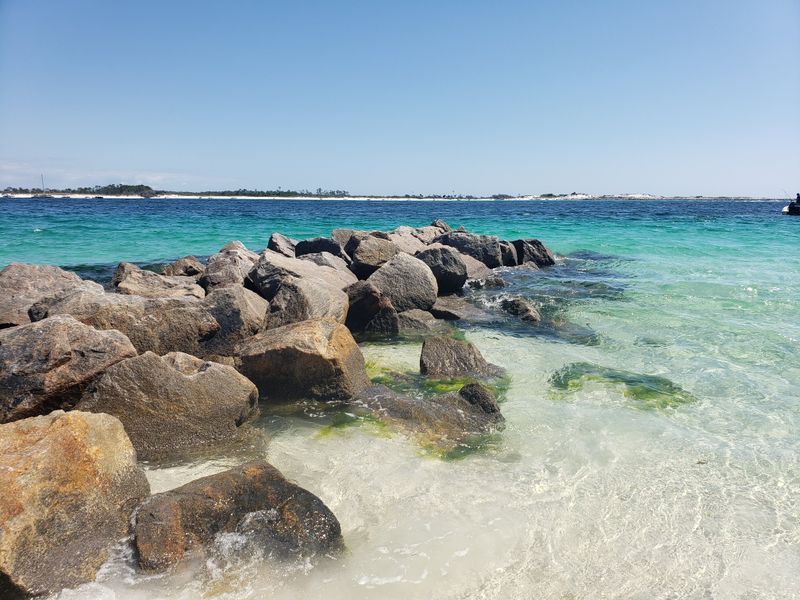
Panama City Beach isn’t just about spring break parties and sugar-white sand. St. Andrews State Park features impressive man-made jetties constructed from massive granite boulders that have become beloved landmarks and fishing hotspots.
While technically not natural formations, these jetties have been colonized by marine life over decades, essentially becoming artificial reefs. The rocks create dramatic wave action and tide pools filled with creatures. Anglers line the jetties hoping to catch redfish, pompano, and Spanish mackerel.
5. Gasparilla Island State Park (Boca Grande)
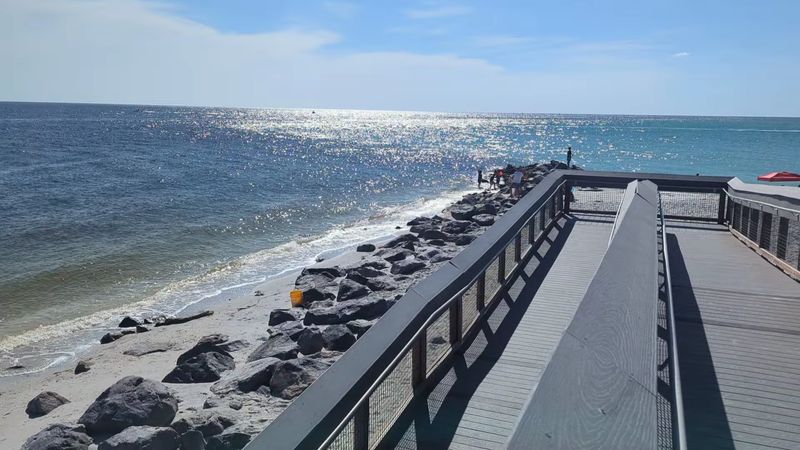
At the southern tip of Gasparilla Island sits a historic lighthouse surrounded by a unique rocky shoreline quite different from typical Florida beaches. Fossilized shell beds and limestone formations peek through the sand, creating interesting textures and tide pool opportunities.
The park’s location at Boca Grande Pass makes it a prime spot for watching boats navigate the channel. The rocky areas attract shorebirds and provide habitat for small crustaceans and fish. History buffs appreciate exploring near the restored 1890 lighthouse while geology enthusiasts examine the ancient shell deposits.
Boca Grande itself is a charming historic fishing village worth exploring. The island is accessible by car via a toll bridge.
6. Fort Zachary Taylor State Park (Key West)
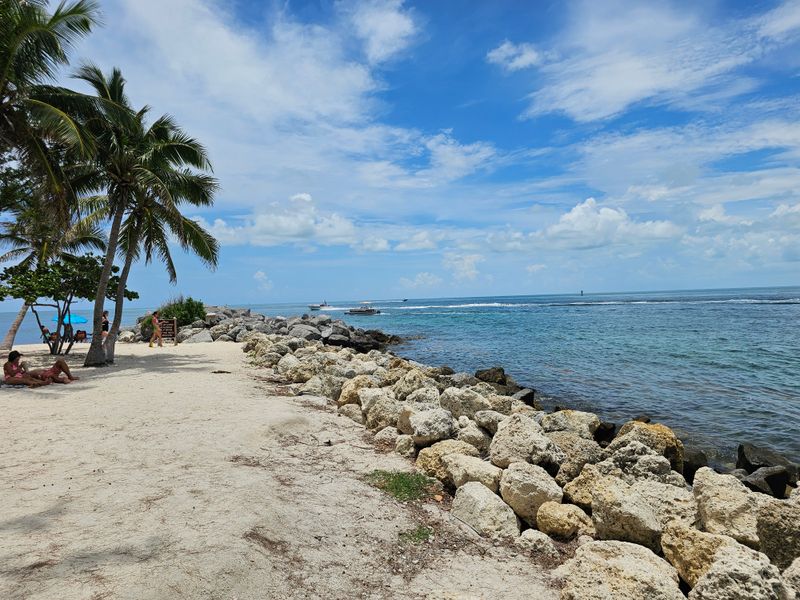
Key West’s Fort Zachary Taylor boasts what many consider the best beach in the Florida Keys, featuring a fascinating mix of coral rock formations, limestone outcrops, and imported granite boulders that create a uniquely textured shoreline.
Snorkeling here ranks among the best in the Keys because the rocky structures provide habitat for tropical fish, sea urchins, and occasionally sea turtles.
Water clarity is typically excellent, making it perfect for underwater photography. Rent snorkel gear at the park if you don’t have your own. Arrive before noon for parking, especially during peak tourist season. The shaded picnic areas and clean facilities make this a comfortable all-day destination.
7. Honeymoon Island State Park (Dunedin)
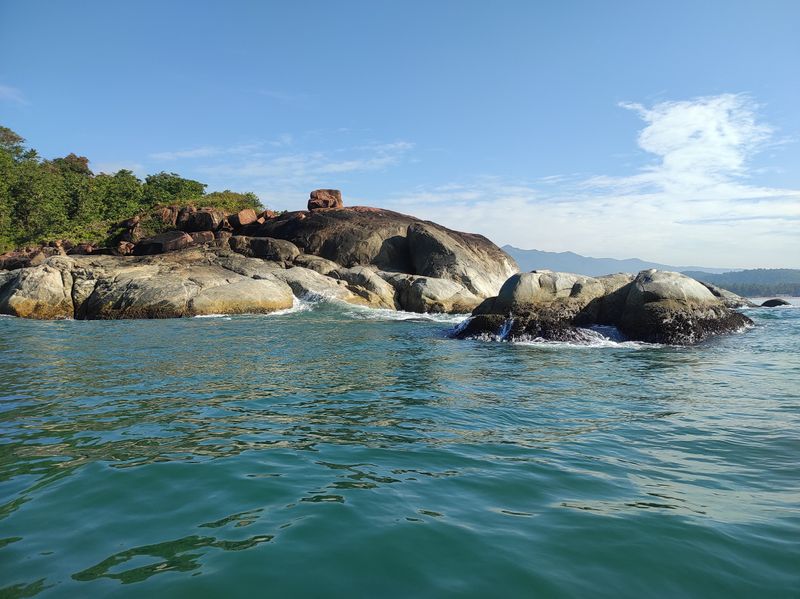
Just off the coast of Dunedin, Honeymoon Island surprises visitors with sections of rocky limestone shoreline that contrast beautifully with its famous white sand beaches. The northern areas of the island feature the most prominent rock formations, creating excellent tide pooling opportunities.
Originally called Hog Island, this barrier island was renamed in the 1940s when it became a honeymoon destination. Today, the rocks attract photographers seeking dramatic coastal compositions and families hunting for shells and small sea creatures. The Nature Trail winds through coastal habitats where you might spot ospreys and eagles nesting.
The island connects to the mainland by a causeway, making access easy. Parking fees apply, but the variety of beach environments makes it worth the cost.