Flesh-Eating Bacteria Is Making Its Rounds Again — Here Are the Florida Counties with the Highest Infection Rates in 2025

The so-called flesh-eating bacteria is trending again among the Florida headlines — but should you be worried? While total cases are actually down compared to recent years, new data does show that deadly infections are still being reported in multiple counties across the state.
The bacteria, known scientifically as Vibrio vulnificus, naturally occurs in warm, brackish seawater and can enter the body through small cuts, scrapes, or open wounds. While rare, infections can quickly turn severe or fatal — particularly for individuals with weakened immune systems or underlying health conditions.
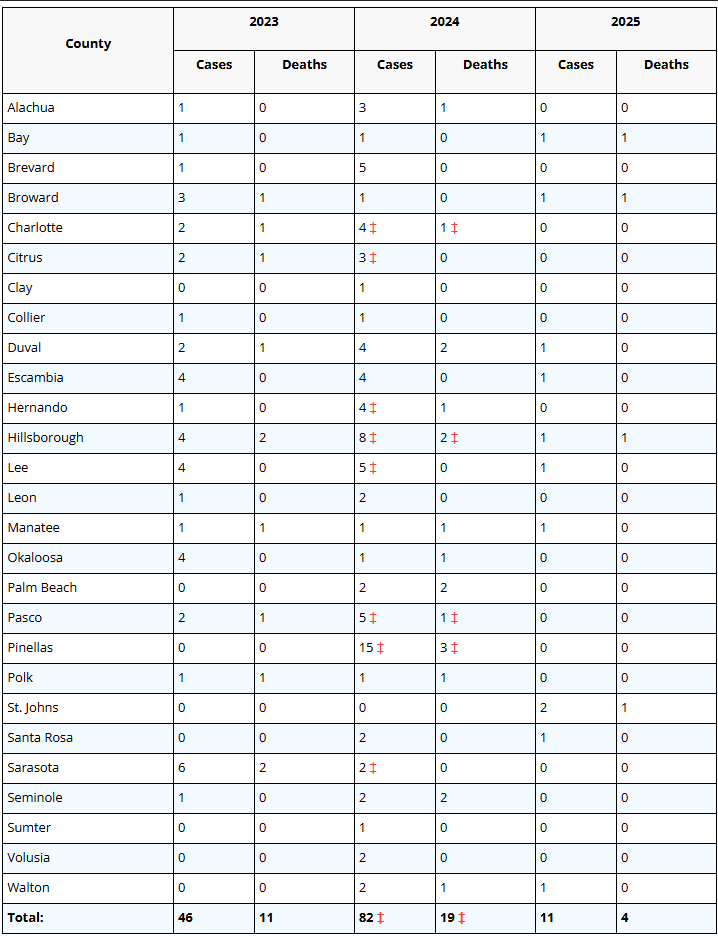
According to the latest Florida Department of Health surveillance update, 11 cases and 4 deaths have already been reported in 2025, with counties like Bay, Broward, Hillsborough, and St. Johns each recording a fatal case so far this year.
Here’s a look at which Florida counties have reported the most Vibrio vulnificus infections so far in 2025 — and how that compares to previous years.
Vibrio are bacteria that naturally live in coastal and brackish waters, especially during warmer months (May to October). While there are several types of Vibrio, the most concerning in Florida is Vibrio vulnificus — sometimes referred to in media as a flesh-eating bacteria.
People can become infected in two main ways:
- Eating raw or undercooked shellfish, especially oysters.
- Exposing open wounds (even small cuts or scrapes) to warm, salty or brackish water.
According to the CDC, Vibrio infections can cause stomach-related symptoms like diarrhea, nausea, and vomiting — but in some cases, especially with Vibrio vulnificus, the bacteria can enter the bloodstream or infect wounds, leading to severe complications like necrotizing fasciitis (flesh-eating infection), amputations, or even death. About 1 in 5 people with a severe Vibrio vulnificus infection die — sometimes within just 1–2 days.
Those with weakened immune systems (including liver disease, diabetes, or cancer) are especially at risk for serious outcomes.
CDC estimates that 80,000 cases of vibriosis happen each year in the United States, of which 52,000 cases of vibriosis are the result of eating contaminated food.
The best way to protect yourself from infection is to keep any open wounds out of the water and ensure all shellfish are thoroughly cooked before eating.