Ron DeSantis Signs New Mental Health Bill in Florida
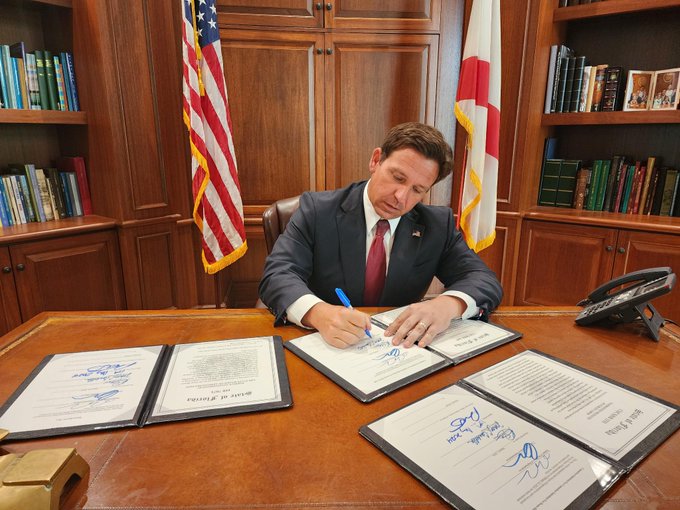
Governor Ron DeSantis today signed the Tristin Murphy Act (Senate Bill 168) into law, introducing new pathways for people with mental illness within Florida’s criminal justice system. The legislation, named after Tristin Murphy—who died by suicide in a state prison in 2021—was sponsored by Senator Jennifer Bradley (R‑Fleming Island) and carried with bipartisan support.
“Tristin’s parents have been so brave to tell his story and advocate for improvements to the way offenders with a mental health challenge are treated within the criminal justice system,” said Senate President Ben Albritton (R-Wauchula). “There is a big
difference between a hardened criminal and someone who needs intervention to address a serious mental health challenge.”
Under the new law, defendants booked into jail must now be screened for mental health issues within 24 hours. Those deemed to need involuntary treatment will be transferred to appropriate facilities, while individuals suitable for outpatient care will be evaluated and may be released under court-supervised treatment plans. Prosecutors can offer pretrial diversion for eligible misdemeanors and select felony charges; upon completing treatment, charges may be dismissed.
The legislation also strengthens probation oversight by requiring mental health evaluations for defendants who had been found incompetent and later regained competency; compliance with recommended treatment becomes a condition of probation. Inmates applying for correctional work programs must now undergo documented physical and mental health screenings before assignment.
First responders will receive additional support and training financed through the Criminal Justice, Mental Health, and Substance Abuse Reinvestment Grant Program. These grants will now include specialized training for 911 dispatchers and EMTs, with fiscally constrained counties eligible for funding without matching contributions.
To expand diversion options statewide, local communities can apply for grant funds to establish misdemeanor or ordinance-level mental health diversion programs. A new state-level data repository—hosted at Florida State University’s Northwest Florida Regional Data Center—will collect statewide behavioral health information linked to criminal justice outcomes, aiming to guide future policy and improve services.
Sen. Albritton praised Tristin Murphy’s parents for sharing his story, saying the bill “strikes a balance that gives law enforcement more options to keep our communities safe”. Senator Bradley added that while violent offenders still face incarceration, “this bill provides a different path for less serious crimes where the defendant, their family, and the community would be better served by allowing the defendant to receive the necessary mental health treatment”.
The Tristin Murphy Act takes effect October 1, 2025, signaling a significant shift toward treatment-focused justice for mentally ill defendants and marking a new era for mental health reforms within Florida’s legal system.