West Nile Virus Confirmed in Escambia County Resident as Mosquito-Borne Illness Activity Rises in Florida
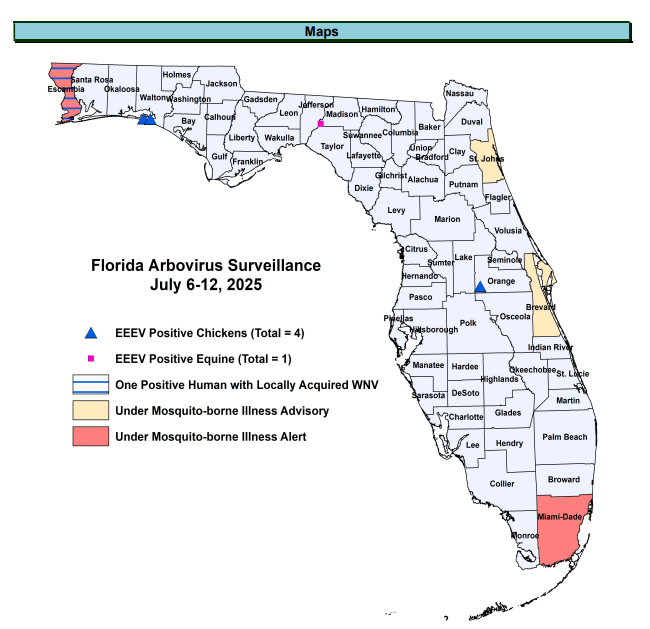
Florida health officials have confirmed a new human case of West Nile Virus (WNV) in Escambia County during the week of July 6–12, 2025, marking the latest development in the state’s ongoing mosquito-borne illness surveillance efforts.
The case is part of broader arbovirus monitoring across Florida, which includes viruses such as Eastern equine encephalitis (EEEV), St. Louis encephalitis (SLEV), dengue, Zika, chikungunya, and malaria. In total this year, WNV has been detected in four asymptomatic blood donors, one horse, and 30 sentinel chickens spanning 15 counties.
Meanwhile, Eastern equine encephalitis activity also increased this past week, with one infected horse reported in Madison County and four sentinel chickens testing positive in Orange and Walton counties. So far in 2025, five horses, two emus, and 23 sentinel chickens have tested positive for EEEV in ten counties across the state.
No new human cases of dengue acquired in Florida were reported this week, though six additional cases linked to international travel were confirmed, bringing the statewide total to 105 travel-related cases this year. Of those, Miami-Dade County continues to report the highest concentration. Three locally acquired cases have been reported so far in 2025—two in Miami-Dade and one in Brevard County.
Chikungunya, Zika, and Oropouche fevers, as well as malaria, saw no new cases this week. The year-to-date total for malaria stands at 21 cases, all in individuals who traveled to endemic regions prior to symptom onset.
Mosquito-borne illness alerts remain in effect for Escambia and Miami-Dade counties, while Brevard and St. Johns counties are under an advisory. No other counties are currently under alert or advisory status.
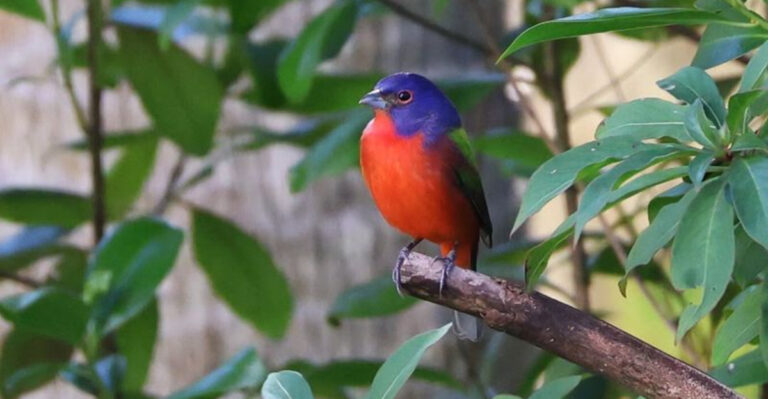
In addition to human and veterinary monitoring, surveillance efforts include sentinel chicken testing and reports of dead birds—early indicators of arboviral activity. This week, 15 dead birds were reported from eight Florida counties. So far in 2025, the Florida Fish and Wildlife Conservation Commission has received nearly 1,000 reports statewide involving over 2,000 birds, including crows, jays, raptors, and doves.
More information about mosquito-borne disease activity in Florida can be found through the Florida Department of Health and Centers for Disease Control and Prevention websites.