12 Beautiful Florida Trails to Hike This April for Ravines, Waterfalls, Springs, and Scenic Overlooks
April in Florida means cooler mornings, fewer bugs, and some of the best hiking weather you’ll find all year. While the state might not be famous for mountains, it hides a surprising collection of trails that wind through steep ravines, past actual waterfalls, along crystal-clear springs, and up to bluff overlooks that feel nothing like the flat Florida most people imagine. Whether you’re chasing rare topography or just want a beautiful walk through old-growth forest, these trails deliver scenery worth lacing up your boots for.
1. Ridge Trail at Mike Roess Gold Head Branch State Park
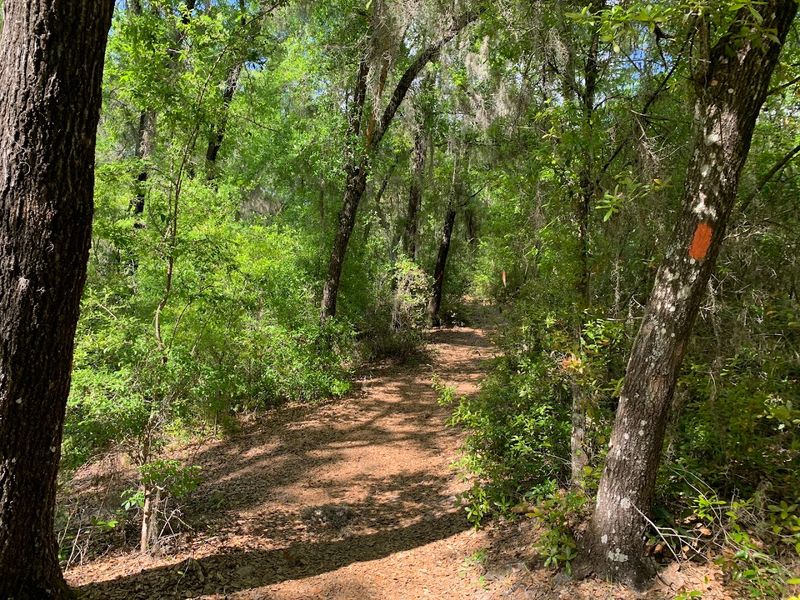
Gold Head Branch has the kind of terrain that makes first-time visitors do a double-take. Rolling sandhills drop sharply into a 60-foot ravine system, and the Ridge Trail runs right along the top edge of it all.
At just 1.1 miles, this loop doesn’t ask for a huge time commitment, but it packs in more elevation change than most Florida hikes manage in twice the distance. You’ll walk under live oaks and longleaf pines, with glimpses down into the ravine where ferns and seepage streams thrive in the cool shade below.
What stands out here is how un-Florida it feels. The trail has actual ups and downs, rooty sections, and enough contour to make your calves remember they have a job to do.
April timing is ideal because temperatures stay comfortable even midday, and spring wildflowers start popping up along the sandy sections. If you want a quick morning hike that doesn’t feel like every other flat Florida trail, this one delivers without requiring a full day’s commitment.
2. Azalea Trail at Ravine Gardens State Park
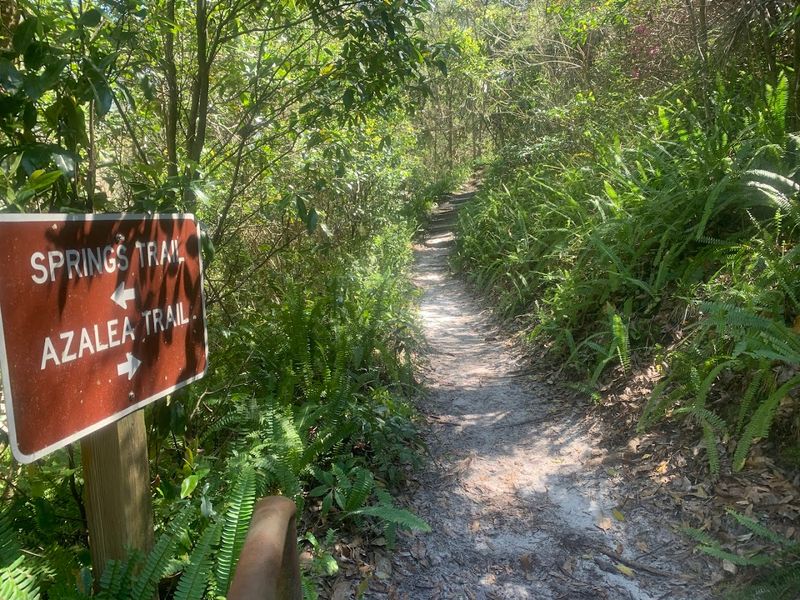
Ravine Gardens sits in Palatka and holds Florida’s most gorge-like landscape. The Azalea Trail drops you straight into a ravine system that cuts up to 120 feet deep, which is dramatic by any standard but especially for a state this flat.
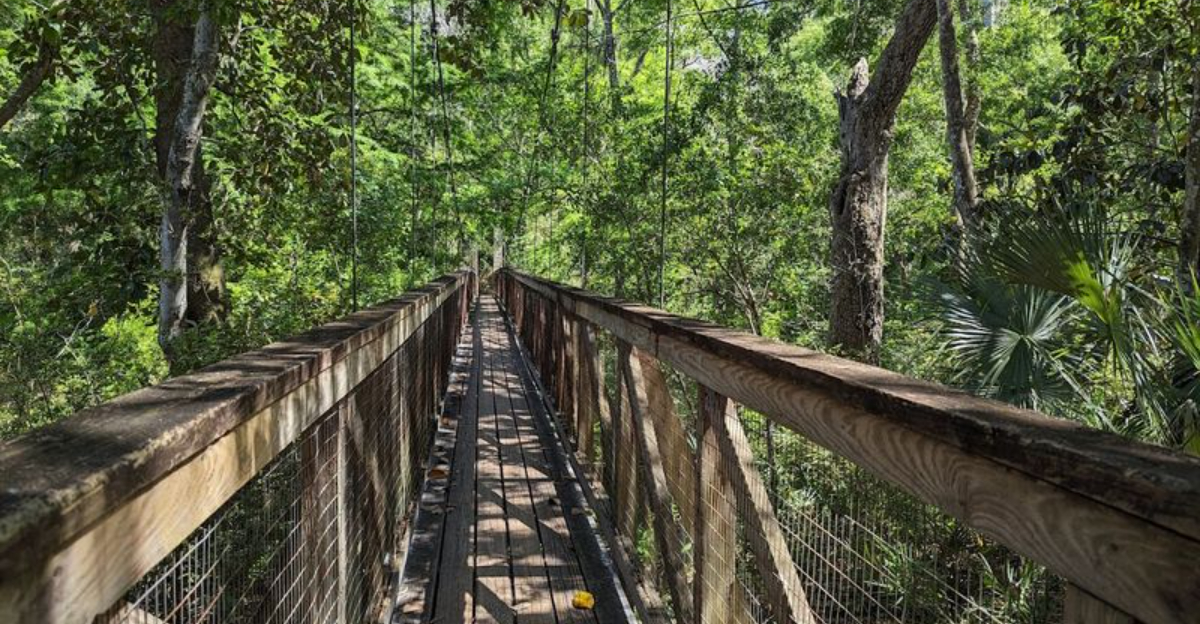
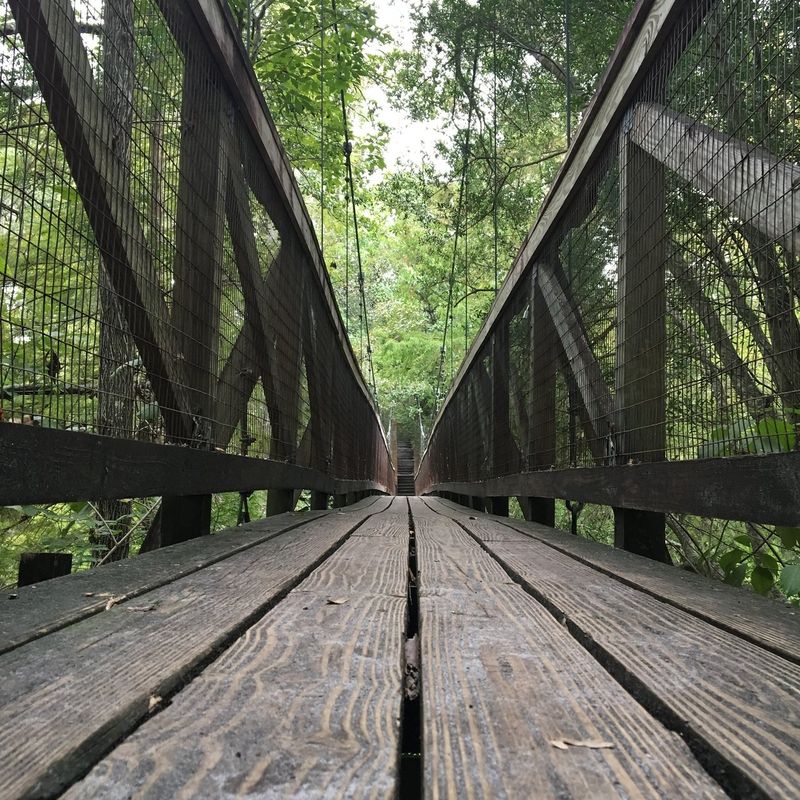
This trail isn’t a casual stroll. You’ll cross suspension bridges that sway gently over the ravine floor, climb staircases that zigzag down steep slopes, and walk under a canopy so thick it stays cool even when the rest of Florida is heating up.
Azaleas bloom heaviest in late winter and early spring, so April catches the tail end of the color show. Even without peak blooms, the ravine itself is the real star—shaded, mossy, and surprisingly rugged.
Wear shoes with decent tread because the steps can be slick after rain, and bring water even though it’s a short route. The elevation changes add up faster than you’d expect, and there’s no shortcut once you’re down in the ravine. It’s one of the most unique walks in the state.
3. Ravine Loop Trail at Ravine Gardens State Park
If you’d rather admire the ravine from above than scramble through it, the Ravine Loop Trail is your move. This path circles the top edge of the ravine system and gives you multiple overlook points where you can peer down into the steep, forested depths below.
The loop is easier on the knees than the Azalea Trail, but it still offers plenty of visual payoff. You’ll walk through gardens that were originally designed in the 1930s, with stone walls and landscaped sections that feel more intentional than most state park trails.
April is a great month to catch lingering azalea blooms and fresh green growth without the summer humidity that makes Florida hiking feel like a sauna. The overlooks are spaced out nicely, so you can pause, take photos, and actually enjoy the view without feeling rushed.
This trail works well if you’re hiking with kids or anyone who wants scenery without technical terrain. It’s paved in sections, shaded in others, and short enough to finish in under an hour while still feeling like you’ve seen something special.
4. Sinkhole Trail at Falling Waters State Park
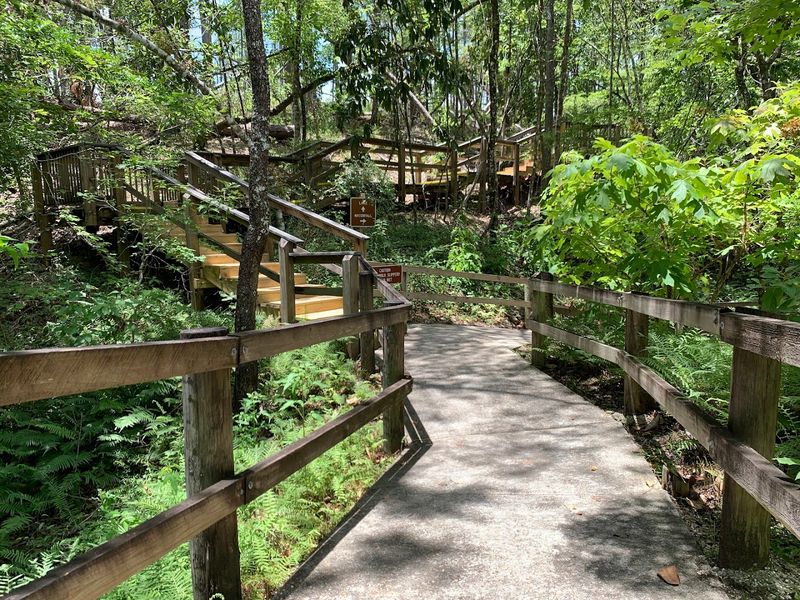
Falling Waters State Park is home to Florida’s tallest waterfall, and the Sinkhole Trail takes you right to it. A stream drops 73 feet into a cylindrical sinkhole, disappearing into an underground cavern that no one has fully explored.
The trail itself is short and easy, which means you can spend more time at the overlook watching the water tumble into the earth. It’s a strange and beautiful sight, especially in a state where most water features are springs or slow-moving rivers.
April usually brings enough rainfall to keep the waterfall flowing strong, though Florida droughts can reduce it to a trickle in drier years. Even when the flow is light, the sinkhole itself is worth seeing—100 feet deep and perfectly round, like something out of a fantasy novel.
The park also has a small boardwalk and a few other short trails if you want to extend your visit. Bring a camera with a decent zoom if you want clear shots of the waterfall from the viewing platform, and plan to visit earlier in the day when light filters down into the sinkhole best.
5. Bluff and Beech Magnolia Trails at Florida Caverns State Park
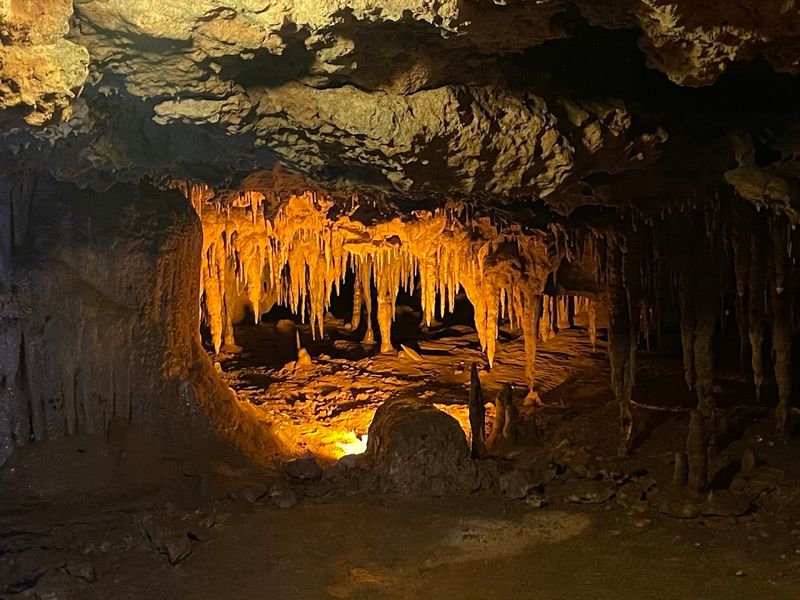
Florida Caverns State Park is best known for its underground tours, but the surface trails here are quietly excellent. The Bluff and Beech Magnolia Trails wind through terrain that feels more Appalachian than Floridian, with limestone outcroppings, steep slopes, and plant species you won’t find anywhere else in the state.
These trails aren’t long, but they pack in variety. You’ll walk along bluffs above the Chipola River, through patches of old-growth forest, and past rock formations that hint at the cave systems below.
April is a smart time to visit because wildflowers bloom in the understory and temperatures stay mild enough for comfortable hiking. The park sits in the Panhandle, so it gets actual seasonal shifts that the rest of Florida misses.
If you’re into geology or botany, this is a standout spot. The rare plants and rock features make it feel like a different state entirely. Combine the trails with a cavern tour if you have time—it’s one of the few places in Florida where you can go underground legally and safely.
6. Torreya State Park Trails
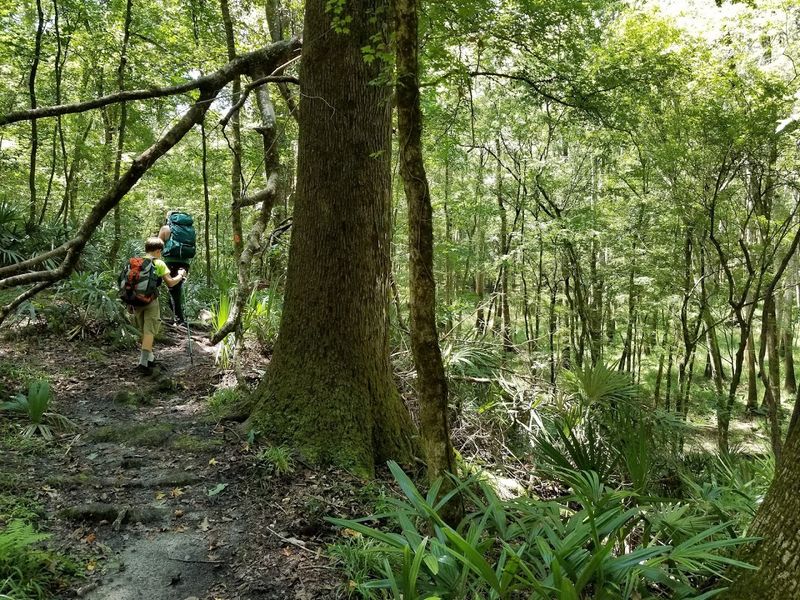
Torreya State Park has the most dramatic topography in Florida, hands down. High bluffs rise more than 150 feet above the Apalachicola River, and the trails here give you views that feel more like the Smokies than the Sunshine State.
The park’s trail system includes several options, from short walks to longer loops that explore the ridges and ravines. You’ll climb steep sections, wind through hardwood forests, and catch overlooks that stretch for miles across the river valley below.
The park is named for the rare Torreya tree, a species that’s critically endangered and found almost nowhere else in the world. April is a great month to visit because the weather cooperates and the forest canopy is still light enough to let in plenty of sunshine.
Wear sturdy shoes because the trails are rooty and uneven in places, and bring plenty of water since the elevation changes will work you harder than most Florida hikes. This is the closest thing the state has to mountain hiking, and it’s worth the drive to the Panhandle if you want serious scenery.
7. Big Shoals Area Trails at Big Shoals State Park
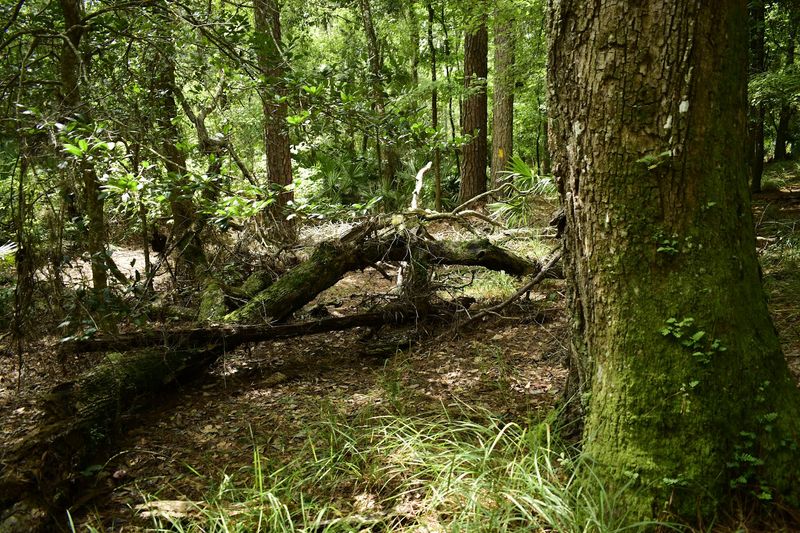
Big Shoals State Park protects the largest whitewater rapids in Florida, and the trails here let you explore one of the state’s most rugged river landscapes. Limestone bluffs rise above the Suwannee River, and the terrain rolls in a way that feels nothing like Central or South Florida.
The trails aren’t long, but they’re scenic and varied. You’ll walk through upland pine forest, descend to river overlooks, and catch views of the shoals where kayakers test their skills on Class III rapids.
April is prime time for wildflowers and comfortable hiking temperatures. The river is usually running strong from winter and spring rains, which makes the rapids more impressive and the whole landscape feel more alive.
This area is remote and quiet compared to more popular state parks, so you’re likely to have the trails mostly to yourself. Bring binoculars if you’re into birds—the Suwannee corridor is a migration route, and spring brings a good variety of species through. It’s a solid pick if you want a wilder, less-manicured Florida hiking experience.
8. Dune Ridge Trail at Little Talbot Island State Park
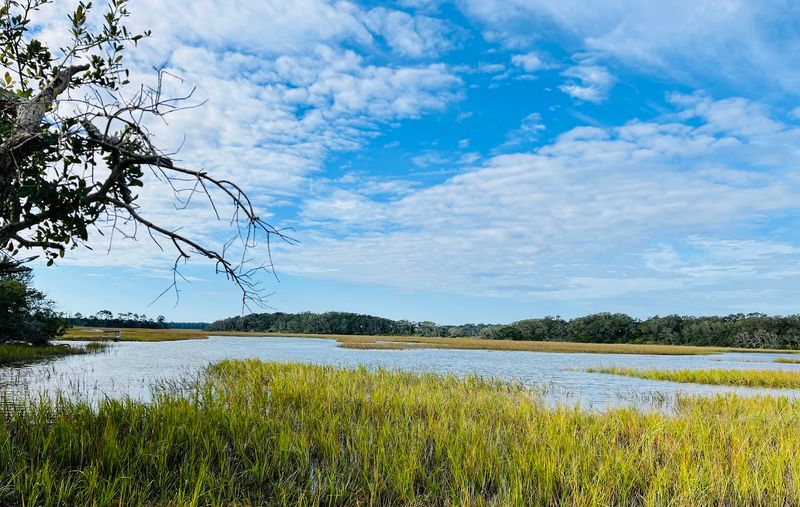
Little Talbot Island is one of the few undeveloped barrier islands left on Florida’s northeast coast, and the Dune Ridge Trail shows off its best features. You’ll walk along ancient dune ridges that rise above the surrounding maritime forest, with ocean breezes filtering through the canopy.
The trail is relatively short but offers a surprising amount of elevation change for a coastal hike. These dune ridges were formed thousands of years ago when sea levels were different, and they create a rolling, hilly landscape that feels unique in Florida.
April is an ideal month to visit because temperatures are mild, humidity is lower, and the beach isn’t crowded yet. You can combine the trail with a walk along the island’s pristine shoreline, which is one of the best stretches of undeveloped beach in the state.
Bring sunscreen and insect repellent because the maritime forest can hold mosquitoes even in cooler months, and parts of the trail are exposed to sun. The island is also great for birdwatching, especially during spring migration when shorebirds and songbirds pass through in large numbers.
9. Trestle Point and Pine Ridge Trails at Ichetucknee Springs State Park
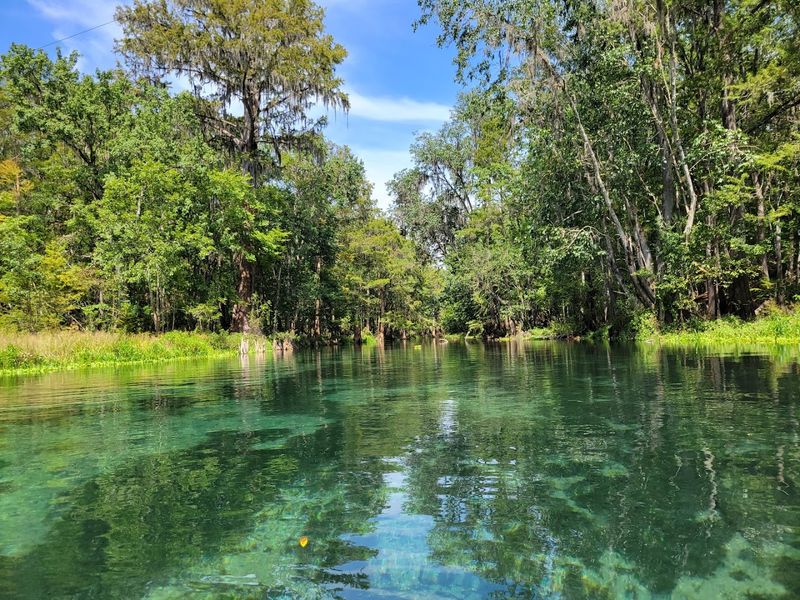
Ichetucknee Springs is famous for tubing, but the Trestle Point and Pine Ridge Trails offer a quieter way to experience the park’s crystal-clear water. These trails run along the Ichetucknee River and give you close-up views of the spring-fed flow without getting wet.
Trestle Point is the shorter option and follows the river through shaded forest with several spots where you can stop and watch the water. Pine Ridge is a bit longer and climbs through upland areas with longleaf pines and wiregrass, offering a nice contrast to the riverside sections.
April is a perfect month to hike here because the water is still cool and clear, wildflowers are blooming in the uplands, and you can enjoy the park before summer tubing crowds arrive. The river is consistently beautiful, with visibility that lets you see fish, turtles, and aquatic plants in detail.
These trails are well-maintained and easy to follow, making them accessible for most fitness levels. If you want to combine hiking with a swim, there are designated areas where you can cool off in the springs after your walk.
10. Cypress Swamp Trail at Highlands Hammock State Park
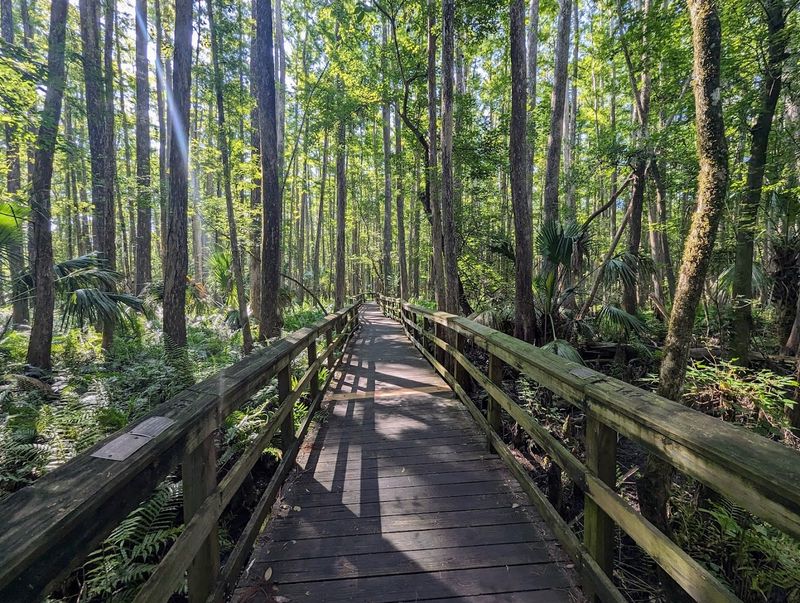
Highlands Hammock is one of Florida’s oldest state parks, and the Cypress Swamp Trail is its most atmospheric walk. An elevated boardwalk loops through ancient cypress trees draped in Spanish moss, with dark, tannin-stained water reflecting the forest around you.
This isn’t a rugged hike, but it’s one of the prettiest. The boardwalk keeps you dry while you walk through a landscape that feels primeval and untouched. Old-growth cypress, towering palms, and dense ferns create a canopy that stays cool even in warmer months.
April is an excellent time to visit because the swamp comes alive with birdsong, wildflowers bloom along the edges, and the humidity hasn’t reached summer levels yet. The park also has several other nature trails that explore different ecosystems, so you can easily spend a few hours here.
Bring a camera with a good lens for low light because the swamp can be dim under the canopy, and the photo opportunities are excellent. The boardwalk is wheelchair-accessible, making this trail a great option for families or anyone who wants beautiful scenery without challenging terrain.
11. Spring Boardwalk and Upland Trails at Manatee Springs State Park
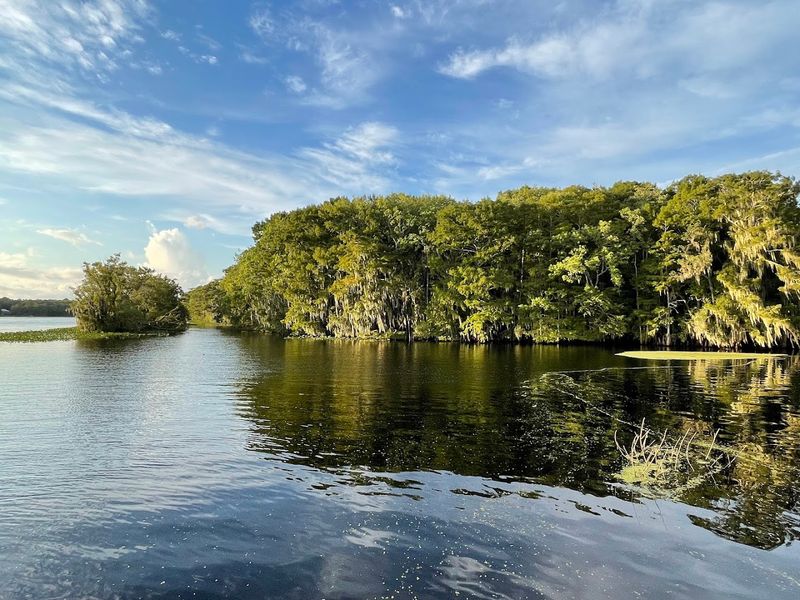
Manatee Springs pumps out 100 million gallons of crystal-clear water daily, and the park’s trail system gives you multiple ways to explore it. The spring boardwalk takes you right to the water’s edge, where you can see fish, turtles, and occasionally manatees that swim up from the Suwannee River.
Beyond the spring itself, the park has more than eight miles of upland trails that wind through cypress forest, hardwood hammock, and pine flatwoods. These trails are less crowded than the spring area and offer a quieter experience with good birdwatching and wildflower opportunities.
April is a smart month to visit because the spring is stunning in any season, but the upland trails are especially pleasant before summer heat and bugs arrive. The water stays a constant 72 degrees year-round, so if you want to swim after hiking, it’s refreshing but not uncomfortably cold.
The park can get busy on weekends, so aim for a weekday visit or arrive early if you want the trails to yourself. Pack a picnic and plan to spend a few hours exploring both the water features and the forest trails.
12. Wekiwa Springs Trail System at Wekiwa Springs State Park
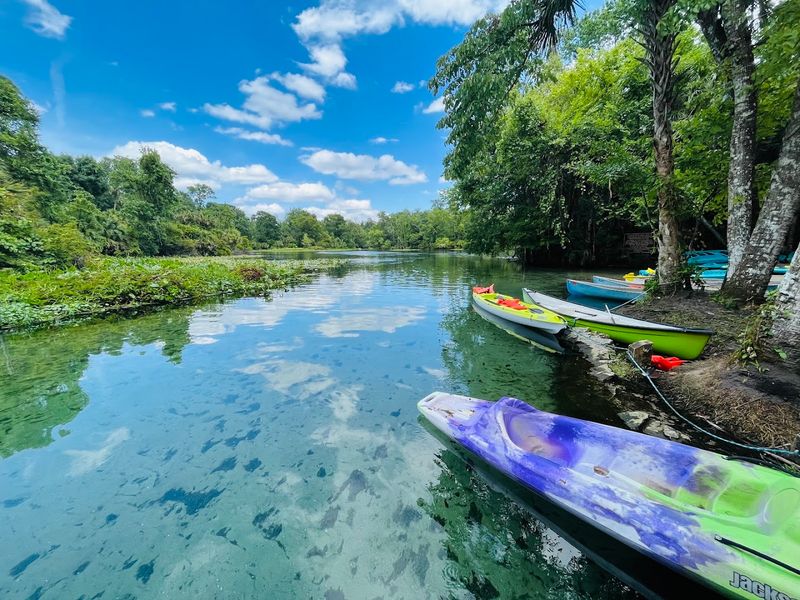
Wekiwa Springs State Park sits just north of Orlando but feels worlds away from the theme parks. The trail system here ranges from short nature walks to a 13.5-mile loop, giving you options whether you want a quick morning hike or a full day in the woods.
The spring itself is the main attraction for most visitors, but the longer trails take you deep into Central Florida forest where you might spot deer, wild turkey, or even black bears. The terrain is mostly flat, but the trails are well-maintained and offer plenty of shade under oak and pine canopy.
April is ideal because temperatures are comfortable for longer hikes, wildflowers bloom along the trail edges, and the spring water is perfect for a post-hike swim. The park also has canoe and kayak rentals if you want to explore the Wekiva River after your walk.
Bring plenty of water and snacks if you’re tackling the longer loops, and wear shoes that can handle sandy sections and occasional wet spots. The park is popular with locals, so weekday visits tend to be quieter and more peaceful.