9 Florida Attractions That Feel Slightly Forbidden Even Though They’re Completely Legal
Florida hides some seriously strange experiences behind perfectly legal admission tickets. You can sleep underwater, walk through monkey habitats as the caged attraction, or visit a town built by people who thought we lived inside the Earth. These places feel like you’re sneaking somewhere you shouldn’t be, even though you paid to get in and nobody’s going to stop you.
1. Devil’s Den Prehistoric Spring (Williston)
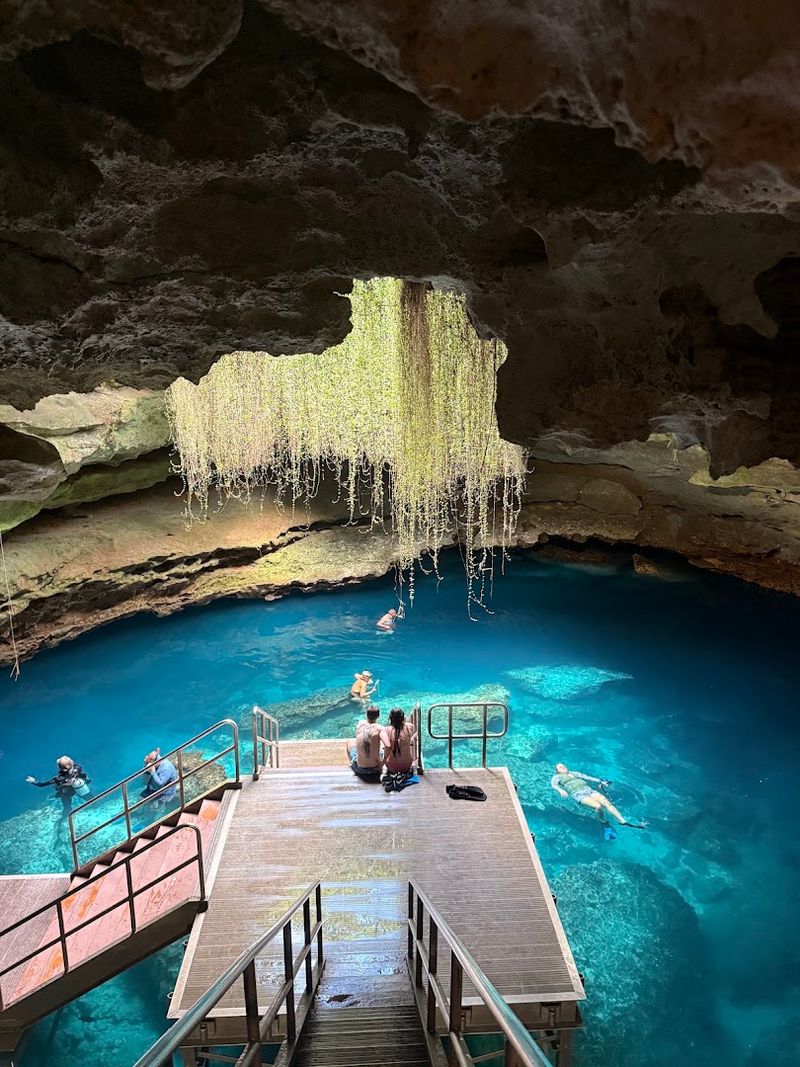
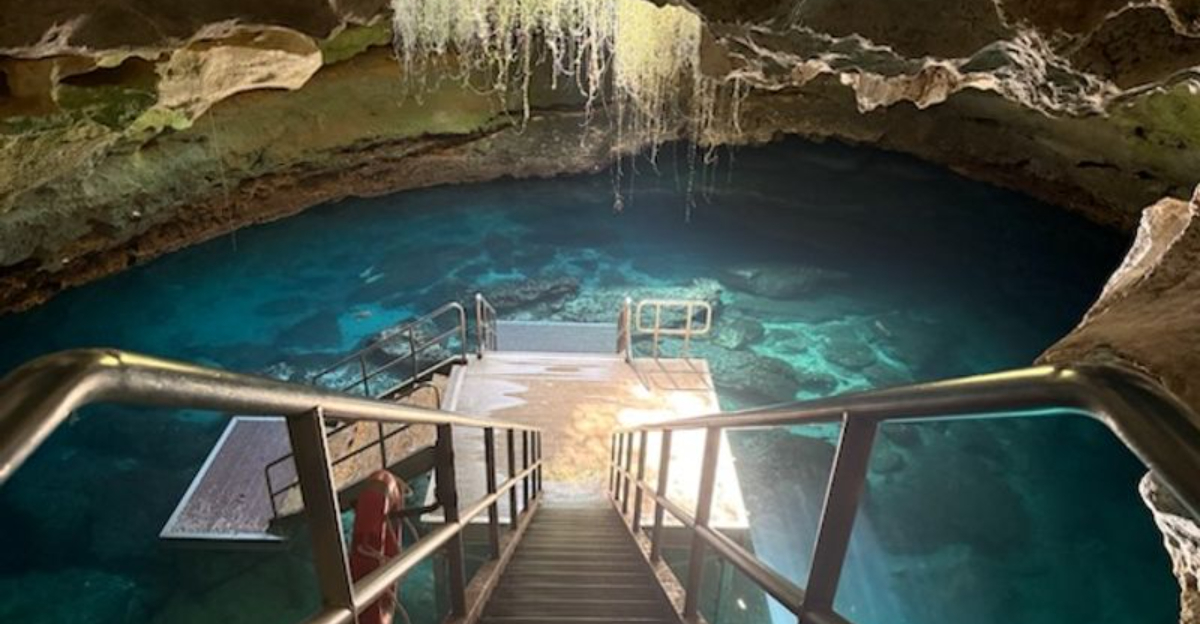
Most swimming holes sit out in the open under the sun. This one hides 50 feet underground inside a dry cave that formed when the roof collapsed thousands of years ago. The water stays a steady 72 degrees year-round, and the whole setup feels like you’re breaking into some secret grotto that nobody else knows about.
You’ll climb down wooden stairs into dim light, then slip into water so clear you can see ancient rock formations below. Snorkelers glide through shafts of sunlight that pierce through the cave opening above. Scuba divers go deeper, exploring crevices and underwater ledges that stretch into darkness.
The spring sits on private property, so you need a reservation before showing up. They limit how many people can enter at once, which keeps it from turning into a crowded pool party. Early morning visits offer the best light and the quietest atmosphere.
Gear rentals are available on-site if you don’t have your own mask and fins. The surrounding property includes picnic areas and nature trails, but most visitors come specifically for the underground spring. Weekends book up fast, especially during summer, so plan ahead if you want to experience what feels like trespassing into prehistoric Florida.
2. Jules’ Undersea Lab (Key Largo)
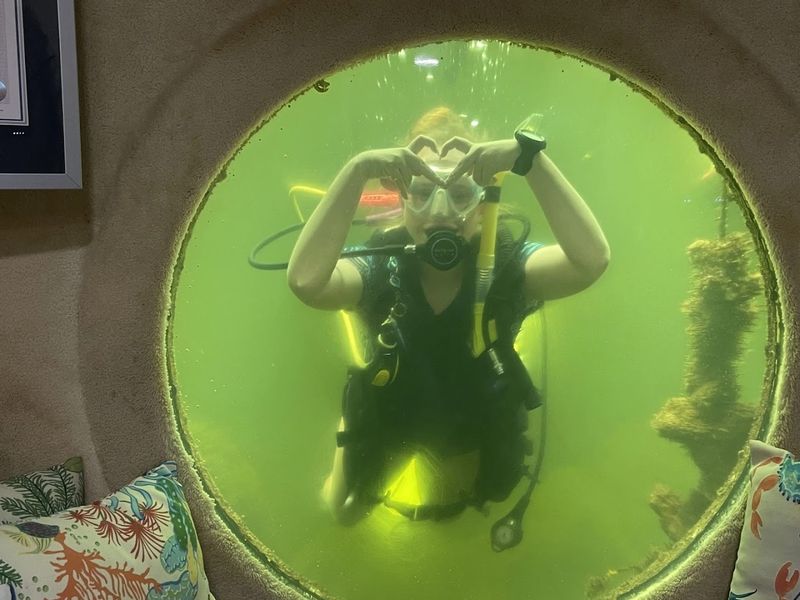
Spending a night underwater sounds impossible until you find out about this submerged hotel that doubles as a working research station. Jules’ sits 30 feet below the surface in a protected lagoon, accessible only by scuba diving down and swimming through the entry hatch. Once inside, you surface into dry living quarters with beds, a kitchen, and windows looking out at passing fish.
The whole experience reverses normal logic. Instead of looking down at sea life from above, you’re looking up at the surface from below. Barracuda drift past your window during breakfast.
At night, bioluminescent creatures glow outside like underwater fireflies.
You must be a certified diver to visit, since there’s no other way in or out. Scientists use the facility for marine research, but they also host overnight guests who want the bizarre thrill of living beneath the waves. Pizza delivery comes via a diver in a dry bag, which might be the strangest room service in Florida.
The compressed air environment means you can’t fly for 24 hours after your stay. Your body needs time to off-gas, just like after any deep dive. It’s technically safe and completely legal, but sleeping 30 feet underwater still feels like you’re doing something wonderfully wrong.
3. Monkey Jungle (Miami)
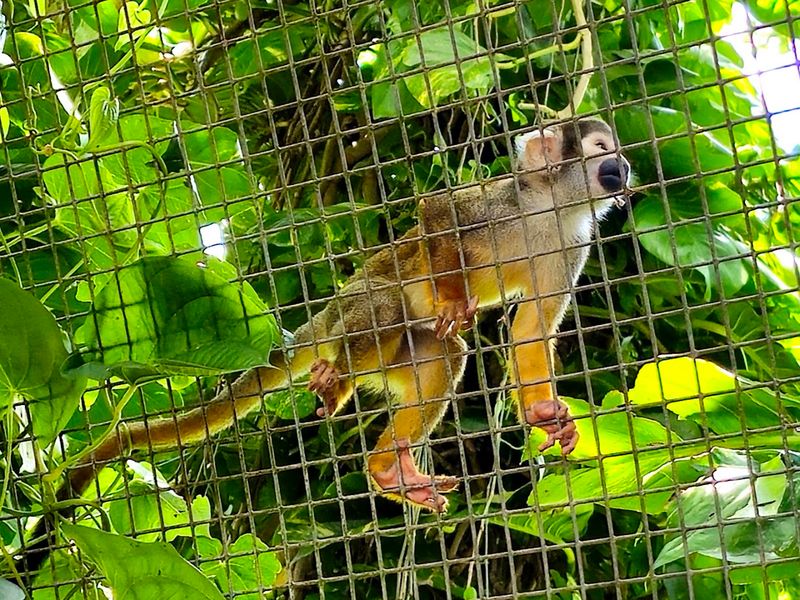
Walk into most zoos and the animals stay behind bars. Here, you’re the one in the cage. Visitors move through screened walkways while monkeys swing freely through 30 acres of tropical hammock above and around you.
The role reversal creates an unsettling feeling, like you’re being studied instead of doing the studying.
Spider monkeys leap overhead. Squirrel monkeys chatter from branches just inches away on the other side of the mesh. Some primates have lived here for generations, completely adapted to this protected forest where they’re the landlords and humans are just passing through their territory.
The facility started in 1933 when a researcher released six monkeys into the hammock to study their behavior. The population grew, and eventually someone built pathways so visitors could observe without disturbing the colony. That original concept still defines the experience today.
Feeding demonstrations happen throughout the day, when staff toss fruit and vegetables to eager troops of monkeys. The animals perform no tricks and follow no commands. They simply exist as they would in the wild, except humans shuffle below them in tunnels, peering up like the exhibit.
It’s perfectly legal and ethically run, but something about being the caged observer feels delightfully backward. You leave questioning who was really watching whom.
4. Fort Jefferson at Dry Tortugas National Park (Key West)
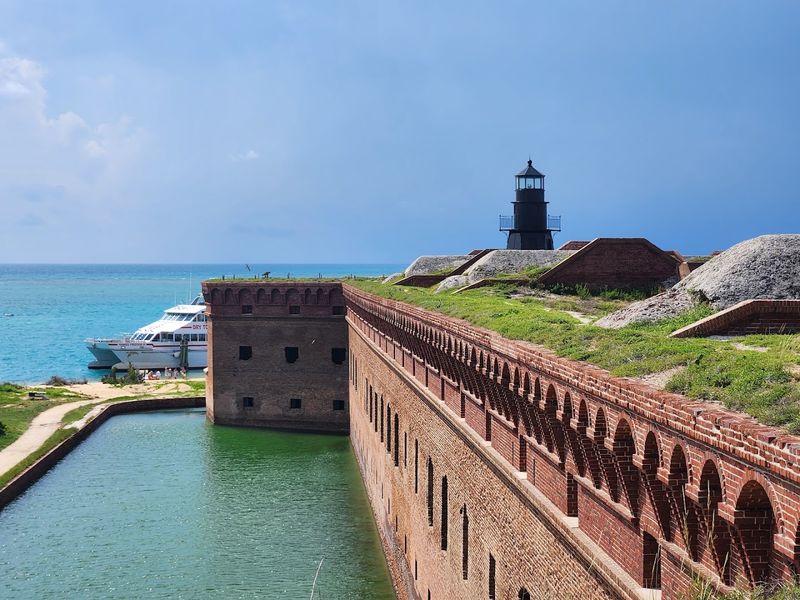
Getting here requires either a two-hour ferry ride or a seaplane flight across open Gulf waters. Fort Jefferson rises from a tiny island 70 miles west of Key West, a massive hexagonal fortress that looks like it belongs in a pirate movie. The isolation makes every visit feel like you’re approaching something forbidden, even though it’s a national park.
Construction began in 1846 but never finished. The fort was designed to hold 450 guns and 1,500 soldiers, but it never saw battle. Instead, it became a prison during the Civil War.
Dr. Samuel Mudd, who treated John Wilkes Booth’s broken leg, served time here under brutal conditions.
Today, you can wander empty corridors, climb spiral staircases, and explore cells where prisoners once suffered in tropical heat. The walls stretch 50 feet high in places, built from 16 million bricks hauled across the ocean. Seabirds nest in the crumbling architecture.
Most visitors come for the snorkeling in the surrounding moat, where tropical fish dart through crystal water. But the fort itself pulls you in with its eerie emptiness. You’ll walk through vast chambers with vaulted ceilings, listening to your footsteps echo off brick walls that have stood abandoned for over a century.
It’s legal to explore, but it feels like trespassing through history.
5. Koreshan State Park (Estero)
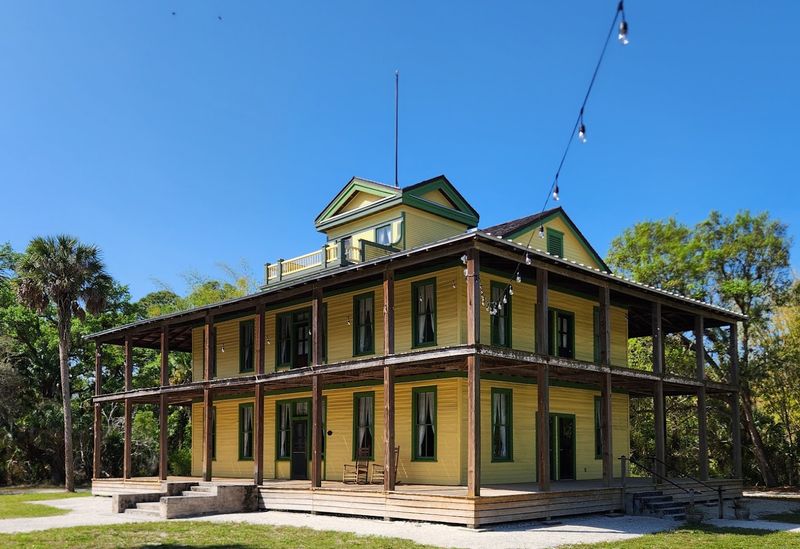
A religious cult once thrived on this land, convinced that humans lived on the inside surface of a hollow Earth with the sun at its center. The Koreshan Unity settled here in 1894, building a self-sufficient community based on celibacy, shared property, and completely inverted cosmology. Walking through their preserved buildings feels like stepping into an alternate reality that someone forgot to erase.
Founder Cyrus Teed changed his name to Koresh and claimed divine revelation. He attracted followers who built homes, workshops, a bakery, and a printing press. They planted tropical fruit groves and created elaborate gardens.
At its peak, the settlement housed about 250 believers.
The community died out slowly as members aged without reproducing. The last four survivors deeded the land to the state in 1961. Now you can tour their meeting hall, dormitories, and workshop buildings, all maintained as they were during the colony’s final years.
Interpretive signs explain their beliefs without mockery, treating the Koreshans as sincere seekers rather than delusional cultists. You’ll see the geodetic survey equipment they used to prove the Earth’s concavity. Their experiments convinced them, even though the rest of the world disagreed.
The park feels haunted by ideas rather than ghosts. These people genuinely believed they lived inside a sphere, and their abandoned settlement stands as a monument to conviction that defied all evidence.
6. Bongoland Ruins at Dunlawton Sugar Mill Gardens (Port Orange)
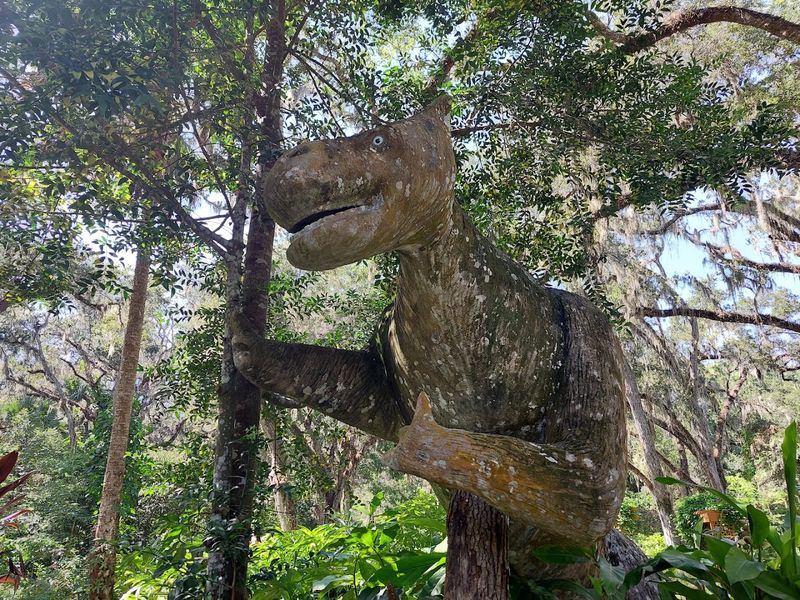
Free botanical gardens usually feature manicured paths and labeled plants. This one hides the moldering remains of a 1950s roadside attraction called Bongoland, where families once paid to see concrete dinosaurs and walk through a fake African village. The dinosaurs still stand, but they’re cracked and faded, slowly disappearing into the overgrown garden like forgotten relics.
The sugar mill ruins date back further, to the 1800s when this land produced cane sugar. Stone walls and the old mill wheel remain, covered in vines and moss. The dinosaurs came later, added by an entrepreneur who thought prehistoric creatures would draw tourists off Highway 1.
Bongoland closed decades ago, but nobody demolished the statues. They just left them standing among the gardens, where they’ve become accidental art installations. A brontosaurus looms over ferns.
A T-rex peers through palmettos, its paint peeling away in chunks.
The gardens themselves are lovely, with winding paths through native and exotic plants. But most visitors come hunting for the dinosaurs, following whispered directions to find each crumbling beast. There’s no official map marking their locations, which makes the search feel like urban exploration.
The whole place operates on donations, maintained by volunteers who seem amused that people care more about decaying concrete dinosaurs than the actual horticulture. It’s completely legal to visit, but stumbling across these forgotten creatures feels like discovering something you weren’t supposed to find.
7. Florida Caverns State Park (Marianna)
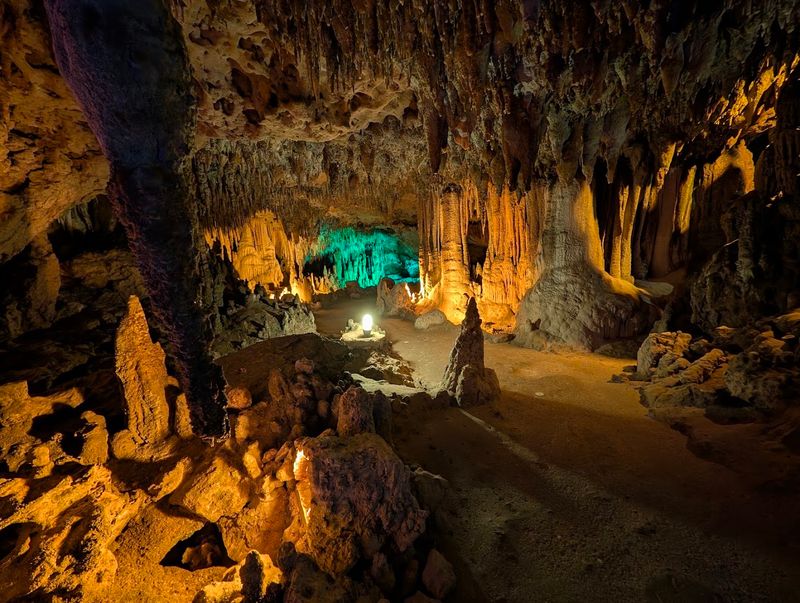
Florida sits on porous limestone riddled with sinkholes and underground rivers, but only one state park offers guided tours through actual show caves. Florida Caverns near Marianna takes visitors down narrow stairways into chambers filled with stalactites, flowstone formations, and pools of standing water. The passages stay tight and the ceilings hang low, making the whole experience feel claustrophobic and thrilling.
Rangers lead small groups through the caverns, pointing out formations with names like the Wedding Cake and the Waterfall. You’ll duck under low overhangs and squeeze through sections where the walls press close. The air smells damp and mineral-rich, and the temperature drops noticeably once you’re underground.
These caves formed over millions of years as acidic water dissolved the limestone. The formations grow incredibly slowly, adding just a cubic inch of rock every hundred years. Some of the columns reach from floor to ceiling, creating natural pillars that look almost architectural.
The tour takes about 45 minutes and involves uneven footing on slippery surfaces. Claustrophobic visitors sometimes turn back at the entrance. The park warns that the caves stay closed during heavy rains when flooding risk increases.
Above ground, the park offers hiking trails, a spring-fed river for kayaking, and picnic areas. But the caves remain the main draw, offering a rare chance to explore Florida’s hidden underground landscape. It’s supervised and safe, but descending into those dim passages still triggers that forbidden thrill of going where you’re not meant to be.
8. Fort East Martello Museum (Key West)
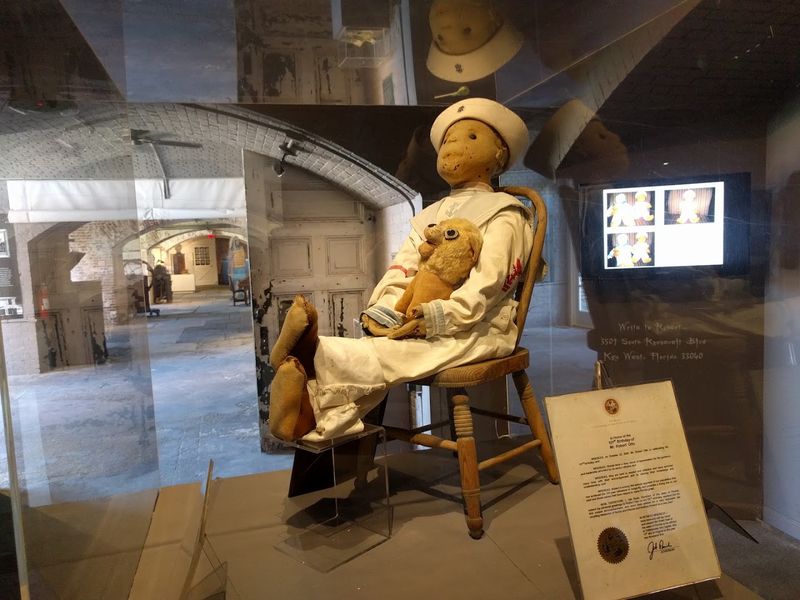
Civil War forts usually house military artifacts and historical displays. This one contains Robert, arguably the most infamous haunted doll in America. Visitors come specifically to see him sitting in his glass case, wearing his sailor suit and clutching his stuffed lion.
The museum warns you to ask permission before taking his photo, and hundreds of apology letters cover the walls from people who claim they didn’t and suffered consequences.
Robert belonged to Key West painter Robert Eugene Otto, who received the doll from a Bahamian servant in 1906. According to legend, the servant practiced black magic and cursed the doll. Young Otto treated Robert like a living companion, and neighbors reported seeing the doll move in the window when the boy wasn’t home.
Otto kept the doll his entire life. After his death, the doll passed to the new owners of the house, who quickly donated him to the museum after experiencing unexplained incidents. Now Robert sits behind glass, his button eyes staring at visitors who file past with a mix of curiosity and genuine unease.
The letters surrounding his case tell stories of bad luck, accidents, and misfortune that people attribute to disrespecting Robert. Some sound genuinely disturbed. Others seem like they’re playing along with the legend.
Either way, standing in front of that case creates an uncomfortable feeling that’s hard to shake.
The rest of the museum features standard historical exhibits, but nobody remembers those. They remember Robert, and whether you believe the stories or not, asking permission from a doll feels appropriately forbidden.
9. Stiltsville Guided Boat Tour (Miami)
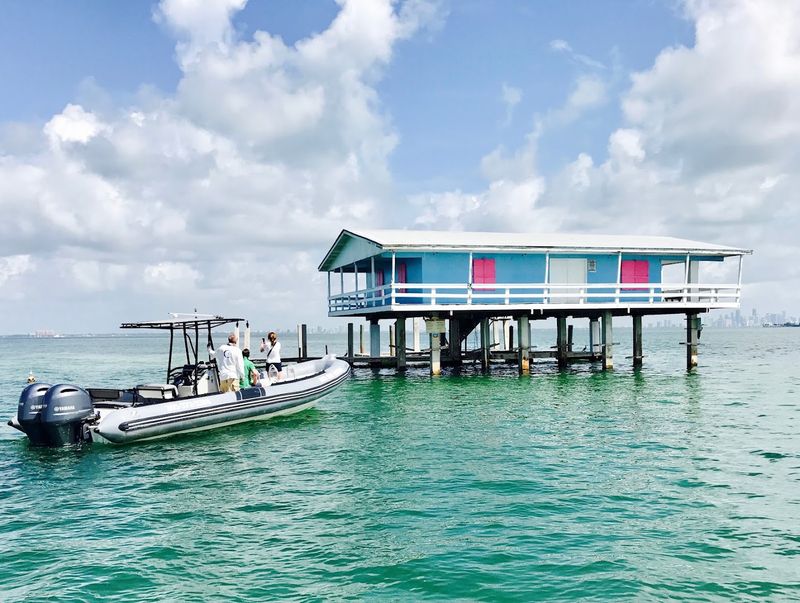
Seven wooden houses stand on pilings a mile offshore in Biscayne Bay, accessible only by boat and completely off-limits to the public. They’re the last remnants of Stiltsville, a community of offshore structures that once numbered over two dozen. Getting close enough to see them requires joining a guided tour, and even then you can’t set foot on the platforms.
Just approaching them feels like you’re trespassing on abandoned property that belongs to ghosts.
The houses started appearing in the 1930s when a fisherman built the first structure just beyond the three-mile limit to sell bait and beer without a license. Others followed, constructing weekend party houses, fishing clubs, and private retreats. For decades, Stiltsville thrived as an anything-goes enclave where Miami’s elite held wild gatherings beyond the reach of land-based law.
Hurricanes destroyed most of the structures over the years. The remaining seven now sit within Biscayne National Park, protected but slowly deteriorating. The National Park Service maintains them minimally while debating their future.
Some want them preserved as historical landmarks. Others argue they should be demolished.
Tour boats circle the structures while guides share stories of legendary parties and famous visitors. You’ll see peeling paint, sagging roofs, and weathered wood that’s held up against decades of salt and storms. The houses look like they could collapse any day, which makes them even more fascinating.
You can’t touch them, can’t board them, can’t even get particularly close. That restriction makes them feel forbidden in the truest sense, even though simply looking is perfectly legal.