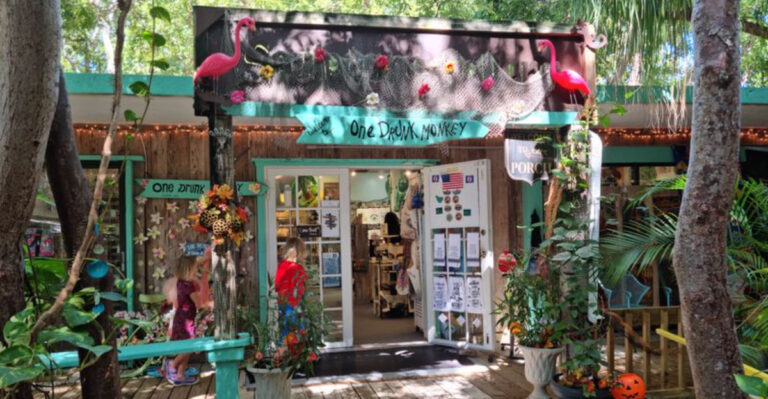
6 Places to Spot Key Deer in February in Florida
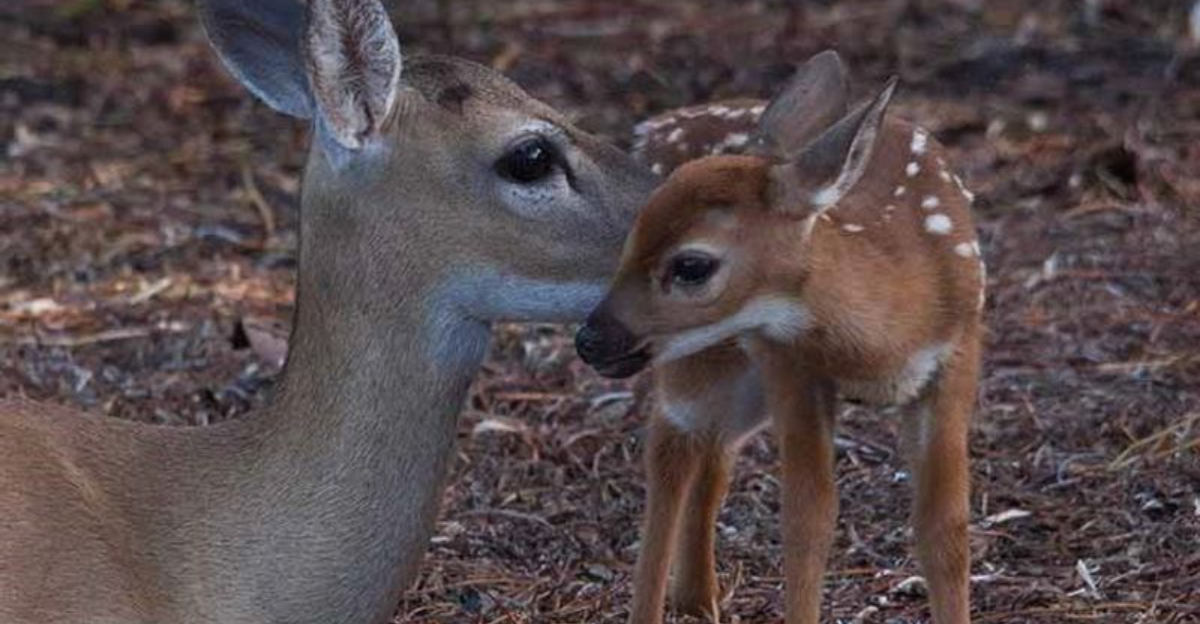
February in the Lower Florida Keys feels like a secret season, when cool breezes and soft golden light make wildlife watching magic. If you have ever hoped to see the tiny, charismatic Key deer up close, this is the time and place to do it. I will show you where to go, when to arrive, and how to watch respectfully so your photos and memories last.
Bring curiosity, patience, and a sense of wonder, because these gentle locals might stroll right past your shoes.
1. National Key Deer Refuge (Big Pine Key)
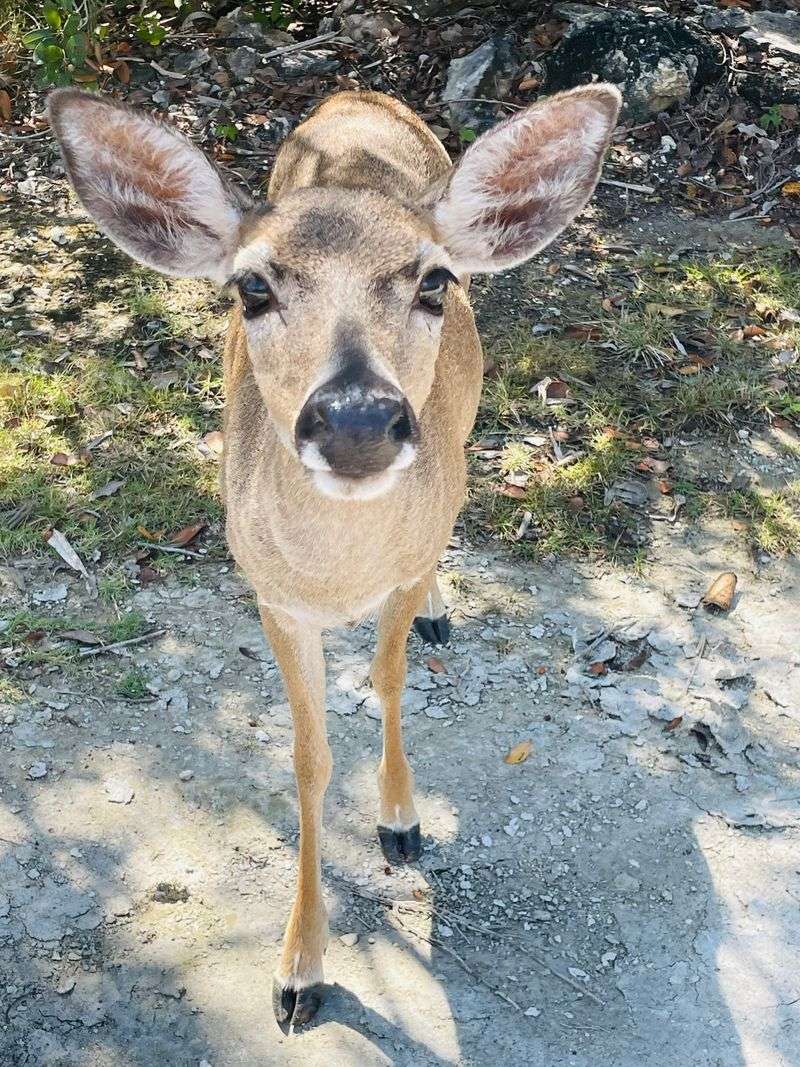
Morning chill and soft light make this refuge feel alive in February. Pine rocklands, freshwater wetlands, and hardwood hammocks create a mosaic where Key deer slip between shadows like shy neighbors. Move slowly, pause often, and you will notice ears twitching among palmettos.
Rangers and trailheads offer maps that steer you toward quiet corners.
Start near habitat edges and look for tracks in sandy limestone soil. Late afternoon brings a second wind, with deer browsing calmly as the sun lowers. Keep distance, use a long lens, and never feed them.
That way, the next visitor gets the same wild moment you did. Parking is easy, and cell coverage helps with navigation.
2. Blue Hole Observation Platform (Big Pine Key)
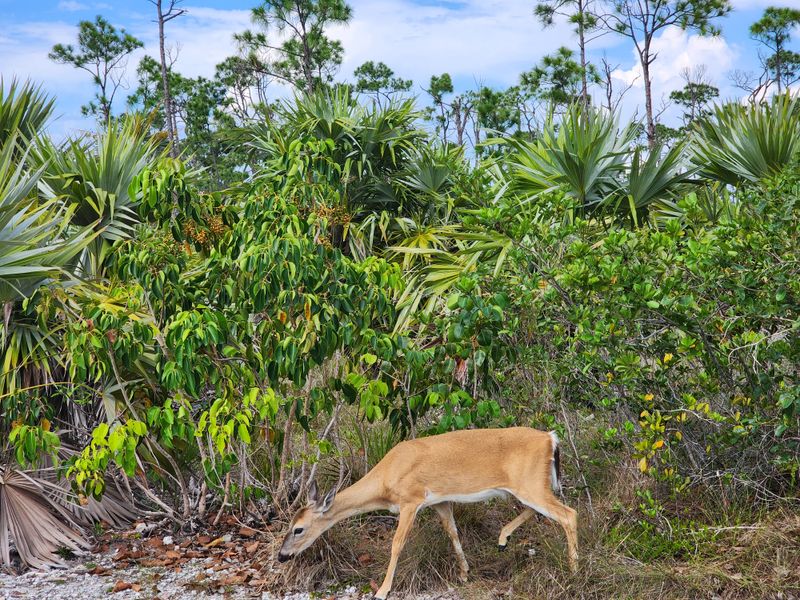
Freshwater is irresistible in the dry season, so this platform becomes a wildlife stage. Scan the shoreline for delicate hoofprints and ripples that hint at movement. Deer often appear in twos or threes, nose-down for a drink, while anhingas dry wings nearby.
Arrive early, speak softly, and your patience will pay off.
Watch the far bank where palmetto shadows meet open water. As the sun warms, deer drift back into cover, so midmorning gets quiet. Return near sunset for another chance.
Keep kids close, respect posted signs, and remember alligators also use this pond. A lightweight tripod, binoculars, and a 200mm lens or more make all the difference here.
3. No Name Key
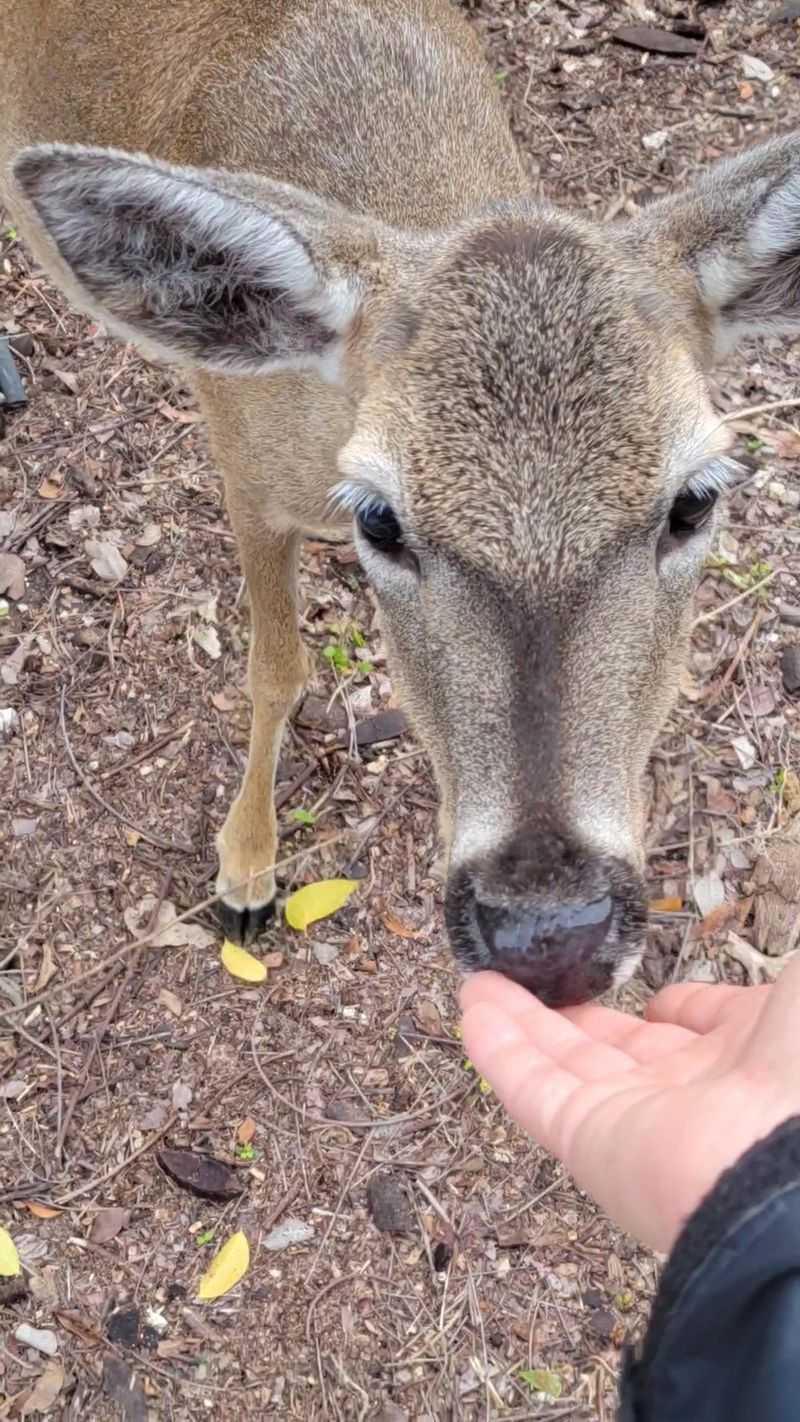
This low key island trades crowds for calm, perfect for slow cruising with windows down. Deer wander roadside verges, pausing to nibble native shrubs and listen for cars. Pull over only where safe, keep lights low, and let them finish crossing.
You will feel like you stumbled into a neighborhood where wildlife sets the rules.
Sunrise and last light are best, when temperatures are gentle and movement peaks. Bring a quiet attitude and a long lens to avoid pressure. Avoid blocking driveways and never approach fawns.
If you miss a sighting, loop again after a short break. The rhythm here rewards those who linger respectfully and let the island breathe.
4. Watson Nature Trail (Big Pine Key)
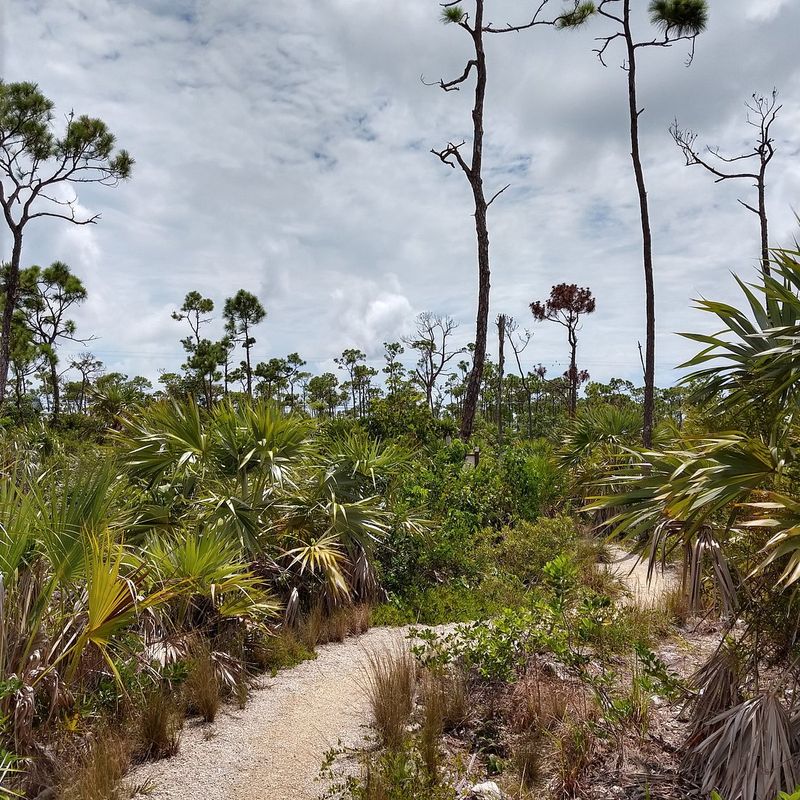
This gentle loop invites a slow, listening walk. Footfalls tap the boardwalk while birds chatter, and then a quiet shape appears between palmettos. Deer browse on low vegetation, pausing to watch you pass.
Step aside, lower your camera, and let them choose the moment. You will learn that silence is a tool.
In February, breezes keep bugs light and scents clear, so deer linger longer. Scan for fresh pellets and clipped leaves along trail edges. Use burst mode sparingly and silence your shutter if possible.
Mornings offer the nicest glow, though cloudy afternoons are wonderfully soft. Finish with a note of gratitude, because this trail delivers peace reliably.
5. Fred C. Manillo Wildlife Trail
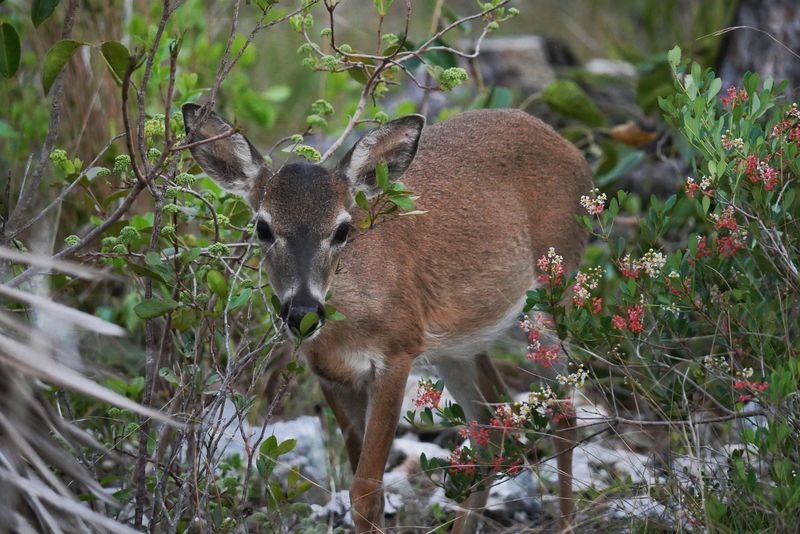
Short but rich, this boardwalk strings together habitats like beads. You can scan far ahead while your footsteps stay quiet on wood planks. Deer often appear where sunlight slips through, sharing space with herons and warblers.
Pause at turns, kneel slightly, and you will see more than you expect. The scale keeps everything intimate.
February’s cooler air means longer grazing sessions, so do not rush. Watch for parallel hoof slots imprinting damp soil near the edges. Keep your distance, yield the right of way, and store food securely.
If crowds gather, step back and let the deer relax. This tiny trail proves great encounters do not require long mileage.
6. Residential Areas of Big Pine Key
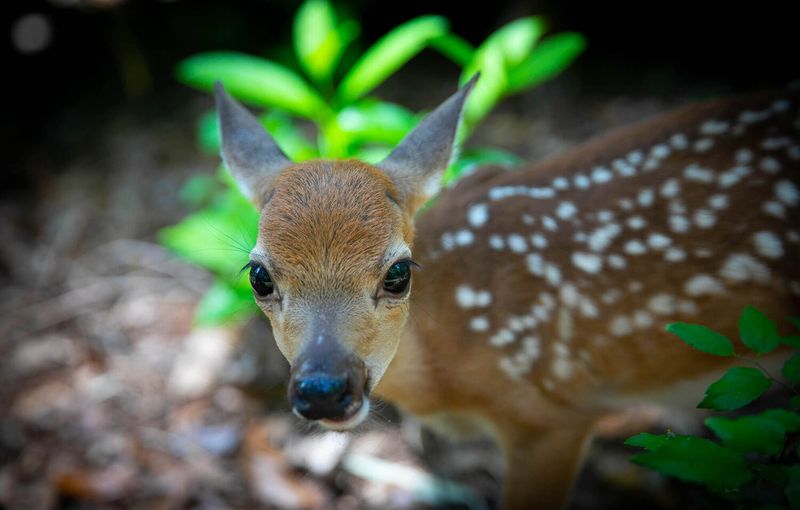
Surprise sightings happen where mailboxes meet sabal palms. Deer wander calmly through neighborhoods, sampling native plants and greeting the day like regulars. Drive slowly, park legally, and watch from the sidewalk.
A telephoto lens preserves space while you capture natural behavior. You will feel like a guest in their everyday routine.
Residents value respectful visitors, so do not feed or touch, and secure trash. Early morning dog walks often reveal quiet herds, especially after cool nights. If you see a fawn, give extra distance and move on.
Keep headlights dim near dusk to prevent collisions. These streets prove wildlife thrives when people practice patience and kindness.