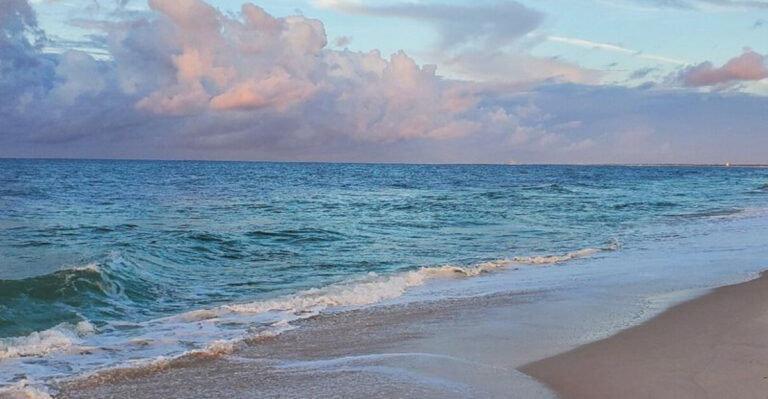
These 10 Florida Lighthouses Look Too Perfect to Be Real
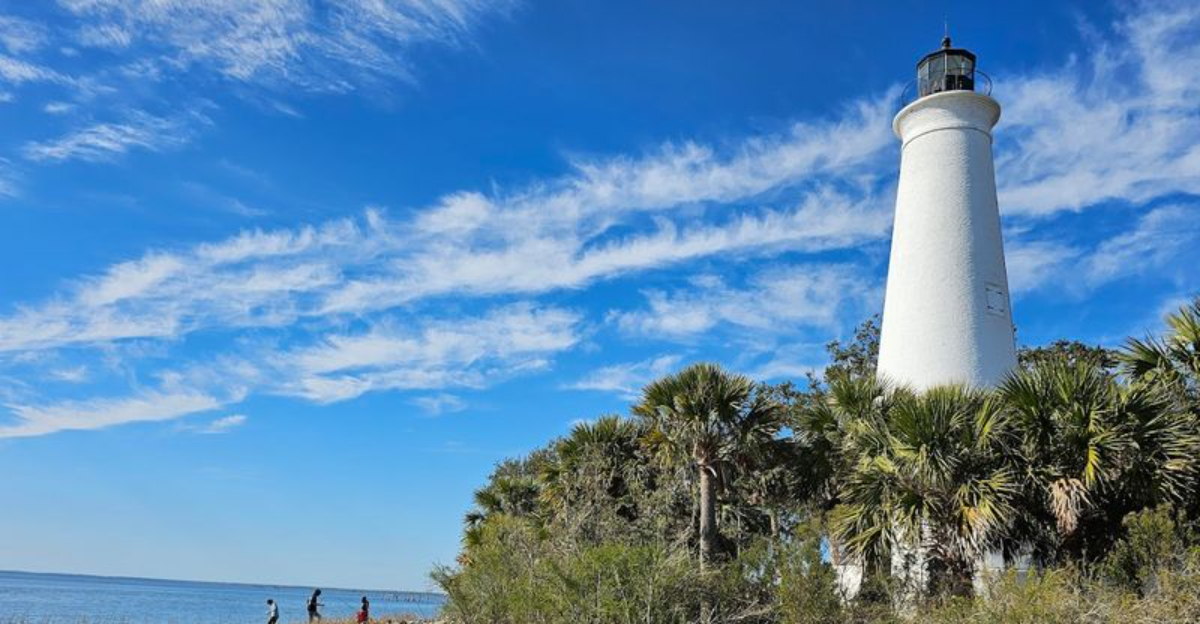
Florida’s coastline is packed with history, storms, and stories that stretch back centuries — and right in the middle of all that drama stand some of the most stunning lighthouses you’ll ever see. From the Gulf Coast to the Atlantic shore, these towers guided sailors through dangerous waters long before GPS existed.
Some survived hurricanes. Some were abandoned and brought back to life.
All of them look like they belong on a postcard. Get ready to meet the ten Florida lighthouses that honestly seem too beautiful to be real.
1. Amelia Island Lighthouse (Fernandina Beach)
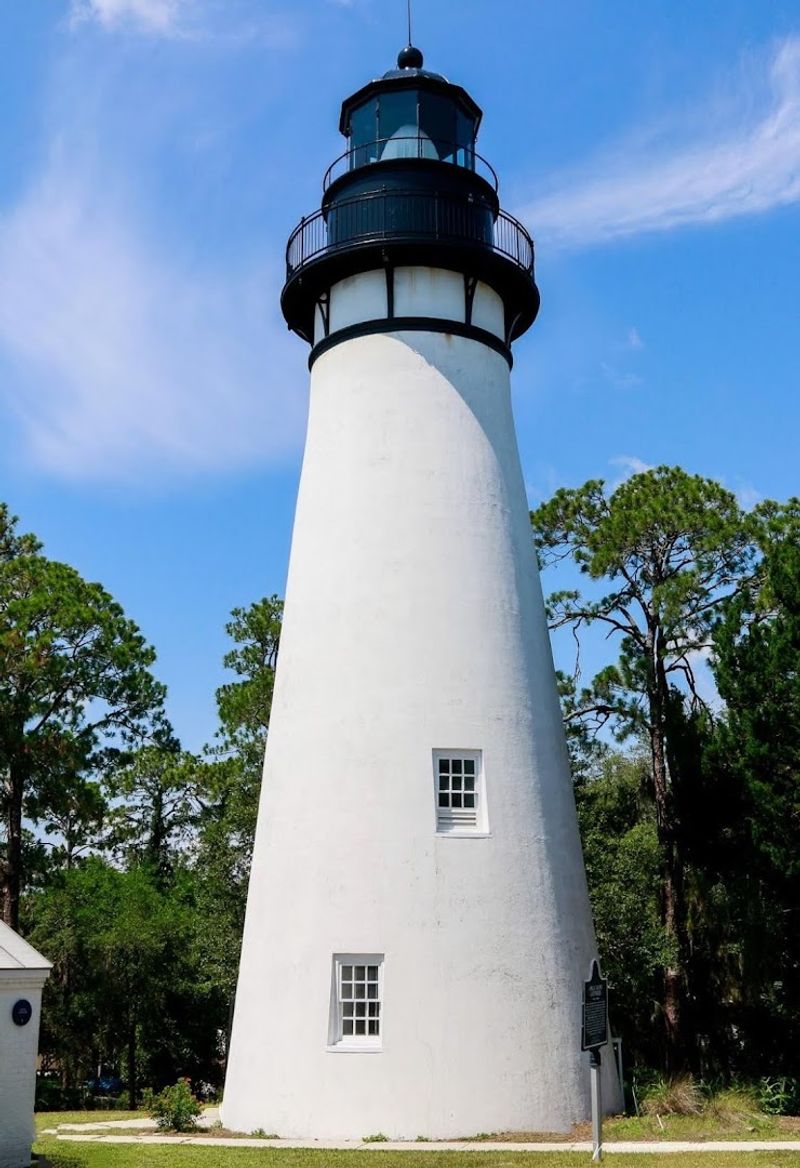
Standing quietly among ancient oaks draped in Spanish moss, the Amelia Island Lighthouse has a kind of storybook charm that makes you stop and stare. It is the oldest lighthouse still operating in Florida, which is a title that carries serious weight when you think about everything this coast has been through.
Hurricanes, wars, shifting politics — this lighthouse has seen it all and still stands tall.
Built in 1838, the tower rises about 64 feet above the ground and sits on a gentle hill, giving it a commanding view over the surrounding landscape. What makes this one feel different from others is how tucked away it seems.
You have to wander through a quiet residential neighborhood in Fernandina Beach to find it, and that hidden-gem quality makes the discovery feel genuinely rewarding.
The lighthouse is still an active aid to navigation, managed by the U.S. Navy and maintained with care.
It does not have a massive museum attached or a busy gift shop — and honestly, that is part of the appeal. Visiting feels like stepping into a slower era.
The grounds are peaceful, and the surrounding neighborhood adds to the old-Florida atmosphere.
Tours are offered on a limited basis, so checking ahead before you visit is a smart move. When tours are available, you can climb the spiral staircase and take in views that stretch across Amelia Island and the surrounding waterways.
The keeper’s house nearby adds to the visual charm, giving the whole property a complete, well-preserved look that photographers absolutely love. If you are road-tripping along Florida’s northern Atlantic coast, this is one stop that earns every minute of the detour.
2. St. Marks Lighthouse (St. Marks)
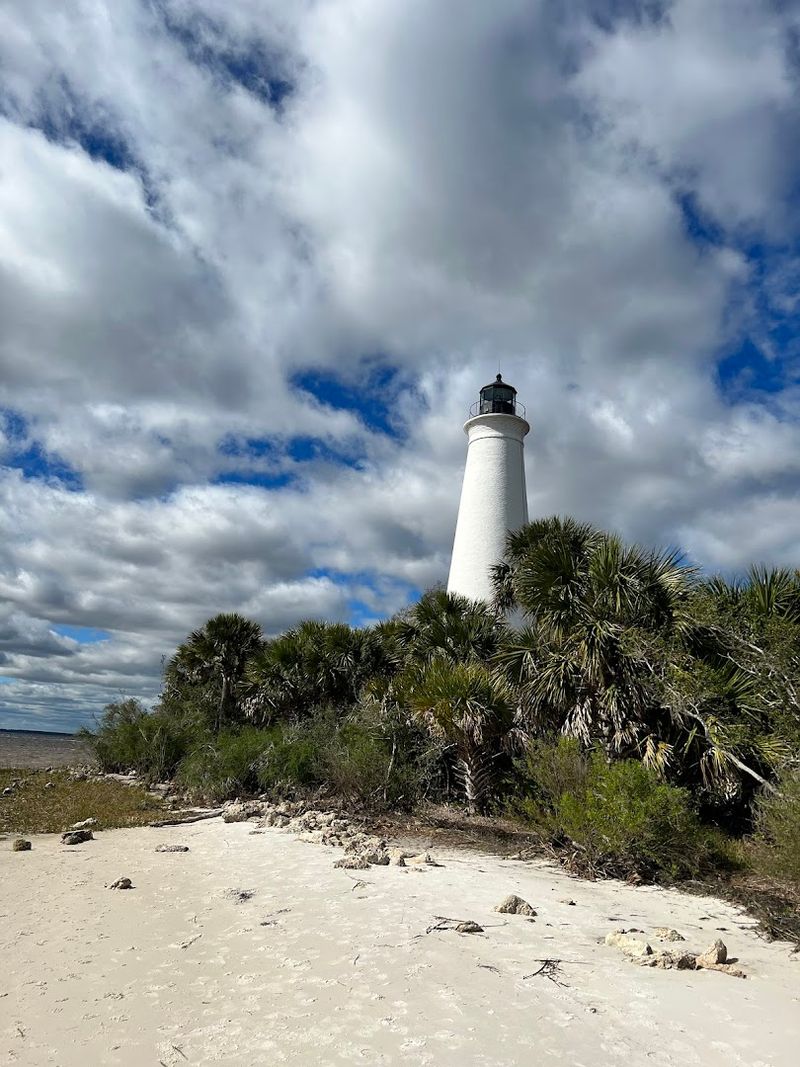
There is something almost surreal about pulling up to St. Marks Lighthouse and realizing it is sitting right in the middle of a wildlife refuge. Herons wade nearby.
Alligators drift through the marsh. And rising above all of it is this brilliant white tower that has been guiding ships since the 1830s.
The combination feels like nature and history decided to team up and create something unforgettable.
The current structure, completed in 1842, is the third lighthouse to stand at this location — the first two were lost to structural problems and storm damage. That persistence says a lot about how important this beacon was to the Gulf Coast trade routes running through Apalachee Bay.
Ships carrying cotton and other goods depended on this light to navigate safely into port.
Today, St. Marks Lighthouse sits within the St. Marks National Wildlife Refuge, which means the drive to reach it takes you through some genuinely spectacular Florida wilderness. Expect to share the road with deer, migratory birds, and the occasional bobcat sighting if you are lucky.
The refuge itself is worth exploring before or after you visit the lighthouse.
The tower is not regularly open for climbing, but the exterior and surrounding grounds are accessible and absolutely worth the trip. At sunrise or sunset, the reflection of the white tower in the calm refuge waters creates a scene that looks almost too composed to be real.
Wildlife photographers and lighthouse enthusiasts both make pilgrimages here, and once you see it in person, you will completely understand why. Pack bug spray, wear comfortable shoes, and bring a camera — you will want to remember every angle of this one.
3. Cape Canaveral Lighthouse (Cape Canaveral Space Force Station)
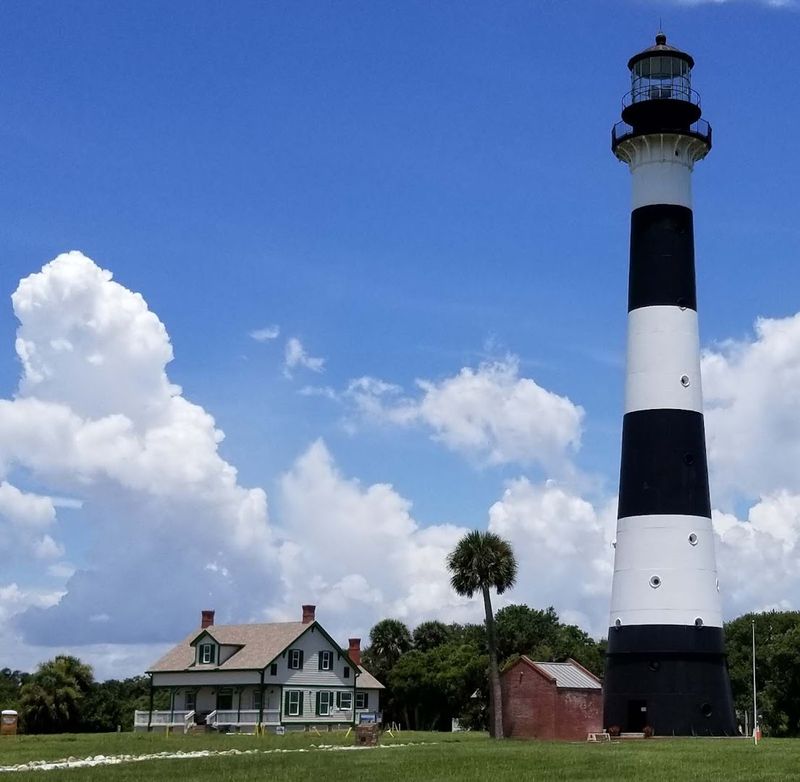
Only in Florida can you find a lighthouse that shares its backyard with rocket launchpads. Cape Canaveral Lighthouse stands on one of the most historically loaded pieces of land in the entire country, where centuries of maritime history collide head-on with the space age.
The contrast is genuinely jaw-dropping — an 1868 cast-iron tower painted in bold black and white stripes, rising against a skyline that has launched humans to the moon.
At 151 feet tall, this is one of the tallest lighthouses in Florida, and its distinctive banded pattern makes it one of the most recognizable. It was built to replace an earlier lighthouse that proved too short to be effective, and the engineers who designed it clearly got the job right.
The light from this tower guided ships safely along one of the busiest stretches of the Atlantic coast for generations.
Because it sits inside an active military installation, visiting requires a bit of planning. Tours are offered through the Cape Canaveral Lighthouse Foundation, and you will need to go through a security checkpoint to access the base.
That extra step weeds out casual visitors and makes the experience feel more exclusive — like you are getting access to something most people miss entirely.
Climbing to the top rewards you with views that stretch across the Kennedy Space Center complex and out over the Atlantic. On a clear day, you can see for miles in every direction.
The keeper’s quarters have been carefully restored, adding historical texture to the visit. Whether you are a space nerd, a history lover, or just someone who appreciates a stunning lighthouse, Cape Canaveral delivers on every level.
Book your tour early — spots fill up fast.
4. Cape Florida Lighthouse (Key Biscayne)
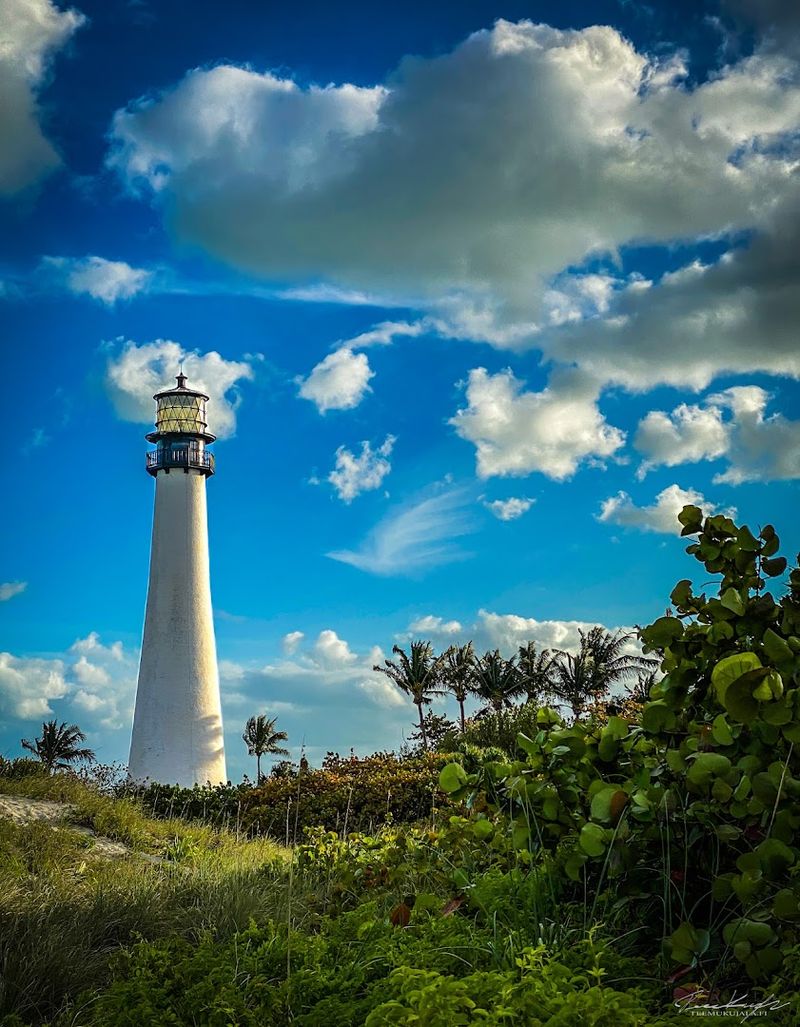
Perched at the southern tip of Key Biscayne inside Bill Baggs Cape Florida State Park, the Cape Florida Lighthouse has one of the most dramatic settings of any lighthouse in the state. Turquoise water on one side, swaying palms on the other, and a brilliant white tower climbing 95 feet into the Florida sky — it genuinely looks like a painting.
First lit in 1825, it holds the distinction of being the oldest standing structure in Miami-Dade County.
The history here is not just scenic — it is intense. During the Second Seminole War in 1836, the lighthouse was attacked and set on fire, and the keeper barely survived by hiding on the iron deck at the top while the wooden staircase burned below him.
A U.S. Navy ship eventually came to the rescue.
That story alone gives this lighthouse a layer of drama that most historic buildings can only dream of matching.
After years of disuse and decay, the lighthouse was fully restored in the 1990s and reopened to the public as part of the state park. Rangers lead guided tours up the spiral staircase on most days, and the view from the top is absolutely worth the climb.
You can see Biscayne Bay, the Atlantic Ocean, and the Miami skyline all at once from up there.
The surrounding park is a destination on its own, with a beautiful beach, a restored keeper’s cottage, and a concession stand serving Cuban food that locals swear by. Weekends get busy, so arriving early is a smart strategy.
Whether you climb to the top or just walk the grounds, Cape Florida Lighthouse delivers the kind of experience that sticks with you long after you leave.
5. Egmont Key Lighthouse (near St. Petersburg)
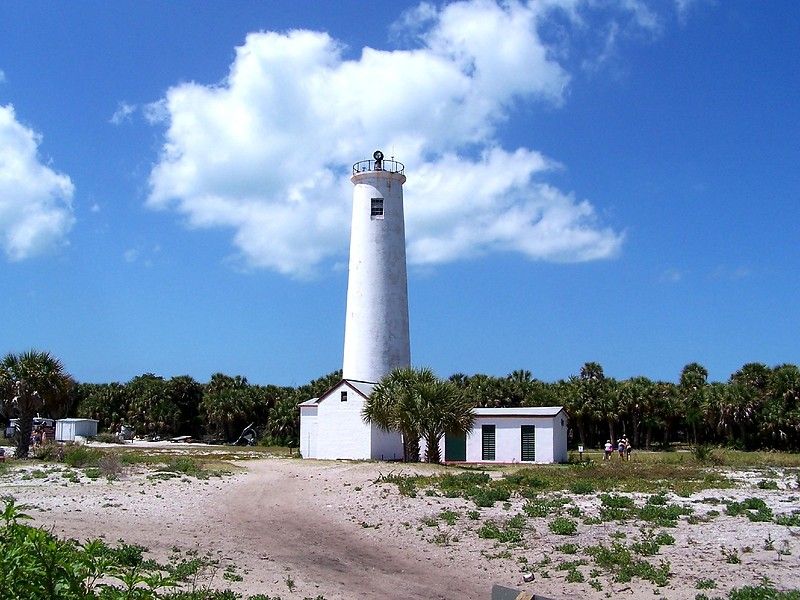
Getting to Egmont Key requires a boat, and that effort is exactly what keeps this lighthouse feeling like a true secret. Sitting on a small island at the mouth of Tampa Bay, the Egmont Key Lighthouse has been guiding ships through one of Florida’s busiest shipping channels since 1858.
The island itself is a wildlife refuge and state park, home to gopher tortoises, shorebirds, and the kind of unspoiled Gulf scenery that feels increasingly rare.
The lighthouse stands about 87 feet tall and has a no-nonsense brick construction that speaks to its purely functional origins. Unlike some of Florida’s more elaborately designed towers, Egmont Key keeps things simple — and somehow that simplicity makes it even more striking against the backdrop of crystal-clear Gulf water and sky.
The contrast between the white tower and the vivid blue surroundings is almost unrealistically photogenic.
Reaching the island is part of the adventure. Ferry services operate from Fort De Soto Park and from St. Pete Beach, making it a popular day trip for locals in the know.
Once you arrive, you can explore the ruins of Fort Dade, a Spanish-American War era military installation that adds another unexpected layer of history to the visit. The combination of lighthouse, fort ruins, and pristine beach makes Egmont Key unlike any other lighthouse destination in Florida.
Swimming, snorkeling, and shelling are all popular activities on the island, so packing a beach bag alongside your camera is a great call. The lighthouse itself is not open for climbing, but walking around its base and taking in the surroundings is rewarding enough.
Sunset views from Egmont Key are legendary among Tampa Bay locals — and once you experience one, you will completely understand the hype.
6. Ponce de Leon Inlet Lighthouse & Museum (Ponce Inlet)
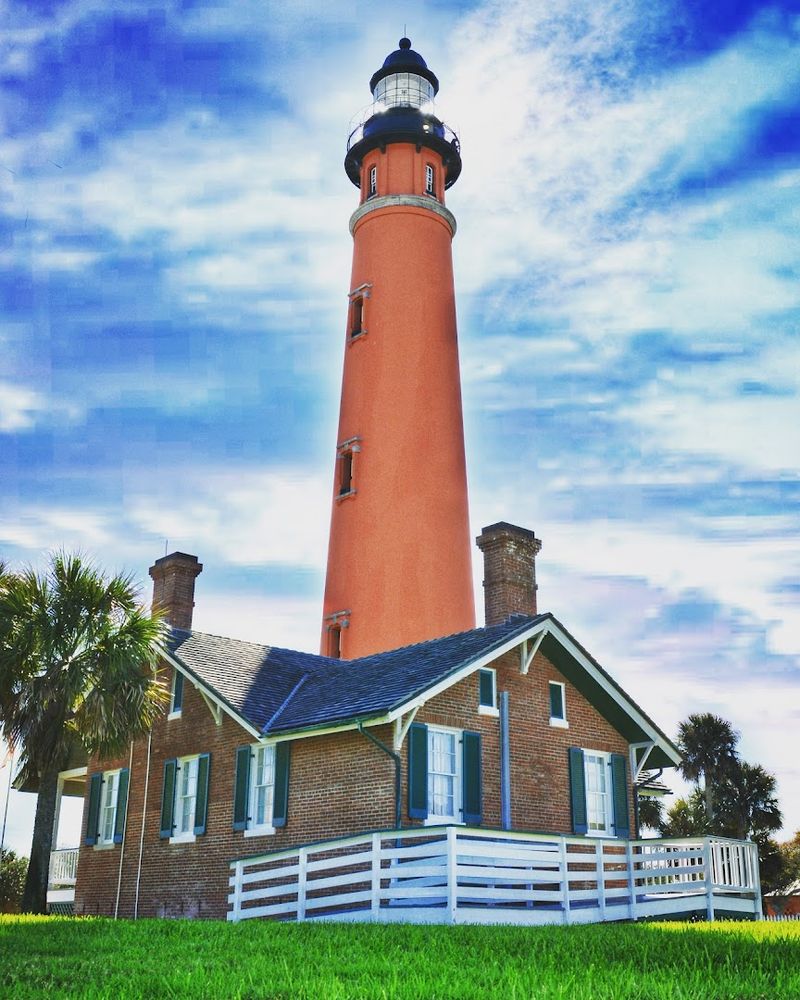
At 175 feet tall, the Ponce de Leon Inlet Lighthouse is not just the tallest lighthouse in Florida — it is the second tallest in the entire United States. That is not a small claim.
When you stand at its base and tilt your head back to look up, the sheer scale of this red brick tower is genuinely humbling. Built in 1887 after years of construction delays and political drama, it finally got the job done and has been doing it ever since.
The lighthouse complex is one of the most well-preserved in the country. Three restored keeper’s cottages surround the tower, and together they make up a National Historic Landmark site that draws visitors from across the country.
The Ponce Inlet Lighthouse and Museum does an exceptional job of bringing the maritime history of Florida’s central Atlantic coast to life, with exhibits covering everything from early lighthouse technology to local shipwrecks.
Climbing the 203 steps to the top is a workout, but the payoff is spectacular. From the lantern room gallery, you can see the Atlantic Ocean stretching to the horizon in one direction and the Halifax River winding inland in the other.
On a clear day, Daytona Beach is visible to the north, and the view south rolls over undeveloped coastline that still looks remarkably wild.
The museum also houses the original Fresnel lens that once powered the light — a stunning piece of 19th-century optics that looks more like a sculpture than a piece of equipment. Ponce Inlet itself is a charming small town worth exploring after your visit.
Seafood restaurants, a quiet marina, and laid-back local energy make the whole area a genuinely satisfying Florida day trip.
7. St. Augustine Lighthouse & Maritime Museum (St. Augustine)
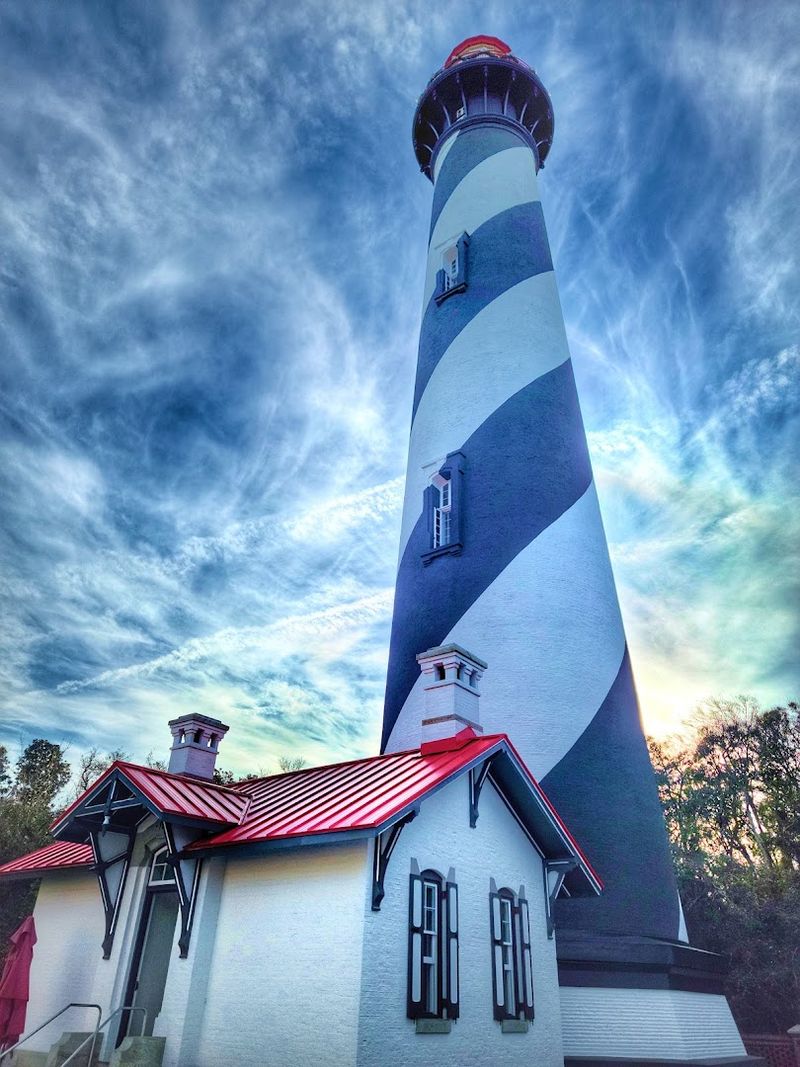
Few lighthouses in America carry as much weight as the one standing in St. Augustine. The city itself is the oldest continuously occupied European settlement in the United States, and the lighthouse fits right into that deep historical identity.
The current tower, completed in 1874, replaced an earlier Spanish watchtower that had guided mariners into the inlet for centuries before it. Standing at 165 feet with its signature black and white spiral stripe, it is one of the most visually distinctive lighthouses in the country.
The St. Augustine Lighthouse and Maritime Museum is not just a pretty tower — it is a full-scale heritage experience. The beautifully restored Victorian keeper’s house serves as the main museum building, packed with exhibits on local maritime history, lighthouse technology, and the lives of the keepers who lived and worked here.
The museum also runs a working maritime archaeology program that has recovered artifacts from shipwrecks around the Florida coast.
Climbing the 219 steps to the top is a rite of passage for anyone visiting St. Augustine. The spiral staircase winds upward inside the cast-iron tower, and the view from the top encompasses the Matanzas Bay, the historic downtown, and the open Atlantic.
Sunrise climbs are especially popular and can be arranged through the museum — watching the sun come up over the ocean from that height is a memory you will not shake easily.
The lighthouse has also developed a reputation as one of Florida’s most haunted locations, and the museum leans into that with nighttime ghost tours that consistently sell out. Whether you are there for history, views, ghost stories, or all three, St. Augustine Lighthouse delivers an experience that feels completely singular.
Book tickets in advance — this one stays busy year-round.
8. Cape St. George Lighthouse (St. George Island / Eastpoint)
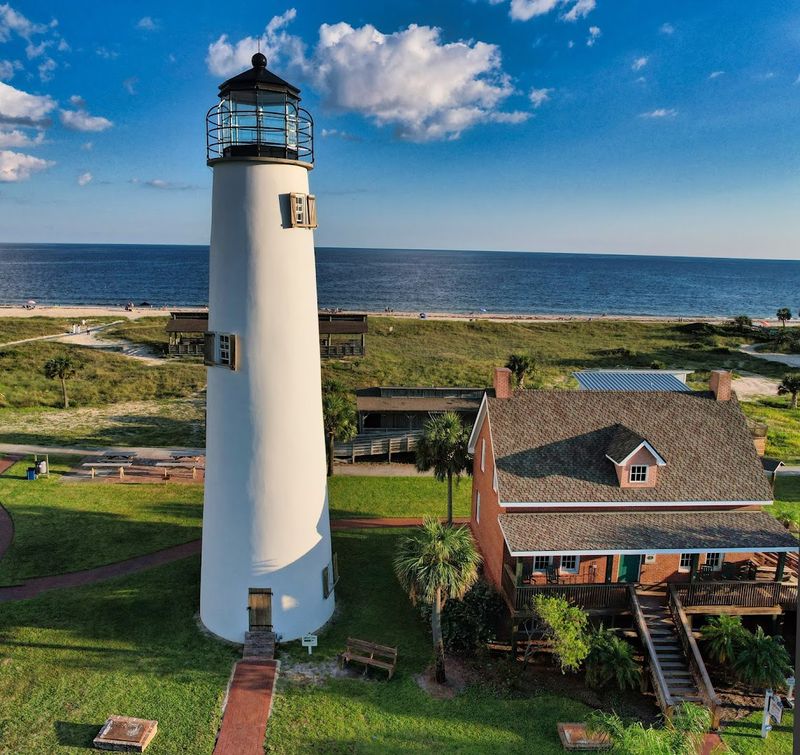
The story of Cape St. George Lighthouse is one of the most dramatic in all of Florida lighthouse history — and that is saying something in a state full of dramatic lighthouse stories. The original tower toppled into the Gulf of Mexico in 2005 after years of erosion slowly ate away the island beneath it.
The collapse was caught on video and became one of those jaw-dropping moments that people who love lighthouses still talk about. But here is the remarkable part: it was rebuilt.
Using original bricks recovered from the water and shoreline, volunteers and preservationists reconstructed the lighthouse on higher, more stable ground on St. George Island. The restored tower was completed in 2008 and now stands as one of the most inspiring comeback stories in Florida preservation history.
Seeing it in person, knowing what it went through to still be standing, gives the visit an emotional weight that few other lighthouse experiences can match.
St. George Island is a beautiful, low-key barrier island that has managed to stay far less developed than many of Florida’s coastal destinations. The beaches here are consistently ranked among the best in the state, and the surrounding area has a relaxed, unhurried atmosphere that feels like old Florida at its finest.
Getting to the lighthouse involves a walk or bike ride through some gorgeous island scenery.
You can climb the restored tower during open hours, and the views from the top stretch across the Gulf and the surrounding barrier island chain in a way that feels genuinely expansive. The keeper’s cottage has also been restored and serves as a small museum with exhibits on the lighthouse’s turbulent history.
This is one of those places that rewards the effort it takes to reach it in every possible way.
9. Jupiter Inlet Lighthouse (Jupiter)
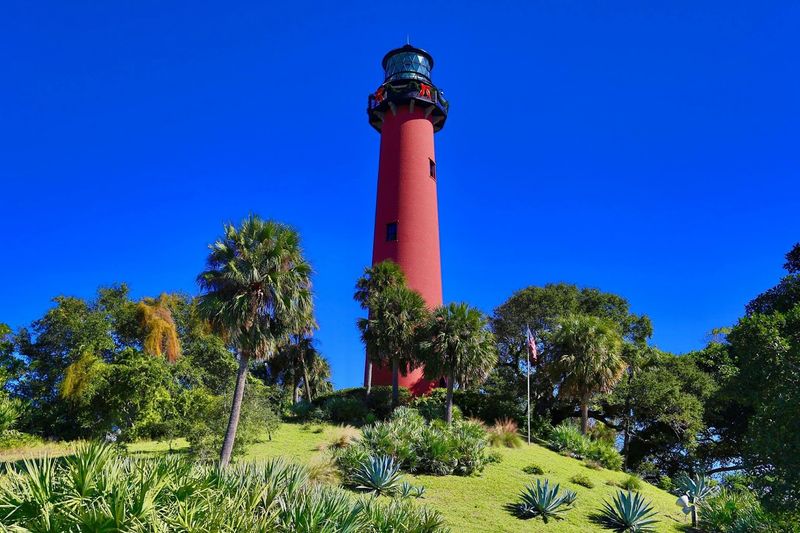
Bright red and impossible to miss, the Jupiter Inlet Lighthouse has been one of the most recognizable landmarks on Florida’s southeast coast since it first lit up in 1860. That vivid brick-red color is not painted on — it is the natural tone of the Florida clay bricks used in its construction, darkened and deepened by more than 160 years of sun, salt air, and coastal weather.
Standing at 108 feet, it commands the inlet with a quiet confidence that makes perfect sense once you learn how long it has been on the job.
The lighthouse sits at the confluence of the Loxahatchee River and the Jupiter Inlet, surrounded by some of the most beautiful water scenery in South Florida. Dolphins are frequently spotted in the waters below, and the surrounding Riverbend Park and natural areas give the whole site a lush, unspoiled quality.
It is the kind of place where you arrive planning to spend an hour and end up staying most of the afternoon.
The Loxahatchee River Historical Society manages the lighthouse and the adjacent museum, which covers the natural and cultural history of the region with genuine depth. Exhibits touch on the Seminole Wars, early Florida settlers, and the long line of keepers who kept the light burning through some of the nastiest storms the Atlantic coast has ever produced.
The museum building itself is housed in a handsome historic structure that adds to the overall atmosphere.
Climbing the lighthouse is available during open hours and involves a manageable spiral staircase that leads to panoramic views of the inlet, the Atlantic, and the surrounding residential and natural landscape.
Jupiter is a wonderful town to explore after your visit — great waterfront restaurants, a laid-back vibe, and easy access to some of the best fishing in Florida make it a complete destination.
10. Key West Lighthouse (Key West)
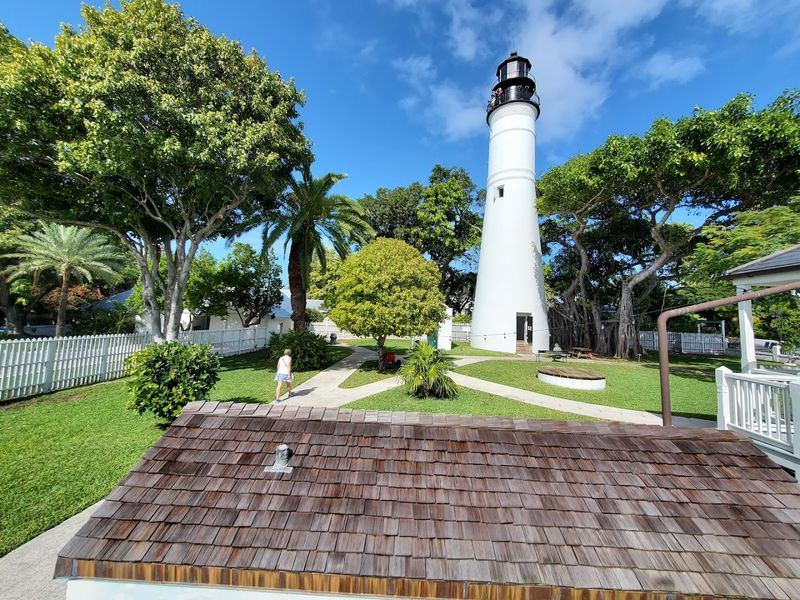
Key West is already a place that feels like it operates by its own rules, and the lighthouse fits right into that energy.
Sitting right in the heart of Old Town, surrounded by Victorian-era homes, bougainvillea, and the general organized chaos of the Conch Republic, the Key West Lighthouse is one of the few in Florida that you can stumble across on a casual neighborhood walk.
That accessibility is part of what makes it so charming — no long drives or boat rides required.
The current tower was built in 1848 after an earlier lighthouse was destroyed by a hurricane — a very on-brand Florida origin story. Standing 86 feet tall, it guided ships through the treacherous reef systems surrounding the Keys for over a century.
Key West was once one of the wealthiest cities in the United States, largely because of the salvage industry built around those same reefs, so the lighthouse played a central role in the economic life of the city.
The Key West Lighthouse Museum is operated by the Key West Art and Historical Society and does a wonderful job of capturing the quirky, layered history of both the lighthouse and the city.
The keeper’s quarters have been transformed into exhibit space covering everything from the lighthouse keeper’s daily life to the colorful maritime history of the Florida Keys.
The exhibits are well-curated and genuinely interesting — not the kind of dusty display cases you might expect.
Climbing the 88 steps to the top puts you above the treetops of Old Town, offering a perspective on Key West that most visitors never get to see. The view of the historic district from up there, with the Gulf on one side and the Atlantic on the other, is one of those moments that reframes the whole island for you.
Do not skip this one just because you are busy exploring Duval Street.