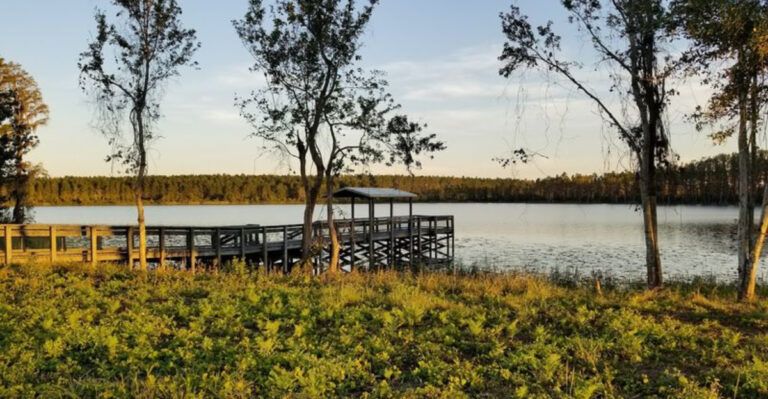
Swinging Bridges, Waterfalls, and Treehouse Trails Await at This Magical Florida Escape
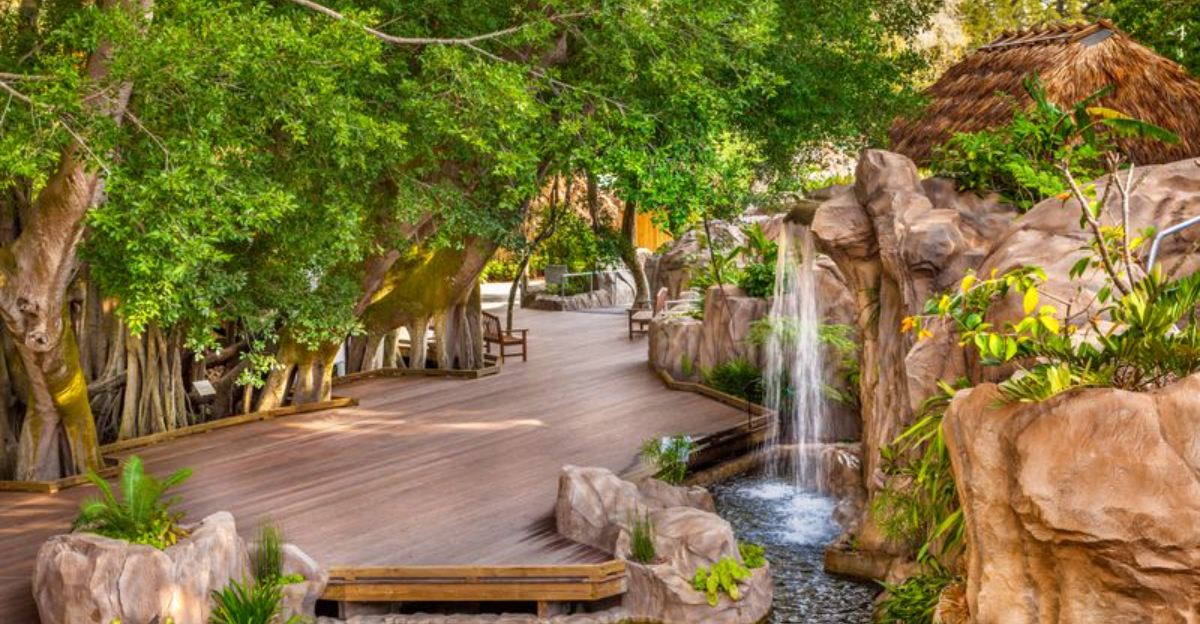
Tucked inside Sarasota’s Marie Selby Botanical Gardens, the Children’s Rainforest Playground transforms a typical afternoon into a mini jungle adventure your kids won’t stop talking about. This compact yet wonderfully designed play area brings the magic of a tropical rainforest right to downtown Sarasota, complete with bridges that sway beneath little feet, cascading water features, and elevated pathways that wind through lush greenery. Parents love it because it combines nature education with high-energy play, while kids just know it’s way cooler than any regular playground they’ve ever climbed on.
1. Canopy Walkways That Make Kids Feel Like Explorers
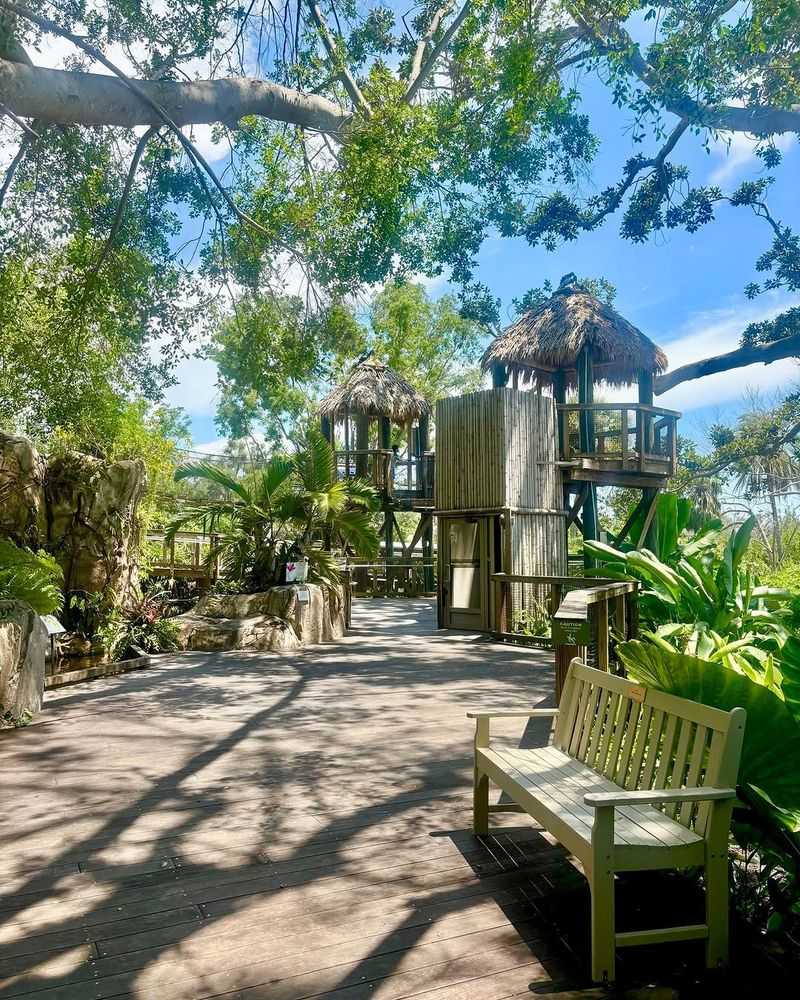
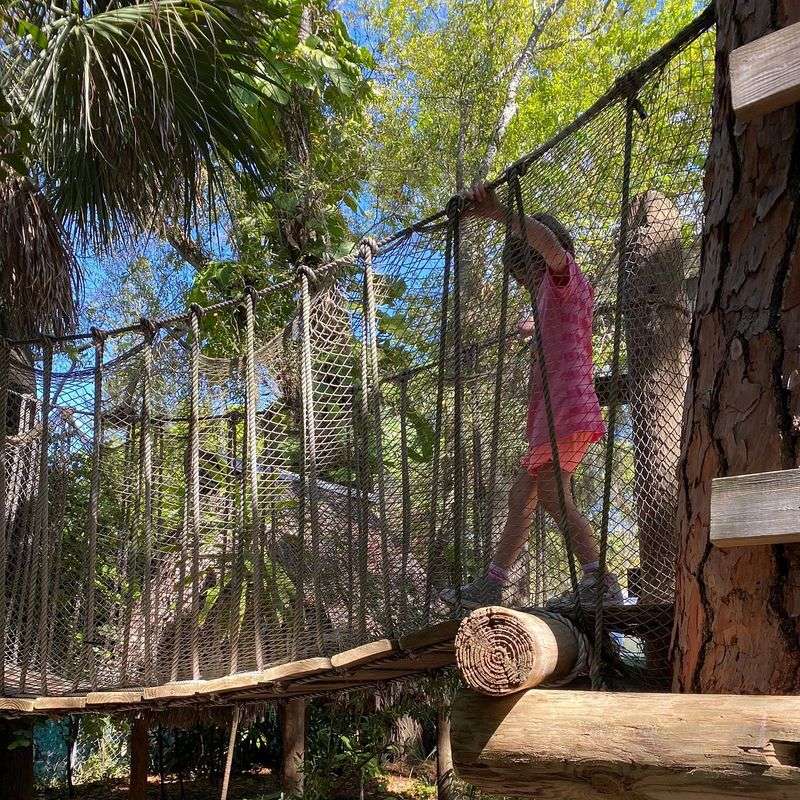
Walking through the air on wooden pathways gives children that rush of excitement usually reserved for actual rainforest expeditions. The elevated trails wind between tropical plants and towering palms, placing kids at eye level with leaves and branches they’d normally only see from below. It’s designed low enough to keep parents from panicking but high enough to make every step feel like a real adventure.
These walkways connect different play zones throughout the space, encouraging constant movement and exploration. Kids naturally transition from one activity to another without realizing they’re getting a serious workout. The pathways also provide fantastic photo opportunities with the botanical garden’s stunning backdrop framing every shot.
Safety rails line both sides, but the design maintains that thrilling sensation of being up in the trees. Younger children gain confidence with each crossing while older kids pretend they’re scientists studying the canopy ecosystem. The shaded sections offer relief from Florida’s intense sun, making this feature comfortable even during warmer months.
Parents appreciate being able to follow along at ground level while maintaining clear sight lines to their adventurers above. The integration with the surrounding gardens means educational moments happen naturally as families identify plants and spot butterflies together.
2. Interactive Water Features That Beat the Florida Heat
Water flows through multiple levels of this playground, creating miniature waterfalls that fascinate children and provide natural cooling. Unlike typical splash pads that drench everything in sight, these features offer gentler interaction that keeps kids engaged without leaving them completely soaked. The sound of trickling water adds authentic rainforest ambiance that makes the whole experience more immersive.
Children can redirect small streams, experiment with water flow, and watch how it moves through carved channels. This hands-on play teaches basic physics concepts while feeling like pure fun. The water features stay active throughout operating hours, maintaining that refreshing atmosphere even when temperatures climb.
Strategic placement near shaded areas means kids can cool down without standing in direct sunlight. Parents often bring towels just in case, though most children dry quickly in Florida’s humidity. The water source is treated and circulated, addressing hygiene concerns that come with public water play.
Rocks and natural materials surround the water elements, reinforcing the rainforest theme while providing seating for adults. Toddlers love splashing their hands in the shallow pools while older kids engineer elaborate water experiments. On particularly hot days, these features become the playground’s most popular attraction, drawing crowds of heat-exhausted families seeking relief.
3. Swinging Bridge Adventures Across the Garden
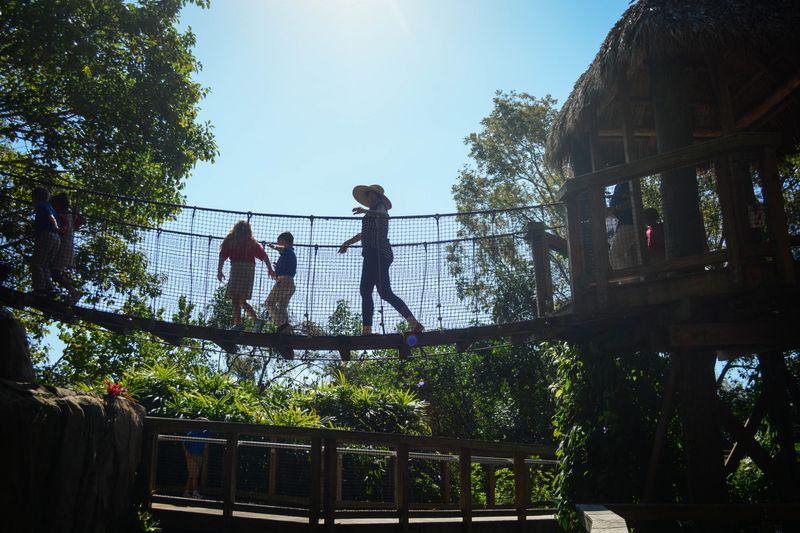
Nothing captures childhood imagination quite like a bridge that moves beneath your feet. The swinging bridge at this playground delivers that perfect combination of mild challenge and absolute safety that keeps children coming back for repeat crossings. Sturdy rope construction and reliable anchoring ensure parents can relax while kids test their balance and coordination.
Each crossing requires focus and body awareness, helping children develop important motor skills without feeling like exercise. The gentle sway responds to every step, creating sensory feedback that enhances spatial awareness. Groups of kids often coordinate their movements, learning teamwork as they navigate together.
The bridge connects two popular play areas, making it a natural pathway rather than just a standalone attraction. This design encourages repeated use throughout each visit as children move between activities. Surrounded by botanical beauty, even the wait for a turn becomes pleasant as families admire nearby plants and flowers.
Younger children sometimes need encouragement for their first crossing, but confidence builds quickly with each successful trip. The achievement of making it across independently becomes a proud moment many kids want to share immediately. The bridge’s moderate length provides enough challenge without overwhelming nervous newcomers, striking that ideal balance for mixed-age groups playing together.
4. Treehouse-Style Platforms for Imaginative Play
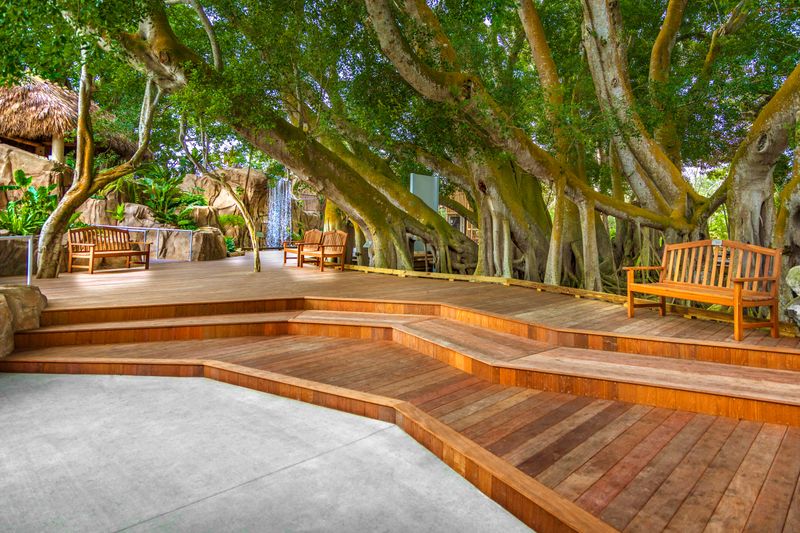
Elevated platforms scattered throughout the playground transform into whatever children imagine them to be. One moment they’re jungle research stations, the next they’re pirate lookouts scanning for treasure. The open design allows for countless play scenarios while maintaining visibility for supervising adults below.
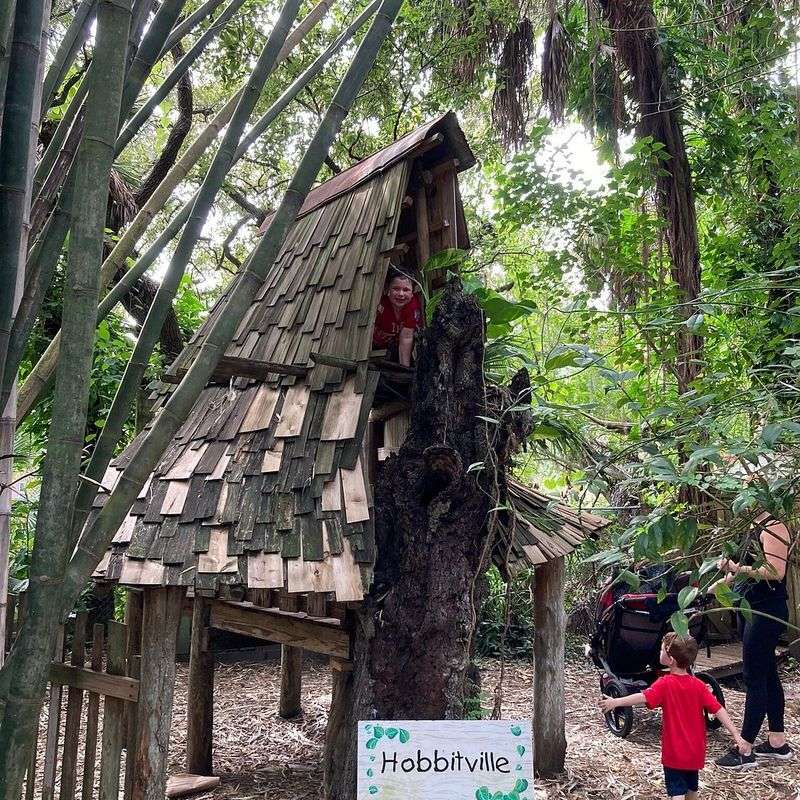
Built with natural wood materials that blend seamlessly with the surrounding botanical environment, these structures feel like genuine treehouses rather than typical playground equipment. Multiple levels accommodate different age groups and play styles simultaneously. Younger children enjoy the lower platforms while older kids gravitate toward higher vantage points.
Small groups gather on these platforms for impromptu meetings, secret clubs, and dramatic play that can occupy them for surprisingly long stretches. The spaces aren’t so large that kids disappear from view, yet they provide enough room for several children to play together comfortably. Parents often hear elaborate storylines developing as imaginations run wild.
Railings and barriers meet safety standards without interrupting the treehouse aesthetic. The platforms connect to other playground elements through various pathways, creating a cohesive play circuit. Benches positioned nearby let adults rest while remaining engaged with their children’s adventures.
These structures prove especially popular during role-playing games where kids assign each other characters and missions throughout the garden.
5. Rainforest-Themed Climbing Structures
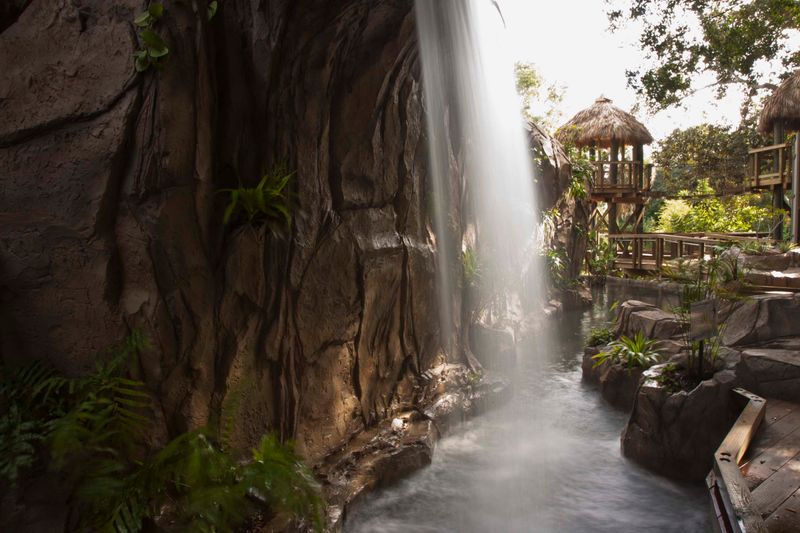
Climbing equipment designed to mimic rainforest vegetation challenges children’s strength and agility in creative ways. Rope nets resemble hanging vines, wooden structures echo tree trunks, and textured surfaces provide varied grips that engage different muscle groups. The theming makes physical activity feel like exploration rather than exercise.
Different climbing challenges accommodate various skill levels, from gentle inclines perfect for toddlers to more demanding vertical sections that test older children. This inclusive design means siblings of different ages can play together without anyone feeling left out. Parents watch nervously at first but quickly realize how well-engineered everything is for safety.
The climbing structures integrate with the elevated walkways and platforms, creating continuous play circuits. Children move naturally from climbing to walking to sliding without distinct breaks between activities. This flowing design keeps energy levels high and boredom at bay even during extended visits.
Soft mulch surfacing beneath climbing areas provides cushioning for inevitable tumbles while maintaining the natural aesthetic. The structures’ earthy colors blend with surrounding plants rather than standing out with bright primary colors common at traditional playgrounds. Many parents appreciate this subtler approach that emphasizes nature connection.
Regular maintenance ensures ropes stay taut and wood remains smooth, addressing wear patterns before they become safety concerns.
6. Shaded Play Zones Throughout the Garden
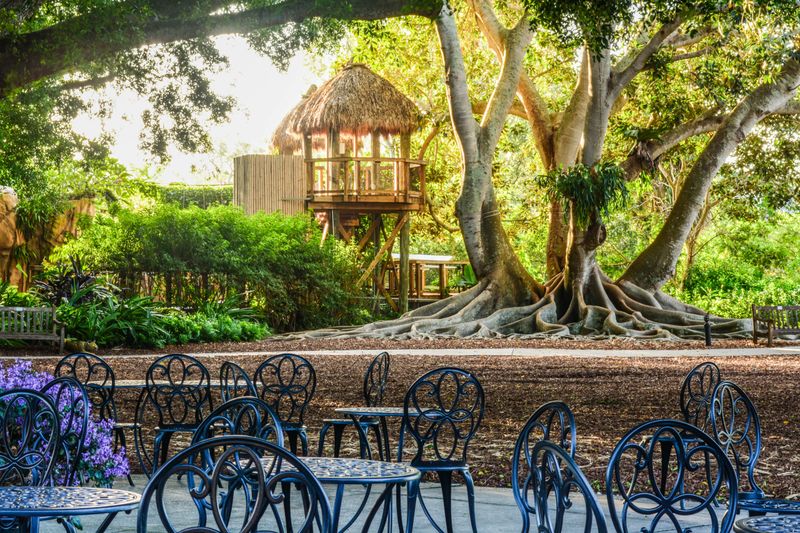
Florida sunshine can turn playgrounds into ovens, but strategic shade planning makes this space comfortable year-round. Mature trees provide natural canopy coverage over key play areas, while architectural shade structures fill gaps where vegetation alone isn’t sufficient. The result is a playground where kids can actually play during midday hours without overheating.
Dappled sunlight creates beautiful patterns across the ground while preventing that harsh glare that makes children squint and parents worry about sunburn. The temperature difference between shaded and sunny sections is noticeable enough that families instinctively migrate toward covered areas during peak heat. This thoughtful design extends usable hours significantly compared to fully exposed playgrounds.
Shade also protects playground equipment from becoming too hot to touch, a common problem with metal slides and platforms in direct sun. Children can safely explore all elements without parents constantly checking surface temperatures. The cooler environment means longer play sessions and happier kids who aren’t constantly asking for water breaks.
Benches positioned in shaded spots give adults comfortable observation posts. Parents can supervise without standing in blazing sun, making the experience more pleasant for everyone. The botanical garden setting naturally provides more shade options than typical park playgrounds, with lush foliage creating layers of protection overhead.
7. Educational Plant Labels and Natural Learning
Play and education merge seamlessly when the playground sits within an actual botanical garden. Children encounter labeled plants throughout their adventures, absorbing information naturally while focused on having fun. Parents can extend playtime into teaching moments by pointing out interesting species, textures, and colors surrounding the play equipment.
The rainforest theme becomes authentic rather than decorative when real tropical plants form the backdrop. Kids learn to identify palms, bromeliads, and flowering species native to actual rainforests. This exposure builds environmental awareness and appreciation for plant diversity in ways that classroom lessons rarely achieve.
Scavenger hunt opportunities emerge organically as families search for specific plants or features mentioned on signs. Children develop observation skills while exploring, noticing details they’d typically overlook. The combination of structured play equipment and natural exploration creates balanced experiences that engage both body and mind.
Staff members from the botanical gardens occasionally lead informal programs near the playground, adding structured learning opportunities to free play. These spontaneous educational moments feel special rather than forced. The playground’s location within Selby Gardens means admission includes access to spectacular plant collections beyond the children’s area, encouraging families to explore further after play sessions conclude.
Many visitors find this integration of recreation and education justifies the botanical garden admission price.
8. Compact Design Perfect for Younger Children
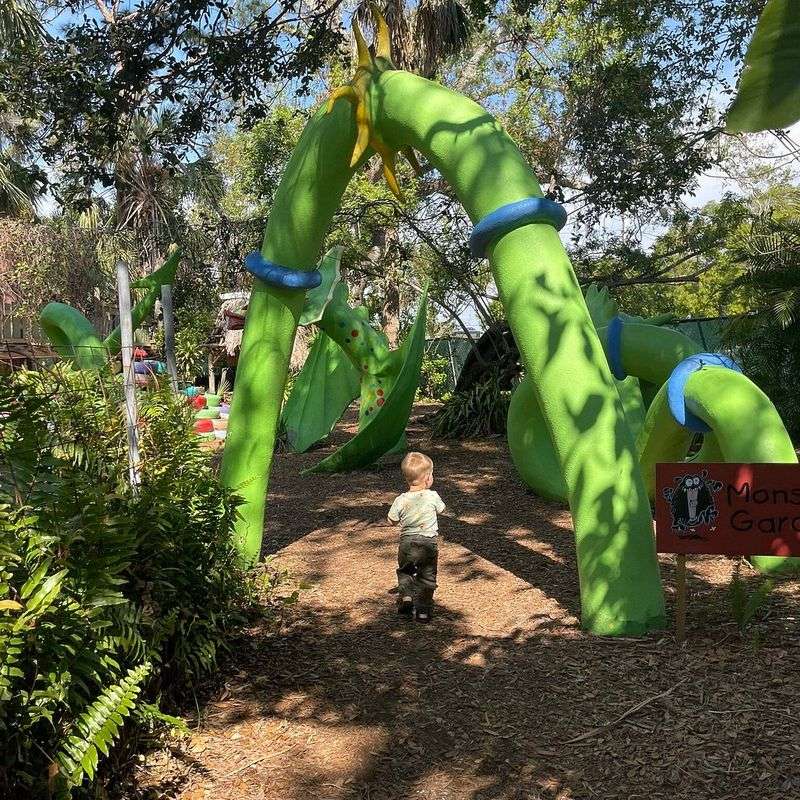
Size matters when it comes to playgrounds, and sometimes smaller is actually better. This intimate space allows parents to supervise easily without constantly chasing children across vast areas. Everything stays within comfortable sightlines, reducing anxiety for caregivers while giving kids appropriate independence.
The compact footprint concentrates activities without feeling cramped or overcrowded. Children encounter new play opportunities every few steps, maintaining interest and encouraging exploration. Families with toddlers particularly appreciate not needing to trek long distances between attractions or worry about older kids disappearing from view.
Equipment scale suits younger children beautifully, with heights and challenges appropriate for preschool and early elementary ages. This playground isn’t trying to accommodate teenagers, which means the design focuses entirely on what works best for little ones. Parents of multiple young children find the manageable size less exhausting than sprawling park playgrounds.
The single review calling it “small, yet beautiful” captures the appeal perfectly. Quality trumps quantity here, with thoughtful design and gorgeous surroundings creating memorable experiences despite modest dimensions. Integration with the larger botanical gardens means families can easily transition to garden paths when playground energy wanes.
This flexibility makes visits feel complete rather than limited, offering varied activities within one admission price and location.