These 12 Secret Florida Castles Feel Straight Out Of A Fairytale
Most people think of beaches and theme parks when they picture Florida, but tucked away across the Sunshine State are magnificent castles that could rival any European fortress. From eccentric artistic hideaways to grand Gilded Age mansions, these architectural treasures tell stories of dreamers, visionaries, and romantics who brought their fairytale fantasies to life.
Whether you’re a history buff, architecture enthusiast, or just looking for a magical day trip, these twelve secret castles prove that Florida has way more to offer than meets the eye.
1. Solomon’s Castle — Ona
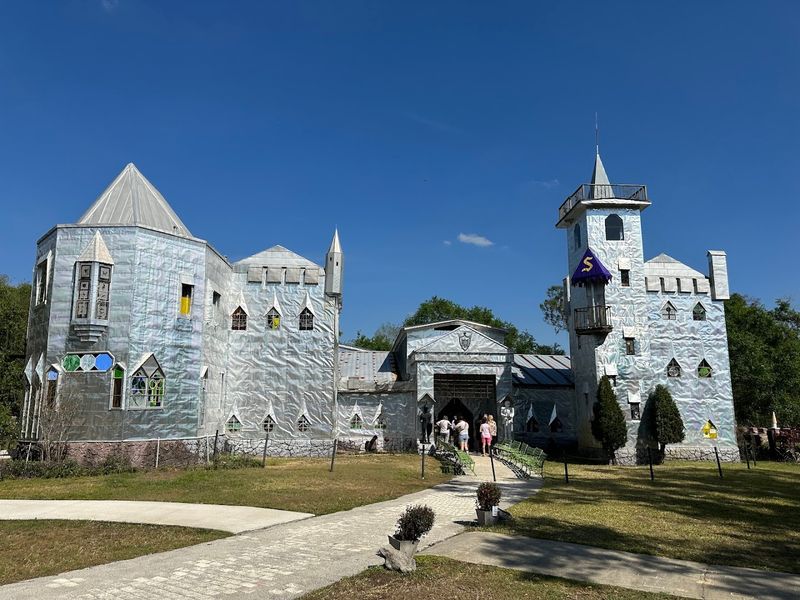
Built entirely from recycled aluminum printing plates, this gleaming fortress rises from the Florida countryside like something plucked from a fever dream. Howard Solomon spent decades creating this three-story castle by hand, and every inch reflects his quirky artistic vision.
The exterior shimmers in the sunlight, creating an almost otherworldly effect that photographs beautifully.
Inside, you’ll find a restaurant called The Boat in the Moat—literally a full-sized replica Portuguese sailing ship. The castle doubles as a gallery showcasing Solomon’s sculptures and stained glass creations, all made from salvaged materials.
His daughter now runs the property, keeping her father’s eccentric legacy alive with the same playful spirit.
The surrounding grounds feature additional sculptures and art installations that blend seamlessly with the rural landscape. Visitors often describe the experience as stepping into one artist’s imagination made tangible.
The castle operates seasonally, so check ahead before planning your visit.
What makes Solomon’s Castle truly special is its authenticity—this isn’t a corporate attraction or historical recreation. It’s one man’s testament to creativity, persistence, and the belief that castles belong wherever dreamers decide to build them.
The remote Ona location adds to its secret, hidden-treasure appeal.
Tours run by appointment and include fascinating stories about the building process and Solomon’s artistic philosophy. The combination of folk art, environmental consciousness, and pure whimsy creates an experience you won’t find anywhere else in Florida.
2. Ca’ d’Zan — Sarasota
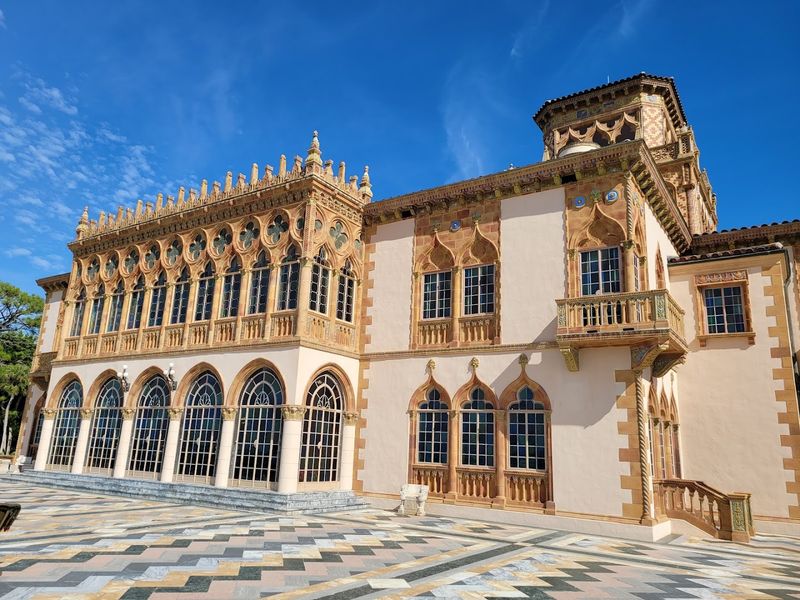
John and Mable Ringling didn’t just want a house—they wanted a Venetian palazzo on Sarasota Bay. Ca’ d’Zan, meaning “House of John” in Venetian dialect, delivers on that vision with spectacular results.
Completed in 1926, this 36-room mansion combines Venetian Gothic and Mediterranean Revival styles into something truly breathtaking.
The waterfront terrace alone justifies the visit, offering sweeping views across the bay while you imagine the Jazz Age parties that once filled these spaces. Inside, original furnishings, Tiffany stained glass, and hand-painted ceilings transport you back to the Roaring Twenties.
The attention to detail reflects the Ringlings’ sophisticated taste and considerable circus fortune.
Tours reveal fascinating stories about the couple’s art collecting adventures and their vision for transforming Sarasota into a cultural destination. The tower provides panoramic views that help you understand why they chose this exact spot.
Every room showcases craftsmanship that modern builders struggle to replicate.
Now part of the Ringling Museum complex, Ca’ d’Zan has been meticulously restored to its original glory. The mansion sits alongside world-class art galleries and beautiful grounds that deserve their own afternoon.
Winter visitors might catch special holiday decorations that make the castle even more magical.
What sets Ca’ d’Zan apart from other Florida mansions is its genuine Venetian inspiration executed with American grandeur. The Ringlings succeeded in creating their personal fairytale, and now everyone gets to walk through it.
3. Cinderella Castle — Walt Disney World, Orlando
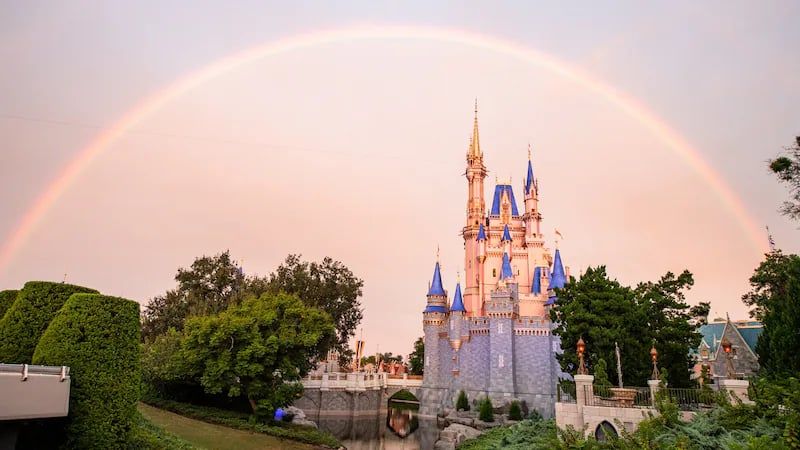
Standing 189 feet tall at the heart of Magic Kingdom, Cinderella Castle defines the Florida theme park experience for millions of visitors annually. Forced perspective architecture makes it appear even taller than reality, creating that perfect fairytale illusion.
The castle draws inspiration from French châteaux, particularly Fontainebleau and Versailles, reimagined through Disney’s magical lens.
Unlike many castle replicas, this one serves multiple purposes beyond photo opportunities. Inside, you’ll find Cinderella’s Royal Table restaurant where families dine with Disney princesses.
The mosaic murals in the breezeway tell Cinderella’s story through five elaborate panels containing over one million pieces of glass in 500 colors.
Recent renovations enhanced the castle’s appearance with deeper blue roofs and gold accents that sparkle brilliantly in Florida sunshine. Nighttime spectaculars project animations directly onto the castle facade, transforming it into a canvas for storytelling.
The nightly fireworks shows use the castle as their centerpiece, creating moments families remember forever.
Hidden details reward observant visitors—family crests, golden spires, and architectural flourishes that reveal new discoveries with each visit. The castle appears in countless vacation photos, engagement announcements, and childhood memories.
Its iconic status extends far beyond Central Florida, symbolizing Disney magic worldwide.
While technically not a secret, many guests rush past without appreciating the craftsmanship and design genius that went into creating this landmark. Taking time to really observe the details reveals why this castle captured imaginations for over fifty years and counting.
4. Castle Otttis — St. Augustine
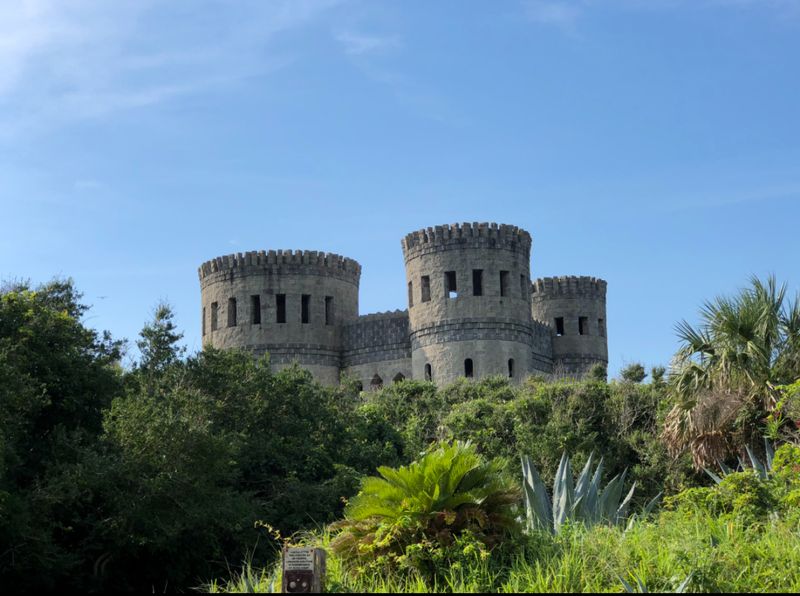
Tucked along St. Augustine’s waterfront, Castle Otttis began life as a Moorish Revival ice plant before artist Otis Dozier transformed it into something completely different. The building’s multiple towers and castle-like features create an unexpected architectural surprise in America’s oldest city.
Its eclectic style defies easy categorization, blending industrial history with artistic vision.
The castle now houses rotating art exhibitions, cultural events, and creative performances that reflect St. Augustine’s thriving arts community. Local artists display their work in spaces that once stored massive blocks of ice for the entire region.
The juxtaposition of industrial past and creative present gives the venue unique character that conventional galleries can’t match.
Walking through Castle Otttis feels like discovering a secret that locals have been keeping to themselves. The building’s history spans multiple uses and owners, each leaving their mark on its evolution.
Today’s incarnation celebrates artistic expression while honoring the structure’s working-class roots.
The location near the Bridge of Lions means you can easily combine a castle visit with exploring St. Augustine’s historic downtown. Evening events often feature live music, poetry readings, and art openings that showcase regional talent.
The intimate scale creates connections between artists and audiences that larger venues struggle to achieve.
What makes Castle Otttis special isn’t grand opulence or historical significance—it’s the grassroots creative energy that fills its repurposed industrial spaces. This castle proves that fairytales come in many forms, including converted ice plants transformed by artistic vision and community support.
5. The Singing Tower at Bok Tower Gardens — Lake Wales
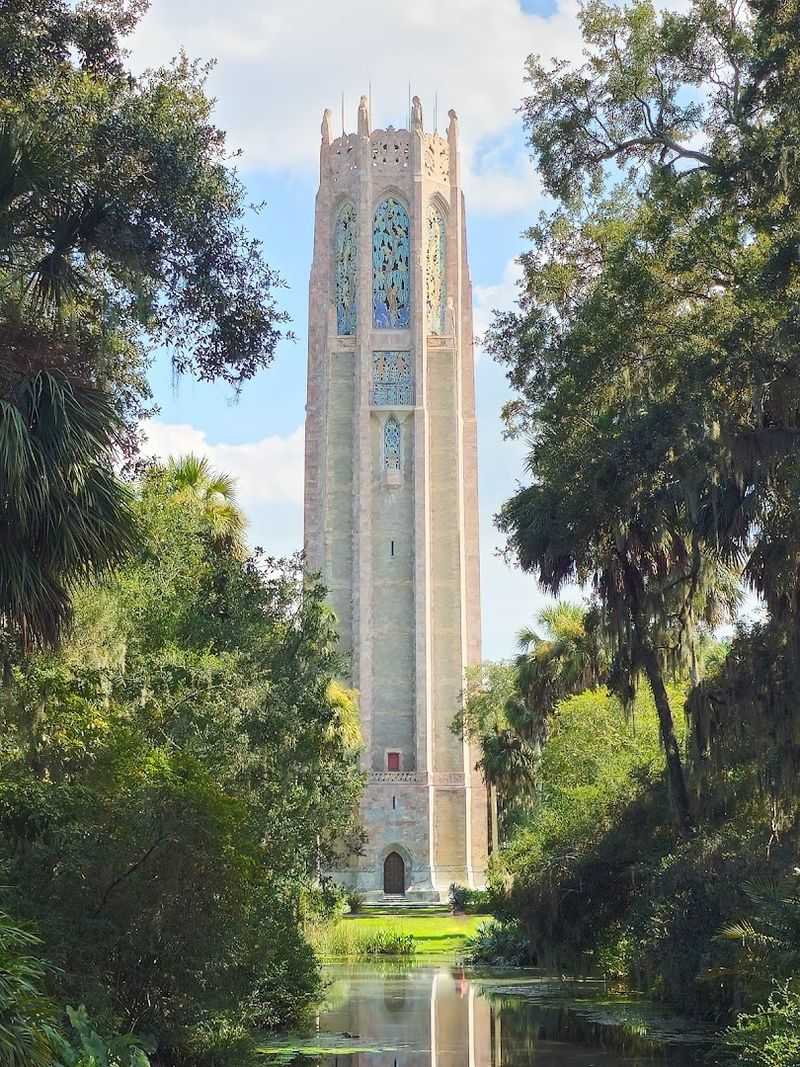
Rising 205 feet above Iron Mountain, the Singing Tower represents one man’s gift to the American people who gave him opportunity. Edward Bok commissioned this Gothic Revival tower in the 1920s as a bird sanctuary and contemplative retreat.
The pink and gray marble exterior features intricate carvings of Florida wildlife, biblical scenes, and symbolic imagery that rewards close examination.
Twice daily, the 60-bell carillon fills the gardens with music that echoes across the landscape. Live carillonneurs perform concerts from a keyboard inside the tower, creating melodies that feel simultaneously ancient and timeless.
The combination of architecture, music, and natural beauty creates an almost spiritual experience that visitors describe as transformative.
The surrounding 250 acres of gardens showcase native Florida plants alongside exotic species in thoughtfully designed landscapes. A moat encircles the tower base, with swans and other waterfowl adding to the storybook atmosphere.
Pathways wind through hammocks and groves that provide shade and discovery around every corner.
Pinewood Estate, also on the property, offers tours of a 1930s Mediterranean Revival mansion that complements the tower’s majesty. The estate’s architecture and furnishings reflect the same attention to detail that characterizes the entire property.
Combined, they create a destination that feels removed from modern Florida’s hustle.
What sets Bok Tower apart is its original purpose—not as a home or commercial venture, but as a gift meant to inspire and uplift. That generous spirit still permeates the gardens, making this one of Florida’s most peaceful and genuinely magical destinations.
6. Bishop’s Palace (Stetson Mansion) — DeLand
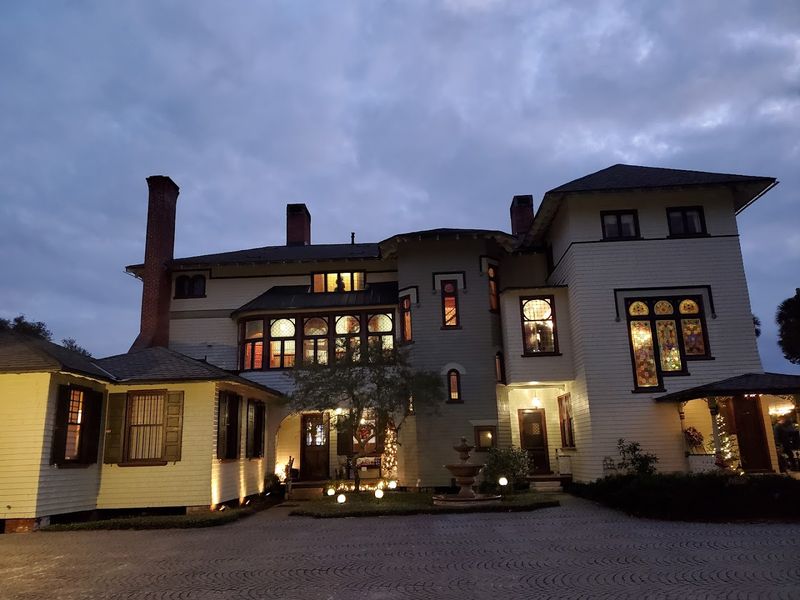
John B. Stetson, the hat magnate, spared no expense creating this 10,000-square-foot Victorian masterpiece in DeLand.
Completed in 1886, the mansion showcases every architectural flourish the Gilded Age could offer—turrets, wraparound porches, stained glass, and hand-painted ceilings throughout. Recent owners have restored it to museum-quality condition with obsessive attention to period accuracy.
The nickname “Bishop’s Palace” came later, but it fits the mansion’s grand ecclesiastical-feeling spaces and ornate detailing. Tours reveal over 16,000 panes of glass, ten fireplaces, and original Tiffany fixtures that somehow survived decades of neglect.
The current restoration showcases techniques and materials that modern craftspeople rarely encounter, making each room an education in lost arts.
What makes this mansion truly castle-like is its commanding presence on a prominent DeLand corner lot. The scale and ornamentation set it apart from neighboring homes, creating that fairytale contrast between ordinary and extraordinary.
The painted exterior features multiple colors highlighting architectural details that might otherwise go unnoticed.
Inside, the woodwork alone justifies the visit—carved mantels, coffered ceilings, and custom millwork in woods sourced from around the world. The mansion’s technology was cutting-edge for 1886, including speaking tubes, electric lights, and indoor plumbing that impressed visitors.
Today’s tours emphasize both the luxury and the innovation that Stetson built into his winter retreat.
The mansion hosts special events, murder mystery dinners, and holiday celebrations that let visitors experience the space as Stetson intended—filled with life, laughter, and social gatherings that showcase the building’s grandeur.
7. The Don CeSar — St. Pete Beach
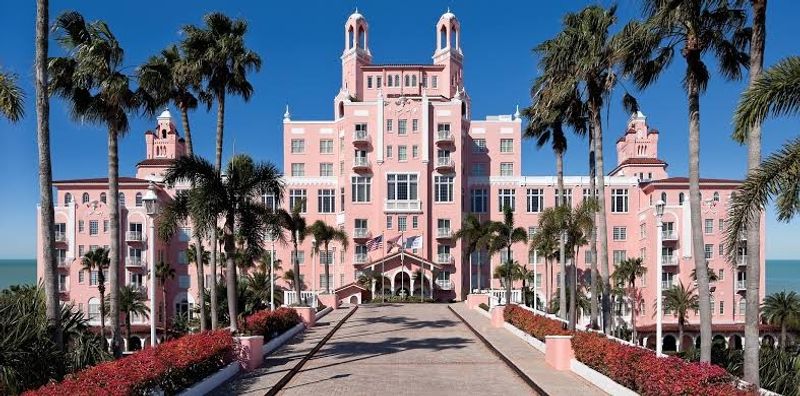
Locals call it the Pink Palace, and one glimpse of this Moorish-Mediterranean resort explains why. Built in 1928 by Thomas Rowe, the Don CeSar rises from St. Pete Beach like a romantic vision in coral pink.
Legend says Rowe named it after a doomed Spanish nobleman from an opera he loved, adding layers of romance to an already dramatic building.
The resort’s castle-like towers, arched windows, and ornate details create an unmistakable silhouette against the Gulf of Mexico. During World War II, the building served as a hospital and later housed offices for the Veterans Administration.
Those years took their toll, but a 1970s restoration returned the Don to its Jazz Age glory.
Today’s guests enjoy modern luxury wrapped in vintage glamour, with the building’s architecture providing constant reminders of its storied past. The lobby features vaulted ceilings and period details that transport you back to Florida’s resort heyday.
Beachfront dining and rooftop bars take advantage of the spectacular Gulf views that attracted Rowe to this location originally.
The hotel’s history includes famous guests from F. Scott Fitzgerald to multiple presidents, adding celebrity cachet to its architectural appeal.
Ghost stories about Rowe and his lost love add mysterious ambiance that guests either embrace or dismiss. Either way, the building’s presence dominates this stretch of beach unlike any other structure.
What makes the Don CeSar feel like a castle isn’t just its towers and pink facade—it’s the sense of occasion the building creates. Staying here feels special, romantic, and slightly fantastical in ways that modern resorts can’t replicate.
8. Vizcaya Museum & Gardens — Miami
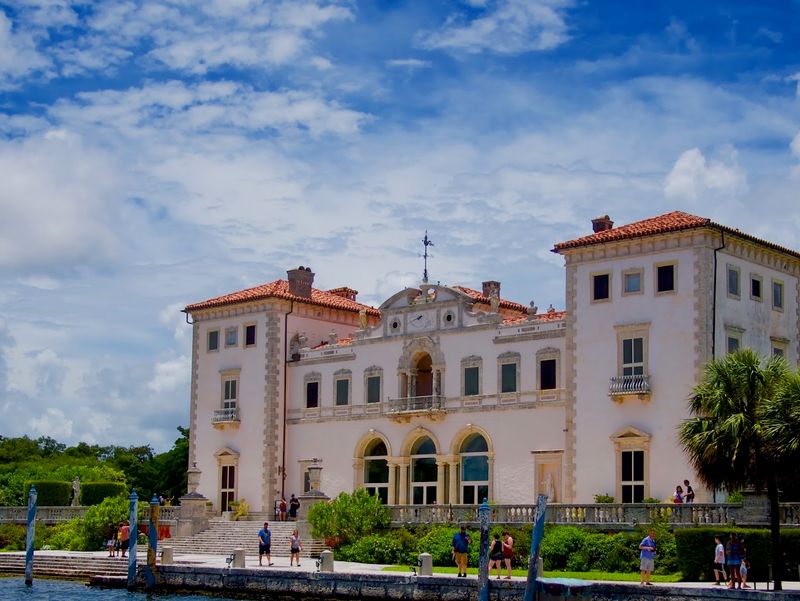
James Deering’s winter retreat looks like it was transported stone by stone from the Italian countryside to Biscayne Bay. Completed in 1922, Vizcaya combines Italian Renaissance and Mediterranean Revival styles into a 34-room villa that rivals European palaces.
The name comes from a Basque word suggesting an elevated place, perfectly describing both its literal location and aspirational grandeur.
The main house contains original furnishings, decorative arts, and antiques spanning centuries of European craftsmanship. Deering and his designer Paul Chalfin spent years acquiring pieces that would create an authentic Renaissance atmosphere.
The result feels less like a museum and more like stepping into a living European estate frozen at its peak.
Ten acres of formal gardens extend the villa’s magnificence outdoors with fountains, sculptures, and carefully planned sightlines that showcase Chalfin’s artistic vision. The stone barge in the bay, called the Stone Barge, serves as a breakwater while adding theatrical flair to waterfront views.
Native Florida hammock surrounds the formal gardens, creating interesting contrasts between manicured European design and natural tropical landscape.
Hurricane damage over the years has required extensive restoration work, but Vizcaya continues welcoming visitors who want to experience Gilded Age excess firsthand. The estate frequently appears in films, fashion shoots, and special events that take advantage of its cinematic beauty.
Walking through Vizcaya makes you understand why Miami attracted wealthy industrialists seeking winter paradise.
What elevates Vizcaya beyond mansion status into castle territory is its completeness—the architecture, gardens, art collection, and setting combine into something greater than their individual parts.
9. Howey Mansion — Howey-in-the-Hills
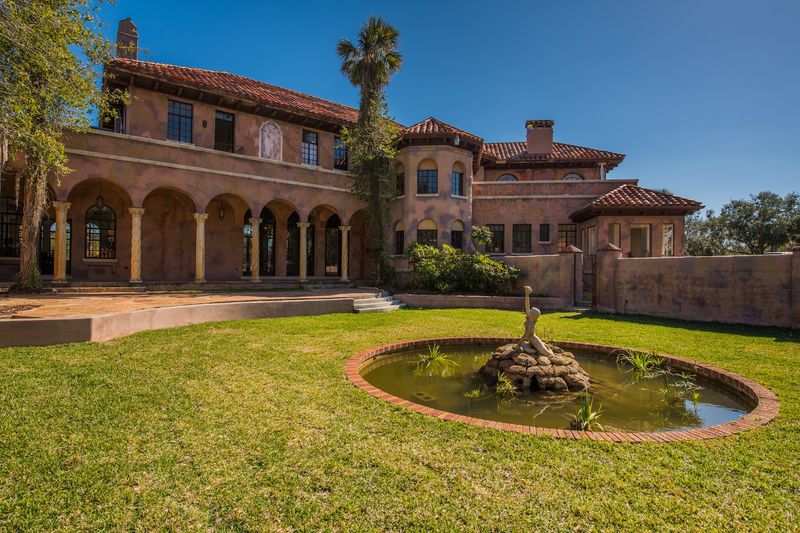
William Howey built his Florida citrus empire in the 1920s and crowned it with this Mediterranean Revival mansion overlooking his planned community. The 20-room estate served as both family home and showpiece for impressing potential investors in his citrus ventures.
Its prominent hilltop location gave Howey commanding views over the town that bore his name and the orange groves that funded his dreams.
The mansion’s architecture reflects the optimistic boom-time spirit of 1920s Florida when anything seemed possible. Red tile roofs, stucco walls, and tower elements create that castle-like appearance that wealthy developers favored during the era.
Interior spaces were designed for entertaining on a grand scale, with rooms flowing together to accommodate the social gatherings that mixed business with pleasure.
After Howey’s death, the mansion changed hands multiple times and fell into serious disrepair. Recent restoration efforts have stabilized the structure and begun returning it to its original grandeur.
The work continues, with each phase revealing more about Howey’s vision and the craftsmanship that went into constructing his dream home.
The surrounding town of Howey-in-the-Hills retains much of its planned community character, with streets radiating from the mansion’s hilltop location. Walking the historic district provides context for understanding Howey’s ambitious plans and the lifestyle he promoted to prospective residents.
The mansion anchors this history as a physical reminder of one man’s outsized Florida ambitions.
Tours offer glimpses into both the restoration process and the mansion’s colorful history, including its role in the citrus industry that shaped Central Florida’s development.
10. The Alhambra-inspired Ringling Estate Grounds — Sarasota
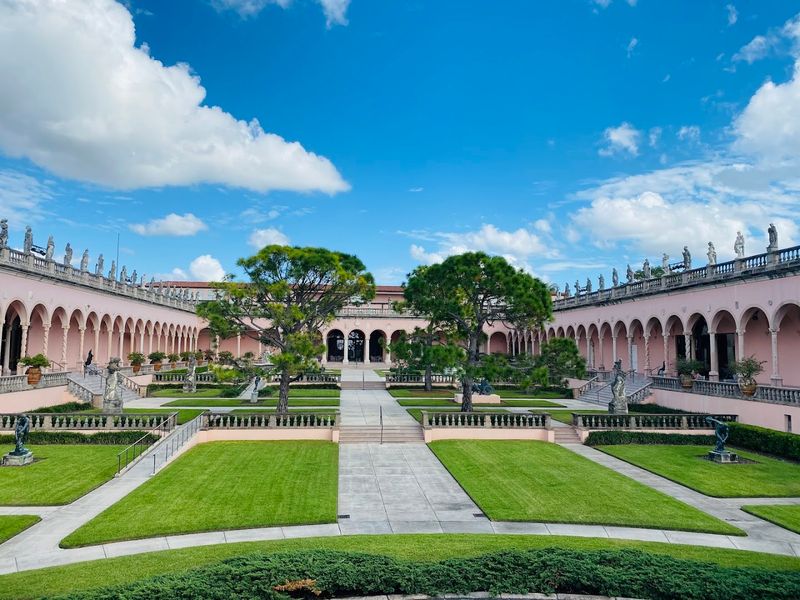
Beyond Ca’ d’Zan, the Ringling estate includes buildings and grounds inspired by Spain’s Alhambra palace that create their own castle-like atmosphere. John Ringling’s vision extended past his personal residence to encompass a complete cultural complex worthy of European capitals.
The museum buildings feature courtyards, arcades, and architectural details that transport visitors to Moorish Spain.
The Museum of Art, completed in 1927, surrounds a sculpture garden with a building design that references Italian Renaissance palaces and Spanish courtyards simultaneously. Pink stucco walls, terracotta tiles, and ornate ironwork create romantic spaces between gallery wings.
The scale and grandeur rival many European museum complexes, reflecting Ringling’s determination to establish Sarasota as a serious cultural destination.
Walking through the arcaded courtyards feels like discovering a secret Spanish castle hiding in plain sight on Florida’s Gulf Coast. The Alhambra influence appears in the tile work, arched openings, and the relationship between interior and exterior spaces.
Ringling and his architects studied European precedents carefully, adapting them to Florida’s climate and building traditions.
The grounds also include the Historic Asolo Theater, a 1798 Italian court theater that Ringling purchased and had reconstructed on the property. This addition demonstrates the scope of his collecting ambitions—not just art and architecture, but entire buildings transported across oceans.
The theater’s ornate interior adds another layer of European castle atmosphere to the estate.
Today’s visitors can spend hours exploring the various buildings, gardens, and exhibitions that fill the estate. The combination of Ca’ d’Zan, the museum complex, and the grounds creates an immersive experience of Ringling’s vision for bringing European cultural sophistication to Florida’s Gulf Coast.
11. Coral Castle — Homestead
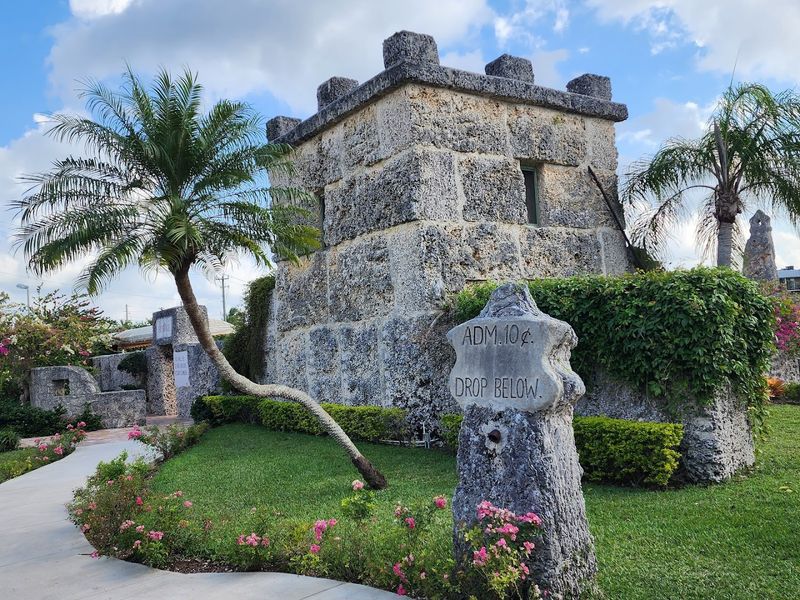
Edward Leedskalnin spent 28 years single-handedly carving and moving massive coral stones to create this mysterious monument to lost love. Working mostly at night to protect his secrets, the Latvian immigrant moved stones weighing multiple tons using techniques he never revealed.
The result resembles ancient megalithic sites more than traditional castles, but its towers, walls, and throne-like furniture create an undeniably castle-like atmosphere.
Theories about Leedskalnin’s construction methods range from practical to fantastical, with some claiming he discovered lost ancient technologies. More likely, he used clever leverage, counterweights, and decades of patient labor to accomplish what seems impossible.
Either way, the achievement remains impressive—one man moving stones that modern equipment would struggle to lift.
The castle features a nine-ton gate balanced so precisely that a child can push it open, a stone telescope aligned with Polaris, and furniture carved from single pieces of coral. Each element demonstrates both Leedskalnin’s engineering skill and his romantic obsession with the woman who rejected him.
The entire structure serves as a monument to heartbreak transformed into creative achievement.
Visitors wander self-guided through the grounds, examining the various structures and trying to imagine the dedication required to create them. The castle’s rough, hand-carved aesthetic differs completely from the polished European-inspired mansions on this list.
Its power comes from its primitive, almost primal quality—one man’s determination made visible in coral stone.
What makes Coral Castle truly magical isn’t its resemblance to traditional castles but its mystery and the story behind its creation. It proves that castles can be built anywhere by anyone with sufficient vision, determination, and perhaps a broken heart to mend.
12. Kissimmee Castle (Medieval Times Castle) — Kissimmee
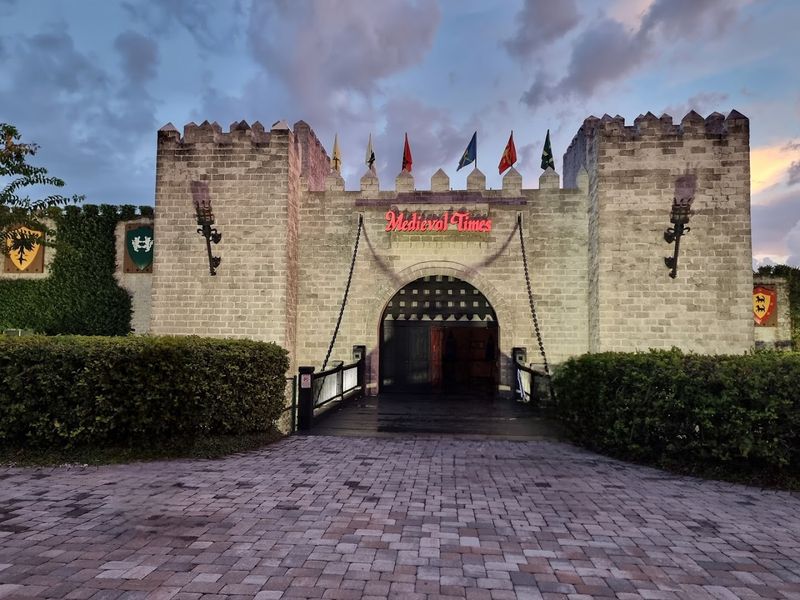
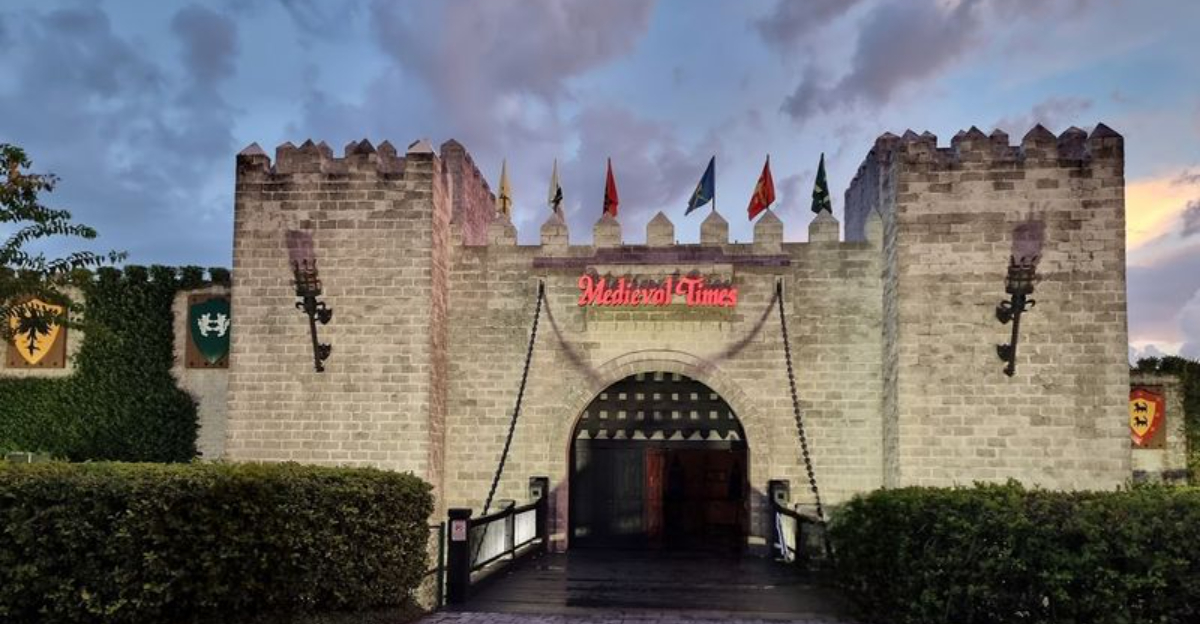
This eleventh-century Spanish castle replica brings medieval Europe to Central Florida with impressive attention to architectural detail. Built specifically for Medieval Times dinner theater, the castle serves as both entertainment venue and immersive experience that transports guests backward through time.
The exterior features authentic-looking stone walls, towers, and battlements that photograph beautifully against Florida’s blue skies.
Inside, the arena accommodates over 1,000 guests who feast on four-course meals while watching jousting tournaments, sword fights, and horsemanship displays. The castle atmosphere extends throughout the interior with period-appropriate decorations, heraldic banners, and servers dressed as medieval wenches and serfs.
The combination of dinner and show creates an experience that families remember long after returning home.
Before the show, guests can explore the Hall of Arms displaying medieval weaponry and torture devices, adding educational elements to the entertainment. The gift shop stocks everything from plastic swords to authentic-looking armor reproductions.
The pre-show museum helps set the historical context, though accuracy takes a backseat to entertainment value throughout the experience.
What makes this castle special isn’t historical authenticity but its commitment to creating an immersive medieval fantasy. The building’s scale and detail exceed what most dinner theaters attempt, creating genuine castle ambiance from the parking lot to the arena.
Kids especially love the opportunity to cheer for their knight in mock combat that feels surprisingly exciting.
The Kissimmee location near Disney World makes it a popular add-on for families seeking alternatives to theme parks. While purists might dismiss it as commercial entertainment, the castle delivers exactly what it promises—a fun, family-friendly medieval experience wrapped in convincing castle architecture that makes the fantasy feel real for a few hours.