10 Old Florida Streets That Feel Like Walking Through A Time Capsule
Florida isn’t just about theme parks and beaches. Tucked away in towns across the state are streets that have barely changed in decades, some even centuries. These old roads still have their original brick pavers, wooden storefronts, and buildings that witnessed Florida history firsthand.
Walking down them feels like stepping back to a time when life moved slower and every corner had a story to tell.
1. Aviles Street (St. Augustine)
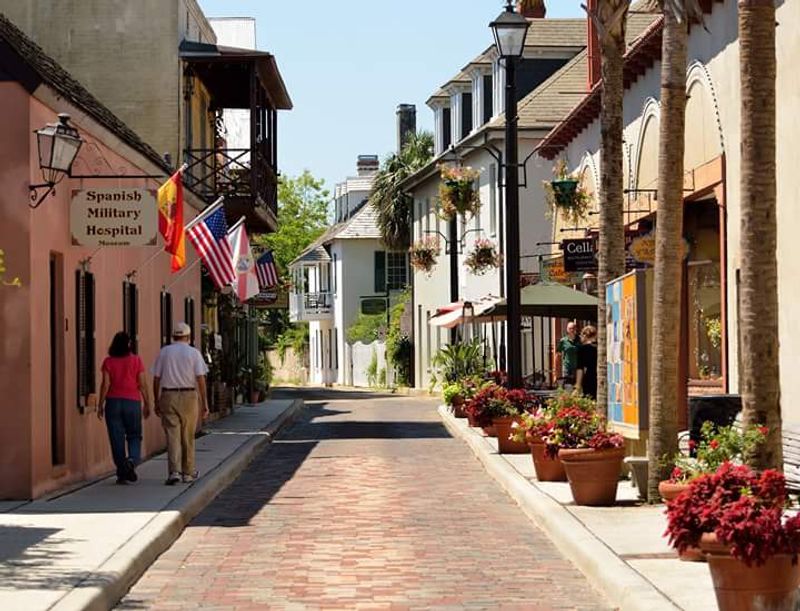
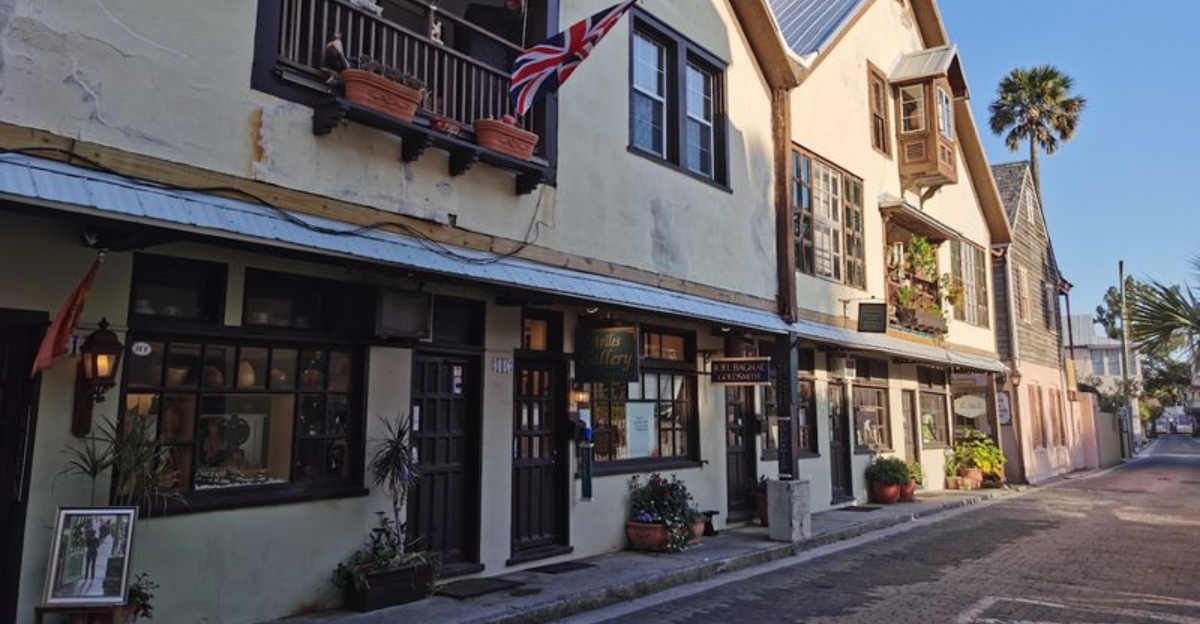
Aviles Street holds the title of the oldest street in America, dating back to the 1500s when Spanish settlers first laid out St. Augustine. The narrow lane still features its original footprint, winding between buildings that have stood for centuries. Walking here means treading the same path that conquistadors, colonial traders, and early settlers once traveled.
The street’s charm comes from its authenticity. Unlike heavily commercialized areas, Aviles maintains a quiet, residential feel mixed with art galleries and small shops. Original coquina stone peeks through in places, and the buildings lean slightly with age, their walls thick enough to keep out summer heat just like they did 400 years ago.
Local artists have claimed many of the old structures as studios and galleries. You’ll find handmade pottery, paintings, and jewelry in spaces that once served as homes and workshops for Spanish craftsmen. The street feels intimate and personal, like you’ve stumbled onto something locals have been keeping secret.
It’s the kind of place where history isn’t just preserved behind glass but remains part of everyday life.
2. St. George Street (St. Augustine)
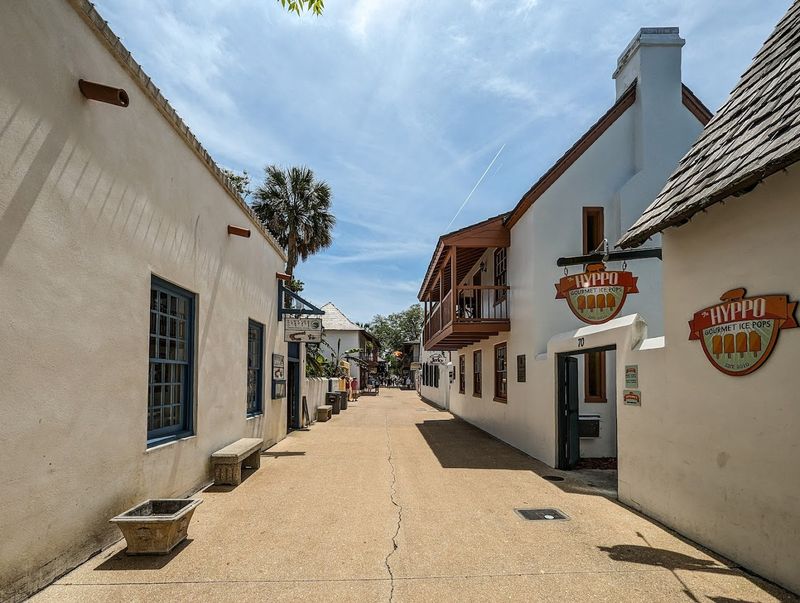
St. George Street became a pedestrian-only zone decades ago, which saved it from modern development and kept its colonial character intact. The street stretches through the heart of the old city, lined with buildings that showcase Spanish colonial architecture from different centuries. Wooden balconies overhang the walkway, and thick walls painted in cream and white reflect the Mediterranean influence that shaped early Florida.
What makes this street special is how it balances preservation with activity. Yes, there are shops and restaurants, but they occupy genuinely historic structures. You’re buying fudge in a building from the 1700s or eating dinner where Spanish soldiers once gathered.
The street’s layout follows the original Spanish grid system, narrow enough that you can almost touch both sides at once.
Evening brings a different atmosphere entirely. When day visitors leave, the street takes on a quieter, more mysterious quality. Gas-style lamps flicker on, casting shadows that dance across old doorways and arched passages.
You can easily imagine horse-drawn carriages clattering past or Spanish governors strolling home after dark. The present and past blur together here more than almost anywhere else in Florida.
3. Centre Street (Fernandina Beach)
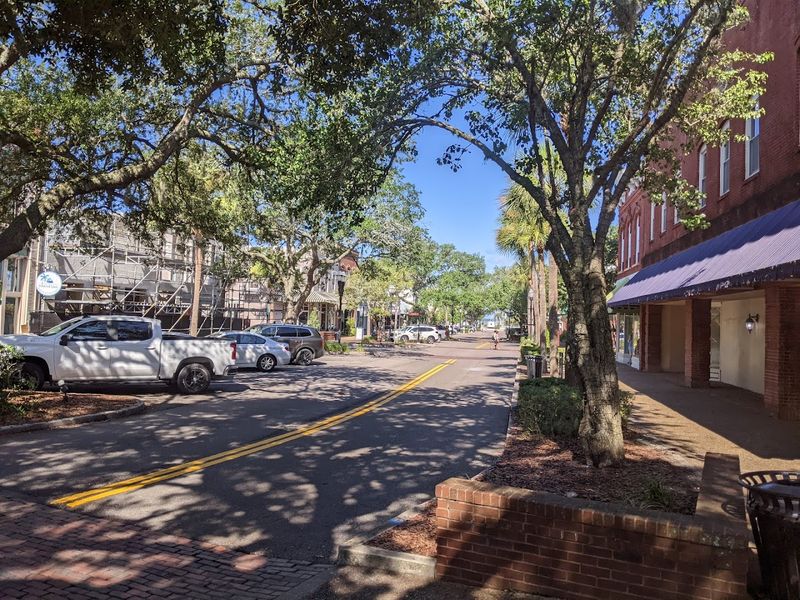
Centre Street tells the story of Florida’s Victorian golden age when shipping and timber made Fernandina Beach one of the state’s most prosperous towns. The street runs from the waterfront inland, lined with brick buildings from the 1880s and 1890s that still serve their original purpose as shops and gathering places. Iron balconies, tall windows, and decorative cornices show the wealth and optimism of that era.
The entire downtown district surrounding Centre Street earned National Register status, which means strict rules govern any changes. Owners must maintain historical accuracy in their renovations, so what you see today closely matches what existed 140 years ago. Even the street itself keeps its original brick paving in sections, worn smooth by generations of footsteps.
This isn’t a museum street frozen in time but a living downtown where locals actually shop and eat. You’ll find hardware stores, bookshops, and cafes operating in spaces that have hosted businesses continuously for over a century. The Palace Saloon, Florida’s oldest bar, still occupies its 1903 building, complete with original woodwork and a pressed tin ceiling.
Walking Centre Street feels less like tourism and more like visiting a place that simply never felt the need to change.
4. Cholokka Boulevard (Micanopy)
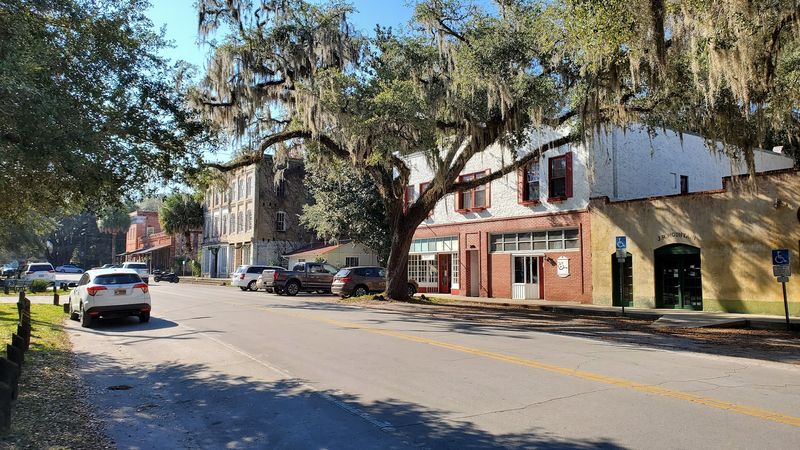
Cholokka Boulevard cuts through Micanopy, a town that time genuinely forgot. This isn’t marketing hyperbole—Micanopy has fewer than 1,000 residents and looks almost exactly as it did in the early 1900s. The boulevard itself winds under a canopy of ancient live oaks dripping with Spanish moss, creating a tunnel effect that blocks out the modern world entirely.
Buildings along Cholokka date mostly from the late 1800s and early 1900s, constructed of wood and brick in simple frontier styles. Many house antique shops now, which feels appropriate since the structures themselves qualify as antiques. The street has no chain stores, no franchises, nothing that would break the spell of stepping back a century or more.
What strikes visitors most is the quiet. Without traffic lights, big box stores, or commercial development, Cholokka Boulevard maintains a silence you rarely find anymore. You can hear birds, wind through the oak leaves, and your own footsteps on the old sidewalks.
The town appeared in the movie “Doc Hollywood” because filmmakers needed somewhere that looked authentically stuck in the past. Walking this street, you understand why they chose it—Cholokka Boulevard hasn’t just preserved history, it’s still living in it.
5. Bridge Street (Bradenton Beach)
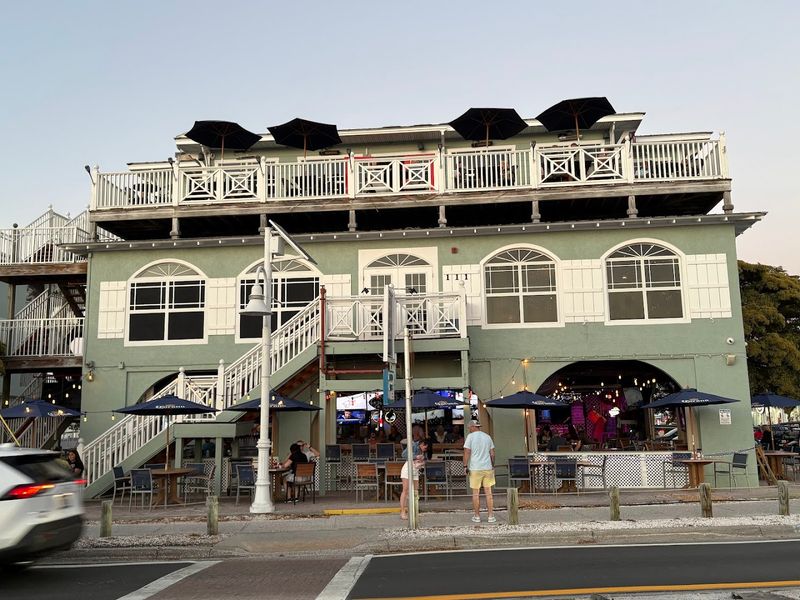
Bridge Street represents Old Florida beach culture before high-rises and resort chains took over the coast. This short stretch in Bradenton Beach maintains the casual, slightly worn character of 1950s and 60s beach towns. Low-slung buildings painted in faded pastels house surf shops, seafood shacks, and dive bars that have served locals and tourists for generations.
The street earned its name from its position near the old bridge connecting Anna Maria Island to the mainland. That location made it the natural gathering spot for fishermen, beachgoers, and island residents. Today it still serves that role, functioning as the island’s main commercial strip while refusing to modernize beyond necessity.
You won’t find corporate branding or polished storefronts—just authentic beach town grit.
Walking Bridge Street feels like visiting someone’s beach house from decades ago, where everything is a bit sandy and sun-faded but perfectly comfortable. The buildings sit close together, many connected by shared walls, creating an intimate village feel. Local restaurants still serve grouper sandwiches at picnic tables, and shops sell beach necessities without pretension.
It’s the kind of place where people wear flip-flops to dinner and nobody blinks. For anyone who remembers Florida beaches before they became luxury destinations, Bridge Street is a welcome reminder of simpler coastal times.
6. Canal Street (New Smyrna Beach)
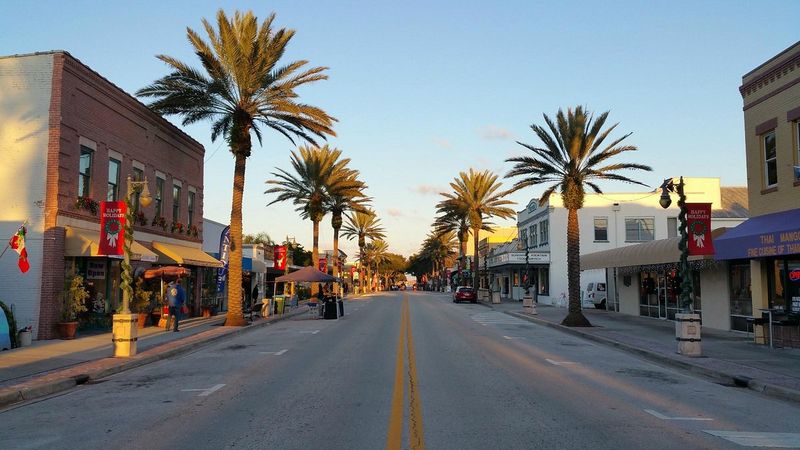
Canal Street runs alongside the Indian River in New Smyrna Beach, where fishing boats still tie up like they have for over a century. The street developed as the town’s commercial heart in the late 1800s, serving fishermen, farmers, and traders moving goods by water. Many original buildings remain, their brick and wood construction showing honest wear from decades of salt air and Florida weather.
Unlike some historic streets that feel precious and untouchable, Canal Street maintains its working waterfront character. Commercial fishing operations share space with restaurants and galleries. You might see someone cleaning their catch on a dock next to diners eating fresh seafood at waterfront tables.
This mix of working port and leisure destination creates an authenticity you can’t fake or recreate.
The street’s layout follows the natural curve of the waterway, giving it an organic feel that contrasts with modern grid planning. Buildings vary in height and style, reflecting different eras of construction and renovation. Some sport Victorian details, others show mid-century modern influences, but all share a weathered coastal quality that comes from genuine age and use.
Walking Canal Street, especially early morning when fishing boats head out, connects you to Florida’s maritime heritage in a way few places still can. It’s not performing history—it’s still making it.
7. Main Street (Mount Dora)
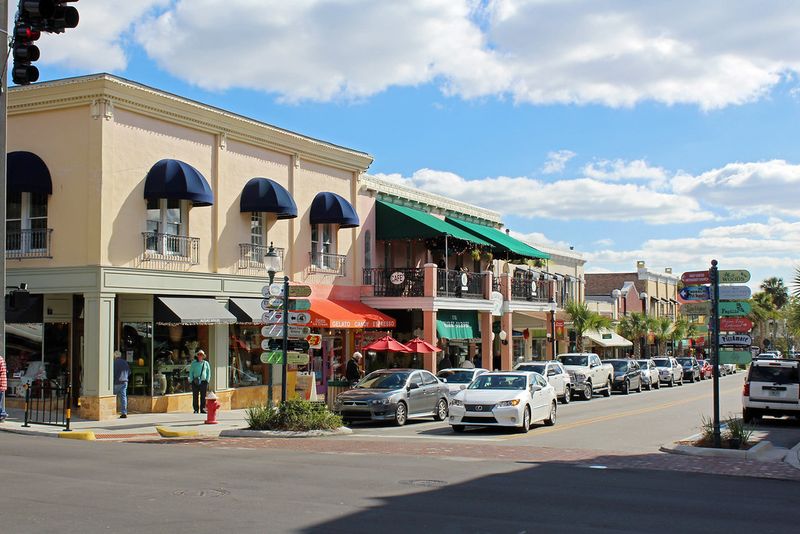
Mount Dora’s Main Street could serve as a movie set for small-town America, except it’s completely real. The street climbs gently uphill—a rarity in pancake-flat Florida—lined with buildings from the 1880s through the 1920s. These structures showcase Victorian, Colonial Revival, and early 20th-century commercial architecture, all carefully maintained to preserve their original character and details.
The town’s location on hills around Lake Dora made it a winter resort destination during Florida’s first tourism boom. Wealthy northerners built hotels and shops along Main Street, creating an unusually sophisticated downtown for such a small community. That early prosperity shows in the quality of construction and architectural detail you don’t typically find in rural Florida towns.
Decorative brickwork, original tile, and handcrafted woodwork remain visible throughout.
Today Main Street thrives as an antique and arts destination, which suits the historic buildings perfectly. Shops occupy spaces designed for retail over a century ago, with high ceilings, large windows, and wooden floors that creak authentically underfoot. The street hosts regular festivals and events that draw crowds but never feel commercialized or fake.
Walking Main Street in Mount Dora offers something increasingly rare—a genuinely preserved small-town downtown that functions as it was intended, serving both residents and visitors without compromising its historical soul.
8. Duval Street (Key West)
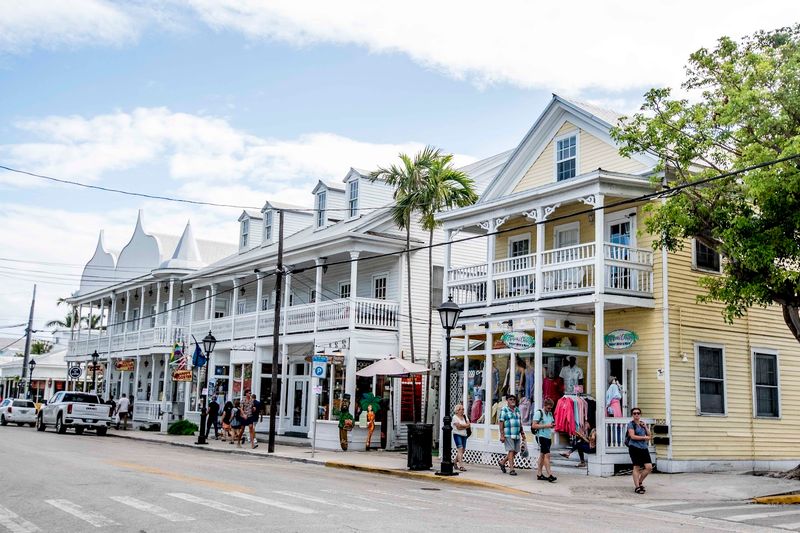
Duval Street runs the entire width of Key West, from the Atlantic Ocean to the Gulf of Mexico, passing through the heart of the island’s historic district. The street showcases Conch-style architecture—wooden buildings raised on piers with wide porches and shuttered windows designed for tropical climate and hurricane survival. Many structures date from the late 1800s when Key West was Florida’s largest and wealthiest city, enriched by wrecking, cigar manufacturing, and maritime trade.
What makes Duval remarkable is how much history remains visible despite heavy tourist traffic. Behind the bars and T-shirt shops are buildings where Ernest Hemingway drank, where Tennessee Williams wrote, and where Cuban cigar makers rolled tobacco. The street’s upper blocks, away from the cruise ship crowds, maintain more of their residential character with beautifully restored Conch houses and smaller, quieter businesses.
Walking the full length of Duval reveals different eras and influences—Spanish colonial, Bahamian, Victorian, and early 20th-century commercial. The architecture tells stories of hurricanes survived, economic booms and busts, and cultural mixing that made Key West unique. Yes, parts feel touristy now, but the bones underneath remain authentic.
Early morning, before the crowds arrive, Duval Street still captures the slightly shabby, romantically decayed tropical port atmosphere that attracted artists and writers for generations. The history isn’t just preserved here—it’s still soaking into the floorboards.
9. Riverside Avenue (Jacksonville)
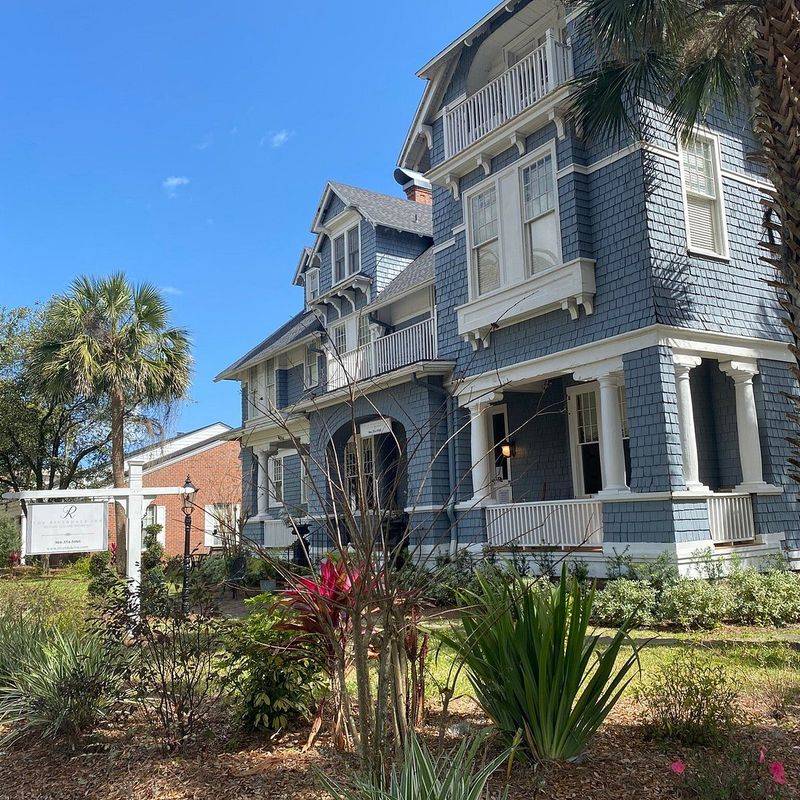
Riverside Avenue curves along the St. Johns River through one of Jacksonville’s most historically significant neighborhoods. The street developed in the early 1900s as a streetcar suburb, attracting wealthy residents who built substantial homes and supported elegant commercial districts. Buildings from that era still line much of the avenue, showcasing Prairie Style, Colonial Revival, and Mediterranean Revival architecture that reflects Jacksonville’s early 20th-century prosperity.
The neighborhood surrounding Riverside Avenue survived urban renewal efforts that destroyed much of Jacksonville’s historic fabric elsewhere. Today it represents the city’s best-preserved collection of early 20th-century architecture and urban planning. Wide sidewalks, mature trees, and human-scaled buildings create a walkable environment that feels radically different from Jacksonville’s car-dominated newer areas.
What distinguishes Riverside Avenue is its continued vitality as a neighborhood street rather than a tourist attraction. Locally-owned restaurants, shops, and businesses occupy historic storefronts. Residents still live in the old homes, and people actually walk to run errands and meet friends.
The street functions as it was designed to function a century ago—as the commercial and social spine of a thriving urban neighborhood. Walking Riverside Avenue shows what Florida cities looked like before sprawl, when neighborhoods had centers and streets were designed for people, not just cars. It’s a glimpse of an urban Florida that almost disappeared but hangs on here, still working, still lived-in, still vital.
10. Reid Avenue (Port St. Joe)
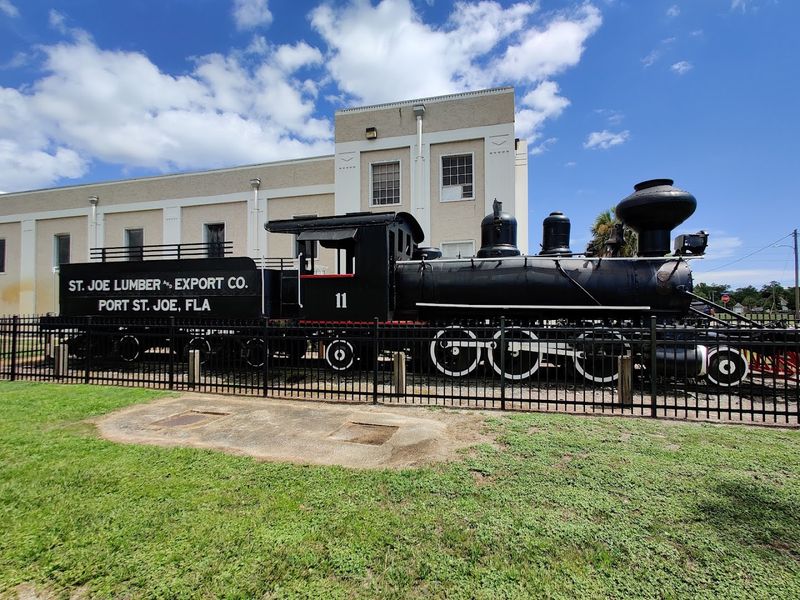
Reid Avenue serves as the main street through Port St. Joe, a Gulf Coast town that boomed briefly in the 1920s when developers hoped to create a major port city. That boom went bust with the 1929 crash, leaving behind a collection of commercial buildings from that optimistic era. These structures, built solidly in anticipation of growth that never came, now house a quiet downtown that feels suspended in time.
The avenue’s buildings show typical 1920s small-town commercial architecture—two-story brick structures with large storefront windows and apartments or offices above. Many retain original details like decorative brickwork, vintage signage, and old-fashioned awnings. Because Port St. Joe never experienced major growth after the 1920s, these buildings were never torn down for redevelopment.
They simply remained, serving the small community that stayed behind.
Walking Reid Avenue today feels like visiting a town that peaked decades ago and settled into comfortable obscurity. It’s not sad or abandoned—businesses operate, people live here, life continues—but without the pressure of growth or tourism that forces modernization elsewhere. The street maintains an authentic, unself-conscious character because nobody’s trying to preserve it for visitors or capitalize on its history.
It’s just a small Florida town going about its business in buildings that happen to be nearly a century old. That lack of pretension makes Reid Avenue perhaps the most genuinely time-capsuled street on this list.