It’s Wild That People Can Live In Florida Their Whole Lives And Miss These 10 Places
Florida might be famous for its theme parks and beaches, but some of the state’s most incredible spots remain surprisingly under the radar. Locals who’ve spent decades here often drive right past treasures that could change how they see their home state. These nine destinations prove there’s way more to Florida than the usual tourist trail, and missing them means missing out on what makes this place truly special.
1. Dry Tortugas National Park (Key West)
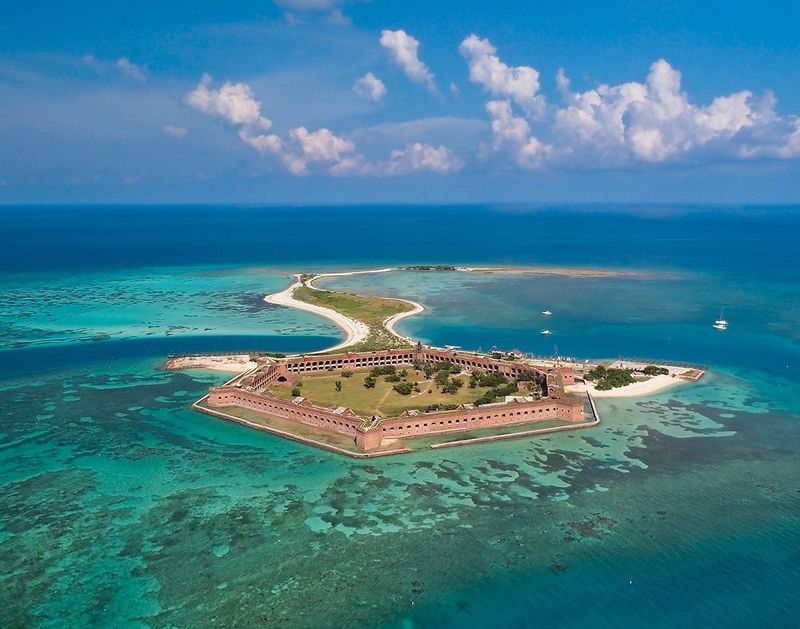
Sitting 70 miles west of Key West, this cluster of seven islands feels more like a Caribbean fantasy than mainland Florida. Getting there requires either a seaplane ride or a ferry journey, which explains why most Floridians never make the trip. The effort pays off the moment you spot Fort Jefferson rising from the water like something out of a history book.
This massive hexagonal fortress covers 16 acres and features over 16 million bricks. Construction started in 1846 but never actually finished, leaving behind a fascinating piece of unfinished American history. Snorkeling around the fort reveals coral gardens and shipwrecks that make the underwater world just as captivating as what’s above.
Camping overnight transforms the experience completely. Once day-trippers leave, you’ll have pristine beaches and star-filled skies practically to yourself. Sea turtles nest on these shores, and bird migrations bring species you won’t see anywhere else in the state.
The park’s remoteness protects its ecosystems beautifully. Crystal-clear waters offer visibility that rivals tropical destinations people fly thousands of miles to reach. Pack everything you need because there are no stores, no restaurants, and definitely no crowds fighting for space on the beach.
2. Rainbow Springs State Park (Dunnellon)
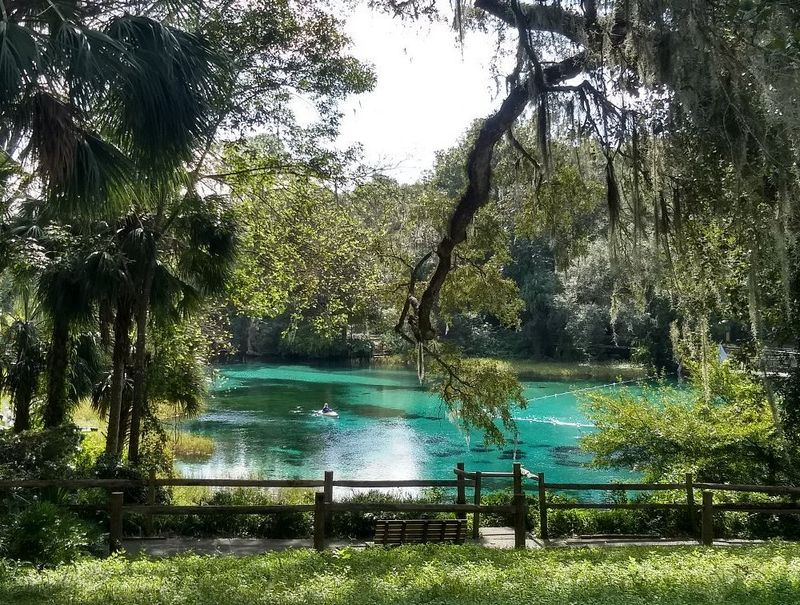
Fourth-largest spring in Florida, yet somehow it stays off most people’s radar completely. Rainbow Springs pumps out nearly 500 million gallons of water daily, creating a river so clear you can count individual fish from the surface. The name comes from sunlight refracting through the water, painting rainbows across the spring basin throughout the day.
Tubing down the Rainbow River feels like floating through liquid glass. The four-mile journey takes about two hours, drifting past underwater gardens of eelgrass swaying in the current. Turtles sunbathe on logs while fish dart beneath your tube, completely unbothered by human visitors.
Walking trails wind through old-growth forests where massive live oaks create natural canopies. Azaleas and camellias bloom in winter, transforming the landscape into something unexpectedly colorful for Florida. Photographers camp out near the headspring, waiting for that perfect moment when light hits water just right.
The park also features gardens developed in the 1930s, remnants of a defunct attraction that nature has reclaimed beautifully. Waterfalls cascade over limestone formations, creating swimming holes that stay a constant 72 degrees year-round. Summer weekends draw crowds, but visit on a weekday morning and you might have entire sections to yourself, surrounded only by birdsong and flowing water.
3. Bok Tower Gardens (Lake Wales)
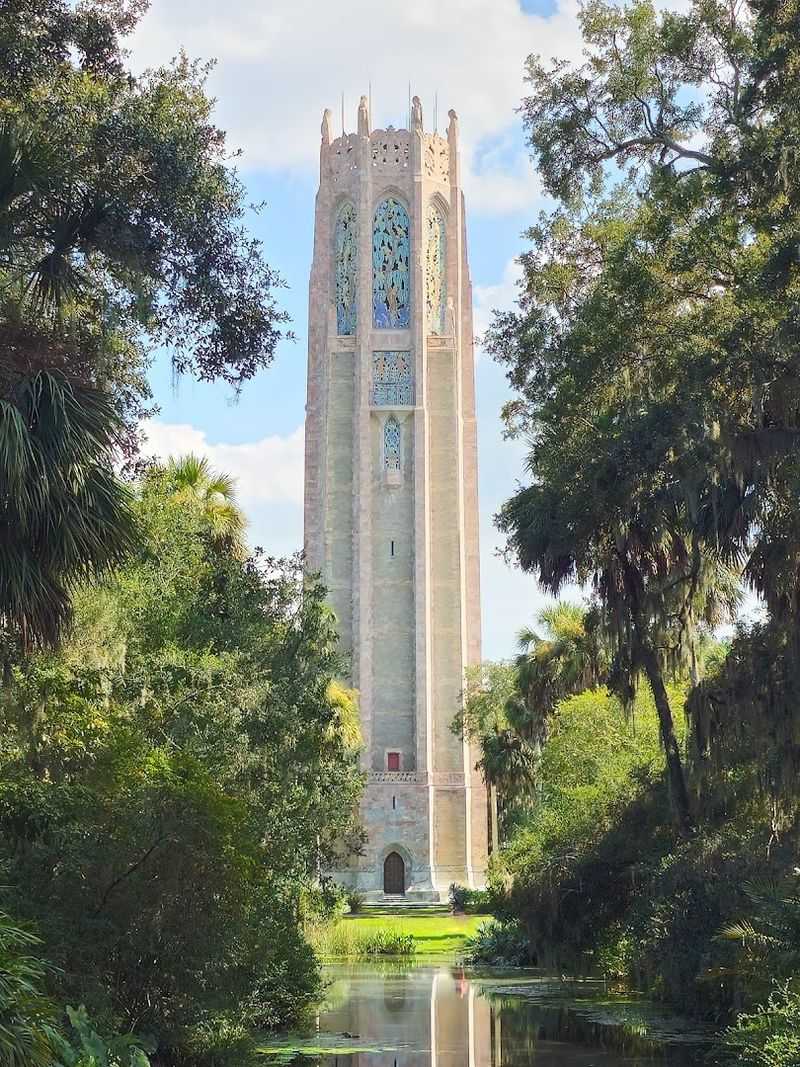
A 205-foot neo-Gothic tower rises from Iron Mountain, Florida’s highest point, playing carillon concerts that echo across manicured gardens. Edward Bok created this sanctuary in the 1920s as a thank-you gift to America for opportunities given to him as an immigrant. Most Floridians have never heard the 60-bell carillon that rings out daily at 1 and 3 p.m.
The tower itself is an architectural marvel covered in colorful tiles and intricate carvings depicting Florida wildlife. Surrounding it, 250 acres of gardens showcase plants from around the world, arranged in ways that create new discoveries around every corner. A moat encircles the tower, reflecting its image like something from a European fairytale.
Walking paths meander through pine forests and past tranquil ponds where birds gather. The landscape architect Frederick Law Olmsted Jr. designed these grounds, bringing the same vision his father used for New York’s Central Park. Seasonal blooms ensure something’s always flowering, from azaleas in spring to camellias in winter.
The Pinewood Estate, a 1930s Mediterranean Revival mansion, opened to tours in recent years. Its preservation showcases how Florida’s wealthy once lived, complete with original furnishings and stunning lake views. Combine the tower visit with the estate tour, and you’ve got a full day exploring a side of Florida that contradicts every beach-and-palm-tree stereotype imaginable.
4. St. Augustine Historic District (St. Augustine)
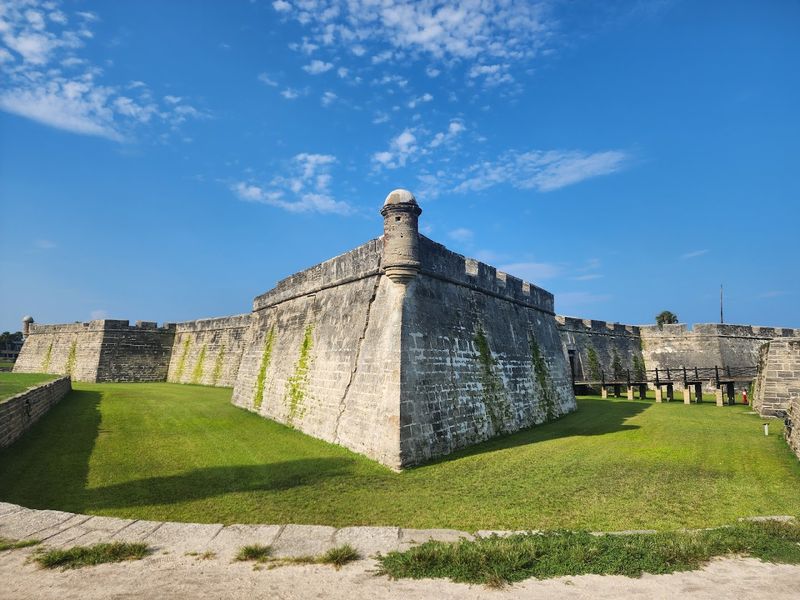
America’s oldest continuously occupied European settlement deserves more than a quick drive-through on the way to Jacksonville. Founded in 1565, St. Augustine’s historic district preserves centuries of Spanish, British, and American history in a walkable area that feels frozen in time. Coquina stone buildings line narrow streets where horse-drawn carriages still clip-clop past tourists and locals alike.
Castillo de San Marcos stands as the oldest masonry fort in the continental United States. Its walls, built from coquina limestone, absorbed cannonballs rather than shattering, making it virtually indestructible. Rangers demonstrate cannon firings on weekends, and exploring the gun deck offers views across Matanzas Bay that haven’t changed much in 300 years.
Flagler College occupies what was once the Ponce de Leon Hotel, a Gilded Age masterpiece with Tiffany stained glass windows and hand-painted ceilings. Even if you’re not a student, you can tour this architectural gem that rivals anything in Europe. The Spanish Quarter Museum recreates 1740s colonial life with costumed interpreters demonstrating blacksmithing, woodworking, and cooking techniques.
Beyond the obvious attractions, hidden courtyards and gardens wait behind unassuming doorways. St. George Street, the pedestrian thoroughfare, mixes history with modern shops and restaurants. Visit during the British Night Watch program, when costumed soldiers patrol by lantern light, and history stops feeling like something from textbooks.
5. Silver Springs State Park (Ocala)
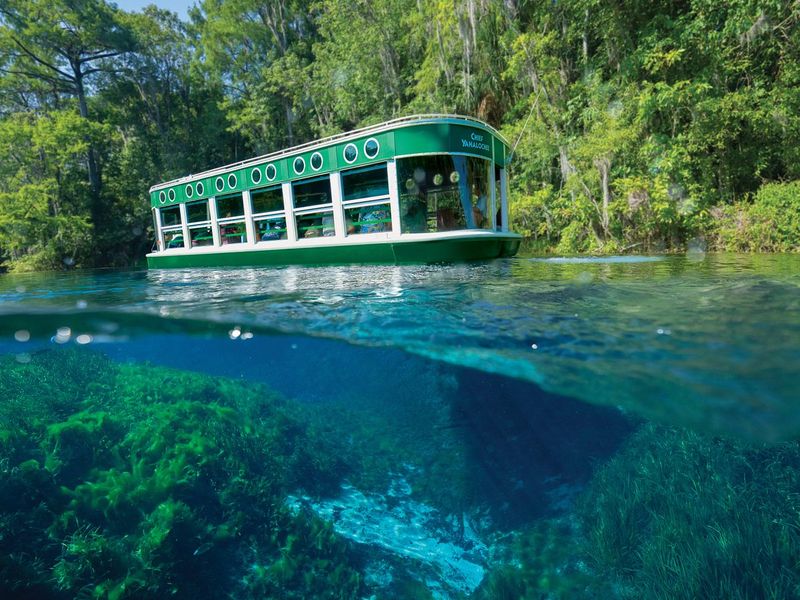
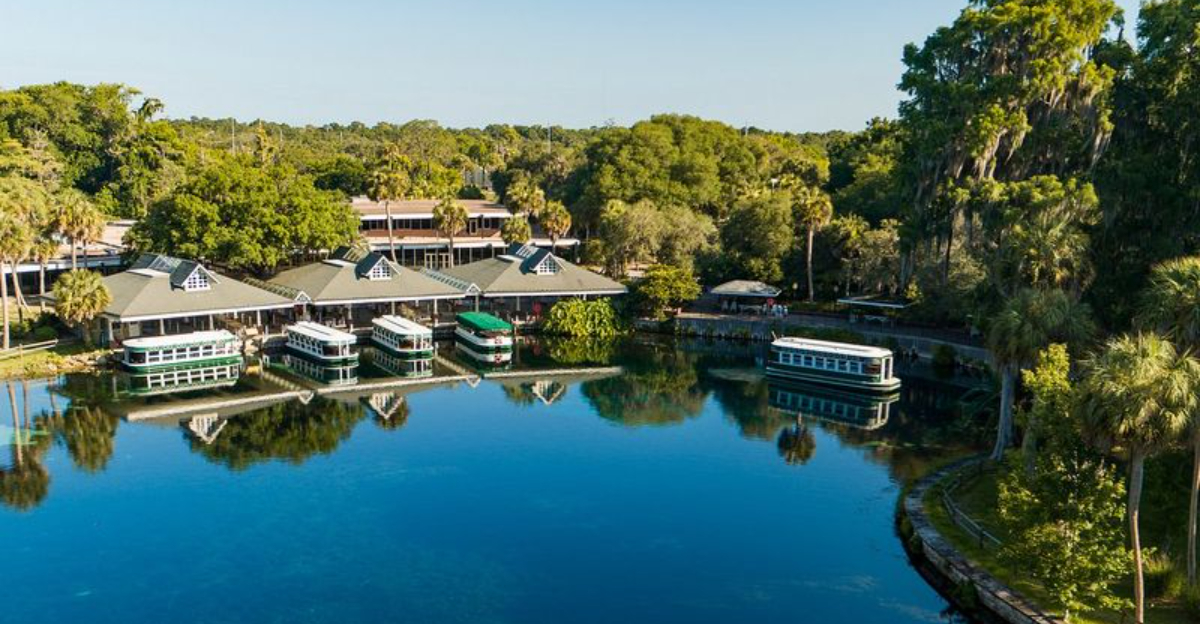
Glass-bottom boats have been gliding over these springs since 1878, making Silver Springs one of Florida’s original tourist attractions. Before theme parks existed, this was the destination, drawing visitors who wanted to peer into impossibly clear water teeming with fish and fossils. Hollywood filmed multiple Tarzan movies here in the 1930s and 40s, using the springs as a stand-in for African rivers.
The spring produces over 550 million gallons daily, creating a constant 72-degree flow that supports an entire ecosystem. Underwater visibility often exceeds 100 feet, revealing limestone formations and submerged logs that have become fish habitats. Kayaking or canoeing the Silver River offers wildlife encounters with monkeys (yes, really), alligators, turtles, and countless bird species.
Those monkeys trace back to the 1930s when someone released rhesus macaques for a Tarzan film. The population thrived, and now their descendants swing through riverside trees, occasionally startling paddlers who weren’t expecting primates in Florida. Rangers emphasize keeping distance since they’re wild animals, not theme park performers.
Hiking trails wind through areas where natural springs bubble up from the ground. The park’s museum explores the area’s history as a tourist destination, displaying vintage glass-bottom boat photos and movie memorabilia. Comparing old postcards to current views reveals how little has changed, a rarity in constantly developing Florida where yesterday’s wilderness becomes tomorrow’s shopping center.
6. Morikami Museum and Japanese Gardens (Delray Beach)
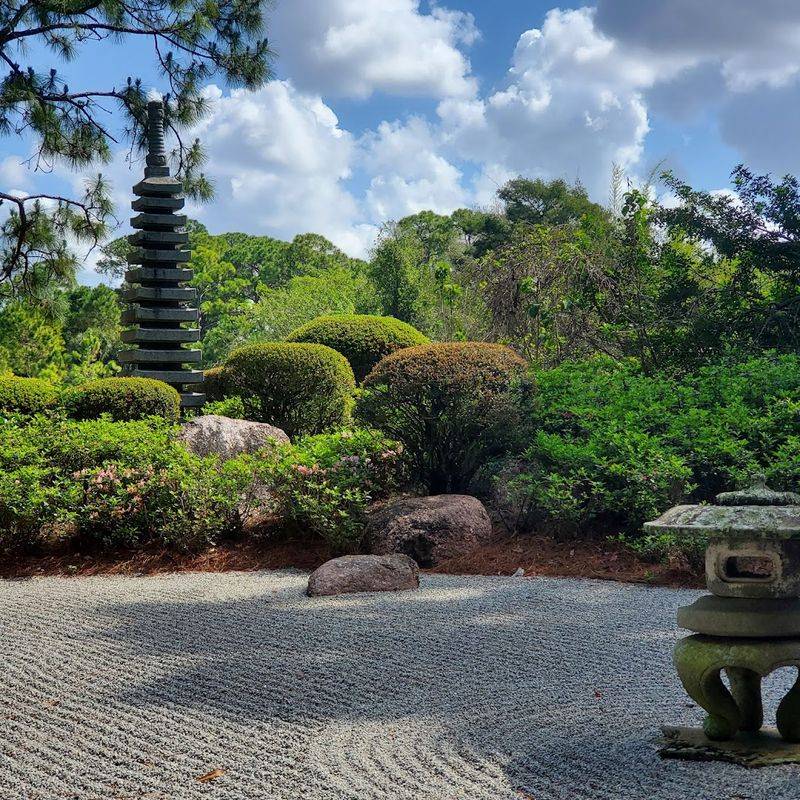
A failed agricultural colony from the early 1900s evolved into South Florida’s most unexpected cultural treasure. Japanese farmers attempted to establish the Yamato Colony here, growing pineapples and other crops in conditions nothing like their homeland. The settlement didn’t last, but George Morikami, one of the colonists, donated his land to preserve the community’s memory.
Today, 200 acres of gardens transport visitors straight to Japan without the 14-hour flight. Six distinct garden styles represent different periods and philosophies, from the contemplative rock gardens to the paradise garden designed around a lake. Koi swim lazily through ponds while turtles sunbathe on rocks, creating scenes that feel worlds away from nearby beaches.
The museum building itself showcases rotating exhibitions of Japanese art, from ancient ceramics to contemporary installations. A permanent collection tells the Yamato Colony story through photographs, letters, and artifacts that humanize these pioneers who tried creating a new life in subtropical Florida. Bonsai demonstrations and tea ceremonies happen regularly, offering hands-on cultural experiences.
Walking these paths during different seasons reveals intentional design choices. Cherry trees bloom in spring, autumn brings changing leaves, and summer’s heat gets tempered by shaded walkways and water features. The museum cafe serves Japanese-inspired cuisine, letting you extend the experience beyond just visual appreciation.
Many South Florida residents live decades here without discovering this peaceful escape exists just minutes from major highways.
7. Blowing Rocks Preserve (Jupiter Island)
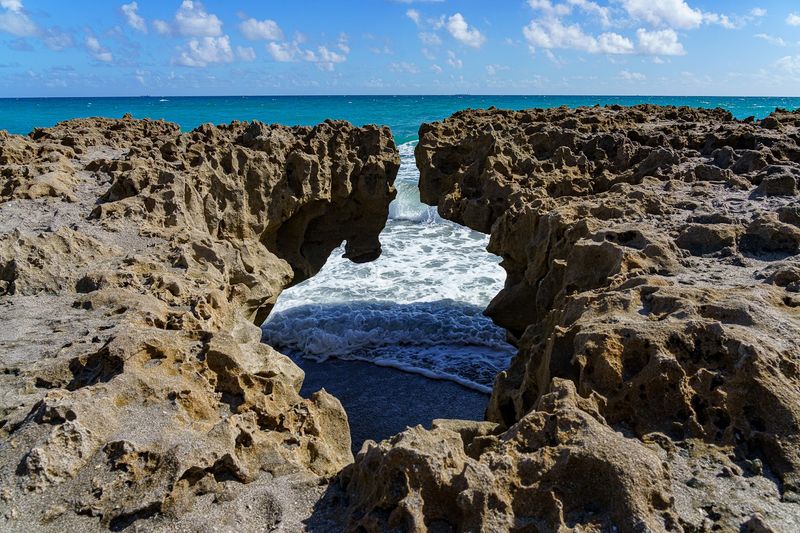
When high tide and strong winds align, seawater explodes through holes in limestone rock, shooting spray 50 feet into the air. This Anastasia limestone outcropping is the largest on Florida’s east coast, a geological oddity in a state known more for sandy beaches than rocky shores. The preserve protects one of the last undeveloped barrier island habitats in Southeast Florida.
Walking along the rocks feels like exploring another planet. Pockmarked surfaces, carved by centuries of wave action, create tide pools teeming with small fish, crabs, and sea urchins. During calm conditions, these rocks become observation platforms for watching sea turtles, dolphins, and migrating whales offshore.
Bring sturdy shoes because flip-flops won’t cut it on this terrain.
The preserve extends beyond the rocks to include coastal strand habitat, dune systems, and mangrove wetlands. Native plants adapted to salt spray and sandy soil create ecosystems found nowhere else. Gopher tortoises dig burrows in the dunes, and their tunnels provide shelter for dozens of other species.
Sea turtle nesting season transforms the beach into a protected nursery. Loggerheads, greens, and leatherbacks all nest here, their tracks crisscrossing the sand at dawn. Nature Conservancy staff lead educational programs explaining conservation efforts.
Sunrise visits reward early risers with golden light painting the rocks and often fewer crowds than popular beaches just miles away. This preserve proves Florida’s coast offers experiences beyond umbrella rentals and beach chairs.
8. Weeki Wachee Springs State Park (Spring Hill)
Real mermaids perform underwater shows in a natural spring theater, a tradition dating back to 1947. Former Navy frogman Newton Perry invented the attraction, training women to breathe from air hoses while performing underwater ballet. What started as a roadside curiosity became a Florida icon, surviving decades of changing tourism trends.
Watching mermaids drink soda, eat bananas, and perform choreographed routines 15 feet underwater never gets old. The spring’s constant 74-degree temperature and 100-foot visibility create perfect conditions for these performances. Modern mermaids train for months, mastering breath control and underwater grace while making it look effortless.
The underwater theater lets audiences view the spring from below the surface, revealing a world most swimmers never see.
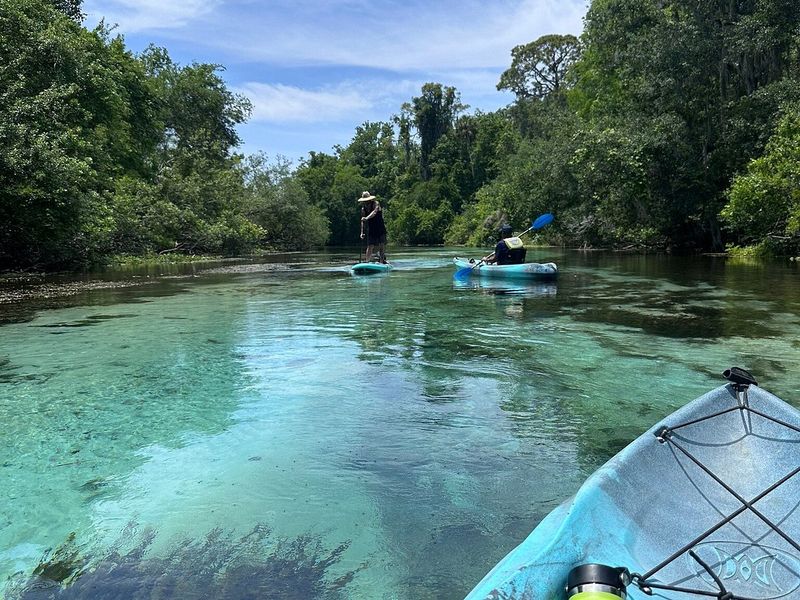
Beyond mermaid shows, the spring feeds the Weeki Wachee River, one of Florida’s most pristine waterways. Kayaking or paddleboarding downstream reveals why Native Americans called this area “little spring” or “winding river.” Manatees visit during winter, seeking the spring’s warm water as refuge from cold Gulf temperatures. The five-mile paddle passes through untouched wilderness where cypress trees drape Spanish moss over the water.
Buccaneer Bay, the park’s water attraction, offers slides and a lazy river fed by spring water. Unlike chlorinated pools, this water stays naturally cool and incredibly clear. The park represents a slice of Old Florida tourism, preserved and protected when it could have easily been demolished for development.
9. Myakka River State Park (Sarasota)
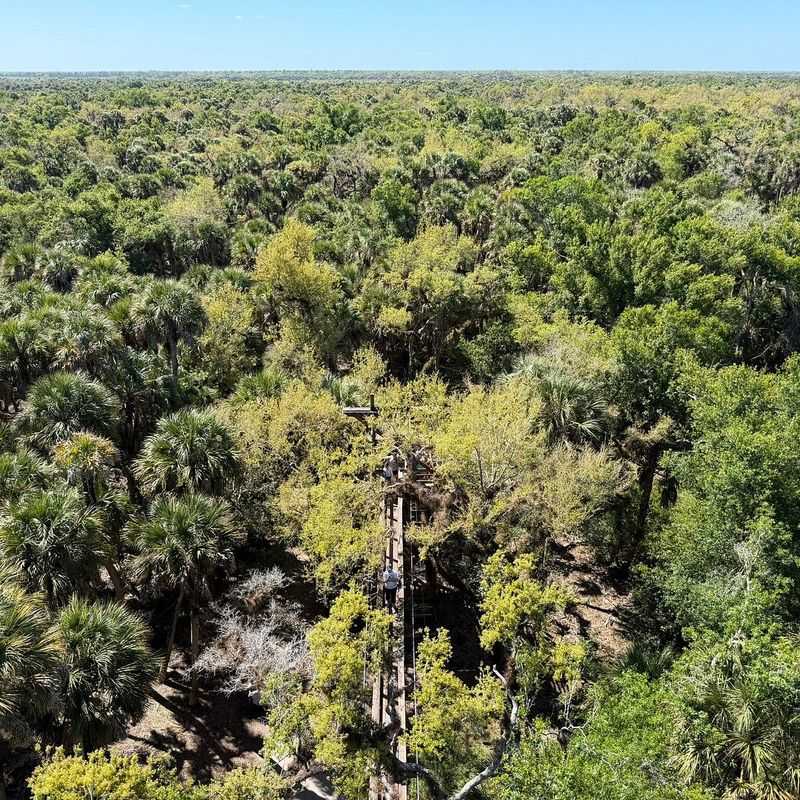
One of Florida’s oldest and largest state parks sprawls across 58 square miles of wetlands, prairies, and forests. Myakka River winds through the property, creating diverse habitats that support over 300 bird species. The canopy walkway, suspended 25 feet above ground, offers perspectives most visitors never experience, looking down on ecosystems instead of up at them.
Alligators sun themselves along the riverbanks in numbers that remind you this is their home, not ours. Airboat tours skim across the marsh, getting you close to wildlife while guides explain the delicate balance keeping these ecosystems healthy. Photographers stake out spots near the weir, where fish congregate and birds follow, creating feeding frenzies worth capturing.
The park’s backcountry trails lead deep into areas where human impact feels minimal. Primitive camping sites let you spend nights surrounded by sounds of nocturnal animals and insects, far from city lights. Deer, wild turkeys, and even bobcats appear regularly for those patient enough to wait quietly.
A 74-foot observation tower provides panoramic views across the entire park. Climbing its stairs rewards you with vistas stretching to the horizon, showing just how much wild Florida still exists. During dry season, the prairie transforms into a sea of golden grass, while wet season brings standing water that reflects clouds and sky.
Many Sarasota residents stick to beaches, never realizing this wilderness sits just minutes inland, offering experiences no coastal visit can match.