10 Florida Experiences That Feel Expensive but Are Completely Free
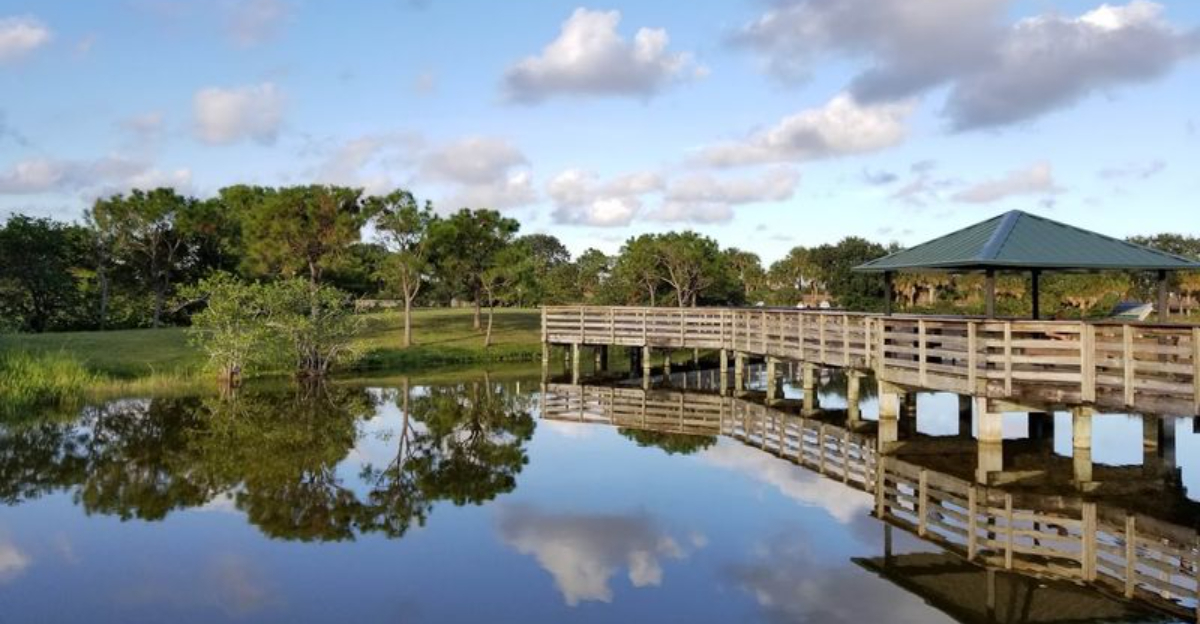
Florida might be famous for its theme parks and beach resorts, but some of the state’s most memorable experiences won’t cost you a dime. From world-class museums to wildlife encounters that rival paid safaris, these attractions deliver luxury-level thrills without the luxury price tag. Whether you’re a longtime resident or just visiting, these free gems prove that the best things in the Sunshine State really can be free.
1. Take a Wildlife Safari on Lake Apopka Wildlife Drive (Apopka)
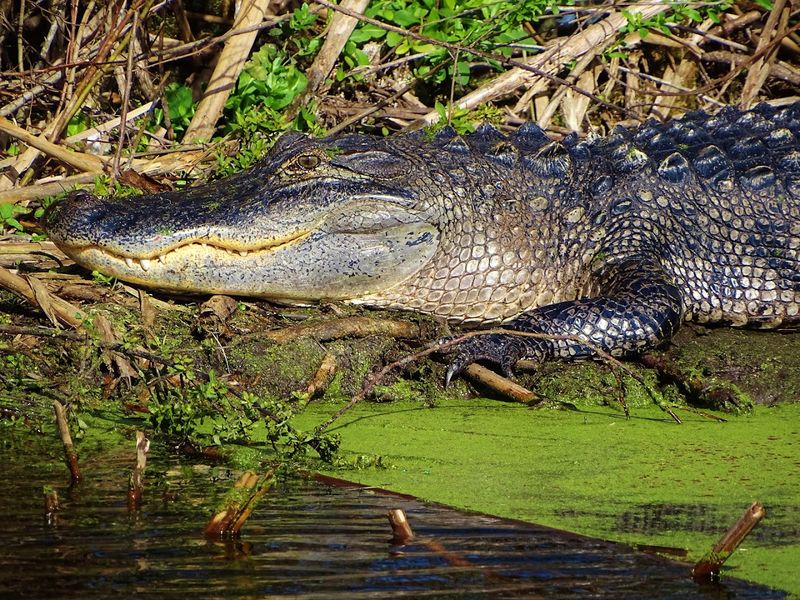
Picture yourself cruising through 11 miles of restored wetlands where nature puts on a show that rivals any paid safari. Lake Apopka Wildlife Drive transforms what used to be farmland back into thriving habitat, and now it’s one of Central Florida’s best-kept secrets for wildlife watching.
Alligators sunbathe along the banks while great blue herons stalk through shallow water just feet from your car window. Bald eagles perch in dead trees scanning for fish, and during migration season, the variety of birds becomes almost overwhelming. Turtles stack themselves on logs like nature’s version of Jenga, and if you’re patient, you might spot river otters playing in the channels.
The beauty of this experience is that you never have to leave your vehicle, making it perfect for families with small kids or anyone who prefers air-conditioned comfort. Early morning and late afternoon offer the best lighting and most active wildlife. Bring binoculars and a camera with a good zoom lens.
The drive operates on specific days and hours, so check the schedule before heading out. Pack snacks and water since there are no facilities once you enter. Cell service can be spotty, which honestly adds to the escape-from-everything appeal of spending a morning surrounded by wild Florida.
2. Watch Manatees From a Waterfront Discovery Center (West Palm Beach)
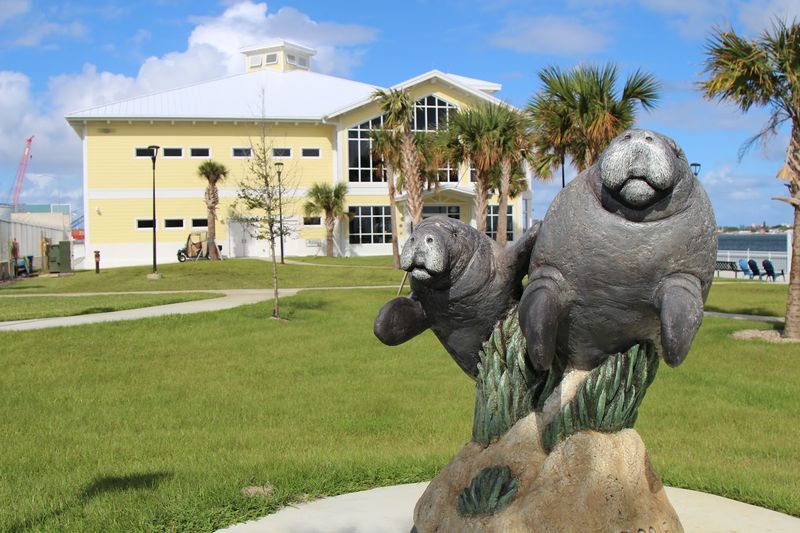
West Palm Beach’s Manatee Lagoon sits right next to a power plant outflow, which sounds decidedly unglamorous until you realize that warm water discharge creates a manatee magnet during cooler months. From November through March, these gentle giants gather by the dozens, and you get front-row seats from elevated observation decks.
The center itself feels more like a modern aquarium than a free attraction. Interactive exhibits explain manatee biology, conservation efforts, and Florida’s marine ecosystems through touchscreens, videos, and hands-on displays. Educational programs run regularly, and staff members are genuinely enthusiastic about answering questions.
When manatees are present, watching them is mesmerizing. They surface to breathe, roll lazily in the warm current, and sometimes bring calves along. The center provides information about how many manatees are currently visiting, so you know what to expect before you even walk in.
Even during summer when manatees scatter to other areas, the center remains worth visiting for its exhibits and waterfront views. The gift shop supports conservation programs, and there’s a small café if you want to grab a snack. Parking is completely free, which is practically unheard of in South Florida waterfront locations.
Plan for at least an hour to fully enjoy everything the center offers.
3. Walk Through a Luxury Waterfront Park at Sunset (Miami Beach)
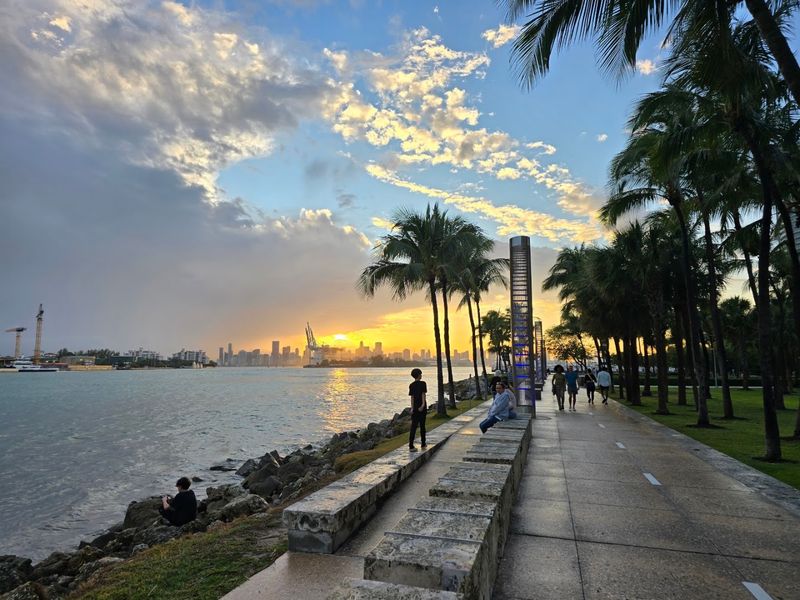
South Pointe Park occupies prime real estate at the southern tip of Miami Beach, where Biscayne Bay meets the Atlantic Ocean. The landscaping alone probably cost more than most people’s houses, with manicured lawns, swaying palms, and contemporary design elements that scream high-end resort.
Walking paths wind through the park, offering constantly changing views of the water, downtown Miami’s skyline, and the steady parade of cruise ships navigating Government Cut. These massive vessels pass so close you can practically wave to passengers on deck. The channel also sees mega-yachts, container ships, and Coast Guard cutters, creating an ever-changing maritime show.
Sunset transforms the park into something magical. The western sky explodes in orange and pink while the city lights begin twinkling across the bay. Families spread blankets for picnics, couples stroll hand-in-hand, and photographers set up tripods to capture the perfect shot.
Beach access is built right in, so you can dip your toes in the ocean before or after your park visit. The park also features a restaurant, playground, and fishing pier. While the park itself is free, nearby parking meters run about two dollars per hour, which is still a bargain considering the location.
Arrive early on weekends because this local favorite fills up fast with people who know quality when they see it.
4. Explore a World-Class Art Collection in Winter Park (Winter Park)
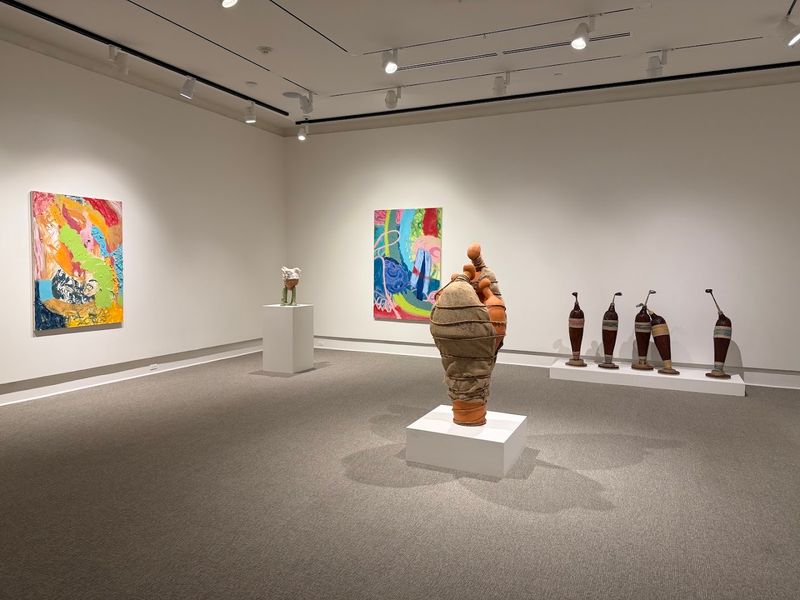
Tucked onto the Rollins College campus, this museum houses a collection that would make many major-city institutions jealous. Old Masters hang alongside American paintings, contemporary works, and rotating exhibitions that bring in pieces from around the world. Walking through feels like you should have paid admission, but the museum believes art should be accessible to everyone.
The permanent collection includes works spanning centuries and continents. You might find yourself face-to-face with Renaissance religious paintings, then turn a corner into a gallery of modern abstract pieces. The museum doesn’t try to be everything to everyone but focuses on quality over quantity, meaning every piece earns its wall space.
What makes this even better is the museum’s relationship with the nearby Alfond Inn, an upscale boutique hotel that displays additional works from the collection throughout its public spaces. You can essentially extend your museum visit by walking through the hotel’s elegant corridors and lounges, admiring art in a completely different setting.
The museum building itself is architecturally interesting, with natural light flooding the galleries and thoughtful design that enhances rather than distracts from the art. Special exhibitions change regularly, so repeat visits always offer something new. Parking on campus is free during most times, making this one of the easiest cultural experiences in Central Florida to access.
5. Wander an Elevated Boardwalk Through Wakodahatchee Wetlands (Delray Beach)
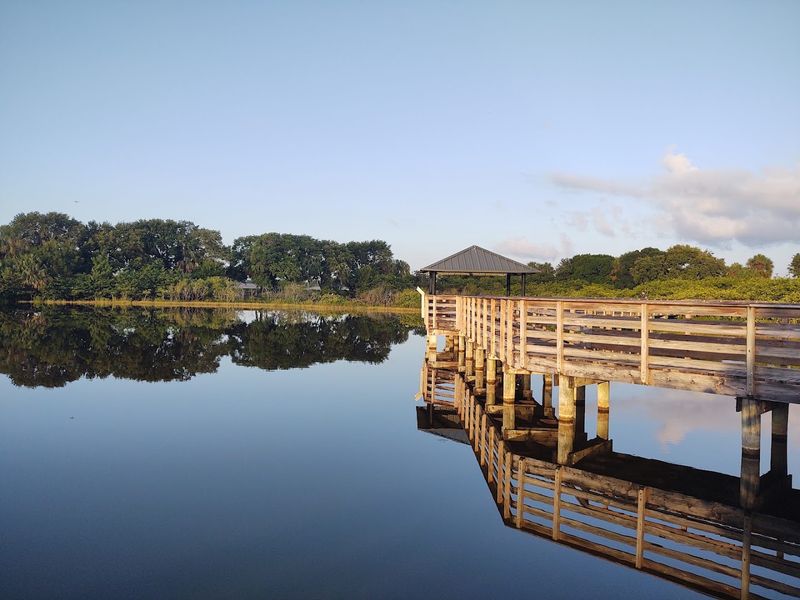
Someone had the brilliant idea to turn a water treatment facility into a wildlife sanctuary, and the result is Wakodahatchee Wetlands—a three-quarter-mile boardwalk that feels like you’ve stepped into a nature documentary. The elevated walkway keeps you dry while putting you at eye level with some of Florida’s most photogenic wildlife.
Alligators lounge in the sun so close you could practically count their teeth (but definitely don’t try). Anhinga birds spread their wings to dry in poses that look like they’re performing yoga. Herons, egrets, and ibis wade through shallow water hunting for fish, while turtles of various sizes stack themselves on every available log.
Nesting season brings extra drama as birds build elaborate stick nests on specially constructed islands throughout the wetlands. Baby birds make their awkward first flights, and protective parents squawk warnings at anything that gets too close. Photographers love this place because the boardwalk provides stable platforms and the wildlife is remarkably tolerant of human presence.
The boardwalk is stroller and wheelchair accessible, making it genuinely available to everyone. Shade is limited, so morning visits are more comfortable during summer months. Bring water, sunscreen, and a camera.
The parking lot is small but free, and the wetlands are open from sunrise to sunset. Plan to spend at least an hour if you want to complete the full loop and actually observe the wildlife rather than just rushing through.
6. Spend an Evening at Disney Springs (Lake Buena Vista)
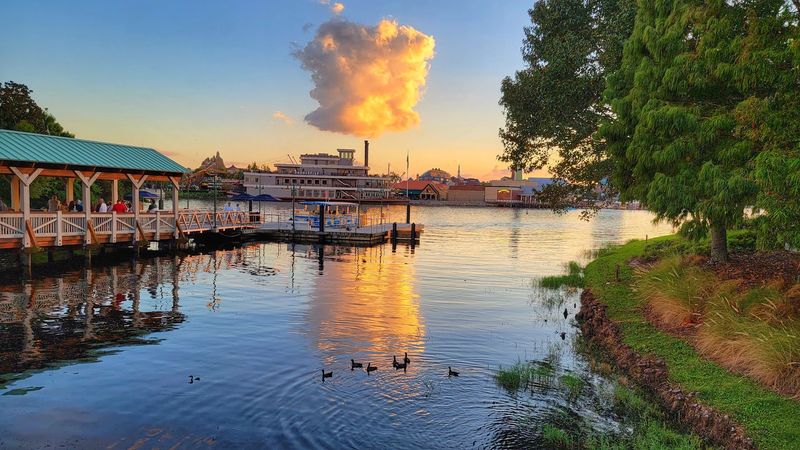
Disney Springs proves you can experience Disney magic without dropping hundreds of dollars on theme park tickets. This massive entertainment and shopping complex spreads across four distinct neighborhoods, each with its own personality and design. Elaborate theming makes you feel transported to different eras and locations as you wander from area to area.
Waterfront promenades overlook springs and waterways where you can watch boats glide past. Live entertainment pops up throughout the complex—musicians, street performers, and seasonal shows that change with holidays. The architecture alone is worth admiring, from the industrial-chic buildings in The Landing to the tropical vibe of Marketplace.
World-class Disney stores let you browse without pressure to buy, though the displays are designed to tempt. You can explore the massive World of Disney store, check out Star Wars merchandise, or browse through the LEGO store’s impressive builds. Window shopping here rivals actual shopping in most other places.
Standard self-parking is complimentary in the massive garages, which is shocking considering the location. Of course, Disney wants you to spend money on dining and shopping once you’re there, but nobody forces you to open your wallet. You can easily spend an entire evening walking around, enjoying the atmosphere, catching free entertainment, and treating Disney Springs like an elaborate free theme park.
Weekends get crowded, so weekday evenings offer a more relaxed experience.
7. See More Than 150 Historic Aircraft (Pensacola)
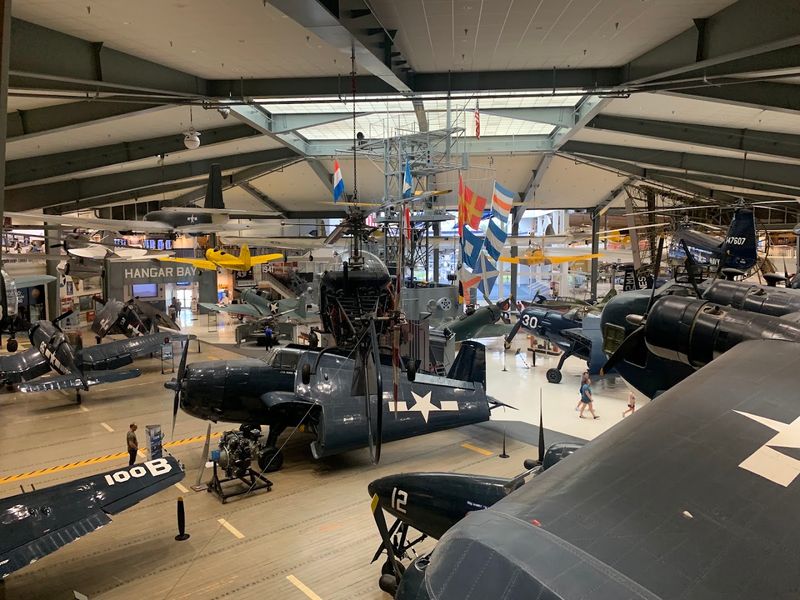
The National Naval Aviation Museum feels like it should cost at least fifty dollars to enter, but it’s completely free. More than 150 restored aircraft fill massive hangars, representing every era of naval aviation from fabric-covered biplanes to modern fighter jets. Walking through is like traveling through time, seeing how aircraft evolved from rickety contraptions to supersonic marvels.
World War II fighters sit alongside Korean War jets and Vietnam-era helicopters. You can get close enough to see rivets, read placards explaining each aircraft’s history, and imagine what it was like to fly these machines in combat. Some aircraft hang from the ceiling in dynamic poses that suggest aerial maneuvers, while others sit at ground level where you can appreciate their size and detail.
The museum offers free docent-led tours where knowledgeable guides share stories about specific aircraft and the people who flew them. Interactive exhibits let you experience flight simulators, and a massive theater shows films about naval aviation history. The Blue Angels’ practice schedule is posted, and when they’re training, you might catch a practice show from the museum grounds.
Access requires passing through the main gate at Naval Air Station Pensacola, where adults must show current identification that meets federal requirements. Parking is free once you’re on base. Plan for at least three hours to see everything properly, though aviation enthusiasts could easily spend an entire day here absorbing every detail.
8. Explore the Florida Keys Without Getting Wet (Key West)
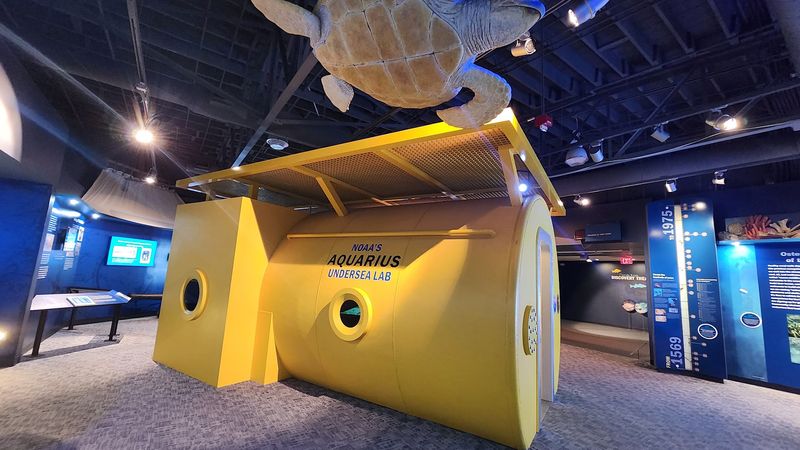
Not everyone wants to snorkel or dive, but everyone should understand what makes the Florida Keys ecosystem so special. The Florida Keys Eco-Discovery Center recreates underwater environments so realistically you’ll feel like you’re swimming through them, all while staying completely dry in air-conditioned comfort.
Interactive exhibits bring coral reefs to life with detailed models showing the incredible diversity of species that depend on these underwater cities. Touch screens explain the delicate balance of reef ecosystems and why they matter. Mangrove displays show how these tangled roots provide nurseries for countless fish species, while seagrass exhibits reveal the hidden world beneath shallow waters.
A mock-up of Aquarius, the underwater research laboratory where scientists live and work for extended periods, gives you a glimpse into what it’s like to actually live beneath the ocean. Kids especially love crawling through the tight spaces and imagining themselves as underwater explorers. Life-size reef dioramas showcase the brilliant colors and bizarre shapes of coral and tropical fish.
The center also addresses conservation challenges facing the Keys, from coral bleaching to invasive species, without being preachy or depressing. You leave understanding why protecting these environments matters. Admission is free, parking is free, and the location near the Key West waterfront means you can easily combine your visit with walking around the area.
It’s a perfect rainy-day activity or a welcome break from the heat and sun.
9. Visit a Museum Filled With Fighter Jets and Bombers (Fort Walton Beach)

Fort Walton Beach’s Air Force Armament Museum specializes in the weapons side of military aviation, which means the aircraft on display are the ones that carried bombs, fired missiles, and changed the course of wars. The collection spans from World War II through modern conflicts, showing how air combat evolved over decades.
Indoor galleries display hundreds of artifacts—bombs, missiles, guns, and equipment that tell the story of aerial warfare. You can see everything from simple gravity bombs to sophisticated guided munitions. The exhibits don’t glorify war but rather document the technology and the people who developed and used it.
Personal stories from airmen add human context to the hardware.
The outdoor airpark is where things get really impressive. Massive bombers, sleek fighters, and specialized aircraft sit under the Florida sun, many positioned so you can walk underneath and around them. The scale of some aircraft is impossible to appreciate in photographs—standing next to a B-52 or an F-4 Phantom gives you newfound respect for the engineering and the courage required to fly these machines.
The museum is located on Eglin Air Force Base, but access doesn’t require going through base security—there’s a separate entrance specifically for museum visitors. Both the indoor museum and outdoor airpark are free to explore. Parking is free, and the staff includes retired military personnel who love sharing stories and answering questions about the exhibits.
10. Tour an Impressive Fine-Art Museum at the University of Florida (Gainesville)
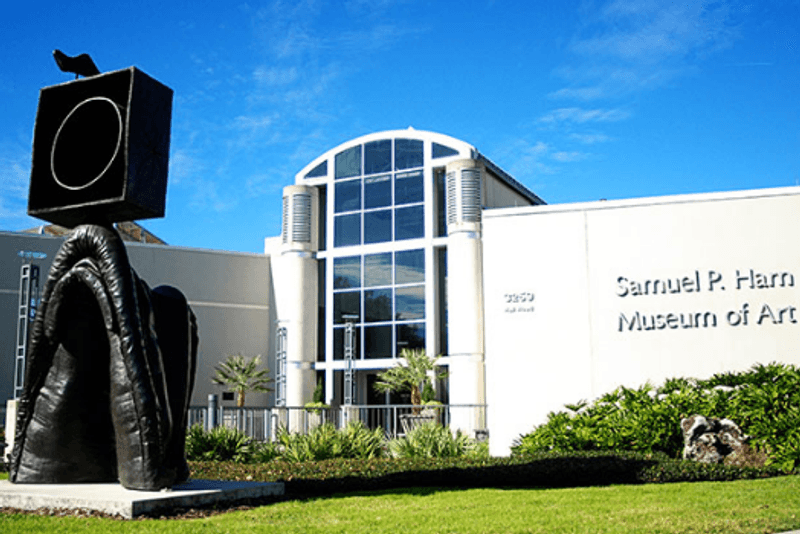
University museums sometimes get overlooked, but the Harn Museum of Art rivals professional institutions in major cities. The collection includes thousands of works covering African art, Asian art, modern and contemporary pieces, and one of the best photography collections in the Southeast. The building itself is architecturally stunning, with natural light carefully controlled to protect the art while creating beautiful viewing spaces.
African galleries display masks, textiles, sculptures, and ceremonial objects that represent diverse cultures across the continent. Asian collections include ceramics, paintings, and decorative arts spanning centuries. The contemporary galleries rotate regularly, bringing in cutting-edge works that challenge and inspire.
Photography exhibits showcase both historical and modern images that document culture and push artistic boundaries.
What sets the Harn apart is how thoughtfully everything is curated and displayed. Wall texts provide context without overwhelming you with academic jargon. The flow between galleries feels natural, and there’s enough variety that different types of art lovers will find something that speaks to them.
The museum also hosts lectures, films, and special events that deepen engagement with the collections.
Admission is always free, which is remarkable considering the quality and breadth of what’s on display. Parking is free during evenings, weekends, and university holidays, and reasonably priced during weekday business hours. The museum sits on the edge of campus near the cultural plaza, making it easy to combine with a walk around the university’s beautiful grounds.