10 Florida Places I Wish I Could See Again For The First Time
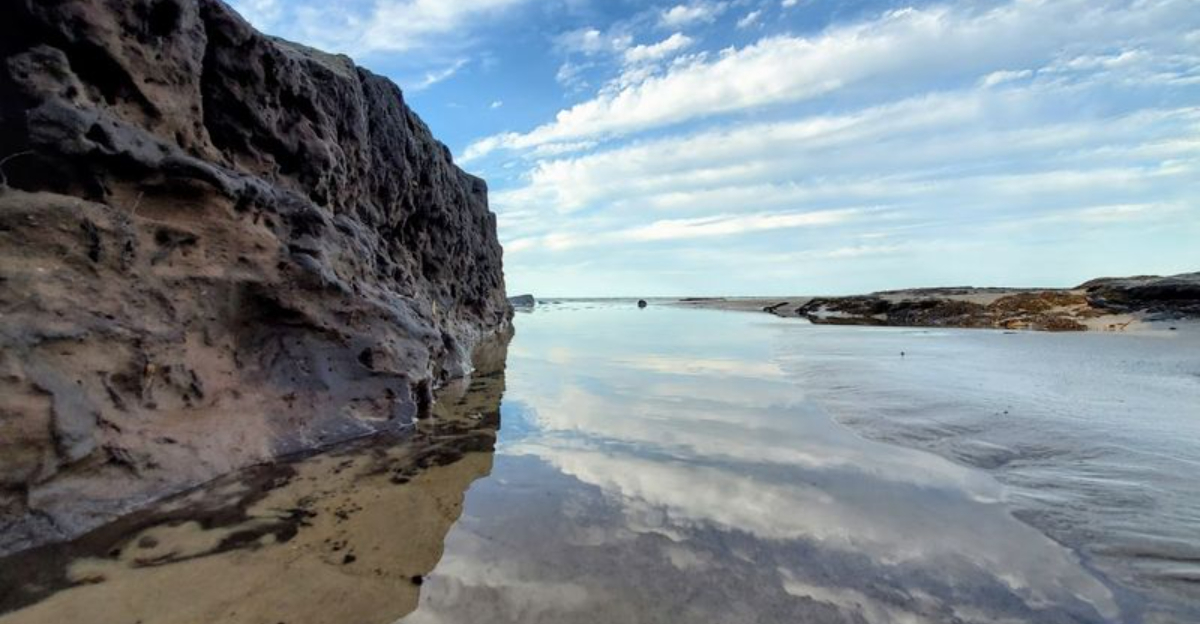
Some places hit different the first time you see them. That initial shock when you round a corner and realize Florida isn’t just beaches and theme parks—it’s sinkholes, waterfalls, wild bison, and volcanic-looking coastlines. These ten spots gave me that jaw-drop moment, and honestly, I’d love to experience that surprise all over again.
They’re the kind of places that make you rethink what Florida actually looks like.
1. Blackrock Beach (Big Talbot Island State Park)
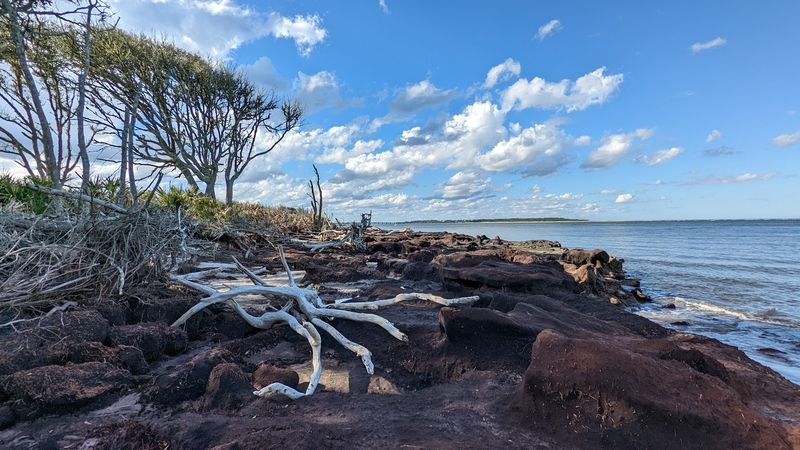
Walking onto Blackrock Beach feels like stepping into a completely different state. The dark, jagged formations along the shore look almost volcanic, and the whole vibe is more Pacific Northwest than Sunshine State. Florida State Parks calls it a “unique and irreplaceable Florida wonder,” and that’s not marketing speak—it really does feel like the landscape glitched.
Instead of sugary sand and calm turquoise water, you get weathered driftwood sculptures, tide pools tucked between ancient-looking rocks, and a shoreline that changes with every storm. Photographers love this place because the contrast is so stark and cinematic. The “rocks” are actually compacted sediment and clay, but they photograph like lava stone.
What makes it a first-time stunner is how unexpected it is. Most people have no idea Florida has a beach like this. You can explore the formations at low tide, hunt for shells in the crevices, and just soak in the moody atmosphere.
It’s raw, rugged, and completely unlike the Florida postcards you grew up seeing.
2. Devil’s Millhopper Geological State Park (Gainesville)
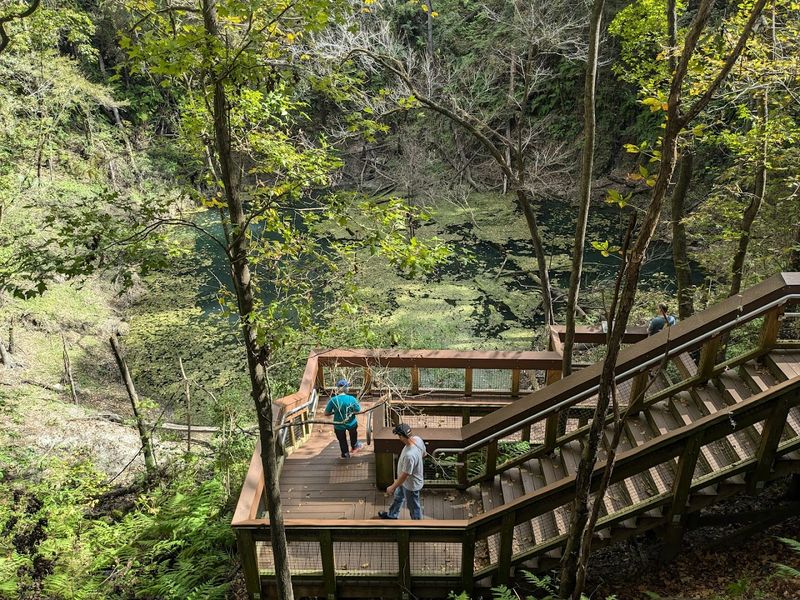
A giant sinkhole filled with ferns, waterfalls, and a wooden staircase spiraling down into what feels like a mini rainforest? That’s not the Florida most people picture. Devil’s Millhopper is a 120-foot-deep karst sinkhole, and it’s one of the few places in the state where you can see more than 100 feet of exposed geologic rock layers stacked like a timeline.
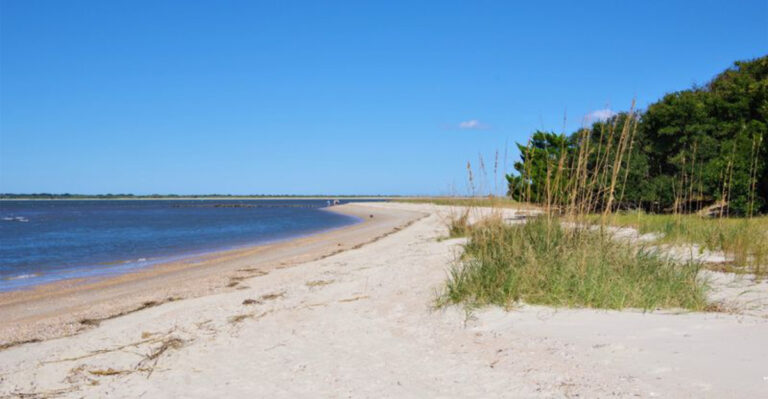
The descent is cool—literally and figuratively. As you walk down the 232-step boardwalk, the temperature drops and the air gets thick with moisture. Tiny streams trickle down the walls, ferns crowd every ledge, and the whole scene feels ancient and otherworldly.
It’s like Florida decided to cosplay as Appalachia for a day.
First-timers always do a double take. You’re in north-central Florida, surrounded by pine flatwoods, and then suddenly you’re looking into this gaping hole in the earth filled with life. The name comes from an old legend about the devil grinding bones, but honestly, the real geology is cooler than any folklore.
It’s a quick visit, but it sticks with you.
3. Ravine Gardens State Park (Palatka)
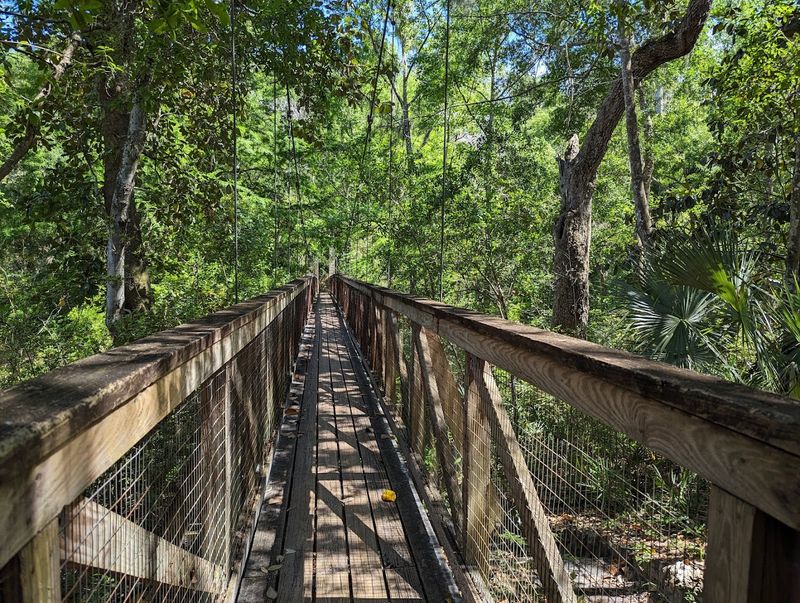
Ravine Gardens is one of those places that makes you wonder why more people don’t talk about it. Two steep, ancient ravines carved by a spring-fed creek cut through the landscape, with banks reaching up to 120 feet deep. The whole area was transformed into a rustic tropical garden back in the 1930s, and it still has that old-fashioned, romantic charm.
Azaleas bloom like crazy here in the spring, but even in the off-season, the ravines are stunning. Ferns spill over the edges, palms and oaks create a canopy overhead, and the creek winds through the bottom like a secret passage. Suspension bridges crisscross the ravines, giving you views from every angle.
It’s lush, dramatic, and wildly underrated.
What hits you on the first visit is how unexpected the topography is. Florida is flat, right? Not here.
The elevation changes, the layered vegetation, the way light filters through the trees—it all feels more like the Smokies than the Sunshine State. You can hike the trails, picnic by the water, or just stand on a bridge and take it all in. It’s a sleeper hit.
4. Blowing Rocks Preserve (Jupiter Island)
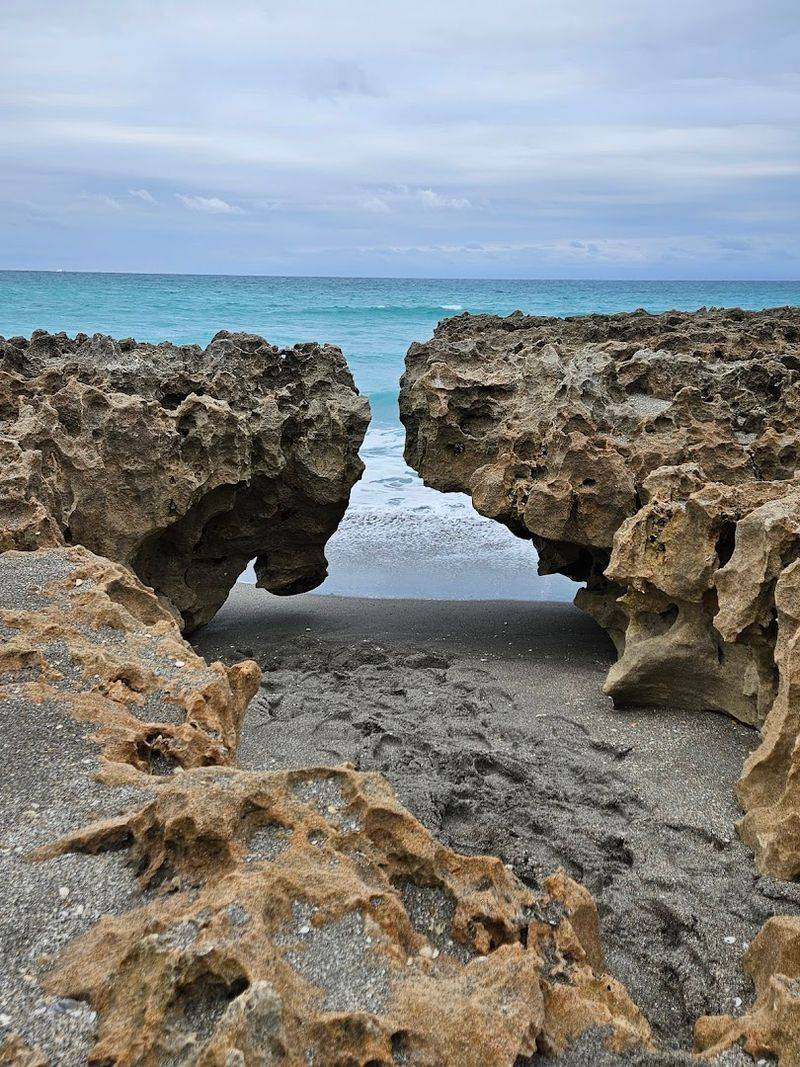
Blowing Rocks Preserve is proof that Florida beaches can do more than just lay there looking pretty. This Nature Conservancy site protects a rare stretch of Anastasia limestone shoreline, and when the surf is up, waves crash into the rocks and shoot saltwater plumes up to 50 feet into the air. It’s loud, dramatic, and completely unlike the typical beach day.
The rock formations are pockmarked and craggy, worn smooth in some spots and sharp in others. At low tide, you can explore tide pools full of crabs, sea urchins, and tiny fish. At high tide, especially during winter swells or storms, the blowhole effect kicks in and the whole shoreline turns into a natural water show.
First-timers are always shocked because it breaks every Florida beach stereotype. No white sand, no calm water, no endless horizon of sameness. Just raw, rocky coastline and the Atlantic doing its thing.
Bring sturdy shoes, check the tide charts, and be ready to get a little wet. It’s a great place to reset your expectations of what a Florida beach can be.
5. The Kampong (Coconut Grove)
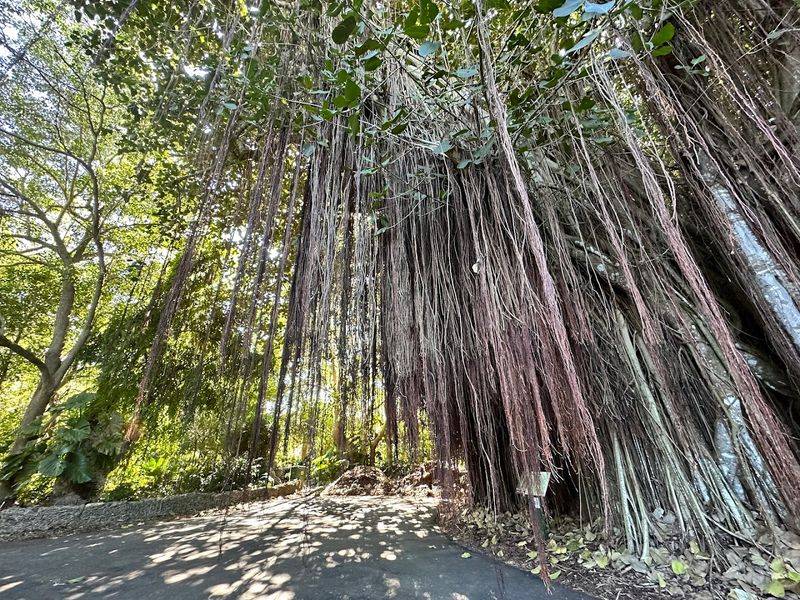
Tucked away in the middle of Miami’s Coconut Grove neighborhood is a nine-acre tropical garden that feels like stepping into a secret world. The Kampong was the home landscape of Dr. David Fairchild, a legendary plant explorer who introduced more than 200,000 plants to the United States. The National Tropical Botanical Garden manages it now, and it’s one of the most peaceful, intimate green spaces in South Florida.
The garden is packed with rare fruit trees, palms, flowering vines, and plants from every corner of the tropics. Mango trees older than most people reading this, bamboo groves that rustle in the breeze, and pathways that wind past ponds and under canopies. It’s quieter and more personal than the bigger-name botanical gardens in the area, which is part of its charm.
What makes it a first-time stunner is the “how is this here?” factor. You’re in the heart of Miami, surrounded by traffic and development, and then you walk through the gates and everything slows down. It’s a living collection, a historical site, and a reminder that Florida’s plant life is just as wild as its wildlife.
6. Paynes Prairie Preserve State Park (Micanopy/Gainesville)
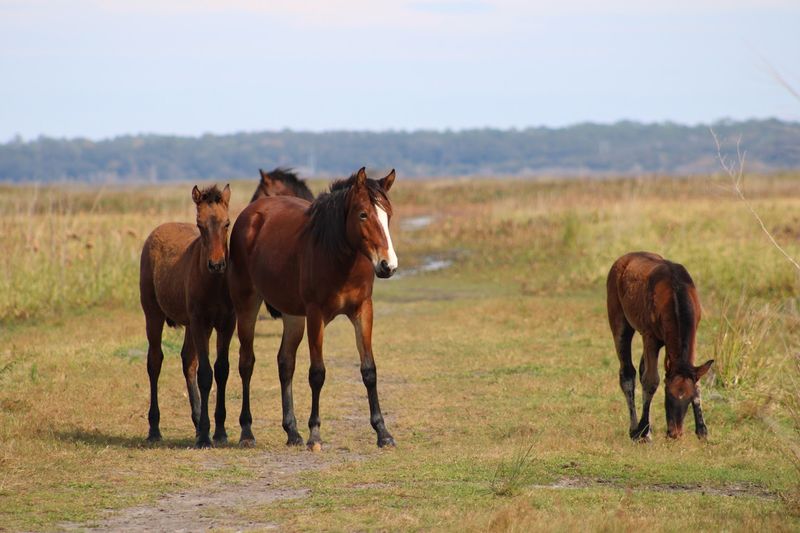
Paynes Prairie doesn’t look like Florida. It looks like the Great Plains dropped into north-central Florida and decided to stay. This 21,000-acre preserve is a massive open savanna dotted with wild horses, bison, alligators, and nearly 300 bird species.
There’s a 50-foot observation tower that gives you a panoramic view of the whole scene, and it’s borderline surreal.
The bison herd is the real showstopper. Seeing a group of these massive animals grazing in the middle of Florida is one of those “wait, what?” moments that sticks with you. Wild horses roam the prairie too, and if you’re lucky, you’ll spot them silhouetted against the horizon at sunrise or sunset.
The birding is world-class, especially during migration season when sandhill cranes and wading birds flood the wetlands.
First-timers are always caught off guard by how different the landscape is. No palms, no beaches, no theme parks—just wide-open space, big sky, and wildlife everywhere. You can hike, bike, or horseback ride the trails, or just climb the tower and take it all in.
It’s one of the best places in the state to see Florida as it was before development.
7. Falling Waters State Park (Chipley)
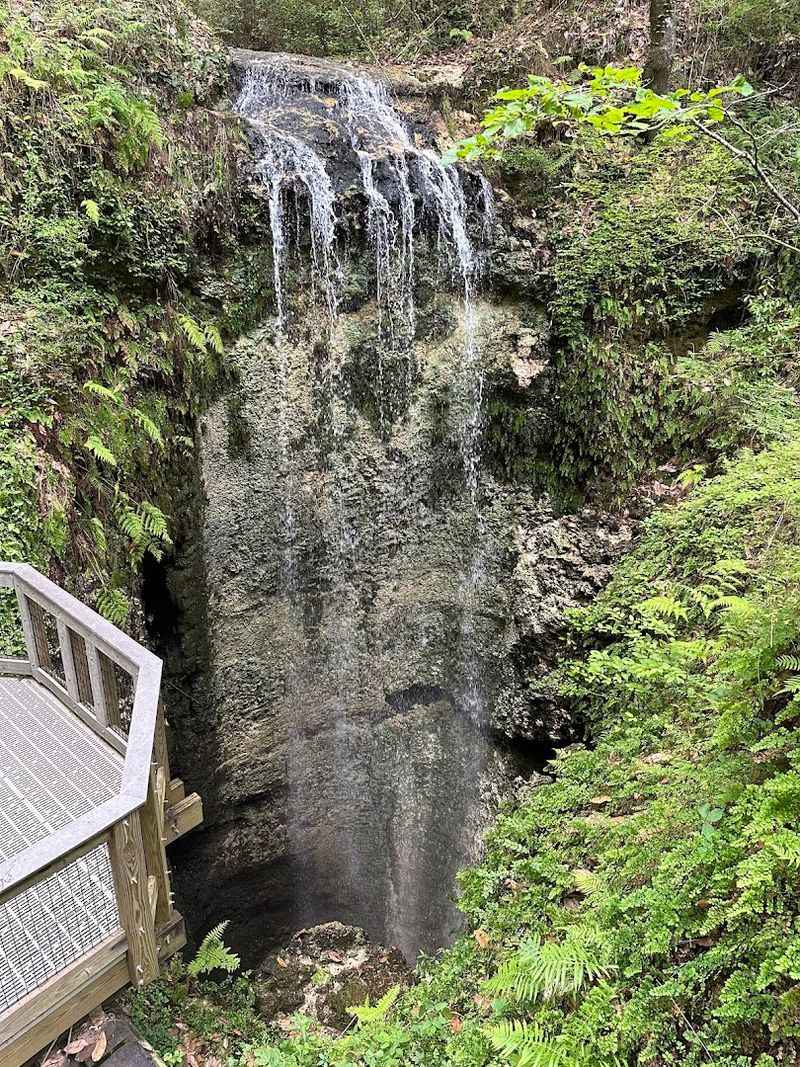
Florida’s tallest waterfall drops 73 feet into a 100-foot-deep cylindrical sinkhole, and the whole scene is so un-Florida-like that it stops people in their tracks. Falling Waters State Park is tucked away in the Panhandle near Chipley, and it’s the kind of place that makes you question everything you thought you knew about the state’s topography.
The waterfall itself is seasonal—it flows best after heavy rains—but even when it’s a trickle, the sinkhole is impressive. Ferns line the walls, trees lean over the edge, and you can walk right up to the rim and peer down into the darkness. When the water is flowing, it disappears into the earth with a soft roar, feeding an underground stream system that no one has fully explored.
What makes it a first-time wow is the sheer novelty. Florida doesn’t do waterfalls, and it definitely doesn’t do deep sinkholes that look like something out of a fantasy novel. There are hiking trails, boardwalks, and picnic areas, but the main event is that waterfall.
It’s a quick stop, but it’s one of those places you’ll tell people about for years.
8. Bok Tower Gardens (Lake Wales)
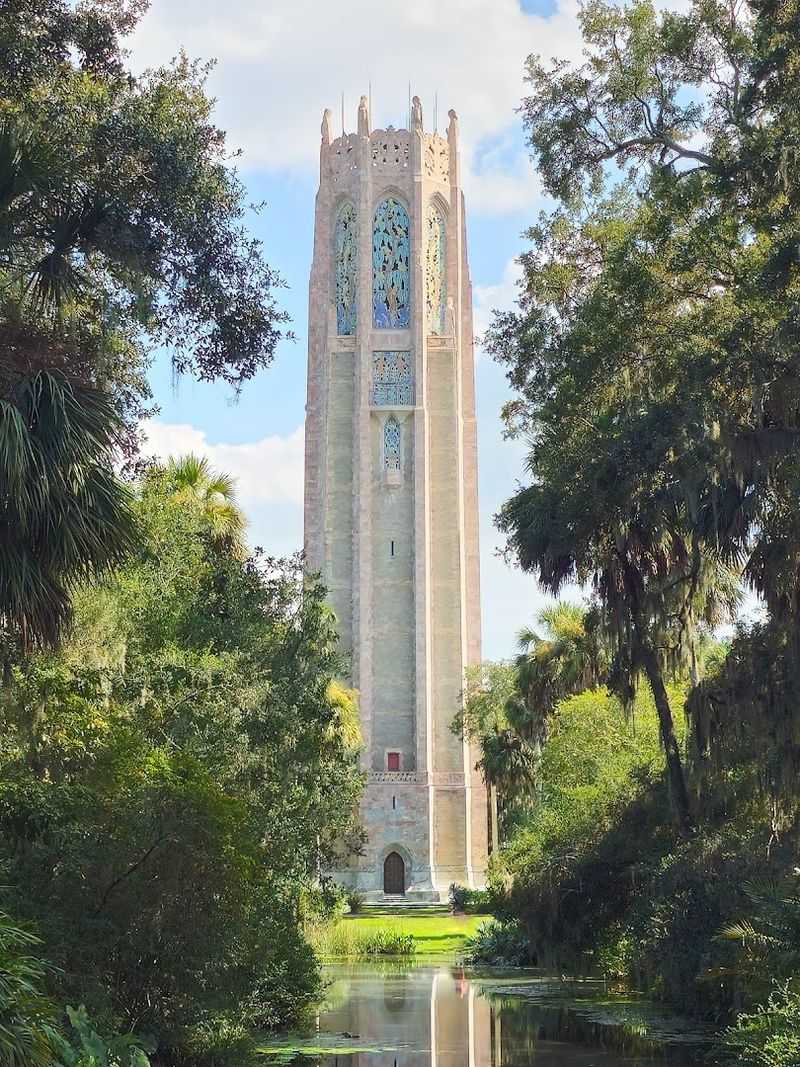
Bok Tower Gardens feels like someone airlifted a European estate into central Florida and planted it on top of one of the state’s highest points. The centerpiece is the Singing Tower, a 205-foot neo-Gothic bell tower that chimes out carillon concerts daily. The gardens have been welcoming visitors since 1929, and they still have that timeless, storybook quality that makes you slow down and just wander.
The landscaping is immaculate—winding paths, reflecting pools, oak hammocks, and seasonal blooms that change with the months. The hilltop setting gives you views over the surrounding ridge, and the whole place feels like a peaceful retreat from the rest of Florida’s chaos. The carillon music drifts through the gardens, adding to the almost dreamlike atmosphere.
First-timers are always charmed by how different it is from typical Florida attractions. It’s not flashy or loud; it’s quiet, contemplative, and beautiful in a way that feels almost old-fashioned. You can tour the historic house, walk the nature trails, or just sit on a bench and listen to the bells.
It’s one of the state’s most distinctive cultural landscapes, and it deserves more love than it gets.
9. Devil’s Den Prehistoric Spring (Williston)
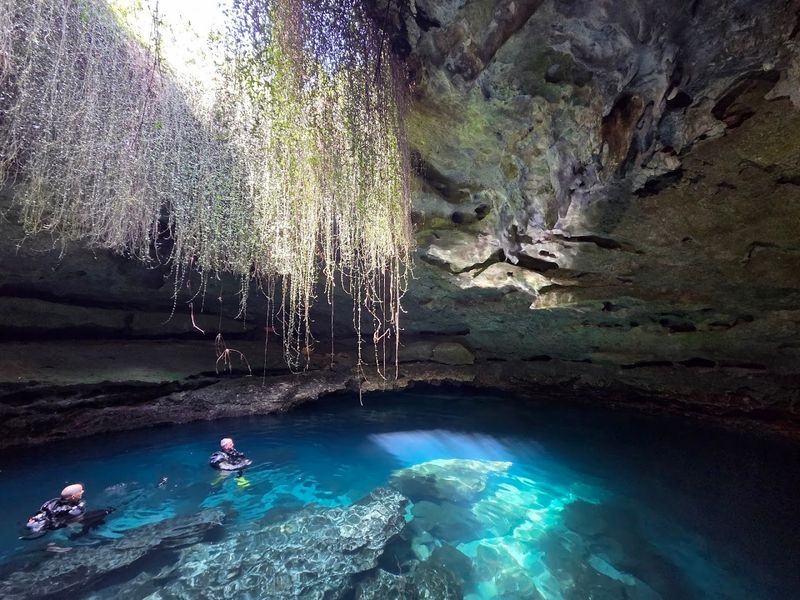
Devil’s Den looks prehistoric because it basically is. This karst cavern near Williston has been around for thousands of years, and the second you see sunlight pouring through the opening into the crystal-clear 72-degree water below, you understand why it’s such a popular dive and snorkel spot. Visit Florida describes it as a spring with ancient rock formations, stalactites, and fossil beds, and all of that is visible when you’re in the water.
The cavern itself is privately owned and open for guided tours, snorkeling, and scuba diving. The water stays a constant temperature year-round, and the visibility is incredible—you can see straight to the bottom, where fossils from Ice Age animals are still embedded in the rock. The light beams that filter through the opening create this ethereal, almost otherworldly glow.
What makes it a first-time stunner is how different it is from any other spring in Florida. Most springs are open, sunny, and surrounded by trees. Devil’s Den is enclosed, atmospheric, and feels like you’re exploring a hidden cave.
It’s a bucket-list experience for divers, but even if you just snorkel or take the tour, it’s unforgettable.
10. Cedar Key Scrub State Reserve (Cedar Key)
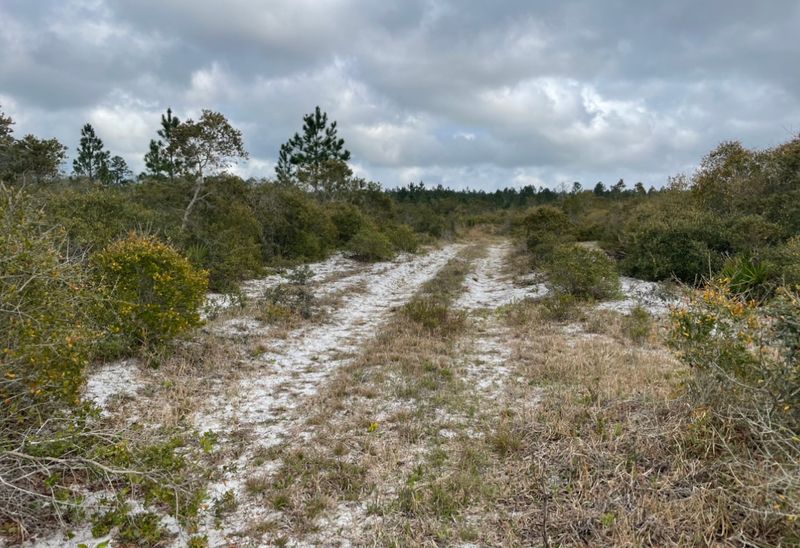
Cedar Key Scrub State Reserve isn’t flashy, but that’s exactly why it belongs on this list. This reserve protects one of Florida’s rarest natural communities—scrub habitat—characterized by white “sugar sand” ridges, gnarled oaks, rosemary plants, and wide-open sky. It’s quiet, reflective, and deeply Floridian in a way that’s easy to overlook if you’re chasing waterfalls and beaches.
The reserve has 13 miles of multi-use trails that wind through the scrub, past tidal marshes, and along the edges of the Gulf. Wildlife is everywhere—gopher tortoises, scrub jays, deer, and wading birds. The landscape is subtle and spare, with low vegetation and sandy paths that crunch underfoot.
It’s the kind of place that rewards slow exploration and patience.
First-timers often underestimate how beautiful scrub habitat can be. It’s not dramatic or loud, but it has this quiet, ancient quality that’s hard to find anywhere else. The light is different here—soft and golden, especially at sunrise and sunset.
If you’re looking for the less-traveled side of Florida, the side that feels wild and untouched, Cedar Key Scrub delivers. It’s not a showstopper, but it’s a soul-soother.