This Delightfully Weird Florida Garden Celebrates Our Favorite Four-Legged Friends
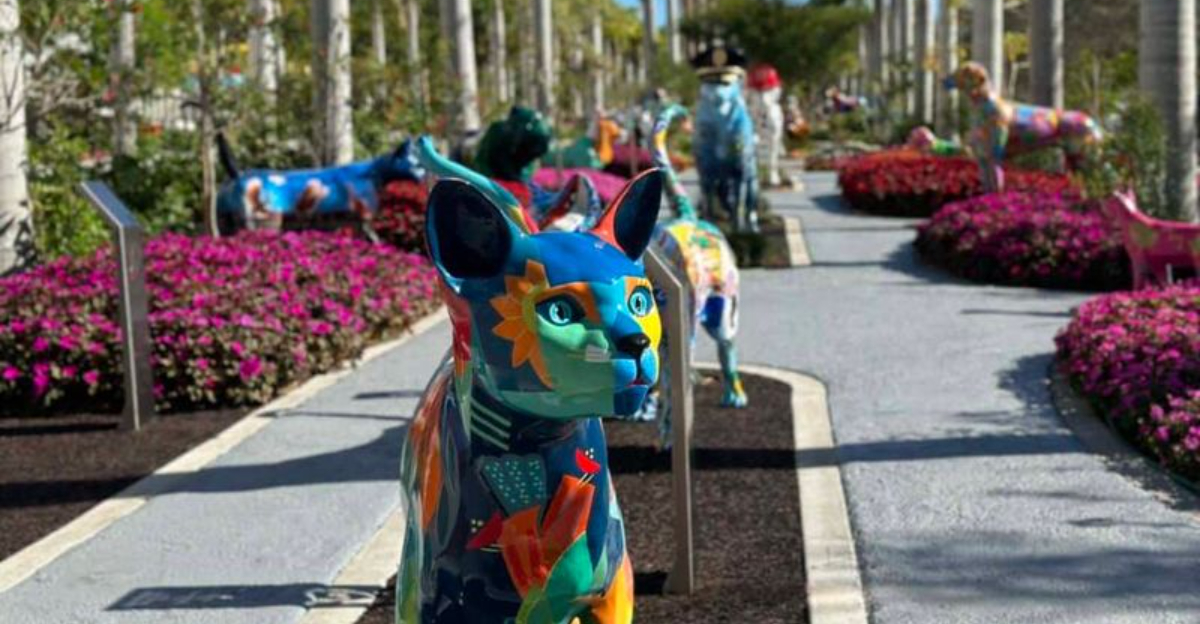
Miami’s downtown waterfront hides a whimsical surprise that’ll make animal lovers and art fans equally giddy. Tucked inside Maurice A. Ferre Park between the Perez Art Museum and Frost Science Museum, the Dogs and Cats Walkway and Sculpture Gardens features 52 oversized aluminum sculptures painted by local artists in every color imaginable.
This free outdoor gallery opened in 2023 and quickly became one of the city’s most photographed spots, proving that public art doesn’t have to be serious to be spectacular.
1. A Gallery That Barks and Meows
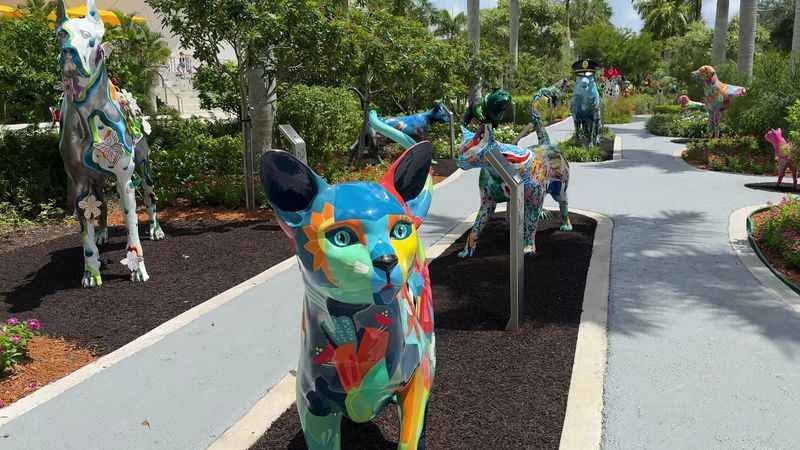
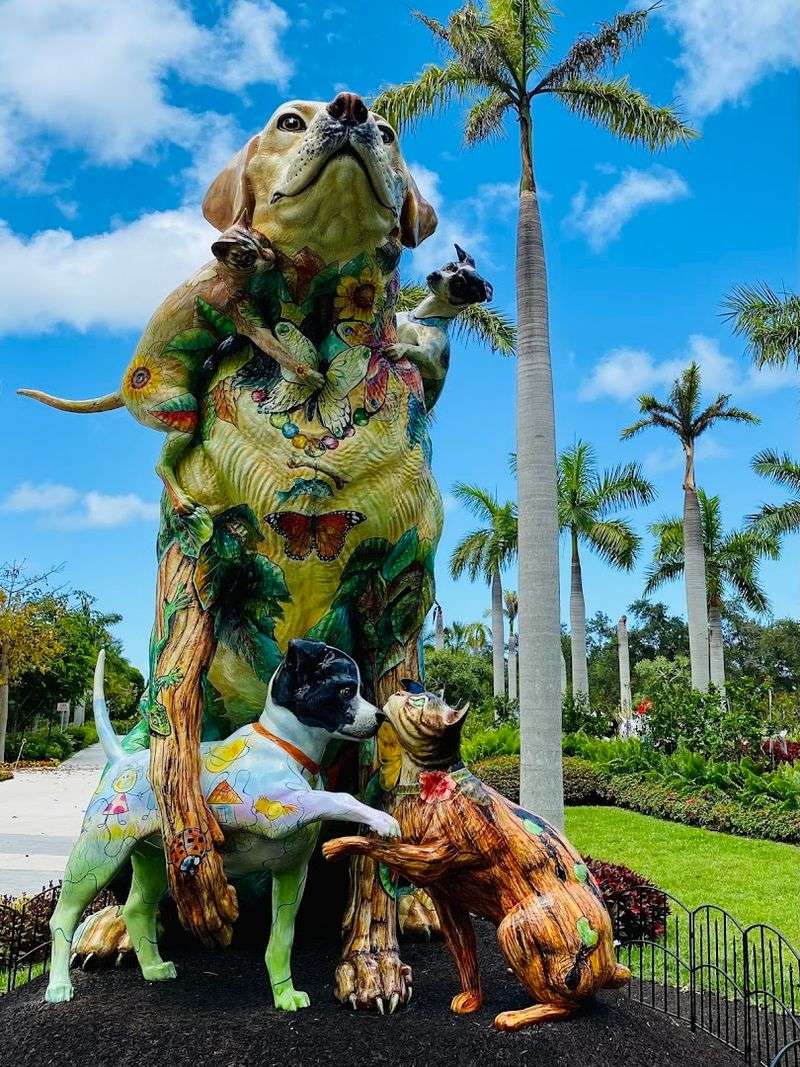
Walking into this garden feels like stepping into a kaleidoscope designed by someone who really, really loves pets. Each sculpture stands several feet tall, crafted from aluminum and then handed over to local artists who transformed them into walking, sitting, and lounging masterpieces. Some cats wear ocean scenes across their bodies while others sport geometric patterns that would make Mondrian jealous.
The variety is genuinely staggering. You’ll find pups covered in tropical flowers, felines decorated with Miami skyline silhouettes, and abstract designs that make you tilt your head and smile. Every single piece tells a different story, reflecting the unique vision of its creator.
What makes this collection special is how it celebrates both the artists and the animals. Each sculpture includes a QR code that shares information about the design inspiration and the artist behind it. Kids absolutely love hunting down their favorite breeds, while adults appreciate the technical skill and creativity on display.
The garden doesn’t just showcase art—it creates conversation. Visitors constantly stop to compare favorites, debate which design is most clever, and snap photos with sculptures that match their own pets at home. It’s community building disguised as a dog park, minus the actual dogs.
2. Location That Couldn’t Be Better
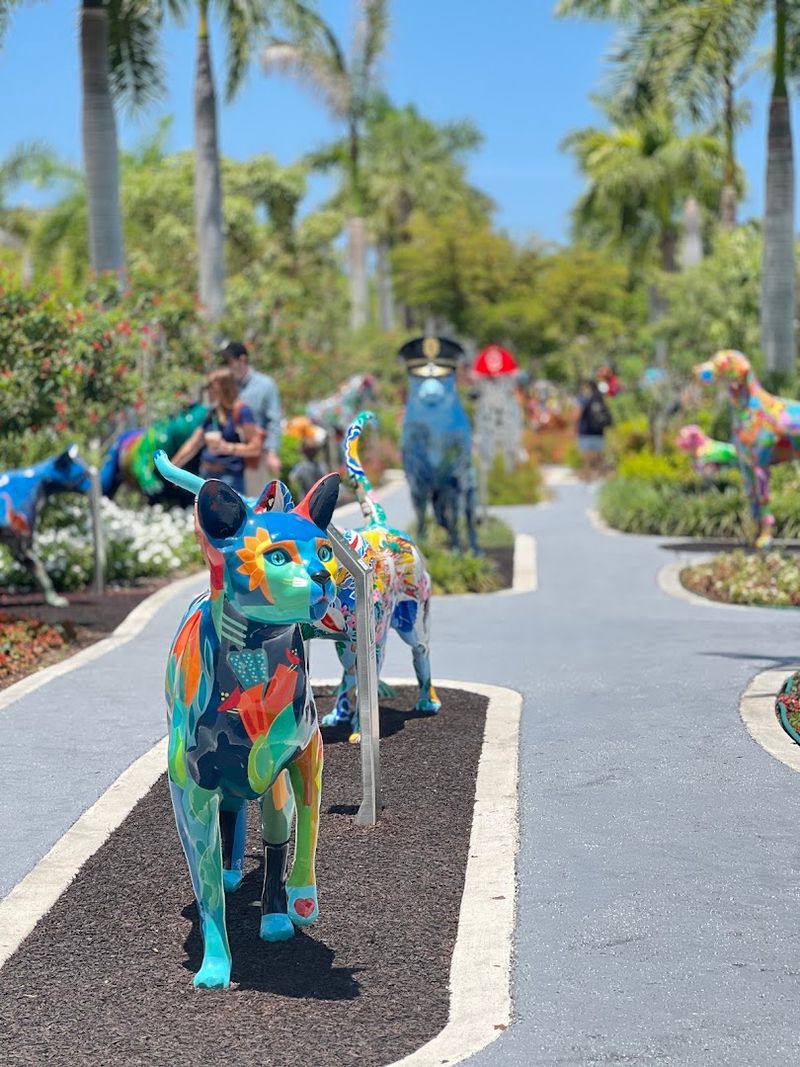
Finding this garden is half the fun because it sits in one of Miami’s most museum-dense neighborhoods. Located at 1025 Biscayne Boulevard, the walkway stretches along the waterfront between two of the city’s cultural heavyweights. You can literally plan an entire day around this area without moving your car.
The Perez Art Museum Miami sits on one side, while the Frost Science Museum anchors the other end. Both museums draw crowds year-round, but surprisingly, many visitors almost miss the sculpture garden entirely. It’s tucked along the water in a way that requires you to actually look for it, which somehow makes discovering it feel even more rewarding.
Maurice A. Ferre Park itself deserves recognition as a destination. The park features pristine landscaping, outdoor fitness equipment, and unobstructed views of Biscayne Bay that make you remember why people move to Miami in the first place.
The sculpture garden occupies about one acre of this waterfront paradise.
Parking can fill up quickly, especially on weekends, since you’re sharing lots with museum visitors. Arrive early or consider using rideshare services. The garden stays open until 10 PM, and while there aren’t gates preventing late-night visits, the lighting after dark creates a completely different vibe worth experiencing at least once.
3. Free Admission Makes It Even Sweeter
Here’s the best part about this attraction: it costs absolutely nothing. Zero dollars. Nada.
In a city where museum tickets and tourist attractions can drain your wallet faster than you can say “cafecito,” finding quality entertainment that’s genuinely free feels like winning the lottery.
The Dogs and Cats Walkway operates as a gift to the community and visitors alike. There’s no ticket booth, no entrance fee, and no pressure to donate or purchase anything. You simply walk in, enjoy the art, and leave whenever you’re ready.
This accessibility makes the garden particularly popular with families. Parents can bring kids for an educational art experience without worrying about admission costs adding up per person. Schools frequently organize field trips here, and it’s become a go-to spot for budget-conscious tourists who still want Instagram-worthy Miami experiences.
The free admission also means you can visit multiple times without guilt. Locals often incorporate the walkway into their morning jog or evening stroll routine. Some visitors return during different times of day to see how changing light affects the sculptures’ appearance and colors.
Being free doesn’t mean it’s cheap-looking or poorly maintained. The garden receives regular upkeep, the sculptures stay vibrant, and the landscaping remains impeccable. Miami took this project seriously, and it shows in every detail.
4. Landscaping That Steals the Show
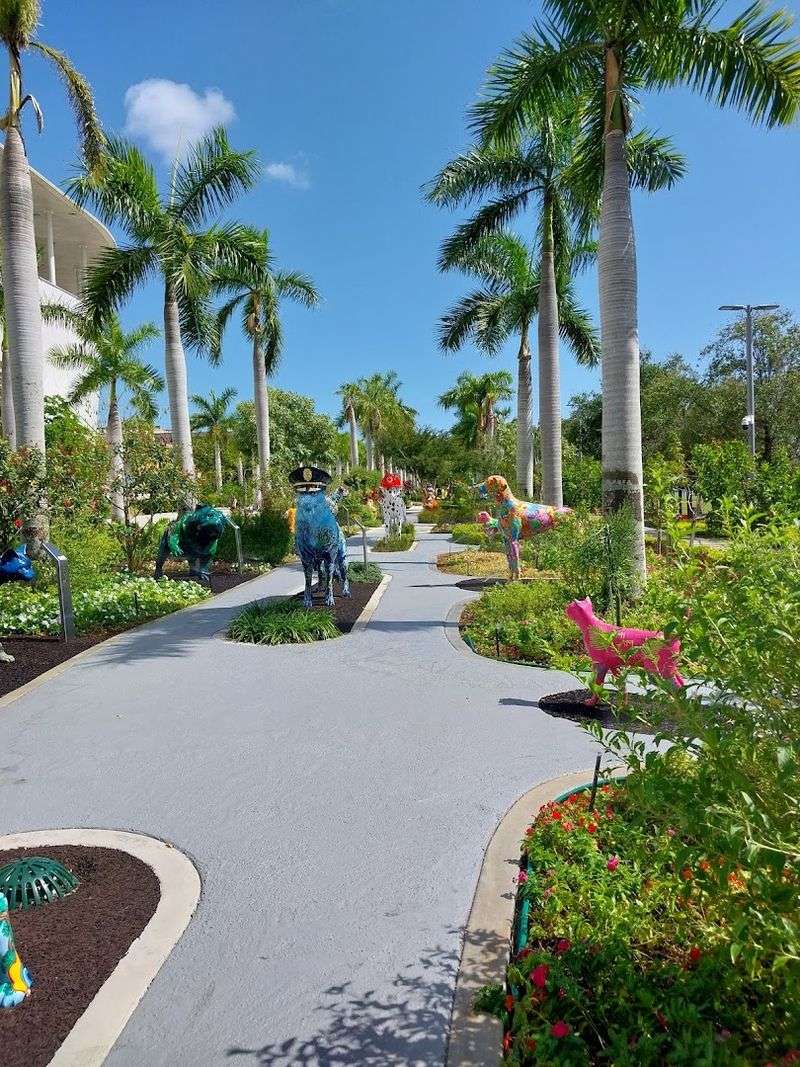
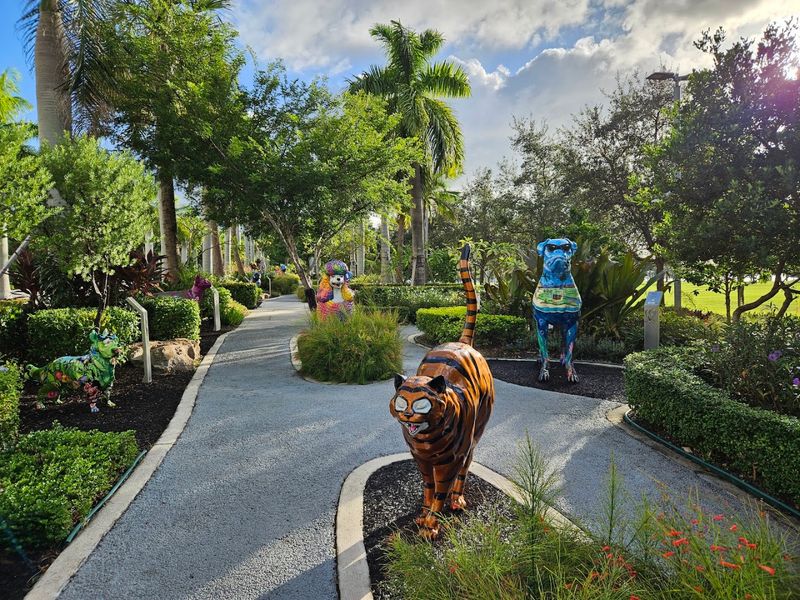
While the sculptures grab your attention first, the garden’s landscaping deserves equal applause. Artistic Director Miguel Ferro carefully curated every plant, flower, and tree to create a one-acre oasis that feels distinctly South Florida. This isn’t just grass and a few shrubs—it’s a thoughtfully designed botanical experience.
Perennial flowers add pops of color that complement rather than compete with the painted sculptures. Hibiscus plants bloom in shades that echo the artwork, creating visual harmony throughout the space. Palm trees provide shade and that essential tropical vibe that reminds you you’re definitely not in Kansas anymore.
The plant selection focuses on native South Florida species that thrive in Miami’s climate without requiring excessive water or maintenance. This sustainable approach means the garden looks gorgeous year-round while being environmentally responsible. The greenery stays lush even during the hottest months when other landscapes turn crispy.
Pathways wind through the garden in a way that encourages exploration rather than rushing through. You’ll find yourself naturally slowing down to notice how a sculpture’s colors play against the surrounding foliage. The layout feels organic, like the art and nature grew up together rather than being forced into coexistence.
Benches scattered throughout provide perfect spots for resting, people-watching, or simply soaking in the combination of art, plants, and water views.
5. Perfect Photo Opportunities Everywhere
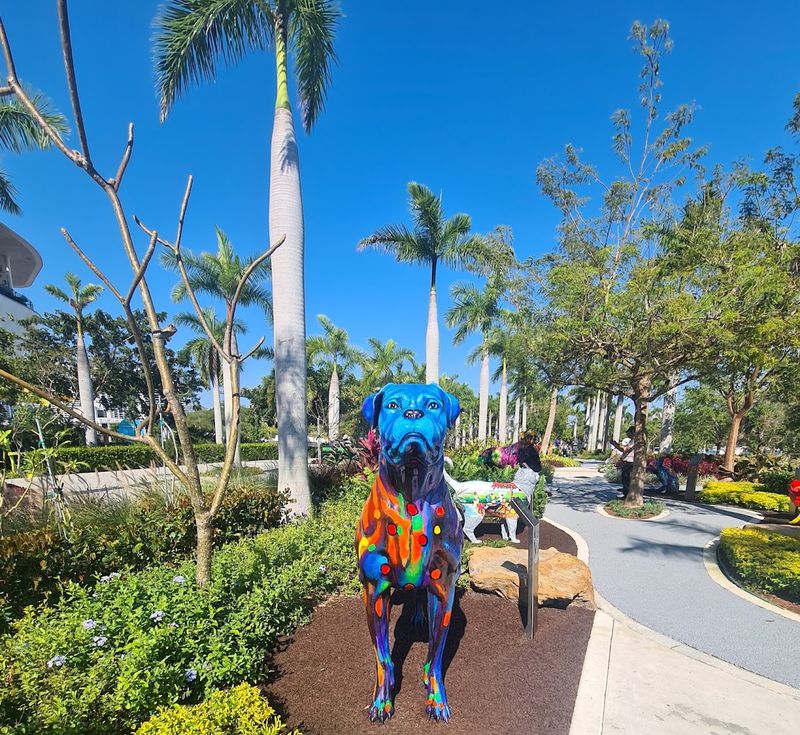
Instagram users, prepare your phones—this place was basically designed for social media. Every single sculpture offers a different photo backdrop, and the combination of colorful art, blue water, and green plants creates images that look professionally styled without any effort. You’ll see visitors striking poses with their favorite pieces constantly.
The sculptures’ size makes them ideal for creative photography. Kids can stand next to them and look tiny, or you can position yourself to make it seem like you’re petting a giant cat. Couples use the more romantic sculptures for engagement photos, while families create annual tradition shots with the same sculpture year after year.
Different times of day offer completely different lighting conditions. Morning light creates soft, warm tones that make the sculptures glow. Midday sun brings out the most vibrant colors but can create harsh shadows.
Golden hour before sunset? Absolute perfection for photography, which explains why the garden gets particularly crowded then.
The waterfront location adds another dimension to your photos. Capture sculptures with downtown Miami’s skyline behind them, or angle your shot to include Biscayne Bay’s sparkling water. The variety of backgrounds means you can take dozens of photos without any looking repetitive.
Don’t forget to scan the QR codes before you leave—they’re great for adding context to your social media posts and showing followers the artist behind your favorite piece.
6. Artists Who Brought Imagination to Life
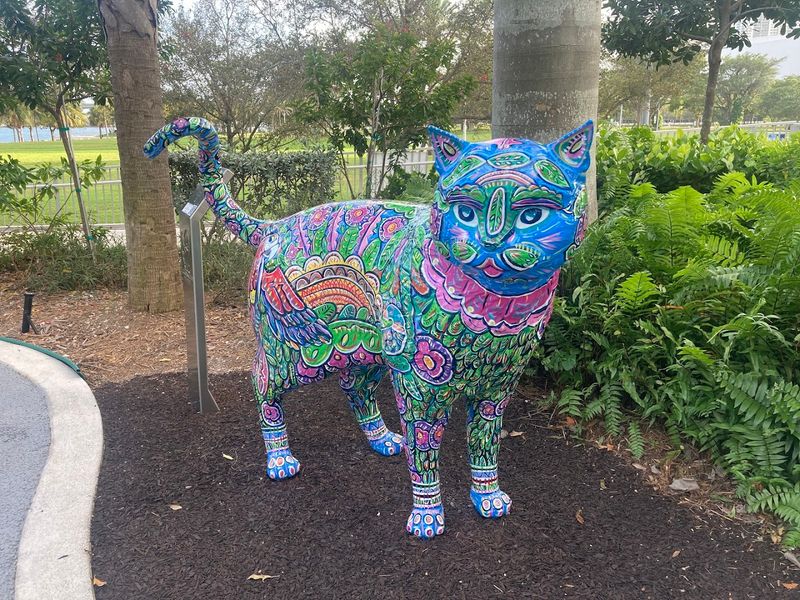
Behind every painted sculpture stands a local artist who poured creativity into transforming blank aluminum into personality. Names like Marta Echazarreta, Edgar Gutierrez, and Rafael Carabano appear throughout the garden, each bringing their distinctive style to their assigned dogs and cats. Their work celebrates not just animals but Miami itself.
Many artists incorporated Miami-specific elements into their designs. You’ll spot Art Deco patterns reminiscent of South Beach architecture, tropical themes that reflect the city’s lush environment, and even references to Miami’s diverse cultural communities. Each sculpture becomes a love letter to both pets and place.
The artistic styles range wildly, which keeps the walk interesting. Some pieces lean abstract with bold geometric shapes and unexpected color combinations. Others take a more representational approach, carefully depicting specific breed characteristics with impressive accuracy.
A few artists went full whimsy, creating designs that make you laugh out loud.
What’s particularly cool is that the project gave local artists significant visibility. Many have YouTube channels where they discuss their inspiration and creative process. These videos add depth to the viewing experience—suddenly you’re not just looking at a painted cat, you’re understanding the hours of planning and the personal stories that shaped its final appearance.
The collaboration between dozens of artists created cohesion without uniformity, variety without chaos.
7. Educational Value Hidden in Plain Sight
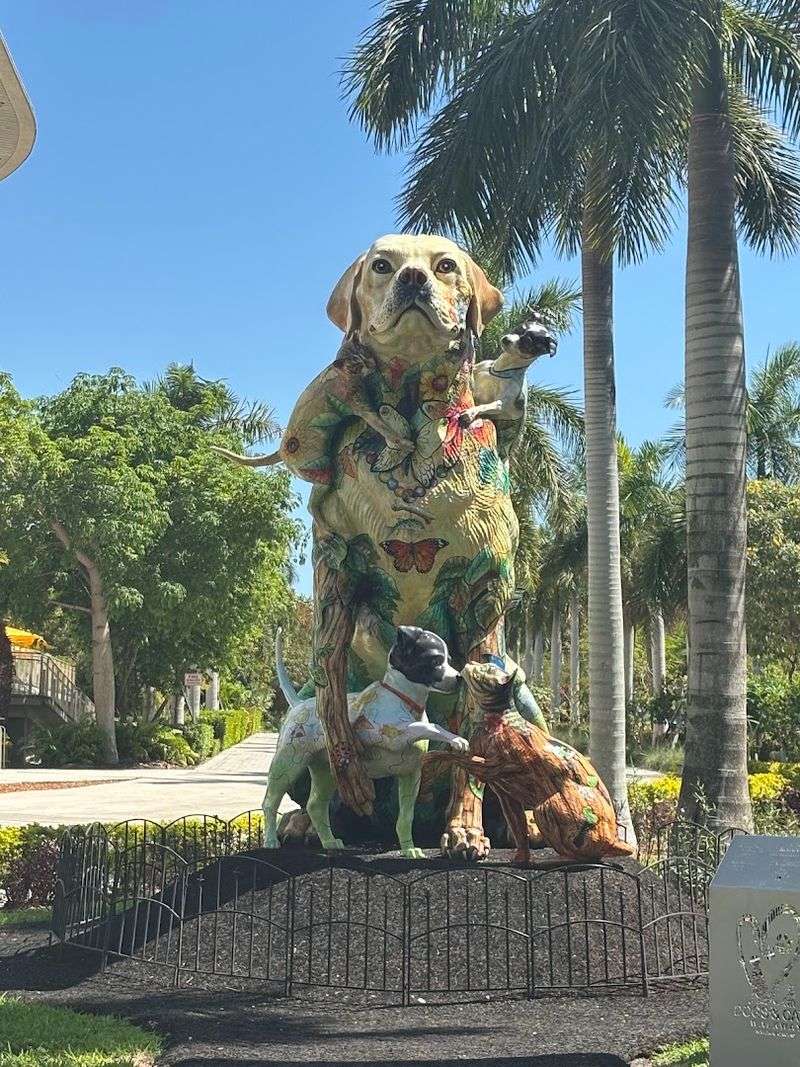
Parents and teachers quickly discovered this garden doubles as an outdoor classroom that doesn’t feel like school. Each sculpture’s QR code links to information about the artist, the design inspiration, and sometimes facts about the depicted breed. Kids learn without realizing they’re learning, which is basically the holy grail of educational experiences.
Younger children benefit from simply identifying different dog and cat breeds. The sculptures represent various breeds from Chihuahuas to Great Danes, sleek Siamese cats to fluffy Persians. It’s like a three-dimensional picture book where kids can walk around each character and see it from every angle.
Older students can explore deeper concepts like artistic interpretation, color theory, and how public art impacts communities. The garden provides real-world examples of how creativity and civic planning intersect. Art teachers from local schools frequently bring classes here specifically to discuss these concepts in an engaging environment.
The educational component extends to pet ownership and animal welfare. Several sculptures include information about responsible pet care or the special roles animals play in our lives. These messages resonate differently when they’re attached to beautiful artwork rather than boring pamphlets.
Even adults leave having learned something new, whether it’s discovering a local artist they want to follow or finally understanding the difference between similar-looking dog breeds. The garden proves that education doesn’t require walls or formal structure.
8. Community Space That Brings People Together
Beyond the art and landscaping, this garden has become something Miami didn’t quite realize it needed: a genuine community gathering spot that welcomes everyone. Unlike exclusive venues or pricey attractions, the Dogs and Cats Walkway creates a level playing field where tourists mix with locals, families with solo visitors, and art enthusiasts with people who just wanted a nice walk.
The garden’s design encourages interaction in subtle ways. Sculptures positioned throughout the space create natural stopping points where strangers start conversations about which piece they like best or which one resembles their own pet. These small exchanges build connection in a city where people often stick to their own neighborhoods and circles.
Regular visitors have noticed the garden attracting an impressively diverse crowd. Morning brings joggers and early-bird tourists. Lunch hour sees downtown workers taking breaks on benches.
Afternoons fill with school groups and families. Evenings draw couples and photography enthusiasts chasing that perfect golden-hour shot.
The outdoor gym equipment nearby adds another layer of community function. Fitness enthusiasts work out, then cool down with a stroll through the sculptures. This combination of art, exercise, and waterfront access creates a holistic neighborhood amenity that serves multiple purposes simultaneously.
Cities play their best when they provide spaces where people naturally want to gather. This garden does exactly that, proving public art can be both beautiful and functionally important to community life.