Cool Off at These 15 Florida Swimming Spots That Feel Like Paradise in August
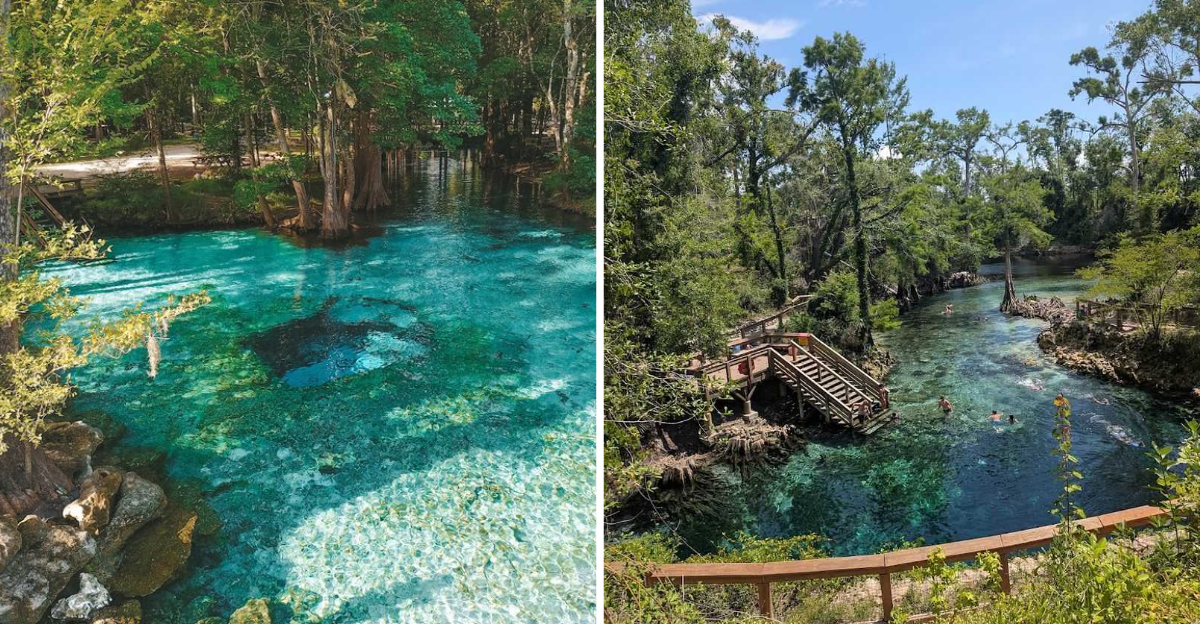
August in Florida means one thing: heat that makes you want to jump into the nearest body of water. Luckily, the Sunshine State has some of the most incredible natural swimming spots where the water stays refreshingly cool year-round.
These aren’t your typical crowded beach scenes or chlorinated pools—they’re crystal-clear springs, shaded waterways, and hidden gems that locals have been enjoying for generations. Whether you’re floating down a lazy river or diving into water so clear you can see the bottom, these 15 spots offer the perfect escape from summer’s scorching temperatures.
1. Ichetucknee Springs State Park – Fort White
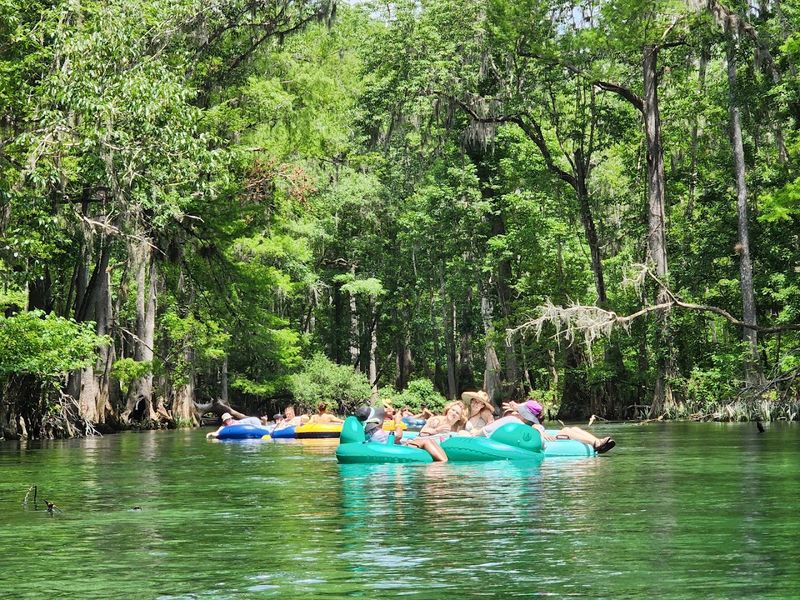
Tubing down the Ichetucknee River feels like floating through a dream. The water temperature hovers around 72 degrees all year, which means instant relief from August’s brutal heat.
You can rent tubes near the park entrance or bring your own for a leisurely three-hour drift through some of North Florida’s prettiest scenery.
The river winds through dense forests where Spanish moss hangs from towering cypress trees. Turtles sunbathe on logs, and if you’re lucky, you might spot an otter playing along the banks.
The current does most of the work, so you can just relax and enjoy the ride.
Eight named springs feed this river, each pumping out millions of gallons of fresh water daily. Blue Hole Spring is particularly stunning—the water is so clear you can see fish swimming twenty feet below.
Some areas are deep enough for diving, while others are shallow enough for kids to wade.
Get there early on weekends because this spot is no secret. The park limits daily visitors to protect the ecosystem, so showing up after 10 AM might mean waiting.
Pack sunscreen, water shoes, and waterproof bags for your belongings.
The natural beauty here is worth every bit of planning.
2. Ginnie Springs Outdoors, LLC – High Springs
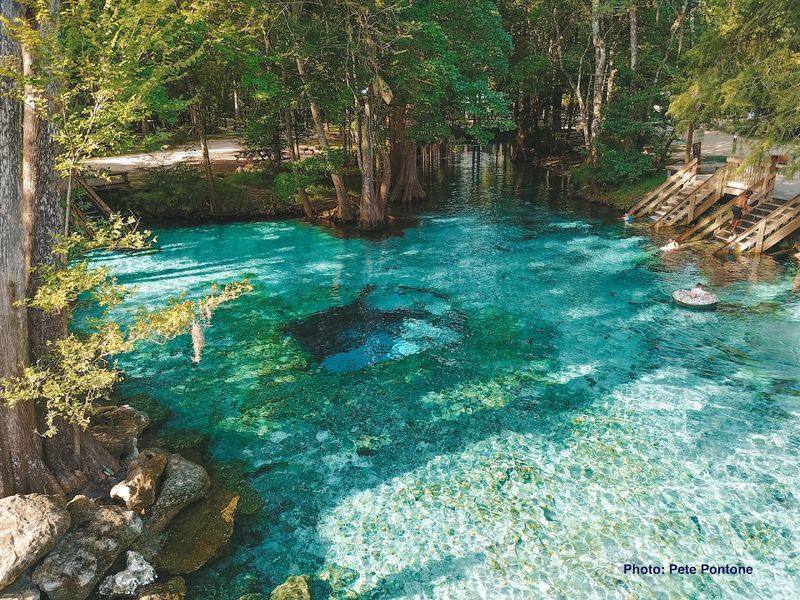
Scuba divers travel from around the world to explore Ginnie Springs, but you don’t need certification to enjoy this magical place. The main spring basin is perfect for swimming, with visibility that rivals any tropical destination.
Water stays a constant 72 degrees, creating a natural air conditioning effect when you step in.
The spring run connects to the Santa Fe River, giving you options for different experiences. Some people prefer floating lazily on the river current, while others set up camp on the white sand beaches.
Families spread out under shady trees, and groups of friends play volleyball in designated areas.
What makes Ginnie special is the combination of activities available. You can snorkel over the spring vent and watch it bubble up from deep underground.
Paddleboarders glide across the glassy surface while swimmers explore the edges. The property includes multiple springs, so even on busy days, you can find your own space.
This is privately owned, so there’s an entrance fee, but the facilities are well-maintained with clean bathrooms and camping options. Weekends get packed, especially in August when everyone’s looking for relief.
Arrive before noon or consider a weekday visit.
Bring your own food since options nearby are limited.
3. Blue Spring State Park – Orange City
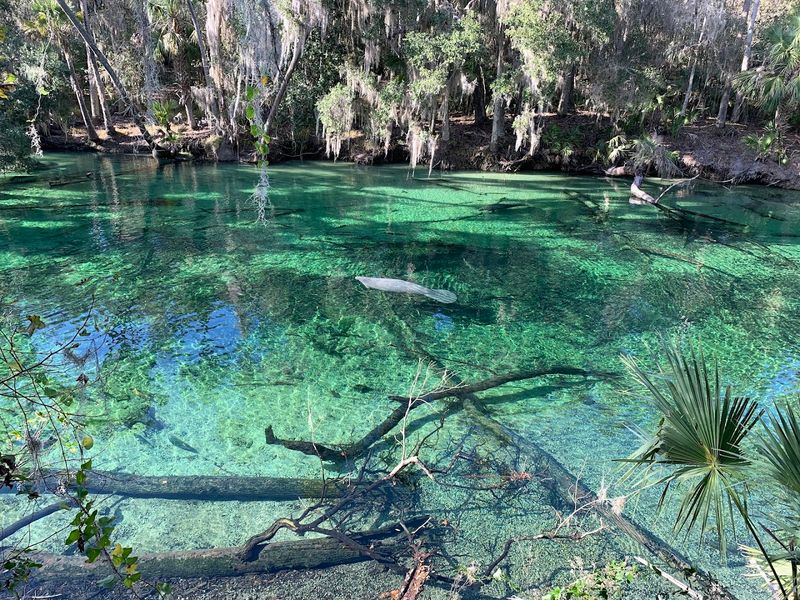
Manatees make Blue Spring their winter home, but August belongs to swimmers. The spring produces 100 million gallons of water daily, maintaining a perfect 73-degree temperature that feels incredible against your skin.
The spring basin is huge—over 100 feet wide—giving everyone plenty of room to swim without feeling crowded.
A wooden boardwalk lets you walk right over the spring run and peer down into the clear water. You’ll see fish, turtles, and occasionally an early-arriving manatee checking out the area.
The contrast between the blue spring water and the darker St. Johns River creates a stunning visual effect.
Swimming is only allowed in designated areas to protect the ecosystem. The main basin gets deep—over 20 feet in spots—so confident swimmers can really stretch out.
Shallower areas near the edges work perfectly for younger kids or anyone wanting to wade. Bring a mask and snorkel to fully appreciate the underwater world.
The park offers camping, hiking trails, and picnic areas beyond just swimming. Rent a canoe or kayak to explore the river, where you might see alligators sunbathing on the banks.
Admission is reasonable, and the park rarely reaches capacity.
Shade is plentiful under massive oak trees, making this a comfortable all-day destination even in peak summer heat.
4. Rainbow Springs State Park – Dunnellon
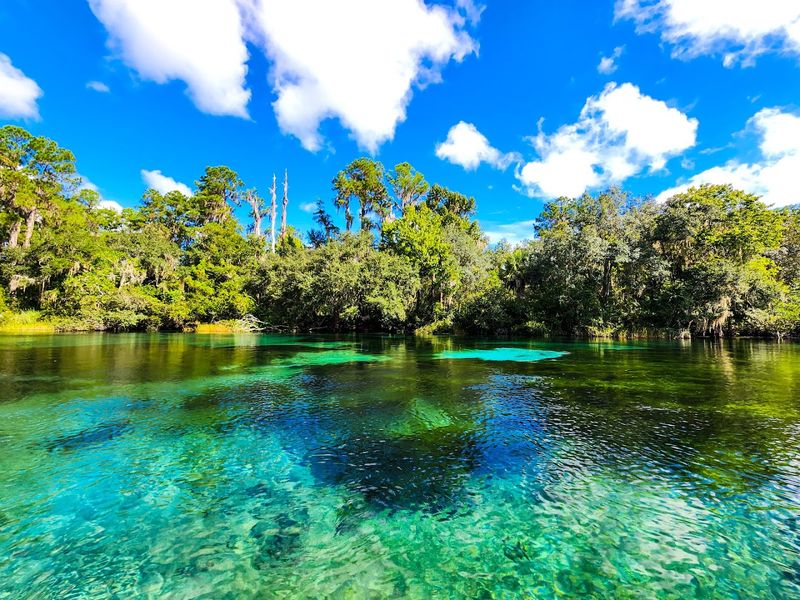
Rainbow Springs pumps out nearly 500 million gallons of water every single day, creating Florida’s fourth-largest spring. The water shimmers in shades of blue and green that look photoshopped but are completely natural.
Underwater plants sway in the current, and the sandy bottom reflects sunlight in mesmerizing patterns.
Swimming happens in a designated area near the headspring, where the water depth varies from waist-deep to over your head. The current is gentle but noticeable, perfect for floating without needing a tube.
Families set up on the grassy areas surrounding the spring, taking turns cooling off in the water.
The park also features a tubing area where you can float down the spring run for about an hour. Gardens throughout the property showcase native plants and create shaded walking paths.
Old growth trees provide natural canopies, and the whole place feels like stepping back in time to old Florida.
Weekends in August mean crowds, but the spring is large enough that it never feels overwhelming. Arrive early for parking close to the swimming area.
The park charges admission per vehicle, which is reasonable considering the facilities. Concessions are available, but bringing your own cooler with snacks and drinks is smarter.
Water shoes help on the rocky bottom areas.
5. Weeki Wachee Springs State Park – Spring Hill
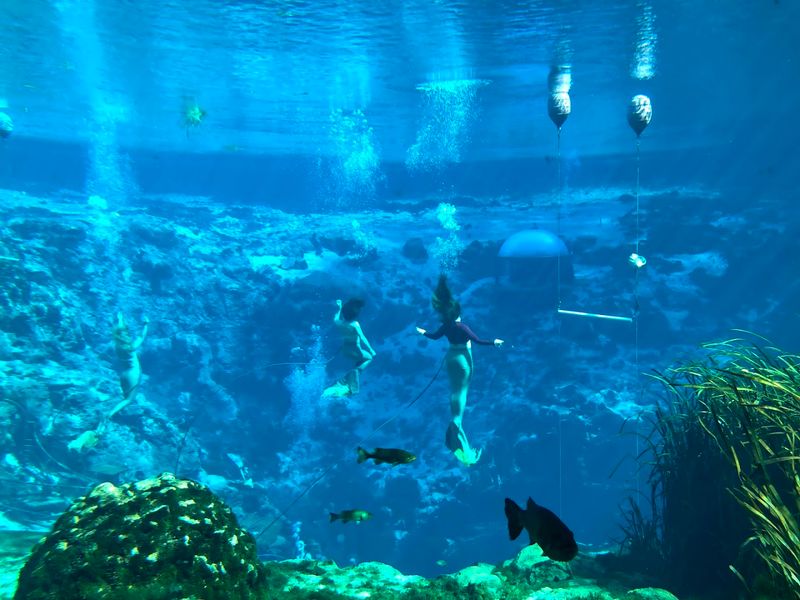
Famous for its mermaid shows since 1947, Weeki Wachee offers more than just entertainment. The spring produces 117 million gallons daily, feeding a river perfect for kayaking and swimming.
August means prime paddling conditions with calm water and lush vegetation lining both banks.
The swimming area sits downstream from the spring source in Buccaneer Bay, a spring-fed water park included with admission. Water stays refreshingly cool while you splash around slides, play in the sandy beach area, or float in inner tubes.
It’s less natural than other springs but offers amenities like lifeguards and concessions.
Renting a kayak or canoe for the river trip is the real highlight. You’ll paddle through narrow channels where tree branches create tunnels overhead.
Wildlife is everywhere—herons fishing in shallows, turtles plopping off logs, and fish visible in the clear water. The five-mile paddle takes about two hours at a relaxed pace.
The mermaid shows are genuinely impressive, with performers swimming in the spring’s depths while breathing from air hoses. Shows run multiple times daily, and the underwater theater stays comfortably cool.
Plan a full day here to experience everything. Pack reef-safe sunscreen since regular sunscreen can harm the spring ecosystem.
Parking fills up fast on summer weekends.
6. Devil’s Den Prehistoric Spring – Williston
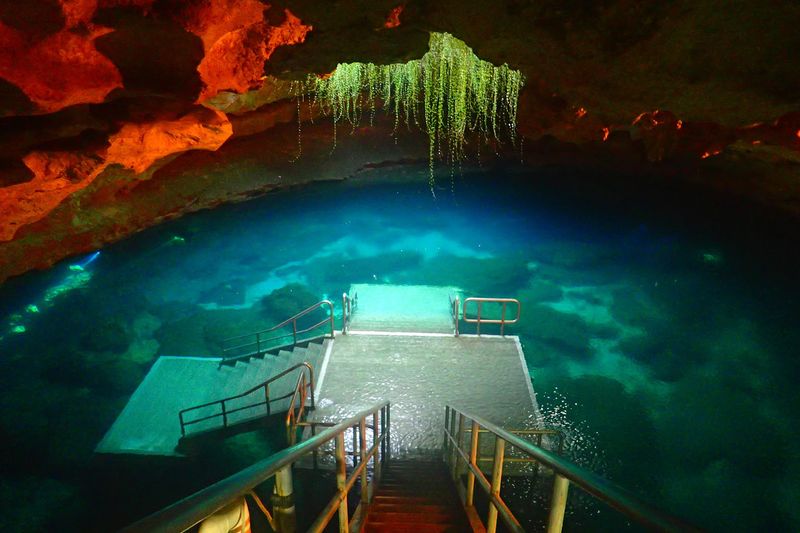
Swimming inside a prehistoric underground cave sounds like something from an adventure movie, but Devil’s Den makes it reality. The spring sits inside a dry cave with a pool of crystal-clear water at the bottom.
You descend wooden stairs into the cavern, where the temperature drops noticeably and the air feels ancient.
Sunlight streams through an opening in the cave ceiling, creating dramatic light beams that penetrate the 72-degree water. Snorkeling here feels otherworldly as you float over the rocky bottom and peer into crevices.
Scuba divers explore deeper areas, but surface swimming and snorkeling don’t require certification.
The cave stays a constant 72 degrees year-round, making it perfect for August when you want to escape both heat and humidity. Stalactites hang from the ceiling, and the acoustics make every sound echo.
It’s like having your own private swimming hole, though it does get busy on weekends.
This is privately owned, so admission costs more than state parks, but the unique experience justifies it. Reservations are recommended, especially for weekend visits.
They provide snorkel gear rentals, and there’s a small camping area if you want to stay overnight. The property includes nature trails and picnic areas.
Bring a towel and change of clothes since there are no elaborate facilities.
7. Gilchrist Blue Springs State Park – High Springs
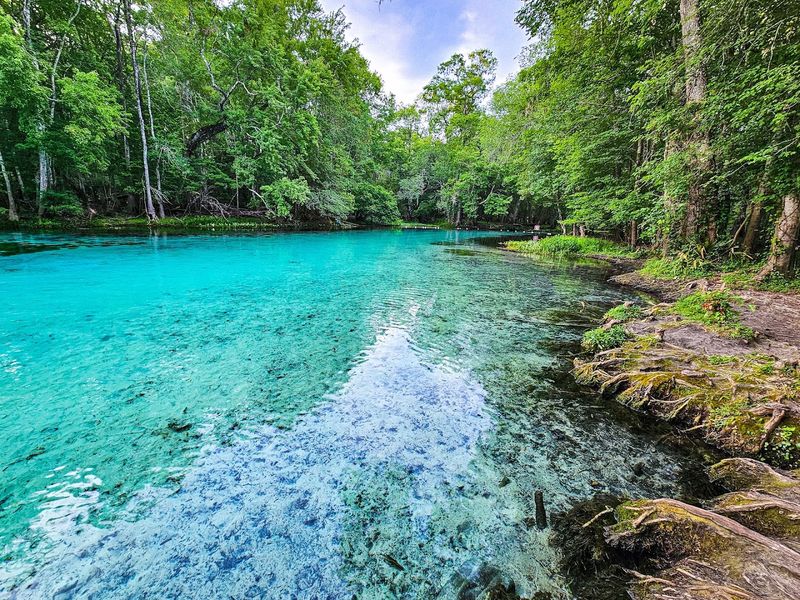
This newer state park opened in 2018, which means fewer crowds than more famous springs. The spring basin glows an almost unnatural shade of blue that photographs beautifully.
Water clarity is exceptional—you can see every detail of the limestone bottom and watch fish swimming in schools.
The spring produces about 40 million gallons daily, creating a short run that flows into the Santa Fe River. Swimming is allowed in the basin and along the run, with depths varying from shallow edges to a deep center.
The temperature holds steady at 73 degrees, providing instant cooling on hot August afternoons.
A wooden dock extends over the deepest part, perfect for jumping or diving. Kids love this feature, though adults have just as much fun.
The surrounding area features picnic pavilions under tall trees, and the park maintains clean facilities. Hiking trails wind through the property if you want to explore beyond swimming.
Because it’s less well-known, you can often find parking even on summer weekends. The park charges standard Florida state park admission.
No food concessions exist, so pack everything you need. The peaceful atmosphere makes this ideal for families wanting a relaxing day without massive crowds.
Water shoes are helpful since the bottom has some rocky areas.
8. Madison Blue Spring State Park – Lee
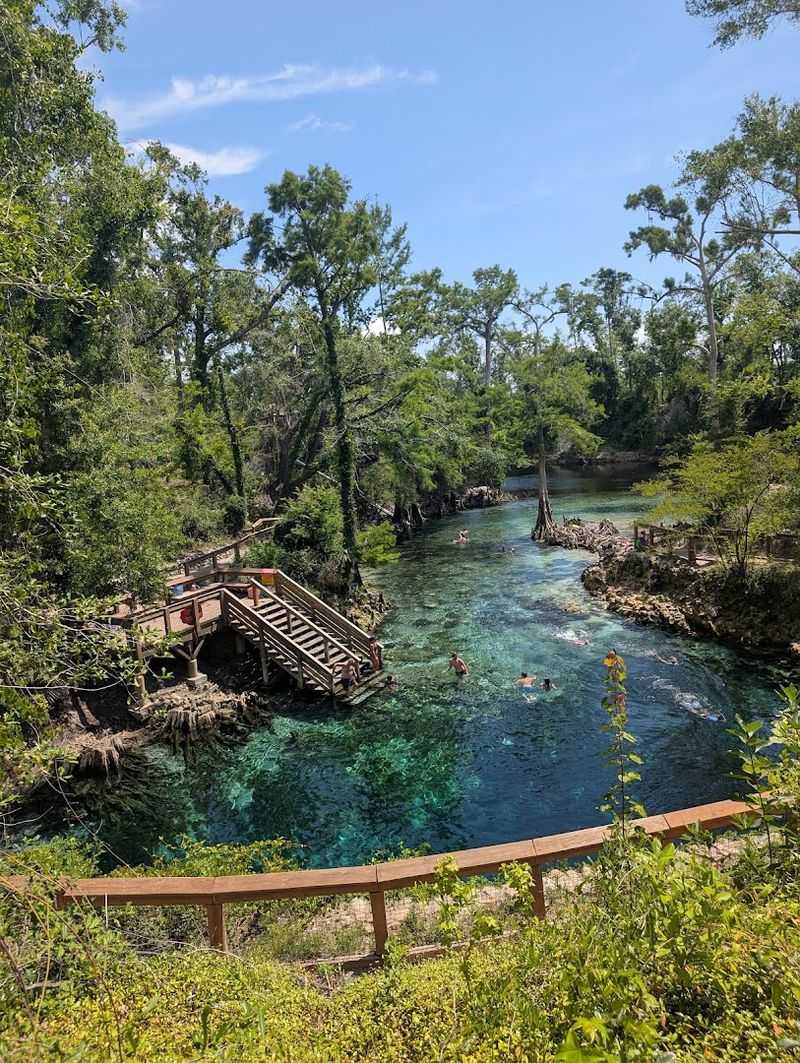
Tucked away in North Florida, Madison Blue Spring feels wonderfully remote. The spring basin is smaller than some famous spots, but the water quality is outstanding.
It pumps about 53 million gallons daily, maintaining that perfect 72-degree temperature. The blue color is so vivid it almost looks artificial.
A wooden platform provides easy entry into the water, and the swimming area is clearly marked. The spring run flows into the Withlacoochee River, creating opportunities for paddling and exploring.
Snorkeling reveals underwater cave openings where the water emerges, though only certified cave divers can enter them.
The park is small and undeveloped compared to bigger state parks, which is part of its charm. Picnic tables sit under shady trees, and a short boardwalk leads to the spring.
The quiet atmosphere makes it perfect for anyone wanting to avoid crowds. Weekdays are especially peaceful, with sometimes only a handful of visitors.
Admission is typical for Florida state parks, and facilities include basic restrooms and outdoor showers. The nearby river offers good kayaking, and you can rent watercraft from outfitters in the area.
Bring your own food and drinks since nothing is available for miles. The drive here takes you through beautiful rural Florida, adding to the adventure.
This spot is genuinely off the beaten path.
9. De Leon Springs State Park – De Leon Springs
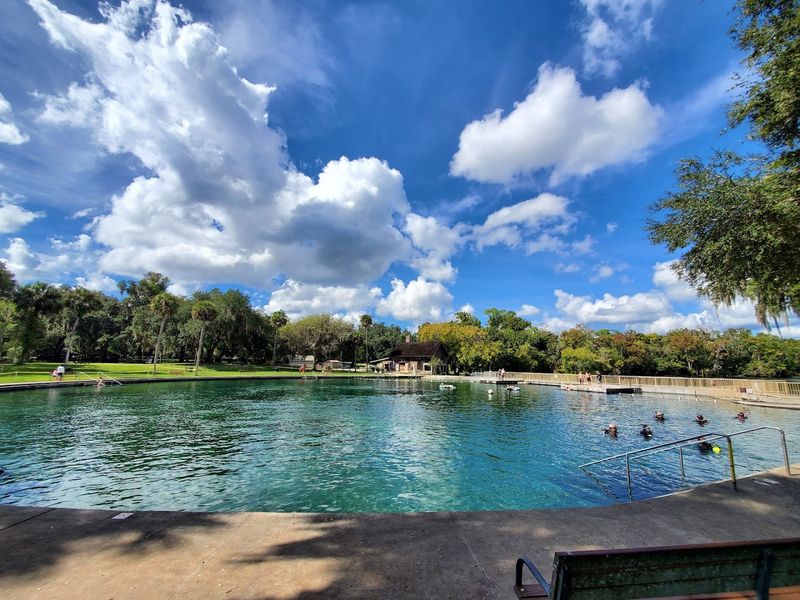
Make-your-own pancakes at the Old Spanish Sugar Mill restaurant make this park famous, but the spring itself deserves equal attention. Water flows at 19 million gallons daily, creating a large swimming area with sandy beaches and grassy lounging spots.
The spring stays at 72 degrees year-round, offering perfect relief from August heat.
The swimming area is huge—almost like a natural pool—with depths ranging from shallow to over your head. Families spread out along the edges while swimmers do laps across the middle.
A wooden boardwalk circles part of the spring, providing scenic views and access points. The clear water lets you see fish and turtles going about their business.
Beyond swimming, the park offers canoeing along Spring Garden Creek, hiking trails through hammock forests, and that famous pancake breakfast. The old sugar mill building adds historical character, and rangers offer educational programs about the area’s past.
Ponce de Leon supposedly searched for the Fountain of Youth here—the spring certainly feels rejuvenating.
Weekends get busy, especially when everyone wants pancakes, so arrive early. Park admission is standard, and the restaurant operates separately.
Bring water shoes since the bottom has some rough spots. Shade is plentiful, making all-day visits comfortable.
This is one of Florida’s most family-friendly spring destinations.
10. Fanning Springs State Park – Fanning Springs
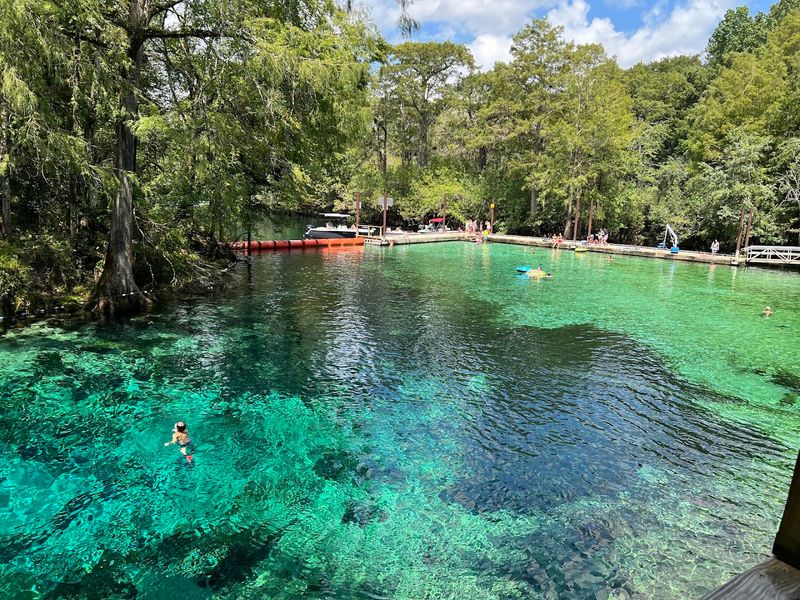
Where the spring run meets the Suwannee River, Fanning Springs creates a unique swimming experience. The spring produces about 60 million gallons daily at a constant 72 degrees, while the river water is warmer and tinted brown from tannins.
You can literally swim between two different water temperatures and colors.
The spring basin is relatively small but deep, with a wooden dock for easy access. The run is short—maybe 200 feet—before joining the river.
This compact size means you can easily supervise kids or keep groups together. The clear spring water contrasts beautifully with the darker river, creating a natural boundary.
A boardwalk extends over the spring, letting you observe underwater features and wildlife. Manatees occasionally swim up from the river, especially during cooler months, though August visits are rare.
The park includes picnic areas, a playground, and a boat ramp for river access. Kayaking the Suwannee is popular, and several outfitters operate nearby.
This park is smaller and quieter than famous springs, making it perfect for low-key family outings. Admission is affordable, and facilities are clean and well-maintained.
The town of Fanning Springs is tiny, so bring supplies with you. Weekdays offer the most peaceful experience.
The combination of spring and river swimming gives you options depending on your mood and temperature preference.
11. Juniper Springs Recreation Area – Ocala National Forest
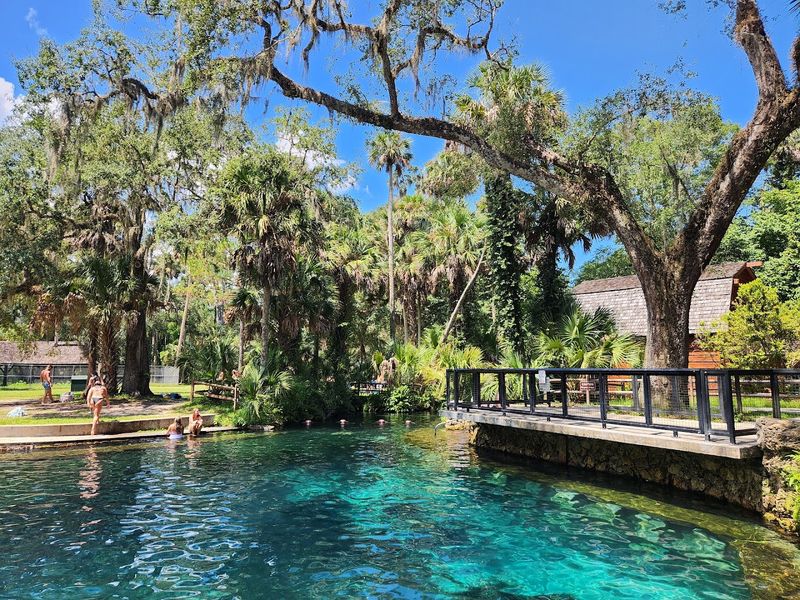
Deep in the Ocala National Forest, Juniper Springs feels like discovering a secret paradise. The spring produces 13 million gallons daily, creating a swimming area surrounded by dense subtropical forest.
Stone walls from a 1930s Civilian Conservation Corps project contain the spring, giving it a unique constructed-yet-natural appearance.
The water is incredibly clear with that signature blue-green tint. Depths vary, with the spring vent area being deepest.
A sandy beach area provides easy entry, and rope swings add old-fashioned fun. The forest canopy provides excellent shade, keeping the area comfortable even on the hottest August days.
A seven-mile canoe run through Juniper Creek is legendary among paddlers. The narrow waterway winds through pristine wilderness where you’ll see alligators, birds, and maybe black bears along the banks.
This isn’t a lazy float—fallen trees and tight turns require attention—but it’s absolutely worth the effort.
The recreation area charges a day-use fee and offers primitive camping. A small concession stand sells snacks and rents canoes.
Get there early on weekends because parking is limited. The remote location means you’re truly surrounded by nature.
Cell service is spotty, adding to the escape-from-everything appeal. Bring bug spray for the forest trails.
This is classic Old Florida at its finest.
12. Alexander Springs Recreation Area – Altoona
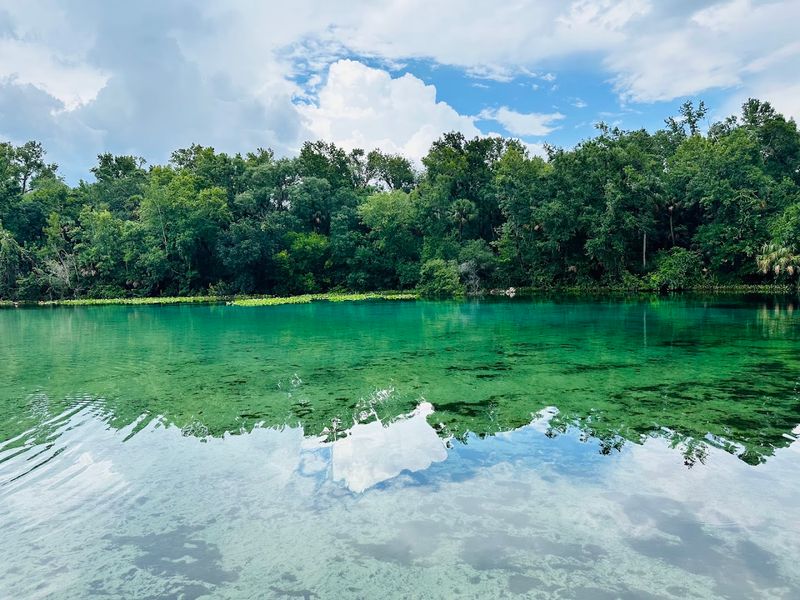
Alexander Springs is one of the largest and most beautiful in the Ocala National Forest. It produces 70 million gallons daily, creating a massive swimming area with a white sand beach.
The spring basin is huge—several acres—giving everyone plenty of space even on busy August weekends.
Water stays at 72 degrees year-round, and the clarity is remarkable. You can see the sandy bottom 20 feet down in the deepest areas.
Snorkeling is fantastic here, with fish everywhere and interesting underwater formations to explore. The spring run flows into Alexander Creek, offering a six-mile canoe trail through wilderness.
Facilities include a bathhouse, picnic areas, and a small camp store. The beach area has designated swimming zones, and lifeguards are sometimes on duty during peak season.
Families set up for all-day visits, rotating between swimming, picnicking, and exploring the surrounding forest. Hiking trails loop through the property.
This is a Forest Service site, so admission costs less than state parks. Camping is available with electric hookups, making it popular for RVers.
The creek canoe trip is gentler than Juniper Springs, suitable for beginners. Outfitters nearby offer rentals and shuttles.
Arrive before 10 AM on weekends to secure parking.
The combination of large swimming area and beautiful forest setting makes this a top choice.
13. Manatee Springs State Park – Chiefland
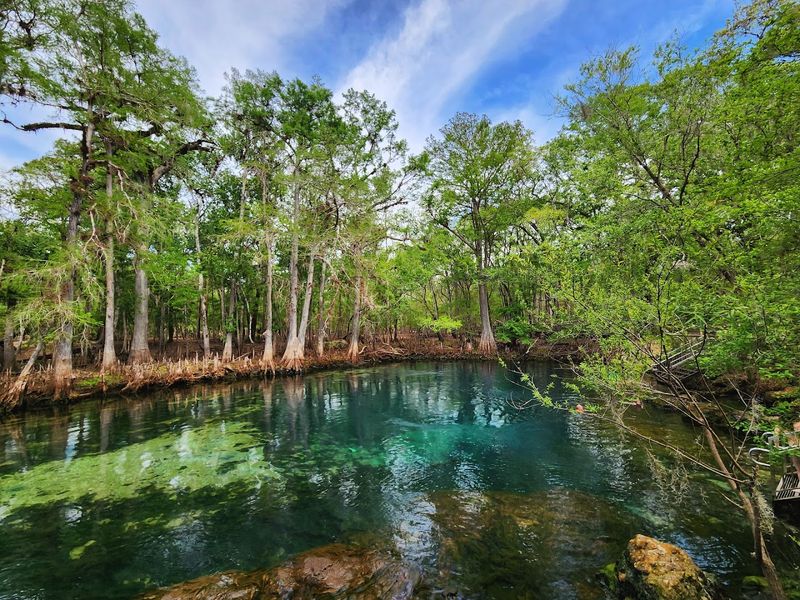
One of Florida’s first-magnitude springs, Manatee Springs pumps out 100 million gallons daily. The spring basin is enormous and stunningly beautiful, with water so clear you can watch manatees swimming when they visit during cooler months.
August means no manatees, but the swimming is unbeatable.
A long boardwalk extends over the spring run, providing spectacular views of the underwater world below. The swimming area is well-marked, with depths varying from shallow edges to very deep center sections.
The 72-degree water feels amazing, and the size of the spring means you never feel crowded even on busy days.
The spring run flows nearly a mile to the Suwannee River, creating excellent kayaking and canoeing opportunities. You can paddle from the spring to the river and back, enjoying wildlife and pristine scenery.
The park also features hiking trails, camping areas, and picnic facilities scattered throughout the property.
This is a popular park, so weekends see plenty of visitors. Arrive early for convenient parking near the spring.
The park charges standard state park admission. A small concession stand operates seasonally.
Bring your own snorkeling gear to fully appreciate the underwater environment.
The combination of spring swimming, river paddling, and forest trails makes this perfect for active families wanting variety in their day.
14. Lithia Springs Park – Lithia
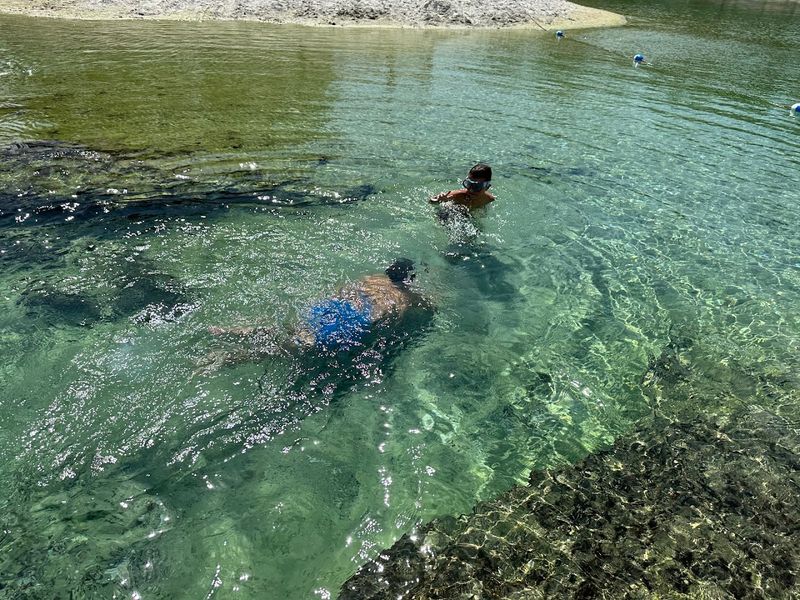
Just outside Tampa, Lithia Springs offers a convenient escape without driving to North Florida. The spring produces about 32 million gallons daily, creating a swimming area that’s smaller than famous springs but perfectly adequate.
Water temperature stays around 72 degrees, providing refreshing relief from Tampa Bay’s humid August weather.
The park is Hillsborough County-operated, which means it’s more developed than wilderness springs. Facilities include a playground, picnic pavilions, volleyball courts, and clean restrooms.
The swimming area has a sandy beach, and the spring run is short but enjoyable for floating. Rope swings add excitement for kids.
What makes Lithia special is the accessibility. You don’t need to drive hours into the forest—it’s right off the highway yet feels surprisingly natural.
Families from Tampa make this a regular summer destination. The park gets busy on weekends, but the atmosphere is friendly and community-oriented.
Admission is very affordable compared to state parks. The county maintains the grounds well, and there’s plenty of shade under mature trees.
A concession stand operates during summer. Bring your own tubes or floats since rentals aren’t available.
The water isn’t quite as crystal-clear as North Florida springs, but it’s still beautiful and refreshing.
This is perfect for anyone wanting a quick spring fix without a major expedition.
15. Rock Springs Run at Kelly Park – Apopka
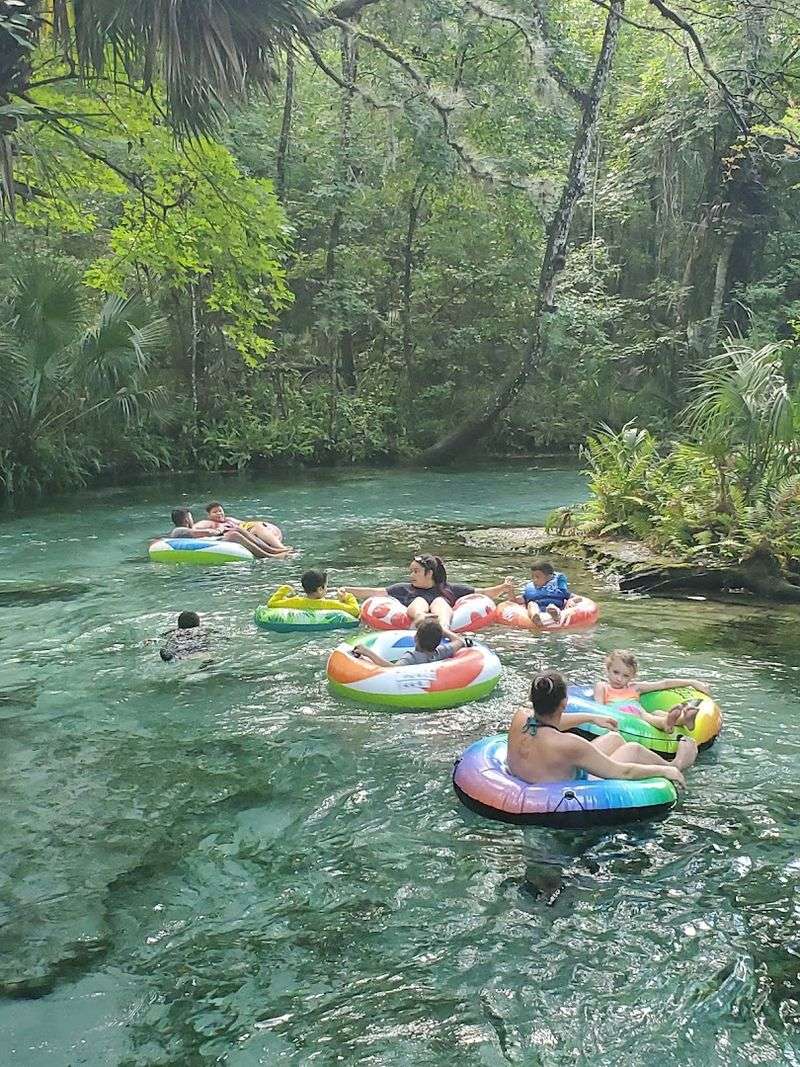
Kelly Park’s claim to fame is the natural lazy river created by Rock Springs. The spring produces 26,000 gallons per minute, feeding a crystal-clear stream perfect for tubing.
You can float the entire loop in about 20 minutes, then walk back and do it again—people spend hours repeating this simple pleasure.
The water stays at 68 degrees year-round, slightly cooler than most springs, which feels incredible in August heat. The run winds through forest, creating a shaded natural water park.
Depths vary from shallow riffles to deeper pools, keeping the float interesting. The sandy bottom and clear water make it safe and enjoyable for all ages.
Beyond tubing, there’s a swimming area near the spring head where the water is deeper and calmer. Picnic areas, playgrounds, and volleyball courts make this a full-service park.
The Orange County facility is extremely popular with Orlando locals, meaning summer weekends see massive crowds.
Here’s the catch: Kelly Park has limited parking and often reaches capacity by mid-morning on weekends. Once full, they close the gates until people leave.
Arriving before 9 AM is essential during peak season. Admission is cheap, and you can bring your own tubes.
No concessions exist, so pack everything you need.
Despite the crowds, the experience is worth the early wake-up call.