9 Florida Buildings Shaped Like the Things They Once Sold
Florida has always loved a good roadside attraction, and nothing stops traffic quite like a building shaped exactly like what it sells. From massive oranges hawking fresh citrus to towering ice cream cones serving soft-serve, these architectural oddities turned commerce into pure spectacle. Many of these quirky structures still stand today, reminding us of an era when getting noticed meant thinking way outside the box.
1. Eli’s Orange World (Kissimmee)
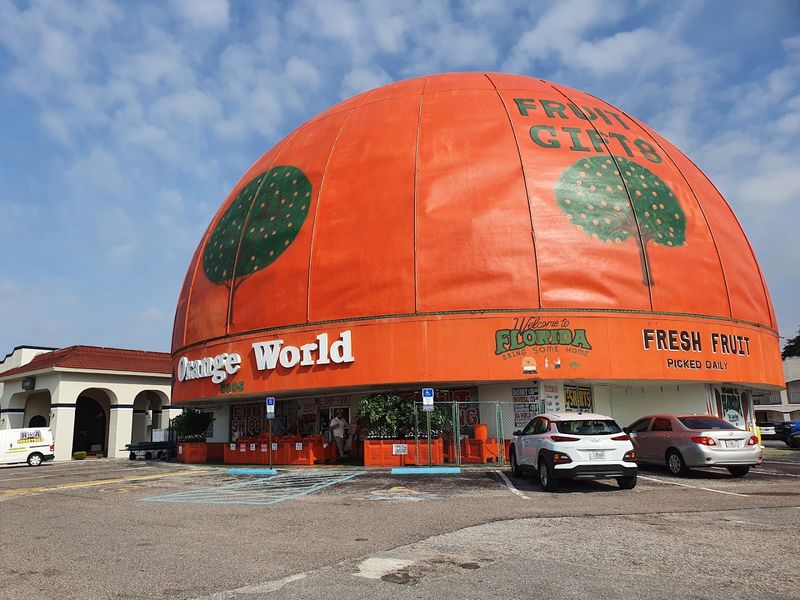
Standing proud along Highway 192, this colossal concrete citrus has been turning heads since the early 1970s. Travelers cruising through Kissimmee can’t miss the sight of what might be the world’s most literal example of truth in advertising. The building towers over the tourist strip, a bold orange sphere that promises citrus goodies and Florida souvenirs inside.
Originally conceived as a simple fruit stand, the structure quickly became something much bigger. Visitors could grab fresh orange juice, bags of grapefruit, and all manner of Sunshine State trinkets beneath the curved concrete walls. The interior stays surprisingly cool even on sweltering summer days, thanks to those thick walls that double as both structure and branding.
What makes this place special isn’t just the shape. It’s the commitment to the bit, the way every element reinforces the citrus theme without feeling cheesy or overdone. Families have been stopping here for generations, snapping photos in front of the giant orange before heading to the theme parks just down the road.
Today, Eli’s continues operating much as it always has. The building has weathered hurricanes, changing tastes, and decades of Florida sun. Yet it remains a testament to a time when roadside commerce demanded boldness, creativity, and a willingness to look absolutely ridiculous in the best possible way.
2. The Giant Orange (Melbourne)
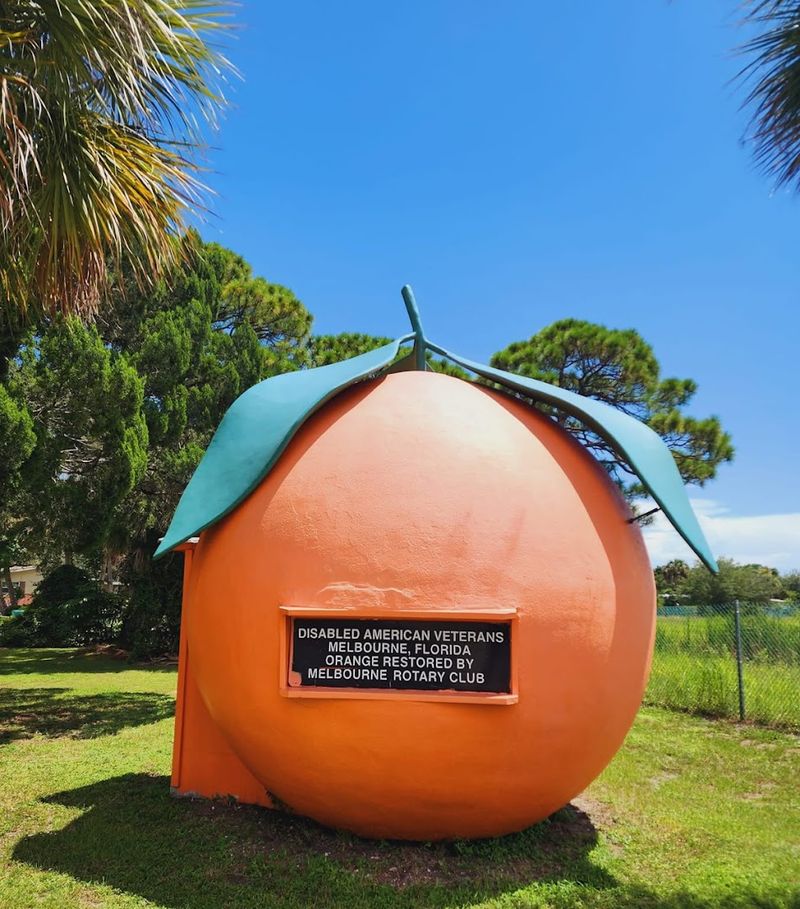
Built in 1967, this 15-foot sphere of painted concrete represents peak Space Coast optimism. Melbourne was booming then, riding high on the aerospace industry and tourist traffic heading to Cape Canaveral. Someone decided the best way to capitalize on Florida’s citrus reputation was to construct an enormous orange right beside the highway and fill it with fresh-squeezed juice.
The concept was simple but effective. Motorists would spot the impossible-to-miss landmark, pull over out of sheer curiosity, and walk away with cups of cold orange juice. No fancy marketing needed when your building literally screams what you’re selling from a hundred yards away.
Inside, the circular space forced an interesting layout. Counters curved along the walls, and workers learned to navigate the round room with practiced efficiency. The building’s small footprint meant every square inch mattered, but the exterior’s visual impact more than compensated for the cramped working conditions.
Decades have passed since those early days, and the orange has seen various owners and purposes. The structure survived Florida’s notoriously unpredictable weather, though it’s needed paint touch-ups and repairs over the years. What started as a simple juice stand became a local landmark, the kind of place people use as a reference point when giving directions.
Few buildings capture mid-century Florida roadside culture quite like this one.
3. The Big Orange at Sunsational Farms (Umatilla)
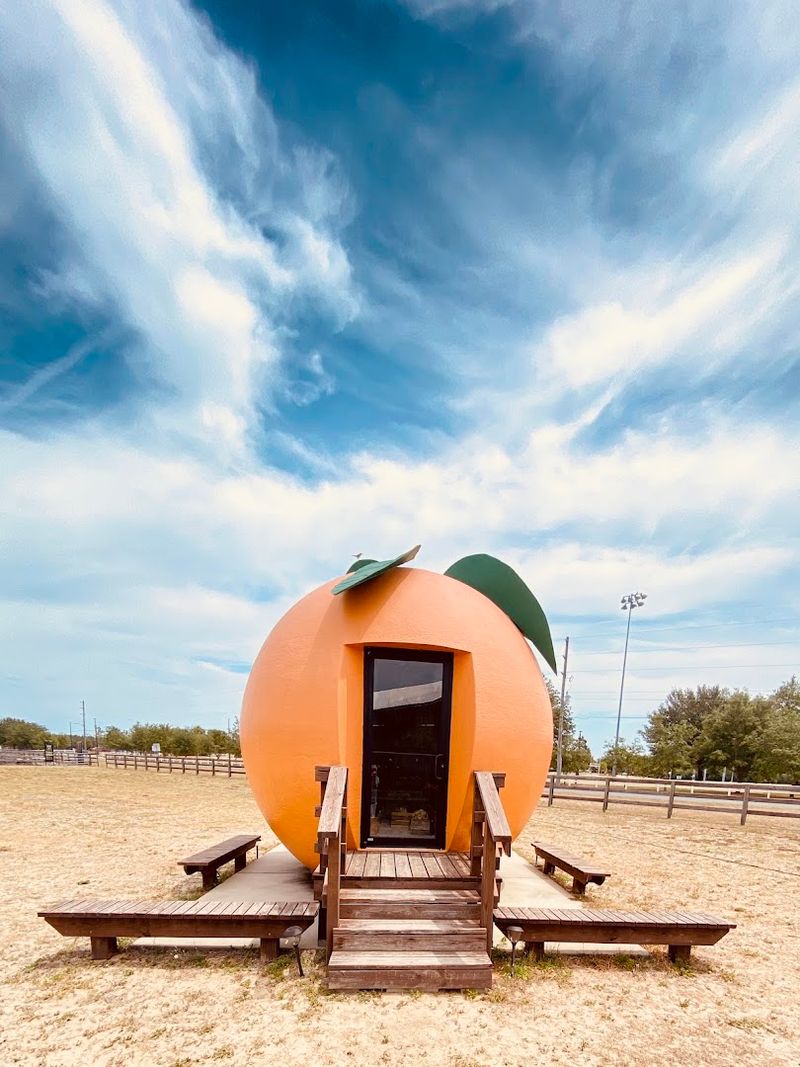
This particular orange has lived more lives than most buildings ever dream of. Originally constructed in Mount Dora as a fruit stand, the concrete sphere served customers for years before falling into disrepair. Rather than demolish it, someone saw potential and orchestrated a rescue mission that would make preservation enthusiasts weep with joy.
The move to Sunsational Farms gave the orange a second chance. Restoration work brought back the structure’s original charm while adapting it for modern use. Now it sits on a working farm, surrounded by actual orange groves instead of just representing them.
There’s something poetic about that, a fake orange finally living among the real thing.
Visitors to the farm encounter the orange as part of their agricultural experience. It serves as both attraction and functional space, bridging the gap between Florida’s roadside-attraction past and its agricultural-tourism present. Kids who see it probably don’t realize they’re looking at a rescued piece of history, but that’s okay.
The farm’s owners clearly understood the value of preserving these quirky structures. Rather than chase bland efficiency, they embraced the orange’s oddness and made it central to their identity. The building draws curious visitors who might otherwise drive past, proving that sometimes the strangest marketing tools are the most effective.
Standing there today, painted bright and proud, the orange has found its forever home.
4. The Original Twistee Treat (North Fort Myers)
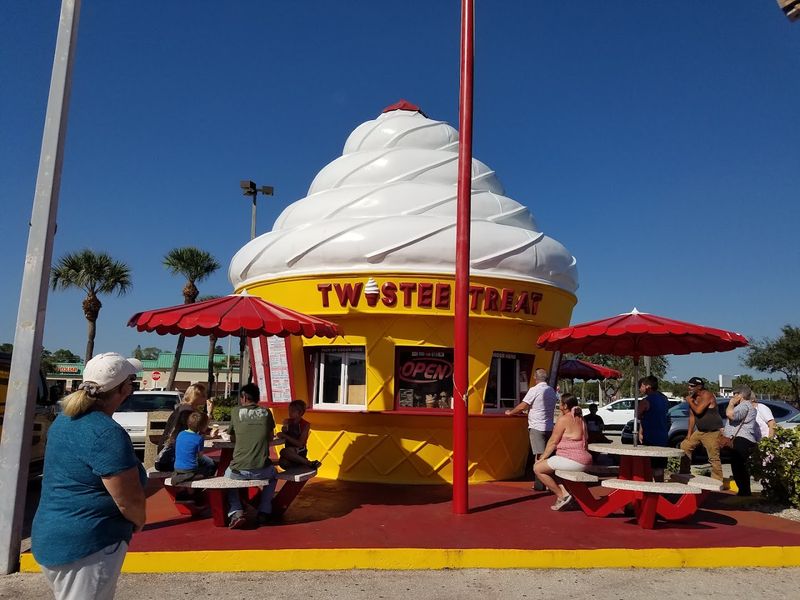
Before Florida became dotted with ice-cream-cone buildings, there was supposedly this one. The North Fort Myers location claims the title of first, the original Twistee Treat that spawned a whole architectural movement. For decades, it served soft-serve to locals and tourists, a gleaming white cone topped with a swirl that never melted, no matter how brutal the summer heat.
The building’s design was genius in its simplicity. Anyone driving past immediately understood the product without reading a single word. The cone shape provided enough interior space for equipment and workers while maintaining the visual gimmick.
Windows cut into the cone allowed for customer service, and the whole operation could run with just a couple of employees during busy shifts.
Twistee Treat locations eventually spread across Florida, each one a variation on this original theme. Some added colors, others changed proportions slightly, but all traced their lineage back to this North Fort Myers pioneer. The concept proved so successful that other ice cream stands started copying the cone-building idea, creating a whole genre of Florida architecture.
Sadly, the original location closed its windows for the final time in 2014. Rather than demolish the structure, someone relocated it, though details remain murky about where it ended up. The closure marked the end of an era, but the building’s influence lives on in every cone-shaped ice cream stand still serving customers across the state.
5. Dairy Joy’s Former Twistee Treat (Seminole)
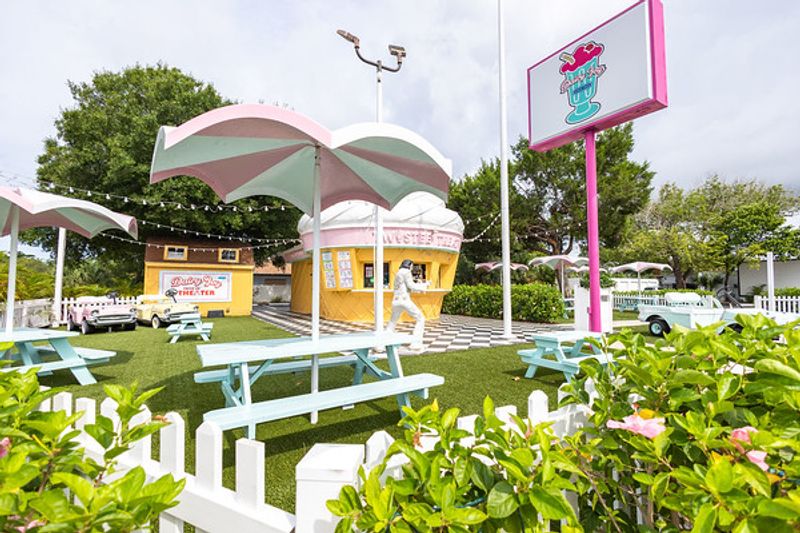
Rebirth happens even in the world of novelty architecture. This cone-shaped building spent years as a Twistee Treat before new owners arrived in 2022 with fresh paint and the Dairy Joy name. The structure itself remained unchanged, but the rebrand gave it new life and a chance to serve another generation of ice cream lovers.
Seminole locals who grew up visiting this spot as a Twistee Treat had to adjust to the new identity. Some probably still call it by the old name out of habit. But the important thing didn’t change: you can still pull up, order through the window, and walk away with cold soft-serve on a hot Florida day.
The cone’s proportions make it instantly recognizable from blocks away. That swirl on top catches afternoon sunlight and practically glows, a beacon calling to anyone with a sweet tooth and a few dollars in their pocket. Inside, the circular layout creates an efficient workspace where employees can pivot between the register and the soft-serve machines without taking more than a step or two.
What the Dairy Joy owners understood was simple. Don’t mess with what works. The building had already proven itself as an ice cream destination for decades.
Slapping a new name on it while maintaining the quality and the experience was enough to keep customers coming back, proving that sometimes the best business strategy is honoring the past while gently updating for the present.
6. Topper’s Craft Creamery (Lake Wales)
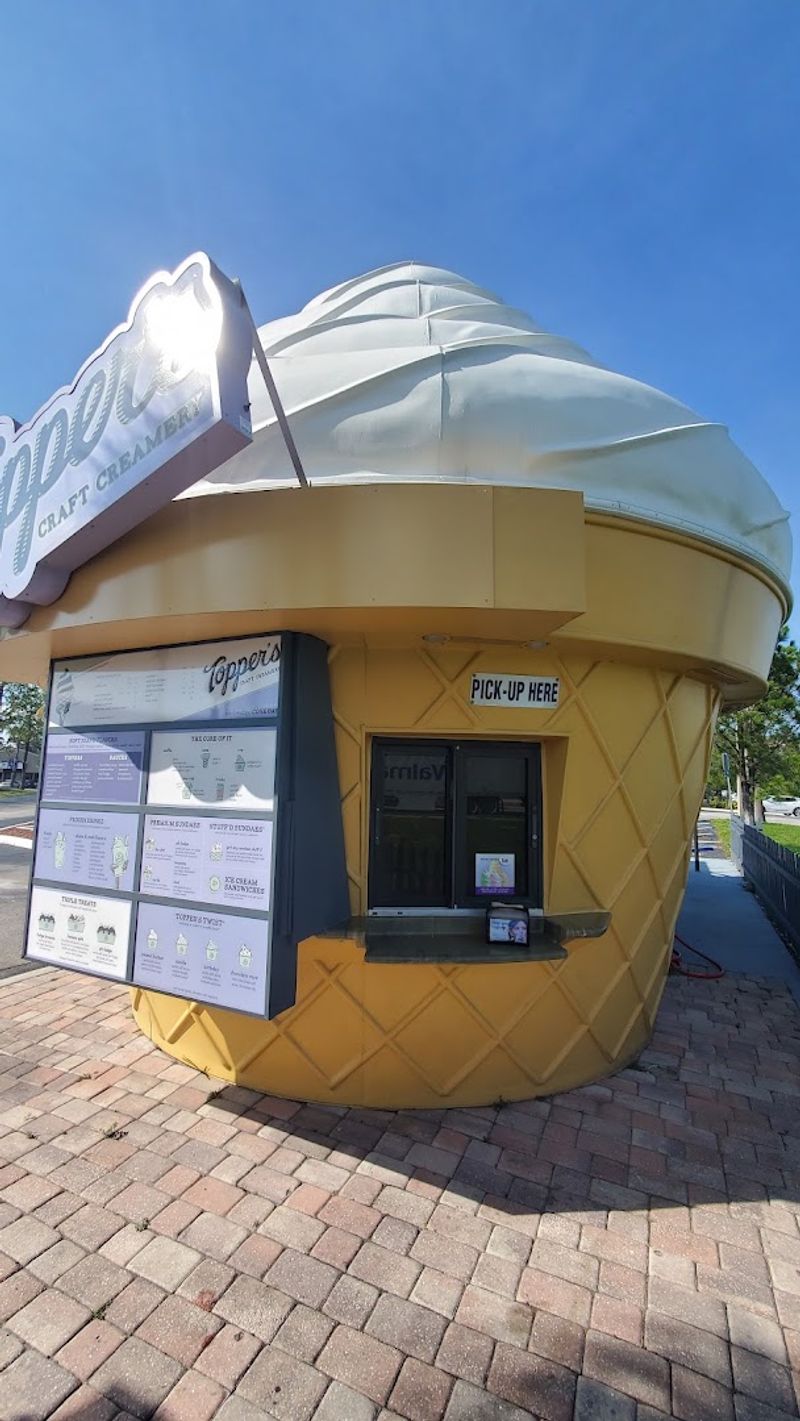
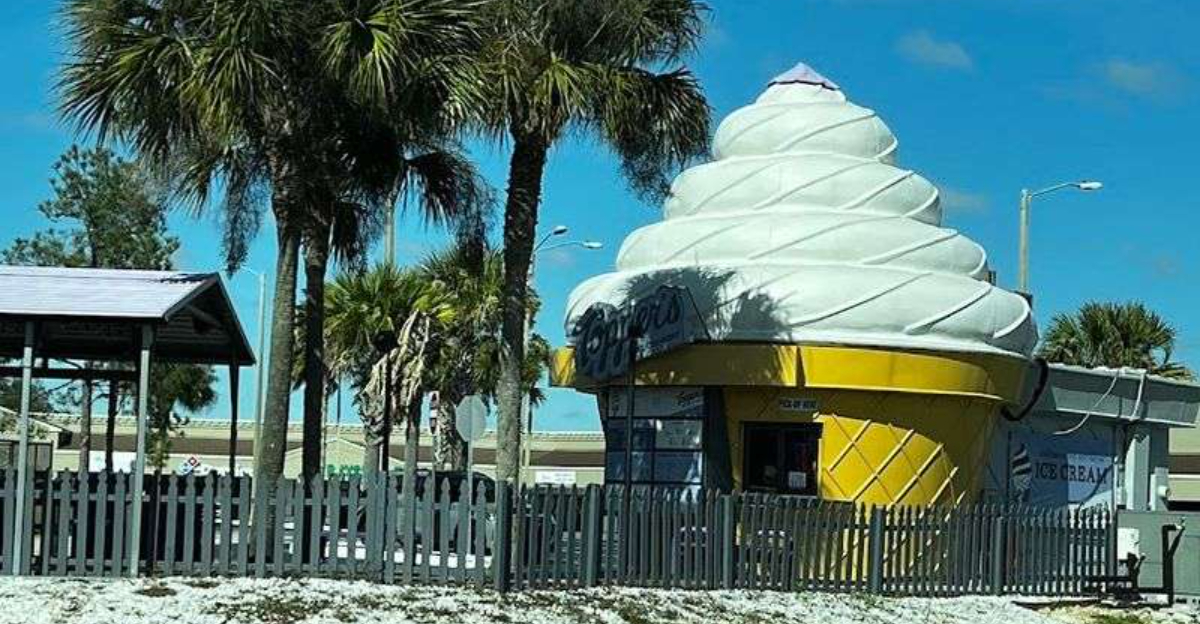
Not all buildings die where they’re born. This particular cone started its life in Tampa as a Twistee Treat, serving soft-serve to city dwellers before someone decided it deserved a different fate. In 2010, the entire structure made the journey to Lake Wales, where it would begin a new chapter as Topper’s Craft Creamery.
Moving a giant ice cream cone isn’t exactly standard construction work. The logistics alone must have been fascinating, figuring out how to transport a cone-shaped building down Florida highways without causing accidents or knocking down power lines. But someone pulled it off, and Lake Wales gained a instant landmark in the process.
The Lake Wales location gives the building a different context than it had in Tampa. Here it sits in a smaller, more intimate community where everyone knows everyone. The cone became a gathering spot, a place where families meet after Little League games and teenagers hang out on weekend nights.
That sense of community wouldn’t exist if Topper’s operated from a generic strip-mall storefront.
Topper’s distinguishes itself by focusing on craft ice cream, elevating the product beyond standard soft-serve. The building’s playful exterior now houses more sophisticated flavors and techniques, creating an interesting contrast. You approach expecting simple nostalgia but leave having experienced something more refined, all while the giant cone overhead reminds you not to take dessert too seriously.
7. Pelican’s SnoBalls’ Former Twistee Treat (Bonita Springs)
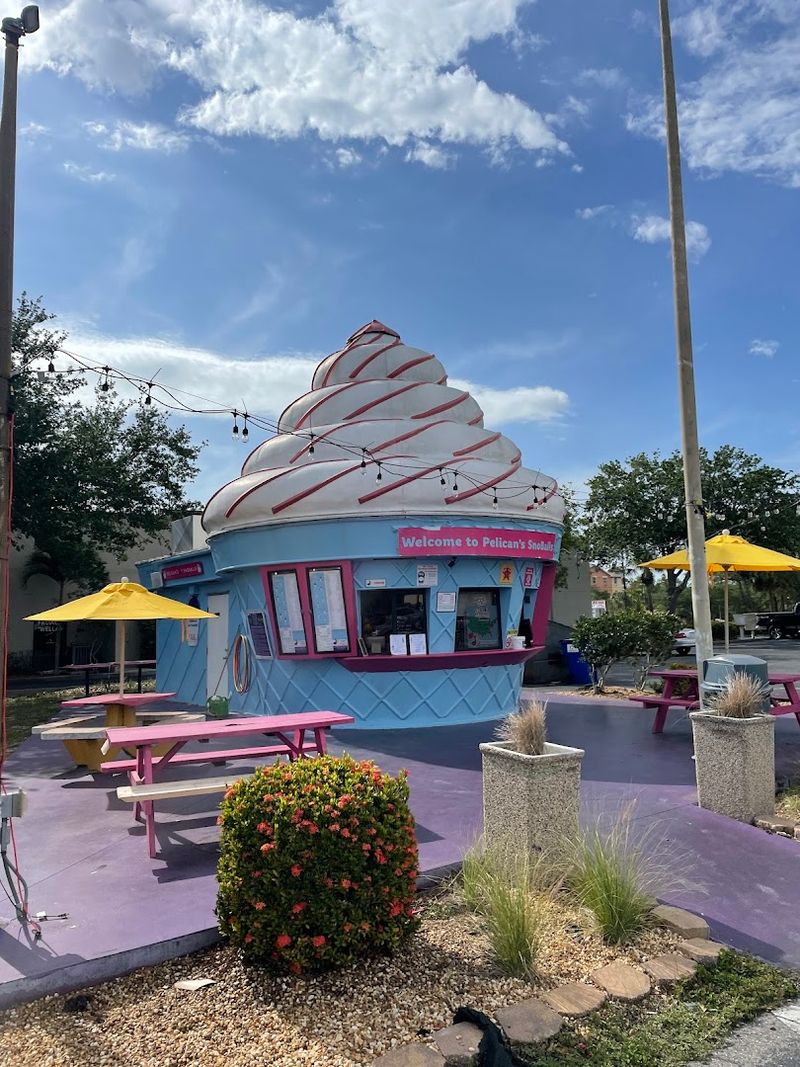
Sometimes change comes in a can of paint and a new menu. This Bonita Springs cone spent years serving soft-serve as a Twistee Treat before new owners arrived with a different vision. They painted the whole thing blue, swapped ice cream for shaved ice, and opened as Pelican’s SnoBalls.
The building stayed the same; only the product changed.
The blue paint transformed the cone’s personality completely. What once read as vanilla soft-serve now suggests tropical waters and frozen treats. That single color choice repositioned the entire business, signaling to customers that something different waited inside.
Smart branding doesn’t always require demolition and new construction.
Shaved ice makes perfect sense for Southwest Florida’s climate. The lighter, icier texture feels more refreshing than heavy ice cream when temperatures push into the nineties. Pelican’s menu features dozens of flavor combinations, turning the simple act of ordering into a fun decision-making process.
Kids press their faces against the window, pointing at color charts while parents pretend to be patient.
The cone shape still works perfectly for the new concept. Customers recognize the building as a dessert destination even if they’ve never heard of Pelican’s specifically. That architectural shorthand, where form instantly communicates function, proves its value regardless of whether you’re selling soft-serve or shaved ice.
The building just needed someone willing to see past its original purpose and imagine something new.
8. Swampy the Alligator at Jungle Adventures (Christmas)
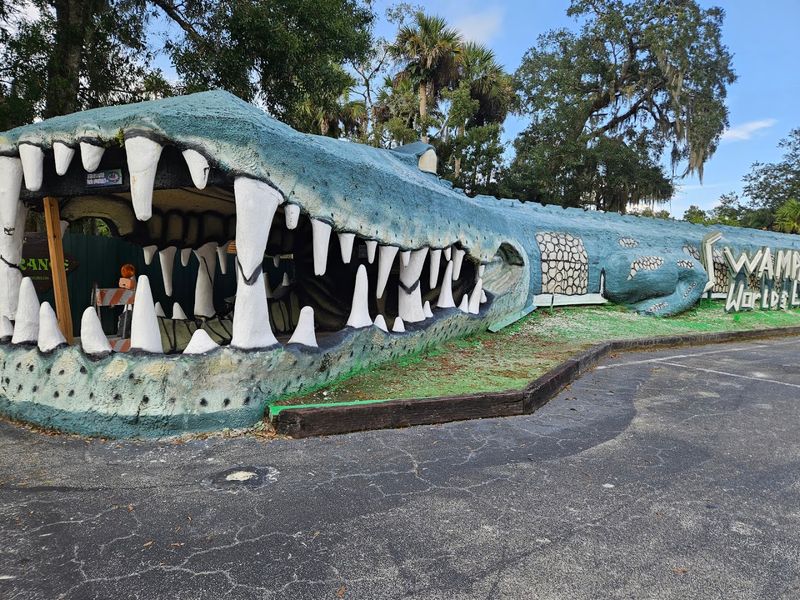
Most gift shops occupy boring rectangular boxes. Jungle Adventures decided their gift shop should be a 200-foot alligator you walk through to enter the park. The decision to build Swampy wasn’t just bold; it was perfectly, wonderfully insane in the way only Florida tourist attractions can pull off.
Approaching Swampy for the first time hits different than seeing photos. The sheer scale becomes apparent as you get closer, this massive concrete reptile stretching across the property like it’s about to devour the parking lot. Kids either squeal with excitement or freeze in terror, sometimes both.
Either way, nobody forgets the experience of walking into an alligator’s mouth to buy postcards.
Inside Swampy’s belly, the gift shop operates like any other, except for the whole being-inside-a-giant-gator thing. Shelves line the curved walls, packed with plush alligators, T-shirts, and every variety of Florida kitsch imaginable. The building’s shape creates unusual sight lines and spaces, making shopping feel like an adventure rather than a chore.
Jungle Adventures understood something important about roadside attractions. In a state packed with theme parks and beaches, you need a hook that cuts through the noise. Swampy provides that hook, a photo opportunity and conversation starter that practically markets itself.
People who might never visit a wildlife park stop because they need to see the giant alligator building up close. Once there, many decide to check out the actual park, which is probably the point.
9. The Guitar Hotel (Hollywood)
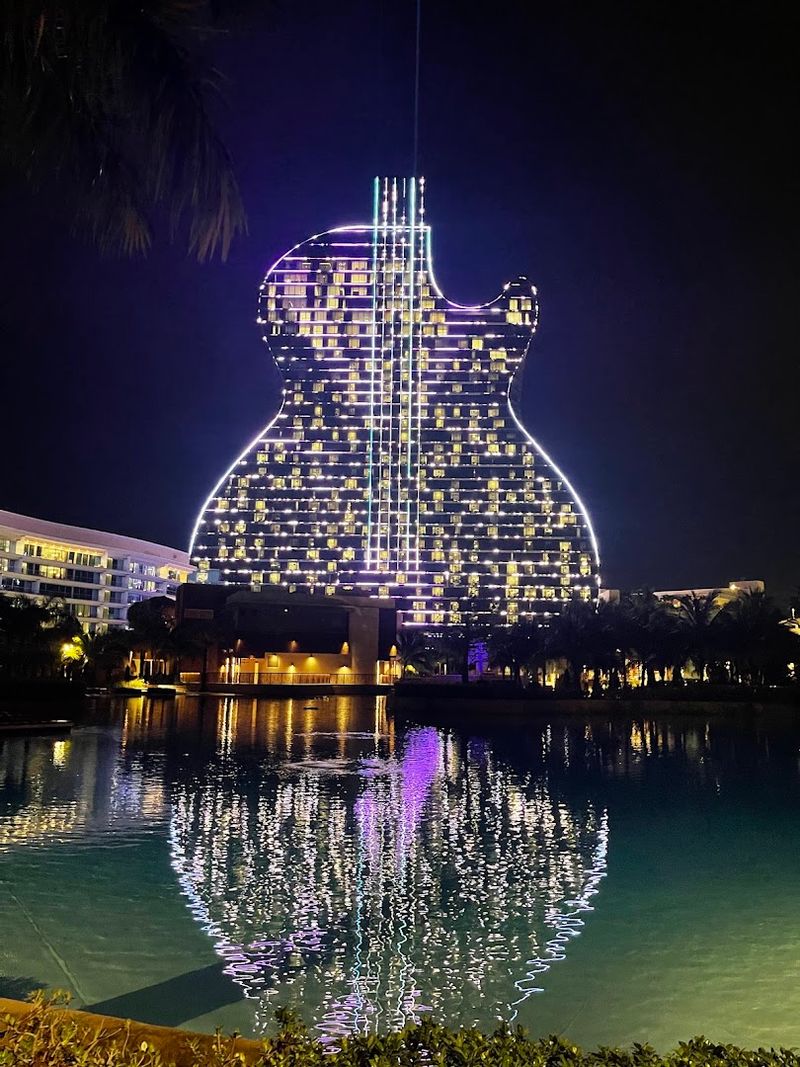
While most entries on this list represent small-scale roadside whimsy, the Guitar Hotel plays in a completely different league. This 450-foot tower doesn’t just suggest guitars; it commits fully to the concept with two massive instruments placed back-to-back, creating a resort that’s visible for miles. The Seminole Hard Rock Hotel wanted an icon, and they got one that redefined South Florida’s skyline.
The engineering challenges must have been extraordinary. Guitars aren’t naturally hotel-shaped, so architects had to figure out how to create recognizable guitar silhouettes while maintaining functional interior spaces. They succeeded brilliantly, crafting a building that photographs like a guitar from every angle while housing hundreds of luxury rooms inside.
At night, the tower transforms into something even more spectacular. LED lights covering the exterior turn the entire building into a dynamic display, with colors and patterns rippling across the guitar surfaces. The effect is mesmerizing, a piece of architecture that doubles as entertainment.
Guests in nearby rooms get front-row seats to a nightly light show, though some probably wish for blackout curtains.
The Guitar Hotel represents novelty architecture’s evolution. Where roadside oranges and ice cream cones charmed with humble simplicity, this tower flexes modern technology and massive budgets. Yet the core concept remains unchanged: make your building announce exactly what you’re about.
For a Hard Rock property, that means rock and roll excess made concrete, glass, and steel, rising into the Florida sky like a power chord turned vertical.