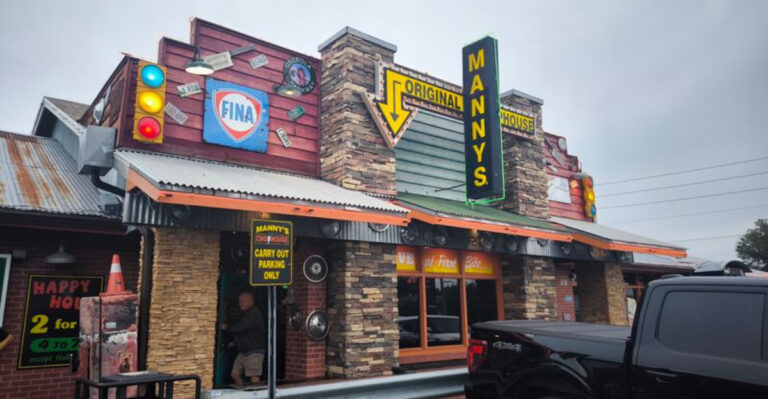
Florida Is Famous for the Wrong Things, and These 11 Places Prove It
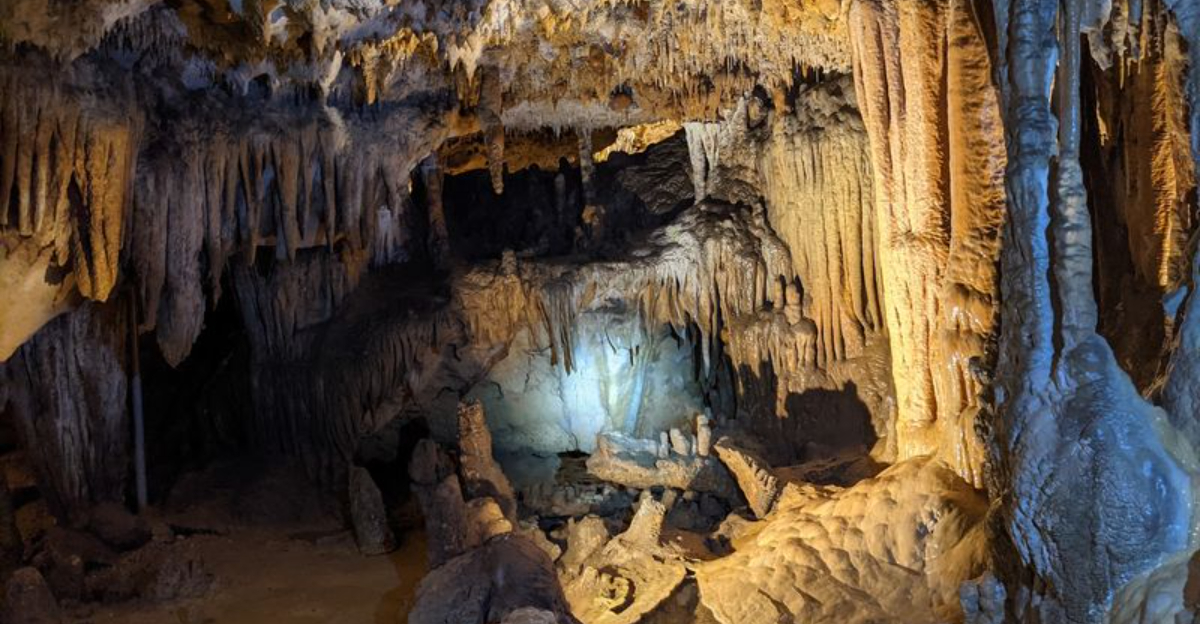
Most people think Florida is all about theme parks, beaches, and retirement communities. Sure, those things exist, but they barely scratch the surface of what makes this state truly fascinating. Hidden across the Sunshine State are underground caves, mysterious monuments, wild prairies, and even a legendary swamp creature headquarters that most visitors never hear about.
These 11 incredible spots reveal a side of Florida that has nothing to do with the usual tourist traps.
1. Florida Caverns State Park (Marianna)
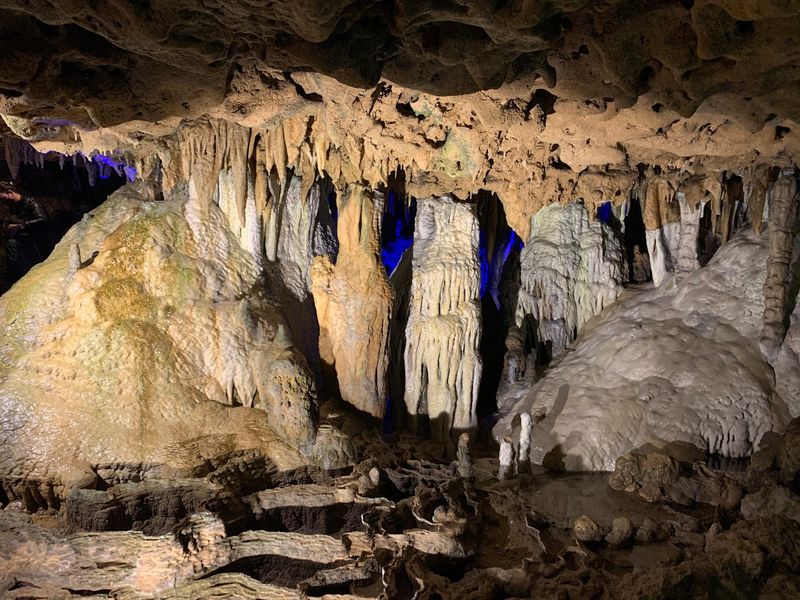
Most folks picture Florida as flat, sunny, and entirely above ground. Nobody expects to find yourself descending into cool, dark chambers filled with ancient rock formations that look like something from another planet. Yet here in the Panhandle, you can walk through the only air-filled caves in the state open to public tours.
The formations took thousands of years to create, drip by patient drip. Stalactites hang from the ceiling like stone icicles, while stalagmites rise from the floor to meet them. Flowstone cascades down walls in frozen waves, and delicate soda straws dangle overhead.
The whole experience feels more like Kentucky or Tennessee than the Florida most people know.
Rangers lead guided tours through the lit pathways, pointing out formations with nicknames like the Wedding Cake and the Waterfall. The temperature stays around 65 degrees year-round, which feels downright chilly after the humid heat outside. It’s a 45-minute walk through geological history that completely flips the script on what Florida landscapes can offer.
Above ground, the park offers hiking trails, canoeing on the Chipola River, and picnic areas shaded by hardwood trees. But the real magic happens below your feet, in rooms carved by water and time into something truly spectacular.
2. Paynes Prairie Preserve State Park (Micanopy)
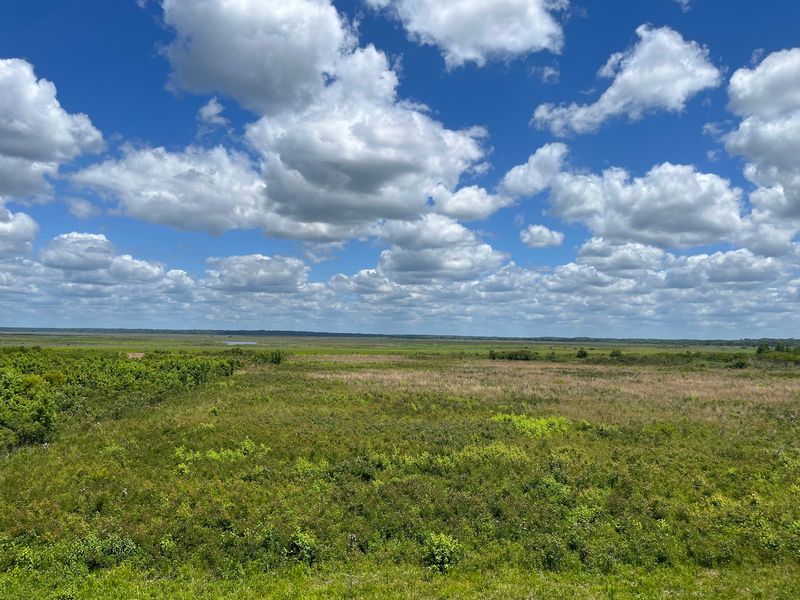
Picture the Great Plains, but swap the wheat fields for palmetto and wetlands. That’s the vibe at this 21,000-acre preserve where actual bison and wild horses roam free, just like they did centuries ago. Early Spanish explorers documented massive herds here, and today’s animals are descendants of reintroduction efforts that brought back a piece of Florida’s forgotten past.
The preserve sits in a massive basin that floods and drains with the seasons. During dry periods, you can spot bison grazing on the prairie grasses, their shaggy heads lowered as they munch. Wild horses move in small bands across the open landscape, their coats gleaming in the Florida sun.
Alligators bask along the wetland edges, and more than 270 bird species have been recorded here.
Hiking trails and an observation tower give you chances to scan for wildlife. The 50-foot tower provides sweeping views across the entire basin, where the horizon stretches farther than seems possible in Florida. Early morning and late afternoon offer the best wildlife viewing, when animals are most active and the light turns everything golden.
This isn’t the Florida of beaches and palm-lined boulevards. It’s wilder, older, and completely unexpected. Watching bison thunder across a prairie under a Florida sky rewrites everything you thought you knew about the state’s natural history and current landscapes.
3. Morikami Museum and Japanese Gardens (Delray Beach)
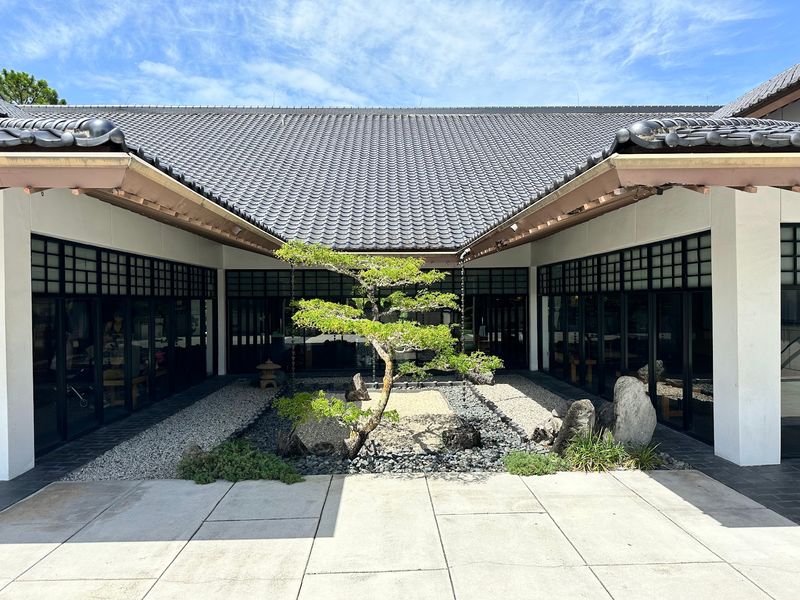
Step through the entrance and suddenly you’re somewhere that feels nothing like South Florida. Instead of tropical chaos, you find carefully raked gravel, perfectly pruned pines, and koi gliding through still ponds. The 16-acre garden complex honors the Yamato Colony, a group of Japanese farmers who settled here in the early 1900s hoping to grow pineapples and make their fortunes.
The colony didn’t last, but one farmer named Sukeji Morikami stayed his whole life. He eventually donated his land to create this museum and garden as a bridge between Japanese and American cultures. Today, six distinct gardens represent different periods and styles of Japanese landscape design, from paradise gardens to modern rock gardens.
Winding paths lead past bamboo groves, waterfalls, and stone lanterns. Traditional wooden bridges arch over streams where turtles sun themselves on rocks. Everything feels intentional and peaceful, designed to slow you down and make you notice small details like the way light filters through maple leaves or how a single flower floats in a stone basin.
The museum building hosts rotating exhibitions of Japanese art, from ancient ceramics to contemporary installations. A café serves Japanese-inspired cuisine overlooking the gardens. Regular events include tea ceremonies, bonsai demonstrations, and seasonal festivals.
It’s proof that Florida’s cultural landscape includes far more than sunshine and theme parks, if you know where to look.
4. Coral Castle Museum (Homestead)
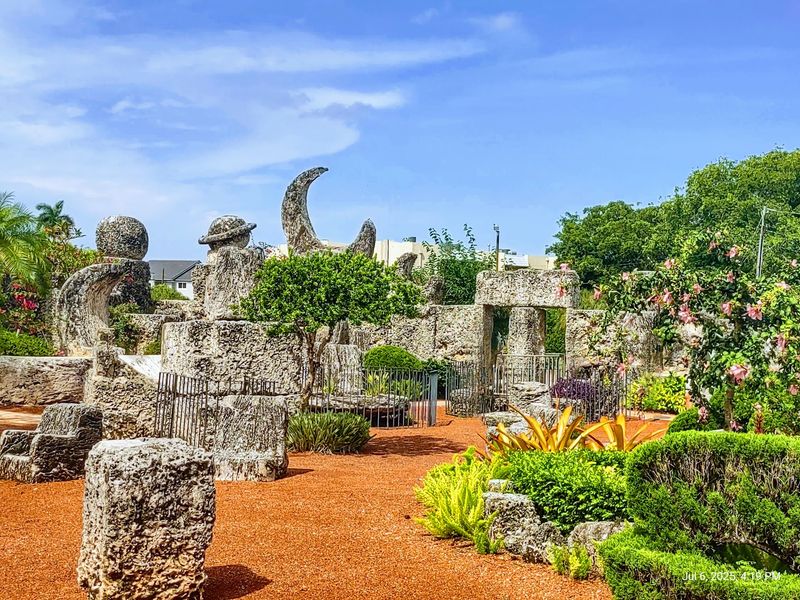
One man, working alone at night, carved and moved more than 1,000 tons of coral rock into walls, furniture, and sculptures. Nobody knows exactly how he did it. Edward Leedskalnin stood barely five feet tall and weighed 100 pounds, yet he single-handedly created massive stone structures that engineers still puzzle over today.
He claimed a broken heart drove him to build this monument after his 16-year-old fiancée canceled their wedding back in Latvia. For 28 years, he worked in secret, mostly at night, using homemade tools and techniques he never revealed. When neighbors asked how he moved nine-ton blocks, he’d smile and say he understood the secrets of the pyramids.
The result looks like something from an ancient civilization, not 1920s Florida. A nine-ton gate swings open with a finger’s touch, balanced so perfectly it moves on a truck bearing. Coral chairs, tables, and beds fill the courtyard.
A two-story tower contains Ed’s living quarters and workshop. Celestial sculptures include a 30-ton moon and representations of Mars and Saturn.
Scientists have studied the site trying to figure out Ed’s methods. Some think he used leverage and counterweights. Others suggest more exotic theories involving magnetism or lost knowledge.
Ed took his secrets to the grave in 1951, leaving behind only his incredible creation and cryptic references to understanding universal forces. The mystery makes the achievement even more impressive.
5. Cassadaga Spiritualist Camp (Cassadaga)
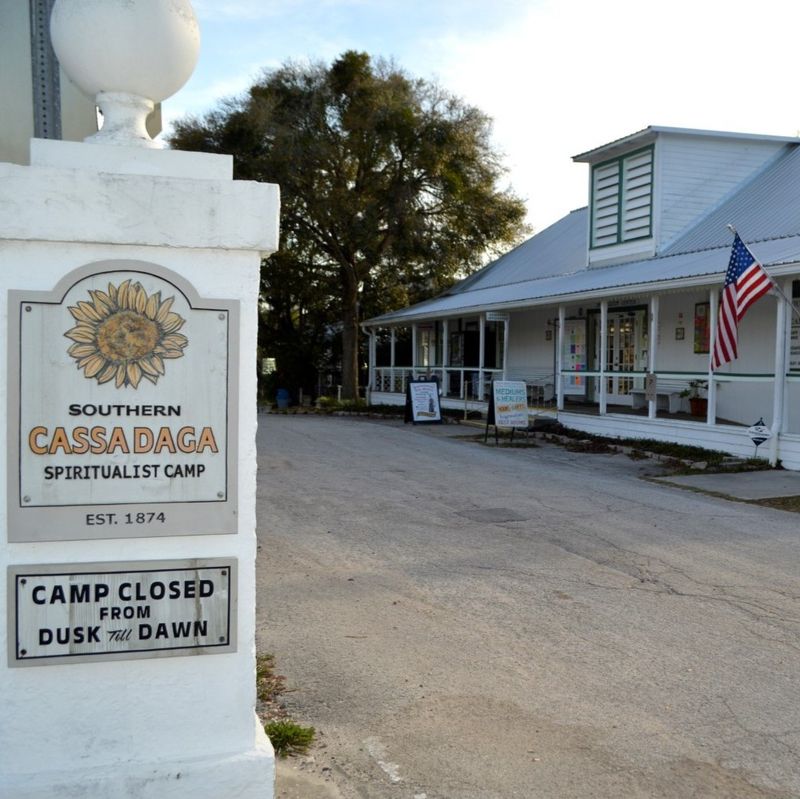
Ghosts, spirits, and psychic readings aren’t just Halloween fun here. They’re a way of life in this tiny community founded in 1894 by spiritualists who believed the dead could communicate with the living. More than a century later, certified mediums still offer readings from their homes along quiet, tree-lined streets that feel frozen in time.
The town operates as both a functional community and a spiritual center. About 100 residents live here year-round, many of them practicing mediums who’ve passed rigorous testing by the Southern Cassadaga Spiritualist Camp Meeting Association. Visitors can book readings, attend healing services, or take guided history tours that explain the movement’s beliefs and practices.
Victorian-era houses painted in soft colors line the streets. Signs advertise palm readings, aura photography, and spirit communication sessions. The Cassadaga Hotel, built in 1927, serves as the social hub where visitors and residents gather.
Everything moves at a slower pace, like the modern world hasn’t quite reached this particular corner of Volusia County.
Whether you believe in the spiritual aspects or just appreciate the quirky history, Cassadaga offers something genuinely different. The town takes its practices seriously while welcoming curious visitors. You can explore the bookstore filled with metaphysical titles, walk the peaceful streets, or sit for a reading and decide for yourself.
It’s Florida weird in the best possible way, authentic and unapologetic about its unusual identity.
6. Devil’s Millhopper Geological State Park (Gainesville)
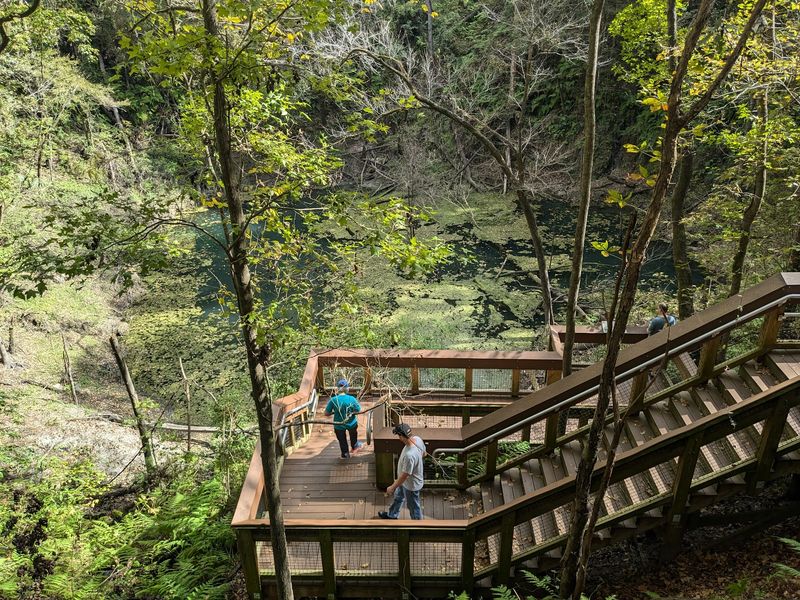
The ground just opens up here, dropping 120 feet into a bowl-shaped sinkhole that looks like something swallowed a chunk of North Florida and left behind a miniature rainforest. Wooden stairs with 232 steps zigzag down the slopes, passing small waterfalls and streams that trickle over exposed limestone layers representing millions of years of geological history.
The sinkhole formed when the limestone roof of an underground cavern collapsed, probably thousands of years ago. Rainwater seeping through created the streams that still flow today, and the steep walls create a unique microclimate. Temperatures at the bottom stay cooler and more humid than the surrounding area, allowing plants typically found much farther north to thrive here.
Ferns carpet the slopes. Hardwood trees lean at odd angles, their roots gripping the limestone. Water drips constantly from small springs, and the sound echoes off the circular walls.
Fossils of marine creatures from when this area sat underwater appear in the rock layers, including shark teeth and extinct shellfish that lived 10 to 20 million years ago.
The name supposedly comes from old legends about the devil grinding up sinners in this natural pit. More likely, it references the grinding sound of rocks tumbling during storms or the millstone shape of the depression. Either way, standing at the bottom and looking up at the rim high above gives you a powerful sense of the forces that shape Florida’s hidden landscapes.
7. Whimzeyland (Safety Harbor)
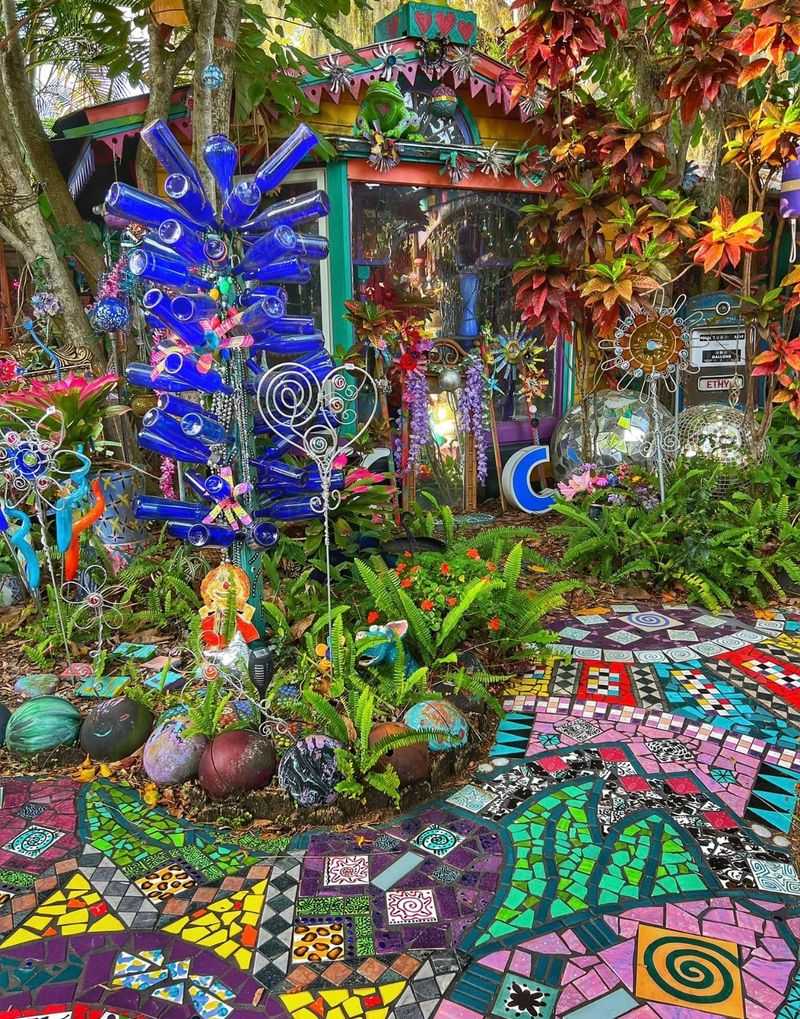
Imagine if a rainbow exploded and someone decided to turn the aftermath into a house and yard. That’s the energy at this wildly creative art installation where every surface bursts with color, pattern, and playful imagination. Todd Ramquist and Kiaralinda created this ongoing project, transforming their property into an interactive wonderland that makes people smile the second they spot it.
Hundreds of painted bowling balls cover the yard like giant colorful eggs. Mosaics made from broken dishes, mirrors, and found objects decorate walls, fences, and sculptures. Bright murals cover every available surface.
Whimsical figures and installations fill the space, from a mosaic elephant to a bowling ball Christmas tree that stays up year-round.
The artists welcome visitors and encourage photos. They’re usually around, happy to chat about their creative process or point out hidden details you might miss. The whole place radiates joy and creativity without taking itself too seriously.
It’s folk art meets Florida quirk, proof that you don’t need a museum or gallery to make something that brings happiness to thousands of people.
Admission is free, though donations are appreciated to help maintain and expand the artwork. The site has become a social media favorite, with visitors posing among the colorful creations. But it’s better experienced in person, where you can appreciate the scale and detail of the work.
It’s the kind of place that reminds you art doesn’t have to be serious or expensive to be meaningful and beautiful.
8. Skunk Ape Research Headquarters (Ochopee)
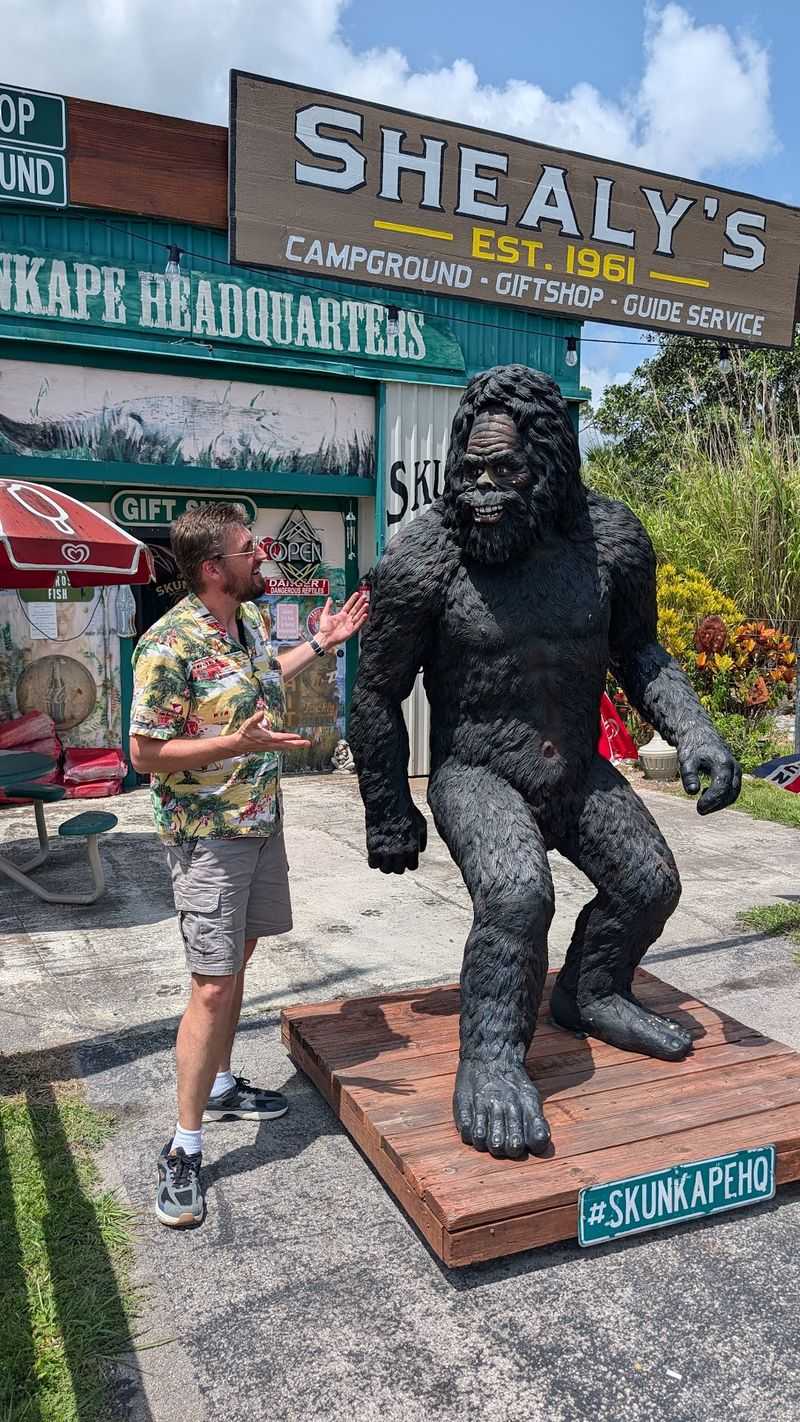
Florida’s answer to Bigfoot supposedly roams the Everglades, and this roadside attraction serves as the unofficial headquarters for tracking the legendary creature. The Skunk Ape gets its name from the terrible smell witnesses report, like a combination of rotten eggs, wet dog, and swamp gas. Sightings go back decades, with blurry photos and earnest testimonies from people who swear they’ve encountered the beast.
Dave Shealy runs the place, and he’s serious about his research even if the whole operation has a wonderfully weird Florida vibe. Inside, you’ll find alleged evidence, eyewitness accounts, and Skunk Ape merchandise. Dave himself claims multiple sightings and has dedicated years to documenting the creature.
Whether you believe or not, his enthusiasm is genuine and infectious.
The facility also functions as a small wildlife exhibit, with native animals like alligators, turtles, and snakes on display. It’s right on the Tamiami Trail, making it an easy stop when crossing between Florida’s coasts. The gift shop sells everything from Skunk Ape T-shirts to hot sauce, because of course Florida’s cryptid needs its own hot sauce line.
Is the Skunk Ape real? Probably not, but the fun lies in the possibility and the delightfully odd dedication to the legend. It represents the kind of authentic roadside Americana that’s disappearing, where passion projects and local legends create memorable stops.
Plus, where else can you learn about cryptozoology while watching alligators sunbathe in the Everglades?
9. Bok Tower Gardens (Lake Wales)
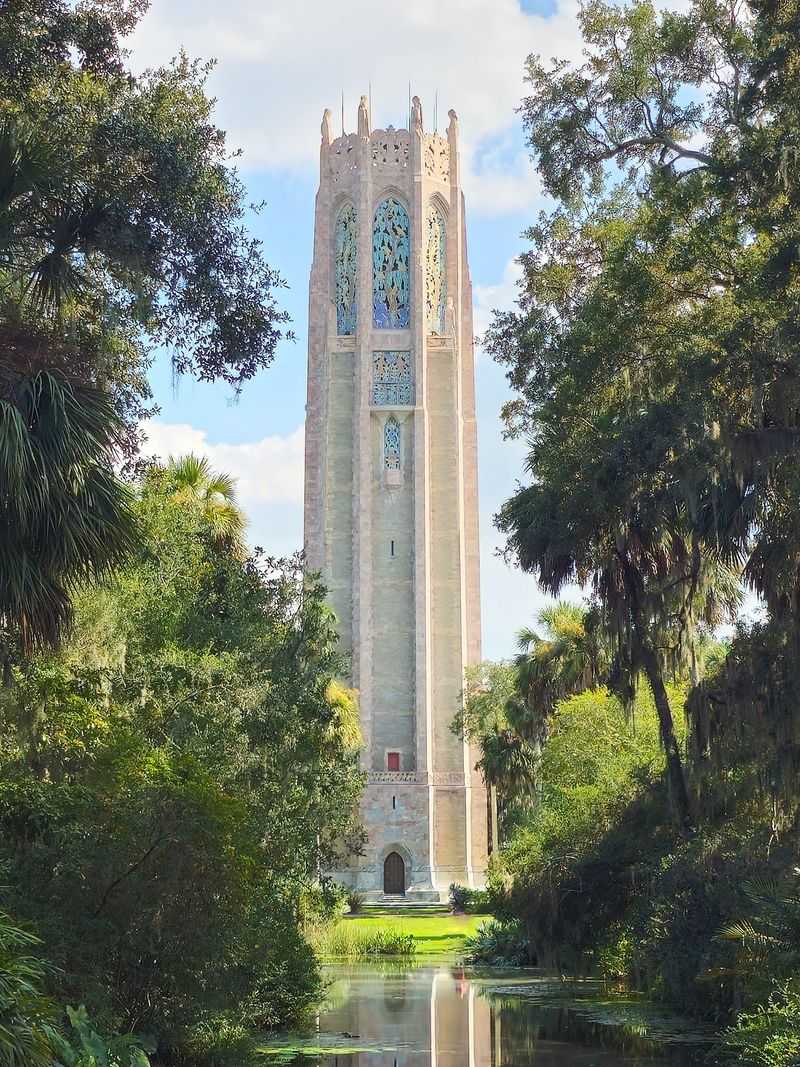
A 205-foot neo-Gothic tower rises from the highest point in peninsular Florida, its carillon bells singing out over 50 acres of gardens that feel more like a sanctuary than a tourist attraction. Edward Bok, a Dutch immigrant who became a successful magazine editor, created this place as a gift to the American people who’d given him opportunities. He wanted a spot of beauty and contemplation, and that’s exactly what he built.
The tower holds one of the finest carillons in the world, with 60 bronze bells ranging from 16 pounds to nearly 12 tons. Daily concerts fill the air with music that drifts across the gardens. The tower’s exterior features intricate carvings of Florida wildlife and plants, including herons, pelicans, and orange blossoms.
Sunset-colored tiles from the Netherlands add warmth to the stonework.
Gardens designed by Frederick Law Olmsted Jr. surround the tower with winding paths through native and exotic plantings. Azaleas bloom in winter. Live oaks draped with Spanish moss create shaded corridors.
A reflection pool mirrors the tower’s image on calm days. The whole place encourages slow walking and quiet appreciation.
Bok never wanted this to be a money-making venture. He endowed it to remain free to the public, though a modest admission now helps with maintenance. The gardens attract visitors seeking peace rather than thrills, people who appreciate beauty for its own sake.
It’s Florida at its most thoughtful and serene, a complete departure from the state’s reputation for nonstop excitement and commercial attractions.
10. Pigeon Key (Marathon)
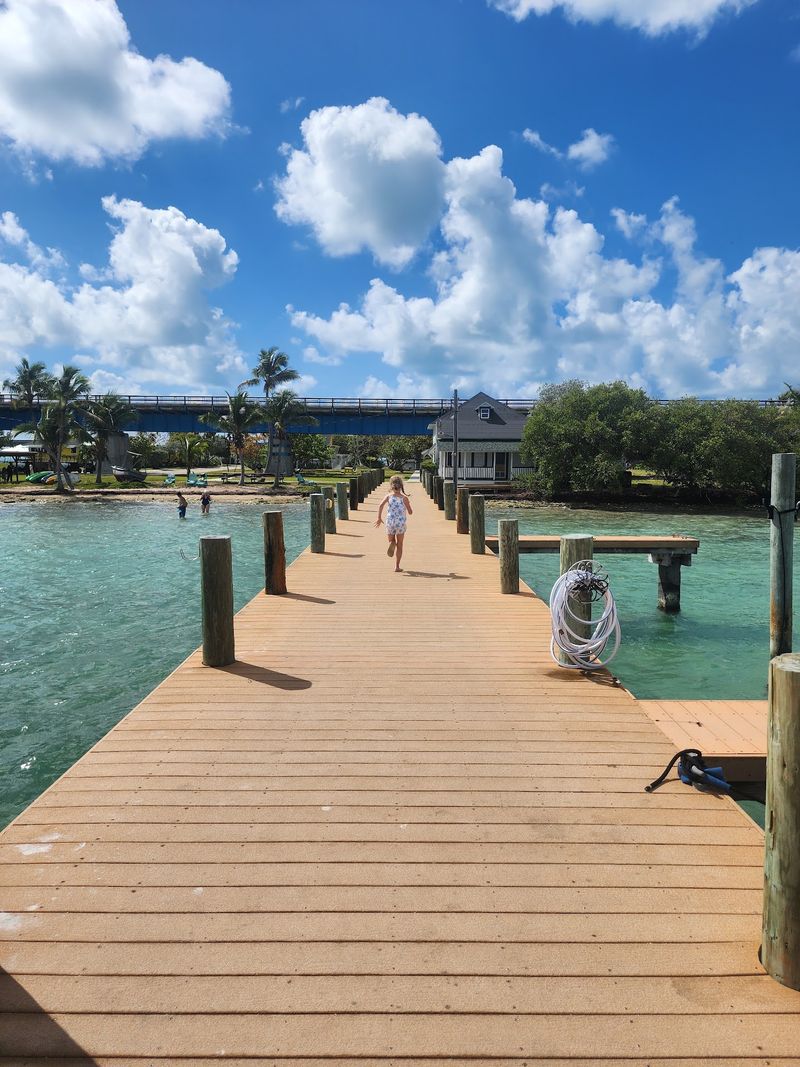
This five-acre island once housed hundreds of workers who built Henry Flagler’s impossible railroad to Key West. Today, it’s a time capsule of Old Florida, reachable only by boat or by walking a section of the Old Seven Mile Bridge. Historic cottages painted in soft tropical colors sit under coconut palms, looking much like they did when railroad crews called this place home in the early 1900s.
Flagler’s Overseas Railroad, completed in 1912, was called the Eighth Wonder of the World. Workers lived on Pigeon Key while constructing the massive bridge spans, enduring brutal heat, hurricanes, and backbreaking labor. The 1935 Labor Day Hurricane destroyed much of the railroad, but the bridges were converted for automobile traffic.
The island served various purposes over the decades before becoming a historic site and marine research center.
Guided tours explain the construction challenges and daily life of the workers. You can explore the restored buildings, including the bridge tender’s house, assistant bridge tender’s cottage, and the honeymoon cottage where newlywed workers stayed. A small museum displays artifacts and photographs from the railroad era.
The surrounding waters offer excellent snorkeling on shallow reefs where tropical fish dart among coral formations.
Getting there is half the adventure. You can take a ferry from Marathon or walk the old bridge section, with stunning views of turquoise water stretching in every direction. The island remains uncommercial and peaceful, a rare glimpse of the Keys before development transformed them into a continuous resort corridor.
11. National Naval Aviation Museum (Pensacola)
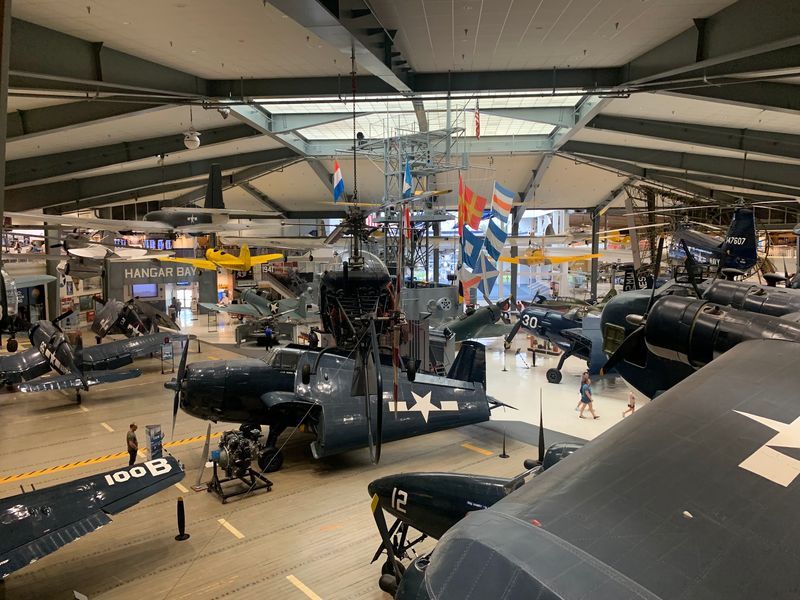
More than 150 restored aircraft fill 350,000 square feet of exhibit space, making this one of the world’s largest aviation museums. You’re talking everything from fragile biplanes to supersonic jets, from early seaplanes to modern fighters. And admission is completely free, because it’s operated by the Navy and exists to preserve and share naval aviation history.
The collection spans aviation’s entire timeline. Early flying boats that pioneered long-distance flight hang near jets that broke the sound barrier. World War II fighters sit alongside Vietnam-era helicopters.
You can climb into cockpits of some aircraft, getting a pilot’s-eye view of the instruments and controls. The Blue Angels’ A-4 Skyhawks are suspended in a diamond formation, frozen in their signature maneuver.
Interactive exhibits let you try flight simulators, learn about carrier operations, and understand the technology that makes naval aviation possible. A massive IMAX theater shows aviation films that put you in the action. The museum also honors the people behind the machines, with exhibits about pioneering aviators, Medal of Honor recipients, and the everyday sailors and mechanics who kept aircraft flying.
Outside, more aircraft sit on display, including massive patrol planes and helicopters. The museum sits on Naval Air Station Pensacola, the birthplace of naval aviation, adding historical weight to the location. You could easily spend an entire day here and still not see everything.
It’s a world-class museum that happens to be in Florida, showcasing a side of the state’s contributions to aviation and military history that most people never consider.