Don’t Leave Florida Without Seeing These 10 Unique Places
Florida is famous for beaches and theme parks, but the state hides dozens of strange, beautiful, and downright unexpected places that most visitors never hear about. From a Cold War missile base deep in the Everglades to medieval monastery stones shipped across the Atlantic, these spots tell stories you won’t find in any guidebook. If you want to see a side of Florida that feels like a well-kept secret, these ten places will show you just how weird and wonderful the Sunshine State really is.
1. Dunlawton Sugar Mill Gardens (Port Orange)
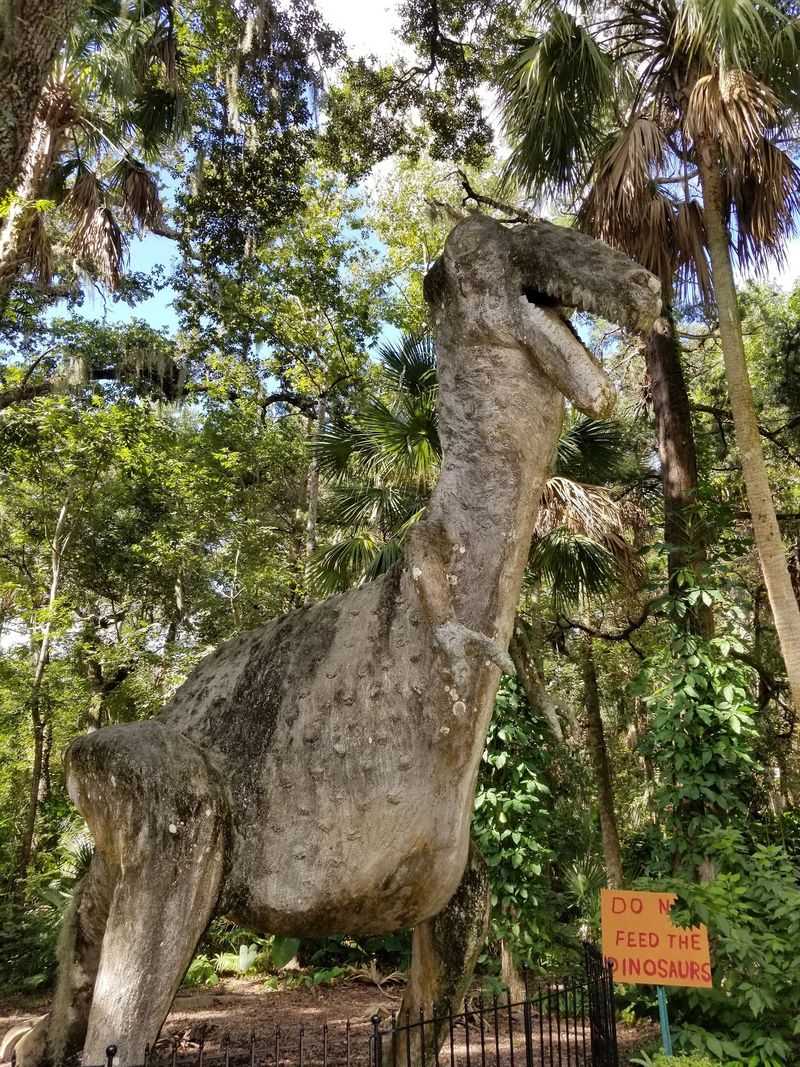
Wander through a patch of old Florida history that feels like stumbling into a time capsule. What started as a working sugar mill in the 1800s eventually became home to a quirky 1940s roadside attraction complete with life-sized concrete dinosaurs. Today, those dinosaurs still stand guard among crumbling stone walls and thick tropical greenery.
The ruins themselves are beautiful in a haunting way. Moss clings to the old coquina and tabby walls, and giant ferns sprout from cracks in the foundation. You can walk right up to the structures and imagine the mill in its working days, grinding sugarcane under the Florida sun.
But the real charm is how strange it all feels together. Ancient ruins next to mid-century dinosaur sculptures surrounded by blooming hibiscus and palm trees create a vibe that’s part history lesson, part fever dream. It’s free to visit, rarely crowded, and perfect for anyone who loves places that don’t take themselves too seriously.
Bring a camera, because every angle offers something unexpected. The park is small enough to explore in under an hour, but interesting enough that you’ll want to linger. It’s the kind of place that makes you wonder why more people don’t know about it.
2. HM-69 Nike Missile Site (Everglades National Park)

Hidden miles deep in the Everglades sits a piece of Cold War history that most people forget ever existed in Florida. This fully intact missile base once stood ready to defend Miami from Soviet bombers, armed with nuclear-tipped Nike Hercules missiles capable of reaching the edge of space. Now it’s open for guided tours, frozen in time like the threat it was built to stop.
The base is remarkably well-preserved. You can walk through the original barracks, peek into the radar control room, and stand next to an actual Nike missile mounted on its launcher. Everything from the vintage signage to the military-green paint feels authentic, not recreated.
What makes it surreal is the setting. Alligators glide through canals just yards from bunkers that once held warheads. Wading birds nest on structures designed to withstand nuclear blasts.
Nature has reclaimed the edges, but the core remains untouched, a strange monument to a paranoid era.
Tours are only offered once a month and fill up fast, so plan ahead. The site is located along a remote stretch of road with zero cell service, adding to the eerie isolation. Wear good shoes and bring water, because Florida heat doesn’t care about historical significance.
3. Solomon’s Castle (Ona)
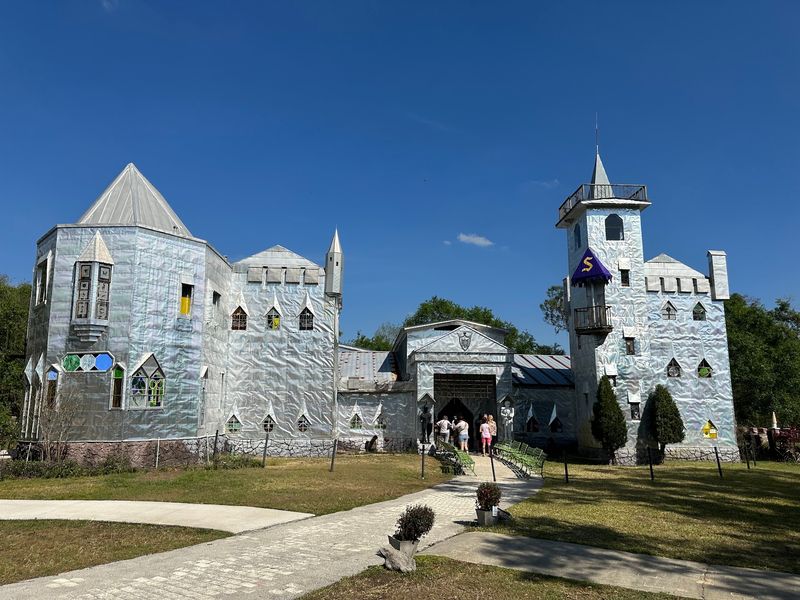
Deep in the scrubland near Ona, an artist named Howard Solomon spent decades building a castle out of recycled printing plates, imagination, and sheer stubbornness. The result is a glittering, three-story fortress covered in thousands of aluminum sheets that shimmer in the sun like fish scales. It’s part sculpture, part home, part gallery, and entirely unlike anything else in Florida.
Inside, every room bursts with Solomon’s wild sense of humor and craftsmanship. Stained glass windows cast colored light across metal sculptures made from car parts, tools, and junk transformed into art. The walls are covered with puns, jokes, and visual gags that make you groan and grin at the same time.
Out back sits the Boat in the Moat, a full-sized replica of a Spanish galleon that serves as the castle’s restaurant. The food is simple but good, and eating lunch inside a landlocked ship while surrounded by swamp feels appropriately absurd. Solomon himself used to give tours, cracking jokes and telling stories, though the castle now operates under new stewardship.
One important note: the castle closes during August and September, so check the schedule before making the drive. The location is remote, down a dirt road that feels like it leads nowhere, which somehow makes arriving even more magical.
4. The Kampong (Coconut Grove)
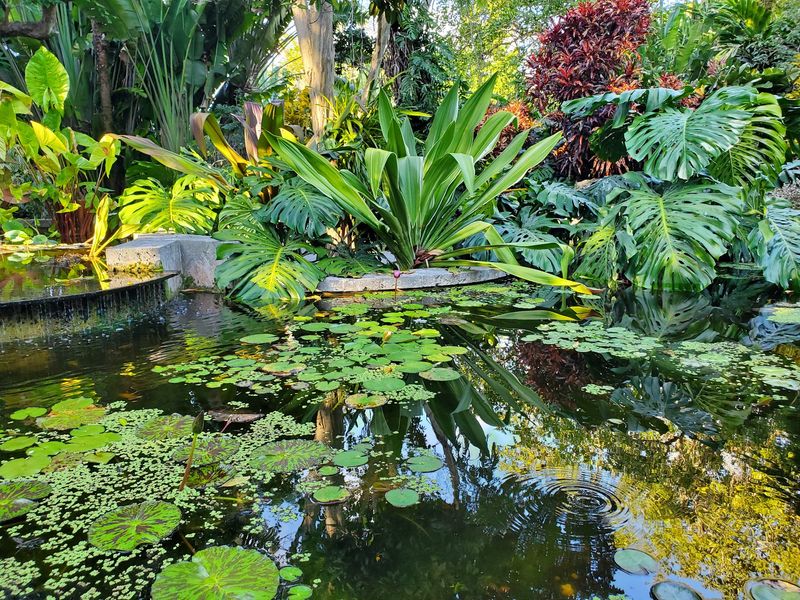
Tucked along the shore of Biscaye Bay, this nine-acre garden feels like a secret jungle in the middle of Miami. It was the home of David Fairchild, one of the most important plant explorers in American history, who spent his life traveling the world and bringing back seeds, cuttings, and specimens that changed what we eat and grow. Walking through The Kampong is like flipping through his personal scrapbook, except the pages are alive.
The collection is staggering. You’ll find fruiting trees from Southeast Asia, palms from the Pacific, flowering vines from South America, all thriving in carefully tended beds and groves. Many of these plants were introduced to the United States by Fairchild himself, including mangoes that became the foundation of Florida’s commercial crop.
The grounds slope gently down to the water, offering views of the bay framed by bamboo and breadfruit trees. Paths wind through shaded areas thick with ferns and open sunny spots bursting with color. It’s peaceful in a way that feels rare for South Florida, a place designed for slow wandering and close observation.
Guided tours are available and highly recommended, because the stories behind the plants are half the experience. Reservations are required, and the garden isn’t always open to the public, so plan ahead.
5. The Ancient Spanish Monastery (North Miami Beach)
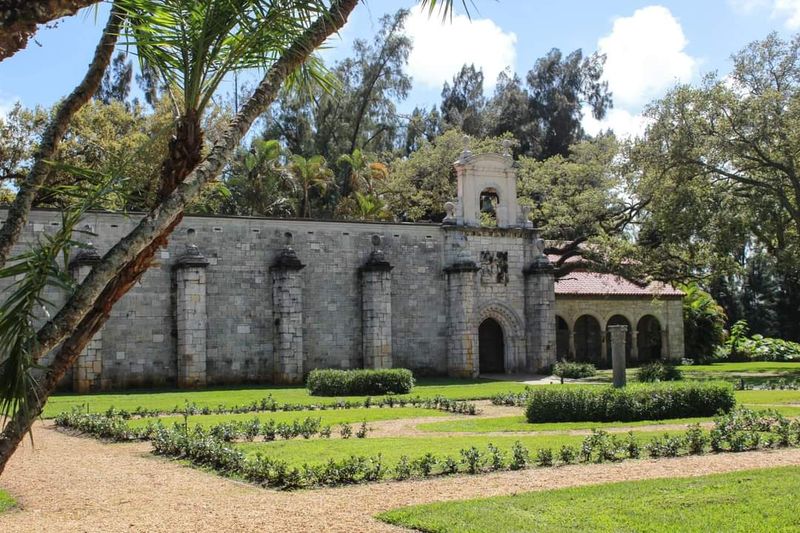
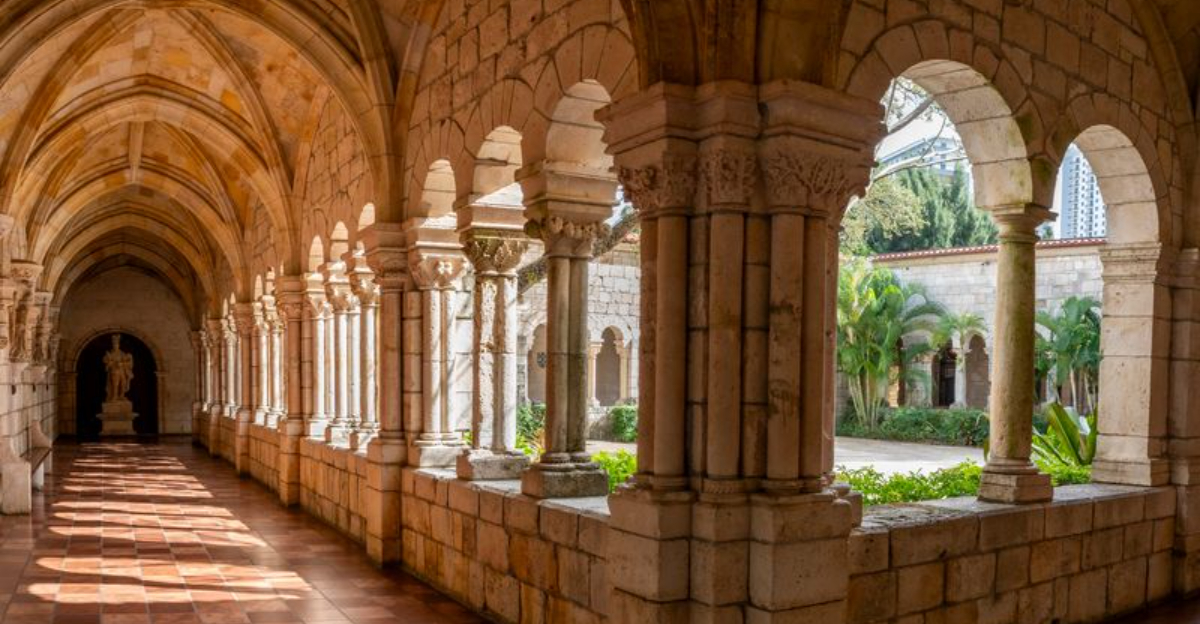
In 1925, William Randolph Hearst bought an entire 12th-century monastery in Spain, had it taken apart stone by stone, packed into more than 11,000 wooden crates, and shipped to New York. Then things got complicated. The crates sat in a warehouse for years, the labels fell off, and the stones got hopelessly mixed up like the world’s hardest jigsaw puzzle.
Decades later, someone finally reassembled the whole thing in North Miami Beach, creating one of the strangest landmarks in Florida.
Walking through the cloisters feels genuinely disorienting. The stone arches, hand-carved columns, and worn flagstones are authentically medieval, weathered by centuries of Spanish sun and prayer. But outside the walls, you hear traffic and see palm trees swaying in the humid breeze.
The contrast is jarring and fascinating.
The gardens surrounding the monastery are peaceful and well-maintained, with fountains, statues, and shaded walkways. It’s a popular spot for weddings, which makes sense given how photogenic the whole place is. You can explore on your own or join a guided tour that explains the wild journey these stones took across the ocean.
The monastery also functions as an active Episcopal church, so be respectful if services are happening. Admission is affordable, and the site is rarely crowded, making it easy to imagine yourself transported back in time.
6. Devil’s Millhopper Geological State Park (Gainesville)
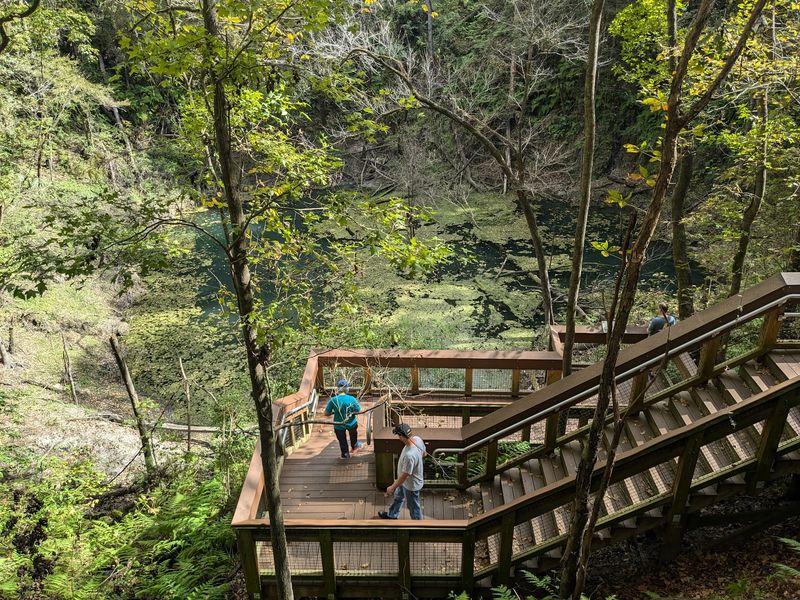
Just outside Gainesville, the earth suddenly drops away into a massive, bowl-shaped sinkhole that plunges 120 feet straight down. Wooden stairs zigzag down the sides, passing through layers of exposed limestone that tell the story of ancient Florida when this whole area sat underwater. Tiny streams trickle down the walls, feeding ferns and mosses that cling to the rock in thick green curtains.
The temperature drops as you descend, and the air gets noticeably cooler and damper. By the time you reach the bottom, it feels like you’ve entered a different ecosystem entirely. Rare plants thrive in the shade and moisture, species that can’t survive anywhere else in the region.
The name comes from an old legend that the devil himself ground up corn here, though the real explanation involves collapsing limestone and underground water flow. Either way, standing at the bottom and looking up at the circle of sky framed by trees and rock feels otherworldly. The acoustics are strange, too, with sounds echoing in unexpected ways.
The park is small and easy to visit in under an hour. The stairs are well-maintained but steep, so take your time going down and especially coming back up. Go early in the morning for the best light and fewer crowds, and bring water because Florida heat waits for no one.
7. Big Shoals State Park (White Springs)
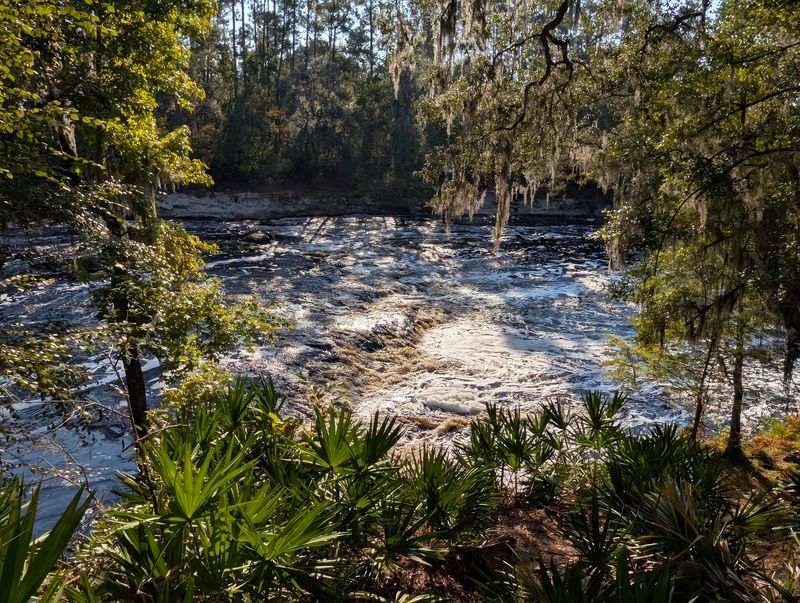
Most people think of Florida as flat, slow, and swampy, which makes Big Shoals feel like a geographic prank. Here, the Suwannee River churns through Class III whitewater rapids, crashing over limestone ledges while bluffs rise roughly 80 feet above the water. It’s the only place in the entire state where you’ll find legitimate whitewater, and it catches first-time visitors completely off guard.
The rapids are best during higher water levels, usually after heavy rains or during the wet season. When conditions are right, kayakers and rafters come from all over to run the shoals, navigating tight channels and sudden drops. When the water’s low, the exposed limestone creates a moonscape of pitted rock and shallow pools.
Hiking trails wind along the bluffs, offering views down to the river and out over the forested floodplain. The elevation change is dramatic for Florida, and the scenery feels more like Georgia or the Carolinas than the Sunshine State. Wildlife is abundant, with everything from otters to bald eagles making appearances.
If you want to paddle the rapids, know your skill level and check current conditions first. The shoals have real power and have caused serious accidents. For those who prefer dry land, the trails are excellent and much safer.
Either way, it’s a side of Florida that surprises almost everyone who sees it.
8. Florida Caverns State Park (Marianna)
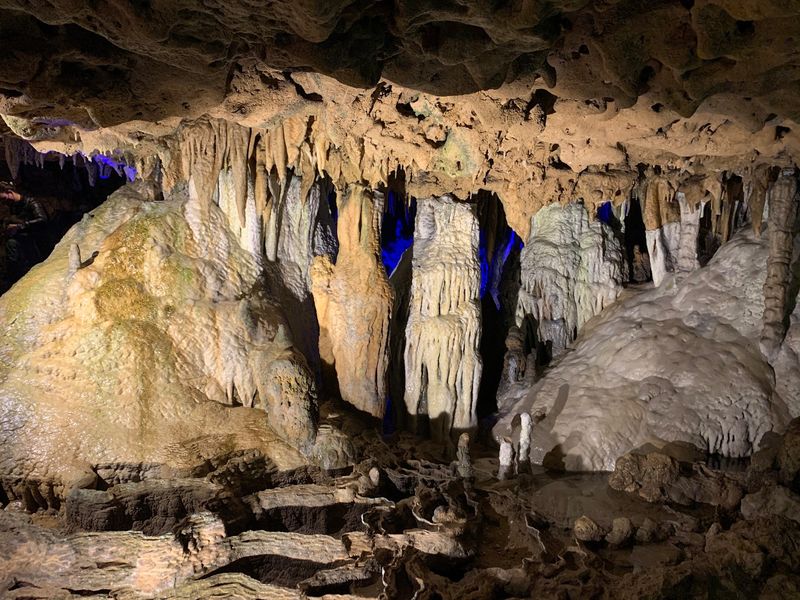
Florida sits on a foundation of porous limestone riddled with underground voids, but most of those caves stay flooded year-round. The caverns at Marianna are a rare exception, a dry-cave system large enough to walk through and filled with the kind of formations you’d expect to find out west, not in the Deep South. Guided tours lead you through narrow passages, past towering columns, and under ceilings dripping with delicate stalactites.
The formations are stunning. Flowstone cascades down walls like frozen waterfalls, soda straws hang like glass icicles, and columns stretch from floor to ceiling where stalactites and stalagmites have fused together over thousands of years. The cave stays at a constant cool temperature, a welcome relief from the heat outside.
Above ground, the park offers hiking trails, a spring-fed river perfect for swimming and paddling, and shaded picnic areas. But the caves are the main attraction, and they’re unlike anything else in Florida. Tours run regularly, but the cave closes occasionally due to flooding, so call ahead to confirm.
The guides are knowledgeable and enthusiastic, explaining the geology and pointing out formations you might otherwise miss. Photography is allowed, but the lighting is tricky, so don’t expect perfect shots. Wear closed-toe shoes with good grip because the paths can be slippery, and watch your head on low ceilings.
9. Blowing Rocks Preserve (Hobe Sound)
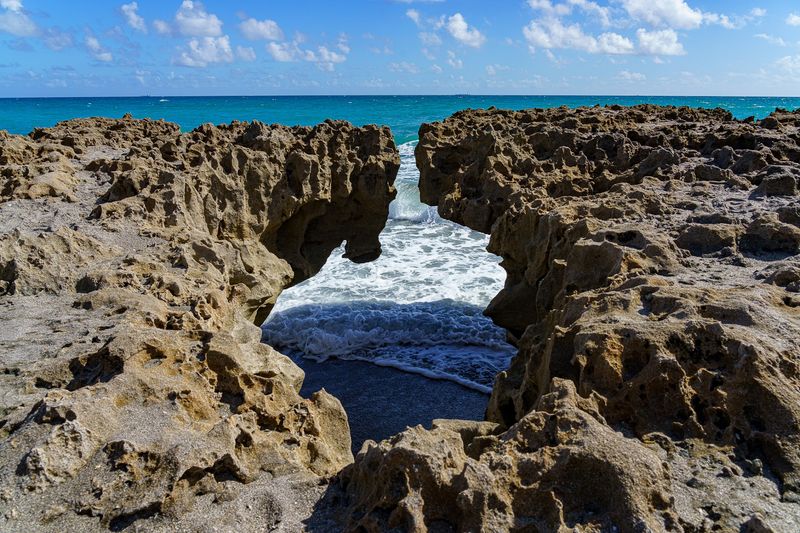
On most Florida beaches, gentle waves lap against smooth sand. At Blowing Rocks, the Atlantic slams into a jagged shelf of Anastasia limestone with enough force to send plumes of seawater rocketing as high as 50 feet into the air. When conditions are right, usually during high tide with strong onshore winds, the coastline erupts in spectacular displays of spray and sound.
It’s raw, powerful, and completely different from the typical beach experience.
The limestone itself is fascinating, full of holes, cracks, and channels carved by centuries of wave action. When swells surge into these openings, the water compresses and shoots upward through blowholes like geysers. The effect is unpredictable and mesmerizing, each wave creating a different pattern of spray.
The preserve protects more than just dramatic rocks. Behind the shoreline, coastal dunes and maritime hammock provide habitat for sea turtles, native plants, and migratory birds. Trails wind through the vegetation, offering quieter exploration when the ocean gets too intense.
The contrast between the wild coast and the sheltered interior makes the preserve feel much larger than it actually is.
Timing your visit matters. Check tide charts and weather forecasts, because calm days won’t give you the show. Wear shoes you don’t mind getting wet and stay a safe distance from the rocks when waves are big.
The spray is exhilarating, but the rocks are sharp and slippery.
10. Bulow Plantation Ruins Historic State Park (Flagler Beach)
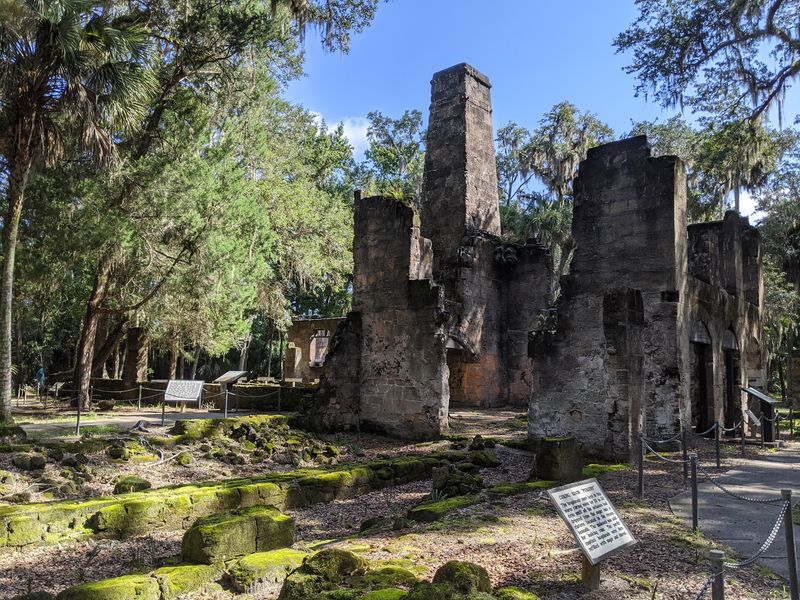
Spanish moss hangs thick from live oaks that have grown up around the crumbling walls of what was once one of the largest and most productive sugar plantations in territorial Florida. The ruins sit deep in 150 acres of coastal hammock, accessible by a short trail that feels like stepping back into a darker chapter of the state’s history. The coquina walls still stand, weathered and beautiful, silent witnesses to both the plantation’s prosperity and its violent end during the Second Seminole War.
The main structure is the sugar mill, where enslaved workers processed sugarcane into molasses and rum. You can still see the massive grinding wheels, the boiling kettles, and the channels that carried the cane juice through different stages of production. Interpretive signs explain the process, but they don’t shy away from the brutal labor that made it possible.
In 1836, Seminole forces burned the plantation during their resistance against forced removal, and it was never rebuilt. The ruins were left to the forest, which has slowly reclaimed them. Today, the site feels haunted in the best sense, a place where history lingers in the shadows and the silence.
The park also offers paddling trails along Bulow Creek, where you might spot manatees, dolphins, and wading birds. The combination of natural beauty and historical weight makes this one of the most thought-provoking places in Florida.