12 Florida Fish Camps That Feel Like a Trip Back to Old Florida
Florida wasn’t always about theme parks and high-rise condos. Before the interstates and the crowds, fish camps dotted the state’s lakes and rivers, offering simple cabins, cold drinks, live bait, and a place to tie up your boat. These spots were where families spent weekends, anglers swapped stories, and the pace slowed down to match the current.
A handful of these camps are still around, run by the same families or kept alive by people who refuse to let the old ways fade. They’re tucked along spring-fed rivers, hidden on forgotten lakes, and perched where the Gulf meets the marsh, and visiting one feels like stepping through a door into a quieter version of the Sunshine State.
1. Highland Park Fish Camp (DeLand)
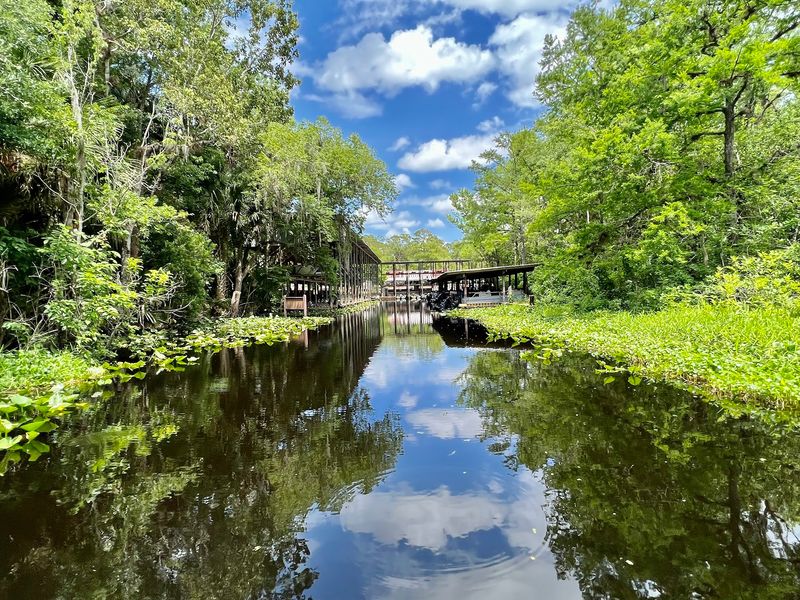
Some places wear their history on their sleeve, and Highland Park doesn’t even try to hide it. The family-owned camp sits right on the Norris Dead River next to Lake Woodruff National Wildlife Refuge, and the owners will tell you straight up that they’re proudly frozen in time. That’s not marketing talk.
It’s the truth.
Cabins line the water under old oaks, and boat slips sit ready for early-morning launches. You can rent a boat if you didn’t bring one, stock up on bait and tackle at the shop, or book a guided trip if the bass aren’t cooperating. The whole setup feels like it hasn’t changed since your grandparents might’ve fished here, which is exactly the point.
Alligators sun themselves on the banks. Herons stalk the shallows. The only sounds are outboard motors and the occasional splash.
RV sites stretch along the property for folks who like to stay awhile, and there’s nothing fancy about any of it. Highland Park doesn’t need upgrades or renovations. It just needs anglers who still appreciate a fish camp that knows what it is and refuses to apologize for staying that way.
2. Mary’s Fish Camp (Weeki Wachee)
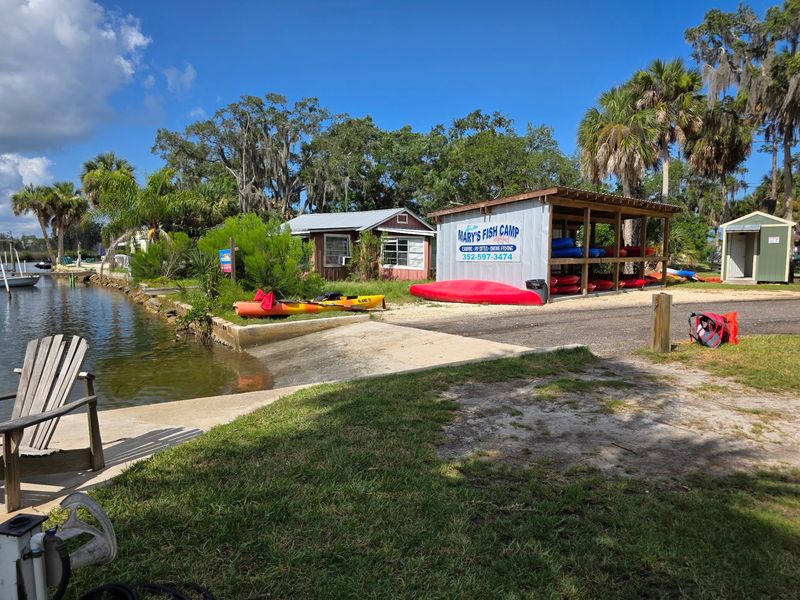
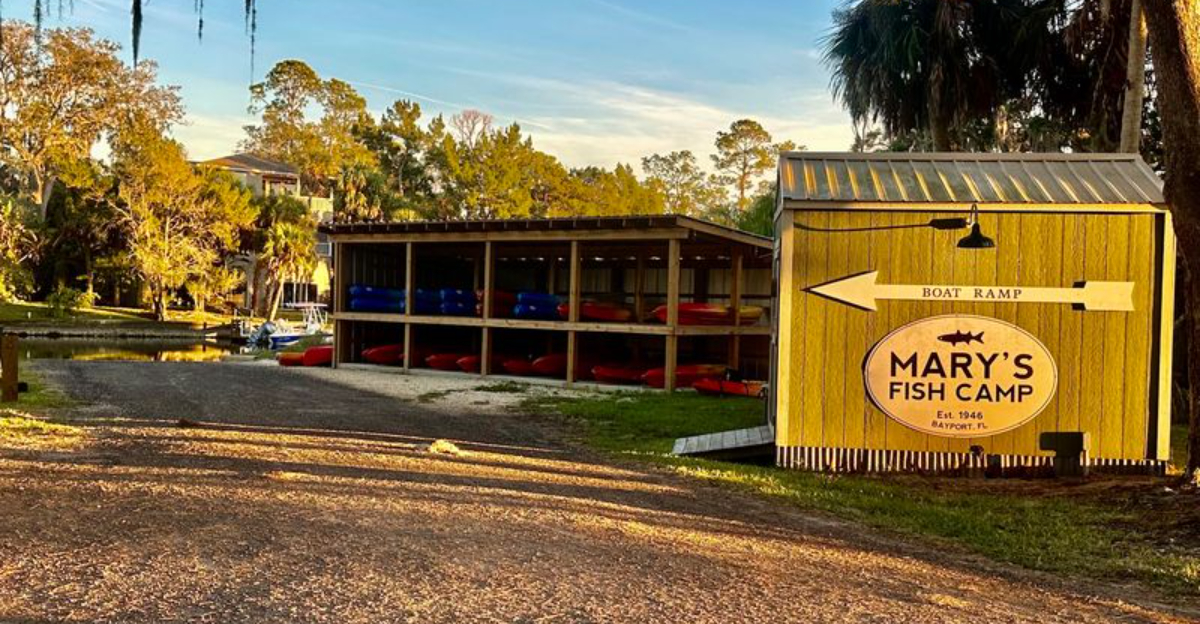
Mary’s has been here since 1946, which means it predates most of Florida’s modern identity. The camp stretches along the Mud River near Bayport, where spring-fed water stays cool even when the air doesn’t. Families who started coming here decades ago still show up, sometimes bringing their own kids and grandkids now.
The cabins look like cabins should look at a real fish camp: simple, functional, close to the water. RV sites give you room to spread out, and the natural shoreline hasn’t been paved over or dressed up. You can fish, paddle a kayak through the mangroves, or follow the river out toward the Gulf if you’re feeling adventurous.
What makes Mary’s special isn’t any single feature. It’s the accumulation of years and the refusal to chase trends. The current owners describe it as an authentic continuation of the Old Florida fish-camp tradition, and that’s not empty nostalgia.
It’s a working camp that still does what it was built to do: give people a place to fish, relax, and forget about the rest of the state for a while. No pretense, no gimmicks, just water and time.
3. Shell Island Fish Camp (St. Marks)
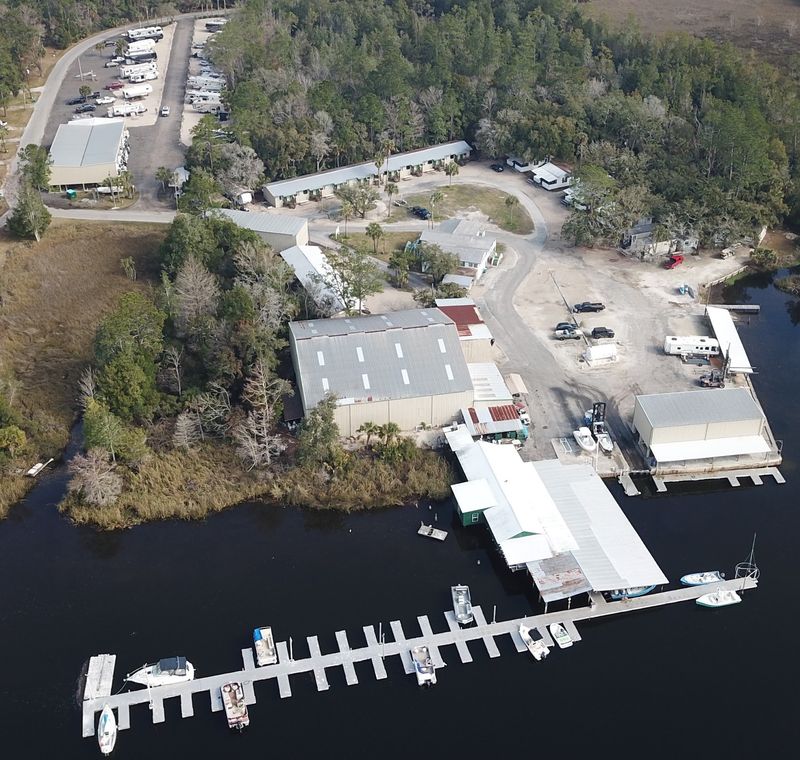
More than 70 years of fishing tradition doesn’t happen by accident. Shell Island sits on the St. Marks River just a few minutes from the Gulf, and the same family has kept it running through generations. That kind of continuity shows in the details: the way the docks are maintained, the stocked bait shop, the fact that locals still stop by to fuel up and swap reports.
Rustic cabins and motel rooms give you options depending on how rough you want to go. RV sites fill up on weekends when the fish are biting. The marina handles everything from small skiffs to bigger boats heading offshore, and there’s a ramp if you’re trailering in.
Charters leave early, and the captains know where the trout and redfish are holding.
Shell Island doesn’t try to be anything other than what it’s always been. It’s a base camp for serious anglers and a quiet retreat for families who want their kids to grow up knowing what a real fish camp looks like. The river runs with the tide, the ospreys nest in the same trees every year, and the whole place hums along like it always has.
4. Grape Hammock Fish Camp (Lake Wales)
Central Florida is famous for theme parks, but Grape Hammock exists in a completely different world. Tucked on the southern end of Lake Kissimmee, the family-operated camp feels miles removed from anything tourist-related. You get here by driving through ranch land and citrus groves, and when you arrive, the lake stretches out wide and wild in front of you.
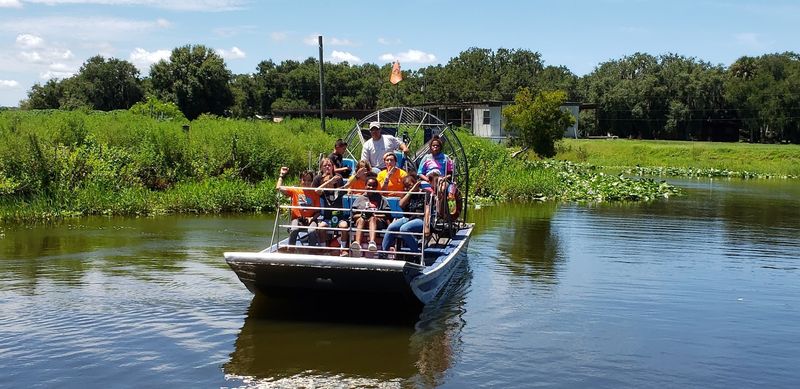
Cabins sit beneath old live oaks, their branches draped in Spanish moss. Tent and RV camping let you wake up to the sound of water lapping at the shore. The marina, bait shop, and boat ramp handle the practical side of fishing, while airboat rides take you deeper into the lake’s wild stretches, where gators and wading birds outnumber people by a comfortable margin.
Lake Kissimmee is one of Florida’s best bass fisheries, and Grape Hammock puts you right in the middle of it. Guides launch before sunrise. Anglers tie their boats to the dock and clean their catch at the fish-cleaning station.
Everything about the place feels unpolished in the best way, like someone decided to preserve a piece of Florida before it got paved over and theme-parked into oblivion.
5. Lochloosa Harbor Fish Camp (Hawthorne)
Lochloosa Harbor calls itself a one-of-a-kind Old Florida fish camp, and honestly, that’s not much of an exaggeration. The camp sits on Lake Lochloosa, a 5,700-acre lake that doesn’t get the attention of some of the state’s bigger fisheries but produces plenty of bass, bluegill, and speckled perch for people who know where to look.
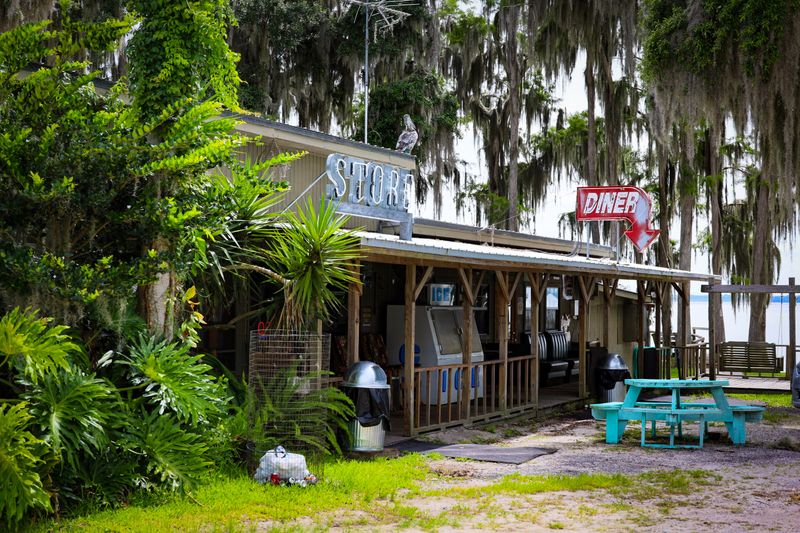
Cabins and RV sites give you a place to stay close to the water. Live bait, tackle, and boat rentals cover the essentials, and the ramp gets you on the lake fast. During the right season, a diner opens up and serves the kind of food you’d expect: fried fish, hush puppies, and cold drinks.
Nothing fancy, just fuel for another day on the water.
What sets Lochloosa apart is the deliberate commitment to keeping things classic. The owners didn’t modernize the place into something slick and unrecognizable. They kept the fish camp vibe intact, which means it still attracts the kind of people who appreciate a dock, a cooler full of bait, and a quiet morning watching the fog lift off the lake.
It’s not for everyone, and that’s exactly why it works.
6. Parramore’s Fish Camp & RV Resort (Astor)
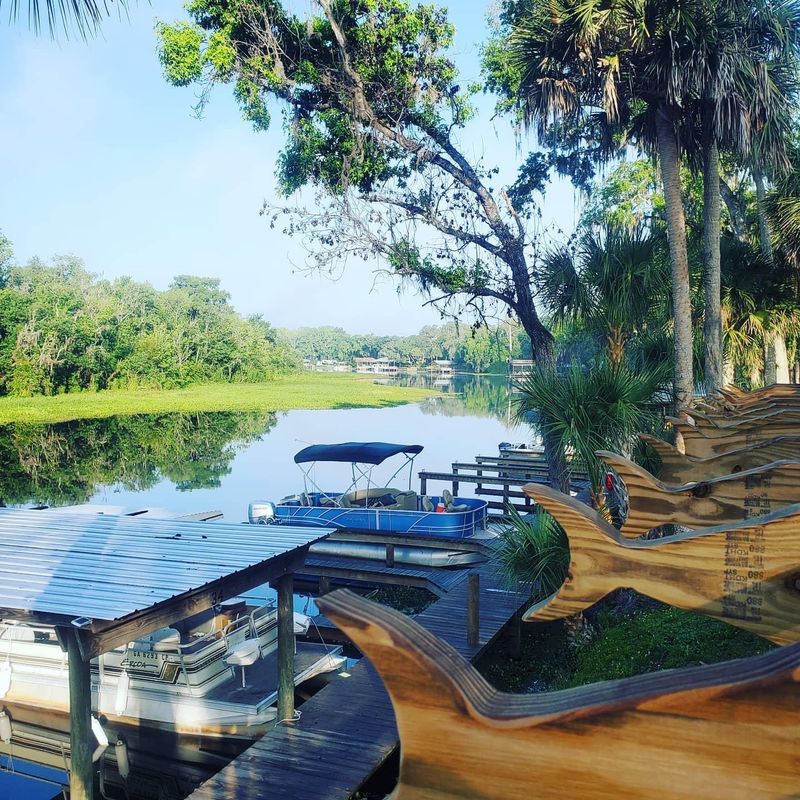
Parramore’s sits along the St. Johns River in a spot where the water moves slow and the trees crowd the banks. Waterfront cabins come with porches that face the river, and if you sit there long enough, you’ll see manatees, otters, and enough bird species to keep a field guide busy. Some cabins sit right on the water, close enough that you can tie your boat up and step straight onto your porch.
RV camping spreads across the property, with sites that give you room to breathe. The boat launch stays busy, especially during cooler months when the bass fishing picks up. The camp also makes a good jumping-off point for exploring nearby springs and the Ocala National Forest, though plenty of people never leave the river.
What makes Parramore’s work is the balance between rustic and functional. It’s not primitive camping, but it’s not a resort either. It’s somewhere in the middle, where you get hot showers and a decent bed but still wake up to the sound of the river and the sight of wood storks gliding past.
The St. Johns flows north, which always feels a little backwards, and Parramore’s fits right into that unhurried, slightly off-kilter rhythm.
7. Henderson’s Fish Camp (Lake Placid)
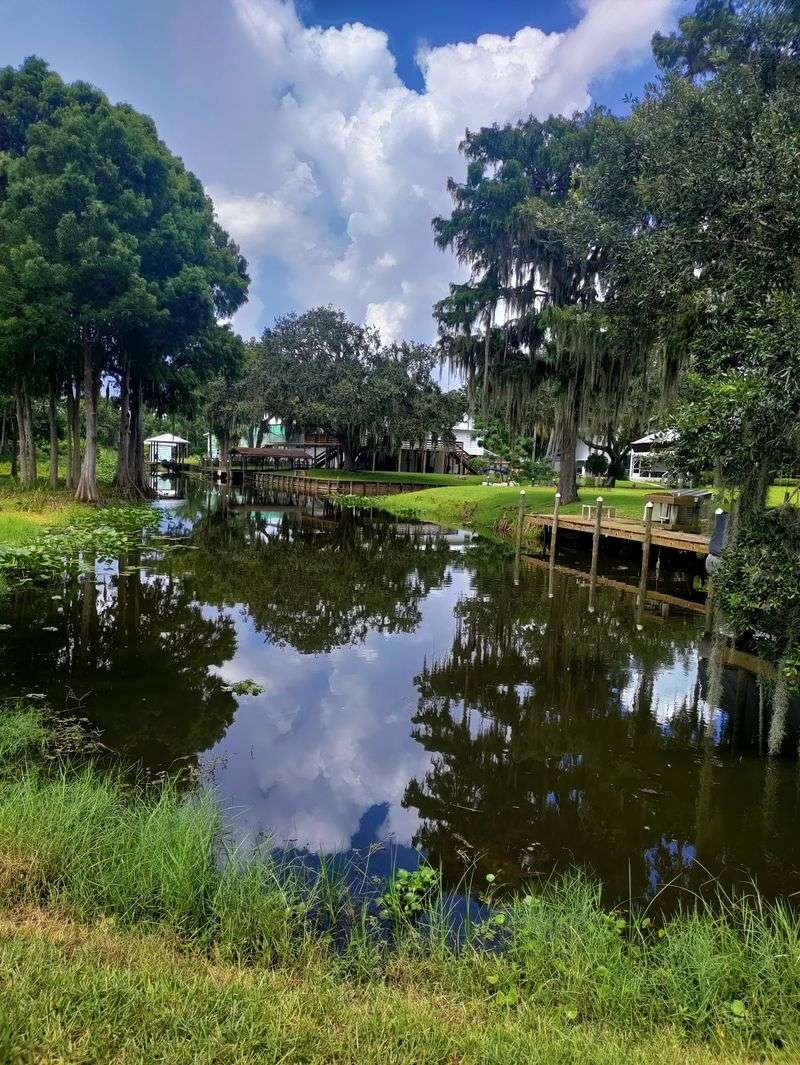
Henderson’s sits on Lake Istokpoga beneath big oak trees, and the owners invite you to step back in time. That’s not a cheesy tagline. Lake Istokpoga is one of the state’s best-kept secrets for freshwater fishing, and Henderson’s has been helping anglers get out on it for decades.
The camp feels like it grew organically from the landscape rather than being dropped onto it.
Cabins come with boat docks, which is a detail that matters when you’re hauling gear and coolers at 5 a.m. RV sites give you options if you’re rolling in with your own setup. The property also has boat slips, gas, live bait, and tackle, covering all the basics without any unnecessary frills.
Serious bass anglers show up here regularly, and the fish-cleaning station sees plenty of use.
What Henderson’s does well is stay out of its own way. It doesn’t try to be a destination resort or a boutique retreat. It’s a fish camp, plain and simple, designed for people who want to catch fish and sleep near the water.
The oaks provide shade, the lake provides action, and Henderson’s provides everything else you need without overthinking it.
8. Indian Mound Fish Camp (Oak Hill)
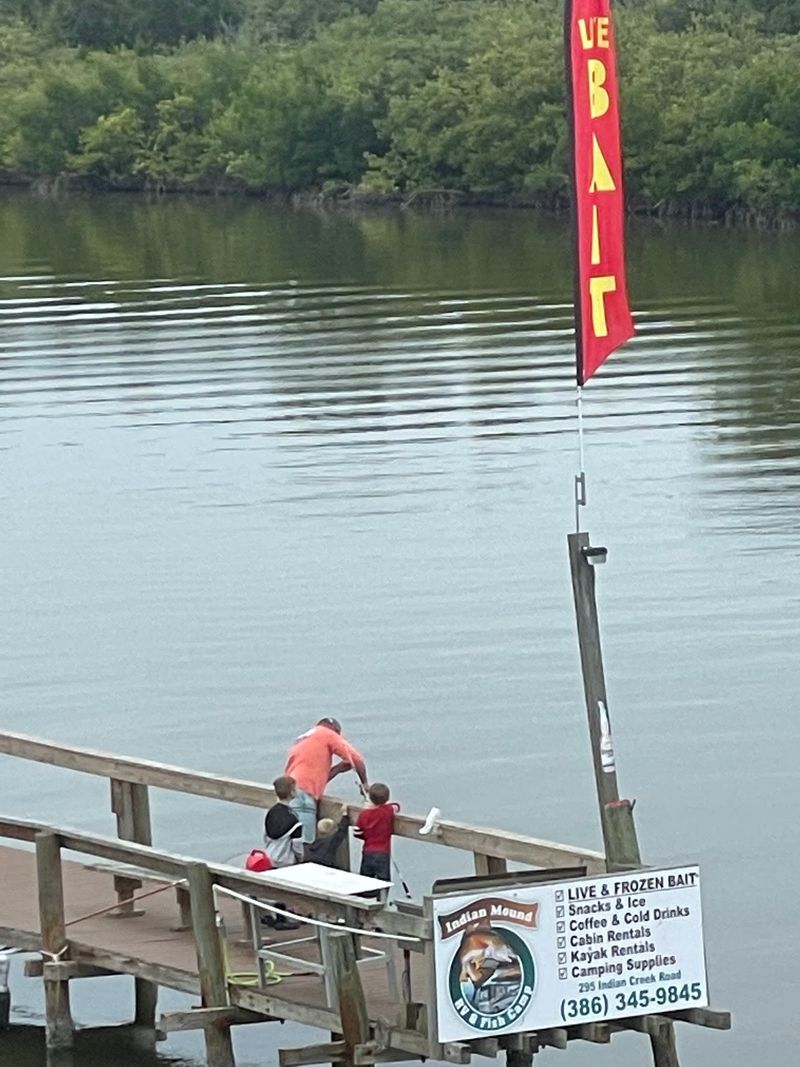
Indian Mound sits on Mosquito Lagoon, which might have the worst name for one of Florida’s best inshore fisheries. The camp combines waterfront RV sites and furnished cabins with a 100-foot dock, a fishing pier, and a tiki deck where you can watch dolphins and manatees cruise past. The lagoon is shallow, clear, and loaded with redfish, trout, and snook when conditions line up.
The fish-cleaning station gets plenty of use, and the bait-and-tackle shop keeps you stocked when the bite is on. A boat launch makes it easy to get on the water, whether you’re poling a flats skiff or running a small center console. The whole setup is geared toward anglers, but even non-fishers appreciate the wildlife and the slow pace.
Mosquito Lagoon sits inside the Canaveral National Seashore, which means the surrounding area is protected and undeveloped. Indian Mound benefits from that wildness. You’re minutes from world-class sight fishing, but you’re also close enough to civilization that you can grab supplies or head into town if you need to.
The camp strikes a nice balance between remote and accessible, which is harder to find than it used to be.
9. Uncle Joe’s Fish Camp (Moore Haven)
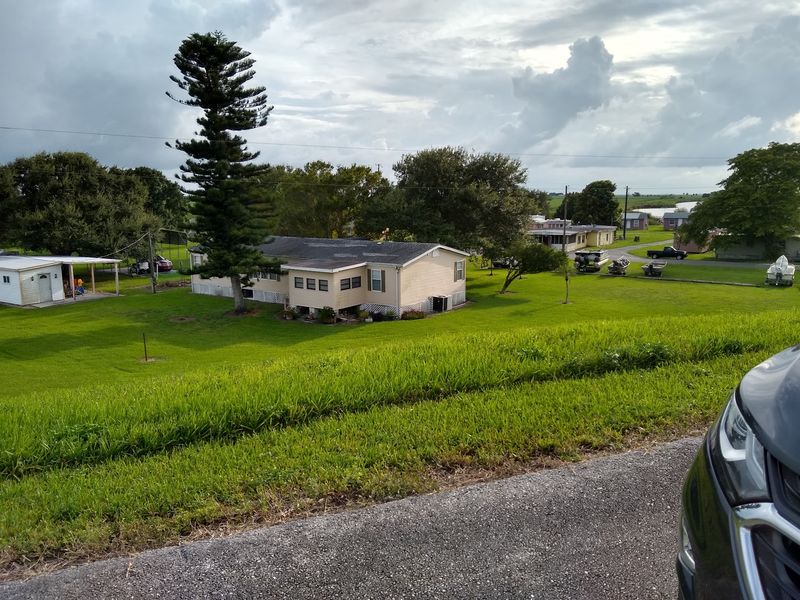
Uncle Joe’s has one of the better backstories on this list. Established shortly after World War II, the original cabins were relocated from Riddle Field in Clewiston, where British airmen trained during the war. That means when you stay here, you’re sleeping in a piece of actual history, which is a rare thing for a Florida fish camp.
Today, visitors can still stay in those cabins, or opt for motel rooms, tent sites, or RV spots depending on preference. The camp sits near Lake Okeechobee, one of the largest freshwater lakes in the country and a legendary bass fishery. Anglers come from all over to fish the Big O, and Uncle Joe’s gives them a no-nonsense place to stay and launch.
The camp doesn’t lean hard on the historical angle, which is refreshing. It’s not a museum. It’s a working fish camp that happens to have an interesting past.
You can fish, boat, relax, and soak up the Lake Okeechobee vibe without anyone making a big production out of it. The cabins have character, the lake has fish, and Uncle Joe’s keeps doing what it’s done for nearly 80 years: putting people on the water.
10. Cherry Pocket Fish Camp (Lake Wales)
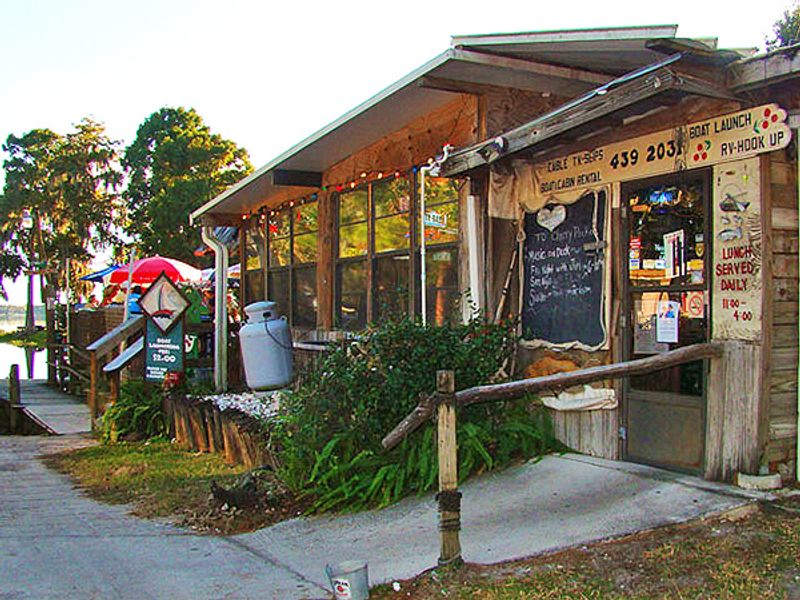
Cherry Pocket is part restaurant, part fish camp, part roadside time capsule. It sits on Lake Pierce and leans hard into its Old Florida character, serving seafood and alligator to tourists and locals alike while also offering cabins and RV sites for people who want to stay overnight. The fish-camp roots date back to the 1940s, and the place hasn’t forgotten where it came from.
You can eat fried gator tail and hush puppies, rent a cabin with a view of the lake, or just grab a cold drink and watch the sunset from the deck. The atmosphere is half tourist attraction, half genuine fish camp, which sounds like it shouldn’t work but somehow does. Anglers still launch from here, and the lake still produces bass and panfish.
What makes Cherry Pocket interesting is that it embraced its own quirks instead of trying to sand them off. It’s a little kitschy, a little nostalgic, and a little rough around the edges, but it’s also authentic in a way that a lot of newer places aren’t. You get the sense that the people running it actually care about preserving the Old Florida vibe, not just cashing in on it.
That makes all the difference.
11. Old Florida Fish Camp (Cedar Key)
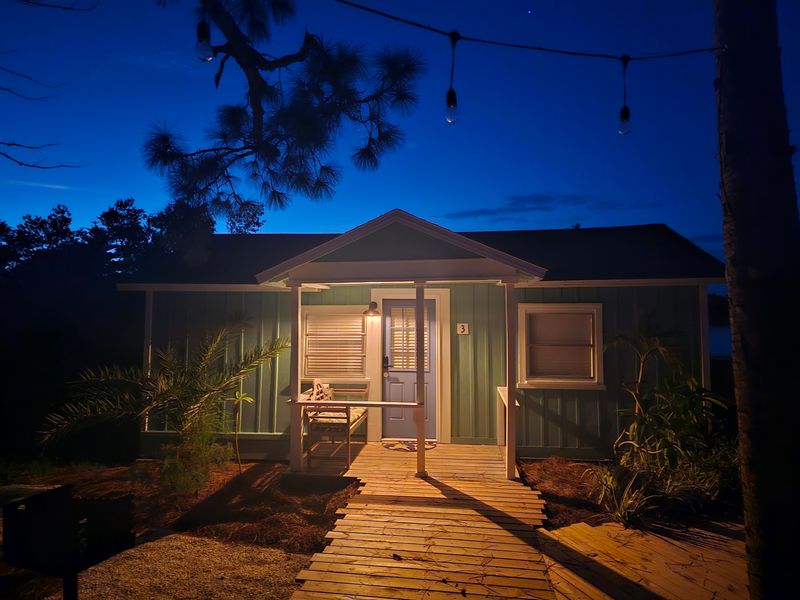
The name isn’t exaggerating. Old Florida Fish Camp in Cedar Key is exactly what it claims to be: a small waterfront retreat made up of renovated historic cabins that overlook the Gulf. Each cabin comes with retro touches that feel intentional rather than forced, and the whole property has a private dock, fish-cleaning station, kayaks, and bicycles for getting around the island.
Cedar Key itself feels like it exists outside of normal Florida time. The town is small, quiet, and stubbornly resistant to overdevelopment. Old Florida Fish Camp fits right into that ethos.
The cabins aren’t fancy, but they’re comfortable and charming in a way that modern builds rarely achieve. You’re steps from the water, and the pace slows down the moment you arrive.
What sets this place apart is the attention to detail. The cabins were restored with care, and the property was designed for people who want to fish, paddle, and unplug without sacrificing basic comfort. Cedar Key attracts a certain kind of traveler, and Old Florida Fish Camp caters to that crowd perfectly.
It’s not trying to be a luxury resort. It’s trying to be a good fish camp in a great location, and it nails both.
12. Whippoorwill Sportsman’s Lodge (Lake Talquin / Quincy)
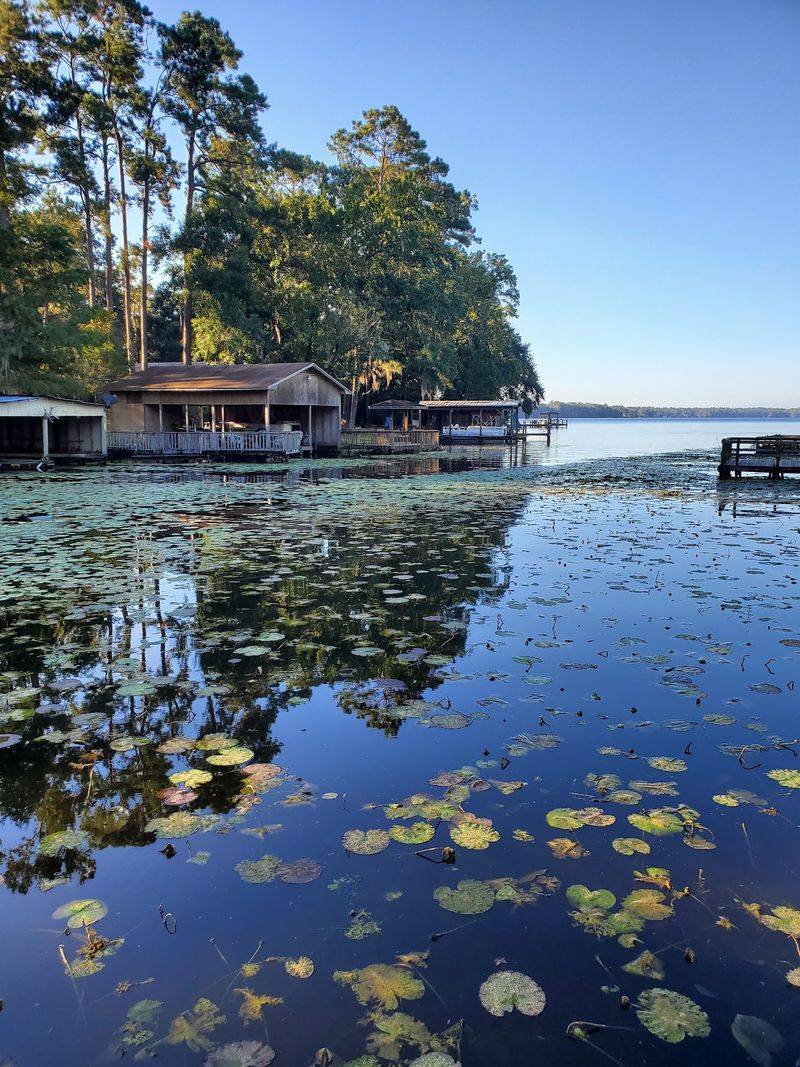
Nearly 90 years of fishing history makes Whippoorwill one of the best heritage picks on this list. The lodge sits on Lake Talquin, a 8,800-acre reservoir on the Ochlockonee River that’s known for largemouth bass, crappie, and bream. Generations of anglers have fished here, and Whippoorwill has been their base camp through all of it.
Cottages give you a comfortable place to sleep after a long day on the water. The boat ramp, slips, tackle shop, and live bait cover the essentials, and the staff knows the lake well enough to point you in the right direction. The whole property has a laid-back lakeside atmosphere that feels earned, not manufactured.
It’s not trying to recreate the past. It’s just continuing what it started almost a century ago.
Lake Talquin doesn’t get the same attention as some of Florida’s more famous fisheries, which is part of its appeal. It’s a working lake with a working fish camp, and both deliver without a lot of fanfare. Whippoorwill has survived this long because it does one thing well: giving anglers a solid place to stay and fish.
That’s a simple formula, but it works when you stick with it for 90 years.