These 12 Florida Trails Prove You Don’t Need a Beach to Find an Amazing View
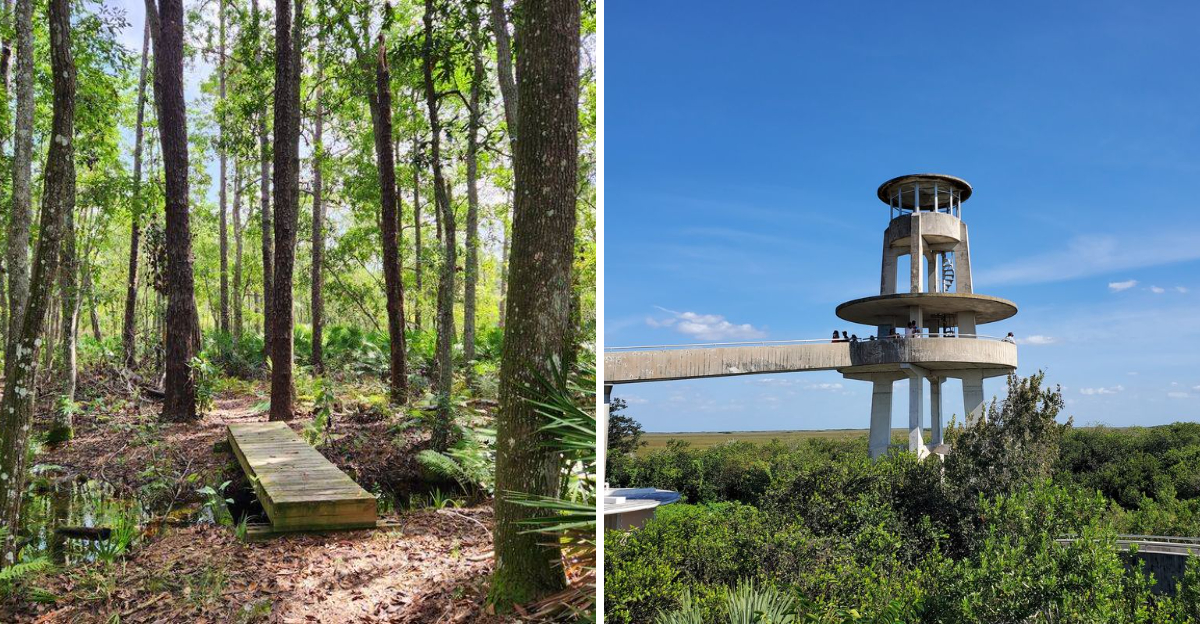
Florida may be famous for its beaches, but some of the state’s most memorable scenery is waiting far from the shoreline. Venture onto the right trail and you can find everything from sweeping wetlands and peaceful rivers to rugged bluffs, shady forests, and wide-open prairie landscapes. These 12 Florida trails reveal just how diverse the Sunshine State can be.
Some lead to elevated viewpoints where the landscape seems to stretch forever, while others wind beside clear waterways, through wildlife-rich marshes, or beneath towering trees. Along the way, hikers may encounter birds, alligators, wildflowers, and other reminders that Florida’s natural beauty extends well beyond its sandy coast. Whether you’re looking for an easy scenic walk or a longer adventure that earns its views, these trails offer plenty of reasons to lace up your hiking shoes.
Leave the beach chair behind for a day and discover a completely different side of Florida—one filled with unexpected landscapes and views worth stopping for.
1. Big Shoals Trail – White Springs
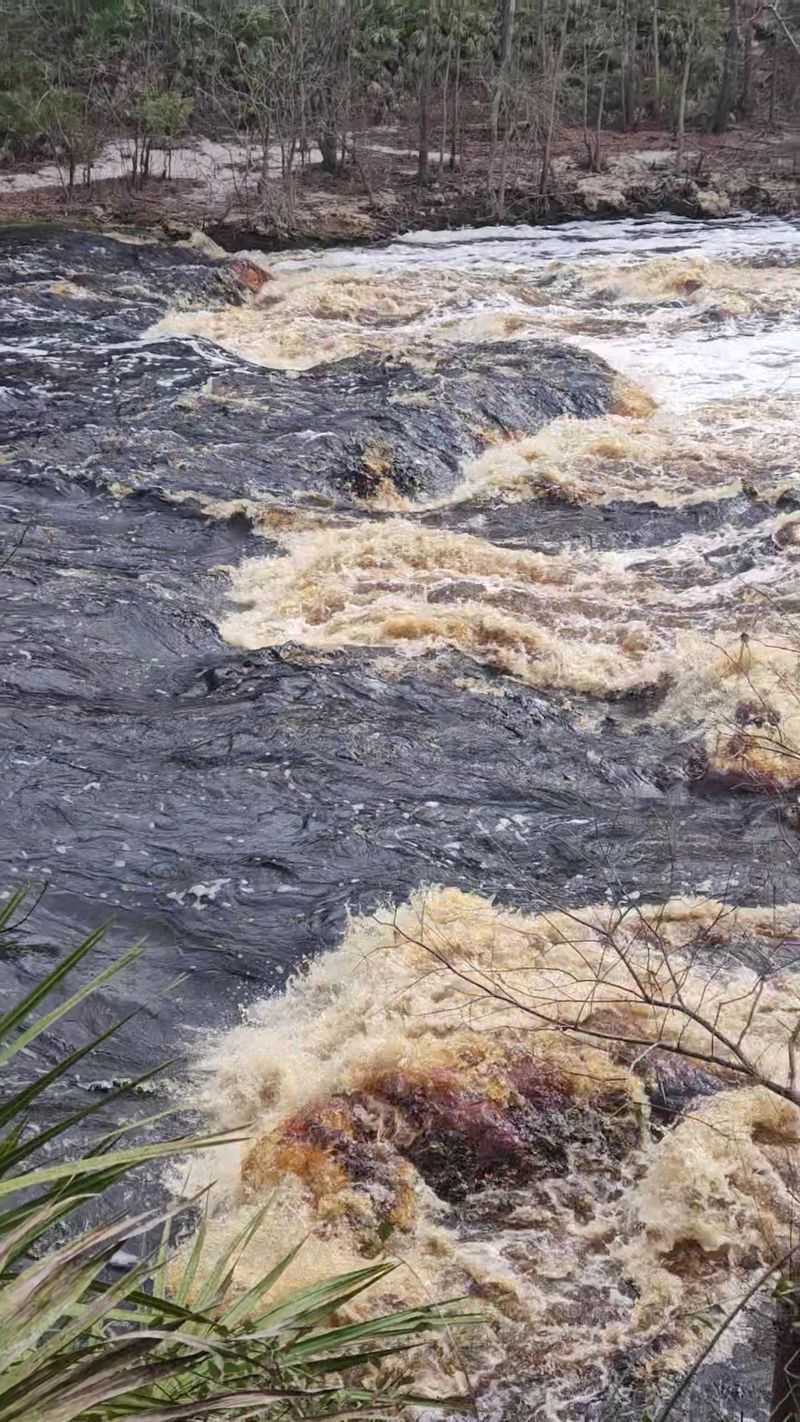
Most Floridians don’t realize their state has actual whitewater rapids until they visit Big Shoals. The Suwannee River crashes over limestone outcroppings here, creating the only Class III rapids in the entire state. It’s a sight that feels more like North Carolina than North Florida, and the trail that follows the river lets you experience it all up close.
The trail winds through hardwood forests and river bluffs, offering multiple viewpoints where you can watch the water tumble over ancient rock formations. During wetter months, the rapids roar with impressive force. When water levels drop, you can sometimes spot the exposed limestone that shapes this unique landscape.
Wildlife is abundant along this route. Keep your eyes open for river otters playing in the calmer pools, and you might spot a bald eagle soaring overhead. The forest itself changes character as you walk, shifting from sandy pine uplands to rich bottomland hardwoods near the water.
Spring and fall offer the most comfortable hiking temperatures, though the trail stays relatively shaded even during summer. The path can get muddy after heavy rains, so waterproof boots are smart. Several benches along the way provide perfect spots to sit and listen to the rushing water.
This trail proves Florida has geological drama to match any state. The combination of moving water, exposed rock, and dense forest creates an experience you simply won’t find at the beach.
2. Torreya Hiking Trail – Bristol
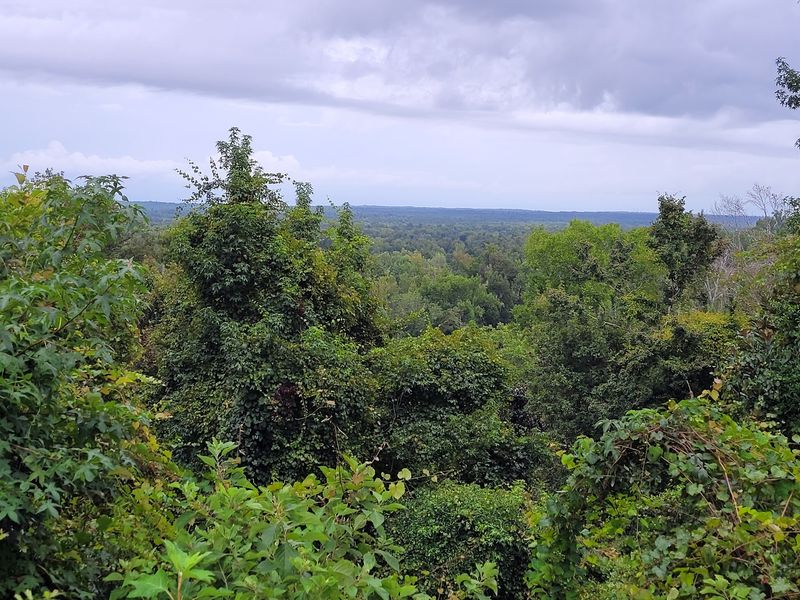
Torreya State Park sits on some of the highest bluffs in Florida, rising over 150 feet above the Apalachicola River. The elevation gain alone makes this trail unique for the state, but the real treasure is the rare Torreya tree that grows here and almost nowhere else on Earth. These ancient trees once covered the region but now survive in just a handful of protected areas.
The trail takes you through a landscape that feels more Appalachian than Floridian. Steep ravines cut through the terrain, and the climb to the top of the bluffs will definitely get your heart pumping. Once you reach the overlooks, the views stretch for miles across the river valley below.
History buffs will appreciate the Gregory House, a pre-Civil War plantation home that was moved to the park and restored. The trail passes right by it, offering a glimpse into Florida’s past. The combination of natural and cultural history makes this hike particularly rich.
Pack plenty of water because those hills are no joke, especially in warm weather. The shade from the hardwood canopy helps, but you’ll still work up a sweat. Early morning hikes reward you with cooler temperatures and better chances of spotting wildlife like white-tailed deer.
This trail challenges the flat-Florida stereotype head-on. The terrain, the rare trees, and the river views combine to create an unforgettable hiking experience that rivals anything the coast can offer.
3. Garden of Eden Trail – Bristol
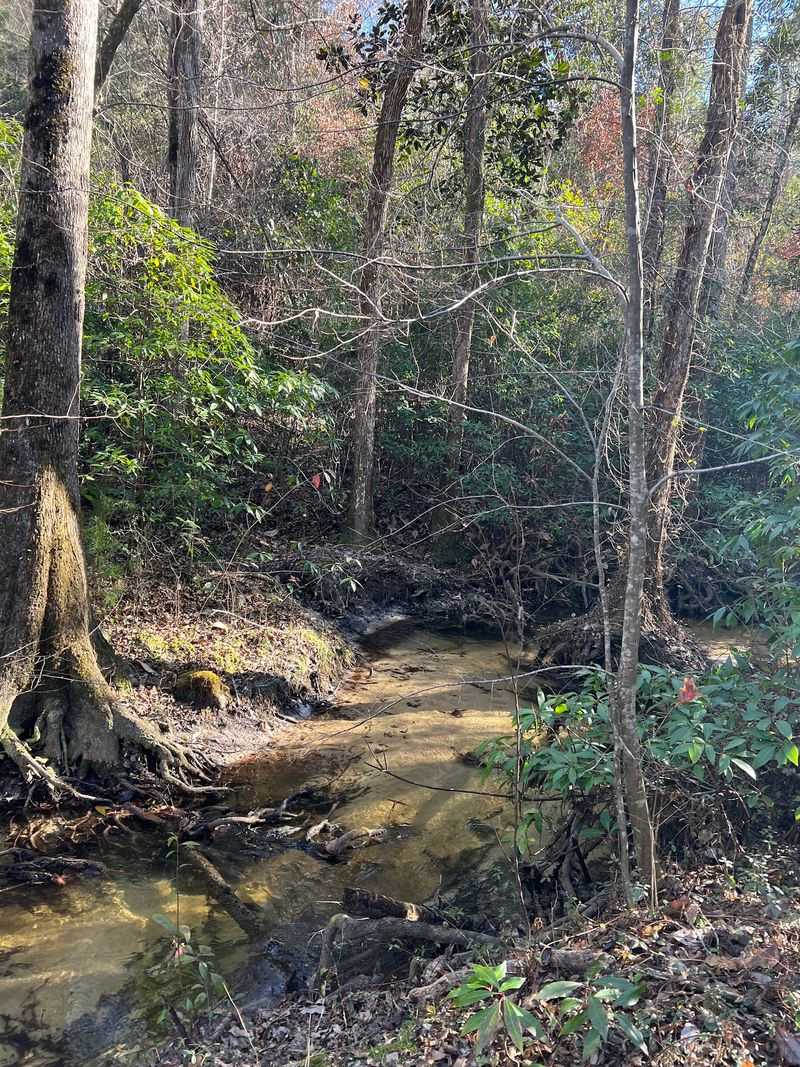
Florida Caverns State Park holds a secret that most visitors never expect: an above-ground trail that leads to a stunning natural spring and cave entrance known as the Garden of Eden. The limestone formations here create a landscape that feels almost tropical, with ferns cascading down rock walls and crystal-clear water bubbling up from underground.
The trail itself is short but packed with visual interest. You’ll walk through a forest of magnolias and oaks before arriving at the spring, where the water maintains a constant temperature year-round. The clarity of the water is remarkable, and you can see straight to the bottom where the spring vent pushes water up from the aquifer.
What makes this spot truly special is the cave opening just beyond the spring. While you need a guided tour to explore the main caverns, the Garden of Eden entrance gives you a preview of the underground world below. Limestone walls show millions of years of geological history in their layers and formations.
Photographers love this trail because the light filtering through the trees creates magical conditions, especially in the morning. The combination of water, rock, and vegetation provides endless composition opportunities. Even casual visitors with phone cameras come away with stunning shots.
This trail proves that Florida’s beauty goes far deeper than its surface. The state’s limestone foundation creates hidden wonders like this throughout the northern regions, waiting for hikers willing to look beyond the obvious attractions.
4. Hobe Mountain Trail – Hobe Sound
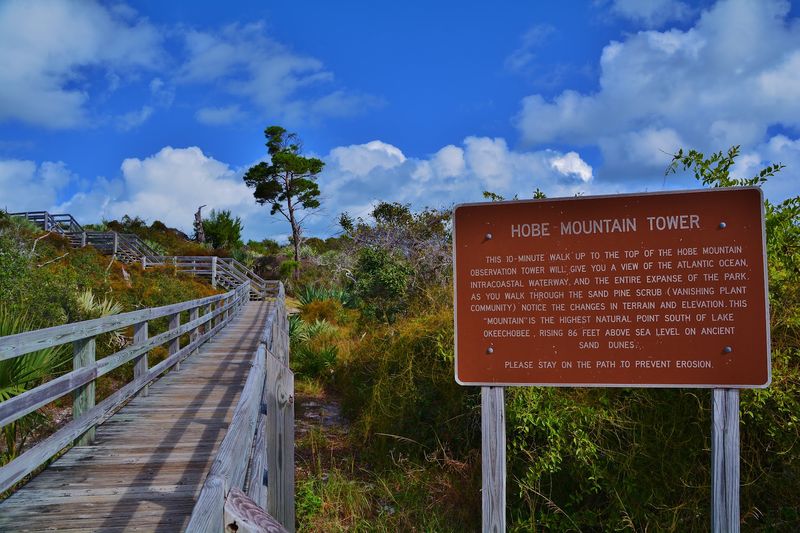
Calling it a mountain might be generous by most standards, but at 86 feet above sea level, Hobe Mountain offers views that will change how you see South Florida. Jonathan Dickinson State Park protects this ancient sand dune, and the trail to the top rewards hikers with a perspective that stretches from the Atlantic Ocean to the Loxahatchee River.
The hike up is short but steep by Florida standards. You’ll climb through scrub habitat that looks almost desert-like, with sand pines and saw palmettos dominating the landscape. This ecosystem is rare and getting rarer, making the trail not just scenic but ecologically important too.
An observation tower sits at the summit, and climbing its stairs adds another 60 feet to your elevation. From the top platform, the view is absolutely worth every step. You can see the river snaking through the park, the ocean shimmering in the distance, and the vast expanse of preserved wilderness in between.
The trail stays open year-round, but summer heat can be intense with limited shade. Winter and spring offer perfect hiking weather, and you might spot migrating birds passing through. Sunrise and sunset hikes are particularly magical when the light paints the landscape in gold and orange.
This trail demonstrates that elevation isn’t everything when it comes to spectacular views. Sometimes just getting above the tree line is enough to reveal the hidden patterns and beauty of the land below.
5. Black Bear Wilderness Trailhead – Sanford
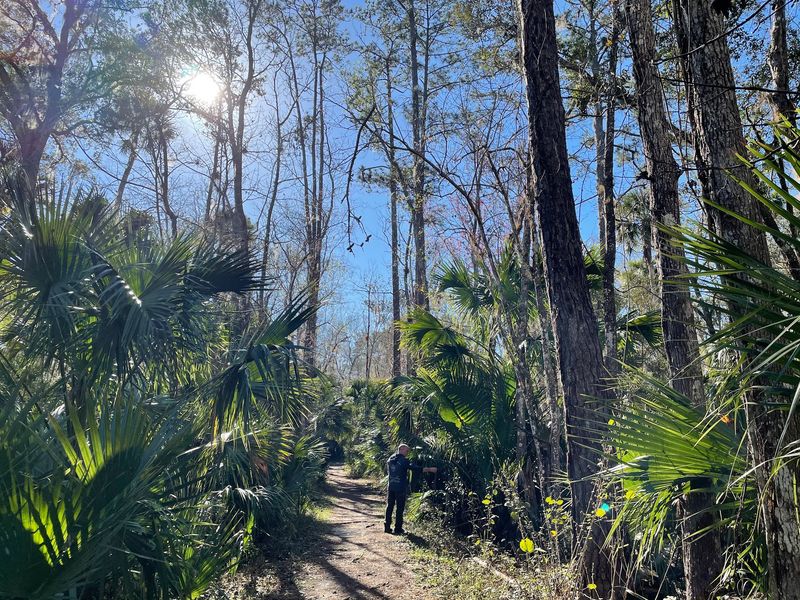
Bears really do live here, and that fact alone makes this trail feel wilder than most Florida hikes. The Black Bear Wilderness Area protects over 1,200 acres of pristine scrub and flatwoods habitat, and the trails that wind through it offer genuine backcountry experiences without leaving Central Florida.
Don’t expect dramatic overlooks or waterfalls here. Instead, you’ll find something equally valuable: solitude and unspoiled nature. The trail system connects loops of varying lengths, so you can customize your hike based on your energy level and available time.
The landscape shifts as you walk, from open sandy areas dotted with scrub oaks to dense palm hammocks that provide welcome shade. This diversity of habitat supports an incredible variety of wildlife beyond the namesake bears. Gopher tortoises dig their burrows along the trail edges, and sandhill cranes stalk through the underbrush looking for insects.
Actually seeing a bear requires luck and timing, but knowing they’re out there adds an element of excitement to every hike. The park requires visitors to follow bear-safe practices, which means securing any food and keeping a respectful distance if you do encounter one.
Trail markers keep you on track, but the wilderness feel is genuine. Cell service can be spotty, so download maps before you go. The sandy soil drains quickly after rain, making this a good choice even after wet weather when other trails turn to mud.
6. Red Clay Cliffs Of Florida Trail – Holt
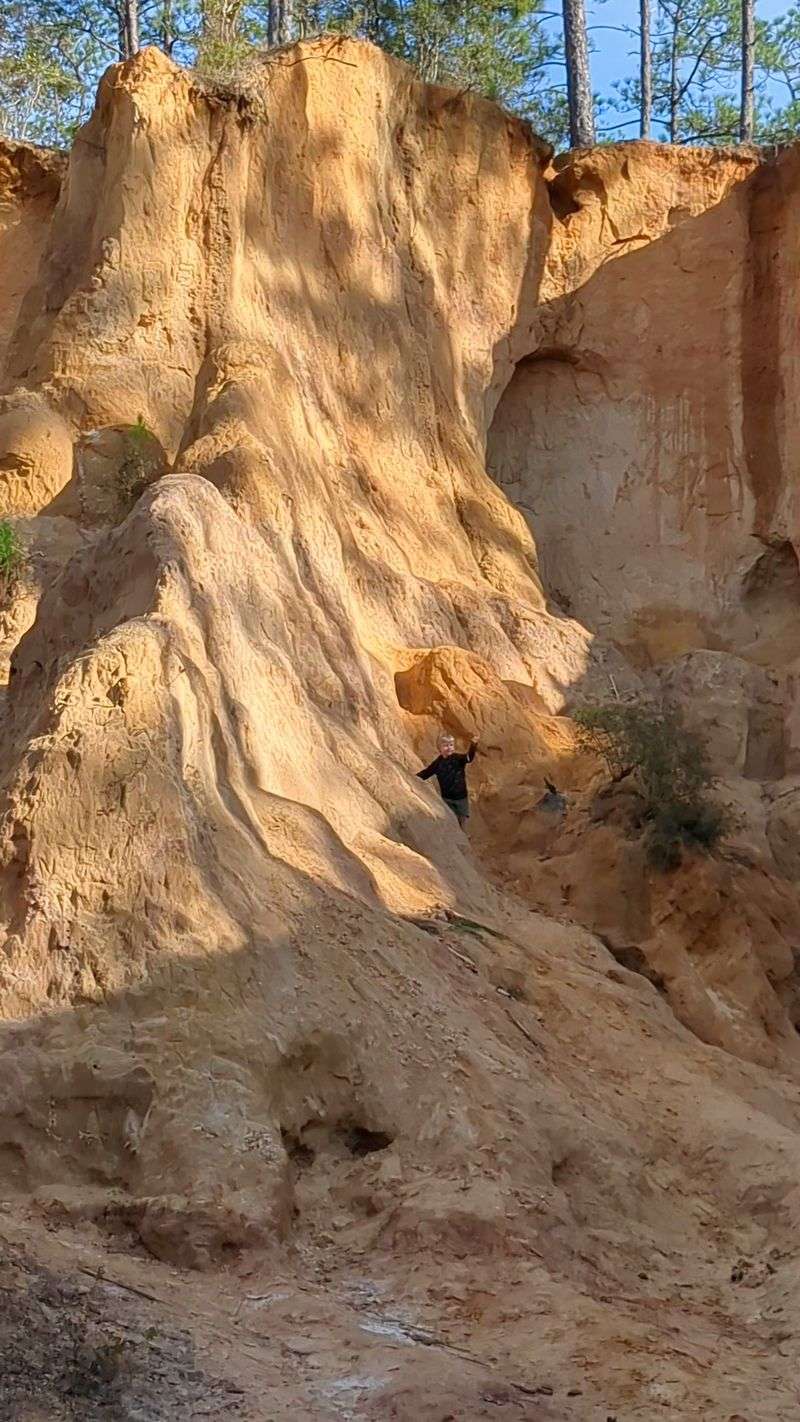
Rust-colored cliffs rising 30 feet from the forest floor seem impossible in Florida, but here they are. The Red Clay Cliffs in Blackwater River State Forest look like they belong in the American Southwest, not the Florida Panhandle. These exposed sediment layers tell the story of ancient seas and rivers that shaped this region millions of years ago.
The trail to reach the cliffs takes you through longleaf pine forest, a once-common ecosystem that now survives in only a fraction of its original range. The tall pines create a park-like understory where sunlight filters through to support native grasses and wildflowers. It’s beautiful in its own right before you even reach the main attraction.
When you arrive at the cliffs, the contrast is striking. The red and orange layers stand out dramatically against the green forest. Erosion has carved interesting formations into the soft clay, creating alcoves and overhangs that shelter ferns and mosses.
Photographers should visit during golden hour when the low sun intensifies the cliff colors. The combination of warm light on red clay creates images that don’t even look like Florida. After rain, the colors become even more saturated and vibrant.
The cliffs remind us that Florida’s geology is more complex than many realize. Different regions of the state reveal different chapters of Earth’s history, and these clay formations represent a time when this area was part of a massive river delta system that no longer exists.
7. Lake Okeechobee Scenic Trail – South Bay
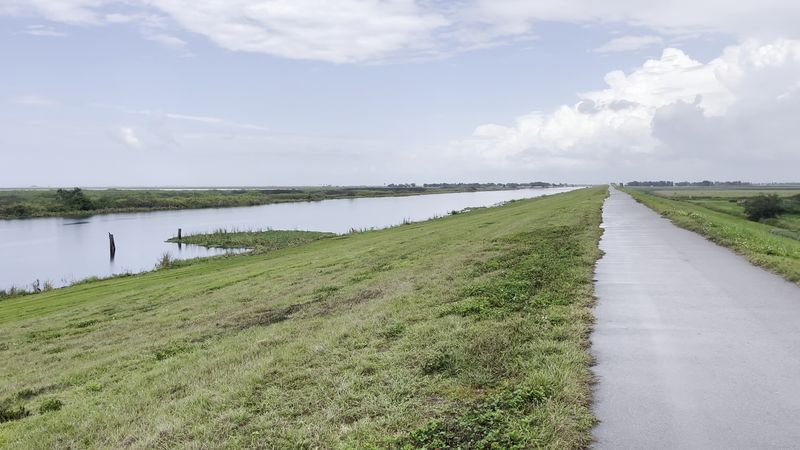
Big Lake, as locals call it, is the second-largest freshwater lake entirely within the United States. The Lake Okeechobee Scenic Trail runs along the top of the Herbert Hoover Dike, giving hikers and cyclists 110 miles of continuous path with water views that stretch to the horizon. The South Bay section offers some of the best access and scenery.
Walking on top of the levee puts you well above the surrounding landscape, providing unobstructed views across the massive lake. On clear days, you can see for miles in every direction. The water seems to merge with the sky at the horizon, creating an almost ocean-like vastness.
Birdwatchers consider this trail a gold mine. The lake and surrounding wetlands attract hundreds of species, from tiny warblers to massive wood storks. During migration seasons, the diversity explodes as northern birds stop to rest and feed.
Bring binoculars and a bird guide to identify the incredible variety you’ll encounter.
The trail is completely exposed with zero shade, so sun protection is absolutely essential. Wide-brimmed hats, sunscreen, and plenty of water aren’t optional here. Morning and evening hikes avoid the worst heat and offer the best light for photography.
Weather can change quickly over the open water. Afternoon thunderstorms are common in summer, and there’s nowhere to take shelter on the levee. Check the forecast before heading out, and don’t take chances with approaching storms.
The lake’s size creates its own weather patterns, and lightning is a serious concern.
8. Florida Trail Panorama Trailhead – Oviedo
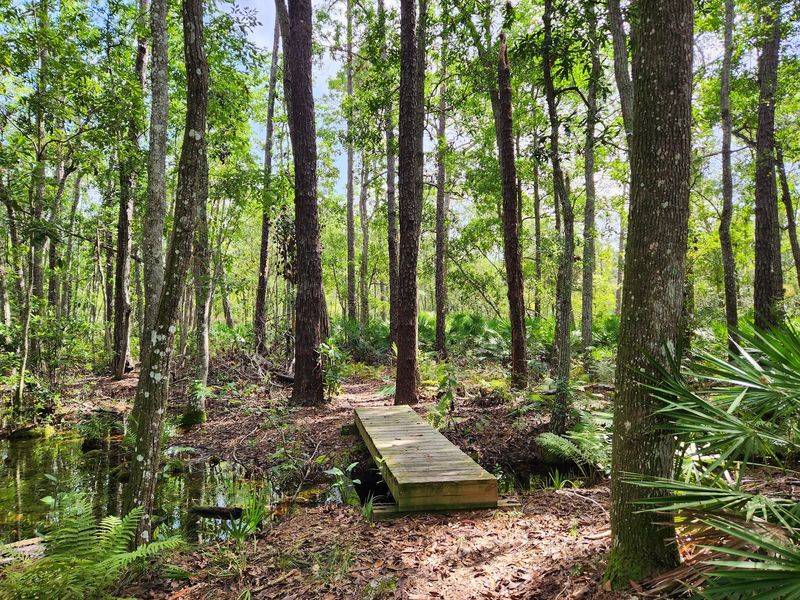
The Florida Trail stretches over 1,300 miles from the Everglades to the Panhandle, and the Panorama Trailhead in Oviedo offers access to one of its most beautiful Central Florida sections. This segment showcases the transition zones where dry pine uplands meet cypress swamps, creating a landscape of constant change and discovery.
Boardwalks carry you over the wettest sections, keeping your feet dry while bringing you face-to-face with the swamp ecosystem. Spanish moss drapes from cypress trees, and the dark tannin-stained water reflects the forest like a mirror. It’s hauntingly beautiful in a way that feels uniquely Floridian.
The dry sections contrast sharply with the swamps. Sandy paths wind through pine and palmetto scrub, and the vegetation changes completely. This variety keeps the hike interesting because you’re constantly moving through different worlds, sometimes within just a few hundred yards.
Wildlife sightings are common and diverse. Alligators sun themselves on the banks of wet areas, while gopher tortoises dig burrows in the sandy uplands. Wading birds like herons and egrets hunt in the shallows, and if you’re lucky, you might spot a river otter or even a bobcat.
The Florida Trail community is active and welcoming. You might encounter through-hikers tackling the entire trail, and they’re usually happy to share stories and advice. The trail represents a growing appreciation for Florida’s wild places and the importance of protecting these corridors for both wildlife and human enjoyment.
9. Shark Valley Tram Trail – Everglades National Park
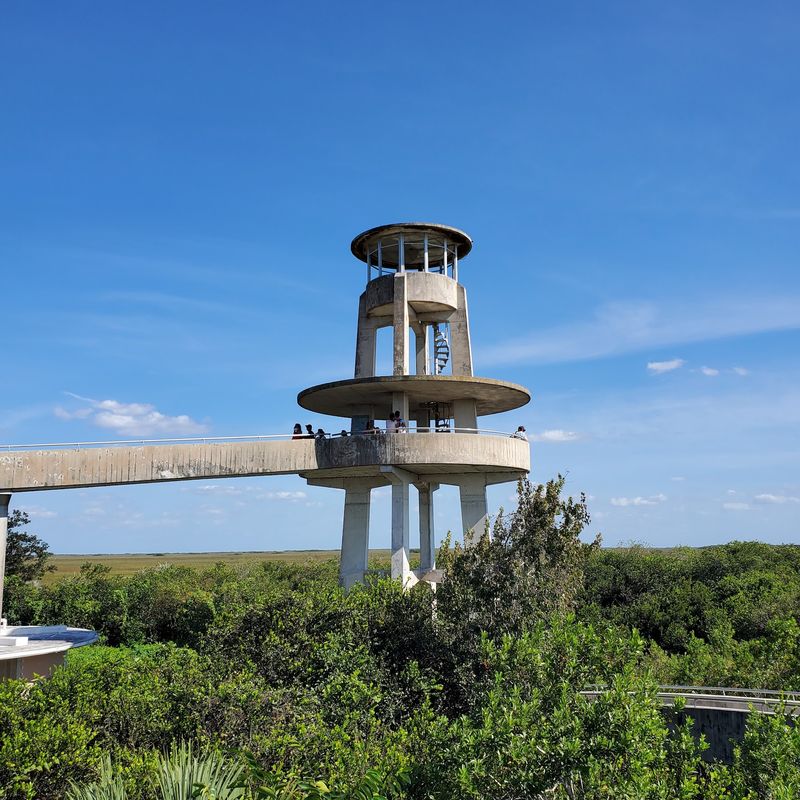
A 15-mile paved loop through the heart of the Everglades might not sound like a traditional hiking trail, but Shark Valley delivers views and wildlife encounters that rank among Florida’s best outdoor experiences. The flat, easy path makes the incredible ecosystem accessible to almost everyone, while the observation tower at the halfway point provides a perspective you simply can’t get anywhere else.
The Everglades is often called a river of grass, and from ground level on this trail, you’ll understand why. Sawgrass stretches in every direction, punctuated by small tree islands called hammocks. The landscape seems endless and unchanged, but look closer and you’ll see constant activity.
Alligators are practically guaranteed sightings here, and they often sun themselves right beside the trail. Respect their space and never approach them, but enjoy the rare opportunity to observe these prehistoric creatures in their natural habitat. The gators are so accustomed to people that they barely react to passing hikers and cyclists.
The observation tower at the loop’s midpoint is the payoff for the seven-mile journey to reach it. Climbing to the top reveals the true scale of the Everglades. The sawgrass prairie spreads to every horizon, and you can see the slight flow of water that gives this ecosystem its river-like character.
Winter is the ideal season for this trail. Cooler temperatures make the long distance manageable, and the dry season concentrates wildlife around the remaining water. Summer heat and afternoon storms make hiking less pleasant, though the landscape is at its most lush.
10. La Chua Trail – Gainesville
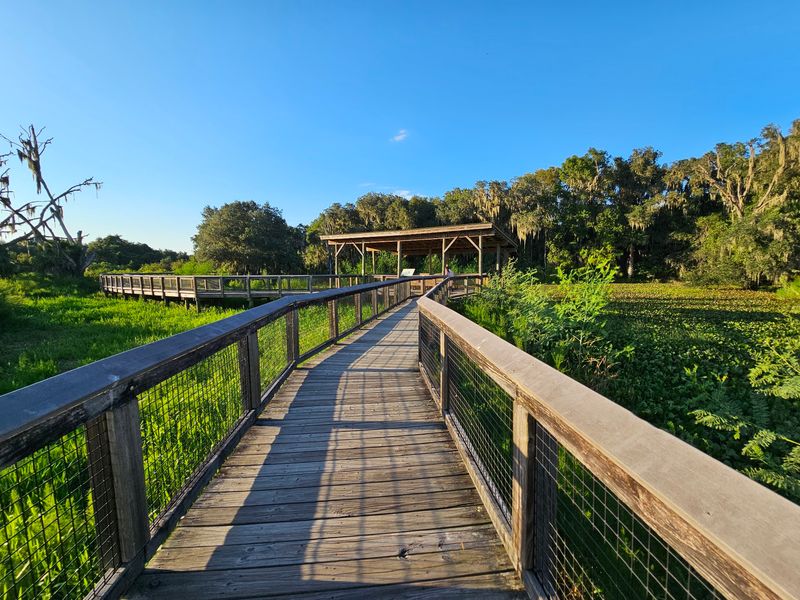
Where else can you see wild horses, alligators, and bison all on the same trail? La Chua Trail in Paynes Prairie Preserve offers exactly that surreal combination. The 1.5-mile path leads to an observation platform overlooking a massive prairie sink, and the wildlife viewing opportunities are simply unmatched anywhere in Florida.
The trail starts in shaded forest but quickly opens onto the prairie. The transition is dramatic, and suddenly you’re looking across hundreds of acres of open grassland. The big animals are what grab your attention first, but the bird diversity here is equally impressive.
Alligators are everywhere during the right season. The marsh areas can hold dozens of them, from babies to massive adults over 10 feet long. It’s one of the most reliable places in the state to see large numbers of gators, making it popular with photographers and wildlife enthusiasts.
The wild horses and bison were introduced to help manage the prairie vegetation, but they’ve become part of the area’s character. Watching horses graze against a backdrop of palms and marsh creates a scene that feels both foreign and distinctly Floridian. The bison are harder to spot but occasionally appear in the distance.
Morning visits offer the best wildlife activity and lighting. Animals are more active before the heat of the day, and the early light creates beautiful conditions for photography. The trail can get crowded on weekends, so weekday mornings provide a more peaceful experience with the same incredible wildlife.
11. Myakka Canopy Walkway – Sarasota
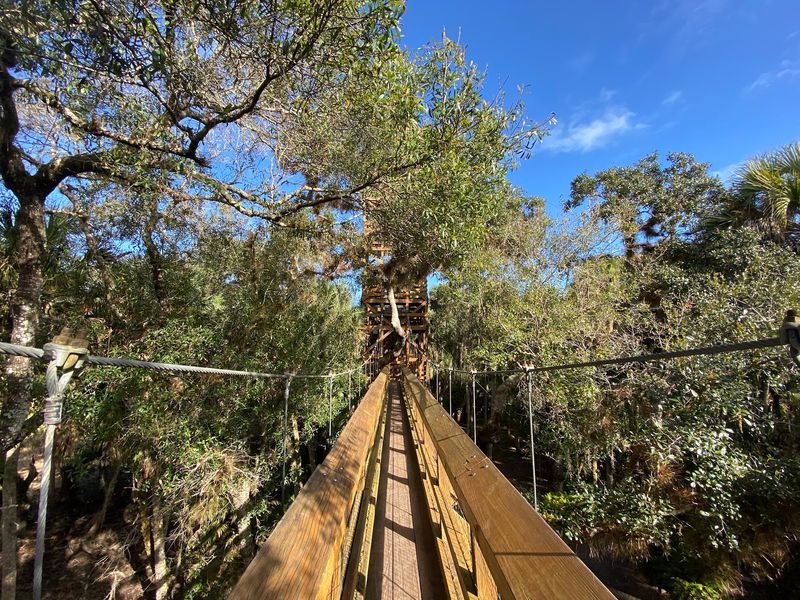
Walking among the treetops changes your entire perspective on a forest. The Myakka Canopy Walkway suspends you 25 feet above the ground on a swaying bridge that stretches 100 feet through the oak and palm canopy. It’s an experience that combines mild adventure with spectacular views of one of Florida’s oldest and most beautiful state parks.
The walkway connects to a 74-foot observation tower that takes you even higher. From the top platform, you can see across the vast Myakka River floodplain and the mosaic of habitats that make this park so ecologically rich. The river itself winds through the landscape like a silver ribbon.
Being up in the canopy reveals a whole ecosystem most hikers never notice. Birds that feed and nest in the upper branches suddenly become visible at eye level. Lichens and air plants that would be invisible from below show their intricate beauty when you’re close enough to really see them.
The structure itself is an engineering marvel designed to move with the trees rather than fight against them. It sways gently, which takes some getting used to but adds to the experience. People with height sensitivity should know what they’re getting into, but the handrails are solid and the structure is completely safe.
Combine the canopy walk with the park’s other trails for a full day of exploration. Myakka protects 58 square miles of wild Florida, including one of the state’s largest remaining prairie wetlands. The diversity of landscapes makes it a microcosm of the state’s natural heritage.
12. Anhinga Trail – Everglades National Park
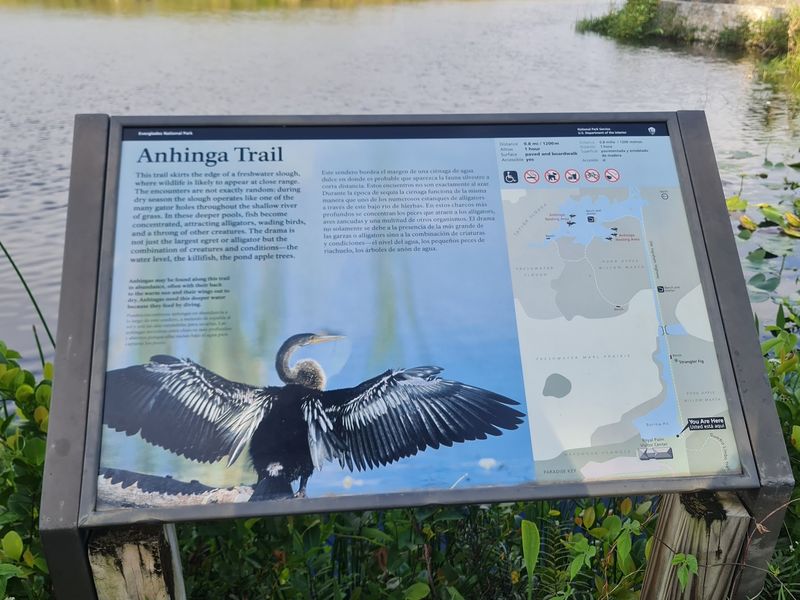
If you only have time for one trail in Everglades National Park, make it the Anhinga Trail. This short boardwalk loop packs more wildlife per mile than almost anywhere else in North America. During the dry season, animals concentrate around the remaining water, creating viewing opportunities that feel more like a nature documentary than a casual walk.
The trail’s namesake birds are nearly guaranteed. Anhingas, also called water turkeys, perch on branches with their wings spread to dry after diving for fish. Their snake-like necks and prehistoric appearance make them fascinating subjects for photography.
They often hunt right beside the boardwalk, completely unbothered by human observers.
Alligators here are so numerous and visible that you’ll probably lose count. They float in the water, sun on the banks, and occasionally cross the path itself. Park rangers monitor the trail and close sections if a gator decides to block the boardwalk, but these encounters are part of what makes the experience memorable.
Wading birds are the real stars during peak season. Herons, egrets, ibises, and roseate spoonbills all hunt in the shallow water, and their numbers can be staggering. The diversity of species and the close viewing distances make this a world-class birding destination.
Timing matters enormously here. Visit during the dry season, roughly December through April, for the best wildlife viewing. Summer offers different experiences with fewer animals visible but more lush vegetation.
Either way, this trail delivers on its promise of showing you the real Everglades in all its wild glory.