Nature Is Reclaiming This Forgotten Florida Park, But Its History Still Lingers
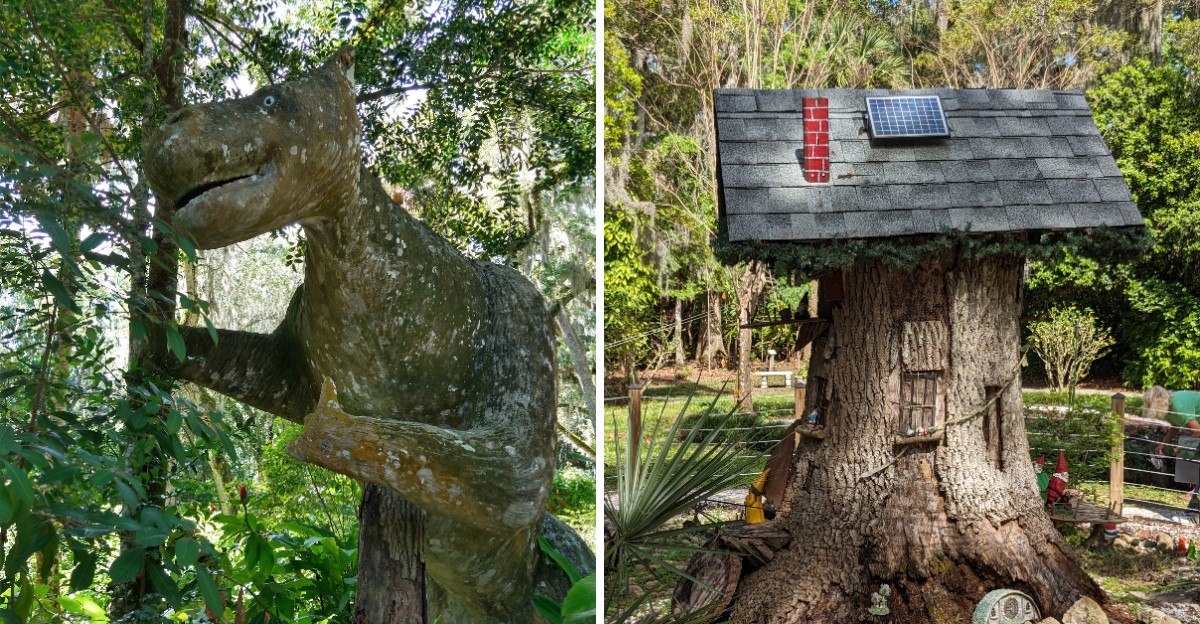
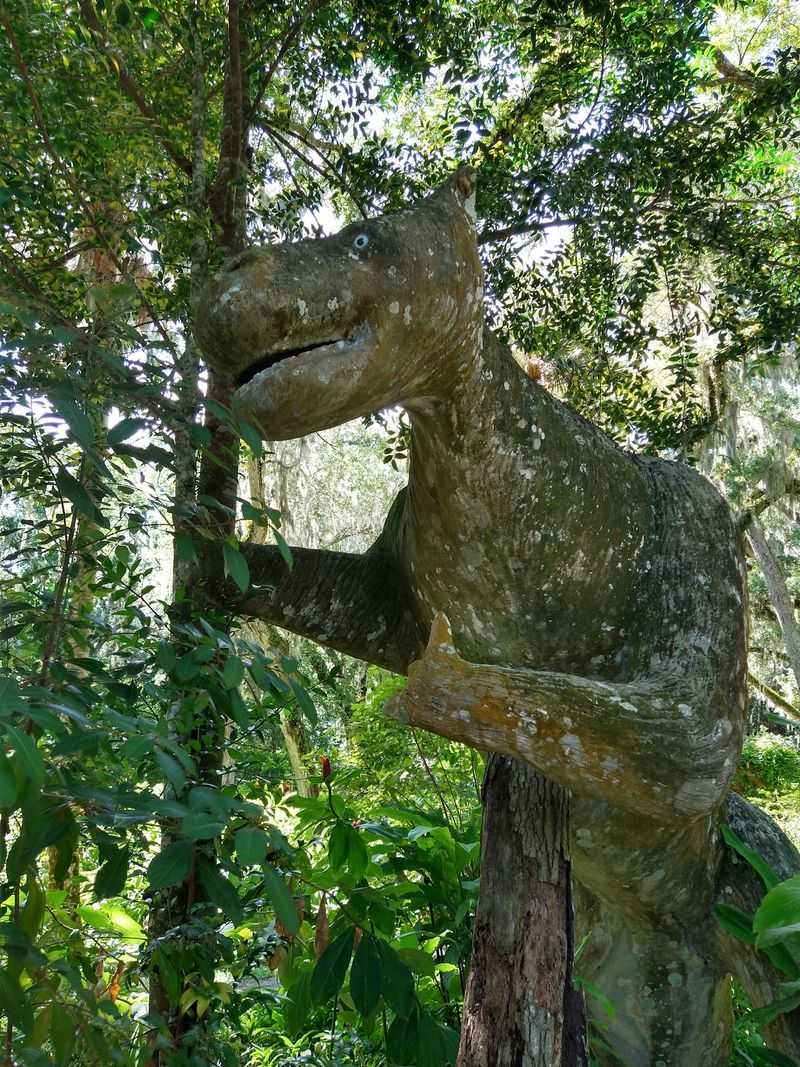
A giant concrete dinosaur is standing in the woods next to the ruins of an 1800s sugar mill. Nobody ever moved it because, well, where would you even put it?
The beast is a leftover from a roadside attraction that opened in 1948 and folded just a few years later. Its prehistoric pals stayed behind as vines, palms, and oak trees slowly crept in around them.
I love that this odd corner of Florida never got bulldozed into a strip mall. Instead, volunteers turned the grounds into free botanical gardens with gravel paths, ponds, and a tiny gnome village.
I can’t imagine a better mashup of history, nature, and pure weirdness on one quiet walk. So how did a herd of dinosaurs end up guarding a sugar mill in the first place?
One Spot, Two Names, And A Whole Lot Of Backstory
Folks call it Bongoland Ruins, but the sign out front tells a different story. The official name is Dunlawton Sugar Mill Gardens, and it covers a surprising amount of Florida history.
The nickname comes from Bongoland, a quirky tourist attraction that once operated on this land. The official name points back even further, to the Dunlawton sugar plantation of the 1800s.
So you get two eras stacked on top of each other. One involved boiling sugarcane, and the other involved selling tickets to see giant dinosaurs.
Today, both layers share space with a thriving botanical garden. Volunteers with the Sugar Mill Botanical Gardens group care for the plants, paths, and plantings across the property.
That mix is what makes Dunlawton Sugar Mill Gardens so fun to explore. One minute you’re reading about plantation-era machinery, and the next a concrete reptile is staring at you through the ferns.
Knowing both names also helps when planning a trip. Searching for either one will lead you to the same shady, slightly strange, and very green destination.
Think of it as a history lesson that forgot to stay serious. Honestly, more history lessons should try that approach.
Old Stone Walls That Remember The Sugar Days
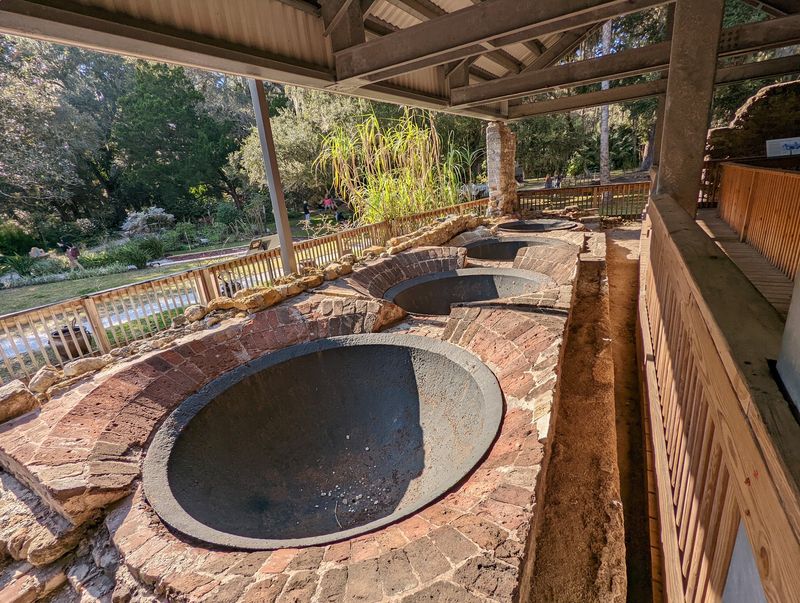
Long before anyone dreamed up dinosaurs here, this land was busy making sugar. The Dunlawton plantation’s mill turned sugarcane into syrup and sugar back in the 1800s.
The original operation was destroyed during the Second Seminole War in 1835. Later, the mill was rebuilt in the 1840s and ran for a stretch before shutting down for good.
What remains today are rough stone walls, arches, and old equipment. Big iron kettles and rusted machine parts sit right where the work once happened.
Walking past them feels a little like flipping through a dusty textbook that grew moss. The ruins are listed on the National Register of Historic Places, which is a pretty fancy title for crumbly walls.
Small markers around the site help explain what each piece once did. Take a minute to read them, because the process was surprisingly complicated for its time.
Kids may care more about the dinosaurs at first. Still, the giant kettles tend to spark questions, and that’s a great start for any young history buff.
Bring your curiosity, and let the old stones fill in the rest. They’ve had plenty of practice.
The Short, Wild Life Of A Roadside Dinosaur Park
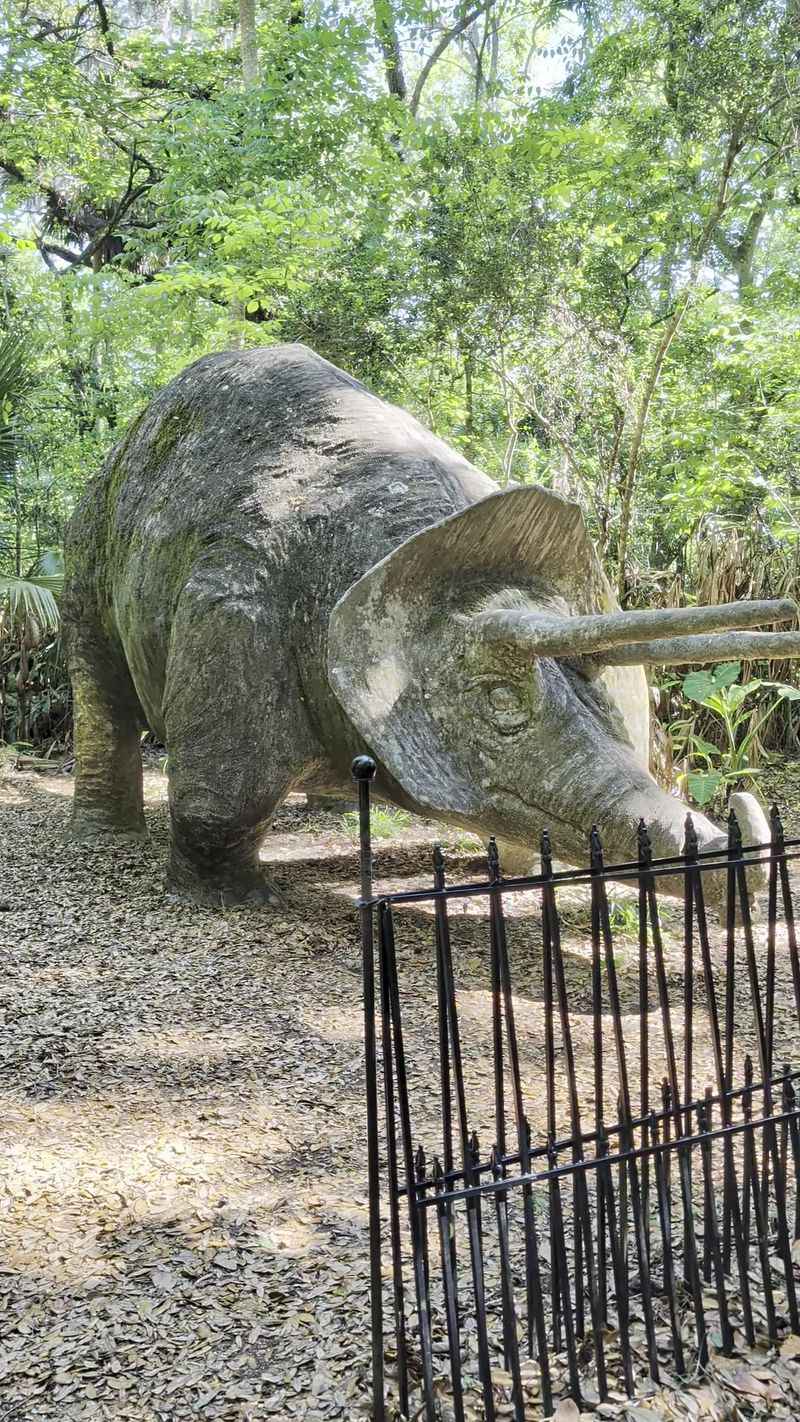
In 1948, a doctor named Perry Sperber had a big idea. He opened Bongoland, a roadside attraction built around the old sugar mill site.
The star features were huge concrete dinosaurs placed among the trees. Visitors could also see animals and learn about Florida’s past, at least the version Bongoland chose to tell.
Sadly for Dr. Sperber, the park never became a tourist magnet. Bongoland closed in the early 1950s after only a few seasons.
Plenty of old Florida attractions vanished without a trace once they closed. This one left behind something much harder to ignore, namely several tons of concrete dinosaurs.
That’s part of the charm of Bongoland Ruins today. You’re looking at the leftovers of a dream that didn’t quite work, yet somehow still made people smile seventy years later.
It’s fun to wonder what might have happened if crowds had shown up. Would there be roller coasters here now, or a dinosaur gift shop the size of a barn?
Instead, the trees won the long game. Honestly, the quiet version might be the better ending.
Go Dinosaur Hunting Without Leaving The Trail
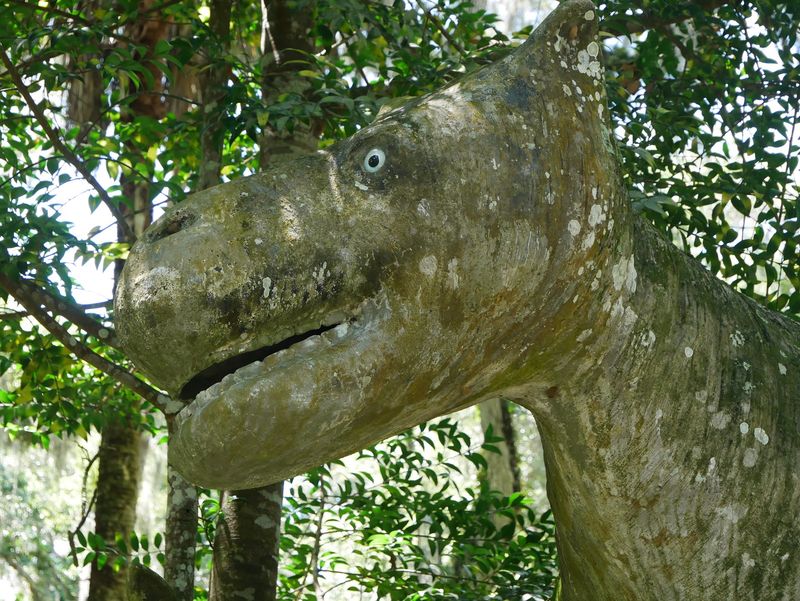
Spotting a long-necked dinosaur through a wall of palm fronds is a genuinely delightful surprise. These concrete giants are the most famous leftovers from the Bongoland days.
Some of the creatures are big enough to make you stop mid-step. Long, low bodies stretch across the ground while greenery creeps up around their legs.
Not every original statue survived the decades, though. Some of the taller figures have collapsed or crumbled over time, so don’t expect a full prehistoric lineup.
That actually adds to the adventure. The remaining dinosaurs feel like discoveries rather than displays, especially with leaves and vines framing them.
Turn the walk into a game if you’re bringing kids along. Count each dinosaur you find, then see who spots the next one first.
Photos here have a fun, almost movie-set quality. The weathered concrete against bright tropical plants looks like a scene from a lost-world adventure film.
Please admire the statues without climbing on them. They’re old, they’ve had a long career, and they deserve a peaceful retirement in the Florida shade.
Plants Get Top Billing In This Leafy Garden
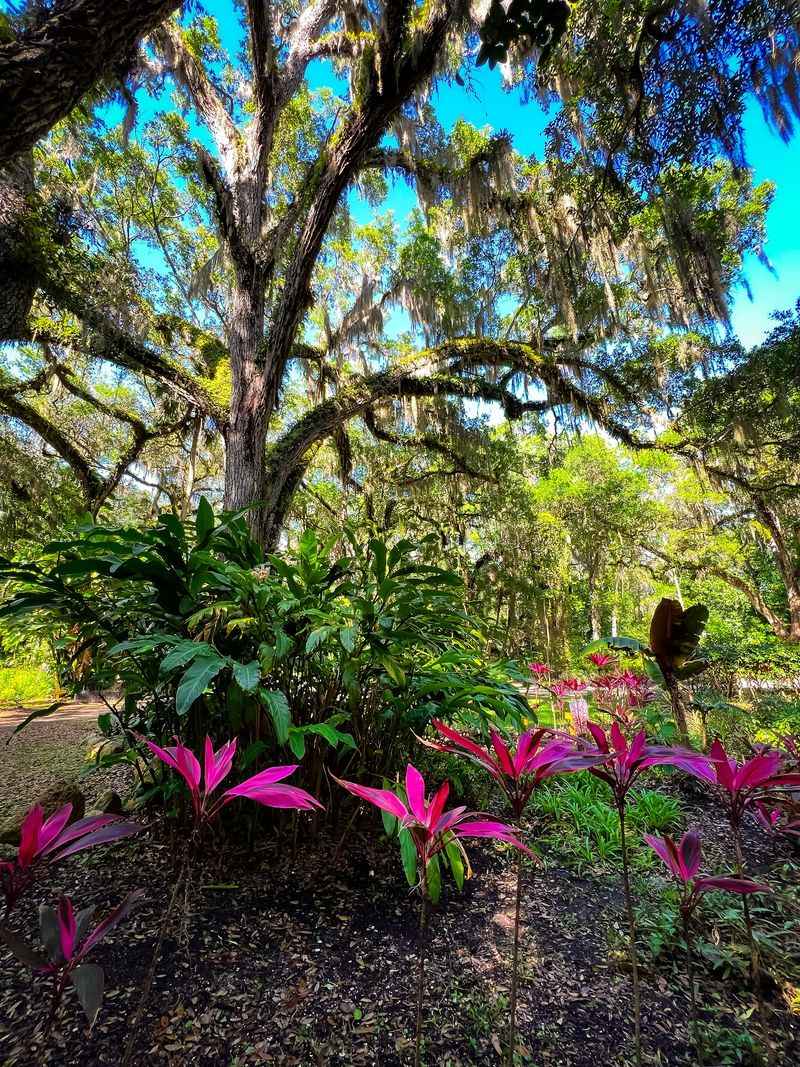
Live oaks spread their branches over much of the property like giant green umbrellas. Underneath, volunteers have planted gardens that turn a simple stroll into a mini botany class.
Many plants are labeled with their names. That makes it easy to learn which ones are Florida natives and which ones came from farther away.
Flowers, ferns, palms, and shrubs fill the beds along the paths. Some areas feel neat and planned, while others lean toward wild Florida jungle.
Gardeners will want to bring a notebook or snap photos of the labels. You might leave with a few ideas for your own yard, or at least a new favorite flower.
The gardens keep changing as volunteers add new plantings and features. That means a return visit to Dunlawton Sugar Mill Gardens may look a little different than your last one.
Plenty of the walk sits under thick shade from the trees. On a sunny Florida afternoon, that canopy feels like a gift.
Slow down and actually look around. The dinosaurs are loud, but the plants are the true stars here.
Tiny Gnomes, Little Bridges, And Plenty Of Whimsy
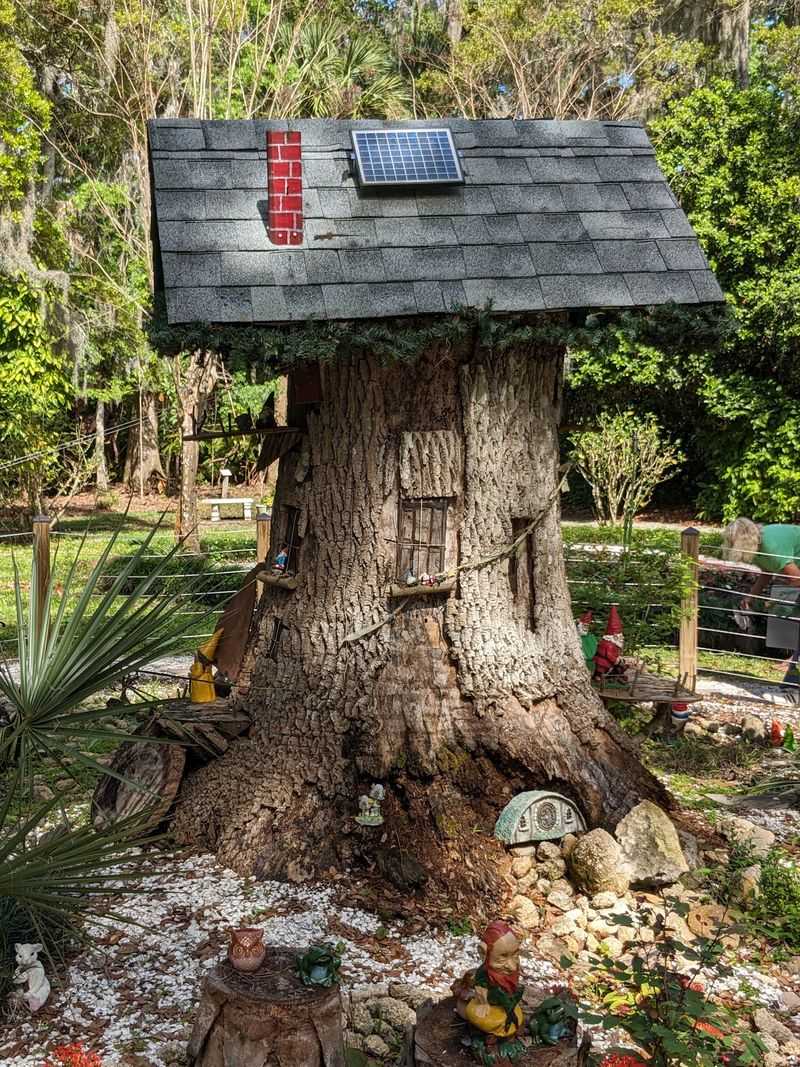
Somewhere along the paths sits a tiny village built for gnomes. It’s small, charming, and exactly the kind of thing that makes grown adults crouch down for a closer look.
The miniature homes add a storybook feel to the gardens. After a run-in with a concrete dinosaur, the change in scale is pretty funny.
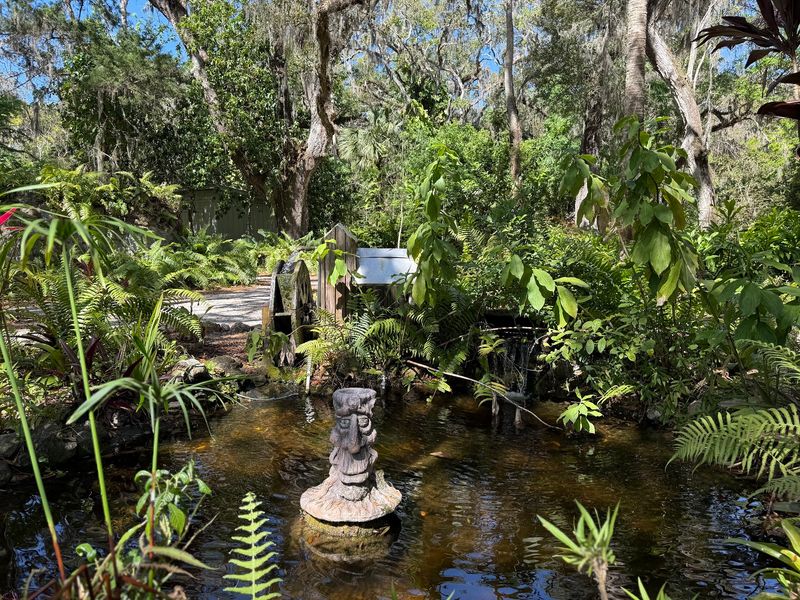
Walking bridges cross small ponds in several spots. Playful ornaments and decorations pop up around the water, so keep your eyes moving.
Water features add soft splashing sounds to parts of the walk. It’s a nice reminder that you’re still in the middle of town, even when it feels far away.
Families with little ones will find a play area too. That’s handy when someone needs a break from walking and a chance to burn off energy.
The whimsy works because it never takes over. History, nature, and silliness all get their own corner without stepping on each other’s toes.
So pause on a bridge and take it all in. Somewhere nearby, a gnome is probably judging your walking pace.
Free Admission Makes This The Easiest Yes Ever
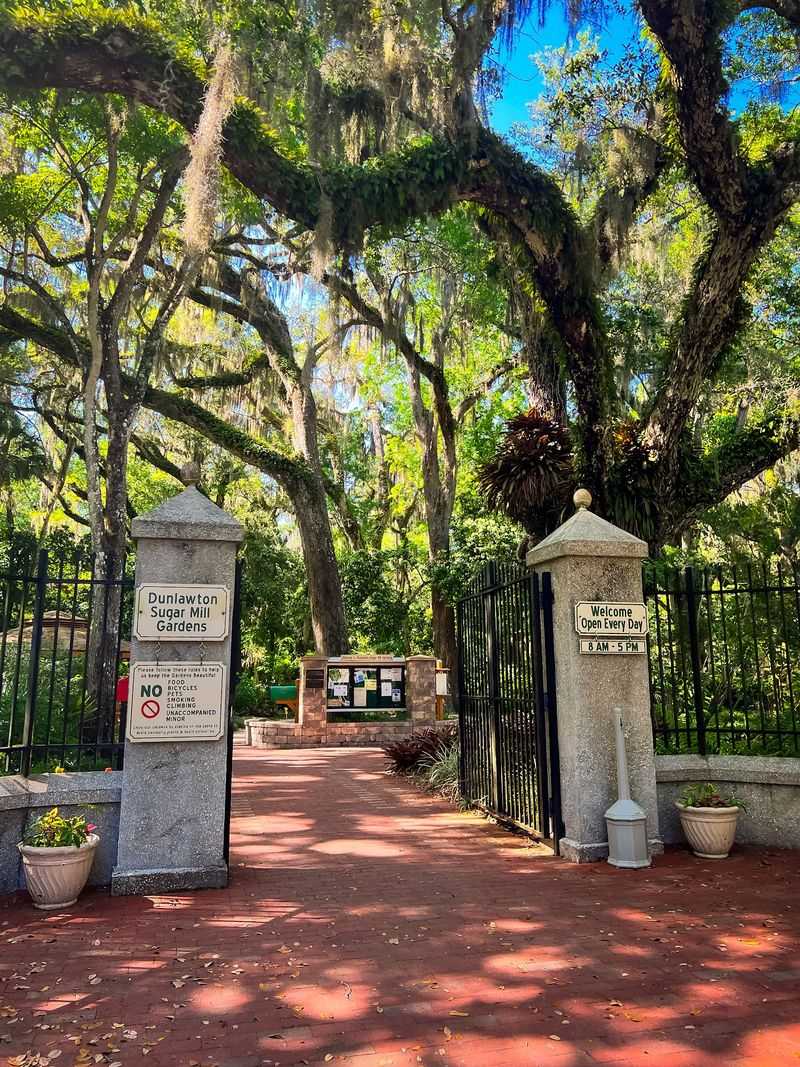
Good news for your wallet: admission costs nothing. A red donation box sits just inside the gate for anyone who wants to support the gardens.
Donations help the volunteers keep things growing and tidy. If you enjoy the visit, tossing in a little something is a kind way to say thanks.
You’ll find the gardens at 950 Old Sugar Mill Rd, Port Orange, FL 32129. A parking lot sits across the road from the entrance gate.
Parking is free, but the lot isn’t huge. Arriving earlier in the day gives you a better shot at an easy spot.
Grab a trail map before you start exploring. They’re kept in a green mailbox near the main entrance sign, to the left.
Bongoland Ruins is open daily from 8 AM to 5 PM. That makes it simple to fit in a morning walk or an afternoon break from beach traffic.
Restrooms sit along the path to the left after the gate. Free entry, free parking, and real bathrooms make this one wonderfully low-stress.
Pack The Bug Spray And Thank Yourself Later
Mosquitoes love shady Florida gardens just as much as people do. Bring bug spray, especially if you plan to explore the back sections of the property.
The paths are mostly gravel and pretty easy to walk. Comfortable sneakers will serve you better than flip-flops on the crunchy trails.
A perimeter path loops around the property, with smaller trails branching off. Following the outer loop first is a smart way to get your bearings.
Benches are scattered along the way for quiet breaks. They’re perfect for catching your breath or just listening to the birds for a minute.
Give yourself at least an hour to see the highlights. Curious wanderers who read every marker could easily spend two hours or more.
Florida weather can change fast, especially on summer afternoons. Check the forecast, because a surprise thunderstorm will cut your dinosaur hunt short.
Water is a smart addition too, even with all the shade. A little planning turns Bongoland Ruins into a relaxed outing instead of a sweaty scramble.
Birds And Butterflies Have Claimed The Place Too
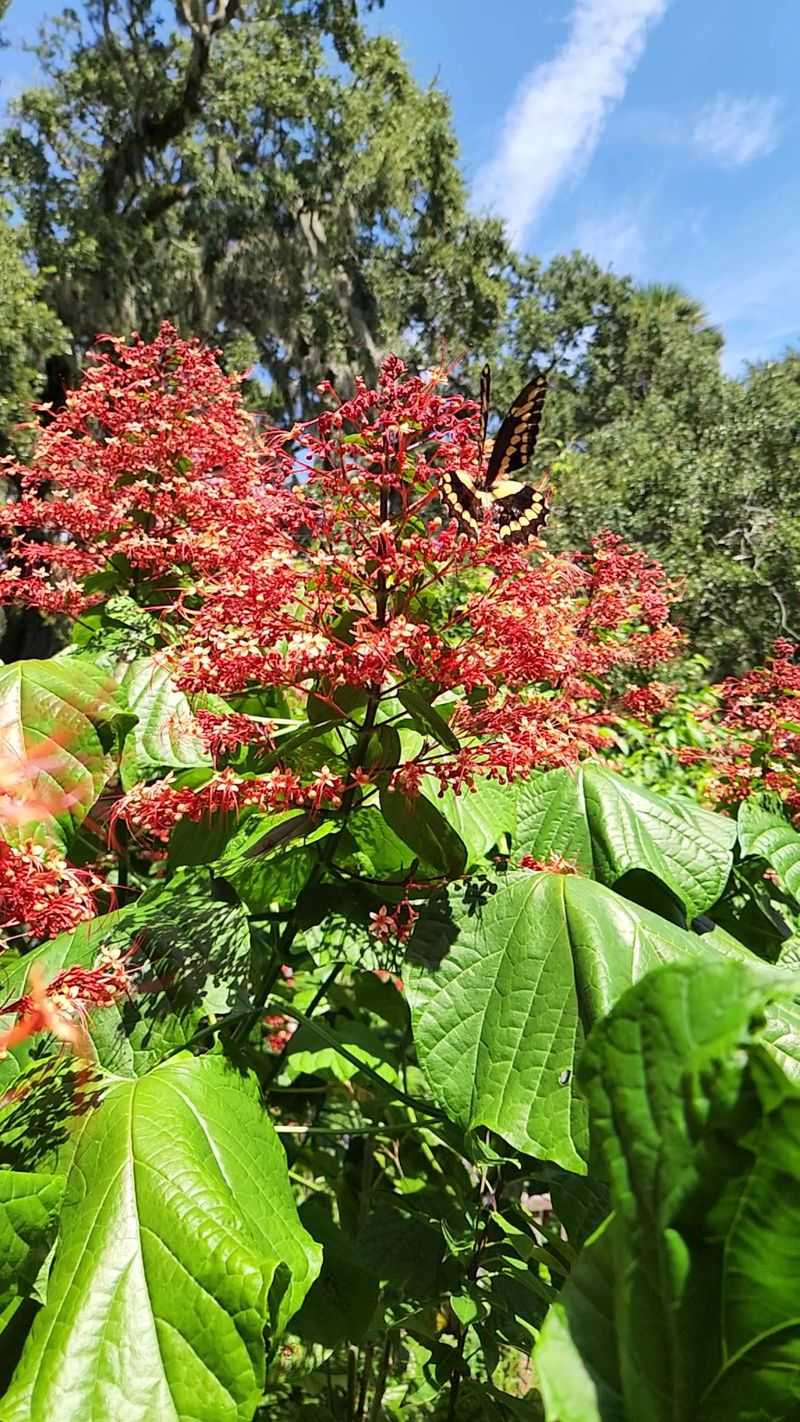
Dinosaurs aren’t the only creatures making themselves at home here. Gardeners have added plants and trees chosen to attract wildlife and pollinators.
Local horticultural and Audubon groups have helped shape parts of these plantings. That teamwork brings more birds, butterflies, and buzzing visitors to the gardens.
Listen as you walk, and you’ll likely hear birdsong mixing with trickling water. It’s a calm soundtrack for a place with such a quirky past.
Bird watchers should bring binoculars and a little patience. Slow walkers usually notice far more than speedy ones.
Butterflies tend to hang around flowering plants on warm days. Kids can try counting colors or patterns while the adults read plant labels.
It’s a fitting final chapter for this patch of Florida. A sugar operation and a failed theme park have turned into a refuge for wildlife.
Nature really is reclaiming Bongoland Ruins, just in the nicest possible way. The history stays put, the plants keep growing, and the dinosaurs simply enjoy the company.