A 250-Year-Old Oak in Jacksonville, Florida Spreads Wider Than Most Visitors Expect
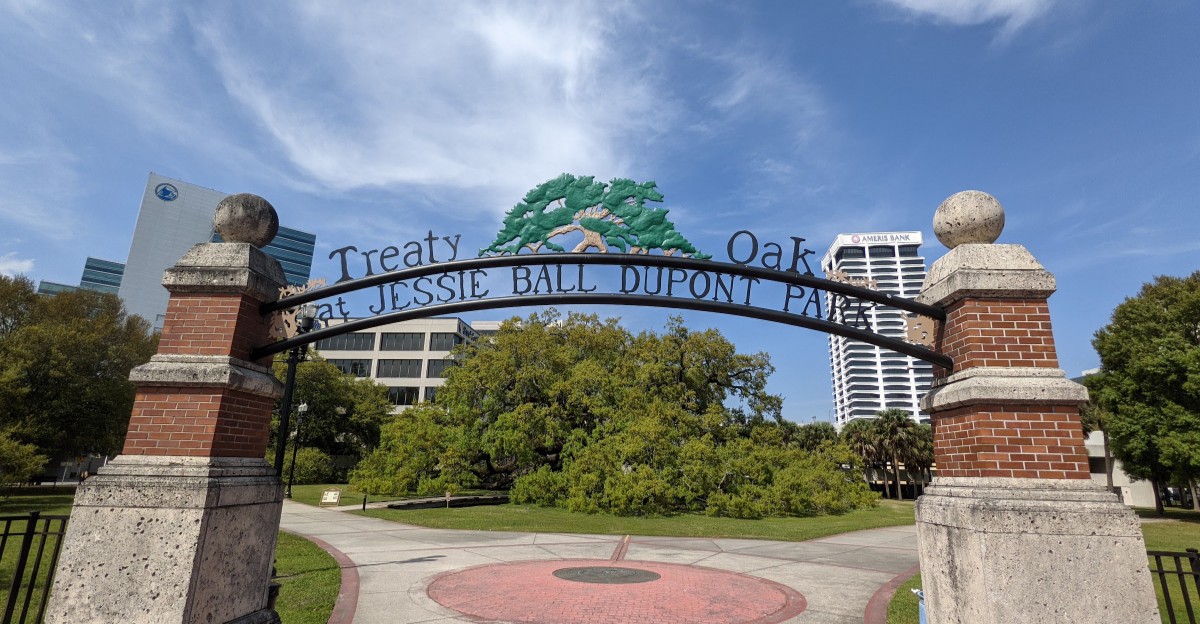
Jessie Ball DuPont Park in Jacksonville is home to one of the city’s most impressive natural landmarks: the massive Treaty Oak. Estimated to be around 250 years old, this sprawling live oak is known for enormous limbs that stretch outward so dramatically they seem to hug the ground. The tree’s scale is what catches most visitors off guard.
Its canopy spreads across the park, creating broad pockets of shade and giving the area a peaceful feel despite being close to downtown Jacksonville. What makes the Treaty Oak especially memorable is its shape. Instead of growing straight up, its thick branches twist, bend, and extend far beyond the trunk, creating a silhouette that feels almost sculptural.
For anyone interested in old Florida landscapes, historic trees, or quiet city parks, Jessie Ball DuPont Park offers a simple but unforgettable stop centered around one extraordinary oak.
A Jacksonville Park Built Around One Extraordinary Tree
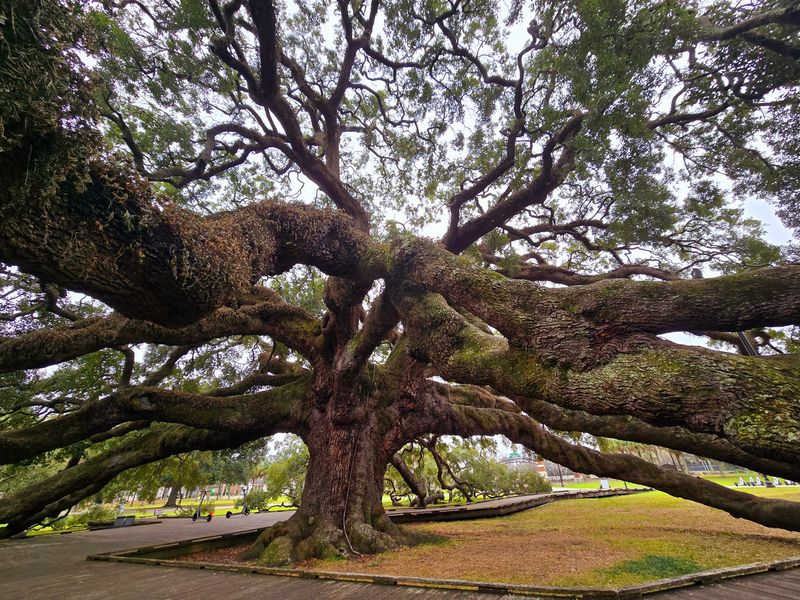
Most parks are built with a playground first and trees second. Jessie Ball DuPont Park flips that idea upside down. The whole place exists to give one tree room to breathe.
You will find the park at 1207 Prudential Drive on Jacksonville’s Southbank, just across the St. Johns River from downtown. It is small, and that is the point. There are no ball fields, no splash pads, and no snack stands competing for your attention.
What you get instead is the Treaty Oak, a southern live oak that many sources estimate to be around 250 years old. The grass, paths, and benches all circle around it like fans around a stage. Everything else is basically a supporting cast.
The park carries the name of Jessie Ball duPont, a well-known philanthropist with deep ties to Jacksonville. Her name on the sign reminds visitors that someone cared enough to protect this land. Without that kind of effort, a parking garage could easily have taken this spot.
Visitors seem to get it right away. The park holds a strong 4.8-star rating on Google from nearly 200 reviews, and the oak tree is by far the most talked-about feature. People call it awesome, magical, and one of the oldest trees they have ever seen.
A quick heads up for planners. Parking is limited, with only a handful of spaces nearby, so many guests keep their visits short to be polite to others waiting. If you can, try a weekday morning when the Southbank traffic is lighter.
You also will not find restrooms here, so plan accordingly, especially with kids. Bring water on hot days, since Florida sun can sneak up on you even near shade. A blanket or folding chairs make the stay more comfortable.
Think of this park as a living museum with one main exhibit. You do not need hours to enjoy it. Twenty minutes under those branches can feel like a real trip somewhere else.
And that is exactly why it works so well.
The Treaty Oak’s Low, Sprawling Limbs Are What Stop Visitors First
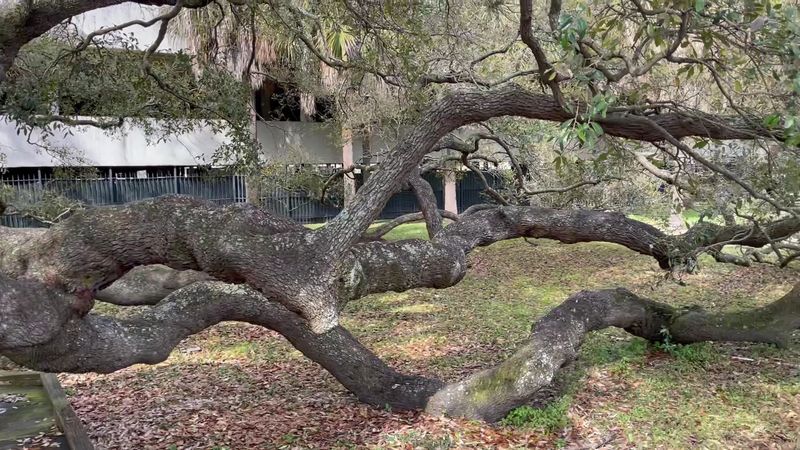
Picture a tree that forgot it was supposed to grow up. That is the Treaty Oak in a nutshell. Its limbs reach sideways, sometimes for what feels like half a block.
First-time visitors usually stop walking about ten steps in. Their heads tilt, their phones come out, and someone says wow. One reviewer described it as sprawling outward like an octopus, and honestly, that is hard to beat.
Some branches dip so low they seem to touch the ground. A few look like they slide underground and pop up again somewhere else. A recent visitor mentioned being amazed at how the branches appear to go into the earth and come out as another tree.
Here is a fun bit of tree science. Live oaks often grow wide instead of tall, especially when they have open space and plenty of sunlight. Heavy limbs can droop over many decades, resting on the soil like a tired giant leaning on its elbows.
Up close, the bark tells its own story. Look for resurrection ferns, which curl up brown when dry and turn bright green after rain. Spanish moss hangs from the branches too, swaying in the river breeze.
Now the important rule. Climbing on the tree is not allowed, even though those low limbs look like a jungle gym. Keeping off the branches protects the bark and roots, so the oak can keep growing for generations.
Kids will still have plenty of fun. Challenge them to follow one branch with their eyes from trunk to tip without losing track. It is harder than it sounds, since the limbs twist and cross like tangled spaghetti.
Photographers, take note. Crouching low and shooting along a branch makes it look endless. Wide lenses or the panorama setting on your phone help capture just how far the canopy reaches.
No matter how many pictures you have seen online, the real thing feels bigger. The limbs simply do not fit in a single frame, and that surprise is half the joy of standing here.
Centuries of Growth Have Given This Live Oak Its Unmistakable Shape
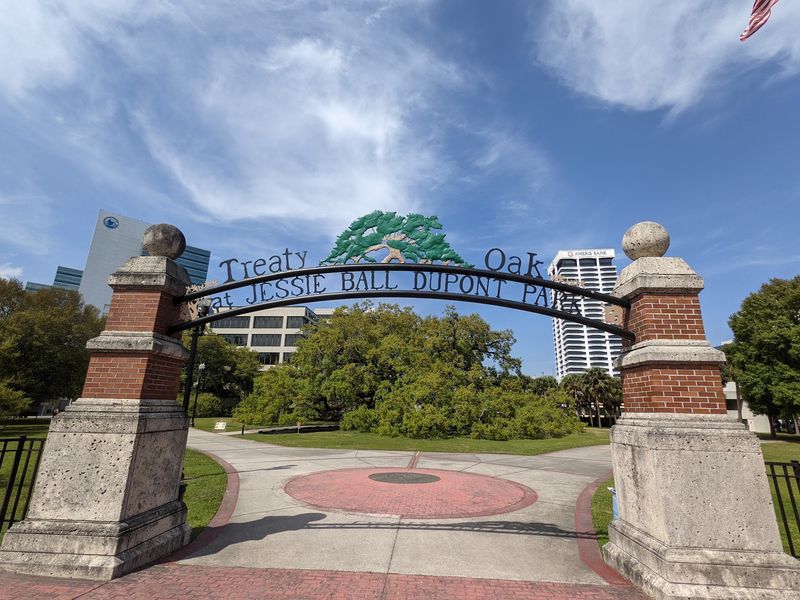
Two hundred fifty years is a long time to stand in one place. If the Treaty Oak is close to that age, it was already growing when Florida was still a frontier. Every bend in its trunk is a record of the seasons it survived.
Ages for old trees are usually estimates, and you will hear different numbers from different people. Some visitors say 200 years, others say 250 or more. What everyone agrees on is that this oak is very, very old.
One reviewer noted the base of the trunk spreads about 25 feet across. Stand next to it and you will feel tiny. Try hugging it with a few friends and see how many people it takes to make it all the way around.
Shape is where age really shows. Young live oaks look fairly neat and round. Old ones, like this, become twisted and wild, with limbs bending toward light and away from storms.
Think about what that means in Florida. Hurricanes, droughts, floods, and freezes have all tested this tree. Each rough year may have nudged a branch here or thickened the trunk there.
Southern live oaks are tough by nature. Their wood is dense and strong, which is one reason they were once prized for building wooden ships. Their wide stance also helps them stay planted when strong winds blow through.
The city has also had a hand in shaping things. Over time, care from arborists and the protection of the park have given the oak space to keep spreading. A tree this size needs a lot of room for its roots, not just its branches.
Walk slowly around the trunk and notice how each side looks different. One angle might seem graceful, another almost spooky. That variety is part of why so many people come back for a second look.
Next time you see a tidy, young oak on a street corner, remember this one. Given a couple centuries, it might turn into something just as wild.
The Tree’s Canopy Creates a Natural Landmark in the Middle of the City
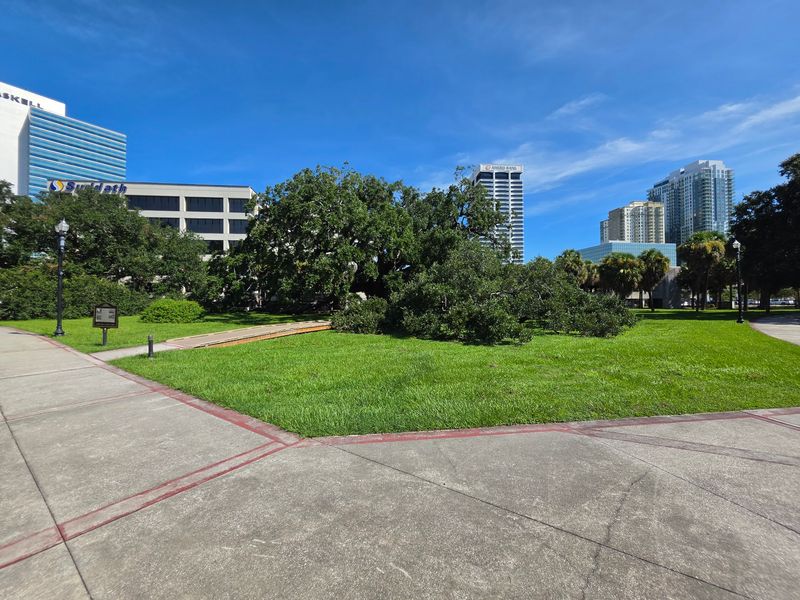
Glass towers rise all around the Southbank, but none of them throw shade quite like this. The Treaty Oak’s canopy forms a leafy roof over much of the park. Step under it and the temperature seems to drop a few degrees.
That shade matters in Jacksonville. Summer afternoons here can get sticky fast, and open sidewalks offer little relief. Under the oak, you get a cool, green pocket that feels almost like a secret room.
Look up and you will see layers. Thick limbs hold smaller branches, which hold clusters of small, glossy leaves. Sunlight slips through in little spots that dance on the grass when the wind moves.
Live oaks keep their leaves most of the year, which is how they earned the name. They drop older leaves and grow new ones in spring, often all at once. So the canopy stays green while many other trees go bare.
Locals often use the tree as a meeting point or a reference spot. Giving directions with the big oak by Prudential Drive works surprisingly well. When a tree becomes part of how people describe the map, you know it is a true landmark.
Here is something to try. Stand at the edge of the park, then walk to the trunk while watching the sky. You will notice the city slowly disappear behind branches until only leaves remain.
Birds and squirrels love this canopy too. Bring a little patience, sit on a bench, and watch the traffic upstairs. You might spot more wildlife than you expected right in the heart of a busy city.
A reviewer once said you forget you are in the city here. That is the canopy doing its job. It blocks noise, softens the skyline, and turns concrete into calm.
For the best light, visit in early morning or late afternoon. Those golden hours make the leaves glow and the shadows stretch long across the lawn.
Jessie Ball DuPont Park Feels Like a Quiet Break From Downtown Jacksonville
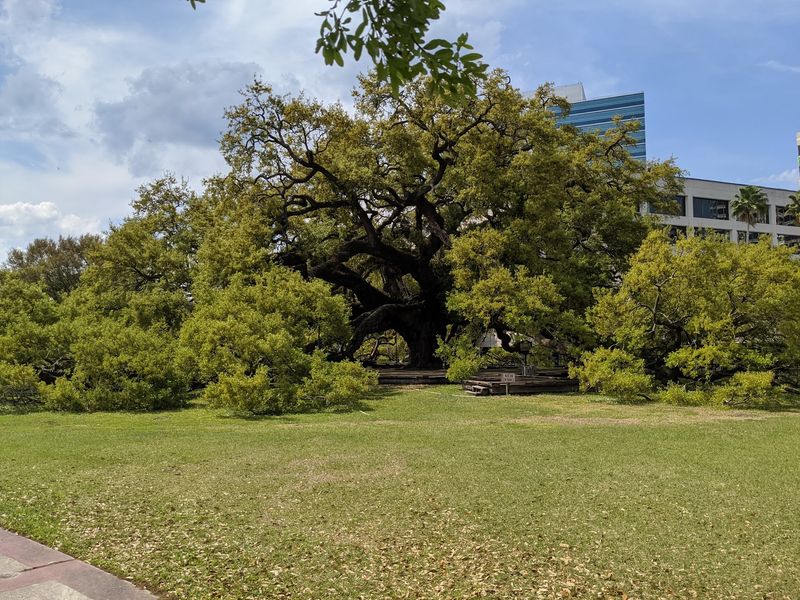
Honk, beep, rumble, then nothing. That is roughly how it feels to leave Southbank traffic and step into this park. The sudden hush catches a lot of people off guard.
Reviewers keep using words like peaceful, serene, and quiet. One even said it felt a little strange to see so few people on a weekend. For anyone craving calm, that is great news.
The park is small, so do not expect long trails or a big loop to walk. Instead, plan for a slow stroll, a few photos, and some sitting time. Benches and open lawn give you places to rest without much fuss.
Bring a book and claim a shady spot. Or pack a simple lunch from a nearby spot and eat under the branches. A couple of folding chairs or a blanket can turn a quick stop into a lazy hour.
A few visitors mention it is not the best place to walk a dog, since space is tight and the focus is the tree. Leave the frisbee at home too. Think quiet picnic, not backyard party.
Office workers on the Southbank have a hidden perk here. A ten-minute lunch break under a centuries-old oak beats staring at a screen any day. Even a short visit can reset a stressful afternoon.
Getting there is easy from downtown, just over the river near the Main Street Bridge area. Parking is the tricky part, with only a few spaces available. Some guests say finding a spot felt like a mystery, so give yourself a little extra time.
If you are visiting from out of town, pair this stop with a walk along the Southbank Riverwalk nearby. The contrast between busy water views and this quiet tree is part of the fun.
Leave nothing behind but footprints. Pack out your trash and keep voices low. That way the calm stays intact for the next person who needs it.
Why This Ancient Oak Has Become One of Jacksonville’s Most Recognizable Natural Sights
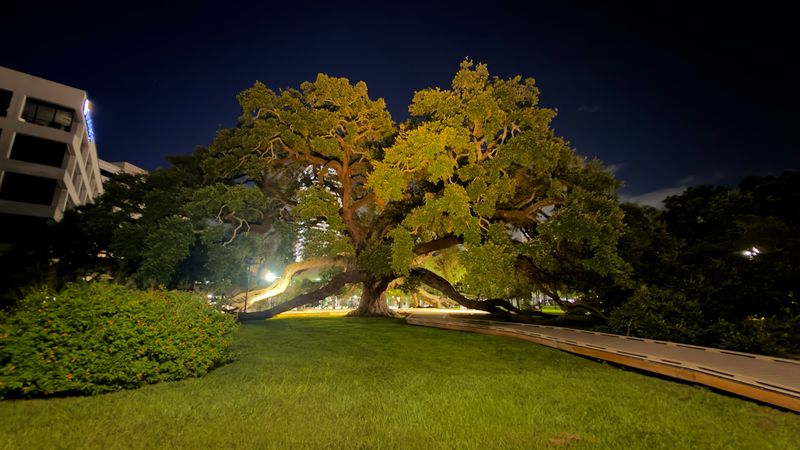
Ask a Jacksonville local to name the city’s most famous tree, and odds are good you will hear Treaty Oak. One reviewer went further and called it the city’s most beautiful landmark. Bold claim, but standing under it makes the case pretty well.
Part of the fame comes from looks. Few trees in an urban area spread this wide or twist this dramatically. People often compare it to the Angel Oak near Charleston, which is high praise in the live oak world.
Photographers have helped too. The park shows up often in family portraits, engagement shoots, and graduation photos. Those curving limbs make a natural frame, no fancy props required.
Weddings happen here as well. Several reviews mention renting the park for ceremonies and special events. If you are dreaming of saying I do under a giant oak, contact Jacksonville Parks and Recreation at 904-630-2489 to ask about reservations.
Then there is the name. Treaty Oak has a ring that sparks curiosity, and stories about its origin have floated around for years. Some tales are more legend than history, so read the signs in the park for the details the city shares.
One reviewer joked that it was named after a backup defensive end for the Jaguars. It was not, of course. But that kind of humor shows how much locals feel the tree belongs to them.
Fame also brought protection. Over the years, community members pushed to save the oak and the land around it. Visitors often say how grateful they are that it survived while the city grew up around it.
Social media keeps the legend alive. Photos of the sprawling limbs travel far, drawing curious visitors from across Florida and beyond. Plenty arrive expecting a nice tree and leave talking about it for days.
When you visit, snap your picture, then put the phone down. The best memory is the feeling of standing beneath something that has watched Jacksonville change for centuries.
A Short Visit Here Offers a Rare Look at Old Florida Still Standing Tall
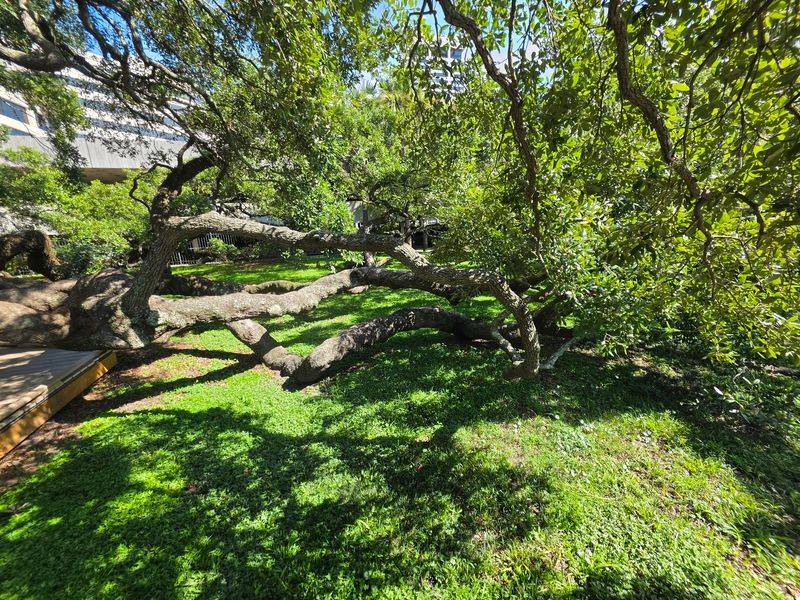
Long before theme parks and highways, much of Florida looked a lot wilder. Huge live oaks shaded riverbanks, dripping with moss and full of birds. The Treaty Oak is a living snapshot of that older world.
So many of those grand trees are gone now, cleared for farms, roads, and buildings. That makes surviving giants like this one feel special. Standing here is a little like opening a time capsule that is still growing.
You do not need a full afternoon to soak it in. A short visit of 20 to 30 minutes works for most people. Walk around the trunk, read the informational signs, and sit for a moment in the shade.
Families can turn the trip into a mini history lesson. Ask kids to imagine what Jacksonville looked like when the tree was a sapling. No skyscrapers, no bridges, maybe just a dirt path and the river nearby.
Bring a sketchbook if you like to draw. Twisting branches are fantastic practice for young artists. Even a quick doodle helps you notice details you might miss in a photo.
Plan around a few practical things. The park has no restrooms and limited parking, so make it one stop in a bigger day out. Nearby Southbank restaurants and the Riverwalk make easy add-ons.
Respect goes a long way here. Stay off the limbs, do not carve or pick at the bark, and keep litter out of the roots. An oak this old deserves gentle visitors.
Many guests say they plan to return, and some already have. One person called it much more amazing in person after a second trip. That says a lot about a park with just one main attraction.
Before you leave, take one last look from the sidewalk. Notice how the city seems to bend around the tree, not the other way around. In a fast-changing state, that kind of staying power is worth a stop.