A Massive 19th-Century Fort Sits Alone On A Florida Island 70 Miles From Key West
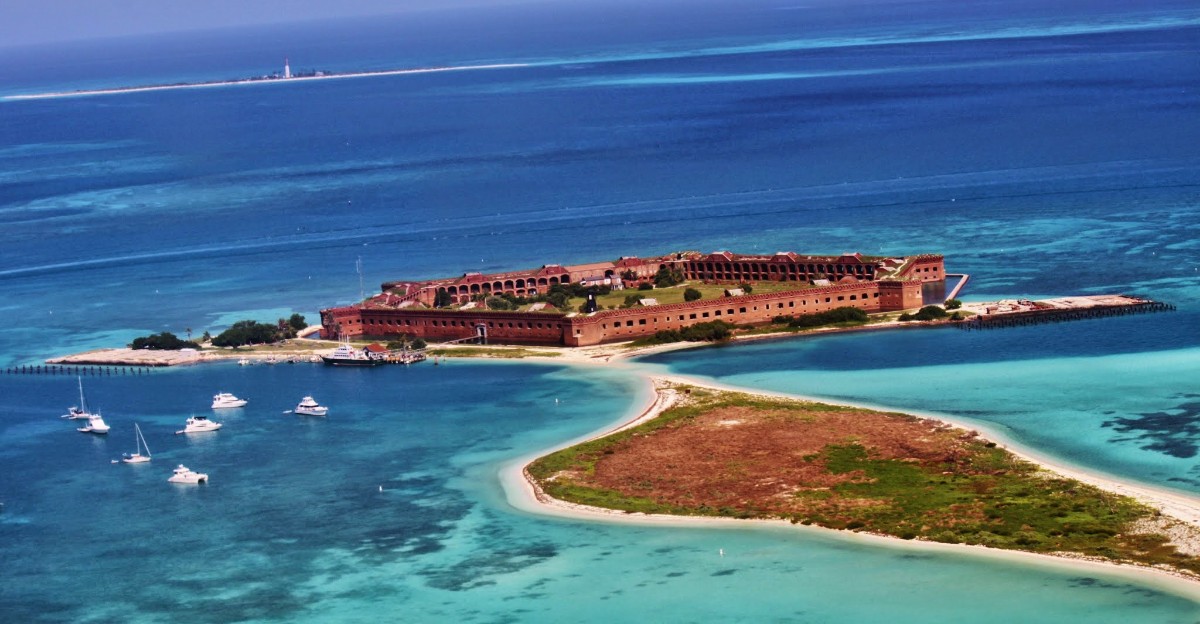
More than 16 million bricks went into one fort that sits on a tiny island with no fresh water. Builders hauled nearly everything across open ocean to make it happen.
I can’t imagine laying brick after brick for decades, surrounded by nothing but blue water. Construction started in 1846 and kept going for about thirty years. Somehow, the fort was never fully finished.
Today, the only way out is by boat or seaplane from the Florida Keys. Once you land, you get arched hallways, a moat full of fish, and a sandy beach next door.
I like how history and snorkeling share the same small patch of land here. Few places let you explore old cannon rooms in the morning and spot coral by lunch. So how does a giant fortress end up this far from everything?
Those 16 Million Bricks Were Shipped In One Boatload At A Time
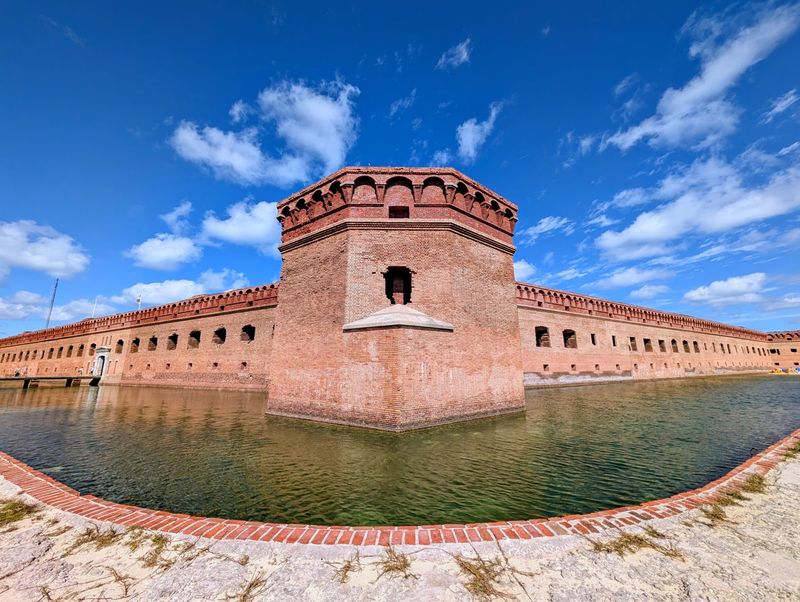
Fort Jefferson is the largest all-masonry fort in the United States. Its walls rise on Garden Key, a small island in Dry Tortugas National Park.
Workers began building in 1846, and the job stretched until about 1875. The fort uses an estimated 16 million bricks, which is a staggering number for a speck of sand.
Nothing useful grew or waited on the island. Bricks, cement, food, and supplies all arrived by ship across open water.
The goal was simple but bold. The United States wanted to guard shipping lanes in the Gulf of Mexico and the Florida Straits.
Engineers planned a six-sided design with three levels of gun rooms. The walls were meant to hold hundreds of cannons, though that full plan never happened.
New weapons with rifled barrels arrived during construction. They made brick forts far less useful, so the fort was never completely finished.
That unfinished story makes the place even more fascinating. You’re looking at a giant plan frozen partway through.
Spend a moment just staring at the walls before you head inside. The scale hits differently once you remember every brick crossed the sea.
Getting There Is Half The Adventure, And Maybe Half Your Day
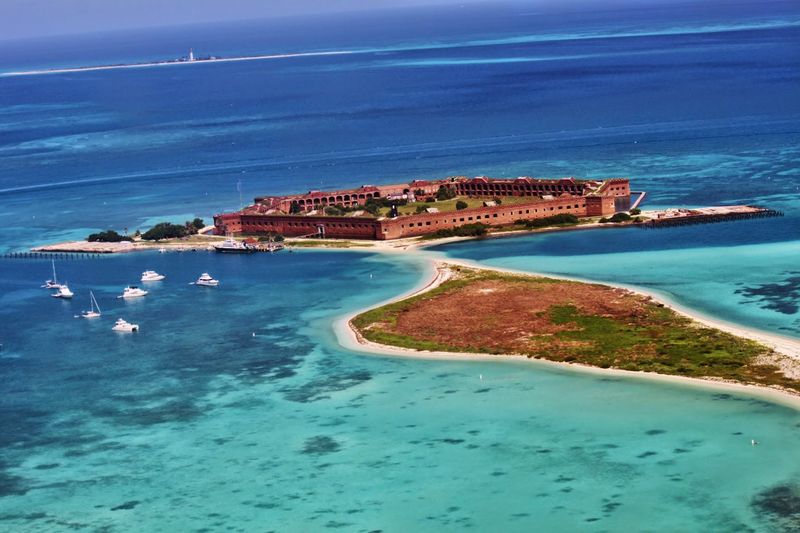
No road reaches this fort. Your choices are a ferry, a seaplane, or a private boat.
The official ferry leaves from Key West and takes roughly two hours or more each way. Most day trips give you several hours on the island before heading back.
Seaplanes cut the travel time way down. The flight also gives you a bird’s-eye look at the fort and the shallow water around it.
The official park address is Fort Jefferson, Dry Tortugas National Park, Key West, FL 33040. Don’t plug that into your car’s GPS expecting a parking lot, though.
Ocean conditions can get choppy out there. If you get seasick easily, pack motion sickness remedies before the trip starts.
Spots on boats and planes can fill up, especially during busy seasons. Booking ahead is a smart move if your Florida vacation has fixed dates.
Private boaters can visit too, but they need to follow park rules and permits. Check the National Park Service guidelines before you set out.
Think of the ride as part of the show. Watching the fort appear on the horizon is a moment worth waiting for.
Wander The Arched Hallways At Your Own Pace
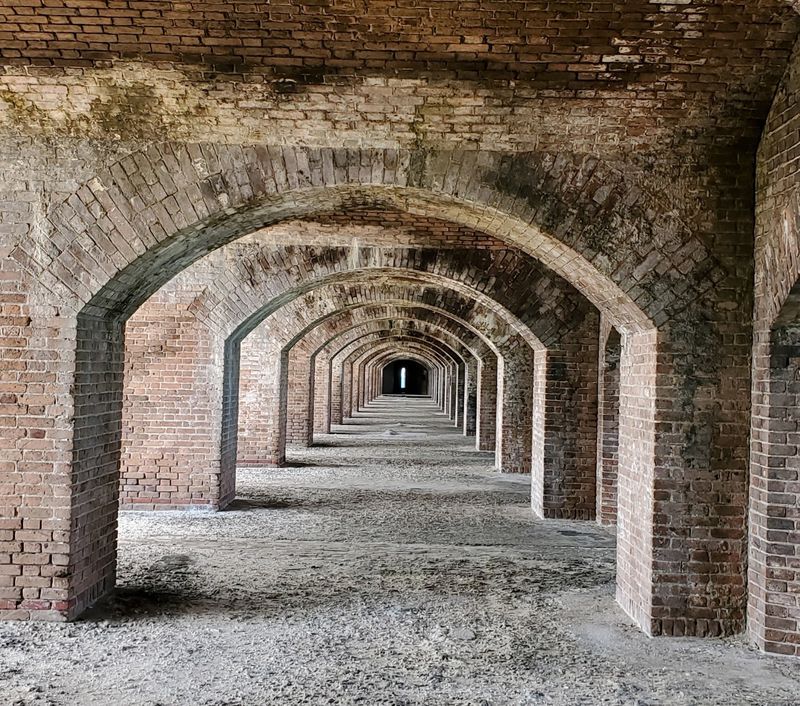
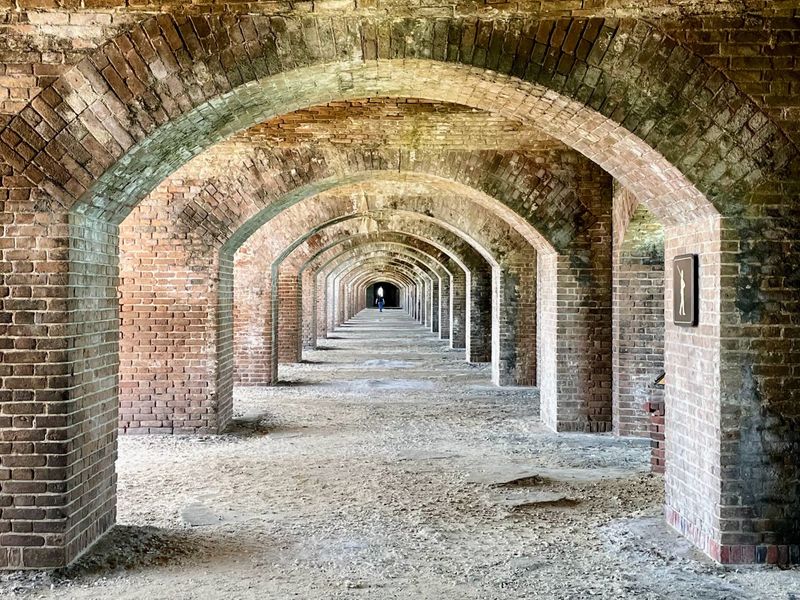
Endless brick arches line the inside of the fort. They repeat so many times that photos can look almost like a mirror trick.
Those arched rooms are called casemates. They were built to hold cannons and protect soldiers behind thick walls.
A marked self-guided route leads you through the fort. Signs along the way explain what each area was used for, so you never feel lost in the story.
Ranger and guided tours may also be offered, depending on the day. They add extra history if you like hearing details from an expert.
Some sections can be closed for safety and preservation work. Saltwater and storms are tough on old bricks, so respect any barriers you see.
Stairways connect the different levels of the fort. Wear comfy shoes with good grip, because sand and old steps don’t mix well with flip-flops.
The fort offers welcome shade from the strong sun. That’s handy, since the rest of the island has very little cover.
Take your time in the quieter corners. The echo of footsteps under those arches is part of the fun.
Head Up Top For Views That Stretch Forever
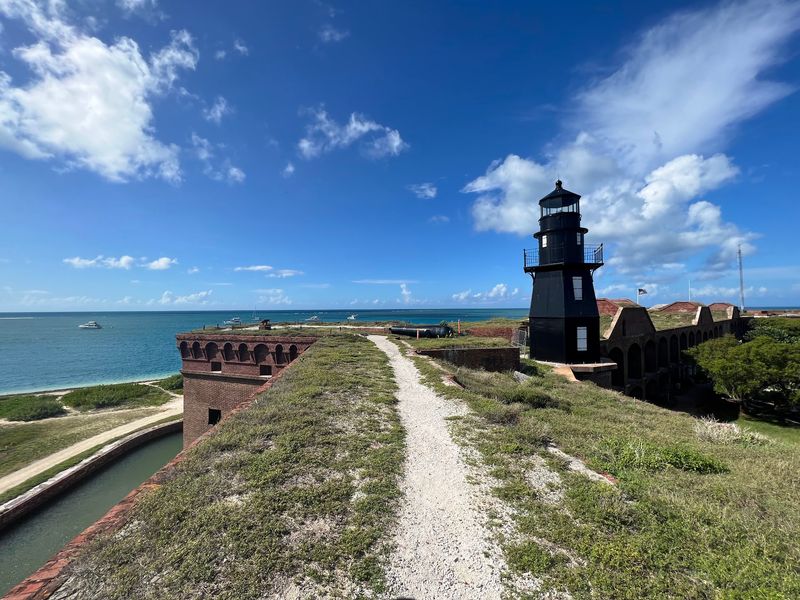
Climb to the top level, and the whole Dry Tortugas spreads out around you. Shades of blue and green water seem to go on with no end.
From up there, you can see the moat circling the fort below. Nearby keys and sandbars dot the water in the distance.
The small Garden Key Harbor Light also sits on the fort’s walls. It’s a fun landmark to spot while you walk the top.
Here’s a heads-up for parents. The upper areas have open edges, so keep a close eye on kids who love to run.
Anyone nervous about heights should move slowly. Stay toward the inside and enjoy the views without rushing.
Bring a hat and sunscreen for this part. There’s barely any shade on the upper level, and the Florida sun doesn’t take breaks.
Photographers will love the angles from the top. The contrast of red brick against bright water makes almost every shot pop.
Try to plan this climb early in your visit. You’ll get your bearings and know exactly where to swim later.
A Famous Prisoner Once Lived Behind These Walls
During the Civil War era, the fort served as a Union military prison. Later, its most famous prisoner arrived.
Dr. Samuel Mudd was sent here after the Lincoln assassination. He had treated John Wilkes Booth’s broken leg and was convicted as a conspirator.
His story took a surprising turn in 1867. A yellow fever outbreak hit the fort, and Mudd helped care for sick soldiers and prisoners.
His medical work earned him support from people at the fort. President Andrew Johnson pardoned him in 1869.
You can learn more about him through signs and exhibits around the fort. His story shows how complicated history can be.
The Army eventually left the fort in 1874. Hurricanes and the yellow fever outbreaks made life there very hard.
Later, the fort became a national monument in 1935. In 1992, the area became Dry Tortugas National Park.
Knowing this history changes how the hallways feel. You’re not just walking past bricks, but through real chapters of American life.
Bring A Snorkel, Because The Moat Is Full Of Surprises
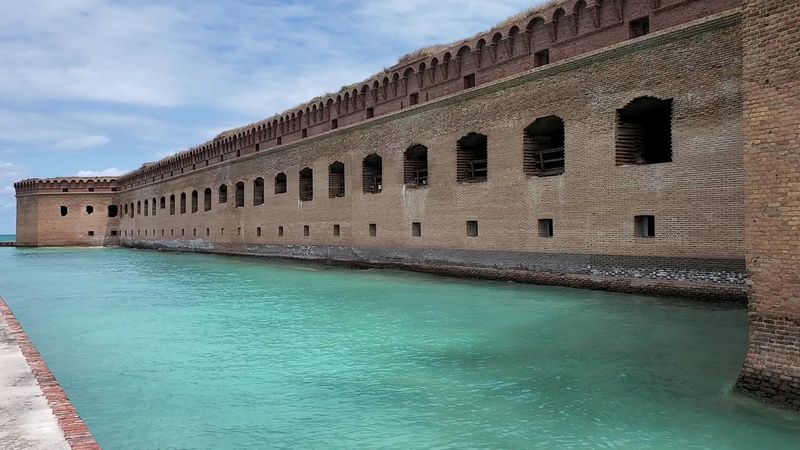
Most moats were built to keep people out. Here, visitors can swim and snorkel outside the moat wall from designated beach areas.
The outer moat wall is a popular snorkeling route, although some sections are currently closed for repair, so visitors should follow posted access restrictions.
Another favorite area is around the old coal dock pilings. Those posts give fish lots of places to hang out.
The water near the fort is often shallow and calm. That makes it friendly for beginners, though conditions always depend on the weather.
Pack your own mask, snorkel, and fins if you can. Ferry trips may provide gear, but it’s best to check before you go.
Give barracuda and other wildlife plenty of space. Don’t touch coral either, since it’s alive and easily damaged.
Swim only in permitted areas and keep an eye on currents. Swimming with a buddy is always smart out here.
After the history lesson, the water feels like a reward. Few forts let you finish your tour face-down with a snorkel.
Seabirds And Sea Turtles Run This Neighborhood
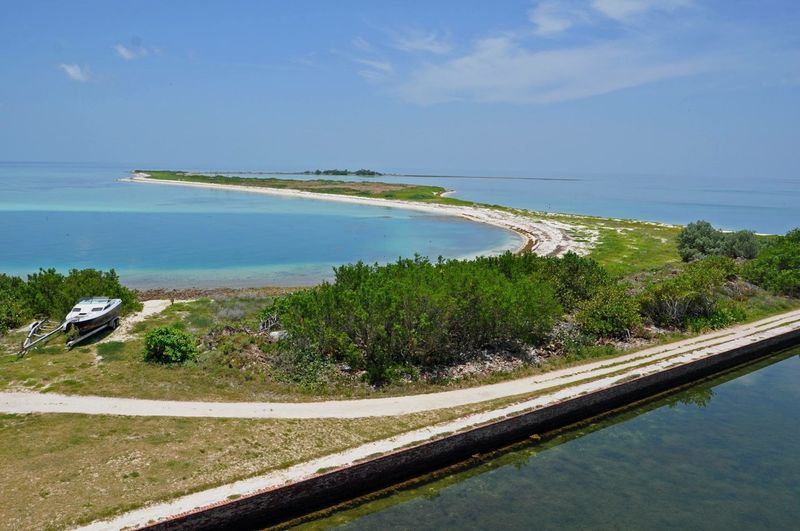
Bird lovers, get your binoculars ready. Dry Tortugas is a key stop for many migrating birds.
Nearby Bush Key hosts a big seasonal nesting colony of sooty terns and brown noddies. Magnificent frigatebirds also soar through the area.
Bush Key may close seasonally for nesting birds, although most of the island is currently open with some protected areas still closed. You can still watch the action from Garden Key and the fort walls.
Spring migration can bring many colorful songbirds through the islands. For tired travelers flying over the Gulf, this spot is a welcome rest stop.
Sea turtles use the park’s beaches for nesting too. Rangers ask visitors to keep distance and follow posted rules.
Under the water, the park protects coral reefs and many fish. Much of the area is closed to fishing, which helps marine life thrive.
Keep food secure and never feed wildlife. Small actions help this remote ecosystem stay healthy.
The fort may be the headliner. Still, the feathered and finned locals put on a pretty great show of their own.
Stay The Night And Get The Island Mostly To Yourself
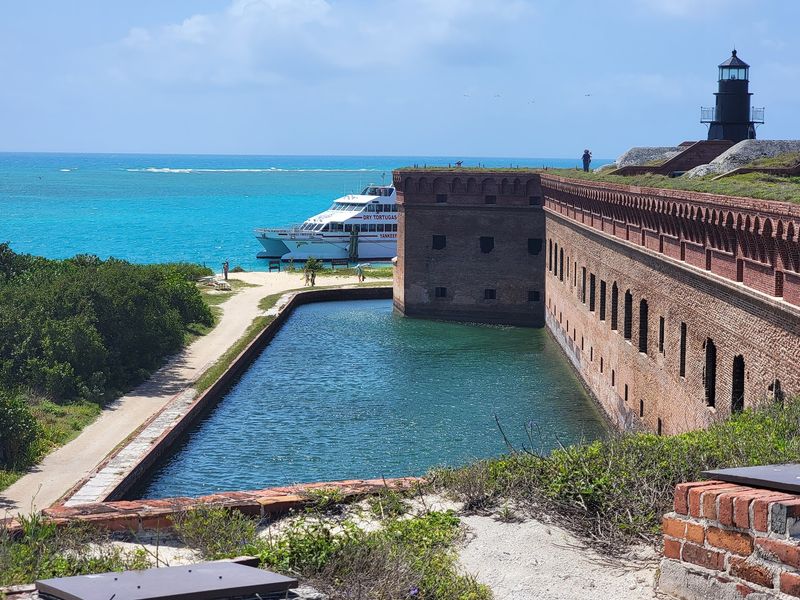
When the last ferry leaves, the island gets very quiet. Campers are among the few people left behind.
Garden Key has a small, primitive campground near the fort. Sites are limited, so planning ahead really matters.
You must bring everything you need. That includes fresh water, food, fuel, and supplies for the whole stay.
Everything you bring must also leave with you. Pack out your trash and keep the island clean.
Campers using the ferry must follow its rules for gear and weight. Check those details carefully before you start packing.
Nights far from city lights can offer impressive star views. Weather can change quickly though, so pack for wind and rain.
Sunrise and sunset are special times to explore the shoreline. Mornings also give you calm moments before day visitors arrive.
Camping takes extra effort, no doubt about it. Yet a night next to a giant brick fort in the middle of the sea is hard to top.
Pack Smart So Nothing Spoils Your Big Fort Day
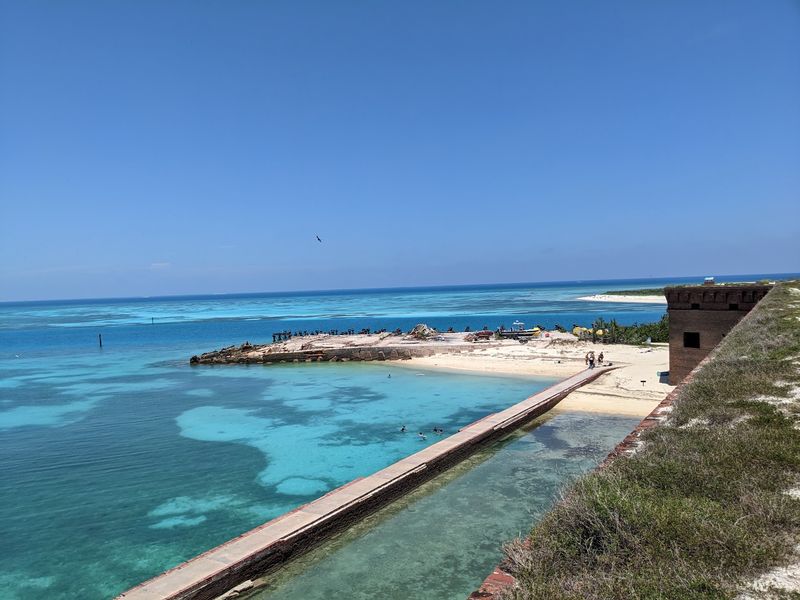
Sunscreen might be the most valuable item in your bag. Shade is scarce outside the fort walls.
Facilities on Garden Key are limited. Plan ahead, because you can’t run to a store once you land.
Bring plenty of water, especially if you arrive by private boat or seaplane. Ferry passengers should check what meals and drinks their trip includes.
Pack a swimsuit, towel, and snorkel gear. A hat and sunglasses will help you during long stretches in bright sun.
The visitor center is inside the fort. Stop by for exhibits, park info, and passport stamps if you collect them.
Kids can also earn a Junior Ranger badge. It’s a fun way to keep young explorers curious about what they see.
Remember the park’s entrance fee. Many ferry and seaplane tickets include it, but double-check your booking.
Fort Jefferson rewards a little preparation. Arrive ready, and your Florida adventure can be all history, sunshine, and blue water.