All 50 States Are Represented in the Stones of This Towering Florida Landmark
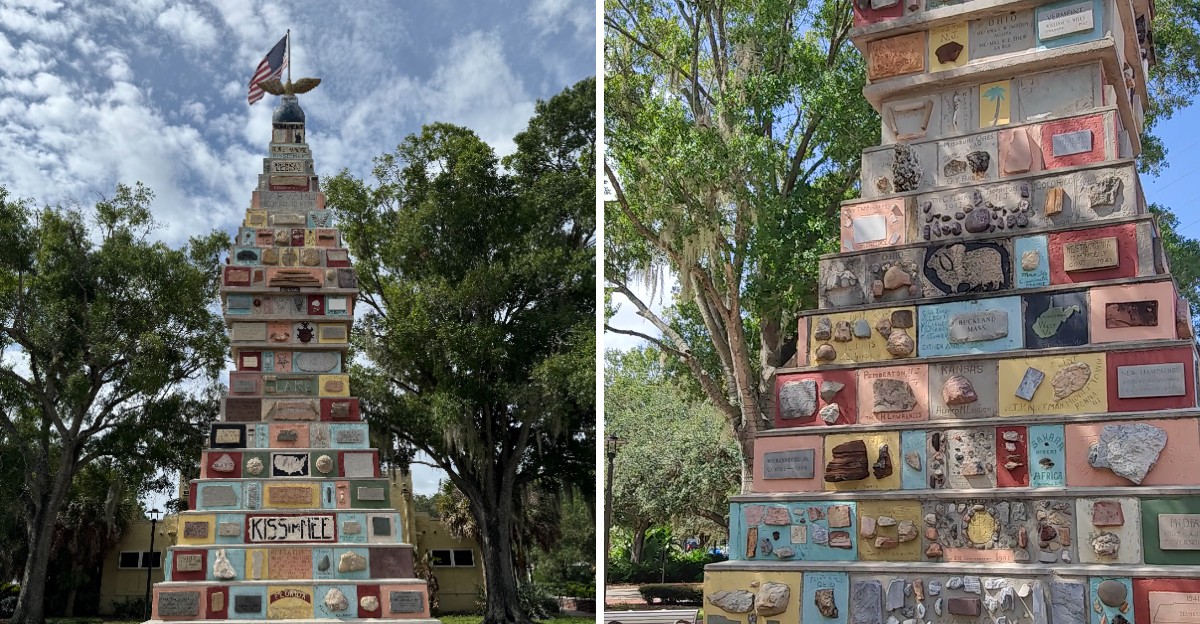
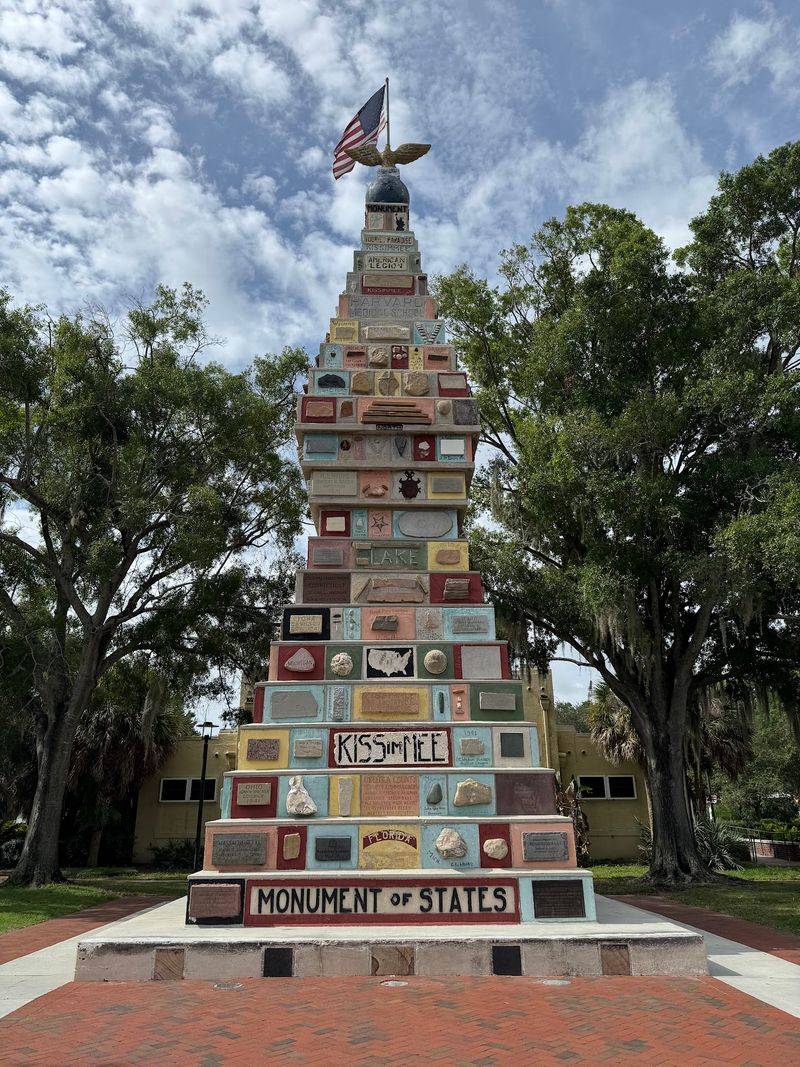
Standing tall in downtown Kissimmee, a peculiar pyramid-shaped tower holds pieces of America’s story in every stone. Built in 1943 during World War II, the Monument of States was created as a symbol of national unity, with rocks shipped from all 50 states and even several foreign countries. This quirky roadside attraction weighs roughly 100,000 pounds and reaches about 50 feet high, topped with an American eagle that watches over Lake Tohopekaliga.
Free to visit any time of day or night, this historic landmark offers a unique glimpse into 1940s patriotism and Florida’s colorful roadside attraction heritage.
A Towering Tribute Born from Pearl Harbor
When Japanese forces attacked Pearl Harbor on December 7, 1941, Americans across the country felt the shock waves of war reaching their shores. Dr. Charles Bressler-Pettis, president of the Kissimmee All-States Tourist Club, decided his small Florida town needed to do something meaningful to show solidarity. He envisioned a monument that would physically bring together pieces of every state in the union.
Construction began in 1943, and the community rallied behind the project with surprising enthusiasm. Letters were sent to governors, civic groups, and everyday citizens across America requesting authentic stones from their home states. The response was overwhelming, with rocks arriving by mail from coast to coast, each one carrying a piece of its state’s geological identity.
The finished structure stands as a step pyramid, reinforced with three and a half tons of steel rails to support its massive weight. An American eagle crowns the top, while a flagpole rises even higher, visible from blocks away. The monument wasn’t just about the stones themselves but about the spirit of cooperation during one of America’s darkest hours.
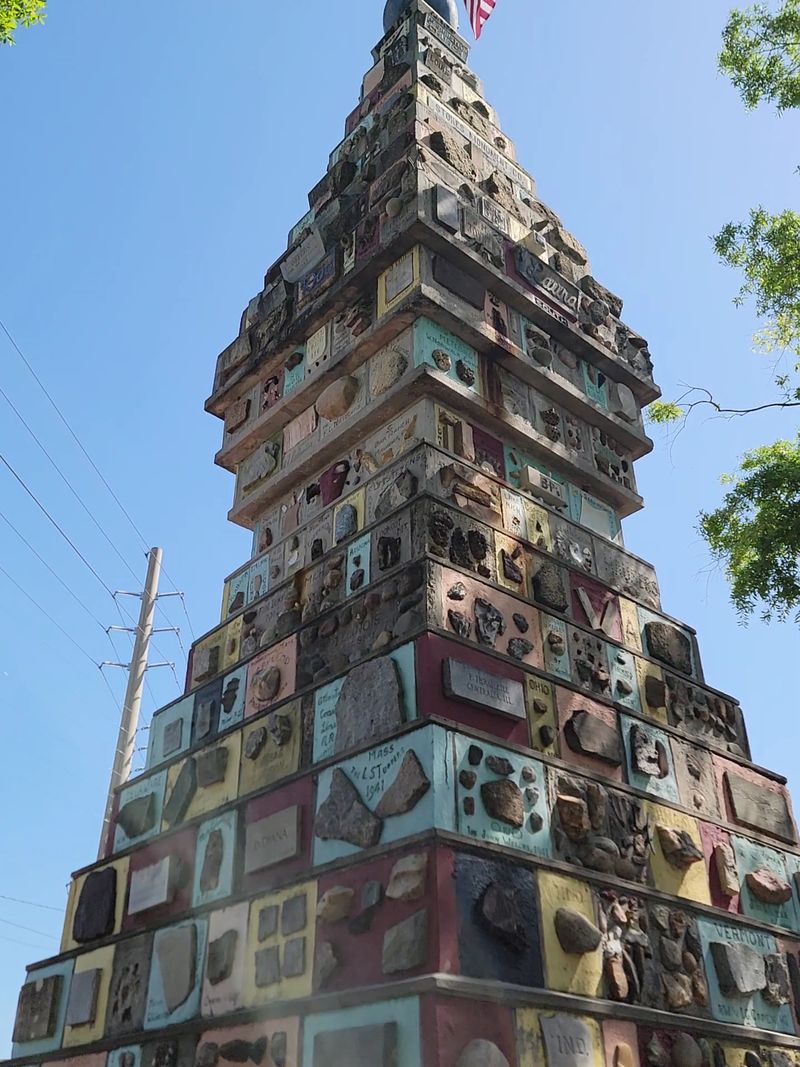
Walking around the base today, you can still feel that wartime energy frozen in concrete and stone. Some rocks are smooth river stones, others jagged mountain fragments. Each one represents a state’s contribution to a unified vision, a physical reminder that despite regional differences, Americans stood together when it mattered most.
The monument was restored in 1993, and a time capsule was embedded during the renovation, scheduled to be opened in 2043. In 2015, it earned designation as a National Historic Monument, cementing its place in American roadside history. This isn’t just a pile of rocks but a snapshot of 1940s patriotism, still standing strong eight decades later.
Hunting for All 50 States in Stone
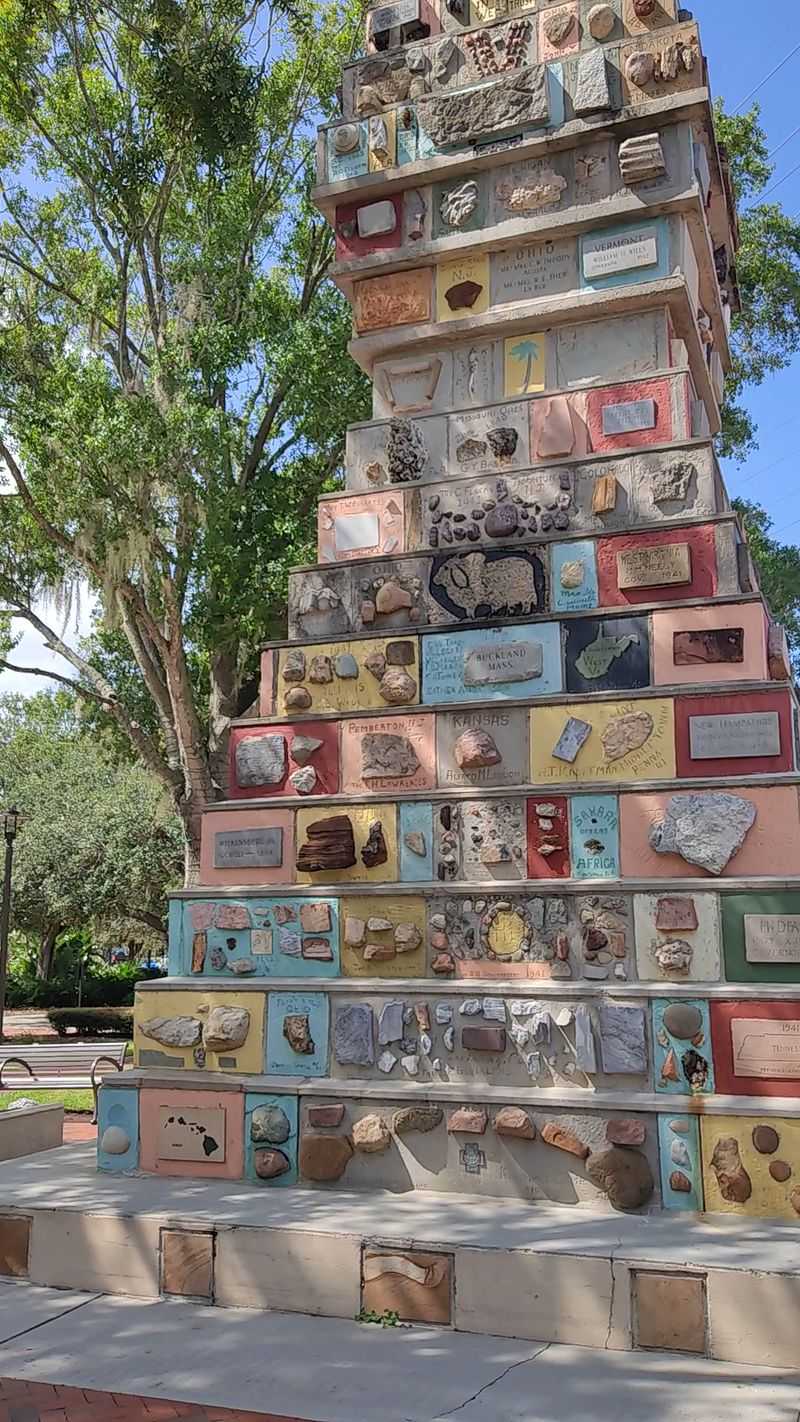
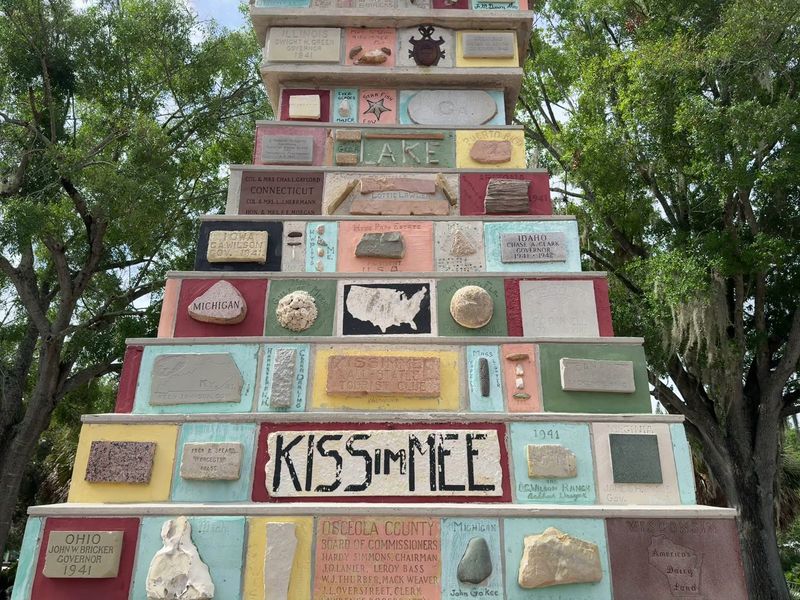
One of the most entertaining parts of visiting the Monument of States is turning your trip into a scavenger hunt. Each of the 50 states contributed a stone, and they’re embedded throughout the monument’s four sides, labeled with the state’s name. Some are easy to spot at eye level, while others require craning your neck or circling the structure multiple times.
The stones themselves tell fascinating geological stories. Arizona might have sent desert sandstone with warm red hues, while Maine contributed granite with flecks of mica that catch the sunlight. Vermont’s marble contrasts sharply with Wyoming’s rugged sedimentary rock, creating a patchwork of textures and colors that reflects America’s diverse landscapes.
But here’s where it gets tricky: after more than 80 years of Florida weather, some stones have weathered significantly. Hurricane winds, tropical downpours, and relentless sunshine have faded labels and even caused a few stones to fall out over the decades. Several visitors have noted in reviews that certain states are harder to identify than others, adding an extra challenge to the hunt.
Bring your camera and make it a game with kids or friends. Can you find your home state? What about the hardest-to-reach stone near the top?
The monument also includes contributions from foreign countries like Canada, Cuba, and even Africa, adding an international twist to this American landmark.
The hunt becomes more than just a visual search when you start thinking about the logistics. Imagine the effort in 1943 to coordinate shipments from 50 states during wartime, when resources were scarce and mail service was slower. Each stone represents not just a place but the people who cared enough to send a piece of their homeland to a small Florida town they’d probably never visit.
The Lakefront Setting and Surrounding Park
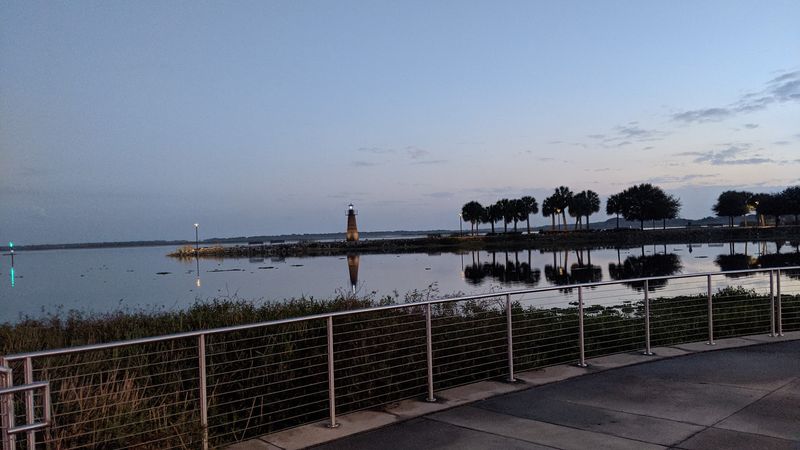
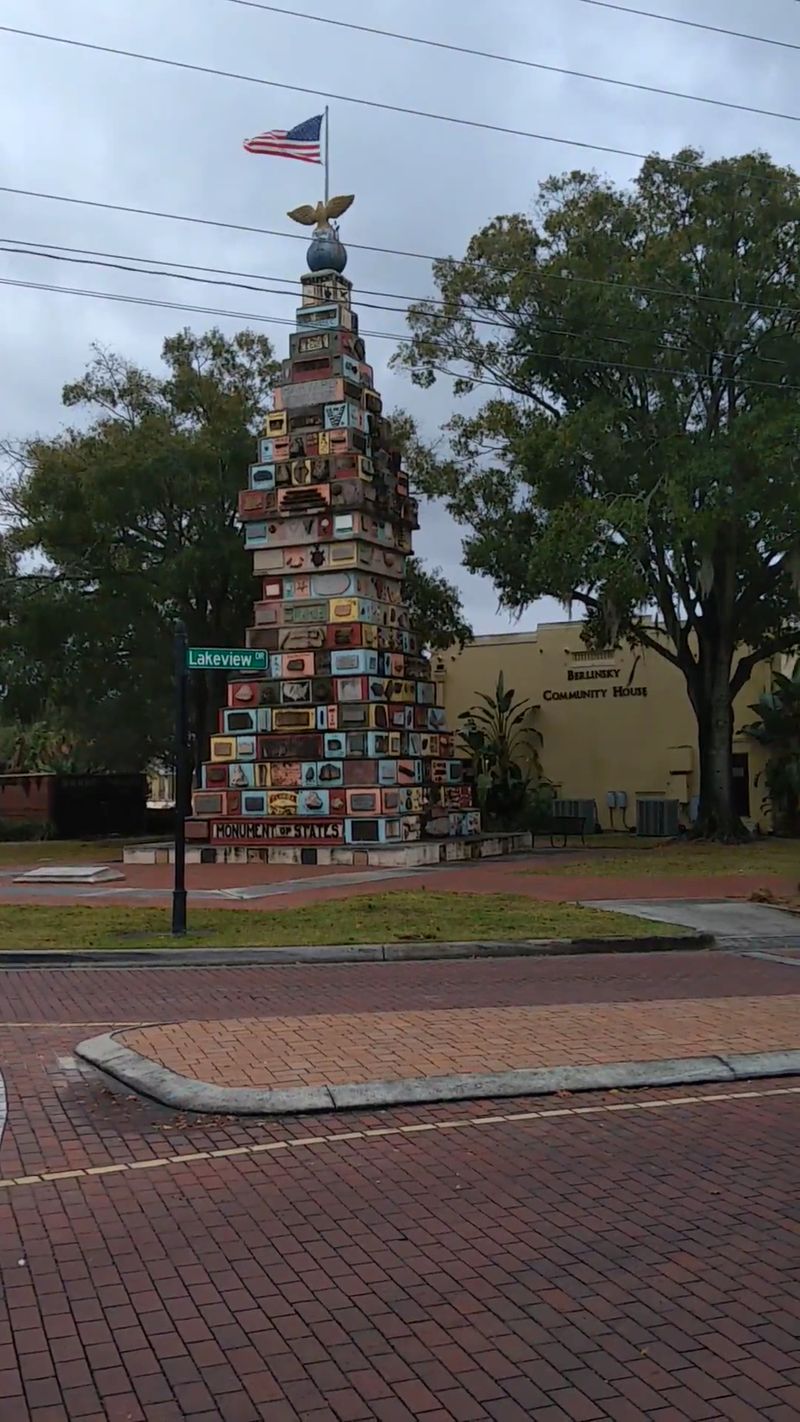
The Monument of States doesn’t stand alone in some random parking lot. It anchors a beautiful lakefront park that stretches along the shores of Lake Tohopekaliga, one of Central Florida’s most scenic bodies of water. Shady oak trees draped with Spanish moss provide natural canopies over benches where visitors can sit and contemplate the monument or simply enjoy the breeze off the lake.
The park features picnic areas with tables and grills, making it a popular spot for family gatherings and birthday parties. A long boardwalk extends along the waterfront, perfect for morning walks or evening strolls when the Florida sun isn’t quite so intense. Cyclists and skaters also use the paved paths that wind through the open green spaces.
Lake Toho, as locals call it, is famous for bass fishing and wildlife watching. From the park, you might spot herons stalking the shallows, ibises probing the grass, or even an alligator sunning itself on the opposite shore. The lake’s presence adds a peaceful dimension to the monument visit, transforming what could be a quick photo stop into a longer, more relaxing experience.
Nearby, you’ll find the Kissimmee Civic Center and the public library, both within easy walking distance. Free parking is plentiful, which is a pleasant surprise in tourist-heavy Central Florida. The area is well-maintained and family-friendly, though like many urban parks, it does see some homeless individuals using the public spaces.
The combination of history, nature, and community space makes this more than just a monument visit. You can easily spend an hour or two here, especially if you pack a lunch or plan to explore the lakefront trails. It’s one of those rare spots where a quirky roadside attraction sits within a genuinely pleasant public park, giving you multiple reasons to linger beyond the initial Instagram shot.
Quirky Roadside Americana at Its Finest
Before Disney transformed Central Florida into a theme park empire, the region thrived on quirky roadside attractions that lured travelers off the highway. The Monument of States represents that golden era of American road trips when families would stop at alligator farms, orange juice stands, and oddball monuments just to break up the monotony of driving.
This monument fits perfectly into the tradition of roadside Americana, alongside giant dinosaurs, oversized fruit sculptures, and mystery houses. What makes it special is its genuine historical purpose rather than pure commercial gimmickry. It wasn’t built to sell tickets or souvenirs but to unite a nation during wartime, which gives it deeper resonance than many similar attractions.
Today’s visitors appreciate that authenticity. Several reviews mention loving the quirky nature of the site, the fact that it’s free, and the nostalgic connection to old Florida before corporate tourism took over. There’s something refreshing about a monument that asks nothing of you except a few minutes of your time and perhaps a moment of reflection.
The structure itself is undeniably odd when you first see it. A pyramid in Florida? Topped with an eagle?
Made from random rocks? It’s the kind of thing that makes you pull over and investigate, which was probably part of its original appeal. In the 1940s and 50s, when U.S.
Highway 17 ran through downtown Kissimmee, this monument would have been impossible to miss.
Modern travelers hunting for Instagram-worthy stops or unusual historical sites will find the Monument of States delivers on both fronts. It photographs well from multiple angles, and the story behind it provides content that goes beyond a simple vacation snapshot. In an age of manufactured experiences and curated attractions, this humble pyramid offers something genuinely different, a piece of sincere wartime sentiment preserved in stone and steel for anyone curious enough to stop and look.
Open 24 Hours and Always Free
In a state where nearly every attraction seems to come with an admission price, parking fee, or some other cost, the Monument of States stands as a refreshing exception. It’s open 24 hours a day, seven days a week, and admission is completely free. No gates, no tickets, no surprise charges when you arrive.
This accessibility makes it perfect for spontaneous visits. Driving through Kissimmee late at night and need to stretch your legs? Stop by.
Early morning runner looking for an interesting route? The monument and surrounding park are waiting. Traveling on a tight budget but still want to experience local history?
This is your spot.
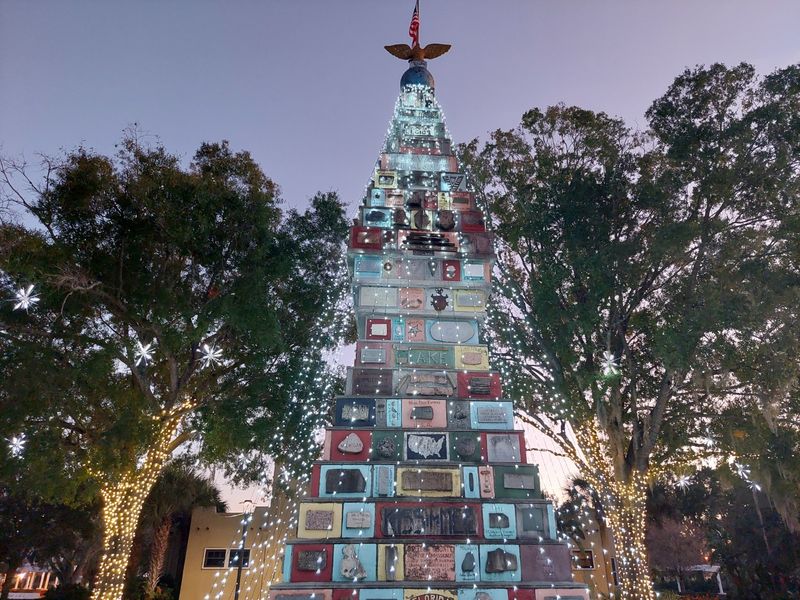
The 24-hour access also means you can visit during different lighting conditions. Early morning light creates long shadows across the stones, while late afternoon sun brings out the warm colors in the rocks. Some visitors even stop by at night when the monument is subtly lit, creating an entirely different atmosphere than a midday visit.
Parking is equally stress-free, with ample free spaces along Monument Avenue and in the adjacent park lots. You won’t circle endlessly looking for a spot or feed quarters into a meter. Just pull up, park, and walk over.
For families traveling with multiple kids or elderly relatives, this ease of access removes common barriers that might otherwise discourage a quick stop.
The no-cost, always-open model reflects the monument’s original community spirit. It was built by and for the people, not as a commercial venture. That philosophy continues today, maintained by the City of Kissimmee as a public historical landmark.
The city deserves credit for preserving this piece of history and keeping it accessible to everyone, regardless of when they visit or how much money they have to spend.
Several reviews specifically praise the free admission and convenient hours, noting that in the expensive Orlando-Kissimmee tourist corridor, finding quality free attractions can be challenging. This monument proves that meaningful experiences don’t always require a price tag.
The 1993 Restoration and 2043 Time Capsule
By the early 1990s, five decades of Florida weather had taken its toll on the Monument of States. Stones had loosened, labels had faded, and the structure needed significant attention to preserve it for future generations. In 1993, the community organized a major restoration project that not only repaired the monument but added a new layer to its story.
During the restoration, workers carefully documented each stone, replaced missing pieces where possible, and reinforced the internal steel structure. They cleaned decades of grime and weathering from the surfaces, revealing the original colors and textures of the stones. The American eagle on top received attention as well, ensuring it would continue watching over the monument for decades to come.
The most intriguing addition was a time capsule embedded within the monument during the 1993 work. Sealed and scheduled to be opened in 2043, exactly 50 years after the restoration and 100 years after the original construction, this capsule contains items and messages from 1990s Kissimmee. What did they include?
That remains a mystery until the designated opening date.
Time capsules create a unique connection between past, present, and future. The people who sealed it in 1993 won’t be around to see it opened, just as the 1943 builders never witnessed the 1993 restoration. The 2043 opening will occur in a world none of us can fully imagine, yet the monument and its stones will still be standing, connecting generations across a century.
The restoration’s success led to another milestone in 2015 when the Monument of States received designation as a National Historic Monument. This official recognition elevated its status from local curiosity to nationally significant landmark, ensuring federal attention to its preservation and placing it on the National Register of Historic Places.
These preservation efforts demonstrate that communities value their quirky history as much as their grand monuments. The Monument of States isn’t the Lincoln Memorial or the Statue of Liberty, but it matters to Kissimmee and to the broader story of American unity during World War II, and that’s worth protecting.
Making the Most of Your Visit
Planning a visit to the Monument of States takes minimal effort, but a few tips can enhance your experience. First, bring water and sunscreen because Florida sun is no joke, even in winter months. The monument sits in an open area with some shade from surrounding trees, but you’ll be walking around in direct sunlight while examining the stones.
Wear comfortable walking shoes if you plan to explore the surrounding park and lakefront areas. The terrain is flat and paved, making it accessible for strollers and wheelchairs, but you might cover more ground than expected once you start following the boardwalk or checking out the various park amenities. Early morning or late afternoon visits offer the most comfortable temperatures, especially during summer.
Photography enthusiasts should consider the lighting carefully. Midday sun creates harsh shadows on the stones, making labels harder to read in photos. Morning or late afternoon provides softer, more flattering light that brings out the textures and colors of the different rocks.
If you’re serious about getting great shots, visit at different times to see how the light changes the monument’s appearance.
Combine your monument visit with other downtown Kissimmee attractions. Several reviews mention nearby restaurants worth trying, including Big John’s Rocking BBQ, which serves breakfast items like brisket omelets. The downtown area has been revitalized in recent years with shops, cafes, and cultural sites within walking distance.
If you’re traveling with kids, turn the visit into an educational game. Challenge them to find specific states, identify different rock types, or count how many foreign countries are represented. The monument works well as a short stop during a longer Florida road trip, breaking up drive time between major attractions while offering something genuinely different from theme parks and beaches.
Don’t rush through your visit. Yes, you can snap a quick photo and leave in five minutes, but spending 30 minutes to an hour allows you to read the stones carefully, enjoy the lakefront setting, and appreciate the history behind this unusual landmark. It’s one of those places that rewards slower, more thoughtful exploration rather than a hurried drive-by.