Almost Nobody Knows About This Remarkably Weird Pirate Museum in Florida
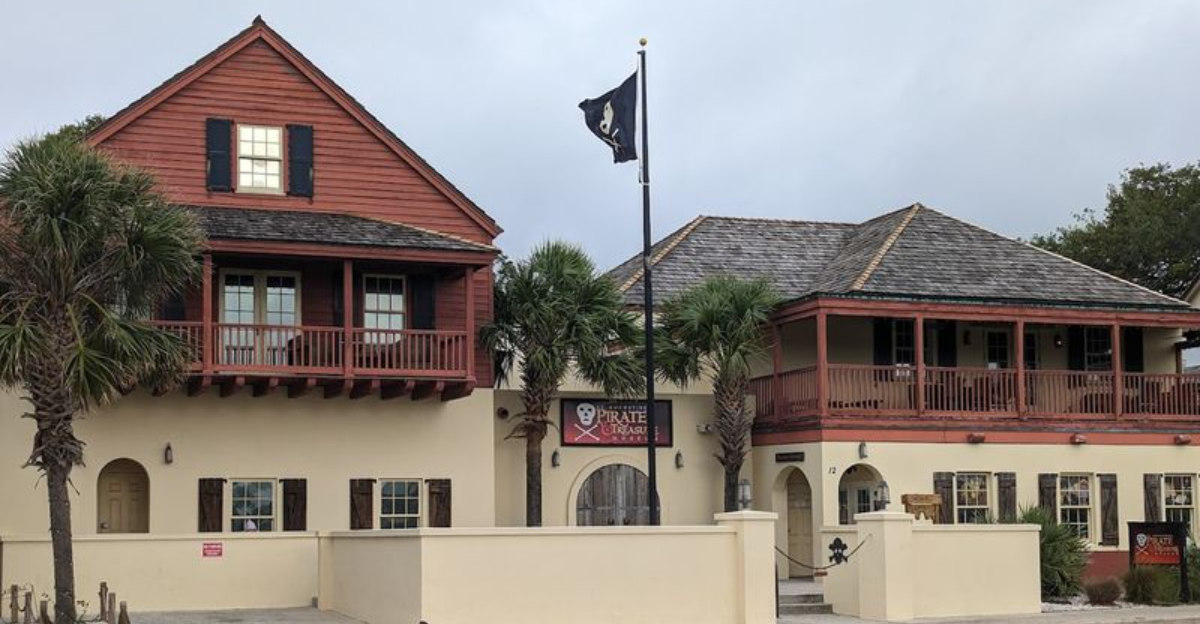
Tucked away on Castillo Drive in historic St. Augustine sits a museum so packed with genuine pirate artifacts and strange treasures that most visitors can’t believe it’s real. The St. Augustine Pirate & Treasure Museum holds the world’s largest collection of authentic pirate relics, including the only surviving pirate treasure chest on Earth and a piece of Blackbeard’s actual ship.
While tourists flock to the city’s famous fort and old streets, this quirky spot flies under the radar despite housing some of the most incredible pieces of Golden Age piracy you’ll find anywhere.
Real Pirate Treasure Chest That Survived 300 Years
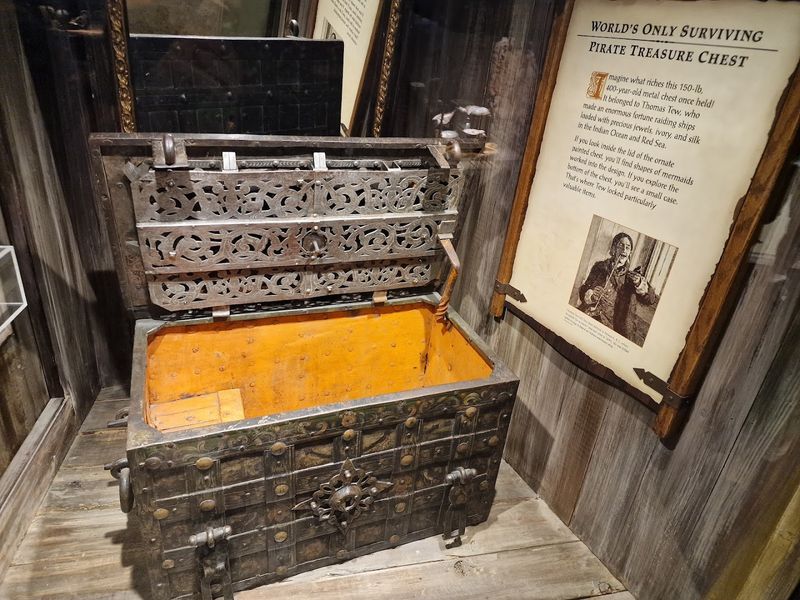
Walking past glass cases filled with rusty cutlasses and faded maps, you’ll suddenly come face-to-face with something that shouldn’t exist anymore. The museum proudly displays the last remaining authentic pirate treasure chest in the world, a genuine artifact from the Golden Age of Piracy that somehow survived three centuries of rot, salt, and time.
This isn’t some Hollywood prop or clever reproduction. The chest actually held pirate plunder back when Blackbeard sailed the Caribbean and Port Royal was the wickedest city on Earth.
You can see the original iron bands, the hand-forged lock mechanisms, and the wear patterns from being dragged across ship decks and buried in sandy beaches.
Museum owner Pat Croce spent years tracking down this piece through private collections and auction houses. The chest sits in a climate-controlled case now, but standing in front of it feels like touching history with your eyes.
Kids press their noses to the glass imagining doubloons and jewels inside, while adults marvel at the craftsmanship of 18th-century metalwork.
What makes this chest particularly fascinating is thinking about whose hands touched it last. Some nameless pirate sealed this box shut, maybe hiding his share of a Spanish galleon’s cargo or stashing coins before a raid went wrong.
The wood grain tells stories the history books never recorded.
Visitors often spend ten minutes just staring at this single exhibit. The museum staff jokes that people treat it like a religious relic, and honestly, for pirate enthusiasts, it basically is.
Every scratch and dent represents an adventure we’ll never fully know.
The chest proves that pirate treasure wasn’t just legend and tall tales. Real people really did bury their loot in real boxes, and this survivor stands as physical proof.
Seeing it in person beats any movie scene hands down, because this chest actually lived through the violence, greed, and chaos of piracy’s golden era.
Blackbeard’s Ship Fragment and Personal Effects
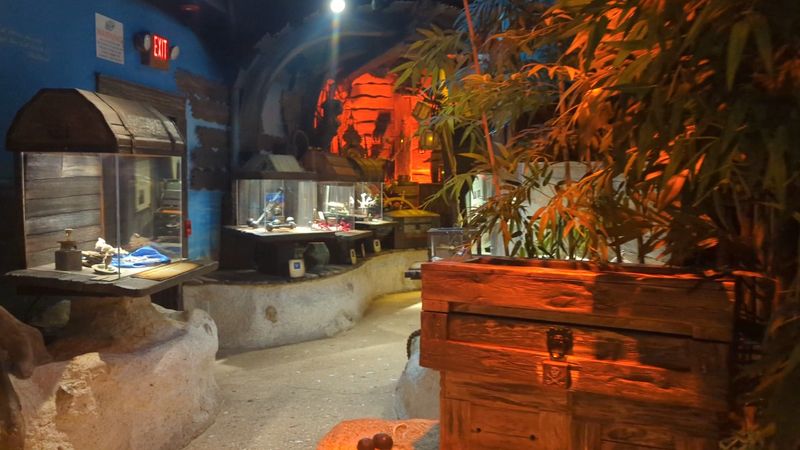
Most museums claim connections to famous pirates, but few can back it up with actual physical evidence. The St. Augustine Pirate & Treasure Museum owns a genuine piece of wood from the Queen Anne’s Revenge, Blackbeard’s flagship that ran aground off North Carolina in 1718.
Pat Croce personally participated in the underwater recovery efforts that brought this fragment to the surface after nearly three hundred years beneath the waves.
The wood looks almost burnt, which makes sense considering the ship caught fire and sank. Blackbeard had captured this vessel from the French, renamed it, and used it to terrorize the Atlantic coast before it met its watery end.
Holding a piece of that ship behind glass connects you directly to history’s most notorious pirate.
Beyond the ship fragment, the museum displays other items linked to Edward Teach himself. These artifacts paint a picture of the man behind the legend, showing that real pirates were more complex than the movie versions.
Blackbeard wasn’t just some cartoon villain with a big beard and a parrot.
The lighting around these exhibits creates an almost reverent atmosphere. Shadows dance across the weathered wood, and you can almost smell the salt water and gunpowder.
School groups gather around while guides explain how Blackbeard would light slow-burning fuses in his beard to create smoke around his face during battles, terrifying his victims into surrender.
What strikes visitors most is the ordinariness of some items mixed with the extraordinary. Pirates were real people who needed real things, not just mythical figures from storybooks.
They ate meals, mended clothes, and counted their coins just like anyone else, except their workplace happened to be the high seas.
The Queen Anne’s Revenge fragment represents something bigger than just one pirate or one ship. It’s a tangible connection to an era when the rules of civilization broke down on the ocean, and desperate men carved out their own brutal kingdoms on floating wooden platforms.
Interactive Cannon Firing and Ship Deck Experience
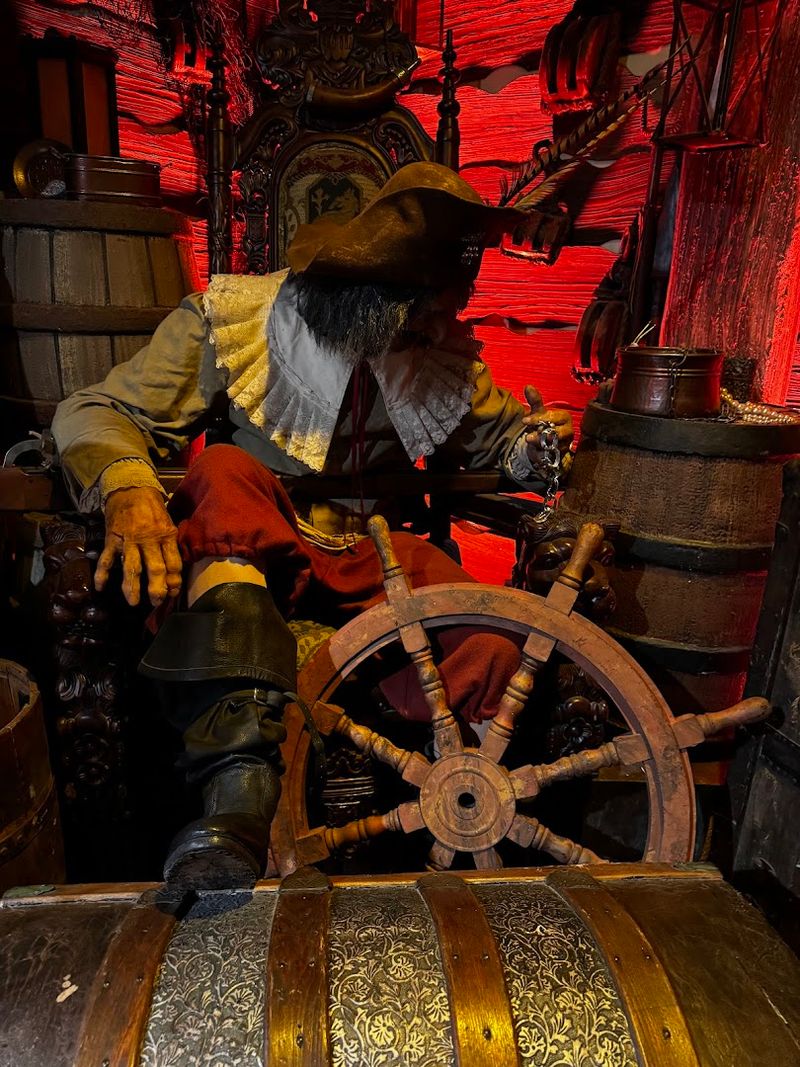
Forget velvet ropes and ‘do not touch’ signs. This museum lets you live out your pirate fantasies by actually firing replica cannons on a reconstructed ship deck.
The boom echoes through the building, making kids jump and adults grin like teenagers. It’s easily the most popular interactive feature, with lines forming throughout the day as visitors wait their turn to play pirate.
The ship deck recreation doesn’t just look pretty for Instagram photos. Every detail mirrors actual 18th-century vessel construction, from the rigging overhead to the wooden planks beneath your feet.
Walking across it, you can imagine the roll of waves and the chaos of naval combat when cannonballs flew and sails ripped apart in the wind.
Museum designers understood something important about learning. Reading about pirate life in a textbook puts kids to sleep, but letting them stand where pirates stood and touch what pirates touched makes history come alive.
The hands-on approach works for adults too, who often get more excited than their children when pulling the cannon lanyard.
Beyond the cannons, you can grab the ship’s wheel, hoist flags, and explore the cramped quarters where crews lived for months at sea. The experience helps you appreciate just how uncomfortable and dangerous pirate life actually was.
No running water, no privacy, constant threat of disease, storms, or violent death from enemies or your own angry crewmates.
Interactive exhibits like these separate this museum from dusty historical collections where everything sits behind glass. You’re not just observing pirate history here—you’re participating in it.
That engagement creates memories that last far longer than simply looking at old stuff in cases.
Parents love watching their kids’ faces light up when the cannon fires. Teenagers who rolled their eyes about visiting a museum suddenly perk up and want to shoot the cannon three more times.
Even skeptical adults admit the interactive elements add genuine fun to the educational experience, making it worth the admission price.
Treasure Hunt Scavenger Game Throughout Museum
Upon entering, kids receive a treasure map that sends them hunting for specific artifacts and answers hidden throughout the museum. It’s brilliant strategy, really—parents get to enjoy the exhibits while children stay engaged hunting for clues instead of whining about being bored.
The scavenger hunt transforms a passive museum visit into an active adventure.
The map isn’t some throwaway gimmick either. It’s thoughtfully designed to guide young visitors to the most important exhibits while teaching them to observe details they might otherwise miss.
Questions require actually reading the informational plaques and examining artifacts closely, sneaking education into what feels like a game.
Complete all the squares on your map, and you earn actual treasure from the gift shop. Kids take this reward system seriously, racing from room to room with pencils clutched in determined fists.
Parents appreciate how it keeps the whole family moving through the museum at a good pace instead of dragging or rushing.
The genius lies in making learning feel like playing. Children absorb facts about pirate navigation, famous battles, and historical figures without realizing they’re being educated.
They remember the experience because it was fun, not because someone lectured them about dates and dead people.
Even adults without kids often grab a map and join the hunt. Something about checking off boxes and solving puzzles appeals to humans of all ages.
Couples turn it into friendly competition, and friend groups split up to see who can finish first.
The treasure hunt also encourages repeat visits. Families who complete it quickly in the morning sometimes return later in the day using their re-entry stickers to explore exhibits they rushed past during the initial hunt.
That second, slower walkthrough often proves more valuable for deeper learning.
Reviews consistently mention the scavenger hunt as a highlight, especially for families with elementary-age children. It’s the kind of simple but effective engagement tool that more museums should copy, turning potential meltdowns into memorable family fun.
Authentic Jolly Roger Flags and Pirate Symbols
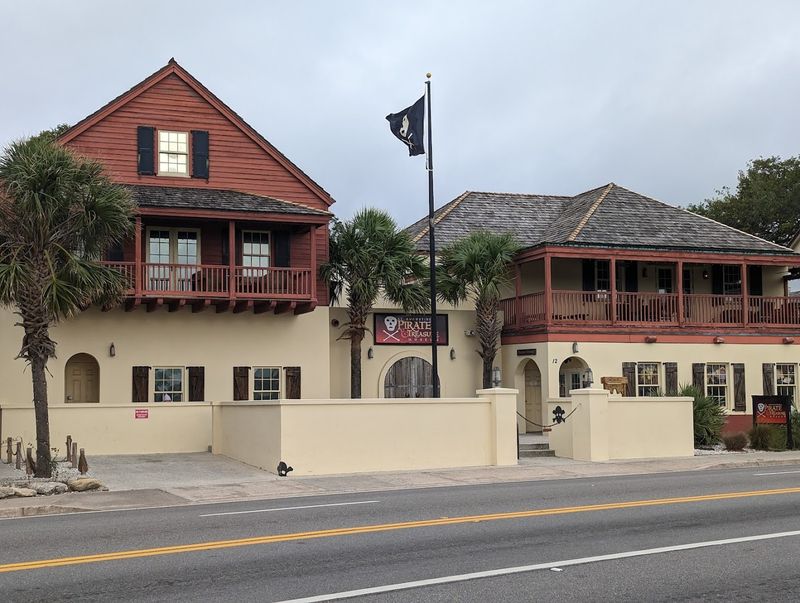
Everyone recognizes the skull and crossbones, but the museum reveals that pirate flags were far more varied and personal than pop culture suggests. Different captains designed unique flags to strike fear into their victims’ hearts, and the collection here showcases authentic examples that once flew above actual pirate vessels terrorizing merchant ships.
Some flags featured skeletons holding hourglasses, symbolizing that time was running out for their targets. Others showed bleeding hearts or raised swords, each design carefully chosen to communicate specific threats.
Pirates understood psychological warfare long before the term existed, using their flags as weapons of intimidation.
The black flag itself signaled a chance for surrender—give up without a fight, and you might live. But some pirates also carried red flags, which meant no quarter given.
Seeing that crimson banner meant you were already dead unless you could somehow escape or defeat your attackers.
What surprises visitors most is learning that the classic skull and crossbones wasn’t even the most common design. Many pirates preferred more elaborate imagery that reflected their personal style or superstitions.
The flags functioned like modern logos or brands, helping victims identify which pirate crew was attacking them.
The museum’s flag collection includes reproductions based on historical records alongside authentic period pieces. Standing before these symbols of terror, you realize that pirates weren’t romantic adventurers—they were maritime terrorists who relied on reputation and fear to make their victims surrender valuables without costly battles.
Kids love the flags because they look cool and scary. Adults appreciate understanding the strategic thinking behind the designs.
A pirate captain who could make merchants surrender through reputation alone saved ammunition, prevented crew casualties, and captured cargo intact rather than damaged by cannon fire.
The exhibit explains how flags evolved and what different symbols meant in pirate culture. It’s a masterclass in historical marketing and psychological manipulation, showing that even lawless criminals understood the power of branding and visual communication.
Prison Cell Experience and Dark Side of Piracy
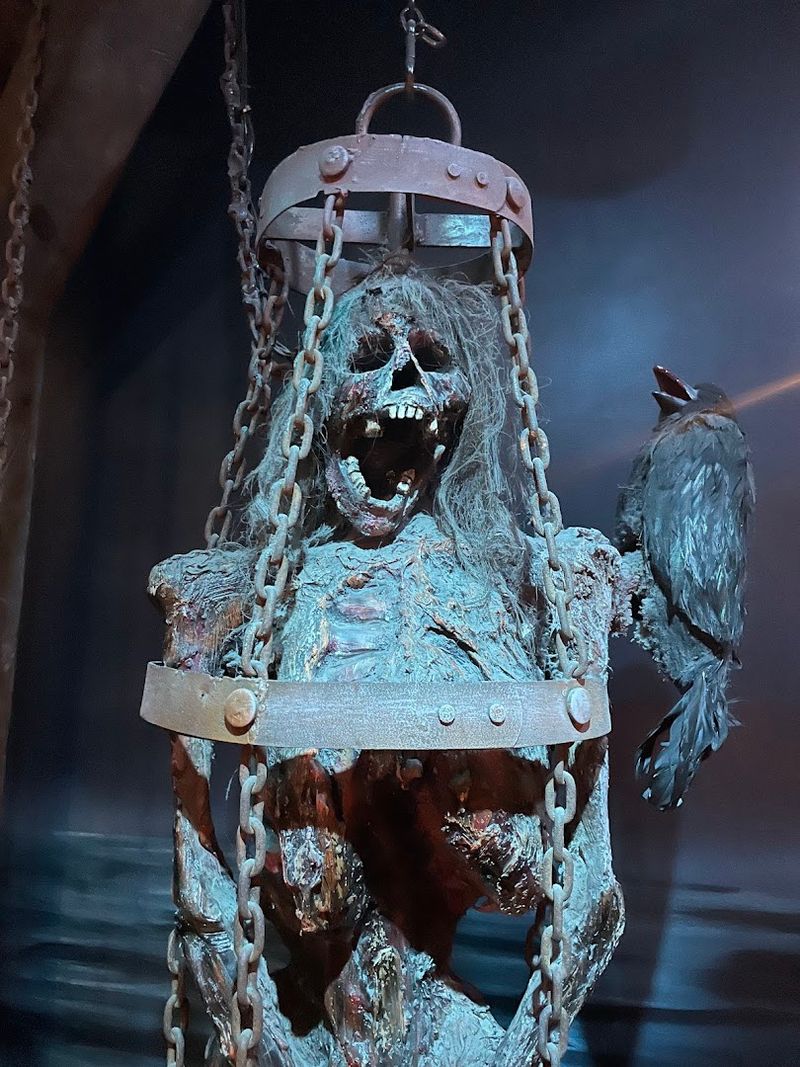
Most pirate attractions romanticize the seafaring outlaw lifestyle, but this museum doesn’t shy away from the brutal reality. A recreated prison cell lets visitors step inside and feel the claustrophobic horror of 18th-century imprisonment.
The bars are cold, the space is tiny, and the atmosphere is genuinely unsettling in the best educational way possible.
Pirates who got caught faced execution, but the time between capture and hanging often involved miserable conditions in damp cells. The museum’s recreation helps visitors understand that pirate life wasn’t all treasure and adventure—it frequently ended in violence, disease, or a noose.
Many crew members turned to piracy out of desperation, not romantic wanderlust.
The cell experience serves as a powerful counterpoint to the more exciting exhibits. It reminds families that real piracy involved real consequences, real suffering, and real victims.
Pirates weren’t heroes, and the people they robbed weren’t just faceless victims—they were sailors trying to make a living who sometimes got killed for their cargo.
Some visitors find this exhibit a bit dark, especially with young children. But sugar-coating history does nobody favors.
Understanding both the appeal and the horror of piracy provides a more complete picture than just focusing on the swashbuckling adventure aspects that Hollywood loves.
The lighting in this section is deliberately dim and foreboding. You can hear ambient sounds of dripping water and distant chains rattling.
It’s theatrical, sure, but it effectively communicates the misery that awaited captured pirates. Many ended their days in cells like this, awaiting public executions designed to discourage others from choosing that lifestyle.
Adults often spend more time in this area than kids do, reading the detailed information about famous pirate trials and executions. The museum doesn’t glorify the violence but doesn’t sanitize it either, striking a balance between educational honesty and family-friendly presentation.
It’s history with the rough edges left on, which makes it more valuable and memorable.
Movie Props from Famous Pirate Films
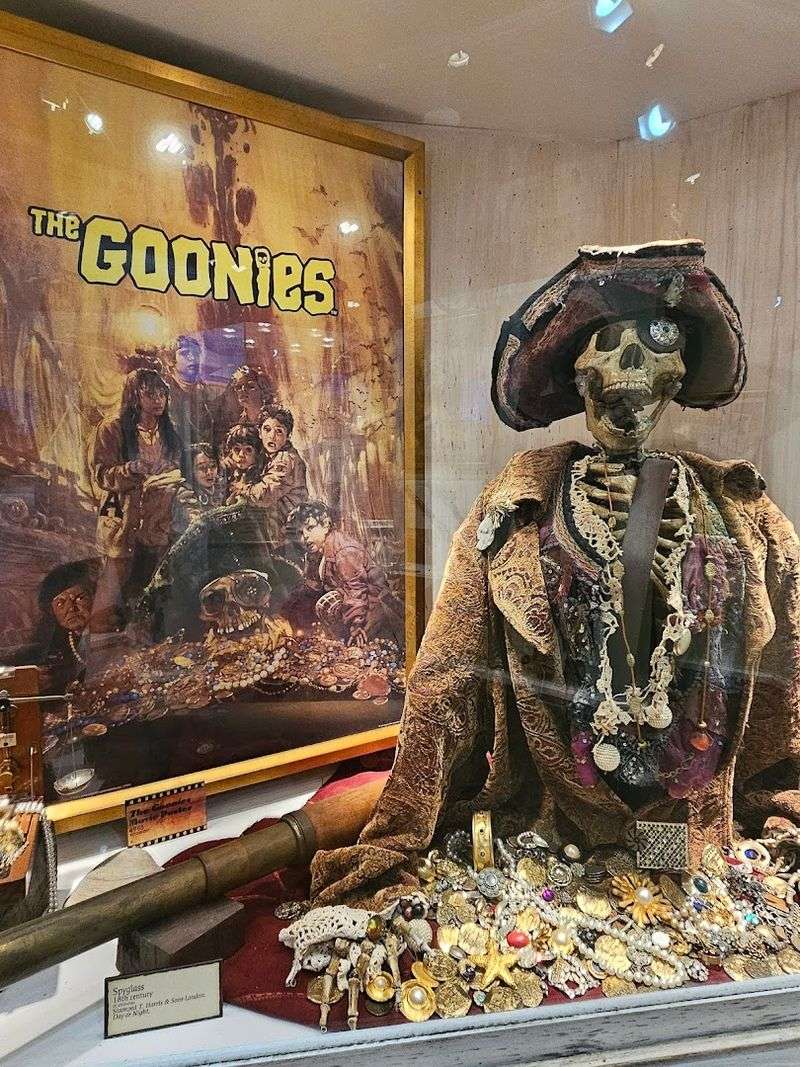
Blending Hollywood fantasy with historical reality, the museum displays actual props from famous pirate movies including items from the Pirates of the Caribbean franchise. Seeing Jack Sparrow’s costume or weapons from Blackbeard’s screen portrayal creates a fun bridge between entertainment and education, showing how modern culture interprets pirate history.
These movie items draw crowds, especially from younger visitors who grew up watching Johnny Depp stumble across their screens. Parents use the props as entry points for discussions about how real pirates differed from their movie counterparts.
Did real pirates talk like that? Dress like that?
Act like that? The answers are usually no, but the conversation is valuable.
The museum cleverly positions movie props near related historical artifacts. You might see a Hollywood costume next to actual pirate clothing fragments, or a prop weapon beside a genuine cutlass.
These comparisons help visitors understand what filmmakers got right and what they invented for dramatic effect.
Film enthusiasts appreciate seeing behind-the-scenes pieces from movies they love. The craftsmanship in movie props is impressive, even if they’re not historically accurate.
Costume designers and prop makers research historical periods before creating their versions, so there’s usually some connection to reality even in the most fantastical pirate films.
Critics might argue that movie props don’t belong in a serious historical museum, but the strategy works. Pop culture draws people in, and once they’re engaged, the real artifacts and factual information can do their educational work.
It’s a gateway drug to genuine historical interest.
The museum doesn’t pretend movies are history, but it acknowledges their cultural impact. Pirate films have shaped how millions of people imagine this historical period, for better or worse.
Examining that influence while presenting actual facts creates a richer, more complete experience than either approach alone.
Kids pose for photos next to their favorite movie items, then wander over to see what real pirates actually used. That journey from fantasy to reality, facilitated by thoughtful exhibit design, makes learning feel natural rather than forced or preachy.
Coin Clusters and Recovered Spanish Treasure
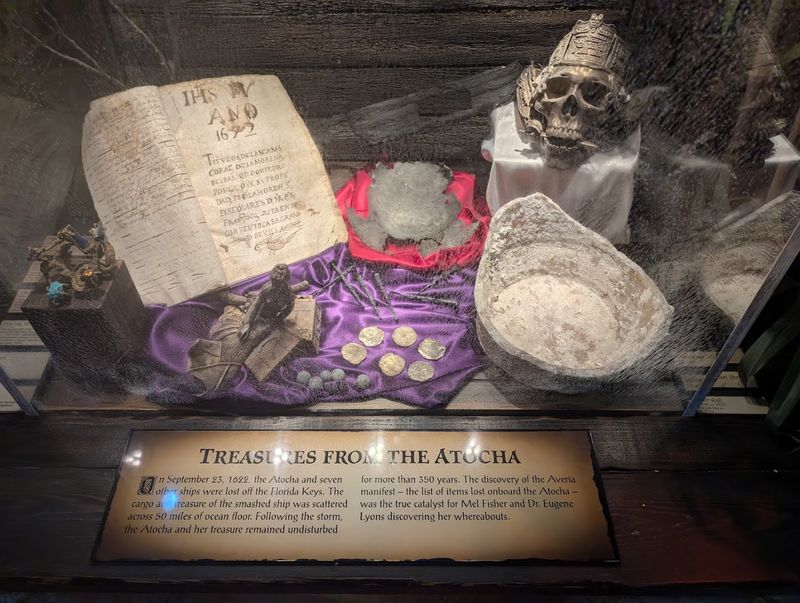
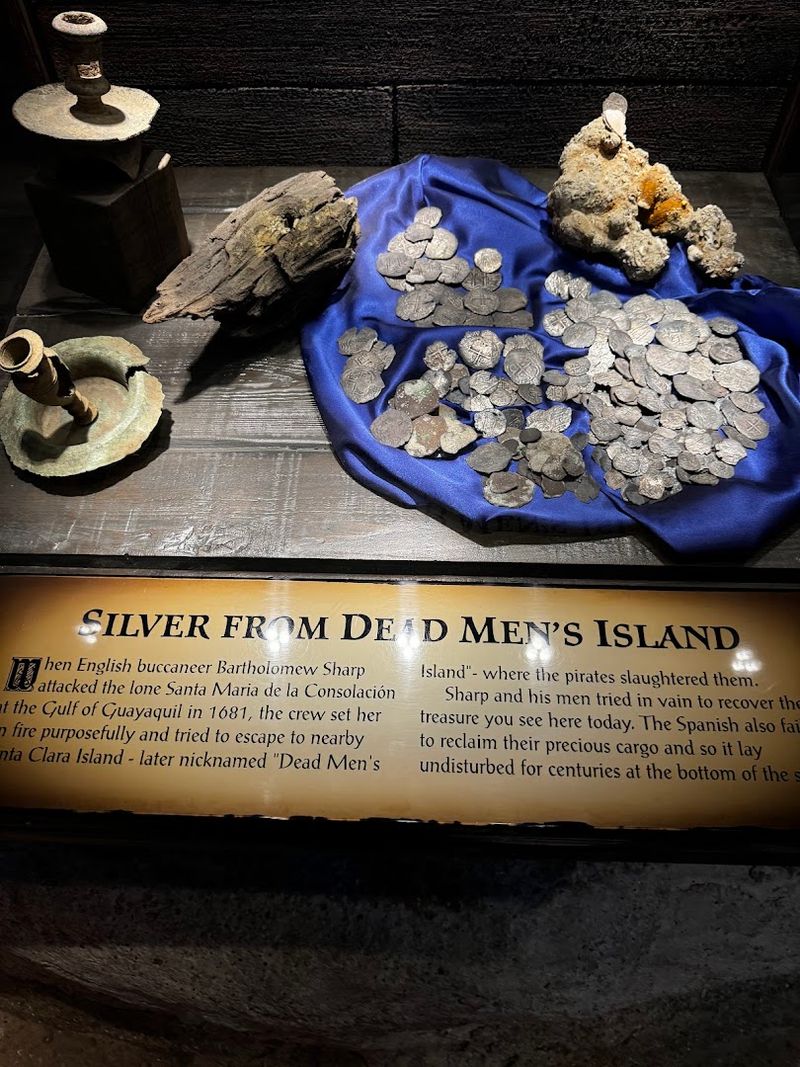
Some of the museum’s most visually striking artifacts are the coin clusters—masses of silver coins fused together by centuries underwater after Spanish treasure ships sank. These lumpy, corroded chunks represent real fortunes that pirates hunted and sometimes captured, physical evidence of the wealth flowing between the New World and Spain that made piracy so profitable.
Spanish galleons carried enormous amounts of silver and gold from Central and South American mines back to Europe. Pirates knew the routes and schedules, positioning themselves to intercept these floating banks.
When ships went down in storms or battles, the treasure sank with them, only to be recovered centuries later by modern salvage operations.
The coin clusters look alien and strange, nothing like the shiny doubloons in movies. Saltwater corrosion created green and brown patinas, and the coins literally welded themselves together through chemical processes.
It takes expert conservation work to separate individual coins without destroying them, and many clusters are left intact as fascinating examples of underwater archaeology.
Each cluster represents a story—a ship that sank, a crew that drowned, a fortune lost to the sea. Some came from pirate wrecks, others from merchant vessels pirates attacked.
The museum provides context about where each cluster was recovered and what ship it might have come from, connecting these objects to specific historical events.
Visitors love examining the different coin clusters, trying to spot individual coins in the mass. The treasure hunt instinct kicks in even when looking at artifacts behind glass.
You can see Spanish royal seals, dates from the 1600s and 1700s, and imagine the moment these coins spilled across a sinking deck.
The exhibit explains the economics of piracy—why men risked death for these coins, how much a single Spanish dollar could buy, what fortunes meant in terms of actual purchasing power. It wasn’t just greed; for poor sailors, one successful pirate raid could earn more than years of legitimate work.
These treasure clusters prove that pirate gold wasn’t myth. Real wealth really did sail across oceans, and real pirates really did capture it, making this museum’s collection tangible proof of the Golden Age of Piracy’s economic foundations.
Guided Tours by Costumed Pirate Characters
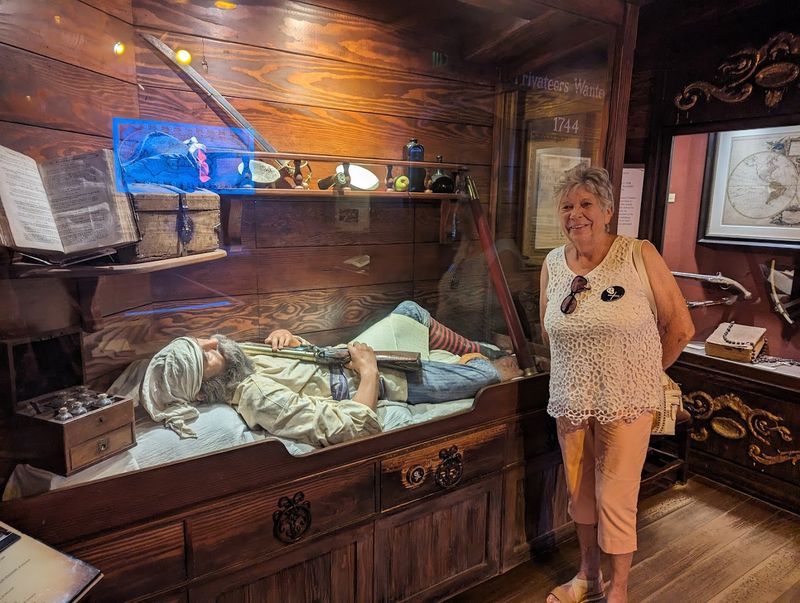
Every twenty minutes or so, a costumed guide who looks like they just stepped off a pirate ship offers free tours to whoever wants to join. These aren’t dry academic lectures—they’re entertaining performances that bring pirate history to life through storytelling, humor, and genuine knowledge.
Visitors consistently rate these tours as highlights of their museum experience.
The guides stay in character without being annoying about it. They’ll crack jokes about landlubbers and scurvy while delivering solid historical information about the artifacts and exhibits.
It’s educational theater done right, keeping both kids and adults engaged while actually teaching them something worthwhile.
You don’t have to take the tour—the museum is self-guided if you prefer exploring at your own pace. But joining a tour adds context and stories you’d miss reading plaques alone.
The guides know which artifacts have the best backstories and which details visitors find most interesting.
Reviews frequently mention specific guides by name, praising their enthusiasm and knowledge. The museum clearly invests in hiring and training people who can perform this unique role, balancing entertainment with education.
It’s harder than it looks, requiring historical knowledge, public speaking skills, and the ability to engage with audiences of all ages.
The tours last about thirty minutes, hitting the major highlights without exhausting your attention span. Guides encourage questions and adapt their presentations based on the audience.
A tour with mostly adults focuses on different details than one with a bunch of elementary school kids.
Some visitors do the self-guided experience first, then catch a tour later to learn things they missed. The museum’s re-entry policy makes this possible, and many families take advantage of it.
You can grab lunch, walk around St. Augustine, then return for the afternoon tour with fresh energy.
The costumed guides serve multiple purposes—they’re part of the attraction itself, they provide valuable educational content, and they help manage crowds by moving groups through the space efficiently. It’s smart museum design wrapped in pirate clothing and delivered with a hearty “Arrr!”
Gift Shop Doubloons and Unique Pirate Merchandise
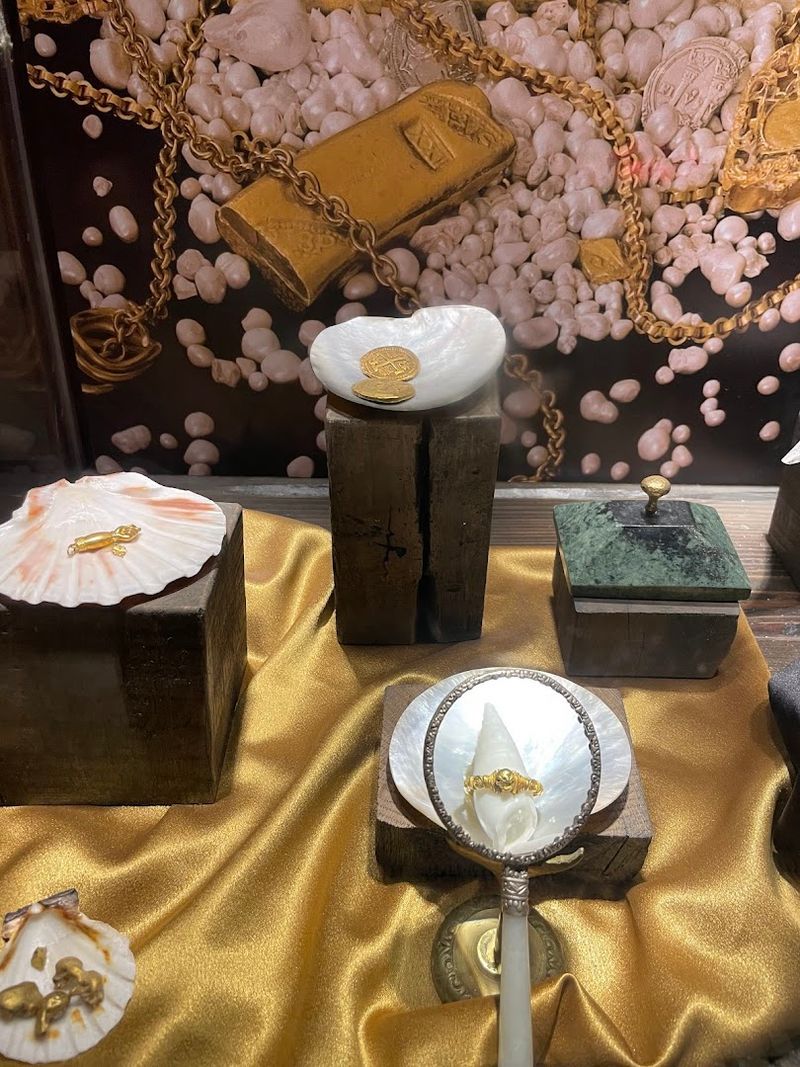
The gift shop isn’t just an afterthought—it’s practically an extension of the museum experience, packed with pirate merchandise ranging from cheap plastic toys to serious collector items. The most popular purchases are the metal doubloons, replica coins that feel substantial in your hand and make perfect souvenirs or gifts for pirate-obsessed friends back home.
Unlike typical museum shops filled with boring postcards and generic t-shirts, this place offers genuinely interesting items. You’ll find historically accurate reproduction weapons, detailed pirate flags, navigation instruments, books about real pirate history, and costumes that don’t look like cheap Halloween junk.
The merchandise reflects the museum’s commitment to quality and authenticity.
Kids love the treasure chest of doubloons, often buying handfuls with their allowance money. Parents appreciate that these coins are affordable and won’t break or become annoying noise-makers on the car ride home.
The doubloons have enough weight and detail to feel special, not like worthless trinkets you’ll throw away next week.
The shop also stocks books for different reading levels, from picture books for young children to serious historical texts for adult enthusiasts. Staff members can recommend titles based on your interests, whether you want pirate fiction, academic history, or something in between.
It’s clear they actually know their inventory.
Collectors hunt for limited edition items and authentic reproduction artifacts. The museum occasionally offers high-end pieces like museum-quality weapon replicas or framed historical documents that serious pirate enthusiasts snap up immediately.
These items cost real money but appeal to a dedicated audience willing to pay for quality.
The gift shop location means you exit through it, which is standard museum design. But instead of feeling like a cynical money grab, it works because the merchandise actually connects to what you just experienced.
Buying a doubloon or pirate flag becomes a way to take a piece of the museum home with you.
Many reviews specifically mention stopping by the gift shop multiple times, buying doubloons for everyone they know. That kind of repeat business suggests the shop offers good value and items people actually want, not just tourist trap garbage.