Beneath Marianna, Florida’s Only Publicly Accessible Air-Filled Caves Are Open For Exploration
Fossil shells and ancient sea creatures are stuck in the ceiling of a cave you can actually walk through. That cave sits in Florida, a state better known for beaches than underground rooms.
The walkways weren’t simply discovered. Young workers in the 1930s chipped them out by hand, mostly with simple tools. Then they used the leftover rock to build a visitor center.
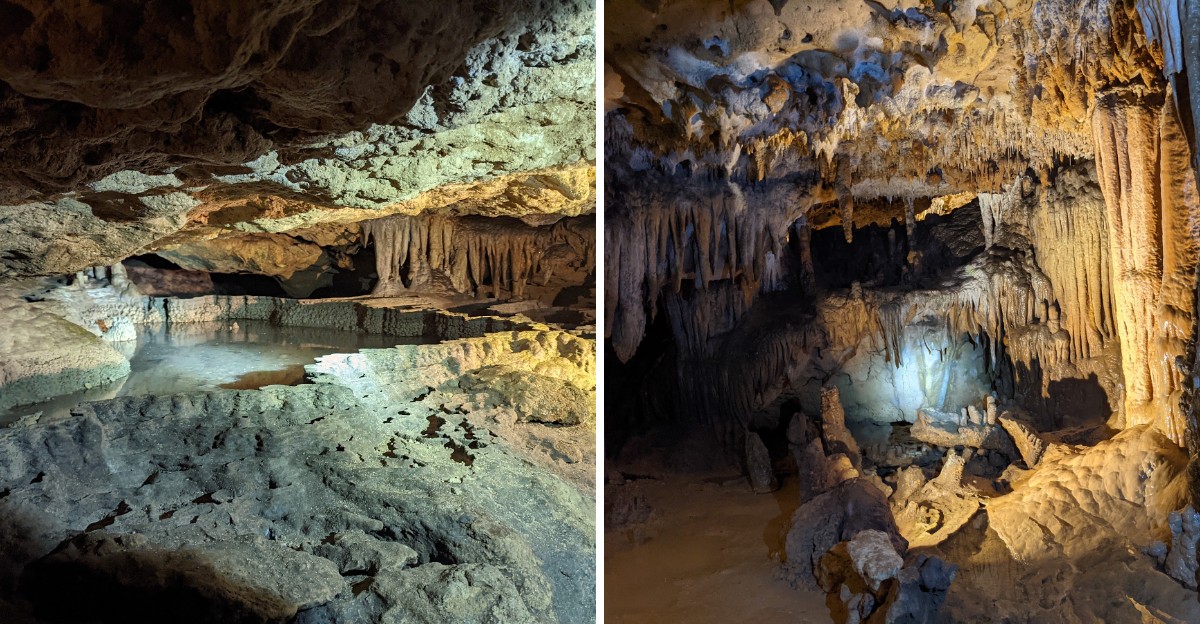
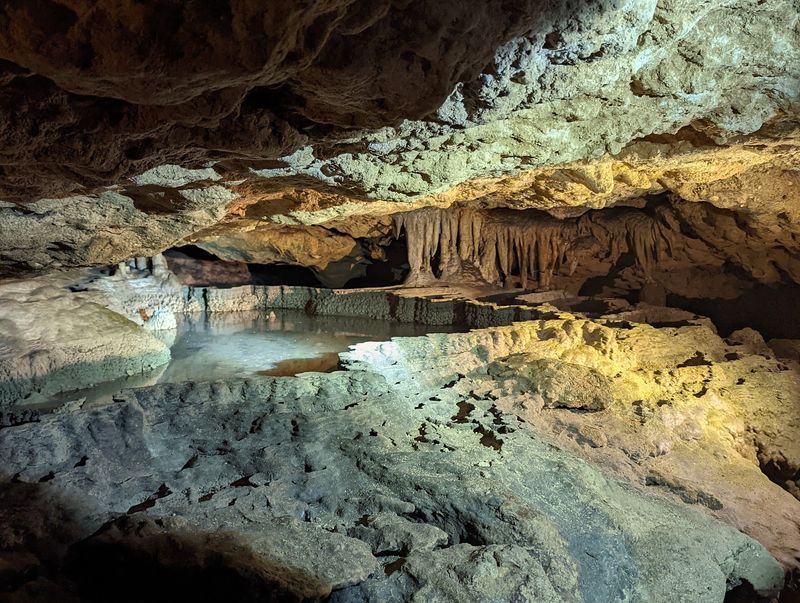
Inside, the air stays cool all year. Stalactites hang overhead, and flowstone spills down the walls like frozen candle wax. Tiny bats sometimes cling to the rock above the path.
I like how this place flips everything people assume about Florida. I can’t imagine a better escape on a sticky summer afternoon. So how does a flat, sandy state end up hiding caves like these?
Florida Keeps Its Coolest Secret Underground
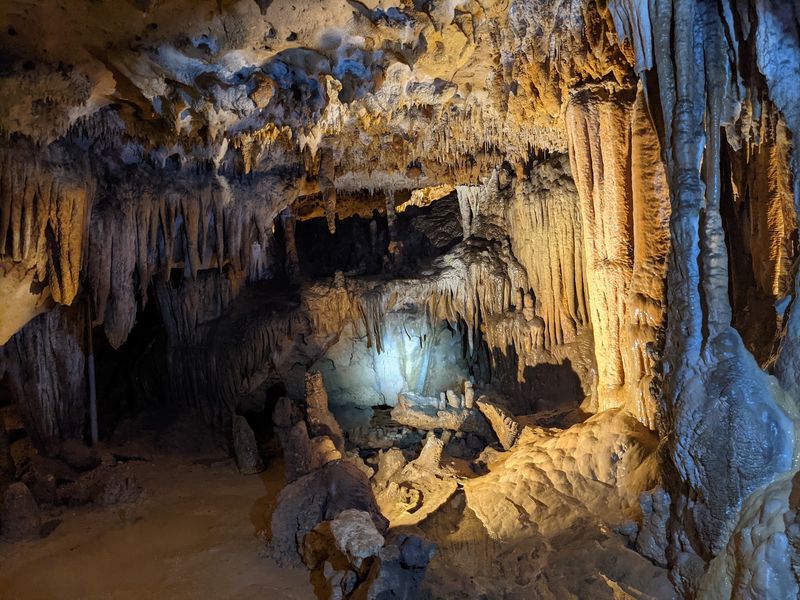
Most Florida trips involve sunscreen, not hard hats. Florida Caverns State Park changes that, because it offers the only guided tours of air-filled caves in the state.
That detail matters. Florida sits on a thick layer of limestone, and plenty of its caves are flooded with water. Exploring those takes special diving gear and serious training.
Here, you can stay dry and walk right through. The caverns formed as slightly acidic water slowly dissolved the rock over a very long time. Once the water level dropped, open rooms were left behind for us to wander.
The park belongs to the Florida State Parks system, so it’s protected and carefully managed. Tour guides lead every cave visit, which keeps the formations safe and the groups organized. You can’t just stroll in on your own, and honestly, that’s a good thing.
The tour route winds through a series of connected rooms. Some spaces open up wide, while others ask you to stoop a bit. Every turn reveals new shapes in the stone.
For a state famous for flat land and swampy edges, this feels almost like a magic trick. Except it’s real geology, and it’s been here the whole time.
Rock Formations That Look Like Dripping Wax and Stone Curtains
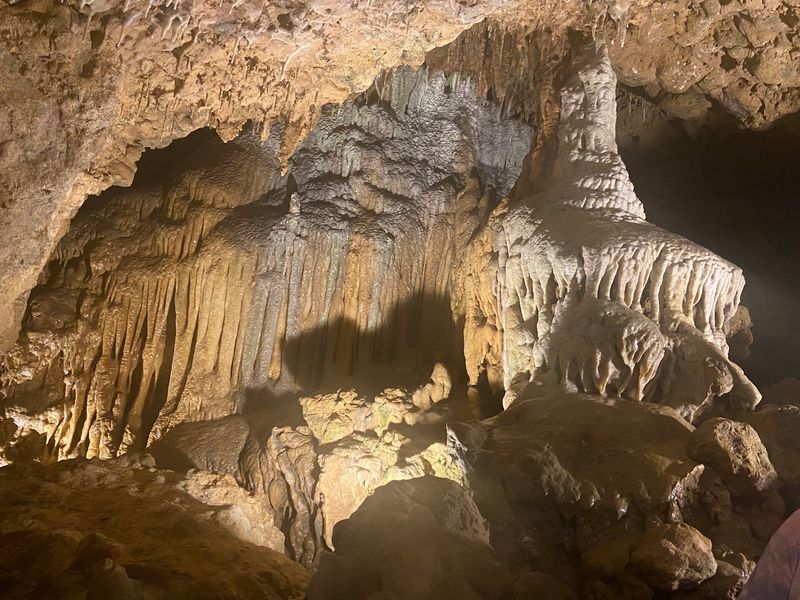
Stalactites hang from the ceiling, and stalagmites grow up from the floor. A simple trick helps you remember: stalactites hold on “tight” to the top.
Florida Caverns State Park shows off much more than those two, though. You’ll see flowstone, which looks like rock that melted and froze mid-spill. There are also draperies, thin wavy sheets that hang like stone curtains.
Soda straws are another fun find. These skinny, hollow tubes form as water drips through their centers. Over time, some of them grow into full stalactites.
Each formation builds up from tiny mineral deposits left behind by dripping water. The process is incredibly slow. A formation the size of your finger may have taken a very long time to appear.
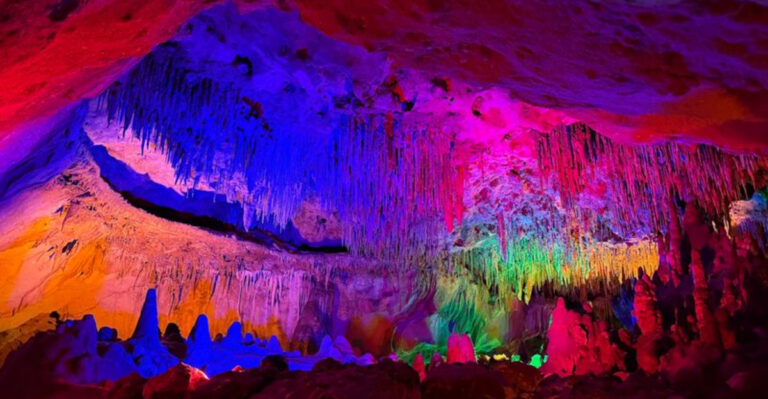
Colored lights brighten the rooms and pick out the textures. Rock that might look plain gray suddenly glows with detail. It’s a great setup for photos, so keep your eyes up.
One rule really counts here. Don’t touch the walls or formations, because oils from your skin can stop them from growing. Look closely, admire freely, and keep your hands to yourself.
Look Up, Because the Ocean Left Souvenirs on the Ceiling
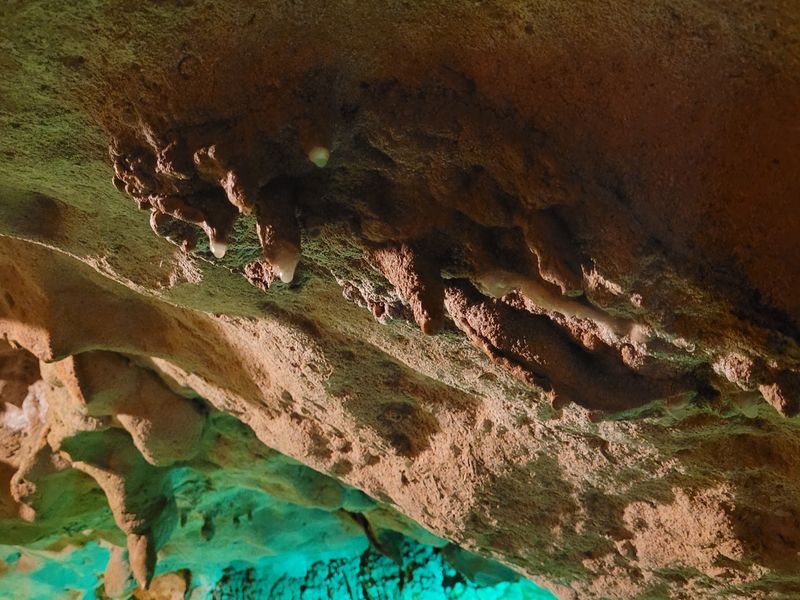
Shark teeth in a cave ceiling sounds like a tall tale. Yet that’s part of the story at Florida Caverns State Park, where fossils show up in the limestone overhead.
Long ago, this whole region sat under a warm, shallow sea. Shells and sea creatures piled up on the ocean floor. Over ages, those layers pressed together and became the limestone you walk beneath today.
So the cave isn’t just a cool tunnel. It’s basically a giant history book made of rock. Each layer holds clues about what life looked like before Florida was dry land.
Guides often point out these fossils during the tour. Spotting them takes a sharp eye, since many blend into the stone. Kids tend to treat it like a treasure hunt, and adults usually join in.
Bring that curiosity along on the trails too. The same limestone shapes the land above ground, creating bluffs, sinkholes, and springs.
It’s a strange thought to hold onto while you crouch under a low ceiling. You’re standing inside what was once the bottom of the sea. Pretty wild for a state park in the Panhandle.
Thank the 1930s Crew Who Carved the Path by Hand
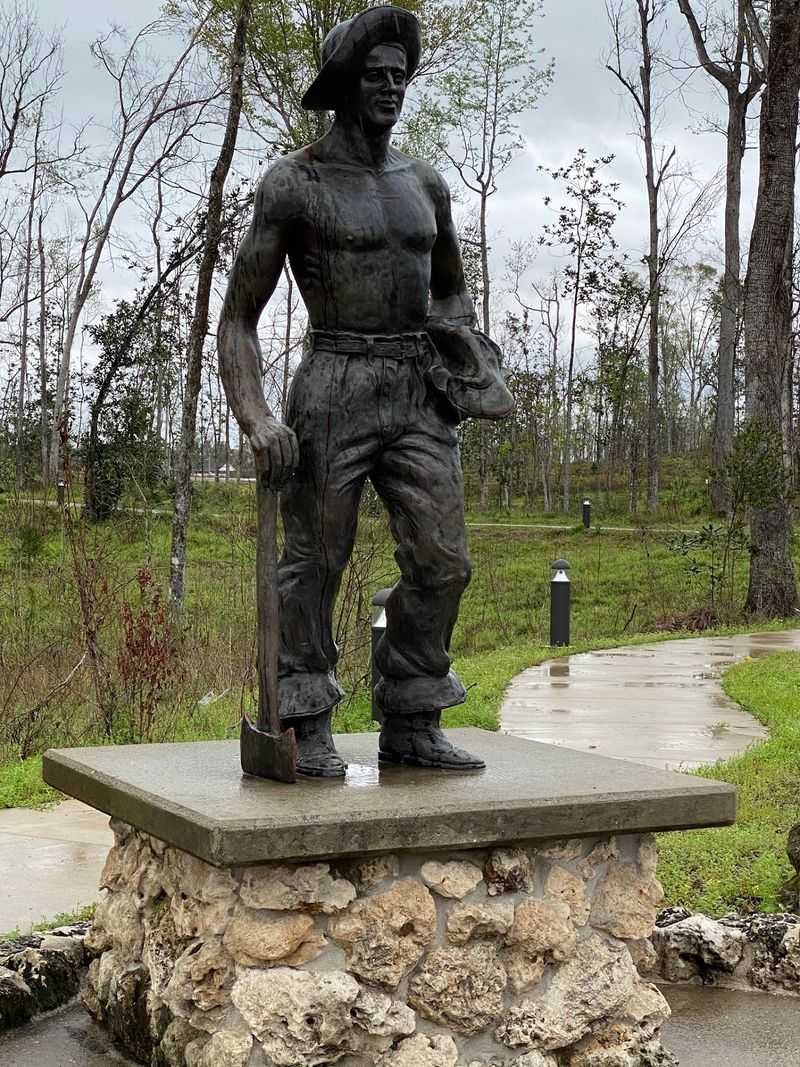
Back in the late 1930s, young men from the Civilian Conservation Corps went to work here. Their job was to make the caves safe enough for the public to explore.
That wasn’t easy. Workers dug out mud and rock, often using hand tools and plenty of muscle. In tight spots, they widened passages so visitors could actually move through.
The CCC was a program that gave jobs to young men during the Great Depression. Across the country, they built trails, bridges, and park buildings. Florida Caverns State Park is one of the standout results.
Here’s a clever twist. The crew used limestone removed from the caves to help build the visitor center. That means part of the building literally came from underground.
A statue honoring a CCC worker stands near the path to the visitor center. It’s a nice reminder that people, not just nature, made this experience possible.
The park first opened to the public in the early 1940s. Generations of families have walked these routes since then. Next time you stoop through a low passage, remember someone once dug it out with a shovel.
Plan Ahead for the Ranger-Led Tour, Because It’s the Only Way In
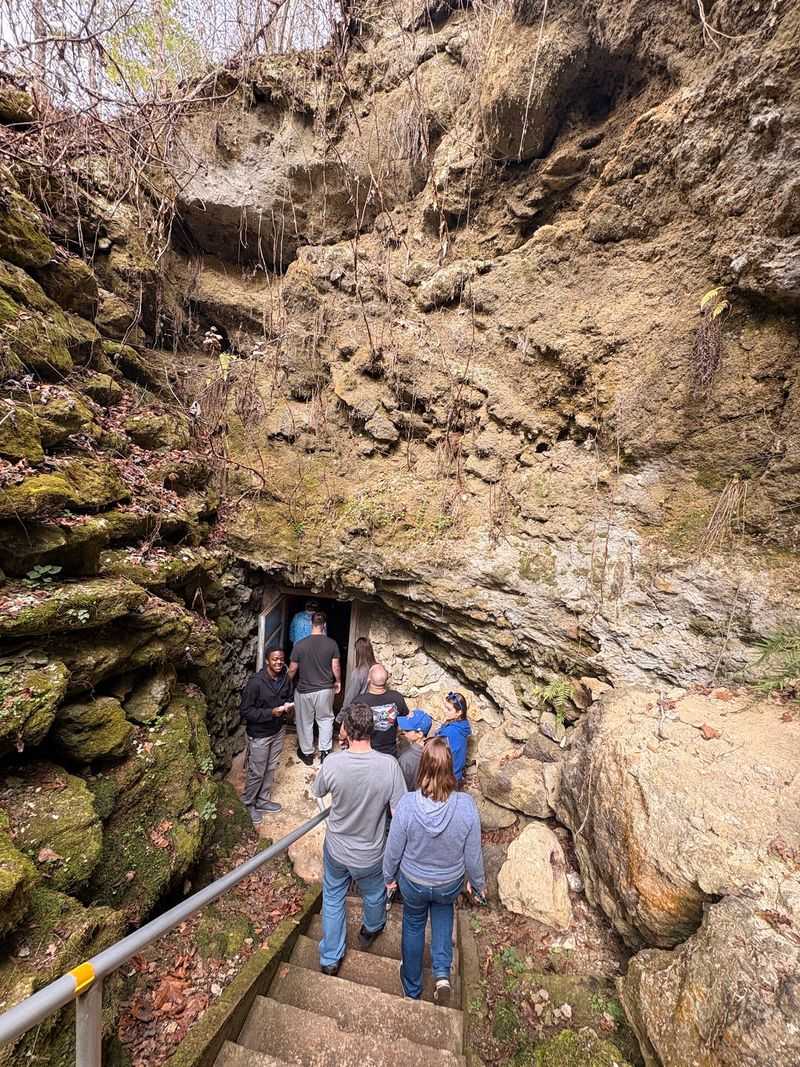
Good news and a small catch. The caves are open for exploration, but only on guided tours led by tour guides.
Tours typically last around 45 minutes to an hour. Guides share geology, history, and fun facts along the way. Tickets can sell out, especially on weekends and holidays, so booking early is smart.
The route includes stairs, wet floors, and some low ceilings. You’ll need to duck in a few spots, so taller folks should be ready to bend. The tour is rated moderate to severe in difficulty.
Wear closed-toe shoes with decent grip. Small puddles show up on the path, and sandals just aren’t worth the risk.
Backpacks, large purses, and bulky totes need to stay behind, and lockers are available at the visitor center. Check the park’s current rules before you go, since policies can change. Strollers and wheelchairs can’t make the trip through the cave.
The cave stays cool all year, sitting in the mid-60s. That feels amazing in July and surprisingly cozy in January. A light jacket works for anyone who chills easily.
Showing up a little early gives you time to explore the visitor center first.
Keep an Eye Out for the Tiniest Residents
Some of the cave’s most adorable neighbors are about the size of your thumb. Bats call these caverns home, and guides sometimes spot one clinging quietly to the rock.
Please don’t panic. These little bats aren’t interested in you at all. They’re usually resting, tucked against the stone and minding their own business.
Bats play a big role in nature. Many eat huge numbers of insects every night. In a region known for buggy summers, that’s a team you want around.
Caves give them a steady, protected place to rest. That’s one more reason rangers ask everyone to keep voices calm and hands off the walls. A disturbed bat burns energy it really needs.
The park also protects other wildlife above ground. Its forests and floodplain along the Chipola River support many plants and animals. Some plants found here are rare in Florida.
Spotting a bat isn’t guaranteed, which makes it feel extra lucky. If your guide points one out, look quickly and quietly. Then whisper a thank-you for all those mosquitoes it gobbles up.
Honestly, these tiny pest controllers deserve a medal.
Your Boots Will Earn Their Keep on These Hilly Trails
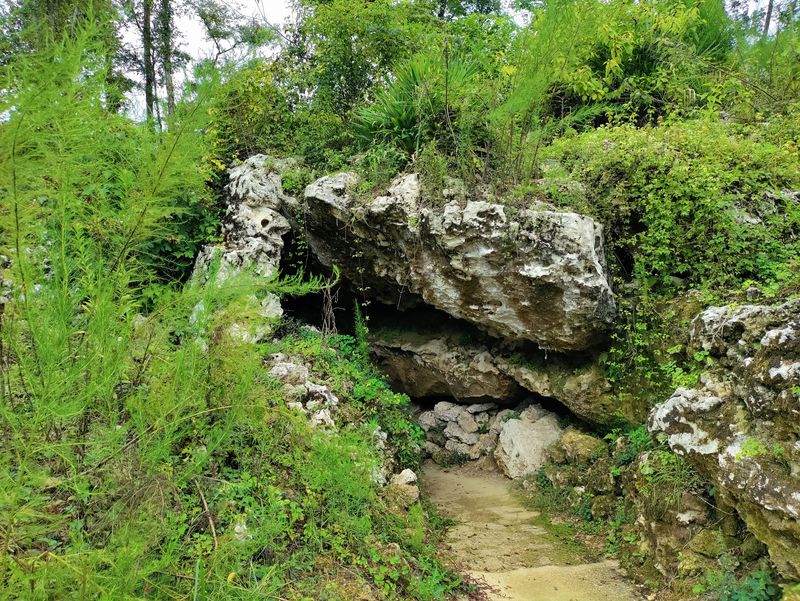
Hills in Florida? Yep, and the trails at Florida Caverns State Park prove it with bluffs, rocky outcrops, and surprising elevation changes.
The Bluff Trail is a favorite for good reason. It winds through hardwood forest and past limestone formations. You’ll even find a small rock tunnel along the way.
The tunnel looks narrow from one end but opens up from the other. If squeezing through isn’t your style, you can usually walk around it. No shame in taking the scenic detour.
Other trails head through floodplain forest near the Chipola River. Some routes are shared by hikers, bikers, and horseback riders. The park even has equestrian trails and a stable area for riders.
Bug spray is your best friend here, especially in warm months. Gnats and mosquitoes love shady, damp woods as much as hikers do. Bring water too, because Florida humidity doesn’t take days off.
Heavy rain sometimes floods low trails and can even close the caves. Checking the park’s alerts before you drive is a smart move. Cooler months tend to be the most comfortable time to hike.
Every mile feels very un-Florida, in the best way.
Cool Off in a Spring-Fed Swimming Hole
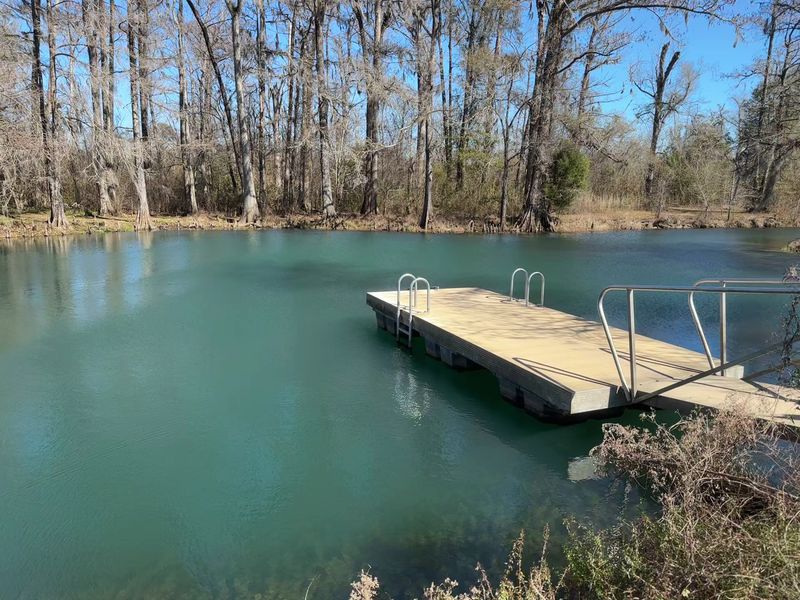
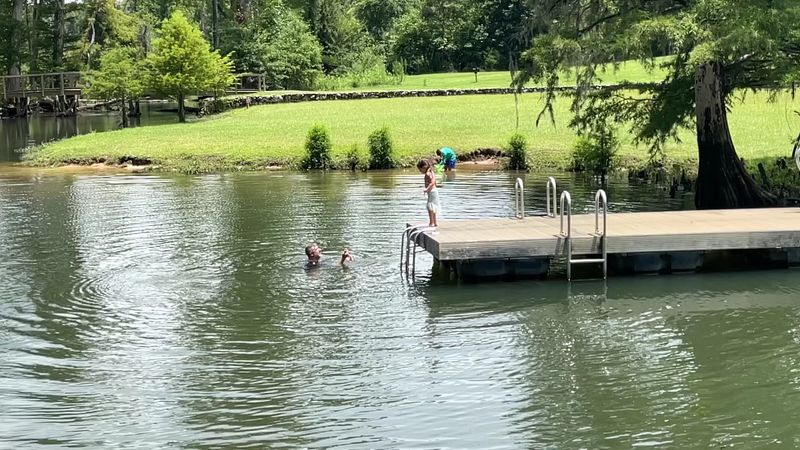
Blue Hole is the park’s spring-fed swimming spot, and the water is famously chilly. After a hike on a hot day, that sounds pretty perfect.
Springs like this pump out water that stays cool all year. Swimmers often call it refreshing, which is a polite word for “brr.” Ease in slowly or just jump and get it over with.
The swim area sits in a shady, wooded setting. It’s a nice way to round out a visit after the cave tour. Picnic areas nearby make it easy to linger.
Like other parts of the park, conditions can change. Flooding or water quality issues sometimes affect swimming. Check current park alerts before packing towels.
The Chipola River also runs through the park. Paddlers can explore its clear water by kayak or canoe. Rentals are offered at the park, depending on season and conditions.
Fishing is another option along the river for those with the right license. Between the caves, trails, spring, and river, the park packs a lot into one stop. You might arrive for rocks and leave planning a second trip just for the water.
Stay the Night and Make It a Real Panhandle Adventure
One cave tour is great, but a full weekend is better. Florida Caverns State Park offers campgrounds with full-facility sites, plus spots set up for equestrian campers.
Camping lets you hike in the cool morning hours before the heat settles in. It also gives you time for paddling, biking, and a slower stop at Blue Hole. Reservations go fast in pleasant weather, so book early.
You’ll find the park at 3345 Caverns Rd, Marianna, FL 32446. It sits just a few miles north of downtown Marianna. That makes snacks, gas, and supplies easy to grab.
It’s also close to Interstate 10, which is handy for road-trippers. Crossing the Panhandle between Tallahassee and Pensacola? This makes a fantastic leg-stretch stop.
Back at the visitor center, a small museum covers the caves, plants, and local history. A gift shop has souvenirs for anyone who needs proof they went underground in Florida.
Fall, winter, and spring usually bring the most comfortable weather for exploring. Summer still works, especially since the caves stay cool. Either way, it’s a Florida memory few people expect to make.